
Sports
When rain and number drowned South Africa’s World Cup dreams

Rex Clementine
in Durban
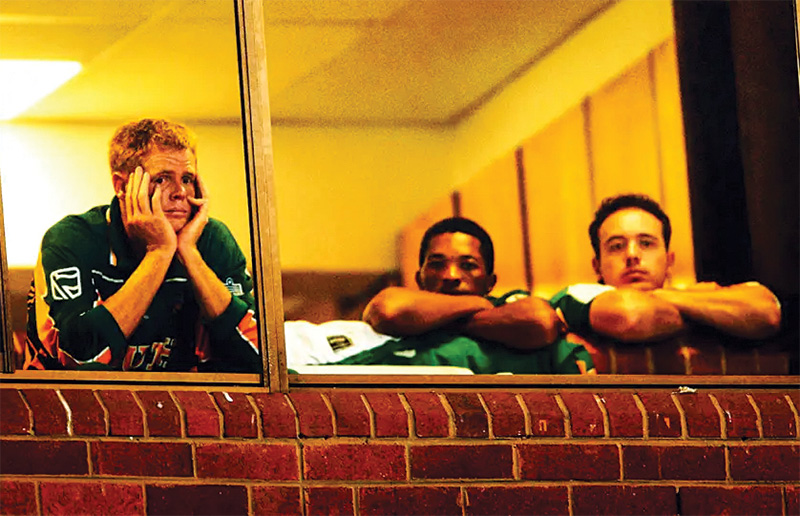
It was the unlikeliest of scripts: the host nation, South Africa, bowing out of the 2003 Cricket World Cup in their backyard, undone by a bizarre twist of fate – and a misread Duckworth-Lewis sheet. To borrow a line from Shakespeare, the fault lay not in the stars but in themselves.
South Africa’s hopes were sky-high as they hosted cricket’s crown jewel, much like the unifying fervor of the 1995 Rugby World Cup, where Nelson Mandela’s charm and Francois Pienaar’s leadership wove a fractured nation into a tapestry of pride. But on a rainy night in Durban, those dreams were washed away—quite literally—by Sri Lanka, in what remains one of the most talked-about matches in cricketing folklore.
Sri Lanka didn’t even win the game, but they didn’t need to. The Proteas, staring at a rain-curtailed chase, fell victim to faulty math – or more precisely, an incorrect interpretation of the Duckworth-Lewis method. With just one run needed to clinch the game, Mark Boucher blocked a ball, thinking the job was done. It wasn’t.
Jehan Mubarak, now Sri Lanka’s Data Analyst, was then a young 12th man with a critical role: carrying the Duckworth-Lewis sheet to the middle. A son of scientist Dr. Aziz Mubarak, Jehan was born in Washington DC and educated at Royal College. He was well-equipped for the task. Reflecting on the drama, he shared:
“I had to deliver the Duckworth-Lewis sheet to the team. Nicky Boje, South Africa’s 12th man, was doing the same for his side. The sheet clearly states that the scores listed are for a tie, not a win. You always need one more run to win. We read it correctly; they didn’t—and it cost them dearly.”
Mubarak’s delivery may not have been on the scorecard, but it was game-changing. As the rain began to pour, South Africa believed they were safe. They weren’t. The match ended in a tie, knocking the Proteas out and allowing Sri Lanka to advance.
During the game, Mubarak also made a brief appearance as a substitute fielder for Marvan Atapattu. But things didn’t go entirely smoothly:
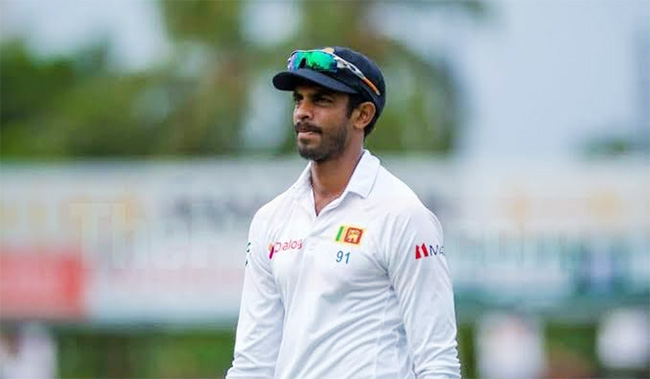 Jehan Mubarak played an important role in knocking South Africa out of the 2003 World Cup. He didn’t play the game, but as 12th man, he carried the Duckworth Lewis sheet and had to convey the important message.
“Sanath (Jayasuriya) was yelling for me to take a catch, so I sprinted toward the ball. It was a tough chance, and I couldn’t hold on. The ball went for four, and I got an earful from the captain. In a game like that, every chance counts. Thankfully, it didn’t affect the result.”
At 22, Mubarak was the youngest player in the squad, playing just one match in the tournament—a forgettable outing against India where he fell for a second-ball duck to Javagal Srinath, the current Match Referee. But for Mubarak, the World Cup was a crash course in high-stakes cricket:
“It was a fantastic learning experience. Against South Africa, Marvan made a stunning hundred, and Aravinda de Silva chipped in with a brilliant 70. We were struggling at 90 for three, but their 150-run partnership turned things around. Watching those legends adjust to different conditions and handle pressure was invaluable for a young player.”
Mubarak recalls the advice he received from stalwarts like Sanath, Marvan, Hashan Tillakaratne, and Aravinda.
“They’d always say, ‘Play positive cricket. Don’t be afraid. Whatever the opposition does – sledging or pressure tactics – hold your ground and never take a backward step.’ Those words stayed with me.”
After hanging up his boots, Mubarak transitioned into coaching, even leading Sri Lanka’s Under-19 team to a series win in England. Later, Sanath Jayasuriya brought him into the senior team setup, recognizing his analytical mind. Today, Mubarak serves as the team’s Data Analyst, a role that suits his methodical nature:
“My job is to analyze data and share it with the coaches and players. We study not just our team but the opposition as well. At SLC’s Brain Center, we look at everything—batting patterns, bowling trends, field placements—and pass on actionable insights.”



Six-a-side school cricket is set to make a high-profile return to Moratuwa when the Old Boys’ Association of Prince of Wales’ College stages the Prince of Wales’ College 150th Anniversary Inter-School Sixes Cricket Tournament on August 29 and 30 at the De Soysa Stadium.
The two-day tournament is one of the major sporting attractions of the College’s historic 150th anniversary celebrations and
will bring together 16 leading school cricket teams for a knockout competition.
The tournament is aimed at reviving the excitement of six-a-side cricket, a format renowned for its fast pace and spectator-friendly nature, which has not featured regularly in major inter-school competitions in recent years.
The Old Boys’ Association believes the 150th anniversary provides the ideal opportunity to bring the format back to the forefront while celebrating Moratuwa’s deep-rooted passion for cricket.
Cricket has long held a special place in the hearts of Moratuwa’s residents, while Prince of Wales’ College boasts a proud cricketing tradition that has produced several outstanding players who have gone on to represent Sri Lanka at the highest level.
The organizers expect more than 5,000 cricket enthusiasts from Moratuwa and surrounding areas to witness the tournament over the two days, turning the event into a major festival of school cricket.
The opening ceremony on August 29 is scheduled to be attended by Kusal Mendis, one of the leading cricketers produced by Prince of Wales’ College and a member of the Sri Lankan national team.
The tournament will feature 16 schools, including Royal College Colombo, St. Joseph’s College Darley Road, Thurstan College Colombo, S. Thomas’ College Mount Lavinia, Dharmasoka College Ambalangoda, Prince of Wales’ College Moratuwa, Moratu Maha Vidyalaya, D.S. Senanayake College Colombo, Sri Sumangala College Panadura, Richmond College Galle, Mahanama College Colombo, St. Sebastian’s College Moratuwa, St. Peter’s College Bambalapitiya, Wesley College Colombo, Ananda College Colombo and Mahanama College Panadura.
With the competition being played on a knockout basis, the compact format is expected to produce plenty of attacking cricket and give emerging players an opportunity to showcase their skills in front of a large crowd.
Apart from the competitive aspect, the tournament is also intended to promote sportsmanship, friendship and fellowship among the participating schools.
The tournament will conclude on August 30 with a ceremonial awards presentation, with the participation of Eran Wickramaratne, distinguished invitees, representatives of participating schools, past pupils and members of the cricketing community.
The Old Boys’ Association has also expressed its appreciation to the corporate sector and event sponsors whose support has helped make the tournament possible.
Their contribution, according to the organizers, reflects the continuing partnership between Prince of Wales’ College, its alumni and the corporate community in supporting educational, sporting and development initiatives.
The six-a-side tournament is therefore expected to provide not only two days of entertaining school cricket, but also a fitting sporting celebration of 150 years of Prince of Wales’ College.

India 503/9 decl (Devdutt Padikkal 117, Dhruv Jurel 115; Asitha Fernando 4-106, Prabath Jayasuriya 2-132) drew with Sri Lanka 290 (Sonal Dinusha 103, Pasindu Sooriyabandara 80; Prasidh Krishna 3-52, Manav Suthar 3-85) and 429/9 f/o (Sonal Dinusha 133*, Pasindu Sooriyabandara 92; Ravindra Jadeja 3-94, Manav Suthar 3-121)

American golfer Matt Gogel has been suspended for six months for betting on golf tournaments, the PGA Tour has said.
The 55-year-old competes on the PGA Tour Champions circuit which is reserved for professional golfers aged 50 and older.
Gogel did not bet on events in which he was participating but admitted to unknowingly violating PGA Tour policy by placing “small recreational wagers” in 2024 and 2025.
“I would never knowingly violate the integrity of the game of golf,” Gogel said in a statement.
“I made an honest mistake and I look forward to playing in 2027 on the PGA Tour Champions.”
He had two top-10 finishes across 18 PGA Tour Champions events in 2026 and was most recently in action during the Rogers Charity Classic in Calgary, Alberta where he finished tied 30th last week.
Gogel, who has earned more than $760,000 (£559,000) in prize money from Champions events, won the Pebble Beach National Pro-Am in 2002 – his only victory in 179 starts on the PGA Tour.
His suspension came into effect on 23 August and lasts until 22 February.
[BBC Sports]

More than 360 dead, 1,400 missing in Nepal and Tibet after Himalayan floods

Bosnian Serb convicted war criminal Ratko Mladic dies

Prince of Wales to celebrate 150th anniversary with six-a-side cricket

Unyielding Dinusha, spirited tail hold off India to save Colombo Test

US golfer Gogel gets six-month ban for betting

UAE’s Asif Khan handed 15-month ban for using a banned substance

‘Dates have the highest sugar content to fight Coronavirus’

Sunday Island 27 December – Headlines

#SundayIsland 17th December – Headlines

Sunday Island – 28th March

Sunday Island Headlines – 21 March

Sunday Island – 21st February – Headlines
-
 News7 days ago
Country’s first woman Surveyor General appointed
-

 Business6 days ago
SriLankan Airlines makes ShakthiSAT Mission possible for talented Sri Lankan student
-

 Features7 days ago
Medical education in Sri Lanka: Then and now
-
 Latest News7 days ago
Imran Khan moved to private hospital amid deteriorating health
-

 Latest News7 days ago
Government has declared 21, 22 and 23 August 2026 as national days of mourning
-
 Features5 days ago
My secondary schooling after Royal Primary
-

 Features5 days ago
From the First to the 22nd: A short history of Amendment Politics and Reform Frustrations
-

 News7 days ago
22A: Opp. demands all available SC judges hear petitions