
Editorial
When propaganda backfires


Saturday 4th October, 2025
Political propaganda is a double-edged sword. It is something to be handled very carefully. But successive governments and their propagandists have used propaganda to demonise their political opponents—in some cases with the help of the police as well. There have been numerous instances where leading Opposition figures were framed and made to languish in remand prisons for months on end under previous governments. The arrest and detention of Vijaya Kumaratunga on trumped up Naxalite charges is a case in point. The J. R. Jayewardene government also falsely accused the JVP of having a hand in the 1983 anti-Tamil violence, and proscribed it. The tradition continues.
The incumbent NPP administration stands accused of misusing its war on drugs to discredit Opposition politicians by making unsubstantiated allegations against them. Its strategy has apparently backfired. The Opposition insists that a wealthy drug dealer recently arrested for smuggling narcotics in trawlers in the Tangalle area is an active member of the JVP! It says some JVP leaders have even enjoyed the drug smuggler’s hospitality during their visits to the southern parts of the country. The boot is now on the other foot. The Opposition has got hold of something to beat the government with.
There is a nexus between politicians and narco barons, as is public knowledge. But many drug dealers are known to operate behind various façades, duping even the police. They pose as business leaders and use legitimate fronts to conceal their illegal activities. In 2002, an unsuspecting Police Chief attended a birthday party thrown by a drug dealer who had acquired social respectability as a businessman. IGP T. E. Anandaraja was denied a service extension when his host was found to be a drug dealer. It is believed that several political leaders used to visit the house of another drug dealer who pretended to be a rich garment factory owner, in Colombo 07. A huge haul of heroin was detected in that house in 2003. The drug baron, known as Ward Place Siyam and his wife were sentenced to death in 2007.
A defining feature of propaganda onslaughts in this country is making very serious allegations against someone and challenging him or her to disprove them! Social media even holds trials and suggests punishment. The police and the national anti-graft commission also resort to hasty arrests and prosecutions, which receive wide media coverage. This may be one of the reasons for Sri Lanka’s disturbingly low conviction rate––a dismal 4-6%.
A large number of politicians, their family members and friends were arrested, remanded and prosecuted during the Yahapalana government (2015-19), and almost all of them were acquitted subsequently, and worse those who were considered corrupt, returned to power after a few years. Most of them cannot be considered honest by any stretch of the imagination, but the police and their political bosses botched up investigations in such a way that the suspects were able to win back public sympathy. Hence the need to ensure that police investigations are devoid of politics, and politicians and the police refrain from turning high-profile criminal investigations into political circuses and causing a severe erosion of public faith in the legal and judicial processes.
The Opposition is likely to make the most of the latest drug bust in Tangalle to exact revenge on the NPP, which has been on the offensive, hurling wild allegations against its political rivals. It is time both sides stopped playing politics with drug busts, criminal investigations, etc., lest the public faith therein should erode further.



Wednesday 17th December, 2025
The Colombo Port is always in the news for the wrong reasons. More than 300 container trucks loaded with cargo are waiting within its premises due to a clearance delay, according to a report we published yesterday. The Container Transport Vehicle Owners’ Association has urged the government to take action to eliminate the port delays forthwith. It has warned that there will be a shortage of essential commodities soon if delays persist. Additional expenditure incurred by the truck operators due to port delays will be passed on to the public, the association has said. One of the reasons for these delays is said to be the inflow of disaster relief materials that need to be cleared on a priority basis. However, the Colombo Port experiences delays even when there is no influx of disaster relief.
Port delays take a heavy toll on exports as well. As we have pointed out in a previous comment, quoting a former Navy officer, the Coast Guard personnel are qualified to handle Customs operations and they can be called in to help ease port congestion. The government should seriously consider doing so.
In January 2025, protracted delays in the Colombo Port jolted the government into purportedly devising ways and means of doing away with them. But the problem is far from over. The government made use of the delays to have 323 red-flagged containers released via the green channel without Customs checks. The possibility of racketeers making the most of the current situation to have containers carrying contraband green-channelled cannot be ruled out. The Opposition, the media, trade unions and port workers must remain vigilant to thwart such a move.
Delays drive away major shipping lines. It has been reported that several international shipping lines have opted to bypass the Colombo Port, which is facing escalating congestion due to various factors related mainly to capacity and efficiency.
What the NPP government and the top port officials must realise is that the Colombo Port is not the only girl on the beach, as it were. India’s newly built Vizhinjam port is becoming a major attraction for international shippers who are averse to delays. In global logistics, shipping lines place very high value on on-time delivery, reliability and efficient operations.
Vizhinjam poses numerous challenges to the Colombo Port. The government must take cognisance of this reality and make a serious effort to enhance the efficiency and capacity of the Colombo Port to retain the transhipment traffic historically routed via Colombo. There is a strong possibility of shipping lines rerouting feeder services away from Colombo to Vizhinjam, adversely impacting Colombo’s network role, as shipping experts have warned.
Vizhinjam has several key advantages over Colombo. It advertises itself as a deep-water port with a 24 m natural draft, which enables it to accommodate ultra-large container vessels without dredging; its proximity to the main east–west shipping route helps vessels to call without significant deviation, reducing voyage time and costs. Automation, modern cranes, faster turnaround times, enhanced operational efficiency and attractiveness to shipping lines are other advantages India’s new port has over Colombo.
Experts have urged Sri Lanka to adopt a viable mitigation strategy to face competition from Vizhinjam effectively. The Colombo Port has to enhance its efficiency, cost proposition, capacity, and service differentiation, while strengthening its role as a comprehensive logistics and maritime hub rather than a pure transshipment stop, they have pointed out. Sadly, successive governments have ignored expert opinion and done precious little to retain the Colombo Port’s competitiveness, much less prepare it to face future challenges. They have only adopted piecemeal remedies and, worse, turned the premier port into a playground for rival global powers.
The incumbent government has failed to make a difference despite its rhetoric. If strategic modernisation and operational improvements are not effected to the Colombo Port urgently to enable it to eliminate delays and enhance its efficiency and the quality of its service significantly-à-vis the emerging rival facilities in the region, it will run the risk of diminishing its relevance.
Tuesday 16th December, 2025
It was with shock and dismay that the world received the news about Sunday’s cowardly terror attack on a group of Israelis in Australia. Sixteen lives were lost and about 40 others injured in the Bondi Beach mass shooting, which followed an increase in anti-Jewish incidents in Australia after Israel’s invasion of Gaza, where 70,000 Palestinians have perished at the hands of the Israeli military.
Israel has doubtlessly made Hamas regret its 2023 incursion, indiscriminate killings and mass hostage-taking. But the Netanyahu government has incurred much international opprobrium by unleashing disproportionate violence and carrying out attacks on civilian targets. Worse, the Bondi Beach attack has demonstrated the growing vulnerability of Israeli citizens overseas.
Hamas has had to agree to a ceasefire, and faces the prospect of having to disarm. Israel may obliterate Gaza, but victory will still elude it. Hamas may carry out more attacks on Israel, and its sympathisers may target Israeli civilians, but Palestinians will not benefit from such acts of violence. Only peace will benefit the warring sides and civilians. The problem is best tackled at source.
The need of the hour is for the world to strengthen the Gaza ceasefire and make it work by ensuring that both sides refrain from violating it. That is what US President Donald Trump was expected to do. Last month, the United Nations Security Council adopted a US-sponsored resolution that enshrined Trump’s 20-point plan, including the mandate to set up a multinational force for Gaza, but not a single nation has formally committed troops to it yet, according to media reports.
Unfortunately, instead of intensifying his focus on resolving the Gaza conflict and other disputes in keeping with his pre-election pledges, President Trump appears to be busy enacting scenes from Pirates of the Caribbean, hijacking ships and sinking boats off Venezuela, while eying the Nobel Peace Prize, of all things.
Meanwhile, Sri Lanka must keep its guard up. There are Israeli tourists here. In October 2024, the US embassy, followed up by Sri Lankan police and Israel’s National security council, warned of serious terrorist threats to Israelis holidaying in the Arugam Bay area. Thankfully, what was feared did not come to pass, but no room must be left for complacency.
Sri Lanka must take the Bondi Beach attack as a warning and brace itself for any eventuality. A terror attack on its soil is something it needs like a hole in the head while struggling to manage the impact of a natural disaster and keep the economy on track.
The economic cost of the Ditwah disaster has not yet been calculated, but Commissioner General of Essential Services Prabath Chandrakeerthi has given a ballpark figure—USD 6 -7 billion or about 3 – 5 percent of GDP. This is a staggering amount. The economic crisis is far from over. The government has its work cut out to allocate funds for rebuilding programmes and is therefore seeking assistance from other nations. But whether foreign aid will be sufficient for the post-disaster reconstruction projects in all 25 districts, affected by Ditwah, remains to be seen, as we argued in a previous comment. The country is therefore heavily dependent on tourism to shore up its foreign currency reserves. One may recall that the 2019 Easter Terror attacks crippled the tourism sector, and contributed to the forex crisis by depriving the economy of billions of dollars a year.
Sri Lanka cannot take any more shocks, and everything possible must be done to neutralise threats to its national security and prevent it from suffering the same fate as the proverbial man who was gored by a bull after falling from a tree.
Monday 15th December, 2025
The government hurriedly launched a social media campaign on Friday to gain political mileage out of the arrest of NPP MP Asoka Ranwala involved in a road accident. Its propagandists boasted that the rule of law had been restored, and everyone was now equal before the law. But they were left red-faced when Ranwala was granted bail soon afterwards. Worse, it was revealed that the police had not made Ranwala undergo an alcohol test immediately after the accident on Thursday night and waited until Friday noon to do so.
An otherwise articulate Police Spokesman ASP F.U. Wootler cut a pathetic figure when journalists asked him why no alcohol test had been conducted on former Speaker Ranwala immediately after the accident to determine whether he was drunk. The police have trotted out some lame excuses for dragging their feet. Thanks to their subservience to the ruling party, the police always have to defend the indefensible whenever a government politician commits a transgression.
An infant, his mother and grandmother were injured in Thursday’s crash. While the police are drawing heavy fire for the despicable delay in arresting Ranwala and making him take a blood alcohol test, the victims’ family members are demanding justice. JVP/NPP politicians are making various statements and pledges in a bid to obfuscate the issue and mislead the public, but to no avail.
The unfolding Ranwala drama, as it were, reminds us of an accident involving a JVP heavyweight during the Yahapalana government in 2016. JVP MP Vijitha Herath was arrested over a road accident where his vehicle went out of control and crashed into a wayside telephone post. He was subsequently released on police bail. The Judicial Medical Officer reportedly mentioned in his report that Herath had been smelling of liquor at the time of examination. However, the Colombo Additional Magistrate acquitted Herath of the drunk-driving charge in keeping with a legal precedent, but ordered him to pay Rs. 1,500 as state costs. Herath was also ordered to pay Rs. 17,400 for the damaged telephone post. Herath vehemently denied that he had consumed alcohol. The JVP was a partner of the Yahapalana government, in all but name.
Is it that the politicians in power and their kith and kin never drive under the influence of liquor and they only drive while ‘smelling of liquor’! The police ignore that smell. They take alcohol tests, if at all, hours after causing accidents! There are allegations of blood and urine samples being swapped to help the politically-connected suspects evade drunk-driving charges.
The JVP-led NPP has demonstrated that it has no qualms about interfering with the legal process to let its members off the hook in spite of its moral grandstanding and pledges to restore the rule of law. Head of the Retired Police Collective of the JVP/NPP, former Senior DIG Ravi Seneviratne, arrested for causing a multiple vehicle collision under the influence of alcohol in Colombo in 2023, had the drunk driving charge against him dropped after his elevation to the current position. The Police Department is currently under him; a fish is said to rot from the head down.
President Anura Kumara Dissanayake has taken upon himself the unenviable task of mitigating the adverse political impacts of his MPs’ endless blunders and transgressions. It has become a Sisyphean ordeal for him. Now, he will have to rush to Parliament again and try to control the political damage the controversy over Ranwala’s accident has caused to the government. He has to make damage-control speeches at such a rate that while sprinting into Parliament for that purpose, he might collide with himself coming out, as in a cartoon.
Upon witnessing the blatant manipulation of the legal process and the subversion of the ideals of equality and justice under the current dispensation, one wonders why JVP/NPP does not adopt the credo of the pigs in Orwell’s Animal Farm and declare that all Sri Lankans are equal, but those who are JVP/NPP members are more equal than others.

Pramodya Wickramasinghe to head Sri Lanka’s new selection committee

Ramakrishnan Sridhar appointed Sri Lanka’s fielding coach until T20 World Cup

Carey century keeps Australia afloat as Ashes refuses to find slower gear

Ambidextrous spinner Gimhani named in Sri Lanka’s new-look squad for India T20Is

“The future needs leaders who can adapt, learn, and respond to change without losing ethical direction” – Prime Minister

PM’s attention draws attention to the Salary Issue of the Government Translators’ Service

‘Dates have the highest sugar content to fight Coronavirus’

Sunday Island 27 December – Headlines

#SundayIsland 17th December – Headlines

Sunday Island – 28th March

Sunday Island Headlines – 21 March

Sunday Island – 21st February – Headlines
-
 Business6 days ago
Cabinet approves establishment of two 50 MW wind power stations in Mullikulum, Mannar region
-
 News7 days ago
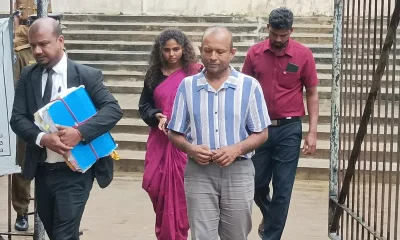
Gota ordered to give court evidence of life threats
-

 Features7 days ago
Cliff and Hank recreate golden era of ‘The Young Ones’
-
 Features7 days ago
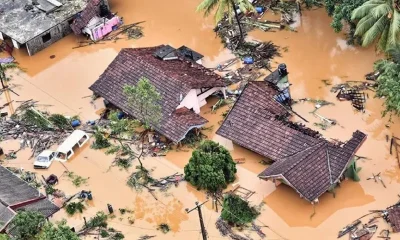
Sri Lanka and Global Climate Emergency: Lessons of Cyclone Ditwah
-

 Editorial7 days ago
Experience vs. Inexperience
-
 News7 days ago
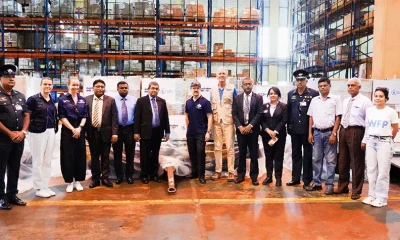
WFP scales up its emergency response in Sri Lanka
-

 News7 days ago
Special programme to clear debris in Biyagama
-

 Features4 days ago
Why Sri Lanka Still Has No Doppler Radar – and Who Should Be Held Accountable