
Editorial
When a fish rots …


Saturday 4th November, 2023
Cricket is said to be a game of glorious uncertainties, but the present-day Sri Lankan cricketers seem determined to disprove this aphorism; they have made their humiliating defeats almost certain and predictable, if their pathetic performance in the past several international tournaments is any indication. It looks as if they specialised in queering the pitch for themselves and snatching defeat from the jaws of victory, so to speak.
Cricket has come to a pass where the SLC (Sri Lanka Cricket), with no match wins as such to celebrate, seeks to bask in the reflected glory of outstanding sportspersons other than cricketers by donating money to them.
It can be said, with apologies to Groucho Marx, that live telecasts of matches that Sri Lankan cricketers play have become very educating of late; whenever someone turns the television on to watch them, others go elsewhere and read books!
No sooner had Sri Lanka suffered an ignominious defeat at the hands of India in the World Cup ODI played at the Wankhede Stadium in Mumbai on Thursday than SLC called for ‘an urgent and comprehensive explanation’ from the coaching staff and the selectors. It also expressed its ‘deep concern and disappointment’ over the performance of the national team during the ongoing World Cup 2023, particularly the disappointing loss against India on Thursday’.
The SLC is apparently labouring under the misconception that Sri Lankan cricket lovers are a bunch of suckers. There is no way it can hide the fact that it has sought to deflect criticism by throwing the coaching staff, the selectors and the players to the wolves.
Sri Lankan cricketers’ performance has been so abysmal, on the watch of the incumbent cricket administrators, that one may say a school cricket team would have put up a better fight in Mumbai on Thursday. The less said about the coaching staff and the selectors, the better. They obviously do not earn their keep, and the national cricketers can definitely maintain their current ‘performance’ at the same level without the help of so many coaches! Who needs expensive coaching to lose matches so consistently?
The SLC bigwigs cannot absolve themselves of the blame for the mess in cricket. A fish is said to rot from the head down. SLC is to be held accountable for what has befallen Sri Lanka’s de facto national sport more than others. It must therefore be dissolved forthwith. One can only hope that Sports Minister Roshan Ranasinghe and President Ranil Wickremesinghe will pluck up the courage to grasp the nettle. It may be recalled that President Chandrika Bandaranaike Kumaratunga did so; she appointed an interim committee consisting of eminent persons, who delivered. Her example is worthy of emulation.












There is already a substantial and growing corpus of analytical work criticising the proposed anti-terror laws, which are no less draconian than the PTA (Prevention of Terrorism Act) they are expected to replace. What the campaigners for democracy and good governance expected of the JVP-led NPP was the abolition of the PTA and not another set of bad laws in its place.
Unsurprisingly, many legal experts have voiced serious concern over the proposed Protection of the State from Terrorism Act (PSTA). Prominent among them is former Minister of Justice, Constitutional Affairs, and Foreign Affairs Prof. G. L. Peiris, who presented a well-argued critique of the proposed anti-terror legislation, at a media briefing on Thursday. He and some other senior Opposition politicians called the PSTA a grave danger to democracy. Anyone who has studied the proposed anti-terror laws will have no difficulty in agreeing with him and other critics of the PSTA.
One of the main campaign promises of the JVP-led NPP was to abolish the executive presidency. During their opposition days, President Anura Kumara Dissanayake and other JVP/NPP seniors were instrumental in having the powers of the Executive President reduced through the 17th, 19th and 21st Amendments to the Constitution. They also vehemently condemned the PTA, demanding its abolition. Now, an opportunity has presented itself for the JVP/NPP leaders to carry out what they wanted their predecessors to do—abolition of the executive presidency and the PTA. But they are soft-pedalling the dictatorial powers vested in the executive presidency and trying every trick in the book to retain the PTA in the form of the PSTA. If the proposed anti-terror laws are ratified—perish the thought—President Dissanayake will have more dictatorial powers including the one to ban any organisation simply by issuing a gazette notification to that effect. What guarantee is there that the government will not abuse that power to ban political parties the way President J. R. Jayewardene did; he proscribed the JVP in the early 1980s by falsely accusing it of being involved in anti-Tamil violence. The JVP stands accused of working towards the establishment of a one-party system. There is hardly anything an outfit like the JVP will not do to retain its hold on power.
Another serious issue Prof. Peiris has rightly flagged is that the PSTA seeks to empower the Defence Secretary to issue detention orders to have suspects in judicial custody transferred to police custody. Thus, the JVP, whose leader—President Dissanayake—appoints the Defence Secretary and has the police under its thumb, will be in a position to circumvent the judicial process and have anyone detained for a maximum of one year.
Pointing out that the proposed PSTA has categorised 13 offences as acts of terrorism although they can be dealt with under other laws, Prof. Peiris has argued that the PSTA is riddled with ambiguities. This, he has said, blurs the critical distinction between ordinary criminal offences and acts of terrorism, which require “clear and unambiguous definition with no scope for elasticity of interpretation.” Grey areas in any legislation are minefields; they lend themselves to misuse, if not abuse, and therefore must be eliminated in the name of democracy and the people’s rights and liberties.
Another danger in the proposed PSTA is the sweeping powers to be vested in the Defence Secretary, a political appointee, including the one to designate ‘prohibited areas’, Prof. Peiris has revealed. Entering such places will constitute an offence punishable by imprisonment up to three years and a fine of up to Rs. 3 million. One cannot but agree that such provision will have a chilling effect on media personnel as they will be prohibited from photographing, video recording and sketching or drawing them.
The deplorable manner in which the JVP/NPP is trying to safeguard the interests of the incumbent dispensation on the pretext of protecting the state against terror makes one hope and pray that Sri Lanka will not end up being like Oceania in Orwell’s Nineteen Eighty-Four, with Big Brother watching every citizen menacingly. Pressure must be brought to bear on the government to deep-six its PSTA forthwith.

Saturday 14th February, 2026
A nine-day protest by beach seine fishers against a ban on the use of tractor-mounted winches to haul their nets was called off yesterday following a discussion with President Anura Kumara Dissanayake. The protesting fisherfolk had been demanding a meeting with the President, but in vain. Why did the President wait for nine days to invite them to a discussion? He could have stepped in to have the fishers’ protest called off on the first day of agitation itself.
Governments usually do not agree to negotiate with any protesters immediately after the launch of their agitations lest others should be encouraged to do likewise. Politicians in power seek to wear down protesters by resorting to brinkmanship. They consider it infra dig to blink first, so to speak. This is the name of the game, but governments and the public stand to gain when the issues that lead to protests and strikes are resolved promptly.
Minister of Fisheries Ramalingam Chandrasekar and his deputy Ratna Gamage opted to play a game of chicken with the protesting fishers, refusing to soften their position that the ban on ‘mechanised’ beach seine fishing must continue. They declared that the ban at issue was non-negotiable, provoking the fishermen into intensifying their protest. They should have invited the protesters to the negotiating table.
There are two schools of thought about the use of tractors fitted with winches to drag fishing nets. Environmentalists are of the view that the use of winches to haul nets causes serious environmental issues, such as the destruction of coral reefs. Those who practise this fishing method argue that there are no corals in the areas where they practise beach seine fishing, and they avoid reefs, which damage their nets. Tractors do not cause sea erosion, they insist. Daring the government to prove scientifically that the homegrown method of hauling nets causes environmental damage, they demanded that they be allowed to use tractors and winches pending an investigation. Why the government did not adopt the proposed course of action is the question. It should have taken up the fishermen’s challenge.
Cabinet Ministers and top bureaucrats rarely succeed in resolving labour disputes under their own steam. They only confront strikers or protesters, provoking the latter into escalating their trade union action, much to the inconvenience of the public. The President has to intervene to do the work of ministers and ministry secretaries and resolve labour issues. This has been the situation under successive governments.
One of the main arguments against the executive presidency is that the President tends to run a one man/woman show, undermining the Cabinet and the state service. Unbridled powers vested in the President have been blamed for this situation, which however is also due to the failure of Cabinet Ministers and top bureaucrats to carry out their duties and functions effectively.
If ministers cannot tackle serious issues without presidential interventions, which are frequent, why should the public pay through the nose to maintain a Cabinet of Ministers?

Friday 13th February, 2026
Justice has caught up with those who killed SLPP MP Amarakeerthi Athukorale and his security officer. The Gampaha High Court has sentenced 12 convicts to death for the double murder they committed during the 2022 uprising, popularly known as Aragalaya. This judgement has evoked the dreadful memories of the crimes committed in the name of a people’s protest movement about four years ago.
Aragalaya began as an outpouring of public resentment fuelled by the 2022 economic crisis and the resultant shortages of essentials. It developed into what may be described as a carnival of protests at Galle Face, where a motley crowd of activists championing various causes gathered under the ‘Gota Go Home’ banner. It was subsequently hijacked by some ultra-radical political forces with sinister agendas following an SLPP goon attack on the Galle Face protesters in May 2022. Retaliatory attacks carried out by organised groups among protesters turned Aragalaya into a firenado of violence that swept through many parts of the country. It was during that violent phase of Aragalaya that mobs killed MP Athukorale and his security officer and torched scores of houses belonging to SLPP politicians and their cronies. All SLPP MPs would have suffered the same fate as Athukorale if they had not gone into hiding. The destructive forces responsible for committing crimes in the name of Aragalaya must be brought to justice.
The genuine Aragalaya activists who acted as a pressure group, calling for an end to the Rajapaksa rule, wanted to call off their protest campaign following the resignation of President Gotabaya Rajapaksa; their goal was to see the back of Gotabaya as evident from the catchy hashtag, “GotaGoHome”. But some opportunistic political forces, particularly the JVP, sought to use Aragalaya to capture Parliament. Minister K. D. Lalkantha himself has admitted that the JVP strove to lead the Aragalaya activists to Parliament, but without success. JVP leaders are seen in social media videos urging the people to rush to Colombo and march on Parliament and deliver a coup de grace to a teetering system. If the military had not made a decisive intervention at the eleventh hour, using force, aggressive mobs that surged forward menacingly, pulling down barricades, would have captured Parliament and perhaps set it on fire, plunging the country into anarchy. One may recall that a grenade attack on a UNP parliamentary group meeting chaired by President J. R. Jayewardene, with Prime Minister R. Premadasa seated next to him in 1987 almost made the country descend into anarchy. That bomb attack, which left a minister and a public official dead and 16 others injured, was blamed on the JVP.
A former senior Indian police officer discusses grey-zone warfare in an article we have reproduced today from The Statesman, an Asia News Network member. This doctrine of hybrid conflict has gained currency in diplomatic, defence and intelligence circles the world over. What we witnessed during the final phase of Aragalaya (2022) can be dubbed ‘grey-zone terrorism’. Arson attacks on the houses of prominent SLPP politicians and others were well organised; they could not have been carried out by flash mobs consisting of non-violent protesters. Unfortunately, those crimes have not been probed properly. The then SLPP-UNP government was wary of investigating those serious transgressions; instead, it generously awarded compensation to the victims of arson attacks far in excess of their losses. The incumbent administration has rightly instituted legal action against some of the culprits who helped themselves to public funds by playing the victim card and inflating estimates, but most of the arsonists and the masterminds behind the arson attacks have got off scot-free. They must be traced and made to face the full force of the law.
The welcome judgement in the Athukorale murder case offers a lesson that should not go unlearnt. Those who join mobs and commit crimes must remember that they run the risk of being tried and thrown behind bars. On seeing the instigators of violence during Aragalaya savouring power and going places, the killers of Athukorale and his body guard must be ruing the day they committed that crime.

West Indies brush aside Nepal to reach Super Eights

India vs Pakistan match is a godsend for T20 World Cup hosts Sri Lanka

Imran Khan to be moved to hospital amid rising health concerns

Fairly heavy showers are likely at some places in the Rathnapura, Kalutara, Galle and Matara districts

India vs Pakistan is finally here. Over to cricket now

“We Are Building a Stable, Transparent and Resilient Sri Lanka Ready for Sustainable Investment Partnerships” – PM

‘Dates have the highest sugar content to fight Coronavirus’

Sunday Island 27 December – Headlines

#SundayIsland 17th December – Headlines

Sunday Island – 28th March

Sunday Island Headlines – 21 March

Sunday Island – 21st February – Headlines
-

 Business4 days ago
Autodoc 360 relocates to reinforce commitment to premium auto care
-
 Midweek Review4 days ago
A question of national pride
-
 Opinion3 days ago
Will computers ever be intelligent?
-
 Midweek Review4 days ago
Theatre and Anthropocentrism in the age of Climate Emergency
-

 Editorial6 days ago
The JRJ syndrome
-

 Features10 hours ago
The Rise of Takaichi
-
 Opinion4 days ago
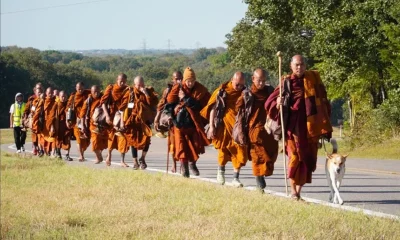
The Walk for Peace in America a Sri Lankan initiative: A startling truth hidden by govt.
-
 Opinion5 days ago
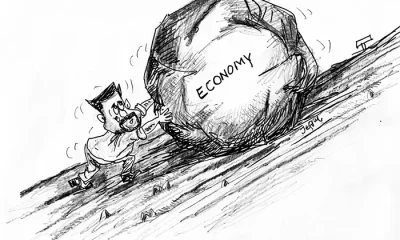
Beyond 4–5% recovery: Why Sri Lanka needs a real growth strategy