
Opinion
Send in clowns and be damned!


The Director-General of the Sri Lanka Tourism Develop Authority has given the thumbs up sign to the Director General of Health and IGP to allow foreign tourists to travel across districts/provinces in Sri Lanka through ‘bubble tourism’. This is despite the fact that Sri Lanka’s Immunology and Molecular Medicine authorities have now identified six new Covid-19 variants in Sri Lanka. These include variants from Denmark, Europe, Middle East, Nigeria and South Africa, including the deadly Indian B.1.617.
A golden wand of protection seems to attend the path of these foreign visitors across the island, while the public is prohibited from venturing into or through such areas to prevent the spread of the virus. It is an irrefutable fact that when foreign tourists are ferried across the Island and allowed to visit the provinces, there is an entourage of locals to assist them at their accommodation, in transport and at places of tourist interest. One of the first Covid-19 patients in Sri Lanka was a Tour Guide! The policy of ‘back to business as usual’, sporadic restrictions, onus of self-protection and ‘never mind the consequences’ has hitherto yielded horrendous results.
The cost of opening the country’s borders to foreign tourists from January 2021, with some short-term gains to hoteliers, has boomeranged on the nation’s production, manufacture and general socio economic well- being. Each new morning new widows and infants howl and mourn the deaths of loved ones. Death Rate and total Covid cases in Sri Lanka have now reached phenomenal levels. Hospitals cannot cope with the rising numbers of patients, who are being accommodated in makeshift sheds and warehouses, or asked to remain in their homes sans medical attention!
Who is really calling the shots in controlling the pandemic that has now reached crisis proportions in Sri Lanka? Does the Minister of Tourism, Prasanna Ranatunga, have special qualifications and abilities in the medical field, to warrant such decisions and directives to be given across the board by his petty minions and willing sycophants in the government bureaucracy? Is he not aware that the practice of bubble tourism is between countries that have relatively small incidence of Covid, as in the case of Australia and New Zealand, holding strong track records of implementing consistently rigorous anti-covid restrictions and regulations? Is not the Director General of Tourism, Ms. Kirmali Fernando, whose husband owns and runs Tourist Hotels, properly advised on the practices around the world? Or is short term pecuniary gain more important than ordinary human lives? In Sri Lanka ” a land like no other” when Ukraine was in a lockdown situation, their tourists were hosted in Sri Lanka.
According to the WHO, the coronavirus variant was first identified in India last year and was classified as a variant of global concern, with some preliminary studies showing that it spreads more easily and is increasingly classified as a variant of concern at a global level. WHO statistics reveal a sharp linear rise in the new Covid cases in India commencing from March 2021, even while our ‘Health Experts’ in the Tourism Ministry were encouraging and further promoting Bubble Tourism Agreements with India until late April 20, 2021
The recent fiasco in Piliyandala saw the local MOH up in arms over the blatant idiotic interference by the Minister Lokuge, in giving counter orders against the Ministry of Health and opening up Covid-19 areas, possibly due to requests of business cronies among his constituents. The subsequent death rate due to Covid in Piliyandala bears ample testimony to the demented exertions of this politico.
Blustering, blundering politicians apart, what of the high-powered Committees, consisting of retired senior government servants, expert medical personnel, deciding to administer the First Dose of anti-Covid-19 AstraZeneca Vaccine to approx. 9 lakhs of the population, while only retaining 03 lakhs for the Second Dose! Surely it is common sense to spread the vaccine in a manner that ensures that both doses are given during the prescribed period of at least 10 weeks! The logic of entering into a signed contract for supply of AstraZeneca to be given for the second dose, and opening a letter of credit, does not seem to have entered into the calculations of those charged with such responsibilities, who perhaps have reached the age of Dementia or careless indifference!
There was enough time to secure the required stock of AstraZeneca from January 2021, if not for political will considering that the Budget of December 2020 had no provision for anti-covid vaccines! Leaving the approx 600,000 of people particularly in the over 60 age group in dire straits, after their first dose of AstraZeneca, which cannot be mixed with other vaccines now available in the market, is tantamount to criminal negligence, breach of trust and inequitable governance. Even in the midst of such severe bungling, there are some politicos trying to pour down Vaccine Cocktails, hitherto never tried or tasted in other parts of the developed world, down the throats of these unfortunate victims.
The cronyism and nepotism rampant in the numerous and now commonplace accounts of people with ‘influential connections’’ getting the vaccine over others, shows a moral impoverishment of the country. It is a fact that today there are those who work in the front line of infection in their respective workplaces, who have not been given priority in the administration of the vaccine. However, Notables, VIPs and Politicians and their allies are given pride of place in getting the scarce second dose of the AstraZeneca, irrespective of the fact that this is considered more appropriate for senior citizens above the age of 55 or 60.
It is a time that the Public has seen through the lies, sheer hypocritical terminology and slanted data that might have hitherto lulled them towards the so-called resurgence of the virus in the “Avurudu Pokura”. Some amusing but insidious half-truths, and concealments are worth mentioning. The media gave the impression for a long time that the deaths were due to underlying conditions of non-communicable diseases such as diabetes and high blood pressure when the causative agent was Covid 19. The undeniable truth is that had it not been for the Covid-19 virus, those with underlying diseases might have lived to a ripe old age with the medications! It is only now, with the escalating deaths and ensuring chaos in the health sector, that the real causative agent of those afflicted with Covid-19 is being acknowledged as Covid pneumonia! The crass negligence of garment factory owners in the Brandix cluster, and resultant probe into criminal negligence is without any progress and lies hidden and dormant. The reluctance to admit that there was a community wide transmission across the island, and the continued lies that this is confined in the main to the Western Province, and that every case could be traced back to the Brandix or Peliyagoda Fish Market clusters is now a sad laughing matter!
Those of us who watched the TV news in the time leading up to the present crisis are privy to the spectacle of the representatives of the people (Politicians), at the pinnacle of power, neglecting to follow simple guidelines such as wearing a mask, avoiding crowded meetings, etc. The subtle interplay of attributing a particular age group to the Covid-19 casualty, the balancing of numbers of positive cases and deaths with limited PCR, and the relative lack of a Geographical Information System by which selective and targeted lockdowns could be imposed in severely affected areas, have contributed to maintaining a fog index over the actual situation prevailing in the country.
A nation that has seen its own Minister of Health and other politicians expound the virtues of a fake decoction called “Dhammika Peniya” as a possible Covid-19 preventive, cannot be too surprised thereafter to witness any worse inanities and tragic bungles!
In conclusion, a nation that with renewed hope changes its political pillow for a new government be it, SLFP, Yahapalanaya, alias SJB, Podujana Peramuna, appears to be doomed to certain abject disillusionment. The truth is plain to see. Any apolitical citizen can now realise that whether there be bond scams, major bribery and corruption charges, criminal negligence on terrorist massacres, the policy of no real remedial action, talk only and a series of commission reports, parading on remand, will be the final product. Except for some sprats down the line, the kingpin will continue their rampage. It is said that there is a certain camaraderie and wheeler dealing even amongst those who represent the people on either side of the divide in Parliaments. Where there is neither honour, principle nor true love of country and its people, in a system that is replete with sycophant”public” servants and moribund self-serving intelligentsia, the dark prescription still is “Send in the Clowns and be damned”.
SONALI WIJERATNE
Kotte

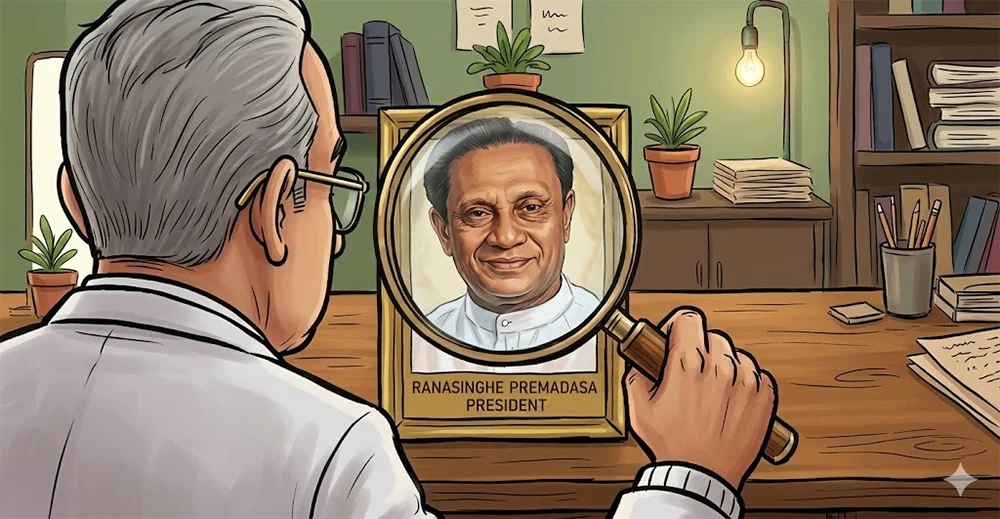
In an article published in The Island of 01 May, Rohan Abeygunawardena has paid a glowing tribute to R. Premadasa. It is true Premadasa, as a man from a humble urban working class, was ambitious, and to boost his personal image he targeted the rural and the common man, marginalised by previous regimes. He set up projects to satisfy these folks and selected his own staff to carry out his orders to achieve what he desired. He got rid of those who were sticking to rules and regulations.
One such case is, J .R. Jayewardene brought in previous prestigious Civil Service officers to revamp the fading public service, and one such was the illustrious Chandi Chanmugam, as Secretary to the Treasury. He was called up by Premadasa and requested to provide funds for a welfare project and when he explained the difficulties, he was bluntly told that he (Premadasa) could find an officer who could make the funds available. In keeping with the traditions of the CCS, Chanmugam tendered his resignation. The vacancy was filled by R. Paskaralingam. When Secretaries questioned about funds, Paskaralingam, who chaired the Development Secretaries Committee, would say, “This is bosses orders, find the funds somehow. ” How the Secretaries provided funds is another story.
The next three projects to boost his image at government expense were the mobile office programme, the housing programme and Gamudawa.
As Assistant Secretary to the Ministry for Power and Energy, I was assigned to conduct the mobile service. As far as I could remember, the first Mobile Office was held in the Yapahuwa Electorate, in a village called Badalgama. The previous day, I rang up the area engineer and asked him to meet me at the school building, allocated for the Mobile Office, and to inform the UNP party supporter, who was to find accommodation for my overnight stay. When I arrived, the Area Engineer was there with men to make arrangements for the mobile office. Then two officers from the Presidential Mobile Office Division walked in and inquired as to why I had not hung a picture of Premadasa as he wanted his picture prominently displayed at Mobile Offices. When I said that I had no picture, they rushed back and came with a beautifully framed picture and hung it on the wall.
The following day, before going to the Mobile Office to take an oath, I went to my office to find that someone had garlanded the picture. It was later found that the clerk, who accompanied the area engineer, had overheard the conversation, knowing Premadasa’s whims and fancies.
The work started and as usual. Premadasa visited all offices and when he came to mine, I greeted him in the oriental fashion but his eyes were directed towards his picture and a beam of smile crossed his face. When leaving he said, “Carry on the good work.” Since then at every Mobile Office, I arranged for a special event for him to attend, such as the opening of a rural electrification project.
Gamudawa: This project was similar to the presidential mobile service. There was a variety show organised by the UNP supporters, and crowds dispersed happily. When the Gamudawa project was to be started, a request was made by the Presidential Secretariat to supply generators as the sites selected were far away from the transmission line. The then Chairman of the CEB, Prof. K. K. Y. W. Perera, who was also the Secretary to the Ministry for Power and Energy, politely replied requesting a payment to meet at least the cost. There was no reply and when I visited the Gamudawa held in Wellawaya, I saw CEB men operating the generators. On my return, I reported the matter to the Secretary to the Ministry and also the General Manager, CEB. They said that they were aware but remained silent.
At the first staff meeting, after the 1988 presidential election, Premadasa said, “Carry out my orders and those who do not agree could find other places.”
This was the start of deterioration in the power and energy sector. He brought in his own staff and the once well-managed sector fell into disarray. Premadasa removed Prof. Perera from the post of Chairman, CEB, and the Workshop Engineer, who supplied the generators without the knowledge of the management, was appointed Chairman, CEB, a reward for carrying out illegal orders! Having been in the state service for 40 years, I walked out happily without a farewell party. I took with me only a wooden block, on which my name was printed, and the Lion Flag, which I displayed at Mobile Offices.
President Premadasa also ordered that all policemen in the Eastern Province, surrender to the LTTE, with their weapons. The LTTE killed all of them, numbering over 600.
G. A. D. Sirimal
Boralesgamuwa
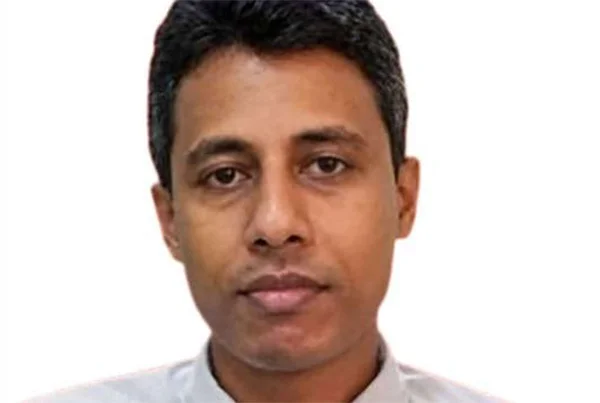
A serious debate has erupted following a postmortem examination conducted on the body of Ranga Rajapakshe, who was found dead in his garden.
The controversy has arisen as Rajapakshe, an Assistant Director in the Finance Ministry, had been suspended over the diversion of 2.5 million dollars to a fraudulent account. Although the cause of death (COD) is obviously cardiorespiratory failure due to severe haemorrhage (loss of blood), whether the two cut wounds on his legs and on his left wrist were self-inflicted or caused by an external agency is what has led to this raging controversy.
A four-member ‘regional’ expert forensic panel (EFP) was appointed supposedly by the Secretary, Ministry of Health. The Judicial post mortem report was submitted within 24 hours. Many questions have risen as a result. Whether the expert forensic panel looked into all aspects of the death – and not only the injuries in the body of the deceased — has become a moot point.
Was the death due to self-inflicted cut injuries, i. e. suicide? Or, were they inflicted by another or others? If so, it becomes homicide or murder. If there have been any deficiencies in the procedure adopted by the expert forensic panel, whether they are errors, negligence or deliberate is what is reverberating on the social media and the public spaces.
One important point has to be mentioned at the outset. The JPM Report is still not in the public domain. Whether it would remain a privileged communication limited to the judiciary remains to be seen. Hence, none can come to definitive conclusions on the JPM findings – except judicious, informed speculation.
Judicial Post Mortem Examinations: Are they prone to error, negligence or deliberate falsification?
History tells us that all three of the above are possible. The fourth possibility is that it is none of the three above, but a legitimate, academically defensible difference of opinion. Neither medicine, nor forensics is an exact science.
Error
A cursory glance at information on the Internet gives us a reasonable overview of the issue of error. Of them, I quote only those that may be relevant to the issue at hand.
(1) Errors in post-mortem examinations can arise from procedural oversights, misinterpretation of findings, or lack of expertise, with major diagnostic error rates ranging from 8% to 24%.
(2) Common mistakes include misinterpreting postmortem changes as injuries, missing findings due to incomplete examination, and failing to secure the chain of custody.
(3) Incomplete Examination: Failing to examine all necessary body cavities or failing to perform histology/toxicology.
(4) Misclassification of Death Manner: Incorrectly labelling a death as natural vs. unnatural (e.g., suicide vs. homicide) due to overlooking evidence or biased interpretation.
Causes of Errors
(1) Systemic Issues: Heavy workloads, lack of specialised training, inadequate equipment, or poor communication between investigators and pathologists.
(2) External Pressure: Influences from law enforcement, media, or families that can bias the investigation.
(3) Inefficient Techniques: Relying on delegated assistants for vital dissections or conducting superficial examinations.
The above would suffice to give us an idea about lacunae and deficiency in JPM examinations that could lead to error. Those interested could go into the plethora of academic articles on this subject of error in JPMs.
Did any of the above lead to an outcome of error in the conclusions of the JMP Report by the expert panel?
Negligence
Negligence involves critical and serious errors that are inexcusable. These include inadequate body examination, failed scene investigations, missed evidence and speculative, premature reporting. These shortcomings can hinder legal proceedings, obscure causes of death, and lead to wrongful conclusions, with studies identifying major procedural errors, including failure to identify injuries or misinterpreting pathological findings.
We have no information whether the EFP had done a detailed site visit.
Deliberate falsification
Deliberate falsification or fraudulent autopsy reporting involves the intentional alteration of findings, documentation, or conclusions to misrepresent the cause or manner of death.
This misconduct can take many forms, including covering up homicide, misrepresenting police actions, or protecting influential individuals.
Forms of Deliberate Falsification include modification of Conclusions due to Forensic pathologists facing coercion from police, politicians, or families to change a homicide to an accidental death or natural causes. Intentional Neglect of Evidence: Failing to document injuries like strangulation marks or bruises to support a fabricated narrative of natural death. Issuing misleading or untrue post-mortem reports constitutes “serious” professional misconduct that is punishable by law.
There is absolutely no evidence that deliberate falsification has occurred in this case. But what I have attempted to inform the readers of is that such situations are well known.
The celebrated Sathasivam case illustrates the earliest instance in Sri Lanka, in which there was conflicting forensic evidence from two highly eminent forensic professors. Professor GSW de Saram, the first professor of forensic medicine, faculty of medicine, of the then University of Ceylon and JMO, Colombo was the most pre-eminent forensic expert in Ceylon who gave evidence for the prosecution and Sir (Prof.) Sydney Smith, world renowned professor of forensic medicine, University of Edinburgh who gave contrary forensic evidence on behalf of the defence. This conflict in the forensic evidence was a key factor that resulted in Sathasivam’s acquittal
I list below, a few JPM discrepancies and conflicting JPM reports that are now in the public domain in the recent past in Sri Lanka:
1. The death of a student at the University of Ruhuna raped and killed on the Matara beach, considered a suicide when circumstantial evidence indicated thugs of a well-known politician were involved in the incident. I was on the academic staff of the faculty of Medicine, University of Ruhuna at that time and came to know several details that had not come into the public domain.
2. The conflicting PM reports on the “disappearance” of the kidneys of a child at LRH, which was originally given as a medical death and later judgement given as a homicide. The child’s good kidney had been removed when the nephrectomy had to be done on the damaged kidney.
3. The infamous JPM report first given on Wasim Thajudeen’s killing. This falsification was done by a very senior JMO.
4. Lasantha Wickrematunga’s death, which was originally attributed to shooting but subsequently found to be due to stabbing with a sharp implement.
5. The RTA death of a policeman on a motorcycle (his wife and children were also seriously injured) in Boralesgamuwa due to the drunk driving by a female specialist doctor. The first JMO report stated that the doctor had not been under the influence of alcohol until CCTV evidence was presented to the Court that showed her drinking in a club that night. The police informed Court that the breathalyser test had confirmed that the doctor was under the influence of alcohol.
These are some of the well-known instances that there had been conflicting JMO reports. Furthermore, there have been several JMO reports where death in police custody was falsely documented in the JPM or JMO reports to safeguard the police involved in torture.
I know of one case personally, where a doctor from Nagoda Hospital, Kalutara was hauled up by the Sri Lanka Medical Council (of which I was a member for 10 years) for falsifying his JPM report of a death of a young man in police custody to safeguard the policemen concerned.
Why do JMOs falsify JMO reports?
Based on reports and studies, primarily focusing on the context of Sri Lanka, allegations of false or misleading judicial medical reports by Judicial Medical Officers (JMOs) arise from a combination of systemic, ethical, and external pressures rather than a single cause.
Reports indicate that instances of faulty reporting often stem from several factors. The main factor being political and external influence. These are likely in high-profile cases; JMOs may face pressure to tailor reports to suit the interests of powerful individuals or to minimize the culpability of suspects.
It has been seen that some reports are deemed erroneous or contradictory due to negligence, improper reporting procedures, or a lack of understanding of the ethical responsibilities of their role as JMOs. The police sometimes exert influence to speed up investigations, leading to “shortcuts”, where evidence is not properly scrutinised, or reports are tailored to support a premeditated narrative rather than scientific findings.
To be fair by JMOs, it must be said that false history or narratives given by victims and or perpetrators mislead the JMO. Victims or suspects may provide false history during the medical examination to protect themselves or to misdirect investigations.
The dearth of experienced forensic specialists can lead to inexperienced officers handling complex forensic cases. It has been the practice in many instances that Magistrates make specific requests that the PM examination be transferred to an experienced and senior forensic expert.
The subversion of justice is not limited to our part of the world. It happens everywhere. The judiciary, the legal and medical professions can work together to deliver justice to the impoverished and unempowered masses.
by Prof. Susirith Mendis
susmend2610@gmail.com

Sri Lanka today stands at a sensitive crossroads where national security, economic recovery, and intercommunal trust intersect. Recent developments including heightened security measures around areas popular with Israeli tourists and the arrest of local youth under suspicion have sparked understandable concern, especially within the Muslim community. These reactions are not mere emotional outbursts. They reflect deeper anxieties about fairness, dignity, and equal treatment under the law.
At the same time, it would be a grave mistake to ignore the broader security environment. In the post-Easter Sunday attack reality, intelligence-led policing often operates in a preventive mode. Locations associated with foreign nationals, including Israeli visitors, have featured in past threat assessments as potential soft targets. In such circumstances, even routine inquiries can appear intrusive. This is the uncomfortable truth of modern counter-terrorism: it is cautious, sometimes heavy-handed, and frequently misunderstood by the very communities it seeks to protect.
Yet, security effectiveness ultimately depends on legitimacy. When segments of the population begin to believe that certain groups are being disproportionately scrutinised whether that perception is accurate or not public confidence erodes. A dangerous narrative is quietly taking root in parts of the Muslim community: that Israeli visitors are receiving heightened protection while local citizens, particularly Muslims, face heightened suspicion. Whether this reflects operational reality or perception alone, it must be addressed with urgency and transparency. In matters of security and social cohesion, perception often carries as much weight as fact.
Equally troubling is the risk of politicisation. Isolated incidents are already being amplified, reframed, and at times distorted to serve narrow political interests. Islamophobia remains a potent and dangerous weapon in the hands of opportunistic actors. When legitimate security concerns are conflated with communal targeting, or when routine policing is portrayed as systemic discrimination, the result is a toxic cycle of mistrust that benefits no one except those who wish to see Sri Lanka divided.
Sri Lanka cannot afford this trajectory.
Tourism remains a vital pillar of our economic recovery. Israeli tourists, like visitors from every other nation, contribute meaningfully to local economies, especially in Arugam Bay, Weligama, and the southern coast. Ensuring their safety is not a political concession; it is a basic sovereign responsibility. However, that responsibility must never be implemented in a manner that undermines the rights and dignity of Sri Lankan citizens.
The way forward demands balance, discipline, and foresight. Here are five practical steps that can help restore both security and trust;
First, strengthen communication.
When arrests or detentions occur under security-related suspicion, law enforcement agencies must explain the basis within legal limits, clearly and promptly. Silence creates a vacuum that speculation quickly fills. In the age of social media, every unexplained action becomes fertile ground for rumours. A short, factual statement can prevent days of damaging speculation.
Second, ensure operational professionalism.
Security operations must remain intelligence-driven rather than perception-driven. Officers on the ground need proper sensitisation training on the broader societal impact of their conduct. A question asked in the wrong tone, a stop conducted without explanation, or a detention perceived as arbitrary can damage community relations for years. Professionalism is not a weakness, it is the hallmark of effective policing in a diverse society.
Third, institutionalise community engagement.
Trust cannot be built reactively after tensions flare. It must be cultivated continuously through structured dialogue. The Muslim community has historically played a vital role in supporting national security efforts. That partnership must be nurtured, not weakened by avoidable missteps. Regular meetings between security agencies, community leaders, and civil society organisations can help identify problems early and prevent misunderstandings from escalating.
Fourth, craft a clear national narrative.
Sri Lanka must consistently and publicly reaffirm one simple principle: we protect all citizens and visitors alike equally under the law. Security is not selective; it is universal. Political leaders, religious figures, and media outlets must reinforce this message without ambiguity. Mixed signals only fuel suspicion.
Fifth, exercise political and media restraint.
Exploiting security incidents for short-term political gain whether by inflaming communal fears or by painting the state as either weak or biased is deeply irresponsible. Leadership at this moment requires maturity, not rhetoric.
The media, too, must resist the temptation to sensationalise. Responsible reporting is a national duty, not an optional extra.
Sri Lanka’s greatest strength has always been its remarkable ability to absorb
complexity without fracturing. We have emerged from a brutal civil war, survived the Easter Sunday tragedy, and navigated multiple economic crises. But this strength is not automatic. It must be actively maintained through wise policy, honest communication, and genuine inclusivity.
The current situation is not yet a crisis. It is, however, a clear warning. Handled with wisdom and fairness, it can become an opportunity to strengthen security practices, rebuild trust, and reinforce social cohesion. Mishandled, it risks deepening divides that both domestic extremists and external actors would be quick to exploit.
The real test before us is not whether we prioritise security or rights. The true challenge is whether we are capable of safeguarding both with fairness, clarity, and quiet confidence.
Sri Lanka has faced far greater tests in its history. What we need now is not more division, but renewed commitment to the values that have held this nation together: justice, equality, and mutual respect.
The choice is ours. Let us choose wisely.
By Mahil Dole SSP Rtd
Mahil Dole, SSP (Retired), is the former Head of the Counter-Terrorism Division of the State Intelligence Service of Sri Lanka, and has served as Head of the Sri Lankan Delegation at three BIMSTEC Security Conferences. With over 40 years of experience in policing and intelligence, he writes on regional security, interfaith relations, and geopolitical strategy.

Joint programme between President’s Fund and Janashakthi Foundation to expand healthcare facilities for children

Maldivian President concludes state visit to Sri Lanka

India to host Zimbabwe for maiden women’s bilateral series

Showers above 75 mm are likely at some places in the Sabaragamuwa, Central, Uva, Southern and North-central provinces

Govt. draws flak over Rs. 500 mn excess Aswesuma payments

NDB fraud: Ravi asks govt. to appoint independent forensic auditor

‘Dates have the highest sugar content to fight Coronavirus’

Sunday Island 27 December – Headlines

#SundayIsland 17th December – Headlines

Sunday Island – 28th March

Sunday Island Headlines – 21 March

Sunday Island – 21st February – Headlines
-
 News2 days ago
CJ urged to inquire into AKD’s remarks on May 25 court verdict
-
 News6 days ago
“Three-in-one blood pressure pill can significantly reduce risk of recurrent strokes”
-

 News3 days ago
USD 3.7 bn H’tota refinery: China won’t launch project without bigger local market share
-

 News6 days ago
Alarm raised over plan to share Lanka’s biometric data with blacklisted Indian firm
-
 News4 days ago
Easter Sunday Case: Ex-SIS Chief concealed intel, former Defence Secy tells court
-
 News5 days ago
Ten corruption cases set for court in May, verdict ordered in one case – President
-
 News6 days ago
USD 2.5 mn fraud probe: Interdicted MoF official found dead at home
-

 Editorial3 days ago
Deliver or perish