
News
What’s happening in Sri Lanka and how did the economic crisis start?

By R Ramakumar, Professor of Economics, Tata Institute of Social Sciences
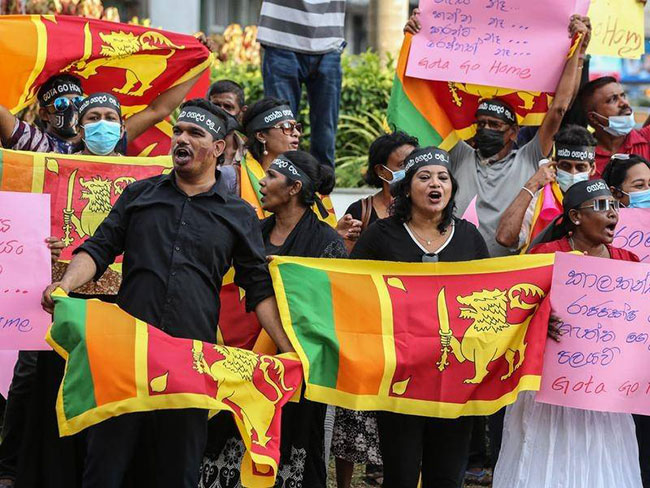
The island nation of Sri Lanka is in the midst of one of the worst economic crises it’s ever seen. It has just defaulted on its foreign debts for the first time since its independence, and the country’s 22 million people are facing crippling 12-hour power cuts, and an extreme scarcity of food, fuel and other essential items such as medicines.
Inflation is at an all-time high of 17.5%, with prices of food items such as a kilogram of rice soaring to 500 Sri Lankan rupees when it would normally cost around 80 rupees. Amid shortages, one 400g packet of milk powder is reported to cost over 250 rupees, when it usually costs around 60 rupees.
On April 1, President Gotabaya Rajpaksa declared a state of emergency. In less than a week, he withdrew it following massive protests by angry citizens over the government’s handling of the crisis.
The country relies on the import of many essential items including petrol, food items and medicines. Most countries will keep foreign currencies on hand in order to trade for these items, but a shortage of foreign exchange in Sri Lanka is being blamed for the sky-high prices.
Many believe Sri Lanka’s economic relations with China are a main driver behind the crisis. The United States has called this phenomenon debt-trap diplomacy . This is where a creditor country or institution extends debt to a borrowing nation to increase the lender’s political leverage if the borrower extends itself and cannot pay the money back, they are at the creditor’s mercy.
However, loans from China accounted for only about 10% of Sri Lanka’s total foreign debt in 2020. The largest portion about 30% can be attributed to international sovereign bonds. Japan actually accounts for a higher proportion of their foreign debt, at 11%.
Defaults over China’s infrastructure-related loans to Sri Lanka, especially the financing of the Hambantota port, are being cited as factors contributing to the crisis.
But these facts don’t add up. The construction of the Hambantota port was financed by the Chinese Exim Bank. The port was running losses, so Sri Lanka leased out the port for 99 years to the Chinese Merchant’s Group, which paid Sri Lanka US 1.12 billion.
So the Hambantota port fiasco did not lead to a balance of payments crisis (where more money or exports are going out than coming in), it actually bolstered Sri Lanka’s foreign exchange reserves by US 1.12 billion.
Post-independence from the British in 1948, Sri Lanka’s agriculture was dominated by export-oriented crops such as tea, coffee, rubber and spices. A large share of its gross domestic product came from the foreign exchange earned from exporting these crops. That money was used to import essential food items.
Over the years, the country also began exporting garments, and earning foreign exchange from tourism and remittances (money sent into Sri Lanka from abroad, perhaps by family members). Any decline in exports would come as an economic shock, and put foreign exchange reserves under strain.
For this reason, Sri Lanka frequently encountered balance of payments crises. From 1965 onwards, it obtained 16 loans from the International Monetary Fund (IMF). Each of these loans came with conditions including that once Sri Lanka received the loan they had to reduce their budget deficit, maintain a tight monetary policy, cut government subsidies for food for the people of Sri Lanka, and depreciate the currency (so exports would become more viable).
But usually in periods of economic downturns, good fiscal policy dictates governments should spend more to inject stimulus into the economy. This becomes impossible with the IMF conditions. Despite this situation, the IMF loans kept coming, and a beleaguered economy soaked up more and more debt.
The last IMF loan to Sri Lanka was in 2016. The country received US 1.5 billion for three years from 2016 to 2019. The conditions were familiar, and the economy’s health nosedived over this period. Growth, investments, savings and revenues fell, while the debt burden rose.
A bad situation turned worse with two economic shocks in 2019. First, there was a series of bomb blasts in churches and luxury hotels in Colombo in April 2019. The blasts led to a steep decline in tourist arrivals with some reports stating up to an 80% drop and drained foreign exchange reserves. Second, the new government under President Gotabaya Rajapaksa irrationally cut taxes.
Value-added tax rates (akin to some nations’ goods and services taxes) were cut from 15% to 8%. Other indirect taxes such as the nation building tax, the pay-as-you-earn tax and economic service charges were abolished. Corporate tax rates were reduced from 28% to 24%. About 2% of the gross domestic product was lost in revenues because of these tax cuts.
In March 2020, the COVID-19 pandemic struck. In April 2021, the Rajapaksa government made another fatal mistake. To prevent the drain of foreign exchange reserves, all fertiliser imports were completely banned. Sri Lanka was declared a 100% organic farming nation. This policy, which was withdrawn in November 2021, led to a drastic fall in agricultural production and more imports became necessary.
But foreign exchange reserves remained under strain. A fall in the productivity of tea and rubber due to the ban on fertiliser also led to lower export incomes. Due to lower export incomes, there was less money available to import food and food shortages arose.
Because there is less food and other items to buy, but no decrease in demand, the prices for these goods rise. In February 2022, inflation rose to 17.5%.
n all probability, Sri Lanka will now obtain a 17th IMF loan to tide over the present crisis, which will come with fresh conditions.
A deflationary fiscal policy will be followed, which will further limit the prospects of economic revival and exacerbate the sufferings of the Sri Lankan people. (PTI)


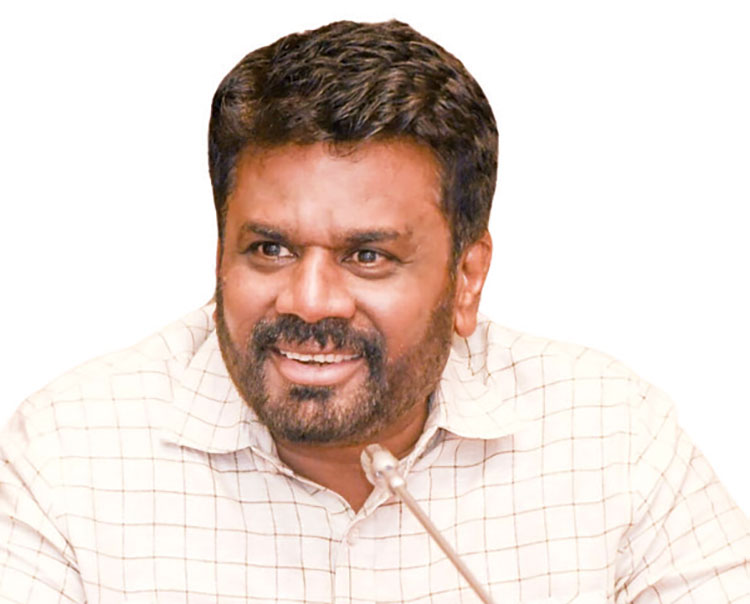
The Presidential Secretariat (PS) yesterday said that prison regulations concerning Buddhist monks serving prison sentences were expected to be adopted within the next two weeks.
The PS said: “Once they come into effect, arrangements will be made for Buddhist monks to be taken outside prison in their robes, based on the recommendation of the relevant Nikaya or chapter.”
The process to amend prison regulations was initiated on 08 October following discussions between President Anura Kumara Dissanayake and the Maha Sangha. The President called the meeting amidst controversy over producing General Secretary of Bodu Bala Sena (BBS) Ven. Galagodaaththe Gnanasara in civilian attire in court.
A special five-member Committee was in the process of studying the current regulations and standing orders under the Prisons Ordinance, the PS said.
The Committee is chaired by Prince Senadheera, Secretary to the Ministry of Buddhasasana, Religious and Cultural Affairs. Its other members are Piyumanthi Peiris, Additional Secretary to the Ministry of Justice, Wasantha Ariyaratne, Additional Secretary to the Ministry of Public Administration, R. M. G. Senaratne, Commissioner-General of Buddhist Affairs, and A.C. Gajanayake, Commissioner-General of Prisons.
The first meeting of the special Committee was held at the Presidential Secretariat on the 9th, chaired by Prince Senadheera. Attorney-at-Law Harshana Nanayakkara, Minister of Justice and National Integration, provided the necessary policy guidance for the Committee’s work.
The proposals concerning Buddhist monks would be presented to the Maha Sangha by the middle of next week to obtain their views and recommendations before their implementation, PS stated.

The Communist Party of Sri Lanka (CPSL) has alleged that the ruling UNP, in a ridiculous bid to whitewash illegal US sanctions on Iranian oil carriers stranded off Sri Lanka, has taken on itself the blame for refusing to supply humanitarian aid to the trapped crews of the oil tankers.
The text of the statement issued by Dr. G. Weerasinghe,
General Secretary, CPSL: “The Communist Party of Sri Lanka condemns the attempts by the USA to prevent essential supplies of food and water to the 19-20 Iranian oil tankers stranded off the coast, which are running short of food, fuel, and fresh water. It urges the Government of Sri Lanka to face up to the criminal actions of the US Government and do its duty under international humanitarian law.
On 30 September 2026, the Wall Street Journal reported that US officials had threatened Sri Lanka with sanctions if it continued supplying the tankers. These tankers (stranded about 24 km off Sri Lanka, within the Exclusive Economic Zone) which already discharged their cargoes, are empty and unable to return to Iran owing to the illegal war being waged against that country by the USA and Israel.
In response to this report, on 4 October, Foreign Minister Vijitha Herath denied that Washington put pressure on the Government of Sri Lanka which, he claimed, always abides by international maritime law. However, he clarified that the Government would enforce US sanctions.
A US Embassy spokesman had earlier stated that Washington is working with allies to cut off “illicit Iranian revenue,” warning that supplying fuel, food, or provisions to sanctioned vessels could expose companies and individuals to US sanctions, including civil or criminal penalties.
Furthermore, from 9-11 September, the US Embassy in Colombo carried out a three-day maritime sanctions compliance workshop. Officers of the Sri Lanka Navy and Coastguard, as well as officials of the Ministry of Defence, Central Bank, Ports Authority and Merchant Shipping Secretariat, participated in this workshop. The officials were warned that any services (including fuel, food, or water) rendered to US-sanctioned vessels, such as the Iranian-linked tankers stranded off Sri Lanka’s coast, could expose companies and individuals to secondary sanctions, civil penalties, or criminal liability.
In fact, it is actions of the USA which are illicit. The US-imposed unilateral and secondary sanctions violate international law, sovereign equality, and the principle of non-intervention. Furthermore, the unprovoked US-Israeli aggression against Iran itself, which had shown no belligerent intent, is illegal in international law. Participation of government officers in the workshop itself is controversial.
According to unofficial reports, Sri Lanka’s national security establishment objected to the demands made by US officials and urged the government to lodge a protest with Washington, pointing out that under UNCLOS Article 98, SOLAS 1974, and the SAR Convention 1979, Sri Lanka is obligated to assist the crews.
However, the response of the National People’s Power (NPP) regime has been to attempt to whitewash the illegal actions of the USA and to take on itself the blame for refusing to supply humanitarian aid to the trapped crews of the oil tankers.
The pusillanimous behaviour of the NPP regime rips aside any pretence that it is in any way progressive or patriotic. Together with its major constituent, the Janatha Vimukthi Peramuna (JVP), it stands exposed as the handmaiden of US President Donald Trump’s reckless, warlike and imperialist foreign policy establishment. It begs the question whether the Government has signed secret war-related deals with the USA and thereby ditched Sri Lanka’s 70-year history of non-alignment.
The Communist Party of Sri Lanka, therefore, condemns these illegal attempts by the USA to prevent Sri Lanka from carrying out its humanitarian duty. It calls upon the Government of Sri Lanka to abide by international humanitarian law, work-out suitable strategies and to supply the stranded crews with essential supplies, including food and water. It also calls upon the Government to reveal any secret deals it has entered with the USA.”
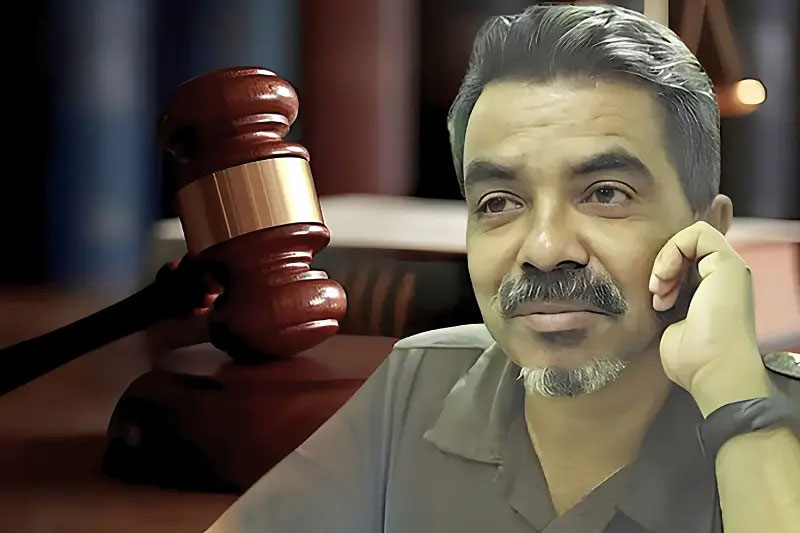
An ex-LTTE cadre Sumathipala Suresh Kumar, alias Thavendran ‘Murali’, has told a three-member bench of the Colombo High Court, hearing the disappearance of media personality Prageeth Ekneligoda, that during the war they discussed plans to assassinate President Mahinda Rajapaksa and a group of government people. The alleged meeting took place in Habarana.
The bench consisted of A.G.U.S. N. K. Seneviratne (Chairperson), Dr. Nalin Hewawasam and Lakmali Hewawasam.Kumar said so giving evidence as the fourth witness on behalf of first, second and sixth accused in this case.
Ekneligoda disappeared on the eve of 2010 January 26 presidential election.
Kumar told court that Ekneligoda proposed to fire a missile at an aircraft carrying President Rajapaksa and other top people. There had been another person, identified as Nadan, there.
Asked by the prosecution whether he served as a leader of LTTE intelligence at the time he met Ekneligoda, Kumar said that he was a prisoner at that time. The witness claimed that he had gone with the Army and it was his first visit to that place where the meeting took place.
When the prosecution proposed that what he said was not true, Kumar denied that.
The nine accused are Army officers and men, including Lieutenant Colonel Shammi Arjun Kumararatne. The others are R.M.P.K. Rajapaksa alias Nathan, W.V. Priyantha Dilanjan Upasena alias Suresh, Seneviratne Mudiyanselage Ravindra Rupasena alias Ranji, Yapa Mudiyanselage Chaminda Kumara Abeyratne, Seneviratne Mudiyanselage Kanishka Gunaratne, Aiyasami Balasubramaniyam, Dangaha Gamaralage Tharanga Prasad Gamage and T.E.R. Peiris.
The fourth witness surrendered to the Army in May 2009 and during investigations it transpired that he was used by Military Intelligence to contact Ekneligoda in a bid to ascertain his intention during the presidential polls campaign.

Showers above 75 mm are likely at some places in the Western, Sabaragamuwa, Central, Southern, Uva and North-Western provinces and in Anuradhapura and Mannar districts.

New prison regulations for monks serving jail terms soon: President’s Office

CP alleges NPP has taken the blame for illegal US sanctions on Iranian vessels

Ex-Tiger witness claims Ekneligoda proposed to fire missile at MR’s plane

Chandrasekaran welcomes Indian stand of Katchatheevu

Alleged killer of couple apprehended

‘Dates have the highest sugar content to fight Coronavirus’

Sunday Island 27 December – Headlines

#SundayIsland 17th December – Headlines

Sunday Island – 28th March

Sunday Island Headlines – 21 March

Sunday Island – 21st February – Headlines
-

 Features4 days ago
The Sri Lankan who made Scottish history
-
 Features6 days ago
Preventing grievances from becoming communal
-

 Sports4 days ago
Nissanka absence opens door for Sri Lanka’s young guns
-

 News5 days ago
Gnansara Thera to be assigned to prison printing section: Officials
-

 News3 days ago
NDB fraud Rs 60mn more than reported
-

 News3 days ago
Removing monk’s robes matter for Sangha to decide: Mahanayake Theras
-

 Features4 days ago
Future of Sri Lanka’s state university system: Should it be shut down and reopened?
-
 News5 days ago
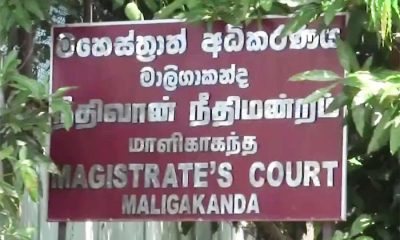
OIC of FCID summoned before Maligakanda Magistrate