
News
Weerawansa urges President to fast-track interest-free university student loan scheme

By Sanath Nanayakkare
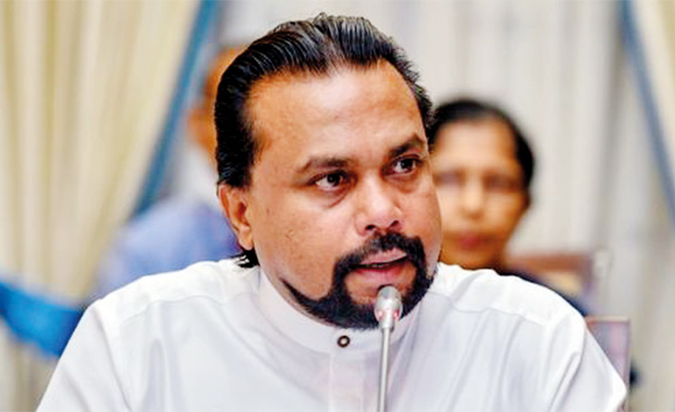
National Freedom Front (NFF) Leader Wimal Weerawansa yesterday urged the Finance Minister and President Ranil Wickremesinghe to expedite the enrollment of students selected to enter non-state/private universities under the student loan scheme initiated by the Yahapalana government in 2017.
“As you are well aware, due to the limited
capacity of enrolling students to state universities, not all students who are eligible for university entrance in Sri Lanka get the opportunity. Against this backdrop, the interest-free loan scheme for selected students to enter private universities was introduced in 2017 while you were the prime minister of that administration.
Under this programme, five consecutive student groups are to be enrolled in private universities, however, the students selected by the Ministry of Higher Education to enter nominated private universities for the Academic Year 2021/2022, have not yet been registered.
The anxiously awaiting students are very concerned about this delay as years don’t wait for them and they can’t reverse the damage caused by it on their future,” Weerawansa stated writing a letter to the President on the matter.
“Providing the opportunity of enrollment to such students to private universities under the above interest-free student loan scheme would be a progressive measure because the capital we invest as a nation for tomorrow’s academic and professional excellence of our students would be a meaningful investment for the future.
“About 15,000 students who belong to this aspirant group are told by the Ministry of Higher Education that financial institutions including the Bank of Ceylon are citing the prevailing higher interest rates as a barrier to implementing this scheme as planned earlier. So I kindly request you to pay immediate attention to this matter as the finance minister and take appropriate action to resolve this issue and accelerate the registration process and intake of these students.”
Several students selected to enter private universities under this scheme told The Island that they were told by Higher Education Ministry authorities at a Zoom meeting that the state bank involved in the project is not willing to give out these loans at the previous rates (12%-13%) as current bank interest rates have exceeded 22% per annum. So we got the impression that either the government would have to give a fresh guarantee to the Bank of Ceylon (BOC) on the new interest payments or our parents would have to pay the increased part of the interest. Most of us are from low and middle income levels of the society, and therefore, it would be practically impossible for our parents to bear a significant share of the interest cost.”
According to the Higher Education Ministry’s website, the total interest-free loan period is 12 years. The repayment of the loan should be started after the study period and one-year grace period.

The Ceylon Petroleum Corporation (Ceypetco) has announced a revision of fuel prices, effective from midnight today (21).
Accordingly,
Auto Diesel – Rs. 382 (increased by Rs. 79)
Super Diesel – Rs. 443 (increased by Rs. 90)
Petrol 92 Octane – Rs. 398 (increased by Rs. 81)
Kerosene – Rs. 255. (increased by Rs. 60)
Petrol 95 Octane – Rs. 455 (increased by Rs. 90)

Latest News
Advisory for Severe Lightning issued for Galle, Matara, Kaluthara and Rathnapura districts

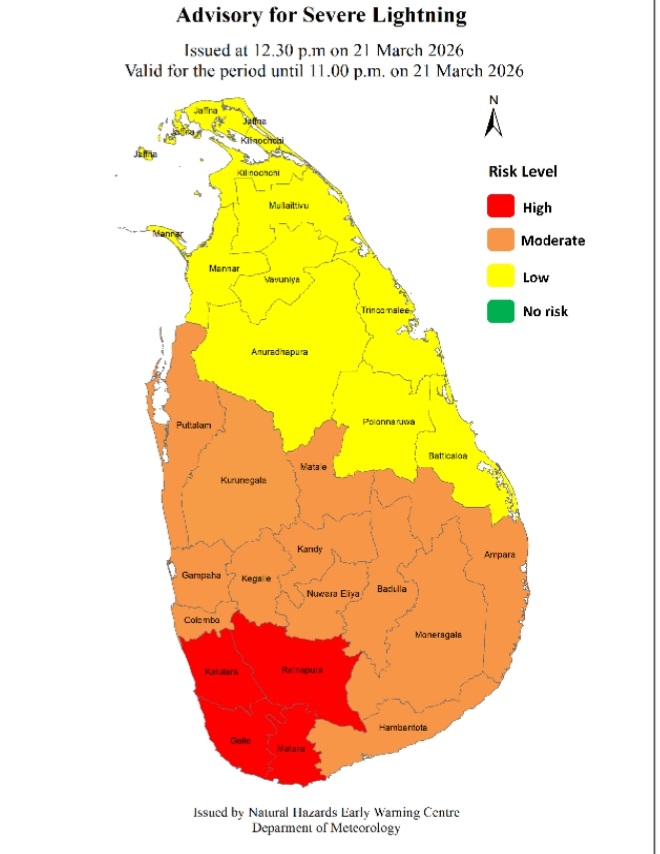
Advisory for Severe Lightning Issued by the Natural Hazards Early Warning Centre Issued at 12.30 p.m. 21 March 2026, valid for the period until 11.00 p.m. 21 March 2026
Thundershowers accompanied with severe lightning are likely to occur at some places in the Galle, Matara, Kaluthara and Rathnapura districts after 1.00 p.m.
There may be temporary localized strong winds during thundershowers. General public is kindly requested to take adequate precautions to minimize damages caused by lightning activity.
ACTION REQUIRED:
The Department of Meteorology advises that people should:
Seek shelter, preferably indoors and never under trees.
Avoid open areas such as paddy fields, tea plantations and open water bodies during thunderstorms.
Avoid using wired telephones and connected electric appliances during thunderstorms.
Avoid using open vehicles, such as bicycles, tractors and boats etc.
Beware of fallen trees and power lines.
For emergency assistance contact the local disaster management authorities.
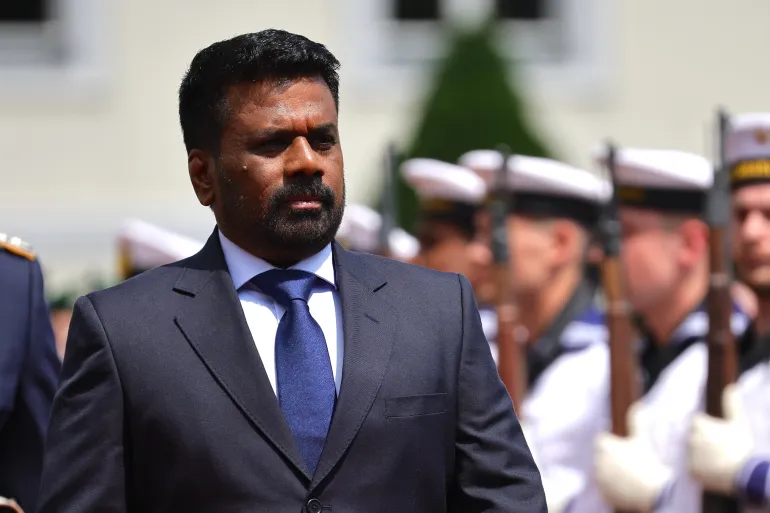
Sri Lanka’s president says his government turned down a request from the United States to land two US combat aircraft at a civilian airport earlier this month.
President Anura Kumara Dissanayake told Sri Lanka’s parliament on Friday that Washington had requested permission for the aircraft to land at Mattala Rajapaksa International Airport in southern Sri Lanka from March 4 to 8.
The request was made on February 26, two days before the US and Israel launched their military offensive against Iran.
“They wanted to bring two warplanes armed with eight antiship missiles from a base in Djibouti”, Dissanayake told lawmakers. “We turned down the request to maintain Sri Lanka’s neutrality”, he added to applause.
The US-Israeli war on Iran has sparked widespread concern globally, as Iranian missile and drone attacks across the wider Middle East have sent energy prices soaring and fuelled fears of a widening conflict.
US President Donald Trump has also been pressuring Washington’s allies to show more support for the war, slamming NATO countries as “cowards” for refusing to help secure the Strait of Hormuz.
Iran has essentially shuttered the critical Gulf waterway amid the war, forcing leaders around the world to scramble to try to offset the effects on their economies and energy supplies.
Amid the turmoil, many countries have refused to get directly involved in the war while calling for urgent de-escalation.
On Friday, Switzerland announced that it would halt any weapons exports to the US that could be used in military operations against Iran, citing its longstanding policy of neutrality.
“The export of war materiel to countries involved in the international armed conflict with Iran cannot be authorised for the duration of the conflict”, the Swiss government said.
Sri Lanka’s president also cited his country’s neutrality in the decision to deny the US request to land the two aircraft at Matalla airport earlier this month.
Dissanayake said he had received another request that same day, on February 26, from Iran to seek permission for three naval vessels to make a goodwill visit to Sri Lanka.
“With two requests before us, the decision was clear,” he said, noting that the government denied both to avoid taking sides as signs of escalating conflict emerged.
“Had we said ‘yes’ to Iran, we would have had to say ‘yes’ to the US, as well”, Dissanayake added.
In early March, Sri Lanka’s navy rescued 32 Iranian crew off IRIS Dena after it was torpedoed by a US submarine off the country’s coast, killing at least 84 people.
Days later, Sri Lanka evacuated more than 200 crew members from a second Iranian vessel, IRIS Bushehr, after the ship requested assistance from Colombo.
[Aljazeera]

CEYPETCO Fuel prices increased from midnight today (21)

Advisory for Severe Lightning issued for Galle, Matara, Kaluthara and Rathnapura districts

Sri Lanka says it denied US request to land two aircraft at Mattala airport

Eid celebrations dimmed by war and displacement across Middle East

Showers may occur at several places in the Western, Sabaragamuwa, Northwestern and Uva provinces and in Galle, Matara, Kandy and Nuwara-Eliya districts after 1.00 pm.

Iranian strikes on bases used by US caused $800m in damage, new analysis shows

‘Dates have the highest sugar content to fight Coronavirus’

Sunday Island 27 December – Headlines

#SundayIsland 17th December – Headlines

Sunday Island – 28th March

Sunday Island Headlines – 21 March

Sunday Island – 21st February – Headlines
-

 Business6 days ago
Browns EV launches fast-charging BAW E7 Pro at Rs. 5.8 million
-

 Life style7 days ago
From culture to empowerment: Indonesia’s vision for Sri Lanka
-

 News4 days ago
CIABOC questions Ex-President GR on house for CJ’s maid
-

 Life style7 days ago
Ranjith Fernando celebrates cricketing journey with Hob Nails to Spikes
-

 News5 days ago
Sri Lankan marine scientist Asha de Vos honoured at UNGA opening
-

 Features6 days ago
Achievements of the Hunduwa!
-

 Latest News7 days ago
QR code system will be implemented for fuel with effect from 06.00 a.m. today (15th)
-

 News5 days ago
Australian HC debunks misleading travel risk claims for Sri Lanka