
News
Weather disasters: Sri Lanka flooded by policy blunders, weak enforcement and environmental crime – Climate Expert

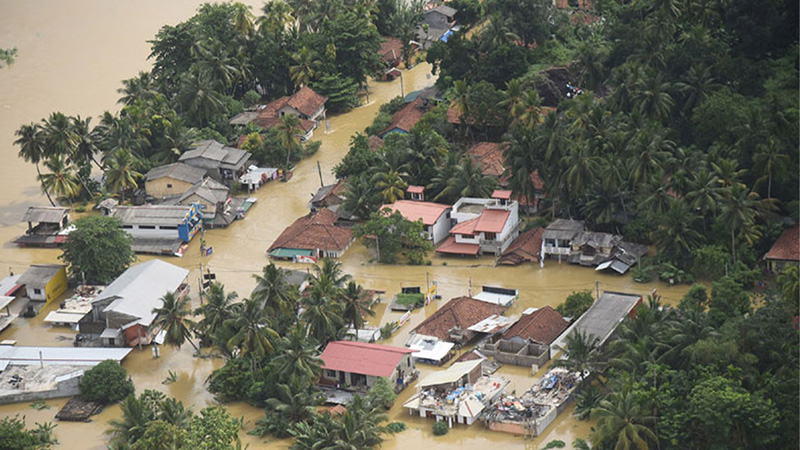
Sri Lanka has once again been submerged not by unprecedented rainfall but by decades of political negligence, environmental crime, and institutional paralysis, says a climate expert. The latest floods have exposed a truth long avoided by those in power: this disaster was engineered, brick by brick, landfill by landfill, approval by approval, he says.
Sri Lankan Scientist Dr. Thasun Amarasinghe working at the Climate Research Centre in Indonesia describes the unfolding situation in Sri Lanka, with precision and anger that few scientists are willing to voice publicly.
“These are not natural disasters. These are governance disasters. Sri Lanka destroyed the very systems that protected it. What’s happening now is the predictable result of political mismanagement,” Dr. Amarasinghe told The Sunday Island.
“Wetlands: Politicians saw land. Scientists saw protection. Guess who won?
“For decades, Sri Lankan wetlands — the nation’s most effective natural flood-control mechanism — have been bulldozed, filled, encroached, and sold. Many of these developments were approved despite warnings from environmental scientists, hydrologists, and even state institutions.”
Dr. Amarasinghe said, “There is no mystery here. The science was clear for years. Wetlands absorb floodwater. Destroy them, and the water has nowhere to go. This is not climate change alone; it is the direct outcome of human decisions.”
He pointed out that each illegal filling, each unregulated housing scheme, and each politically protected encroachment was a “small act of environmental violence” and together they had dismantled the country’s natural defences.
“Committees will not save lives. Enforcement will.”
Dr. Amarasinghe is of the view that Sri Lanka’s enforcement failure is not a weakness it is a pattern. After the 2010, 2016, 2021, and now 2025 floods, governments promised reforms, appointed task forces, and issued new guidelines. Almost none were implemented. Violations continued. Approvals continued. Wetlands shrank further.
Dr. Amarasinghe identified the core issues:
“The problem is not capacity. The problem is courage. Institutions have the laws, expertise, and authority.
What they lack is the political green light to enforce without fear.”
A country paying the price for its silence.
The economic cost of recurring floods due to destroyed infrastructure, emergency relief, lost livelihoods runs into hundreds of billions of rupees. But the political cost of enforcement? Historically, politicians feared losing votes.
“This time, however, the public mood has shifted.
“Communities devastated by the floods are openly blaming unplanned development, wetland destruction, and political interference. The government, for the first time in years, has space to act decisively.”
Dr. Amarasinghe calls it “a short-lived but powerful window of opportunity.”
“If the government misses this moment, it will go down as a historic failure. The nation is ready for strict action. Leaders must not retreat.”
He said he had a message for President Anura Kumara Dissanayake: “Act, don’t apologise!”
According to Dr. Amarasinghe, the President Anura Kumara Dissanayake’s next move will determine whether Sri Lanka repeats this disaster cycle or finally breaks it.
“The President must say clearly: Sri Lanka cannot rebuild its way out of these disasters. Only enforcement can stop them. This is the time for tough decisions — not consolation speeches.
“The question we should ask ourselves is not “What caused the floods?” Instead, it is “Who allowed this?”
Environmental law violations in wetland areas did not happen in secret. They were signed, stamped, approved, or silently ignored. Developers operated with confidence because history told them they could.
Dr. Amarasinghe’s message carries unmistakable weight:
“Every policy, every law, every guideline needed to prevent this disaster already exists. If another flood takes lives, responsibility will be clear — it will lie with those who refused to enforce the laws.”
He says for Sri Lanka it is a turning point or the beginning of worse disasters, and it faces two choices:
1. Use this disaster as a national correction, enforcing wetland laws without exceptions, without political pressure, and without backdoor approvals.
2. Return to the status quo, guaranteeing that the next floods — fuelled by stronger rainfall and weaker ecosystems — will be deadlier.
Dr. Amarasinghe leaves no room for ambiguity:
“Nature has delivered its warning. If Sri Lanka fails to respond with decisive action, the next disaster will not be an accident — it will be a consequence.”
by Ifham Nizam ✍️





Latest News
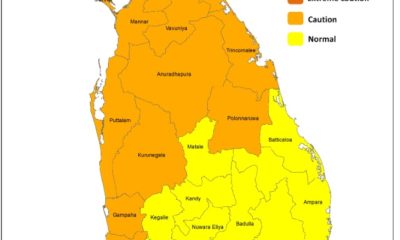
Heat Index at Caution level’ in the Northern, North-central, North-western, Western and Southern provinces and in Trincomalee district.


Warm Weather Advisory
Issued by the Natural Hazards Early Warning Centre
Issued at 3.30 p.m. on 12 April 2026, valid for 13 April 2026.
Heat index, the temperature felt on human body is likely to increase up to ‘Caution level’ at some places in the Northern, North-central, North-western, Western and Southern provinces and in Trincomalee district.
The Heat Index Forecast is calculated by using relative humidity and maximum temperature and this is the condition that is felt on your body. This is not the forecast of maximum temperature. It is generated by the Department of Meteorology for the next day period and prepared by using global numerical weather prediction model data.

Effect of the heat index on human body is mentioned in the above table and it is prepared on the advice of the Ministry of Health and Indigenous Medical Services.
ACTION REQUIRED
Job sites: Stay hydrated and takes breaks in the shade as often as possible.
Indoors: Check up on the elderly and the sick.
Vehicles: Never leave children unattended.
Outdoors: Limit strenuous outdoor activities, find shade and stay hydrated.
Dress: Wear lightweight and white or light-colored clothing.
Note:
In addition, please refer to advisories issued by the Disaster Preparedness & Response Division, Ministry of Health in this regard as well. For further clarifications please contact 011-7446491.

On the apparent northward relative motion of the sun, it is going to be directly over the latitudes of Sri Lanka from 05th to 15th of April in this year.
The nearest areas of Sri Lanka over which the sun is overhead today (13th) are Pesalai, Mankulam and Nedunkerny about 12:11 noon.
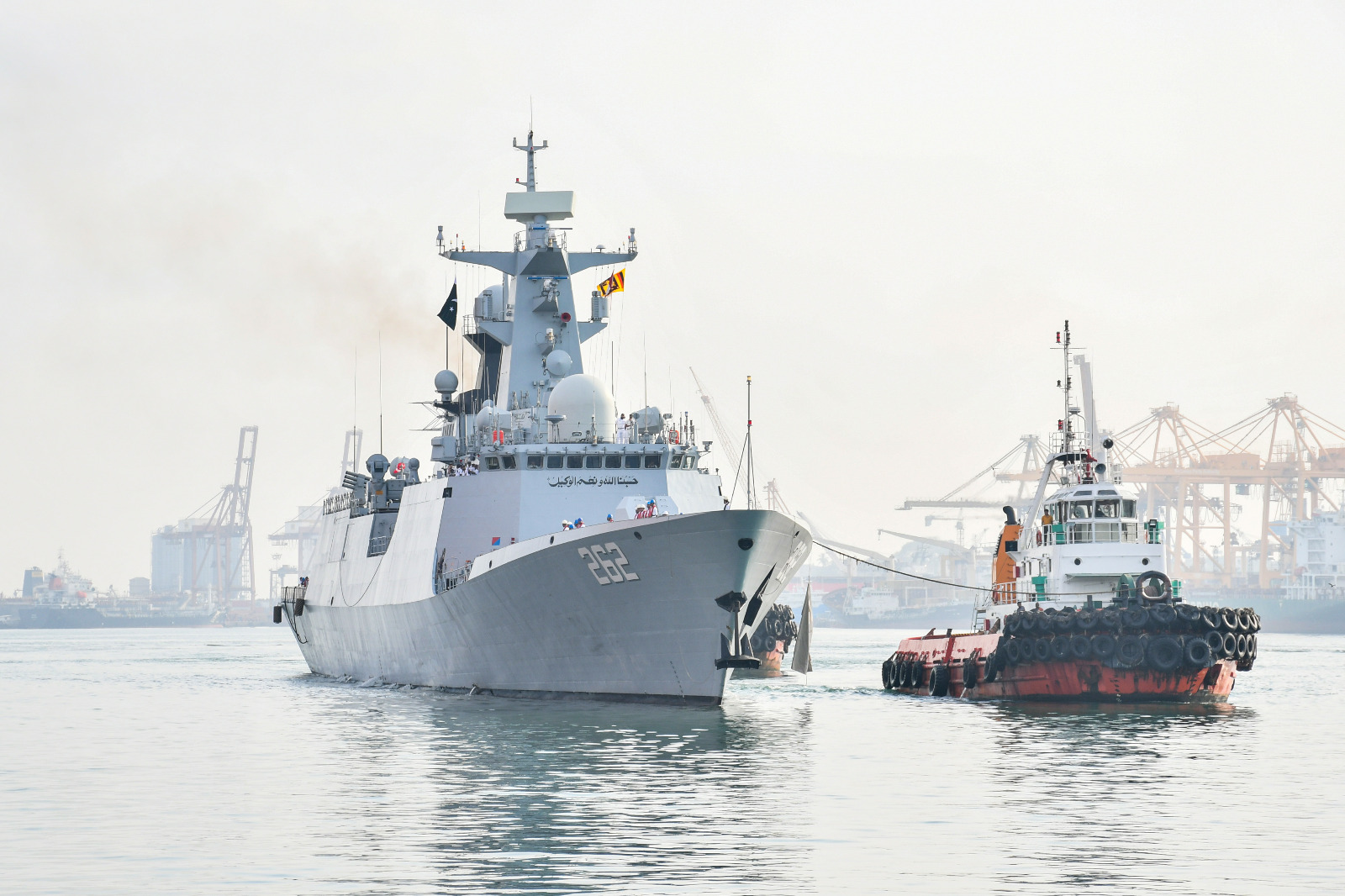
The Pakistan Navy Ship (PNS) TAIMUR and ASLAT arrived at the Port of Colombo on a goodwill visit on 12 Apr 26.
The visiting ships were welcomed by the Sri Lanka Navy in
compliance with naval traditions.
The duo of ships is commanded by Captain NIAMAT SAEED KHAN (PNS TAIMUR) and Captain NADIR MATEEN AFRIDI (PNS ASLAT).
Meanwhile, the ships are expected to conduct a Bilateral Naval Exercise LION STAR V with the Sri Lanka Navy in Colombo seas.

Salt and Patidar power RCB past Mumbai Indians

Prasidh, Buttler set up comfortable win for Gujarat Titans

Heat Index at Caution level’ in the Northern, North-central, North-western, Western and Southern provinces and in Trincomalee district.

Showers above 75 mm are likely at some places in the Western, Sabaragamuwa, Central, Southern and North-western provinces.

Sun directly overhead Pesalai, Mankulam and Nedunkerny about 12:11 noon

PNS TAIMUR & ASLAT arrive in Colombo

‘Dates have the highest sugar content to fight Coronavirus’

Sunday Island 27 December – Headlines

#SundayIsland 17th December – Headlines

Sunday Island – 28th March

Sunday Island Headlines – 21 March

Sunday Island – 21st February – Headlines
-

 News6 days ago
Lankan-origin actress Subashini found dead in India
-

 News1 day ago
CEB orders temporary shutdown of large rooftop solar systems
-

 News4 days ago
AG: Coal procurement full of irregularities
-

 Business3 days ago
Israeli attack on Lebanon triggers local stock market volatility
-

 Business4 days ago
Hayleys Mobility introduces Premium OMODA C9 PHEV
-

 Business3 days ago
HNB Assurance marks 25 years with strategic transformation to ‘HNB Life’
-

 News6 days ago
UN Regional Director launches SL’s first Country Gender Equality Profile during official visit
-

 News6 days ago
Dialog Launches ‘GanuDenu QR’, Making Cashless Transfers Free for All with eZ Cash and Dialog Finance