
Foreign News
‘Watermelon deaths’ in Mumbai puzzle investigators

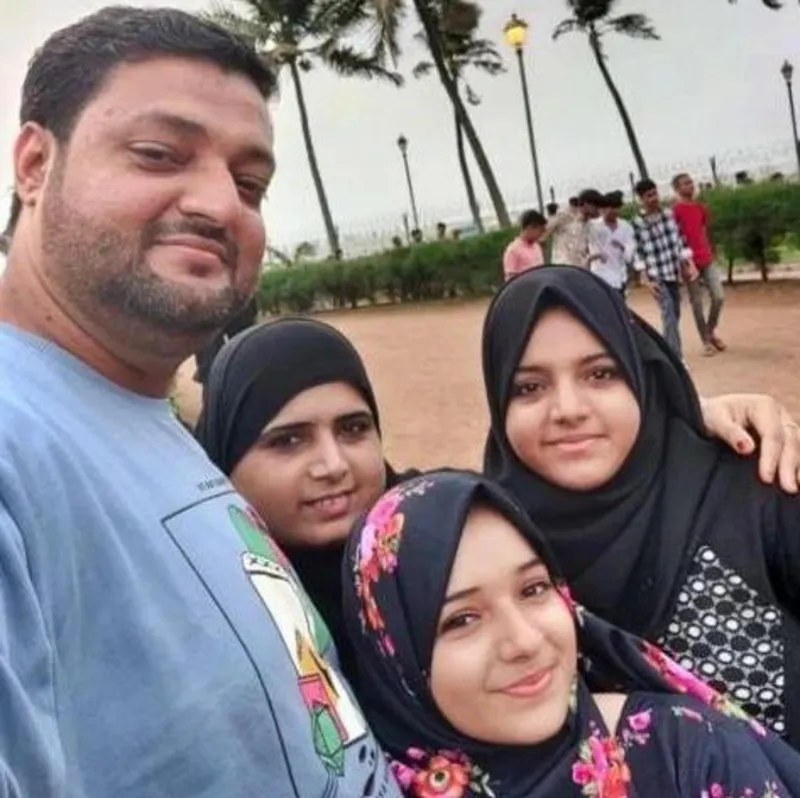
Nearly three weeks after an Indian family of four were found dead in their home, investigators tell the BBC they are no closer to knowing what actually happened.
The Dokadia family – Abdullah, his wife Nasreen and their two daughters Ayesha and Zainab – were found dead at their home on 25 April in Mumbai’s Pydhonie area.
When the news broke, Indian media quickly dubbed the case “watermelon deaths”, after the last thing the family had eaten before their deaths.
The deaths received incessant media coverage in India, with lots of headlines advising caution while eating what is one of India’s most popular summer fruits.
Reports claimed the fruit was either adulterated or had been poisoned and that the couple and their teenaged daughters died because they consumed it late at night. This even led to a crash in watermelon prices in Mumbai’s fruit markets after demand plummeted.
There was also a lot of speculation over whether the deaths were accidental or intentional.
Last week, police in Mumbai said forensic tests had shown it was zinc phosphide – an extremely toxic chemical commonly used to kill rats – that killed the Dokadias. They said it was found in their organs and the remnants of the fruit.
But despite the revelation, the case is far from being solved and there are many unanswered questions.
On Wednesday, sources in the Mumbai police told the BBC that there is still no clarity on the motive or how the poison entered the watermelon.
“We are still collecting evidence and looking at all angles for motives,” a senior police officer said. “We have not ruled out homicide, accidental death or suicide.”
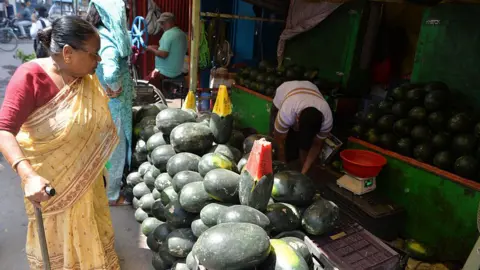
The Dokadias lived on the first floor of an old building in south Mumbai’s Pydhonie area.
In their first comments after the deaths, police said that night the family had hosted some relatives for dinner where they had eaten biriyani – a rice dish cooked with meat and fragrant spices.
The guests left at 22:30 and a few hours later the Dokadias ate watermelon. Soon after, they became ill.
“They all began suffering from vomiting and diarrhoea. They were taken to a nearby hospital and later transferred to JJ Hospital. However, all four individuals unfortunately died,” Deputy Commissioner of Police Pravin Mundhe told the media.
On hearing about their distress, neighbours, including Dr Zaid Qureshi who lives on the fourth floor of the building, rushed to help the family.
“I noticed that the youngest of the four individuals was experiencing difficulty breathing. I administered CPR. However, as her condition did not improve, she was taken to a nearby hospital. She passed away,” Dr Qureshi told BBC Marathi.
“The other three individuals were transferred from a local hospital to JJ Hospital,” he said, adding that they also died. Their post-mortem reports are still awaited.
Police said they seized all the food items, including rinds of the watermelon, to check for adulteration. As the last item the family had eaten before becoming ill, the attention was focused on the fruit.
Last week’s report from the Forensic Science Laboratory (FSL) in Mumbai shifted the focus from watermelon to zinc phosphide.
The chemical was “detected in the deceased individuals’ viscera samples – specifically in the liver, kidney, and spleen – as well as in samples of stomach contents, bile and abdominal fat”, FSL director Dr Vijay Thakare told BBC Marathi. “Zinc phosphide was also detected in the watermelon sample.”
Mundhe, who is investigating the case, also confirmed that the chemical was “detected in the watermelon samples collected during the investigation, although it was not found in any other food samples sent for analysis”.
The building in which the Dokadias lived has a rodent problem, according to a report in the Indian Express newspaper. It says that many families use repellents, poison cakes and glue pads to get rid of these pests.
Some of the poison used to kill rats contains zinc phosphide which is “an extremely toxic chemical compound”, says Mumbai-based doctor Bhushan Rokade.
“Once ingested or upon contact with moisture, this chemical generates phosphine gas which inhibits the body’s cells from utilising oxygen and has severe repercussions on multiple organs.
“Symptoms include vomiting, a sensation of tightness in the chest, shortness of breath and going into shock. Even in very minute quantities, it can prove fatal,” Dr Rokade explained.
On Wednesday, a senior police official told the BBC they were still puzzled by how the rat poison ended up in the fruit.
“We have questioned 40-50 people, including relatives, friends, family, neighbours and Dokadia’s work colleagues. We have formed multiple teams that are working to solve the case.
“We will keep working until we find the answers,” he said.
[BBC]


More than 400 cats destined for slaughter have been rescued in Vietnam after authorities dismantled an alleged feline theft ring, an animal welfare group has said.
Nine people have been arrested in connection with what police described as a “criminal group specialising in stealing and collecting cats”, according to the official newspaper of Ho Chi Minh City police.
Officers recovered more than 400 live cats and around 80 dead animals preserved on ice during raids on sites in Tay Ninh Province and Ho Chi Minh City last week. A further 21 cats were seized at a separate facility.
The consumption of dog and cat meat is legal in Vietnam, but vendors require permits that show the origin of animals.
Police said they tracked down the group on 11 June after investigating a spate of pet thefts in Ho Chi Minh City, according to local media reports.
The suspects admitted trapping and collecting cats across southern Vietnam over the past three years, police said. According to investigators, the suspects allegedly transported stolen cats to holding facilities before selling them on to traders, with transactions taking place every two to three days.
Around 40 of the stolen cats have since been reunited with their owners, Humane World for Animals said in a statement on Tuesday.
The organisation praised local authorities for “decisive action that has saved the lives of so many animals”, but said “a number had later died as a result of their ordeal.
It added that it was providing food and other supplies for animals still being held by police as evidence while the case continues.
Police said the investigation was ongoing and urged residents who believe their pets have been stolen to come forward to help identify recovered animals.
An estimated five million dogs and one million cats are captured, stolen, trafficked and slaughtered for meat in Vietnam each year, according to Humane World for Animals.
The organisation says pets are frequently stolen from homes, with dogs often seized using poisoned bait tasers and iron pincers, and cats with spring-loaded snares.
While the consumption of dog and cat meat remains more common in Vietnam than other Asian countries, campaigners say attitudes are changing.
A 2023 survey commissioned by Humane World for Animals found growing public opposition, particularly among younger people and pet owners, with majorities backing bans on both the dog and cat meat trades.
(BBC)
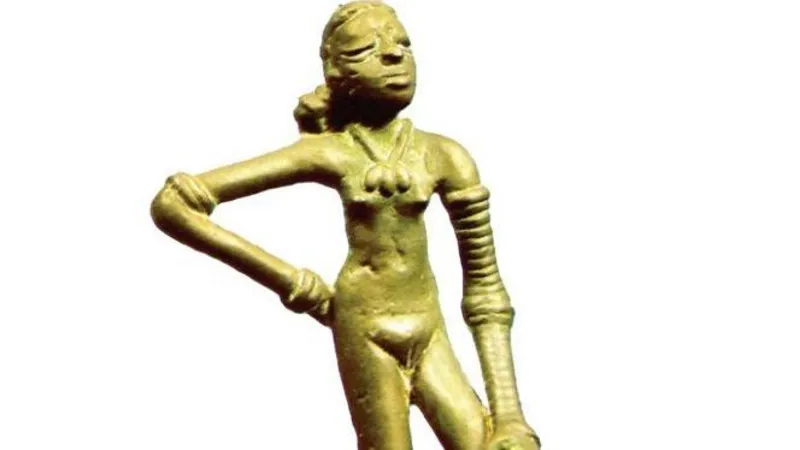
The “covered-up” image of a nude artefact has been withdrawn from an Indian school textbook after it sparked a massive backlash from historians and educationists.
The bronze sculpture – known as the Dancing girl from Mohenjo-daro – shows a girl standing with one hand on her hip and is one of the most recognisable artefacts from the Indus Valley civilisation.
But in a newly released grade nine textbook, the figurine’s torso was covered with dark shading, hiding its anatomical features.
After it created an uproar, officials said that the original image has been restored in the digital version of the book and that new print editions would also carry the unedited photo of the bronze sculpture.
After news broke of the inclusion of the modified image, historians had accused the National Council of Educational Research and Training (NCERT) – which drafted the textbook – of disfiguring the iconic artefact.
The NCERT, an autonomous organisation under the federal education ministry, oversees syllabus changes and textbook content for children taking exams under the government-run Central Board of Secondary Education (CBSE).
NCERT director Dinesh Saklani told reporters that the modified image would be withdrawn from the textbook.
“Following consultations with experts, the department is replacing the image of the Dancing Girl with its original version,” Saklani told ANI news agency.
The BBC has contacted Saklani for comment.
A chapter on the Indus Valley has been a staple in Indian school curriculum, and though the Dancing Girl sculpture has appeared in textbooks for decades – including in earlier versions of NCERT textbooks – its torso has never been censored in any way.
The NCERT has not yet shared a reason for introducing the modified image but media reports have speculated that it could be due to concerns over nudity.
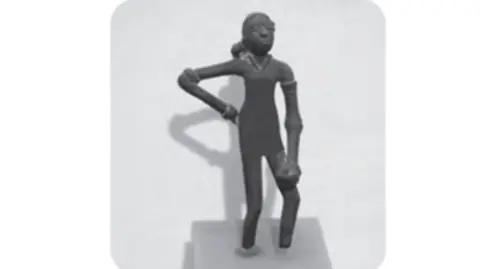
An editorial in the Indian Express newspaper, which first broke the news, criticised the modification of the artifact, saying:
“The Dancing Girl has been significant not because it conforms to a blindfolded standard of modesty but because it embodies poise, confidence and unmistakable presence. If the task of education is to equip young people to engage with the world as it is, then NCERT would do better to trust both students, and women – both contemporary and millennia old – with a little more agency.”
The textbook is part of the NCERT’s new Arts Education Series, introduced under the latest National Education Policy (NEP) to integrate visual, performing and literary arts into mainstream schooling.
The Dancing Girl sculpture, which was discovered at Mohenjo-daro – one of the largest settlements of the ancient Indus Valley Civilisation – depicts a girl adorned with ornaments with her hair tied in a bun.
Her posture captures the human body in motion and archaeologists have long considered the sculpture to be of great artistic value and evidence of the civilisation’s advanced knowledge of metallurgy.
The sculpture is currently housed in the National Museum in Delhi.
[BBC]
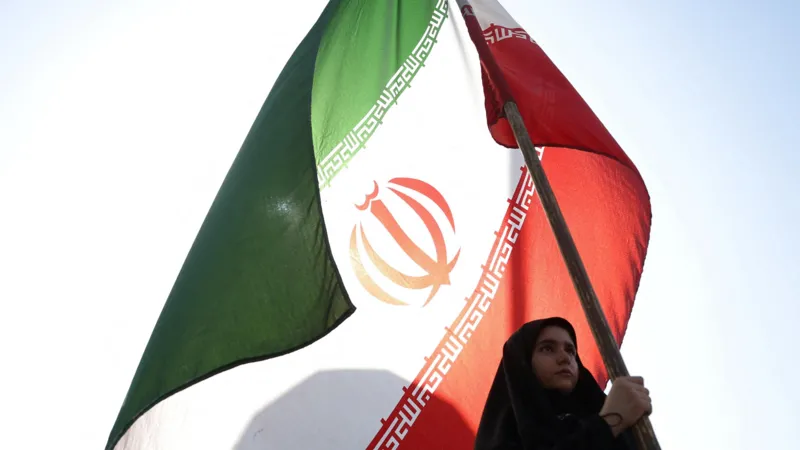
Iran’s leadership is trying to present its emerging memorandum of understanding (MoU) with the US not as a retreat, but as the result of resistance and victory. That is not an easy argument to make.
The country has just gone through a damaging war, the economy is under severe pressure, and parts of the Islamic Republic’s own support base have spent months denouncing any compromise with Washington.
There are also Iranians, both inside the country and abroad, who see the crisis not as a moment for diplomacy, but as an opportunity for regime change.
This is the divided political landscape in which Tehran is now trying to sell the deal.
Senior Iranian officials have framed the deal as a win. Mohammad Bagher Qalibaf, the Speaker of parliament and the leading Iranian figure in the talks, said Iran had taken “a long step towards final victory”.
President Masoud Pezeshkian has described the understanding as potentially transformative, saying that if fully implemented it could resolve many of Iran’s problems and create “a different world” in Iran and the Middle East.
Qalibaf’s role is significant because he is not identified with Pezeshkian’s moderate camp; his public support suggests the deal has backing from more powerful parts of the system even within Islamic Republic Revolutionary Guards.
The leadership is also presenting the agreement as a victory because, in Tehran’s argument, the US and Israel failed to achieve their main objectives.
They did not force Iran into surrender, did not remove the Islamic Republic from power, did not end Iran’s nuclear programme through military action, and did not break Iran’s links to Hezbollah.
Instead, Iran is still at the negotiating table, with Lebanon included in the framework and sanctions relief being discussed.
But this official narrative is contested inside Iran.
One hard-line MP, the deputy chair of parliament’s National Security Committee, has reportedly described the draft deal as a document that would turn Iran into an American colony.
He also accused negotiators of ignoring the supreme leader’s directive not to re-open the Strait of Hormuz to shipping.
That criticism matters because it does not come from outside the system. It comes from within one of the institutions meant to oversee national security.
For months, hard-line voices in parliament, state-aligned media and nightly pro-government gatherings have argued that the US cannot be trusted.
They point to the fact that diplomacy was still taking place shortly before the war began, and say the Trump administration used negotiations as cover while Israel and the US prepared military action. For them, any deal with Washington risks looking like appeasement.
Yet some of these voices appear quieter now. That may suggest that the decision to proceed has been authorised from the highest levels of the state. It does not mean there is full unity.
It might suggest that, for now, the centre of power has judged that the cost of rejecting a deal may be greater than the cost of absorbing hard-line anger.
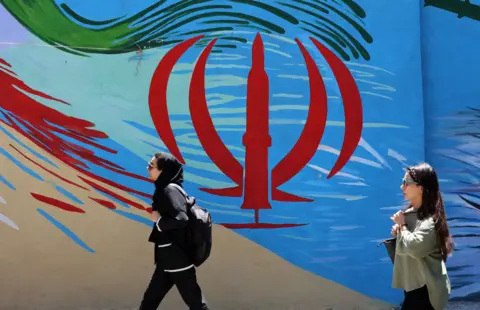
Economic pressure is central to that calculation.
Iran’s leadership may present the agreement as the result of military leverage, including pressure around the Strait of Hormuz and attacks on US and regional energy interests. But the economy has also forced Tehran’s hand.
The war, sanctions, restrictions on shipping, reduced access to oil markets and hard currency, and very high inflation have all squeezed the country and ordinary Iranians.
For many families, the question is not whether the agreement sounds like victory, but whether it lowers prices and reduces fear of another round of war.
US Vice-President JD Vance has said Iran would not receive taxpayer money but could gain access to billions of dollars if it fulfills its commitments and sanctions are eased. That allows Tehran to sell the deal as a path to investment and reconstruction rather than dependency on America.
Still, the risks are obvious. The details of the memorandum have not been fully published, and negotiations are expected to begin in Switzerland on Friday.
The most difficult issues, the future of Iran’s enriched uranium, the level of enrichment allowed, verification, sanctions relief, Hormuz and Lebanon, remain to be discussed in the talks.
There is also uncertainty over Israel. Its prime minister, Benjamin Netanyahu, has rejected reports that Israel will withdraw from southern Lebanon, saying Israeli forces will remain in Lebanon for as long as necessary.
Donald Trump, meanwhile, has publicly criticised Israel’s conduct in Lebanon, saying too many people have been killed. He also said he was unhappy with an Israeli strike on Beirut shortly before the Iran-US deal was reached, while insisting his relationship with Netanyahu remained excellent.
For Tehran, this visible friction between Washington and Israel is useful. It can be presented as evidence that Iran’s pressure has complicated Israel’s freedom of action. But it also makes the deal fragile.
If Israel continues operations in Lebanon, Iran will face pressure to respond. If Washington cannot restrain Israel, Tehran’s claim that Lebanon is covered by the memorandum may quickly be tested.
The reaction from BBC Persian’s audience suggests the official victory narrative is landing unevenly.
One audience member said they had been very worried about another Israeli attack, but even after hearing about the agreement, they had “no trust” and were worried about whether the country would be properly managed if the deal lasted.
Another anti-regime Iranian, who initially supported US military action, asked what the US attack had achieved, since if it did not lead to political change in Iran: “Our hope was that the ruling system would change. But apart from misery, inflation, and further damage to the economy, what benefit did it have for people?”
Others were more sympathetic to the government’s line. One audience member described Iran as the winner, saying the war showed sanctions are lifted not through “begging”, but through the use of power.
Another welcomed the agreement more cautiously, saying it allowed people to return to work and life with greater peace of mind. “I think it is temporary,” they said, “but we needed a few months of breathing space and calm.”
That may be the most realistic reading. The Islamic Republic is selling the deal as victory because it cannot easily sell it as necessity.
But for many Iranians, its success will not be measured by slogans. It will be measured by whether the war stops, whether prices ease, whether sanctions relief arrives, and whether the leadership can manage the next phase without another sudden escalation.
[BBC]

Moscow hit by largest Ukrainian attack since start of Russia’s full-scale war

Sooryavanshi to have parents with him on tour of Ireland and England

Luis Diaz, Colombia defeat World Cup 2026 debutants Uzbekistan

Oil prices fall, stocks rally as US, Iran sign framework to end war

Kane double fires England past Croatia in World Cup thriller

G7 leaders to boost Ukraine air defences, tighten sanctions on Russia

‘Dates have the highest sugar content to fight Coronavirus’

Sunday Island 27 December – Headlines

#SundayIsland 17th December – Headlines

Sunday Island – 28th March

Sunday Island Headlines – 21 March

Sunday Island – 21st February – Headlines
-

 News6 days ago
CIABOC summons Yoshitha over his participation in British Navy training programme
-

 News3 days ago
Release of 2025 O/L results likely to be delayed
-

 News6 days ago
Justice Minister responds to social media claims he represented Easter Sunday ringleader
-

 Sports3 days ago
Tharanga set for high-profile javelin clash in Ostrava
-

 Features4 days ago
Politics of protected species
-

 News2 days ago
Beijing Capital Airlines to resume flights to Colombo signalling boost to tourism
-

 News3 days ago
Theft of USD 2.5 mn from Treasury: CoPF accused of complicity in NPP cover-up
-

 News5 days ago
Commonwealth lawyers urge Lanka to uphold rule of law