
Features
Was the Buddha Born in Sri Lanka?

Bhante Dhammika of Australia
Just a few weeks ago the recipients of this year’s Nobel Prizes were announced. I always follow the announcement because I’m interested in the great men and women who have contributed so much to improving and enriching human life. But I have sometimes thought that there should also be an annual prize for the most useless, the most harmful or the most ridiculous invention, idea or scribbling each year – just to remind us that humans can also be incredibly stupid. It could be called the Ignoble Prize. If there was such a prize and I were one of the judges tasked with selecting the winner, this year I would award this Ignoble Prize to those who are claiming that the Buddha was born in Sri Lanka.
As there is not an atom of evidence for this laughably claim I will lay out just some of the mountain of evidence that the Buddha, the greatest of men, was an Indian, born in India, and who spent his whole life in India.
(1). Throughout the Tipitaka, the subcontinent we now call India is known as Jambudipa. The Buddha described India like this, “In this Jambudipa there are few pleasant parks, pleasant groves, pleasant stretches of land and lakes while more common are the steep rugged places, uncrossable rivers, dense thickets of thorny trees and inaccessible mountains.” This is a rather good description of India and quite at odds with the topography of Sri Lanka which most people agree is green, lush and fertile. There is no literature from either India or Sri Lanka where the name Jambudipa is given to Sri Lanka.
 I may also mention that the English name ‘India’ comes from ‘Sind’ the name the ancient Greeks and Arabs used for India, and which is derived from the Indus (i.e. Sind) River, which is now in Pakistan, not Sri Lanka.
(2). The region of India where the Buddha was born was known to him and his contemporaries as the Middle Land (Majjhima Desa) because it was roughly centrally situated in northern India. Again, no ancient sources refer to Sri Lanka by this name, in fact, it is always described as being an island. The Buddha mentioned that in his time there were 16 states and kingdoms in India – Magadha, Kosala, Vamsa, etc. – and no states or kingdoms with such names are mentioned in Sri Lankan history. Likewise, none of the ancient kingdoms of Sri Lanka – Anuradapura, Rajarata, Ruhana, Polonnaruwa, etc. – are mentioned in any Indian sources. Further, archaeologists have uncovered the ruins of Rajagaha the capital of Magadha, Savatthi the capital of Kosala, and Kosambi the capital of Vamsa and identified them conclusively by ancient inscriptions found at the sites. All these and other cities visited by the Buddha are in northern India, not Sri Lanka.
(3). In the Rathavinita Sutta of the Majjhima Nikaya the Buddha described the Sakyan country as “the land of my birth” (jatibhumaka). All ancient sources without exception mention that the Sakyan land and its capital Kapilavatthu were in northern India. When, in the fifth-sixth centuries, several Chinese pilgrims journeyed to India and visited Kapilavatthu, one of them, Xuanzang, gave quite precise details of how to get there; and it was in India. He spoke to the monks living the monastery at Kapilavatthu but none of them told him that if he wanted to visit ‘the real’ Kapilavatthu he’d have to go all the way to Sri Lanka.
(4). In the Cullavagga of the Vinaya, the rules for monks and nuns, is a long account of the lead up to and the enactments of the Second Buddhist Council which took place about 100 years after the Buddha’s passing. There it says, “Lord Buddhas are born in the eastern districts” (puratthimesu janapadesu buddha bhagavanto uppajjanti). The Pali word uppajjati means ‘to arise’, ‘appear’ or ‘to be born’.
But what about the words puratthima and janapada? Does this mean that the Buddha was born in the eastern provenance of Sri Lanka? In Batticaloa perhaps, or Ampara? How about Kalmunai, Uhana or Pulladiputti? As ridiculous as it sounds, there are actually a few people who might argue that this is possible.
But if the Middle Land is really in India as I have mentioned above, why does this passage from the Vinaya refer to it as “the eastern district?”
During Buddhism’s first few decades it gradually spread throughout India but particularly so to Gandhara which was in what is now northern Pakistan and parts of Afghanistan which are to the west of the Middle Land and thus it was known to the Buddhists of Gandhara and other regions beyond the Middle Land as “the eastern district.”
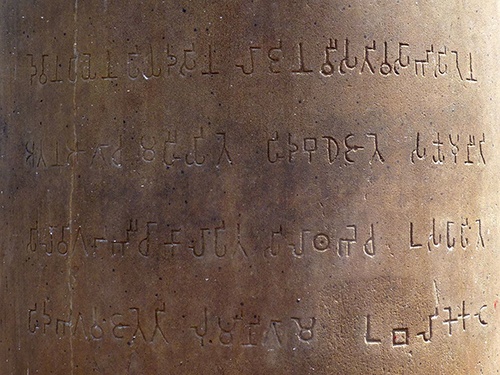
 (5). In the year 249 BCE King Asoka made a pilgrimage to Lumbini, the site of the Buddha’s birth and erected a great stone pillar there to mark the place and commemorate his visit. The inscription on the pillar clearly mentions that the Buddha was born at this location. This pillar has stood solid and unmoved since it was erected all those centuries ago and it was in India, until the British surveyed and drew the India-Nepal border in 1867 so that it ended up just inside Nepal, unbeknown to everyone until it was discovered in 1896.
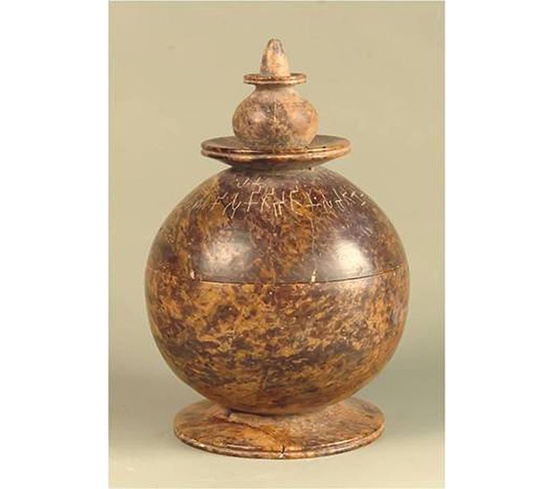
(6). In 1897 excavations were done at a large mound near a village named Pippahwa in northern India very close to the border with Nepal. As the excavations proceeded it became clear that the weed-covered mound was actually an ancient Buddhist stupa and so it was decided to dig into this stupa and see if it contained anything. A sandstone relic casket was discovered which had an inscription on it, very possibility the oldest decipherable writing from India. The inscription reads, “This casket of relics of the blessed Buddha of the Sakyas [is gifted by] the brothers Sukirti, jointly with their sisters, sons and wives.” This inscription confirmed that the Buddha was a real person, and from India.
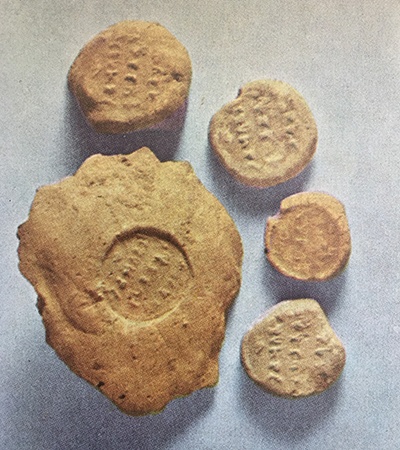
In the early 1970s the eminent Indian archaeologist K. M. Srivastava did further excavations at Pippahwa to see if it was, as many experts believed, the sited of Kapilavatthu, the Buddha’s hometown. In the process he uncovered nearly 40 clay sealings which included the words “Kapilavatthu bhikkhu sangha” thus proving beyond any doubt that Pippahawa is the town where the Buddha spent the first 35 years of his life. This site is in India, the casket and the sealing inscriptions are in an Indian language, King Asoka’s inscription on the Lumbini pillar is likewise in an Indian language, proving conclusively that the Buddha was born in India. Do any inscriptions found in any ancient sties in Sri Lanka mention that the site is Kapilavatthu or Lumbini? No! Not one!
(7). The authors of the Dipavamsa, the Mahavamsa, the Thupavamsa, the commentaries (atthakattha) to the Tipitaka and their sub-commentaries (tika) all agree that the Buddha was born in India. According to the Dipavamsa and Mahavamsa, King Asoka sent his son Mahinda to Sri Lanka to introduce the island to Buddhism. If the Buddha was a Sinhalese from Sri Lanka, the opposite should have happened, King Devananpiyatissa should have sent his son to King Asoka’s court to introduce Buddhism to India. To say that the Buddha was born in Sri Lanka is to turn 2000 years of history and tradition on their heads. It is to render the Dipavamsa and Mahavamsa to nothing more than useless novels whereas almost all historians agree that they contain a great deal of historically accurate information.
It would be easy to marshal much more evidence to show that the Buddha was born in India but perhaps this is sufficient, and there is little point in spending any more time debunking a notion that has no credibility. But how could someone come to believe and then promote a notion so patiently false? Why would someone oppose an idea that not only goes against the unanimous consensus of all historians of Indian culture and history, all Buddhist scholars, and the belief of 99.009% of the world’s Buddhists for the last 2,500 years? It could be plain common ignorance but this seems unlikely. Anyone with any education, especially living in a country where knowledge of Buddhism is widespread, could not possibly be unaware that the Buddha was an Indian. There must be some other reason for people holding to this view. Another possibility is a personality trait which has been identified by sociologists and psychologists. Some people, for whatever reason, feel the need to stand out from the crowd and to be the centre of attention. They lack the originality, the skills or the virtues that usually warrant acclaim so they adopt a belief, or sometimes a style of dress so ridiculous that everyone starts talking about them.
There are others who derive a perverse pleasure from being annoying. One way they do this is to pretend to believe something so outlandish that others try to convince them they are wrong and get frustrated when they fail to do so. There are many examples of people behaving like this – those who insist that the world is flat, that the moon landing was faked, that Marlow really wrote Shakespeare, etc. Another thing that sometimes drives people to adopt fringe theories is super-nationalism. They will insist that their country or countrymen excel all others and are better than all the other. They feel the need to adopt some great personality as one of their own to glorify their country and themselves by proxy. Napoleon was doing this when he famously said, “All great men are French.” Hitler did the same when he shouted, “The German Aryans are the apex of humanity.”
But the notion of the Buddha being a Sri Lankan is more than just a harmless delusion, the result of an inadequate personality or the hot air of an inflated ego; it is also potentially harmful. While it is now only the opinion of a few, it could spread and cause confusion, doubt and divisions within the Buddhist community and that would not be good for the progress of the Dhamma. King Asoka long ago said, “Truth triumphs” (Satyameva jayate) and hopefully it will in this case.


Prof. Ranjith Senaratne,
Emeritus Professor in Crop Science and former Vice-Chancellor,
University of Ruhuna and General President of the Sri Lanka Association for the Advancement of Science (2023) and
Prof. Prasad Jayaweera,
Dean, Faculty of Computing, University of Sri Jayawardenapura
Rice is not merely another crop in Sri Lanka. It is our staple food, an integral part of our history and culture, and a foundation of the civilisation that flourished around our ancient hydraulic systems. Revered as Buddha Bhogaya, the Buddha’s crop, rice has sustained our people for more than two millennia. Yet, remarkably, a country with such a profound relationship with rice continues to lurch from one rice crisis to another.
At one time, we have a surplus. At another, we face shortages. Prices rise sharply, consumers complain, farmers struggle to obtain remunerative prices, millers and traders become the focus of public attention, imports are hurriedly arranged, and governments announce yet another set of measures to contain the crisis. Then, after the immediate problem subsides, the matter recedes from the national agenda, until the next crisis arrives.
Why does this keep happening despite decades of agricultural research, policy interventions, expert committees and public debate?
Perhaps because we have been asking the wrong question. The fundamental problem is not simply how to produce more rice. Nor is it merely a question of prices, imports, fertiliser, farmers, millers or markets. The rice conundrum is a complex national systems problem.
We cannot solve a system by fixing its parts in isolation
Sri Lanka’s rice sector is an intricate web of interconnected systems involving agriculture, land, water, climate, technology, finance, energy, transport, markets, trade, governance, institutions and consumer behaviour. A decision made in one part of this system can have consequences, sometimes unintended, in another.
A change in fertiliser policy, for example, can affect productivity and production costs, which in turn influence farmer profitability, market prices and the need for imports. Irrigation decisions affect not only production, but also water availability, energy use and environmental sustainability. Guaranteed prices influence farmers’ cropping decisions, while import policies can simultaneously protect consumers and weaken incentives for domestic production. Likewise, market concentration can affect both the price received by farmers and the price paid by consumers. This is precisely why isolated interventions so often produce disappointing results. We keep treating symptoms while leaving the underlying system largely untouched.
For decades, we have generated valuable scientific knowledge on individual aspects of rice production and marketing. But knowledge generated within disciplinary and institutional silos does not automatically translate into solutions to complex real-world problems. What is needed now is a fundamentally different way of thinking.
From a “rice crop” to a “rice system”
The first step is to stop looking at rice simply as something that is grown in a paddy field.
The rice system begins with land, water, seed, inputs, technology and finance. It extends through cultivation, harvesting, drying, milling, storage, transport, wholesale and retail marketing, and finally to the consumer’s table. At every stage, there are different interests, incentives, constraints and actors: farmers, farmer organisations, input suppliers, machinery operators, millers, traders, wholesalers, retailers, financial institutions, government agencies, researchers and consumers.
And hovering over the entire system are climate change, changing consumer preferences, technological transformation and national economic conditions. A weakness anywhere in this chain can compromise the performance of the whole system.
Consider post-harvest losses. If significant quantities of rice are lost because of inadequate drying, storage or processing facilities, increasing production alone cannot solve the problem. Similarly, if farmers produce efficiently but face weak markets and poor bargaining power, productivity gains may not translate into improved livelihoods.
The question, therefore, should not be “How much rice can we produce?” but “How can we make the entire rice system work better?”
That requires us to see the connections.
The missing ingredient: reliable, real-time information
There is another fundamental weakness that deserves urgent attention: we still lack a comprehensive, integrated, interoperable and reliable national information system for rice. Information is scattered among different institutions, often collected using different methodologies and not necessarily available when decisions need to be made.
How much rice will actually be produced? How much is in storage? What is the likely demand? Where are the emerging production shortfalls? What are the stocks held by different actors? How are prices moving along the value chain? What are the likely consequences of climate conditions? Without timely and reliable answers to such questions, policymakers are forced to make critical decisions with incomplete information. This is not merely an administrative inconvenience. It is a national food-security vulnerability.
Sri Lanka should therefore seriously consider establishing a National Rice Intelligence and Decision Support System (NRIDSS), an integrated digital platform that brings together relevant real-time information from agriculture, meteorology, irrigation, markets, trade, statistics and other institutions. Such a system could support production forecasting, market monitoring, import decisions, early warning and evidence-based policy formulation. In an increasingly uncertain climate and volatile global economy, this should no longer be regarded as a luxury. It is becoming an essential component of national food-system governance.
The deeper problems cannot be ignored
A systems approach would also force us to confront some uncomfortable structural realities. Why does productivity remain relatively low despite decades of research? Why are so many holdings too small to achieve economies of scale? Why are modern technologies and precision agriculture not being adopted more rapidly? Why do farmers often have limited bargaining power? Why do substantial losses occur after harvesting? Why can market power become concentrated in a relatively small number of actors? Why are guaranteed prices sometimes announced too late to influence farmers’ production decisions? Why are policy interventions so often reactive rather than proactive? And how will droughts, floods, temperature extremes, changing rainfall patterns and emerging pests affect the stability of rice production in the years ahead? These are not separate questions. They are parts of the same system.
From crisis management to systems governance
Sri Lanka does not need another isolated discussion about rice. What is needed is a national policy dialogue and action forum that brings all relevant actors together, not merely to exchange speeches, but to develop a shared understanding of the system and agree on what needs to be done. Such collaboration must go beyond consultation or the exchange of views. The different parties need to work together from problem definition through to implementation, bringing their diverse knowledge, perspectives, interests and practical experience into a common process.
Farmers bring contextual and experiential knowledge; industry actors understand market realities and operational constraints; scientists contribute evidence and analytical capabilities; policymakers bring institutional and regulatory perspectives; while technology and data specialists can provide new tools for understanding and managing the system. When these different perspectives are brought together systematically, they can reveal interdependencies, challenge assumptions, identify feasible interventions and generate solutions that are evidence-based, practically implementable and socially acceptable.
This is the essence of a transdisciplinary systems approach: not simply working across disciplines, but bringing together multiple stakeholders and multiple forms of knowledge to co-create solutions and share responsibility for outcomes. The process should therefore go beyond presentations and speeches. It should involve systems mapping, causal analysis, stakeholder dialogue, scenario planning and the participatory identification of the critical bottlenecks and leverage points in the rice system. Most importantly, it should distinguish between what is urgent and what is important, and between interventions that merely alleviate symptoms and those capable of changing the underlying behaviour of the system itself.
We need an implementation roadmap, not another report
There is, however, one important caveat. Sri Lanka has no shortage of reports, recommendations and policy documents. What we often lack is sustained implementation. Any national initiative on the rice conundrum must therefore end not with another set of broad recommendations but with a prioritised national action roadmap. It should identify short-, medium- and long-term actions, assign institutional responsibilities, establish timelines and define measurable indicators of progress. The ultimate objective should be to move Sri Lanka from reactive crisis management to proactive systems governance.
A national opportunity
The rice conundrum may, in fact, provide Sri Lanka with an opportunity that extends well beyond rice to deal with other important crops. If we can demonstrate that a complex national problem can be addressed by bringing together science, policy, stakeholder knowledge, real-time information and systems thinking, the approach could become a model for addressing other persistent challenges, from climate resilience and water security to energy, food systems and disaster risk.
The choice before us is therefore quite stark. We can continue responding to each rice crisis as it emerges, adjusting prices, arranging imports, appealing to millers, reassuring consumers and supporting farmers, only to repeat the cycle later. Or we can step back and ask a more fundamental question:
What is it about the way our rice system is structured and governed that continually produces these crises?
That is the question that needs to be answered. Sri Lanka has the scientific expertise, institutional capacity and stakeholder knowledge required to do so. What is needed now is the willingness to bring these fragmented sources of knowledge together and examine the rice sector as one interconnected system.
Our ancient civilisation understood the importance of interconnectedness: land, water, agriculture and society were organised as parts of a larger whole. Perhaps, in confronting the modern rice conundrum, we need to rediscover that systems wisdom, this time supported by modern science, technology, real-time data and transdisciplinary thinking. The time has come to stop merely managing the rice crisis. It is time to fix the system that keeps producing it.
It is against this backdrop that the Sri Lanka Association for the Advancement of Science (SLAAS) proposes to convene shortly a “National Policy Dialogue and Action Forum on the Rice Conundrum in Sri Lanka”, bringing together the key stakeholders across the rice system. The Forum is intended to provide a platform for moving beyond piecemeal and reactive interventions towards a coordinated, evidence-based and transdisciplinary systems approach, one capable of generating lasting and pragmatic solutions to what has become an “island-shaking national issue”.
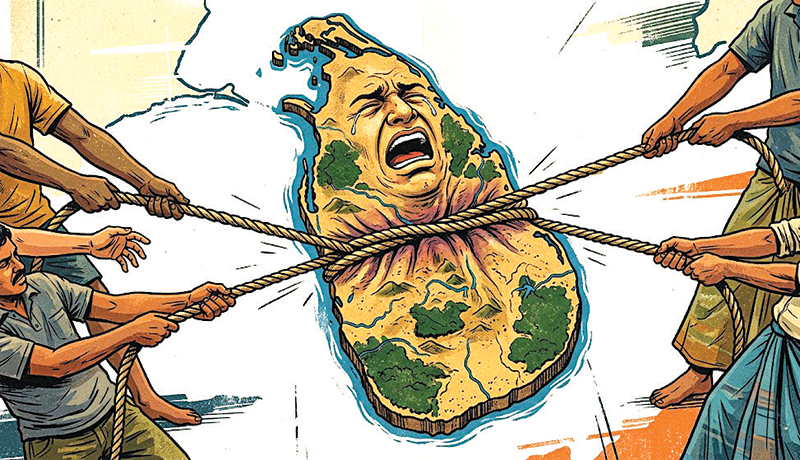
78 Years of Demagoguery, Not Democracy
by Brigadier Ranjan de Silva
rpcdesilva@gmail.com
On the 4th of February every year, we raise the lion flag and speak of democracy. We speak of 78 years of “self-rule.” But honesty demands we ask: what kind of rule have we actually had? It was not democracy. Democracy is government for the common good, constrained by law, informed by reason, and accountable to truth.
What Sri Lanka has had for 78 years is demagoguery — government by manipulation, by party, and by passion.
Defining the Curse:
The dictionary defines demagoguery as “political activity that seeks support by appealing to the desires and prejudices of ordinary people rather than by rational argument.” Its tools are simple: divide the people, promise the impossible, demonize the opponent, and govern for the next election, not the next generation. That is the political culture we inherited in 1948 and perfected since.
78 Years of Evidence:
The record is not ambiguous. Policy by Pendulum – 1948–2024. Instead of a national development plan, we got a partisan wrecking ball. 1956: The “Sinhala Only Act” was passed not after linguistic study, but as an election mobilization tool. 1970-77: The SLFP nationalized private enterprise and imposed import controls. 1977: The UNP reversed course with an open economy overnight. 2005-2014: Mega infrastructure was built on Chinese loans with no feasibility transparency. 2015-2019: Those same projects were called “white elephants” and stalled. 2020-2021: The organic fertilizer ban was announced as a populist “green” policy, reversed 6 months later after it collapsed agriculture and food prices. The Colombo Port City, Hambantota Port, and the Central Expressway all followed the same pattern: started, stopped, rebranded. The country pays twice. The party takes credit once. Economics as Election Candy. Demagoguery is expensive. 1960s: Subsidized rice to win rural votes, leading to the 1971 food crisis.
2005-2014:
Fuel subsidies and public sector hiring sprees that doubled the wage bill. 2019:
Unfunded tax cuts that removed Rs. 500 billion in annual revenue with no offset. By April 2022, external debt hit $51 Billion and we defaulted for the first time. The party that cut taxes was not in power to manage the IMF program. The party that inherited it was blamed for the austerity. This is the cycle. Institutions captured. A democracy needs referees. We turned them into party cadres. The 17th Amendment 2001 created independent commissions. The 18th Amendment 2010 abolished them. The 19th 2015 restored them. The 20th 2020 gutted them again. Police transfers, university vice-chancellors, and state bank chairmen have all been decided by party headquarters, not merit.
When the institution serves the party, the citizen gets leftovers.
Identity over Ideas: From 1956 to 1983 to 2009 to 2022, our elections have been won on fear, not spreadsheets. “They will erase your language.” “They will sell the country.” “Only we can protect Buddhism/the minorities/the nation.”
Rational debate on debt, productivity, or climate adaptation never wins a rally. Prejudice does. That is demagoguery by definition.
Party Interest subverted the National Interest. The core damage of 78 years of partisan politics is this: the nation became secondary to the party. Need power sector reform? Impossible, because our unions will strike. Need to cut 300,000 ghost employees? Impossible, because our voters will defect. Need a 20-year education and export plan? Impossible, because it won’t show results before the next election. So, we borrowed. We patched. We lied. The result: a railway system that still runs on 1950s engines, hospitals without paracetamol in 2022, and a brain drain of 300,000+ skilled workers since the crisis. The parties rotated. The country declined.
The Opposition’s Original Sin and here, all parties share guilt equally. In opposition, the job is not to govern. It is to destroy. The UNP in the 60s called the SLFP “communist.” The SLFP in the 70s called the UNP “imperialist.” The JVP called both “traitors.” The SJB, SLPP, and NPP today use the same script with new logos. Every tax is “anti-people.” Every reform is “a sell-out.” Every crisis is proof the other side is evil and must be removed at any cost. Then they win. And implement 80% of what they opposed. Because demagoguery has no principles, only positions. 78 years of unmerciful, bad-faith criticism has not produced accountability. It has produced cynicism. The public now believes all politicians are the same — because for 78 years, they have behaved the same.
Breaking the Curse:
Changing the party in power will not end this. We must change the incentives that reward demagoguery. Three reforms are non-negotiable: Bind future Parliaments to national policy. Pass 10-year frameworks for energy, education, and public debt with 2/3 majority protection. Infrastructure and fiscal rules should outlast one government, as they do in Chile and New Zealand. Depoliticize the state. Independent commissions for police, elections, public service, and bribery must have constitutional budgets and appointment panels that exclude MPs. No more 18th/20th Amendment style rollbacks. Demand better from voters We must stop rewarding the best slogan and start demanding the best spreadsheet. Town halls over rallies. Costings over promises. A 5-year plan over a 5-minute speech.
In 1948, we did not inherit democracy. We inherited an election. For 78 years we have used that election to choose our favourite demagogue. The prize has been debt, division, and decay. The curse of partisan politics will only end when citizens and leaders agree on one principle: Party second. Country first. Until then, February 4th will remain a ceremony, not a celebration.
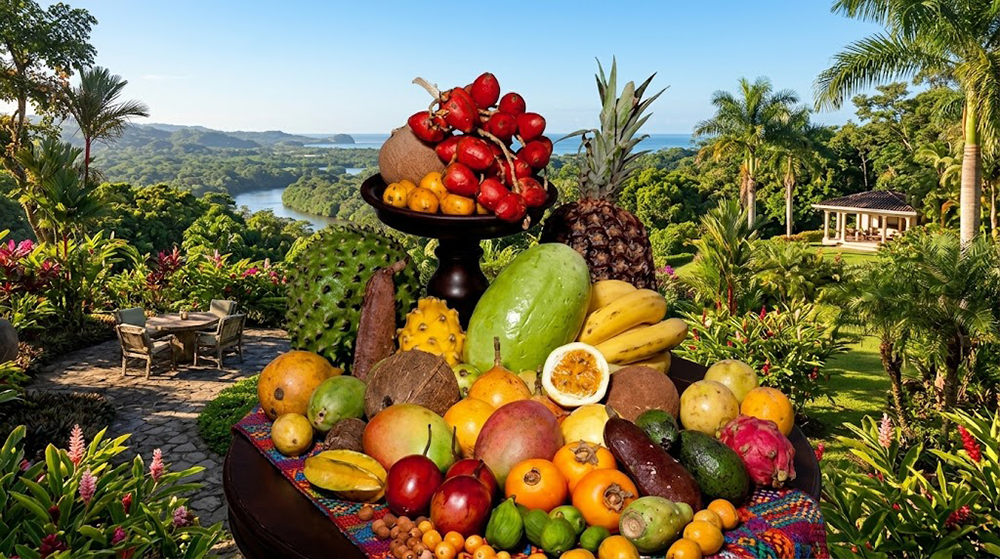
Export diversification – Missing the wood for the trees – Part II
by Gomi Senadhira
Sri Lanka established its diplomatic presence in the Gulf region only in the early 1980s. First, a small embassy was opened in Abu Dhabi, covering the UAE. Then in 1982, embassies were opened in Jeddah and Kuwait. The embassy in Jeddah covered Saudi Arabia while Kuwait was responsible for Kuwait, Oman, Qatar and Bahrain. Commercial Diplomats were also assigned to these two embassies. A senior private sector executive, with experience in marketing, was posted to Jedda as the commercial counsellor. I was posted to Kuwait as a second secretary (Commercial). Our instructions were very clear. Focus not only on traditional exports. Product diversification was a priority.
Developing Markets for Agricultural Products
At that time, Minister Lalith Athulathmudali had just launched his Export Production Villages (EPV) programme. He believed that the EPVs working closely with the exporters would provide an ideal opportunity for rural households to directly benefit from the government’s new open trade policy. Agricultural products, particularly fruits and vegetables, were a key component of this approach and the ministry thought that the Gulf countries, with large Sri Lankan communities, would have a ready-made market for these items. Thus, from day one we were compelled to explore the market for nontraditional exports; fruits and vegetables (F&Vs) were on the top of our priority list.
From cane baskets to cardboard boxes
Fortunately, the market for the F&Vs products in the region was at a very early stage of development. That provided an opportunity for Sri Lankan exporters, who were also inexperienced, to work with the importers and grow together. For example, in Kuwait, one of our first customers for F&Vs was a small supermarket where the manager was a Sri Lankan. After the first shipment arrived, he invited me to inspect the shipment. I visited the supermarket and was shocked by what I saw. While produce from other countries was packed nicely in cardboard boxes, our packaging mirrored transport to Manning market, cane baskets! As a result, fresh produce had suffered significant damage. A long report, with photographs, to the trade ministry produced an immediate response. After all, this was a pet project of the Minister. Within weeks, shipments were packed in cardboard boxes. Immediately afterwards, an expert on packaging from the Commonwealth Secretariat was sent to Kuwait with an official from the EDB to study the problem.
By then, we had also managed to develop a friendship with the management of the Salmiya supermarket, a large upmarket supermarket patronised by wealthy Kuwaitis and expats. It was a cooperative and the chairman was a Kuwaiti public servant. I could only meet him after 6 PM when his large office functioned as a diwaniya, a cherished cultural space in Kuwaiti society. Guests moved in and out the room. I had to spend time with them sipping many cups of tea. Though that meant at least two hours on each visit, it helped greatly to develop a close relationship. The general manager was an efficient and friendly Palestinian. After many visits we had succeeded in getting an order for F&Vs. The day after the first shipment arrived, I got an urgent call from the GM to come and inspect it. Once again, I was in for a surprise. Inside the cold room, the consignments from other countries were stacked neatly on top of each other, while vegetable boxes from Sri Lanka had collapsed once placed on top of each other, crushing the produce within.
Fortunately, our packaging experts arrived in Kuwait soon after this incident. They spent two days in the Salmiya Supermarket, studying the packaging from other origins. We were also successful in assuring the GM our packaging would improve. After that, packaging improved and exports moved smoothly. With that, Sri Lanka emerged as a small but reliable supplier to the mainstream market, not just the ethnic segment of the market.
Export of Fresh Vegetables by Sea
Towards the end of my tour, a Sri Lankan businessman requested me to find a buyer for cabbages, which he was prepared to export in large quantities by sea. I introduced him to the largest fruit and vegetable importer in Kuwait. Their regular suppliers of similar vegetables were Jordan, Lebanon and Syria. Luckily, the company was keen to diversify the supply sources. A few weeks later, the first container load of cabbages from Sri Lanka arrived in Kuwait. Immediately after the arrival of the container, I visited the company. They were pleased with the quality and the price and were looking forward to importing more fruits and vegetables. Unfortunately, that turned out to be a one-off event. Later on, when I was back in Sri Lanka, the exporter informed me that he couldn’t continue with it due to the problems with the local supply chains.
Floriculture
During the period I was asked by the EDB to explore the market for floricultural products, more particularly for cut flowers. At that time Kuwait was a relatively large importer of cut flowers and live plants. The main suppliers were the Netherlands and Colombia. Importers were also reluctant to move out of the established supply chain, particularly due to “snob value” associated with the product from Europe. However, after some difficulties, one importer agreed to place a pre-paid trial order. After the arrival of that shipment, he was impressed by the quality of the product and the orders expanded rapidly. As a result, by the end of 1985 Kuwait had become a major buyer of Sri Lanka’s floricultural products.
From village to global markets
As a result of the proactive promotional work undertaken by the EDB and the embassies in the region, by 1985, Sri Lanka had managed to acquire a small but significant share of the F&V and floriculture markets in the GCC countries. We had also identified domestic supply chain issues that hindered exports. All that was done, long before Southeast Asian or African countries even entered into that market. In fact, my Southeast Asian colleagues used to contact me often to reserve “durian” for them at the “Sri Lankan supermarket”.
Most importantly, a substantially large share of produce from Sri Lanka in Kuwaiti supermarkets originated in the EPVs. Of course, that didn’t just happen. The ministry (or the minister) using the carrot and stick approach “encouraged” exporters to buy the produce directly from the newly established EPVs. (The writer can be reached at senadhiragomi@gmail.com)

Malaysia declares emergency in Sarawak as haze from Indonesia worsens

UAE keep semi-final hopes alive after convincing win over Indonesia

Sun directly overhead Moratuwa, Kesbewa, Handapangoda, Idalgashinna, Yudhaganawa, Kotiyagala and Panama about 12.08 noon today (05)

Showers above 75 mm are likely at some places in the Uva, Central and Eastern provinces and in Polonnaruwa and Mullaittivu districts after 2.00 p.m

Namal remanded until Sept. 18 over Airbus deal investigation

Dengue cases surpass 96,000 this year

‘Dates have the highest sugar content to fight Coronavirus’

Sunday Island 27 December – Headlines

#SundayIsland 17th December – Headlines

Sunday Island – 28th March

Sunday Island Headlines – 21 March

Sunday Island – 21st February – Headlines
-

 Features7 days ago
“Wrap Me Up in My Blazer”— A Gentlemanly Bradby Reminiscence
-

 Features6 days ago
When Sri Lankan stories find their own voice
-
 Features7 days ago
JVP/NPP government as seen from outside by Lionel Bopage now domiciled in Australia
-
 News6 days ago
BASL takes exception to Justice Ganepola being denied a place in SC
-
 Features7 days ago
Prof. Savitri Goonesekere: What has she done?
-

 News3 days ago
Denied of promotion to SC despite vacancies, justice Gurusinghe retires
-

 Latest News3 days ago
Grade 5 scholarship exam results released
-

 News3 days ago
22A: SC urged to suspend hearing, appoint full bench