
Midweek Review
Warning issued over proposed ‘Open Government Partnership’ action plan

The USAID had no qualms in announcing the Rs. 1.92 billion (USD $13 million) project with a Parliament that blatantly protected Treasury bond thieves. The civil society, too, remained conveniently silent over the Treasury bond scams (do not forget the Samagi Jana Balawegaya MPs, as then members of the UNP, shielded the Treasury bond thieves. They can never absolve themselves of their culpability in the bond scams. One of those MPs even had the audacity to write a book stating that there was no scam!).
By Shamindra Ferdinando
Additional Secretary to President Ranil Wickremesinghe at the Presidential Secretariat Chandima Wickramasinghe recently declared that there shouldn’t be a dispute whatsoever over the proposed third National Action Plan (NAP) expected to be implemented in line with the ‘Open Government Partnership’ (OGP) project.
She strongly advised against the government and the civil society pointing fingers at each other after having jointly worked on such a project. The official emphasized that neither the government nor the civil society should be held responsible, separately, as it was a joint venture.
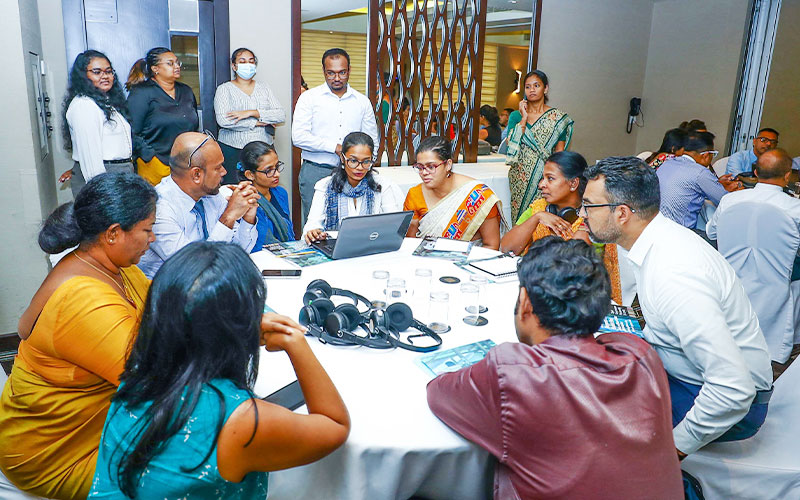
The Additional Secretary issued the warning at the inaugural multi-stakeholder workshop meant to prepare the country’s third NAP for 2023-2025, held at the Renuka Hotel, Colombo, on January 10.
The latest initiative involved the Presidential Secretariat, Transparency International Sri Lanka (TISL) and Sarvodaya. The OGP project is meant to bring the government, the civil society and citizens together to primarily achieve transparency and accountability.
Declaring that the government decided to prepare the NAP on a directive issued by President Wickremesinghe, principally for the benefit of the people, Mrs. Wickramasinghe said that the report would be submitted to the Cabinet-of-Ministers for approval.
The gathering was told Cabinet approval would be sought next month. The country is in such a deepening political-economic-social crisis that agreeing on a NAP at this juncture would be a herculean task. Rapid developments taking place, both in and outside Parliament, emphasize further divisions among political parties, individual members of Parliament and civil society as the country struggles to cope with the worst-ever post-independence economic fallout.
Perhaps, the Presidential Secretariat, TISL and Sarvodaya should examine why the first and second NAPs failed before they proceeded. If they are genuinely interested in addressing the issues at hand, the need to identify the root causes for the developing crisis should be identified and properly dealt with. The PMD launched an online survey to collect public response in respect of key sectors/issues in support of their effort.
Over the years, as various interested parties, including the civil society, examined the root causes of the deterioration of the public and private sector here, there is absolutely no need for a fresh examination. Democracy rests on three pillars – executive, the legislature and judiciary. The legislature enacts laws, the executive implements them and the judiciary arbitrates when either of the other two fail in their responsibilities. Therefore, those formulating the third NAP should peruse the unprecedented Supreme Court judgment in respect of the fundamental rights petitions filed against the economic ruination caused during Gotabaya Rajapaksa’s presidency.
The Nov 14, 2023 ruling was delivered by a five-member Supreme Court bench led by Chief Justice Jayantha Jayasuriya, PC. While the Chief Justice with Justices Buwaneka Aluwihare, Vijith Malalgoda, and Murdhu Fernando agreeing collectively issued the majority verdict, Justice Priyantha Jayawardena dissented.
Political parties represented in Parliament obviously lacked the strength to address issues raised by the Supreme Court. Parliament owed an explanation regarding the continuation of the Parliamentary Select Committee (PSC) to Investigate Causes for the Financial Bankruptcy declared by the Government and to Report to Parliament and Submit its Proposals and Recommendations in this regard many weeks after the SC ruling. It would be pertinent to point out that absolutely no action has been initiated so far in respect of those who had been found faulted by the SC. The SLPP General Secretary Sagara Kariyawasam heads the PSC. On January 09, Secretary to the Treasury Mahinda Siriwardena appeared before the PSC where he was quoted, in a statement issued by Parliament on January 12, 2024, that the government never announced bankruptcy.
That statement issued by Parliament’s Director Legislative Services/Director Communication (Acting) Janakantha Silva further quoted Siriwardena as having explained that the government declaration that certain debts couldn’t be settled couldn’t be technically considered a state of bankruptcy.
Action hasn’t been taken to close the massive loopholes created by the Yahapalana government that is draining valuable foreign exchange from the country, mainly created by it doing away with the time tested exchange controls in 2017 that were in existence since 1953. With the country’s finances being in charge of the people responsible for two massive Central Bank heists can we expect anything better than their oft repeated mantra IMF, IMF, IMF….? But, most importantly, the IMF mantra is not working as was espoused by those who insisted on taking its medicine and most Sri Lankans are suffering as never before! Some of these economic hitmen even wanted to bring in economic whiz kids from places like Harvard and Yale business schools to put things right here from Yahapalana days, not seeing the obvious that those wizards can’t put right the continuing slide to economic disaster in the US, which is dragging down even countries like Sri Lanka with it, mainly because of our dependence on the fiat dollar system.
The age old saying is that the test of a pudding is in its eating, but for most Sri Lankans it is increasingly a case of there being nothing to eat.
Interestingly, the Parliament issued this statement a day after an IMF delegation arrived here on a week-long visit to examine the recent economic developments and follow-up on upcoming programme targets and commitments. Perhaps the Parliament should explain why Sri Lanka knelt down before the IMF for the 17 occasion if the situation here didn’t technically require it to be called bankrupt.
Persons in charge of the Presidential Secretariat led-effort to prepare the third NAP, should take into consideration the country had been bankrupted by the actions of the executive and those who represented the legislature as well as political appointees. They should also keep in mind that the Wickremesinghe-Rajapaksa government enacted under controversial circumstances a new Central Bank Act to restore fiscal discipline in the country after the SC ruled that the then President, two Finance Ministers and Governor of the Central Bank created the problem by their actions or non-actions.
PMD survey
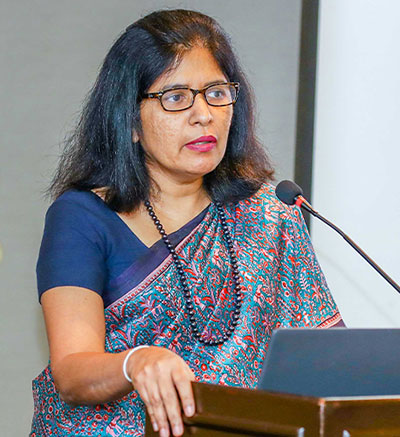
Additional Secretary to the President,
Chandima Wickramasinghe addressing the
inaugural multi-stakeholder workshop at the
Renuka Hotel.
The Presidential Media Division (PMD) sought public views on five specific issues to help prepare the third NAP. The PMD based its survey on the following five sectors:
*Improvement of public services
–ways and means to improve public service machinery, promotion of innovations in the private sector for efficient delivery of public services including health, education, transport, public utilities, consumer services.
*Prevent bribery and corruption
– How to deal with systematic corruption at every level thereby encouraging accountability in the public sector as well as promotion of access to information, etc.
*Manage public resources more effectively
– Measures meant to maximize utilization of financial and physical resources of the government.
*Create safer environments for communities
– Measures that address public safety, including needs of children, women, disabled and other vulnerable communities.
*Effective management of National and Provincial projects
– Proper implementation of projects that had been funded with foreign and domestic sources, in a cost-effective manner, with transparency, timely completion and achievement of desired results.
The issues at hand/explosive combination of factors – deterioration of public services, unbridled waste, corruption, irregularities and mismanagement, squandering of public resources, perilous economic-political-social environment and pathetic state of utilization of foreign and domestic funding remain cause for serious concern.
The private sector, too, at varying levels, is embroiled in corruption. In fact, the five matters raised by the PMD can be described as deterioration of public finances to such an extent the Gotabaya Rajapaksa government had no option but to suspend debt repayment due to public sector corruption and public-private sector corruption. There cannot be a better example than the controversial sale of debt free and tax paying Lanka Marine Services Limited (LMSL), a wholly owned company of Ceylon Petroleum Corporation (CPC) to John Keells Holdings (JKH) subsequently reversed by the Supreme Court in May 2008 to explain Sri Lanka’s predicament.
A three-member bench of the SC, consisting of then Chief Justice Sarath Nanda Silva and Justices Ameratunga and Balapatabendi, agreeing in respect of a fundamental rights case filed by lawmaker Vasudeva Nanayakkara (UPFA), ruled that the Chairman of PERC (Public Enterprise Reform Commission) Dr. P. B. Jayasundera, caused the sale of LMSL in an illegal and biased manner.
The case dubbed Vasudeva Nanayakkara vs Choksy and others (John Keells case) revealed how political authorities, at the highest level, and officials, collaborated unabashedly in a corrupt deal that shook the very foundation of the government. At the time the SC gave its historic ruling in 2008 Dr. PBJ served as the Secretary to the Treasury.
The influential official continued till the end of 2014 and again returned as the Secretary to President Gotabaya Rajapaksa in late 2019. Dr. PBJ was one of those faulted by the SC in its Nov 14, 2023 ruling in respect of fundamental rights petitions filed against economic ruin.
Choksy, referred to in the SC ruling regarding LM case, had been the one-time Finance Minister (the late K.N. Choksy). Successive governments did absolutely nothing. Did anyone bother to examine the responsibility on the part of the blue chip in this regard? The 18th respondent in the LMS case Susantha Ratnayake of JKH was invited by the Gotabaya Rajapaksa government to run the BoI. That proved the government didn’t bother about the LMS ruling.
Collapse of earlier initiatives
Sri Lanka joined the OGP in 2015, the year the yahapalana government perpetrated the first Treasury bond scam in late Feb 2015. The first NAP covered the Yahapalana period (2015-2019) and the second (2019-2021). The government perpetrated the second Treasury bond scam in late March 2016.
The second NAP covered the Gotabaya Rajapaksa’s period of unprecedented chaos. In short, at the end of the period covered by the second NAP, disorder and confusion reigned.
Interestingly, the third report had been ordered by Wickremesinghe who served as the Premier during the period covered by the first NAP and then elected as the executive by the SLPP held responsible for the economic chaos that descended on the country with the Covid-19 pandemic. In fact, those in power, regardless of the political party they belonged to, blatantly acted contrary to the Constitution, thereby violating even the basic OGP principles intended to make governments more inclusive, responsive, and accountable. Had governments abided by the law of the land, Sri Lanka could have automatically fulfilled the OGP obligations and preparation of NAP would have been child’s play.
As OGP is a global effort involving governments, perhaps they should pay attention to what is going on in Parliament here. One of the key issues that emerged in the wake of Aragalaya that ousted Gotabaya Rajapaksa, who had been elected with a significant majority at the 2019 presidential poll, is how the abolition of time-tested Exchange Control (emphasis is mine) Act No 24 of 1953 contributed to the deterioration of the national economy. During the period covered by the first NAP, the Yahapalana government enacted a new Foreign Exchange Act No 12 of 2017 that favoured unscrupulous exporters and importers.
In spite of Justice Minister Dr. Wijeyadasa Rajapakse, PC, publicly declaring, both in and outside Parliament, that the 2017 Act contributed to the crisis, the Wickremesinghe-Rajapaksa government remains committed to that law. In fact, no less a person than former Governor of the Central Bank Dr. Indrajith Coomaraswamy told Parliament, in 2019, how the 2017 law diluted regulatory powers exercised by them, thereby greatly weakening financial discipline. But the Gotabaya Rajapaksa government did nothing to amend that law. Now the Rajapaksas and Wickremesinghe are together and the possibility of remedial measures seems very unlikely.
It would be interesting to see whether the third NAP would address this issue. Would PMD and its partners dare to recommend restoration of time-tested provisions in the original law to compel the Cabinet-of-Ministers to take tangible measures?
Regardless of past atrocious actions, the government can take tangible measures to reinstate public faith in the governance. The responsibility on the part of the Cabinet-of-Ministers for the crisis should be examined taking into consideration the fundamental rights application filed by the then ministers Vasudeva Nanayakkara, Wimal Weerawansa and Udaya Gammanpila against the transferring of 40% of government-owned shares of Yugadanavi power plant to US Company New Fortress Energy in Sept 2021. In early March 2022 The Supreme Court dismissed their petition as well as other petitions without taking them up for examination.
There hadn’t been a previous instance of members of the Cabinet moving the Supreme Court against their colleagues who exercised executive powers while simultaneously functioning as lawmakers. In line with the OGP principles, Sri Lanka should seriously consider bringing in far reaching but necessary constitutional amendments to bar members of Parliament exercising executive powers.
The writer doesn’t think we (parties represented in Parliament) have the political will to do so. The recent disclosure of the alleged manipulation of the Cabinet-of-Ministers by those responsible for the immunoglobulin scam and the subsequent directive issued by Maligakanda Magistrate Lochani Abeywickrema for the Criminal Investigation Department (CID) to obtain Cabinet papers and other relevant documents submitted by the Health Ministry in this regard underlined the gravity of the problem.
The success of the third NAP entirely depends on the willingness on the part of the executive, legislature and judiciary to genuinely examine the repeated failings. Those tasked with preparing the NAP should consult the National Audit Office (NAO) and, depending on the requirements, heads of parliamentary watchdog committees, regarding the failure on the part of successive governments to act on recommendations made by the NAO.
A case in point is the NAO report on Sri Lanka Cricket (SLC) pertaining to the tour of Australia for the T20 World Cup (Oct 09-Nov 13). That audit report, released in 2022, laid bare sordid operations of the SLC but the government stood firmly by those who had been faulted by the State Audit. Instead of taking immediate remedial measures, Sports Minister Roshan Ranasinghe, who sought to tackle the powerful body, was sacked. Obviously, lawmaker Ranasinghe lacked the political support enjoyed by former Health Minister Keheliya Rambukwella who received a new ministerial portfolio regardless of serious accusations regarding his direct involvement in the sordid immunoglobulin scam and its apparent attempted cover up.
Can ministers accused of acting contrary to their responsibilities be dealt differently and granted privilege status depending on their political affiliations?
Audit on 2016 USAID project, etc., needed
Initially, the writer wanted to participate in the PMD survey but later decided to raise relevant issues to compel interested parties to pay attention. The OGP project shouldn’t be just another lucrative project for the civil society as over the year’s deterioration of the public sector and related sectors paved the way for various foreign funded projects that consolidated civil society.
In late 2016, during Karu Jayasuriya’s tenure as Speaker, Sri Lanka entered into a high rofile agreement with the USAID in Nov 2016 to strengthen accountability and good governance. USAID-Sri Lanka Parliament ‘operation’ got underway over a year after the launch of the OGP project.
The USAID had no qualms in announcing the Rs. 1.92 billion (USD $13 million) project with a Parliament that blatantly protected Treasury bond thieves. The civil society, too, remained conveniently silent over the Treasury bond scams (do not forget Samagi Jana Balawegaya MPs, as then members of the UNP, shielded the Treasury bond thieves. They can never absolve themselves of their culpability in the bond scams. One of those MPs even had the audacity to write a book stating that there was no scam!).
Those who benefited from the USAID project, are on record as having said that the three-year Strengthening Democratic Governance and Accountability Project (SDGAP) was meant to improve ‘strategic planning and communication within the government and Parliament, enhance public outreach, develop more effective policy reform and implementation processes, and increase political participation of women and underrepresented groups in Parliament and at local levels.’
The Presidential Secretariat as the focal point for the OGP project should examine major efforts undertaken by previous administrations to address the issues the third NAP intended to deal with. It can ask for a report from Parliament regarding the implementation of the USD 13 mn project, just one of the many USAID projects.
In addition to the USAID projects, the European Union, too, implemented various projects but, unfortunately, regardless of such efforts to improve good governance and accountability, Sri Lanka is in chaos. Such efforts appeared to have had no impact on the executive and legislature at all. If they did, Ali Sabry Raheem, who had been a member of the House Privileges Committee at the time he was arrested and fined in March 2023 for smuggling of gold and smartphones worth nearly Rs. 80 mn couldn’t have remained a lawmaker.

Against the backdrop of the economic crisis that erupted in 2021/2022 Sri Lanka’s dependence on Indian economic and military support is growing. INS Udayagiri, Indian Navy’s indigenously built multi-role stealth frigate, that arrived at Colombo Port hours before Indian Defence Minister Rajnath Singh arrived here, brought essential machinery/equipment spares for Sri Lanka Navy and Sri Lanka Air Force. INS Udayagiri departed on 11 September, less than 24 hours after Singh concluded his three-day visit. The list of Indian support is long. In June this year, India swiftly transferred military stores worth USD 5.5 million to Sri Lanka Army on gratis basis from its operational stocks. India stepped in when Sri Lanka appealed for assistance to deploy over 1,000-member military contingent in Haiti under the UN command to help maintain order in that violence ridden country.
By Shamindra Ferdinando
Parliament on 9 Sept. passed the Chief of Defence Staff (Repeal) Bill, over one and half years after the last Chief of Defence Staff (CDS) General Shavendra Silva retired.
The wartime General Officer Commanding (GoC) of the celebrated 58 Division (former Task Force 1) bid farewell to the Sri Lanka Army (SLA) on 1 January, 2025, following some record breaking achievements, leading his troops from the front in the final phase of the war to eradicate the Tiger terrorists.
Following the debate on the second reading of the Bill, on 9 Sept., the Bill was passed without a division. It clearly indicated that the Samagi Jana Balawegaya (SJB)-led Opposition wasn’t at least interested in making an obvious issue out of it. The Bill has been introduced to repeal the Chief of Defence Staff Act, No. 35 of 2009, enacted in 2009, to carry out functions, including the coordination of activities among the Armed Forces and the Ministry of Defence.
Pointing out that the relevant Bill had been enacted after the conclusion of the war, the National People’s Power (NPP) government declared in Parliament that the abolition of the Office of the CDS wouldn’t harm national security. The NPP emphasised that the Mahinda Rajapaksa administration created that post to accommodate war-winning Army Commander Lt. Gen. Sarath Fonseka after he firmly turned down the offer to accept a non-military post as Secretary to the Sports Ministry.
Amidst rapidly deepening turmoil within the government, Fonseka received the appointment as the first CDS on 15 July, 2009, in terms of the newly enacted Act. It would be pertinent to mention that the government had no option but to placate Fonseka by establishing the Office of CDS through a parliamentary Act to ensure the change of command take place, as planned.
The writer was among those assigned to cover Fonseka receiving the appointment as CDS and Maj. Gen. Jagath Jayasuriya taking over the command of the war-winning Army from Fonseka. This was against a background of Fonseka wanting Chief of Staff Maj. Gen. G.A. Chandrasiri succeeded him. Instead, the Rajapaksas brought in Maj. Gen. Jagath Jayasuriya as Fonseka’s successor. Chandrasiri was made to retire and those who had been senior to Jayasuriya sidelined as the government tightened its grip on the Army. Therefore, the creation of the Office of the CDS to accommodate Fonseka should be considered in the appropriate context.
But, Fonseka quit the CDS post in November 2009 after reaching a consensus with the UNP-JVP combine to contest the presidential election. Air Chief Marshal Roshan Goonetileke succeeded Fonseka as CDS, on 16 November, 2009, while continuing his duties as the Commander of the Air Force.
The NPP, at the inception of its administration, quite clearly wanted to abolish the post of CDS. Silva, who received the appointment as Acting CDS, on 1 January, 2020, while serving as the Commander of the Army, relinquished the substantive post on 1 June, 2022. That happened in the wake of the 9 May countrywide systematic violence unleashed by those spearheading the high profile project to oust President Gotabaya Rajapaksa after the increasingly humiliated SLPP by the siege laid by Aragalaya activists on important government institution with a foreign dictated agenda, ordered a goon attack on those Galle Face protesters.
Retired Maj. Gen. K.B. Egodawele, former Minister Wimal Weerawansa, foreign affairs commentator Asanga Abeyagoonasekera and Prof. Sunanda Maddumabandara, who authored books on the 2022 regime change project, all pointed to external hands in the mayhem. Abeyagoonasekera went to the extent of alleging direct Central Intelligence Agency (CIA) role in the operation, while Prof. Maddumabandara named then Indian High Commissioner Gopal Baglay as the one who asked Speaker Mahinda Yapa Abeywardena to take over the presidency, along with the backing of the likes of Omalpe Sobitha thera. That brought an end to the repeated attacks on US Ambassador Julie Chung over an alleged meeting with Abeywadena on the eve of President Rajapaksa being forced to flee the country.
India never challenged Prof. Maddumabandara’s declaration, widely believed to be based on revelation made by Abeywardena.
A significant visit
Indian Defence Minister Rajnath Singh’s historic three-day official visit to Colombo coincided with the House passing the Chief of Defence Staff (Repeal) Bill. What a coincidence it was!
A rapidly deepening partnership spanning defence, economic aid, and regional connectivity under India’s Neighbourhood First policy dominates bilateral relations.
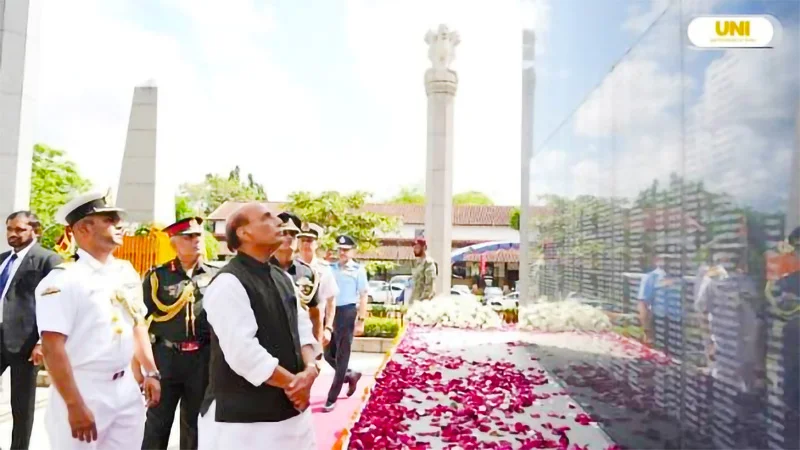
Singh, a senior member of the ruling Bharatiya Janatha Party (BJP), laid a wreath at the Indian Army memorial, in Pelawatte, Sri Jayewardenepura, on 9 September, on the second day of his visit, as the Parliament announced the repealing of the Bill. The memorial is a stark reminder of a despicable Indian destabilisation project directed at smaller, economically weak Sri Lanka in the 80s.
Singh, who is on his second term as Defence Minister, would go down in history as the first Indian Defence Minister to pay respect at the memorial built in memory of Indian Army officers and men killed in Sri Lanka. Having established a large scale terrorist project in Sri Lanka, the Congress government destabilised Sri Lanka to facilitate signing of the so-called Indo-Lanka Peace Accord after the arm twisting by its infamous ‘parippu’ drop over Jaffna, humiliating and bringing to its knees the then ‘all-powerful’ JRJ government when its powerful friends in the West turned their backs on their perennial vasal here, dubbed the ‘20th Century Fox’. The deployment of the Indian Army followed, beginning 29 July, 1987, on a mission to ostensibly disarm terrorist groups, including the Liberation Tigers of Tamil Eelam (LTTE).
The then Indian Defence Minister K.C. Pant visited Colombo on May 30-June 1, 1988, in the run-up to the presidential election at the time the Indian Army was engaged in operations against the LTTE. India never sent another defence minister here even after Sri Lanka built a memorial near Battaramulla, in August 2008. It had been put up on a recommendation by the late Gen. Lionel Balagalle, Commander of the Army and CDS following an official visit to New Delhi in Dec., 2003.
Indian High Commissioner Ashok Kantha was the first top Indian government representative to pay floral tribute at the memorial on 15 August, 2010, over a year after Sri Lanka brought the once Indian sponsored war to a successful conclusion.
There is another Indian Army memorial in Palaly, Jaffna, built by the Indian Army in memory of 33 officers and men killed in a disastrous heli-borne assault on the LTTE, based in the Jaffna University. That assault took place on 12 Oct., 1987, at the onset of Indian operations. However, among the Indian dead inscribed on the memorial was Lieutenant Colonel Arun Kumar Chhabra who served the 10 Para (SF), elite battalion of the Parachute Regiment involved in the Jaffna University assault. Chhabra died on 14 Oct., 1989, during a gun battle with the LTTE.
The point is whatever various interested parties say today about the Indian intervention here, the truth is Premier Indira Gandhi destabilised this country in line with her strategy meant to address separatist sentiments in Tamil Nadu. India cannot absolve itself of the responsibility for the massive death and destruction caused not only in Sri Lanka but also the assassination of former Prime Minister Rajiv Gandhi who advanced his slain mother’s strategy by deploying the Indian Army here.
Indian trained terrorists, the People’s Liberation Organisation of Tamil Eelam (PLOTE), almost succeeded in overthrowing Maldivian President Maumoon Abdul Gayoom in Nov., 1988. Two boat loads of PLOTE terrorists passed under the nose of the Indian Navy, at that time responsible for controlling all movements within Sri Lanka territorial waters, to reach the Maldives. The Indian intervention in the Maldives to save the Gayoom’s administration was hailed as a spectacular Indian military operation. No one found fault with India for sponsoring PLOTE. In fact, the PLOTE, widely believed to have been disarmed by the Indian Army in line with the Indo-Lanka peace accord signed under duress, retained weapons to mount the operation. That proved the much publicised project to disarm terrorist groups, including the LTTE and PLOTE, was more a farce than anything else.
The top BJPer’s, who recently concluded his visit to Colombo, emphasised the nearly four decades long absence of an Indian Defence Minister paying respects at the Jayewardenepura monument. Interested parties have sought to depict the monument as a testament to India sacrificing life to protect Sri Lanka. But, the truth is the monument reminds the world of a politically motivated terror project that ruined Sri Lanka, caused deaths of at least 1,200 Indian military personnel, and paved the way for a coup attempt in the Maldives. Names of 1169 Indians, including 55 officers, are inscribed therein. The catastrophic Indian project also led to the invention of suicide attacks (human bombs), a tactic now practiced in different parts of the world. India experienced the horrors of suicide bombing when a Sri Lanka woman blew up Rajiv Gandhi at Sriperumbudur, Tamil Nadu, on 21 May, 1991, over a year after India pulled out its Army from Sri Lanka.
Two Battaramulla memorials
Sri Lanka and Indian media reported Defence Minister Singh’s visit to the Indian Army memorial at Battaramulla. Unfortunately, print, electronic and social media failed to mention that the National War Memorial, with names of nearly 29,000 officers and men, who paid the supreme sacrifice, inscribed, is situated a walking distance from the Indian Army memorial. Perhaps the Indian Defence Minister should have laid a wreath at the National War Memorial, a gesture that may have somewhat atoned for an utterly irresponsible and reckless political decision.
The two memorials situated just 1.1 kms apart underscore the horrors of conflict engineered and sustained by regional power that almost destroyed Sri Lanka. Sri Lanka was trapped in separatist terrorism and a simultaneous insurgency in the South that ripped the country apart.
Sri Lanka transformed its ceremonial armed forces to a worthy fighting formation over the years. The Office of the CDS had been in place throughout the war though it was not constituted by a specific law (Chief of Defence Staff Act, No. 35 of 2009).
As the armed forces expanded, the country needed a headquarters for better coordination among the armed forces and police. The Joint Operations Command (JOC) was established in 1985. In 1999, during the tenure of President Chandrika Bandaranaike Kumaratunga, the JOC was replaced by Joint Operations Bureau (JOB), a civilian led set up that failed miserably to meet the challenging task. In the same year, Kumaratunga, in her capacity as the Defence Minister, did away with the JOB and established Joint Operations Headquarters.
Kumaratunga created the Office of CDS in 2000 ahead of major northern battles. That functioned till the end of the war in May, 2009, and no one ever thought of enacting a specific Bill to constitute the Office of CDS. The NPP told Parliament, on 9 September, that a staggering Rs 8.7 bn had been spent on the Office of CDS, since 2009.
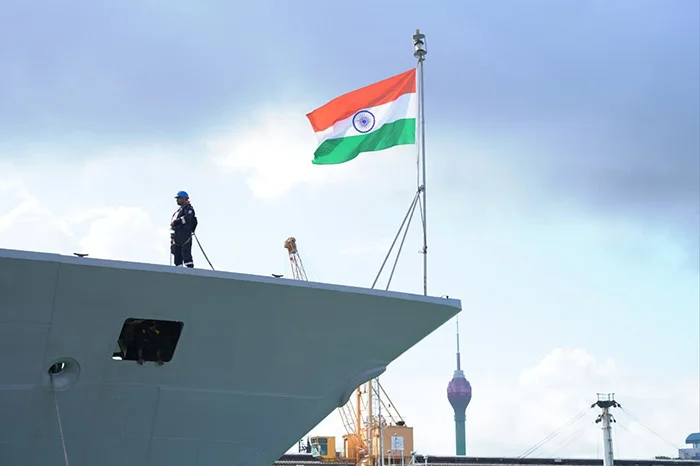
Multi-role stealth frigate INS Udayagiri at the Colombo port. The ship
visit coincided with Singh’s 3-day tour
The Indian political establishment largely ignored the humiliating loss of lives suffered during the mission in Sri Lanka. They conveniently forgot the disastrous intervention though the High Commissioner here visited the Battaramulla memorial in 2010. However, Modi, having captured power at the 2014 general election, initiated his own strategy. He first visited the Battaramulla memorial, in March, 2015, less than a year after becoming the Premier. He again visited the memorial in April, 2025, when he visited Colombo to sign seven Memorandum of Understanding (MoUs), including one on defence.
Having backed Gotabaya Rajapaksa’s ouster in 2022, Modi (Rajnath Singh served as the Defence Minister during the US-Indian operation in Colombo) endorsed the candidature of Anura Kumara Dissanayake, in February, 2024, by extending an official invitation to the leader of the NPP, as well as the JVP. Dissanayake was given the opportunity to meet External Affairs Minister S. Jaishankar and National Security Advisor Ajit Doval. The message from New Delhi was loud and clear. Although Al Jazeera described the Indian move as an unlikely invitation, those who have carefully analyzed New Delhi’s actions here may realise the importance of the unexpected rescue of Somawansa Amarasinghe, in the early 90s, as the UNP government was about to capture him. Had Amarasinghe ended up in the custody of the military, the same fate that befell other party seniors, including Rohana Wijeweera, too, would have been his.
The UNP showed no mercy at all to the JVPers. Amarasinghe escaped with Indian help in February, 1990, three months after the Army executed Wijeweera. Although some speculated about a possible Indian role in saving Amarasinghe, no one could prove it. Then, unexpectedly, Amarasinghe himself, at a rally held in Kalutara, in late 2001, disclosed how India saved his life. The revelation was made at the first rally he addressed after returning home, following a 12-year exile.
Dissanayake received a second invitation from New Delhi after his historic unlikely victory achieved, thanks to outside machinations, mainly by the West ,in the run up to the Sept. 2024 presidential election. Modi announced their consensus on entering into MoU on defence at the conclusion of Dissanayake’s Dec. 2024 visit, though the joint statement didn’t say so. India swiftly moved to finalise the Defence MoU along with six other MoUs in the first week of April 2025 when Modi visited Colombo.
By then even the JVP/NPP had forgotten that the JVP waged insurgency against the UNP over the signing of the Indo-Lanka Accord. The emergence of the NPP as the undisputed political power in Colombo has facilitated the Indian strategy here. It also facilitated US strategy, as well as joint US-Indian scheme, the future of it now very much in doubt, especially with erratic actions of President Trump.
Immediately after Modi concluded his April 2025 visit, the Colombo West International Terminal (CWIT), Sri Lanka’s first fully automated container terminal with an $800 million investment, officially commenced operations. The project that offered a significant boost to the maritime economy marked a major milestone in India–Sri Lanka infrastructure collaboration.
By then, India has secured the controlling interests of the Colombo Dockyard Limited (CDL), a move facilitated by Japan. Although the announcement regarding Japan’s Onomichi Dockyard parting with its 51% of shares to India’s state-owned Mazagon Dock Shipbuilders Limited, supplier of warships to India et al. It was India’s first-ever acquisition of a foreign shipyard.
India never had such a hold on Sri Lanka during the war of post-conflict period. In fact, the current Indo-Lanka partnership or whatever you choose to call it seemed to be fait accompli.
The way forward
‘Yankie Dicky’s’ (JRJ was known as Yankie Dicky because of his ardent pro-American stands) nephew Ranil Wickremesinghe, in his capacity as President and Defence Minister, declared a moratorium on foreign scientific research vessels during 2024. Wickremesinghe, struggling to cope up with economic difficulties amidst being at the mercy of US and India, announced the moratorium on such ship visits. It was meant to deprive Sri Lanka of the opportunity to receive Chinese vessels. Wickremesinghe’s announcement came in the wake of US backed Indian protests over Chinese vessels Yuan Wang 5 and Shi Yan 6 vessels visiting Sri Lanka. But, Wickremesinghe’s moratorium still remains in force as the incumbent government shied away from making its position known to the public. China, having acquired the strategically situated Hambantota Port and Colombo International Container Terminals (CICT), South Asia’s premier deep water terminal, Beijing consolidated its position here. Perhaps many people do not remember that the Colombo Terminal project was awarded to a consortium involving China, in Sept, 2010, then a joint venture established under a 35-year Build–Operate and Transfer (BOT) project in 2011 and the facility inaugurated in August 2013 though construction continued till April 2014.
The Hambantota Port was acquired in 2017 during the Yahapalana government, in the wake of the Colombo Port City controversy. In spite of issues, China has established control over Colombo Port City, CICTT, as well as the Hambantota Port.
Sri Lanka may overtly take a stand that may see us as bei pro-India but at the end of the day whoever wielded political power as well as those in the Opposition wouldn’t be able to disregard Chinese interests. President Gotabaya Rajapaksa realised his folly when he declared intention to renegotiate the Hambantota Port deal. China simply dismissed the President’s proposal. The President was compelled to issue a clarification at his own expense.
The recent statement attributed by the Defence Ministry to Defence Secretary AVM (retd) Sampah Thyuyakontha regarding Sri Lanka’s readiness to seek NATO assistance drew a sharp response from General Secretary of the Communist Party of Sri Lanka Dr. G. Weerasinghe. Thuyakontha made the statement during a recent visit to Canada where he represented the government at the 28th Annual Indo-Pacific Chiefs of Defence (CHOD) Conference, held in Victoria, Canada, from 31 August to 2 September 2026.
There hadn’t been a previous instance of Sri Lanka seeking NATO assistance. The CP Chief questioned Sri Lanka’s unexpected declaration while examining post-2024 presidential polls developments. It would be pertinent to mention that it was Mahinda Rajapaksa who first entered into ACSA (Acquisition and Cross-Servicing Agreement) in March, 2007. The CP, without hesitation, criticised President Rajapaksa’s action. President Sirisena extended that agreement in 2017 though he pretended he didn’t approve it. Since the change of government in 2024, the NPP has enhanced defence relations with the US and the next year’s extension of ACSA is a foregone conclusion. Sri Lanka is set to go ahead with US-India strategies though China remains a factor that cannot be ignored, under any circumstances.

 by Sasanka Perera
(The writer is on X as @sasmester)
A few weeks ago, a friend in India wrote to me about Ghazala Jamil’s book, What to Do with Political Sadness and Other Essays on Death, Destruction and Hauntology (2026). It had just been published by New Delhi’s Simon & Schuster India and Yoda Press. And thanks to the kindness of yet another friend, I managed to get a copy of the book. I think we are all surrounded by different forms of ‘political sadness’ both in our own country and beyond. And some of us might actually ask ourselves the same question Jamil has posed in the title of her book: What to do with political sadness? In this situation, since the book spoke to me directly, I ended up writing notes on it and reflecting on what she had to say as I read.
Globally, we live in an era governed by systemic attrition, state-sanctioned violence, and the steady dismantling of democratic institutions. In this situation, despair is frequently framed as a personal pathology or a personal tragedy that is difficult for one to reconcile with. This is particularly the case if one lives in conditions of political instability burdened with a conscience — knowing full well what is right and what is wrong but not having the power to make a difference. Contemporary neoliberal politics routinely urge the disenfranchised to practice ‘resilience’ or ‘mindfulness’ without offering serious means to deal with unbearable situations. That process helps strong-man and dictatorial politics to not only survive but also justify their destructive politics.
Ghazala Jamil thoughtfully and reflectively deals with what happens when one must deal with politics of violence up front in her collection of essays. Jamil argues that the political sadness felt by marginalized people experiencing juridical, economic, and physical destruction is neither an aberration nor a personal failure. It is, instead, a rational and ethically sound response to state power built on dispossession and intimidation. For Jamil, political sadness is a method of both perseverance in difficult conditions and a means of generating hope as well as a way of imagining a future despite being surrounded by orchestrated death, destruction and dispossession.
Rather than attempting to ‘cure’ this sadness or dismiss it as weakness, Jamil interrogates its anatomy in an attempt to locate something far more durable than passive optimism or taken-for-granted fatalism so familiar in South Asia. That is a radical, unyielding form of idealism rooted in memory and a refusal to be silenced. Idealism in this sense is increasingly becoming a scarce resource in the circumstances where most of us live and work. While reading Jamil’s essays and writing these thoughts, I was also contemplating on the unfolding politics in Sri Lanka. A recent tweet by me in response to a news item pertaining to the UN Special Rapporteur on the Independence of Judges and Lawyers, Margaret Satterthwaite requesting information from the Sri Lankan government’s proposed judicial reforms in Sri Lanka drew much criticism.
While I was concerned overall on the reforms meant to increase the retirement age of judges across the judicial hierarchy on matters of principle and potential impact on democratic governance in the country, my immediate concern was the UN’s established bias in responding to these kinds of issues. That is, the blatant lack of equality where people at the receiving end usually happen to be nations without a veto or the ability to control one in the UN. Many people, both known and unknown, were upset with the tweet claiming I did not know how the UN system worked or had not done my homework. My sense was, I was considered naïve or even stupid as I harboured a sense of idealism, which sadly they had lost. Jamil, on the other hand, might agree with me.
Across nineteen essays, spanning political philosophy, urban sociology, and cultural critique, the collection is based on a close reading of three primary and closely related theoretical positions buttressed by immediate life experiences in both India and beyond.
The first position deals with what might be called, mechanics of state violence. Here, Jamil explores the politics of physical and institutional mechanisms, that range from spatial segregation and legal disenfranchisement — such as the weaponisation of citizenship laws — to the degradation of public resources such as education and transport. In this situation, she considers death and destruction as essential byproducts of governance that may not however be always intended. But ultimately, such mechanisms define the nature and reach of state authority.
The second overall position she deals with has to do with bodily dissent and martyrdom. It is in this discussion that Jamil analyzes extreme forms of political protest, such as hunger strikes and suicide drawing from experiences ranging from India to Ireland. When the state strips vulnerable communities of institutional recourse to justice and fair play, the body becomes the final site of sovereignty and agency. But bodily self-sacrifice forces a public ethical showdown, demonstrating that even the dispossessed retain the agency to expose the moral bankruptcy of majoritarian power. Even so, such extreme protests do not always work, nevertheless keeping alive political sadness, and with it, reservoirs of hope.
The final position Jamil explores is focused on the idea of hauntology and futures. Drawing on Jacques Derrida’s concept of hauntology, Jamil examines the spectral presence of unfulfilled post-colonial promises. In the Indian context, the constitutional ideals of secularism, egalitarianism, and social justice have been systematically compromised or dismantled, even though their ‘ghosts’ refuse to disappear. They haunt the present, reminding us of what was promised, what was destroyed, and what remains to be reclaimed and achieved. Therefore, this also becomes a repository for hope from where futures may be imagined.
As far as my reading is concerned, the core strength of Jamil’s work lies in how she retrieves hope from the debris of political grief. Her kind of idealism rejects toxic positivity, insisting that genuine hope can only emerge after we fully confront actual histories and experiences of destruction. This, I think, is essential, and speaks to me personally and directly in a situation where such idealism has been compromised by an unfortunate combination of naivety and political foolishness.
For Jamil, hauntology acts as an engine of political memory. Ideally, the ghosts of past struggles should prevent us from normalising present atrocities. Idealism, therefore, is not an abstract dream of a utopian future. Instead, it is the stubborn refusal to allow state violence to dictate the limits of human imagination. To feel political sadness is to remember that things were supposed to be different, and that they still could be.
Though Jamil writes from her location in India augmented by theoretical arguments that are in global circulation, what she has to say speaks to the world in the present time. This makes her critique both locally grounded and regionally and globally applicable.
In so far as India is concerned, Jamil’s critique speaks to a situation marked by the relentless rise of ethno-nationalism, religious intolerance, bulldozer politics of dispossession, and the systematic marginalisation of minority identities and their sense of being. Hope in this context is found in grassroots resistance, such as the constitutional consciousness kept alive by student movements, civil rights activists, and community-led dissenters who insist on asserting full citizenship despite systemic hostility. I would locate the recent Cockroach Janta Party agitations in this context.
As far as my own location, Sri Lanka is concerned, Jamil’s exploration of hauntology provides immediate resonance and painful familiarity. Sri Lankan society is haunted by unresolved ghosts of wartime as well as post-war absence of state accountability, forced disappearances, alienation of minorities, and the catastrophic economic collapse that dismantled public security. This is without even venturing into the violence and dispossession orchestrated by the Liberation Tigers of Tamil Eelam and Janata Vimukti Peramuna when these entities wielded power in their agitations against the state. The mass uprising of 2022 or the ‘aragalaya’ placed in context both the transformative power of collective hope and the tragic reality of state appropriation. Reading Jamil from Colombo underscores how South Asian states export and replicate tools of division, militarization, and erasure.
Beyond the subcontinent, Jamil’s writing indicates the necessity that localised grief must be connected to globally intertwined histories. From hyper-capitalist labor exploitation to climate displacement, the Global South faces a collective and ongoing crisis of hegemony. Reclaiming hope requires cross-border solidarity, recognising that struggles against authoritarianism or majoritarianism in South Asia and elsewhere constitutes part of a worldwide fight for human dignity.
For me, Ghazala Jamil’s What to Do with Political Sadness is an essential and thoughtful manual for ethical survival and the generation of hope in difficult times. It does not offer easy comfort or simple solutions. Instead, it offers something far more valuable: a framework for ethical survival and persevering with idealism and hope. Let me conclude with my 2022 poem, ‘Island Story’ (Let Us be Silent: Poems, Sarasavi, Nugegoda, 2025).
“To live in the blessed isle
close your ears
guard your tongue
freeze your heart
Then,
hell of despair
would seem
like
heaven of hope”
I attempted to deal with my unhappiness not merely by writing a poem, but by trying not to see what was obvious, as a means of dealing with pain and overshadowing the conscience. Jamil, will have none of this as she has convincingly argued throughout her book. By transforming political grief into an active analytical tool and method for hope, Jamil reminds us that our sadness is proof of our lingering moral clarity. In many ways, her effort is a conversation among theory, life experience and hope. For most of us, living under the shadow of disrupted pasts and lost futures, this book serves as a powerful reminder that as long as we remember what has been destroyed, the blueprint for a just world remains alive.
(A shorter version of this essay was published in The Wire [new Delhi] on 22 August 2026)
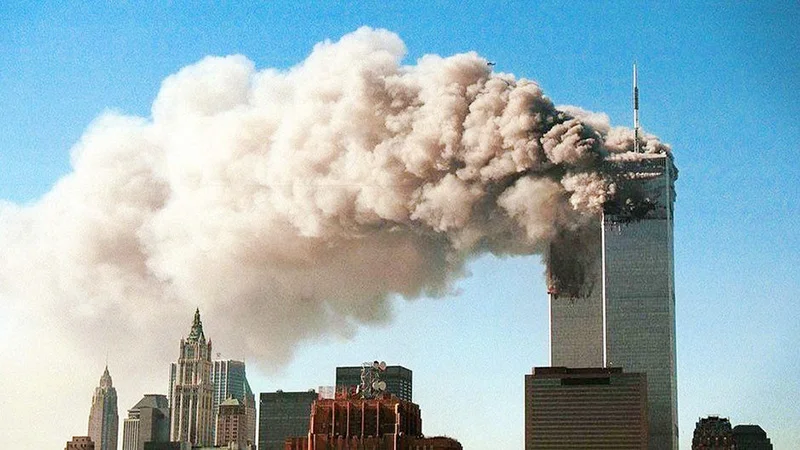
By Lynn Ockersz
The 9/11 explosion of pent-up hate,
Has left a slow-burning sorrow,
In the hearts of the sensitive few,
Proving humanity yet has some space,
But the root causes of the savagery,
Are being given short shift,
By those who could make a change,
Signaling to the sowers of division,
That their Day of Reckoning,
May perhaps never ever come.

Showers about 75 mm are likely at some places in the Western, Sabaragamuwa, Central and Southern provinces

Brook, Buttler, Baker star as Sri Lanka slump to 119-run rout

Where is Gnanasara Thera?Police pass buck to court

Russian citizens in Lanka to vote in State Duma elections

Euro 110,000 research drive to tackle plastic waste in food sector

New SAU-RCSS pact to boost South Asian dialogue

‘Dates have the highest sugar content to fight Coronavirus’

Sunday Island 27 December – Headlines

#SundayIsland 17th December – Headlines

Sunday Island – 28th March

Sunday Island Headlines – 21 March

Sunday Island – 21st February – Headlines
-

 Sports5 days ago
DDS set to lose Test captaincy
-

 News5 days ago
Sri Lanka faces new grid challenge as rooftop solar surges: former CEB GM
-

 Latest News5 days ago
Shafali, Deepti power India into sixth T20 Asia Cup final
-

 Latest News5 days ago
Sri Lanka thwart Fatima Sana challenge to secure Asia Cup final spot
-

 News3 days ago
Gnanasara Thero absconding after SC ruling
-
 Features6 days ago
Lost for 90 years: Rare Goby resurfaces in Jaffna
-

 News4 days ago
Ammunition cache found in old Kandy bungalow
-
 Latest News7 days ago
Italian Naval Vessel ‘ITS Giuseppe Garibaldi’ arrives in Colombo