
Business
Volt Charge: A visionary JAT Holdings joint venture redefining the Global EV charger industry


JAT Holdings proudly introduces Volt Charge (VC), an ambitious joint venture that signifies a remarkable collaboration between Sri Lanka and Saudi Arabia, poised to revolutionize the global Electric Vehicle (EV) charging landscape. In partnership with Saudi-based Safari Group, QSS Robotics, and Sri Lankan tech trailblazer Cyrus, Volt Charge is on a mission to set new industry standards, with JAT Holdings PLC at the helm of this visionary initiative.
Aelian Gunawardene, Founder & Managing Director at JAT Holdings PLC expressed his enthusiasm saying, “Volt Charge embodies our vision of pioneering innovation. This joint venture represents the convergence of diverse talents and resources from Sri Lanka and Saudi Arabia to reshape the EV charging industry worldwide. We are proud to be leading the charge, change and transformation towards a greener transportation infrastructure together with like-minded partners, in keeping with our commitment to a sustainable future.”
Cyrus, a brand owned by Cyrus EV Charger Pvt Ltd, leads the frontier of innovation in Sri Lanka in EV charging and charger manufacturing. Promising to redefine the way the world powers its electric vehicles, Cyrus boasts a dedicated team led by Dr Beshan Kulapala, the pioneer behind manufacturing Sri Lanka’s and South Asia’s first-ever electric supercar, which was unveiled at the Geneva International Motor Show in 2020. A trailblazing tech entrepreneur focused on developing high-tech solutions on a global scale, Dr Kulapala has created Sri Lanka’s largest EV charging network with homegrown EV Chargers.
Commenting on the partnership, Dr Kulapala added, “We’re excited to be part of this endeavour not only as a technology partner but also as a shareholder of a global enterprise to shape the future of EV charging. Volt Charge will not only provide advanced technology but also contribute significantly to the global sustainability cause, thanks to our breakthroughs in innovation in the field.”
The joint venture, Volt Charge, symbolizes JAT Holdings’ unwavering commitment to shaping the future and diversifying its portfolio to meet the ever-growing demands of the world while expanding its global presence. Bolstered by substantial multimillion-dollar investments from JAT, Safari, and QSS, and harnessing Cyrus’s expertise in EV charging technology, this partnership aims to carve a significant niche in the expansive $90 billion global EV charging industry.
Volt Charge is making an impressive entrance with its state-of-the-art 22kW Level-2 charger, featuring an industry-leading interactive user interface. In a bid to exceed current competitors, Volt Charge envisions a charging experience that resonates profoundly with customers, setting new benchmarks in the industry. Its ambitious roadmap includes a range of fast-charging technologies and visionary pursuits, such as wireless and robotics charging solutions, designed to anticipate the needs of the future.
The first set of Volt Charge EV chargers is slated for commercialization and launch with the commencement of Volt Charge’s manufacturing plant in Saudi Arabia by March 2024, ensuring a steady supply of cutting-edge chargers for the global market.


The inaugural Sri Lanka Fintech Summit 2025 concluded with industry leaders and regulators establishing two critical national priorities: a bold target to reduce physical cash usage and a push for consolidated regulatory oversight.
In a key decision, participants set a clear three-year goal to lower the ratio of cash in circulation to GDP from 4.5% to 3.5%. The strategy will focus on digitizing high-cash sectors like transport, utilities, and SME payments, while expanding digital access through post offices and cooperatives.
For the long-term health of the ecosystem, stakeholders agreed to lobby for the creation of a single, unified regulatory authority dedicated to fintech oversight. This aims to streamline approvals and provide clearer guidance for innovators.
“Our members needed to leave with concrete action points,” said Channa de Silva, Chairman of the Fintech Forum, Sri Lanka. The summit, designed as a series of closed-door roundtables with regulators including the Central Bank, produced actionable frameworks. “It was about defining KPIs, setting targets, and giving the industry a shared direction,” de Silva explained.
The outcomes signal a concerted shift from discussion to execution, aiming to build a more inclusive, efficient, and secure digital financial economy for Sri Lanka.
By Sanath Nanayakkare ✍️
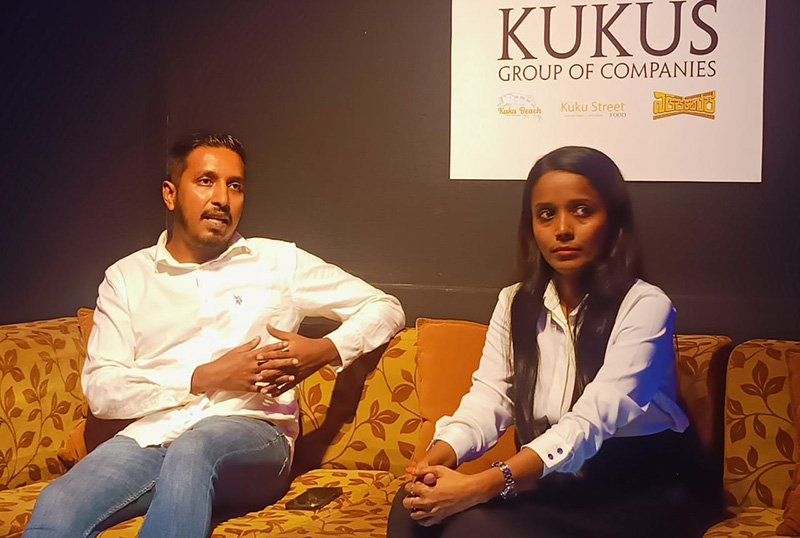
A new force in Sri Lanka’s food industry, Kukus Group, is gaining momentum with a clear vision to deliver authentic cuisine, high hygiene standards, and affordability. Founded by young entrepreneurs Nadeera Senanayaka, Lakmini Gurusinghe, and Randila Gunasinghe, the group has successfully launched its pilot outlet and is now preparing for a significant nationwide expansion.
The inaugural in Kotte has served as a successful proof of concept. Operating for five months, this modern street-food outlet has garnered a strong customer response, confirming market demand and providing the confidence to fund the group’s ambitious growth strategy.

The inaugural in Kotte
“The positive reception has been overwhelming and has solidified our plans,” said Lakmini Gurusinghe and Randila Gunasinghe. “Our Kotte outlet is the operational model we will replicate – ensuring consistent quality, disciplined operations, and excellent service across all future locations.”
The group’s expansion strategy is built on three distinct thematic brands:
Kukus Street: Targeting young urban customers, these outlets offer a vibrant, casual dining experience with a menu of Sri Lankan rice and curry, kottu, snacks, and BBQ, with most meals priced under Rs. 1,500. Services include dine-in, takeaway, and delivery.
Kukus Beach: Planned for coastal areas, beginning in the South, this concept will feature an urban-style beach restaurant and pub designed for relaxed social dining.
Kukus Bioscope: Celebrating Sri Lanka’s cinematic heritage, this dedicated restaurant concept will create a nostalgic cultural space inspired by the golden eras of Sinhala cinema, with the first outlet slated for Colombo.
The immediate plan includes transforming the flagship Kotte location into Kukus Pub & Bar, pending regulatory approvals. The long-term vision is to develop 18 outlets nationwide: 10 Kukus Street locations, 5 Kukus Beach venues, and 3 Kukus Bioscope establishments.
“Kukus Group is more than a hospitality brand; it’s a celebration of Sri Lankan flavors and culture,” the founders concluded. “Our mission is to build trusted, recognizable brands that connect deeply with communities and offer lasting cultural value alongside authentic cuisine. We are dynamic and excited to proceed with this strategic expansion,” they said.
By Sanath Nanayakkare

Fcode Labs marked its seventh anniversary by hosting its annual Awards Night 2025 at Waters Edge, celebrating team achievements and reinforcing its organizational values.
The event featured keynote addresses from Co-Founders & CEOs Buddhishan Manamperi and Tharindu Malawaraarachchi, who reflected on the company’s annual progress and future strategy. Chief Operating Officer Pamaljith Harshapriya outlined operational priorities for the next phase of growth.
Awards were presented across three key categories. Prabhanu Gunaweera and Dushan Pramod received Customer Excellence awards for partner collaboration. Performance Excellence awards were granted to Munsira Mansoor, Thusara Wanigathunga, Thushan De Silva, Adithya Narasinghe, Avantha Dissanayake, Amanda Janmaweera, Sithika Guruge, and Sandali Gunawardena. The Value-Based Behaviour awards were given to Thilina Hewagama, Udara Sembukuttiarachchi, and Kavindu Dhananjaya for exemplifying company values.

BCB’s integrity unit finds ‘credible suspicion’ during BPL

Devine’s 95 trumps Lee, Wolvaardt fifties in see-saw thriller

Fairly heavy showers about 75 mm are likely at some places in the Western, North-western and Sabaragamuwa provinces

President proposes; Speaker disposes

Sri Lanka loses Rs.7.5 bn due to coal tender irregularities: FSP

CID summons SJB MP for criticising education reforms

‘Dates have the highest sugar content to fight Coronavirus’

Sunday Island 27 December – Headlines

#SundayIsland 17th December – Headlines

Sunday Island – 28th March

Sunday Island Headlines – 21 March

Sunday Island – 21st February – Headlines
-

 News1 day ago
Sajith: Ashoka Chakra replaces Dharmachakra in Buddhism textbook
-

 Business1 day ago
Dialog and UnionPay International Join Forces to Elevate Sri Lanka’s Digital Payment Landscape
-

 Features1 day ago
The Paradox of Trump Power: Contested Authoritarian at Home, Uncontested Bully Abroad
-

 News6 days ago
Interception of SL fishing craft by Seychelles: Trawler owners demand international investigation
-

 News1 day ago
Level I landslide early warnings issued to the Districts of Badulla, Kandy, Matale and Nuwara-Eliya extended
-

 Features1 day ago
Subject:Whatever happened to (my) three million dollars?
-

 News6 days ago
Broad support emerges for Faiszer’s sweeping proposals on long- delayed divorce and personal law reforms
-

 News1 day ago
65 withdrawn cases re-filed by Govt, PM tells Parliament