
Business
Victoria Golf & Country Resort awarded Sri Lanka’s Best Golf Course at World Golf Awards


Victoria Golf & Country Resort (VGCR) secured the award for Sri Lanka’s best golf course at the eighth Annual World Golf Awards. The World Golf Awards celebrate and reward excellence in golf tourism, world-class courses and golf destinations, recognizing leaders setting the benchmark in the industry. Votes are cast by professionals working within the golf industry and by golf tourism consumers.
VGCR is owned by John Keells Properties (JKP) and managed by Troon International. It is located by the Victoria Reservoir, in the hills of Digana. The golf course has been lauded for its picturesque nature and unique sporting experience.
“Victoria Golf & Country Resort’s recognition at the World Golf Awards is a validation of JKP’s investment in its properties and future growth, the untiring efforts of the staff and the faith that members, residents and guests have in the quality and distinctive experience on offer at the resort,” said Nayana Mawilmada, Sector Head of John Keells Properties and Executive Vice President – JKH.
The award also has considerable significance for Sri Lanka’s tourism sector. “Sri Lanka’s tourism industry is in the process of recovering from the pandemic. As we continue to navigate current challenges and as global tourism and travel gradually open, it is important to keep building and investing for the future. Golf tourism constitutes a key segment of the global travel and tourism marketplace. The award also provides a boost for the country as it signals Sri Lanka’s numerous offerings and experiences that speak to a wide demographic of global travellers,” noted Asela Wavita – General Manager of Victoria Golf and Country Resort.
The unique shapes and contours of VGCR, flanked by scenic vistas, create a challenging and memorable sporting experience even for seasoned golfers who have experienced fine courses around the world. Landscaped on a 517-acre land, the course was designed by Donald Steele & Co. in 1977 and is ranked among the “100 Most Beautiful Golf Courses in the World” by Golf Digest. VCGR’s recently introduced turnkey holiday villas and townhouses located within the golf course have been well received. Over 50% of Sunrise Ridge Holiday Homes have been sold to date while all premium land plots from phase one, which was launched in September 2020, have been sold out.
Further, the golf course and its facilities have been extensively renovated recently – the course was laid out with Turf Grass “Zorro Zoysia” from USA and installed with state-of-the-art automated irrigations systems. The recent award at the World Golf Awards reaffirms the quality of the course, unique experience and world-class standards at the Victoria Golf & Country Resort.
Victoria Golf & Country Resort is managed by Troon International, the biggest golf resort and club management company with over 640 resorts around the world. Through its partnership with VGCR, Troon International brings world-class agronomy practices and turf management as well as club house management and operations, offering unique golfing experiences in Sri Lanka and exclusive benefits and access to Troon-managed courses around the world for members of VGCR.
The World Golf Awards™ is part of World Travel Awards™, which is currently celebrating its 27th anniversary. Their global media partners include Destination Golf, TV5Monde, International New York Times, Bloomberg and CNBC with a monthly readership of 1.7 million and a TV audience reach of 90 million.



The Asian Development Bank (ADB) has approved a $100 million results-based loan to help Sri Lanka transform its technical and vocational education and training (TVET) system, equip more young people with industry-relevant skills, and strengthen the country’s competitiveness and inclusive growth.
The Skills Development System Transformation Program will support the Government of Sri Lanka’s efforts in improving the quality and relevance of skills training, strengthening links between training providers and industries, and expanding employment opportunities for youth. The program will increase women’s employment opportunities in nontraditional jobs in fields including automotive technology, engineering, information and communications technology, construction, and renewable energy.
“A skilled workforce is essential to Sri Lanka’s long-term economic transformation and competitiveness,” said ADB Country Director for Sri Lanka Shannon Cowlin. “This program will help create stronger pathways from education to employment by making training more responsive to industry needs, expanding opportunities for young people and women, and ensuring that graduates have the skills required by a modern and evolving economy.”
Though Sri Lanka’s economy is recovering, it faces skills shortages in priority sectors, high youth unemployment, and low female labor force participation. Many employers report difficulty finding workers with the skills needed in a changing economy.
Aligned with the Government of Sri Lanka’s Technical and Vocational Education and Training Sector Strategic Framework 2026–2035, the nationwide program will be implemented from 2027 to 2031 and is expected to directly benefit more than 100,000 young people through improved access to quality, employment-oriented training.
By Ifham Nizam
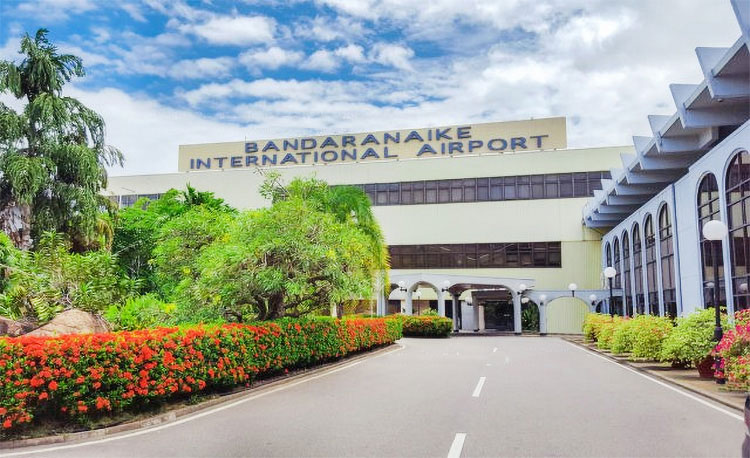
The government has cleared a USD 40.84 million and Rs. 8,548.75 million contract to build a dedicated aviation fuel pipeline from Muthurajawela to Bandaranaike International Airport (BIA), alongside a massive new fuel storage facility with a capacity of 92,000 cubic metres.
Energy Minister Anura Karunatilaka said the project represented a major investment in strengthening the infrastructure underpinning Sri Lanka’s aviation fuel supply and ensuring more reliable fuel availability at the country’s main international airport.
‘This project will provide the infrastructure required to strengthen the reliability and continuity of aviation fuel supplies to Bandaranaike International Airport, Karunatilaka said.
The contract has been awarded to China Petroleum Pipeline Engineering Company Limited, following an international competitive procurement process in which three bids were received.
The project will see a new aviation fuel storage tank complex constructed at Muthurajawela, together with the associated infrastructure required for handling and transferring aviation fuel.

By Hiran H Senewiratne
Trading activity on the Colombo Stock Exchange (CSE) gathered pace yesterday as global fuel prices began to show signs of easing, according to market analysts.In this context, both indices moved upwards. All Share Price Index up by 67.97 points while S and P SL20 up by 8.30 points.
Turnover stood at Rs 1.4 billion with seven crossings. Those crossings were reported in Sampath Bank 1.7 million shares crossed to the tune of Rs 238 million and its share price traded at Rs 140, Access Engineering two million shares crossed to the tune of Rs 159 million and its share price traded at Rs 79.50, LOLC one million shares crossed to the tune of Rs 129 million and its share price traded at Rs 129, HNB 100,000 shares crossed to the tune of Rs 38.4 million and its share price traded at Rs 384, JKH 1.9 million shares crossed to the tune of Rs 35 million and its share price traded at Rs 18.60, Hayleys 100,000 shares crossed to the tune of Rs 22.50 million and its share price traded at Rs 225 and Richard Pieris 847,000 shares crossed to the tune of Rs 22 million and its share price traded at Rs 25.50.
In the retail market top seven companies that have mainly contributed to the turnover were Sampath Bank Rs 114 million (813,000 shares traded), JKH Rs 100 million (5.3 million shares traded) LB Finance Rs 49 million (325,000 shares traded), HNB Finance Rs 30 million (27 million shares traded), HNB Rs 27 million (70000 shares traded), NTB Rs 25 million (82000 shares traded ) and Lanka IOC Rs 21 million (666,000 shares traded). During the day 65 million shares volumes changed hands in 10433 transactions.
The Banking and manufacturing sector counters performed well. In the banking sector Sampath Bank let the market while manufacturing sector especially JKH also significantly performed well. With the fuel revision Land IOC also a significant stock at the floor.
Meanwhile, First Capital Treasuries said that Ramesh Schaffter resigned as a Non-Independent Non-Executive Director with effect from October 1, to facilitate the restructuring of the company’s board.
Yesterday the Central Bank announced the US Dollar rate as against rupee. The rupee was quoted flat at Rs 330.65/80 to the US dollar in the spot market , while bond yields dropped, dealers said.

Ambassador of the UAE to Sri Lanka meets with the Prime Minister

EU rejects Trump’s diesel demand amid Iran war shortages

Sineth Jayawardena, Vijayakanth Viyaskanth in Sri Lanka squad for Pakistan T20Is

Bronze at stake as Bangladesh, Sri Lanka look to bring cheer to Asian Games contingents

Wanderers to host 2027 men’s ODI World Cup final as well as India vs Pakistan

Prime Minister joins Gandhi Jayanti Commemoration

‘Dates have the highest sugar content to fight Coronavirus’

Sunday Island 27 December – Headlines

#SundayIsland 17th December – Headlines

Sunday Island – 28th March

Sunday Island Headlines – 21 March

Sunday Island – 21st February – Headlines
-

 Editorial7 days ago
Birth of a bad law
-

 News5 days ago
Police remove Thileepan statue in Jaffna
-

 News7 days ago
TIN mandatory for key transactions from Nov. 1
-

 Features5 days ago
The 22nd Amendment, constitutional recovery and illiberal slippage
-

 Features5 days ago
Of foreigners as CEOs of Lankan ventures
-

 Latest News3 days ago
Gold winner Tharanga gets brand-new Honda Vezel from SLAAJ
-

 News5 days ago
Sajith rejects Jt. Opp. protest sabotage claim; SJB TU chief demands remedial action
-

 Features4 days ago
Thailand’s biggest new global star …