
Business
Vehicle importers await duty structures and Import Controller’s circular to banks

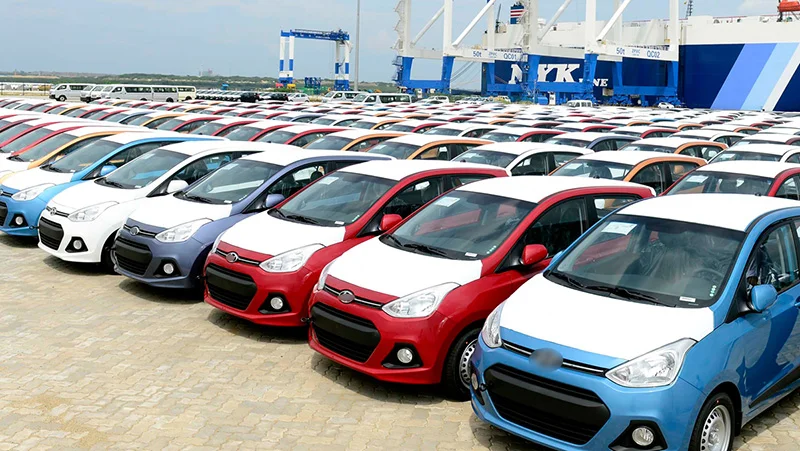
Following govt’s gazette to resume vehicle imports
By Sanath Nanayakkare
Prasad Manage, the President of the Vehicle Importers’ Association of Sri Lanka (VIASL), yesterday said that the registered vehicle importers are eagerly waiting for the government to issue the four-duty structures applicable to vehicle imports as well as the circular to the banks from the Import Controller, following the extraordinary gazette notification regarding the import of vehicles on Jan. 27, 2025, by President Anura Kumara Dissanayake as the Minister of Finance.
The new gazette allows the importation of 25-seater (or more) buses, 10-to-16-seater passenger transport vans, double cab, and lorries.
Manage said that their industry has received the good news that 4 types of vehicles were opened up for importation, for which the duty structures have yet to be issued by the authorities.
“We hope that circular would be issued soon. We also hope that car imports for personal use will be opened up shortly. This will have a progressive impact on the economy of the country,” he said.
He pointed out that the 5-year ban on vehicle imports has had an adverse impact on direct and indirect jobs of the industry.
“The businesses that put up shutters will revive with this move, and it will increase the money circulation in the country. Also, the government will be able to reach its revenue targets as a result of it. The job losses suffered by clearing agents, lorry drivers, car carrier operators, spare parts sellers, garages etc. will also be revived with the move. It will serve as a stimulant to the economy. “he said.
“Importation of vehicles for personal use has not opened yet. We hope as the President said, a gazette would be issued on Feb. 1, regarding that too. Our wish is to enable the consumers buy a good vehicle at a good price for them. However, to get a correct understanding of what prices they could purchase, depends on the duty structures and other things to be announced yet,” he said.
Responding to questions from the media about how the existing prices on old vehicles will behave in the new circumstances, he said,” I can’t exactly say without having the duty structures. From our experience, I would say that chances are the prices of some old vehicles will come down while some will go up.”
“For example, we might be able to import a [double] cab for Rs. 25-26 million. Accordingly, the prices of old cabs may come down. The price of a 15-seater van could go up because the CIF price and the duty on it has gone up. Our objective is to let the consumers buy good vehicles at reduced prices if we get less taxes. We have requested the government to reduce the tax structure a bit. If that is granted, we can bring vehicles at reduced prices,” he said.
He noted that if car imports are allowed by Feb. 1, they can bring the vehicles to Sri Lanka in three weeks.
He mentioned the fact that banks need to receive a circular from the Import Controller to enforce the new gazette notification and open LCs for the four types of vehicles currently allowed.”.
The new gazette, however, has revised vehicle import regulations under Import and Export Control Act. They included: registration requirements with the TIN number, import limits for individuals, penalties for over-importation and re-export regulations if in violation of new regulations.
Sri Lanka’s Cabinet of Ministers had decided to lift all vehicle import restrictions by February 2025, according to a comment made by the then foreign minister Ali Sabry, on September 12, 2024.

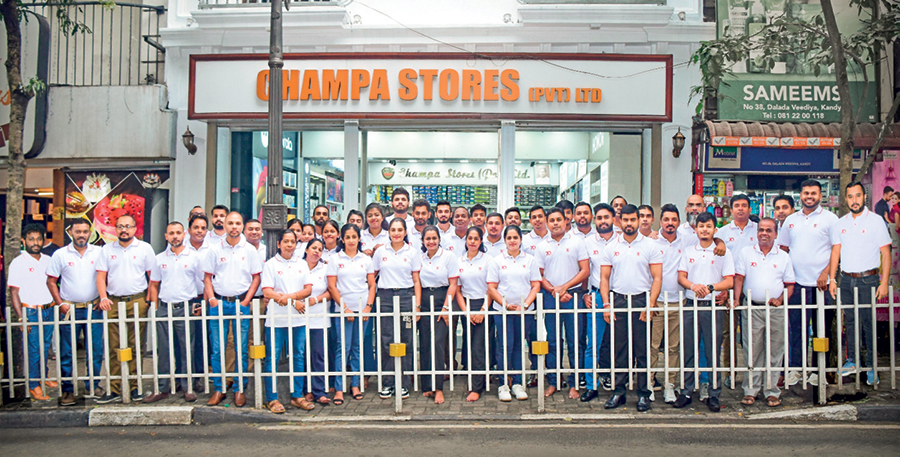
A longstanding fixture in Kandy’s commercial landscape, Champa Stores marks its 70th anniversary this year, underscoring a legacy built on trust, reliability and consistent quality across a diverse range of products and services.
Founded in 1956 by Wimaladasa Weeraratne, the business traces its origins to a modest beginning when three brothers from Matara relocated to Kandy in the 1950s in search of opportunity. Their entrepreneurial drive would go on to shape a lasting contribution to the city’s commercial life.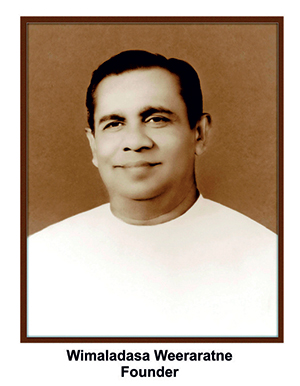
While Wimaladasa established Champa Stores, his brothers carved out their own successful ventures. Dharmadasa Weeraratne founded Devon, while Daya Weeraratne established Bakehouse. Both enterprises have since become well-known names in the city’s hospitality and bakery sectors, with Devon further expanding to include the The Grand Kandyan Hotel. Today, all three businesses continue to operate under the stewardship of the family’s next generation.
Over the decades, Champa Stores has evolved into a prominent retail and service hub, offering a wide selection of products ranging from mobile phones and laptops to audio equipment, accessories and sports goods. Its printing division, in particular, has earned a strong reputation for delivering high-quality services in Kandy.
Despite its growth, the business has retained the personal touch that has endeared it to generations of customers. Longtime patrons point to knowledgeable staff, dependable after-sales service and a customer-focused approach as key factors behind its enduring appeal.
Currently employing over 50 staff members, the business is managed by Chapa Weeraratne, representing the second generation of family leadership.
As it celebrates seven decades in operation, Champa Stores stands as one of Kandy’s enduring family-run enterprises—demonstrating that a reputation built on trust and service can successfully span generations.
By S.K Samaranayake
Business
Dialog Voted Service Brand and Telecommunication Brand of the Year at SLIM-KANTAR People’s Awards 2026

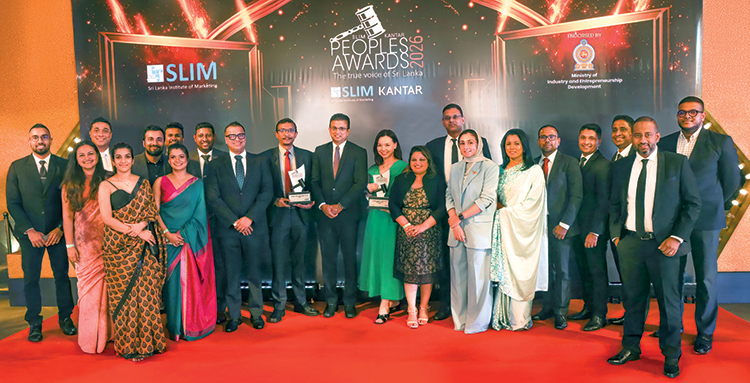
Dialog Axiata PLC, Sri Lanka’s #1 connectivity provider, announced that it has been recognised as the ‘Service Brand of the Year’ for the 5th time and the ‘Telecommunication Brand of the Year’ for the 15th consecutive year at the SLIM-KANTAR People’s Awards 2026, held on 18 March 2026. Voted by Sri Lankans through a nationwide consumer survey, the recognition reflects the continued preference for Dialog’s services and the trust placed in the brand across the country.
Since its inception in 2007, the SLIM-KANTAR People’s Awards have been based on consumer sentiment across multiple categories, recognising brands and individuals through public perception as an independent measure of brand affinity.
Supun Weerasinghe, Director / Group Chief Executive of Dialog Axiata PLC said, “We are grateful for this continued confidence, which reinforces the responsibility we carry in serving millions of customers across the country. As we continue to evolve our services and digital platforms, our focus remains on delivering consistent, high-quality experiences while staying true to our purpose of empowering and enriching Sri Lankan lives and enterprises.”
As a recognition shaped by the voice of consumers across the country, these accolades reflect Dialog’s continued relevance in a rapidly evolving digital landscape, underscoring its role in supporting the connectivity needs of individuals, homes and businesses across Sri Lanka.
When you think of sharks in Sri Lanka, your mind probably goes to the sleek blacktip reef sharks gliding through the reefs of Pigeon Island. But what most people don’t realise is that Sri Lanka is home to over 100 species of sharks and rays—ranging from reef dwellers and open-ocean giants to mysterious deep-sea, with some juvenile bull sharks being found even in freshwater!. They’re scattered across almost every part of the coastline, from coral reefs and estuaries to muddy lagoons and inland waterways. Yet despite their presence, these fascinating creatures remain deeply misunderstood and largely unprotected in national conservation efforts.
Chances are, if you’ve eaten karawala (dried fish) in Sri Lanka, you’ve possibly eaten shark—without even knowing it. Shark meat often ends up in local markets with no species names, and no questions asked. But here’s the catch: unlike fast-growing fish like sardines or mackerel, most sharks and rays grow slowly, mature late, and have very few offspring. Some only give birth once every couple of years. That means that their populations are usually precarious and they are sensitive even to small-scale fishing operations, which push their populations into serious decline. And in Sri Lanka, while vessel sizes are smaller in comparison to many developed countries, the number of vessels combined with their fishing techniques has resulted in the depletion, and in the case of sawfishes, a likely local extinction.
That’s where Important Shark and Ray Areas (ISRAs) come in. ISRAs are a global science-based tool designed to designate places that matter most for sharks, rays, and chimaeras. They aren’t marine protected areas and don’t come with legal restrictions—but they highlight critical habitats based on rigorous scientific criteria. These include areas used for breeding, feeding, migration, or home to rare, threatened, or range-restricted species.
In 2024, after a thorough review and vetting process, five (of the seven) proposed areas from Sri Lanka were formally designated as ISRAs
Bathalangunduwa Island, located on the fringes of the shallow coastal Puttalam Lagoon and off the coast of Wilpattu National Park in northwestern Sri Lanka, qualifies as an ISRA based on the presence of the threatened Winghead Shark (Eusphyra blochii). This area meets two ISRA criteria: it supports a vulnerable species and functions as a reproductive habitat.
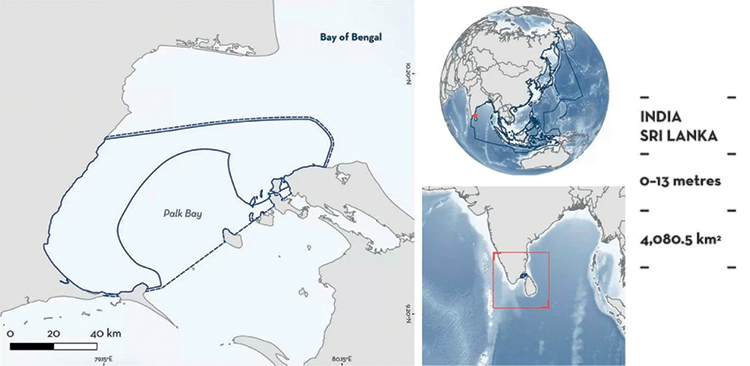
Palk Bay, a shallow, semi-enclosed water body shared between India and Sri Lanka, qualifies as an ISRA due to the presence of multiple important species. These include the threatened Shorttail Whipray (Maculabatis bineeshi), the range-restricted Sharpnose Guitarfish (Glaucostegus granulatus), and reproductive populations of the Grey Sharpnose Shark (Rhizoprionodon oligolinx). This was one of the few trans-boundary ISRAs covering both Indian, and Sri Lankan waters.
-
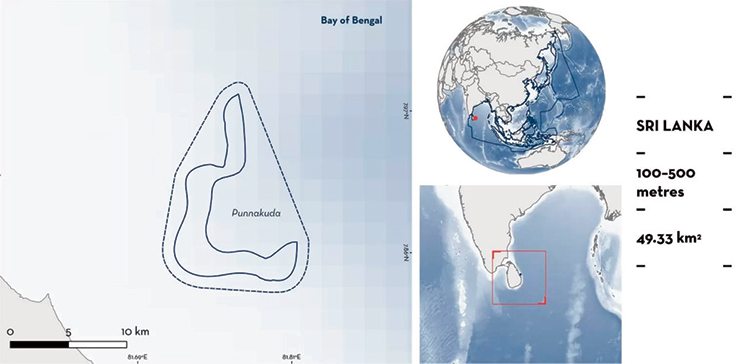
- Punnakuda ISRA
-

- Pigeon Island ISRA
-

- Pasikuda & Kalkudah ISRA
-
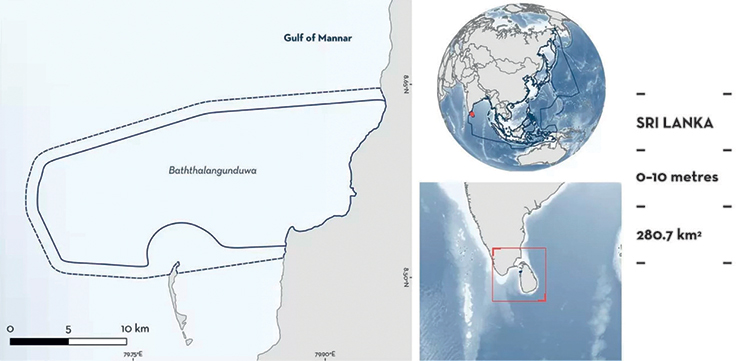
- Baththalangunduwa ISRA
Pasikudah & Kalkudah, a coastal stretch in Sri Lanka’s Batticaloa District, is known for its coral reefs and nearshore shark activity. This ISRA qualifies due to the presence of threatened and range-restricted species, such as the Stripenose Guitarfish (Acroteriobatus variegatus).
Punnakuda Canyon, a deep-sea canyon located just offshore from Pasikudah & Kalkudah and beyond the boundaries of the coastal ISRA, qualifies based on the presence of threatened and range-restricted deep-sea species, including the Indian Swellshark (Cephaloscyllium silasi).
Pigeon Island, the only ISRA in Sri Lanka that overlaps with a Marine Protected Area—the Pigeon Island Marine National Park—qualifies due to the presence of threatened species and undefined aggregations, notably the Blacktip Reef Shark (Carcharhinus melanopterus).
These areas are already designated ISRAs. In addition to this Sri Lanka also has two “Areas of Interest”; Koddiyar Bay and Hikkaduwa.
While these ISRAs don’t enforce protection on their own, except for Pigeon Island, which happens to overlap with an already established National Park, they’re a vital starting point. They help guide where marine protected areas might be placed, where fishing regulations could be refined, and where development should tread carefully. For Sri Lanka, ISRAs offer a powerful chance to align conservation and fisheries planning before it’s too late.
Most importantly, ISRAs are created using available scientific knowledge. Organisations like Blue Resources Trust (BRT) were able to contribute to the designation of ISRA’s due to long-term monitoring of shark and ray fisheries across the country. BRT has built the largest dataset on Sri Lankan sharks and rays, thanks to contributions from the Tokyo Cement Group, the Save Our Seas Foundation (SOSF), the Marine Conservation and Action Fund (MCAF) of the New England Aquarium, the Hong Kong Ocean Park Conservation Foundation (OPCFHK), the Prince Bernhard Nature Fund, amongst others.
By designating our ISRAs, Sri Lanka now has the recognition to make smarter, science-led decisions for the ocean’s most vulnerable species.
As shark and ray populations decline under pressure from overfishing, habitat loss, and climate change, knowing where they still have a chance to thrive is the first step toward saving them. Through ISRAs, Sri Lanka can take the lead in showing how conservation and coastal livelihoods can go hand in hand.
To explore ISRA maps and learn more, visit: https://sharkrayareas.org

Trump says US will ‘obliterate’ Iran’s power plants if Strait of Hormuz not open before 48-hour deadline

Showers may occur at several places in the Western, Sabaragamuwa and Southern provinces and in Nuwara-Eliya district after 1.00 pm.

PM Harini leads panel to protect public services

Sajith slams President over war conduct and economic missteps

Johnston Fernando, sons held in Lanka Sathosa lorry misuse case

Gura: The unsung hero

‘Dates have the highest sugar content to fight Coronavirus’

Sunday Island 27 December – Headlines

#SundayIsland 17th December – Headlines

Sunday Island – 28th March

Sunday Island Headlines – 21 March

Sunday Island – 21st February – Headlines
-

 Business7 days ago
Browns EV launches fast-charging BAW E7 Pro at Rs. 5.8 million
-

 News5 days ago
CIABOC questions Ex-President GR on house for CJ’s maid
-

 News6 days ago
Sri Lankan marine scientist Asha de Vos honoured at UNGA opening
-

 Features7 days ago
Achievements of the Hunduwa!
-

 News6 days ago
Australian HC debunks misleading travel risk claims for Sri Lanka
-

 News4 days ago
Bailey Bridge inaugurated at Chilaw
-

 Latest News6 days ago
Wednesdays declared a government holiday with effect from 18th March
-

 News4 days ago
Pay hike demand: CEB workers climb down from 40 % to 15–20%