
Features
Unlocking shareholder value: How finance professors enrich corporate governance, maximise wealth


 I recently attended a conference “The AsianFA Annual Conference” at the University of Ho Chi Ming City (UEH University, Vietnam). The key note speech was delivered by Professor Roni Michaely, an Israeli academic specializing in Economics and Finance. Michaely is Professor of Finance at the University of Hong Kong, School of Business and Economics. Professor Michaely’s research has also received many awards and honours. Michaely published numerous works (several of which received best-paper awards) in high ranked academic journals. His research has been also frequently featured in the Wall Street Journal, the New York Times, the Economist, Investor’s Business Daily, the San Francisco Chronicle, BusinessWeek, Forbes, Barrons, Money, Reuters, Worth, among others.
Prof Michaely presented a paper utilizing a unique dataset comprising nearly one million voting rationales provided by investors. The research findings shed light on the motivations behind institutional investors’ voting decisions and their impact on corporate governance practices.
The first finding reveals that institutional investors are more likely to provide rationales when voting against management, indicating that they disclose their concerns over management practices.
The most significant reasons include board independence, board diversity, tenure, firm governance, and busyness. These factors play a crucial role in institutional investors’ decision-making process when opposing directors.
Furthermore, the research highlights an increasing trend among institutional investors to vote against directors who have failed to address environmental and social issues adequately. This indicates a growing emphasis on holding directors accountable for their actions and the impact of their decisions on broader societal concerns.
The study finds that institutional investors’ concerns are well-founded, as companies with low board gender diversity receive more rationales regarding board diversity. Similar patterns are observed for companies with long director tenure and directors with busy schedules.
Finally, the research demonstrates that companies that experience high dissent voting related to board diversity, tenure, and busyness tend to improve their board composition in the subsequent year. This suggests that voting rationales containing investors’ reasons for opposing directors serve as valuable information for firms, enabling them to address governance shortcomings and promote better practices within their portfolio companies.
In summary, this particular study shows that institutional investors are more likely to provide rationales when voting against management, indicating their concerns over management practices. Key factors driving opposition to directors include board independence, diversity, tenure, firm governance, and busyness. Institutional investors are increasingly voting against directors to hold them accountable for addressing environmental and social issues. Companies with low board diversity, long director tenure, and busy directors receive more rationales related to these factors. Moreover, companies with high dissent voting on board diversity, tenure, and busyness tend to improve their board composition in the following year. These findings suggest that voting rationales contain valuable information for firms and serve as a low-cost strategy to promote good governance practices in portfolio companies.
Another researcher revealed that to maintain diversity in corporate boards they hire finance professors from universities. That strategy serves many purposes;
Financial Expertise:
Finance professors possess specialized knowledge and expertise in the field of finance. They bring a deep understanding of financial concepts, markets, and instruments to the boardroom. Their expertise can enhance the board’s ability to make informed decisions regarding financial strategies, investments, risk management, and capital allocation.
Research and Data Analysis:
 Finance professors are well-versed in conducting rigorous research and analyzing complex data. They can provide valuable insights based on empirical evidence and help the board in assessing the financial implications of various strategic choices. Their analytical skills enable them to identify trends, risks, and opportunities, guiding the board’s decision-making process.
Teaching and Communication Skills: As educators, finance professors possess strong teaching and communication skills. They can effectively articulate financial concepts, principles, and strategies to fellow board members who may not have a finance background. Their ability to simplify complex financial information can foster better understanding and facilitate more meaningful discussions among board members.
Objective and Independent Thinking: Finance professors often maintain a degree of independence and objectivity in their research and analysis. This mindset can be valuable in the boardroom, where unbiased thinking is crucial. They can challenge prevailing assumptions, ask critical questions, and provide alternative perspectives, contributing to more robust board deliberations and decision-making.
Academic Network and Industry Insights: Finance professors typically maintain extensive networks within academia and the industry. They have access to the latest research, trends, and best practices in finance. This network can provide valuable insights and connections that can benefit the board in staying updated on emerging financial issues, regulatory changes, and industry developments.
Institutional Knowledge and Governance Expertise:
Finance professors often have a deep understanding of corporate governance practices and frameworks. They can bring this knowledge to the board, helping to enhance governance processes and ensure compliance with regulatory requirements.
Their familiarity with governance principles can contribute to improving board effectiveness, transparency, and accountability.
Bridge between Academia and Practice:
Hiring finance professors to cooperate boards creates a bridge between academia and the corporate world. They can facilitate the transfer of knowledge, research findings, and best practices from the academic realm to practical applications in the boardroom. This integration can foster innovation, informed decision-making, and the adoption of evidence-based strategies.
In summary, hiring finance professors from universities to cooperate boards offers the advantages of financial expertise, research and data analysis skills, teaching and communication abilities, independent thinking, academic and industry networks, governance expertise, and bridging the gap between academia and practice.
These benefits can strengthen board performance, contribute to sound financial decision-making, and enhance overall governance practices within organizations.
Another paper discussed on The growing demand for (environmental. Social and governance) ESG-related corporate information spurs the adoption of mandatory ESG disclosure regulations worldwide. We document that firms respond to these mandates by strategically adjusting productive assets through acquisitions and divestitures to enhance their ESG profiles. In particular, firms acquire more assets with strong ESG performance but divest those with weak ESG records, particularly in the wake of negative ESG incidents. Moreover, firms facing ESG disclosure mandates pay higher premiums for acquiring good-ESG assets and accept lower premiums for divesting poor-ESG assets. Acquisitions are more effective than divestitures for improving ESG performance and enhancing firm value.
Another paper points out that Researchers often study the relationship between CSR and firm value and the linkage between ownership and firm value separately. Only a few papers in the existing literature combine both the study branches, that is answering how ownership can affect the CSR-firm value relation. In this paper, we intend to fill this gap by investigating how state ownership can affect the mentioned relationship. Using a sample of Vietnamese listed firms, we figure out an interesting feature in the Vietnamese financial market. When the state is the sole large shareholder in a firm, it negatively affects the CSR-firm value relation. However, when there are foreign institutions concurrently appearing as other large shareholders, the state ownership then positively affects the mentioned relation. We interpret the phenomenon by using the overinvestment hypothesis. That is due to the agency problem, when the state presents as the only large shareholder, it uses the firm’s financial resources to overinvest in CSR activities to improve the state’s reputation in the public eye. However, doing that comes at the cost of other shareholders, specifically a decrease in firm value. Nevertheless, when foreign institutions come in, they can help monitor and alleviate the issue, therefore, the firm value increases. In this case, foreign institutional investors might play an effective role in mitigating the mentioned issue.
Another study from Korea argues that, the effects of corporate social responsibility (CSR) on firms’ stock performance were examined in the context of a corporate scandal closely tied to environmental and social (ES) issues, namely the humidifier disinfectant scandal in Korea. The researchers found that firms with higher ES ratings, particularly those with stronger social ratings, experienced significantly better stock performance during the product safety scandal. The findings highlight the influential role of CSR in shaping a company’s stock performance, especially when investors demonstrate significant attention to ES issues. This suggests that firms’ investments in CSR can effectively mitigate nonfinancial risks and contribute to their overall financial performance.
(The author, a senior Chartered Accountant and professional banker, is Professor at SLIIT University, Malabe. The views and opinions expressed in this article are solely those of the author and do not necessarily reflect the official policy or position of the institution he works for.)


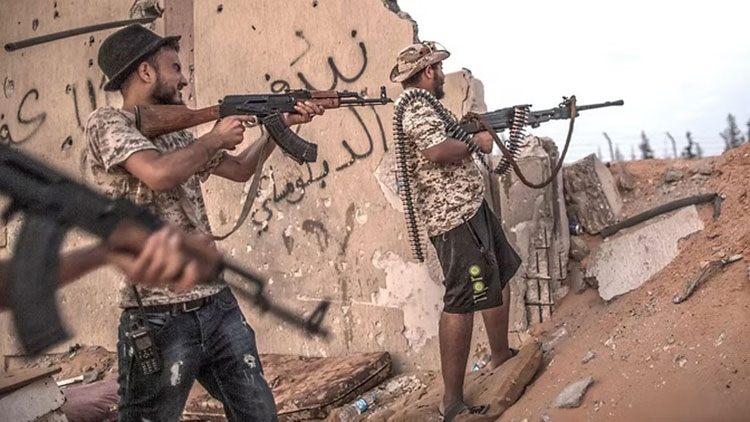
by Col. (R) Nalin Herath
There is a question that the international community must periodically ask itself: What happens to a State after its regime has been ousted?
The question is particularly relevant when examining Iraq and Libya. Saddam Hussein and Muammar Gaddafi were authoritarian rulers. Their governments were associated with political repression, human-rights violations and the suppression of political opposition. None of this should be ignored or excused. But recognising the failures of authoritarian rule does not prevent us from asking another, equally important strategic question:
Did the removal of these regimes adequately prepare for what came next?
The experience of Iraq and Libya suggests that removing a ruler is considerably easier than replacing the political, administrative and security architecture around that ruler.
Danger of confusing regime change with State reconstruction
A state is more than its leader. It consists of institutions, security forces, civil servants, courts, political structures, infrastructure, economic systems and, perhaps most importantly, an accepted monopoly over the legitimate use of force. When an authoritarian system has concentrated enormous power around one individual, removing that individual can expose weaknesses that were previously hidden. The strategic mistake is to assume that once the dictator has gone, a democratic and stable state will naturally emerge. History does not support such an assumption. The aftermath of Iraq demonstrates this particularly clearly. Following the 2003 invasion, the Coalition Provisional Authority issued Order No. 2, formally dissolving the Iraqi Ministry of Defence and the Iraqi Army, among other security institutions. A US congressional report later documented the enormous consequences of this decision, including the disappearance of hundreds of thousands of military personnel from the institutional framework of the state. Whatever the intentions behind the decision, the strategic consequence was that an established security structure had to be rebuilt while the country was simultaneously experiencing political upheaval and growing violence. That is a dangerous combination.
Iraq: Removing the structure before building the replacement
Saddam Hussein’s government was unquestionably authoritarian. It also reflected a complicated sectarian and political structure in which members of the Sunni minority occupied disproportionate positions of power despite being a demographic minority. But the question for strategic planners should not simply be whether Saddam deserved to remain in power. The question should have been:
What institutional structure would replace the system once he was removed?
An army can be politically controlled without being politically representative. A bureaucracy can serve an authoritarian government while still providing essential state functions. A security institution can be reformed without necessarily being destroyed. The distinction between reforming institutions and eliminating institutions is therefore critical. The post-2003 experience demonstrated the consequences of institutional disruption. Security vacuums contributed to insurgency and instability, while the process of rebuilding Iraq’s security forces took place amid an increasingly deteriorating security environment. The lesson is not that authoritarian institutions should never be reformed. The lesson is that state capacity should not be casually destroyed without a credible replacement.
Libya: prosperity, authoritarianism and institutional fragility
Libya presents an even more complicated case. Gaddafi’s government was authoritarian and deeply personalised. Political freedom was severely restricted, and the security apparatus was deliberately structured around regime survival. Yet Libya, under Gaddafi, also used substantial oil revenues to fund education, healthcare, infrastructure and social services. World Bank data from around the end of the Gaddafi era show life expectancy reaching approximately 75 years by 2011, skilled attendance at birth at 100 percent and measles immunisation at 98 percent. This does not prove that Gaddafi’s system was politically legitimate. It demonstrates something different: economic and social outcomes can coexist with authoritarian political structures.
The Great Man-Made River illustrates the scale of Libya’s investment ambitions. The World Bank described the project as one of the world’s largest engineering schemes, involving thousands of kilometres of planned pipelines to transport water from deep desert aquifers toward the populated coastal belt. The original project was estimated at approximately US$ 25 billion over several phases. Again, this should not become nostalgia for dictatorship. It should become a lesson in state capacity.
What happened after Gaddafi?
The post-2011 experience is perhaps the clearest illustration of the vacuum problem. Libya did not simply move from dictatorship to a consolidated democratic state. Instead, competing armed groups, political factions and institutions emerged. A UN economic and social affairs analysis concluded that the fall of the Gaddafi regime exposed weak state institutions and that the post-Gaddafi period was characterised by the proliferation of armed militias and institutional fragmentation.
The World Bank has similarly described how the security vacuum allowed armed groups to expand, while attempts to integrate them into the formal security apparatus produced a hybrid system in which state institutions and powerful armed groups operated alongside one another. This is the heart of the lesson. The consequences of regime change were also evident in Libya. The 2012 Benghazi attack, later portrayed in 13 Hours: The Secret Soldiers of Benghazi, illustrated the security vacuum that emerged after Gaddafi’s fall. The collapse of central authority allowed militias and competing armed groups to fill the space left by weakened state institutions. The lesson is clear: removing a regime may achieve military victory, but without a credible plan to rebuild the state, victory can quickly become a security vacuum.
When the state withdraws, something else occupies the space. If the replacement is not a legitimate national institution, the vacuum can be filled by militias, tribes, ideological movements, criminal networks or competing political authorities. The vacuum does not remain empty.
Terrorism question
There is another uncomfortable issue. Authoritarian regimes frequently suppress political and armed movements through coercive security systems. When those systems disappear abruptly, previously contained organisations can find new operating space. This does not mean that dictatorship is an appropriate method of counterterrorism. It means that counterterrorism cannot be separated from State capacity. The international community therefore needs to distinguish between defeating a particular terrorist organisation and maintaining the institutional conditions that prevent multiple armed actors from competing for power. The destruction of one regime does not automatically eliminate the forces that created insecurity. Sometimes it creates an environment in which those forces multiply.
Strategic mistake: winning the war but losing the peace
Military intervention can have a clearly defined operational objective. State reconstruction does not. A military campaign may successfully remove a government in weeks or months. Building legitimate institutions can take decades.This creates a fundamental strategic asymmetry. The shorter the planning horizon for intervention, the greater the danger of a long-term vacuum. The international community therefore needs to think beyond the first question: How do we remove the regime?
It must ask: Who governs the country the next morning? Who controls the borders? Who controls the security forces? Who pays government employees? Who maintains electricity, water and hospitals? Who protects critical infrastructure? Who administers justice? Who prevents armed groups from becoming alternative governments? Who provides political legitimacy? And perhaps most importantly: Who possesses the authority to enforce the decisions of the new state? If there are no convincing answers, regime change is only the beginning of the problem.
The lesson should not be that the United States or its allies should never intervene. Nor should it be that Saddam Hussein or Muammar Gaddafi should be rehabilitated as models of governance. The lesson is more practical. Regime change must never be confused with state-building.
Before dismantling an established political order, external powers need a credible understanding of the institutions that will replace it. Security-sector reform should normally distinguish between individuals who must be removed and institutions that must be preserved. A national army may need reform. A ministry may need restructuring. A security service may need accountability and civilian oversight. But destroying institutional capacity without having an operational replacement can create consequences far beyond the original objective.
Wider geopolitical lesson
The consequences of Iraq and Libya did not remain within their borders. State fragmentation affects neighbouring countries, migration, organised crime, arms trafficking, terrorism, energy markets and regional power competition. In today’s interconnected world, a failed transition in one country can become a security problem for an entire region. That is why intervention planning should include not only military objectives but also political, economic, humanitarian and security-sector objectives. The most important planning document may therefore not be the operational plan for removing the regime. It may be the plan for Day One after the regime has disappeared.
History should not be written as a simple choice between dictatorship and democracy. The real strategic challenge is more complicated. Saddam Hussein and Muammar Gaddafi were dictators. Their governments committed serious abuses, and their populations had legitimate grievances. But the failures of authoritarian rule do not automatically justify the destruction of state institutions without a credible plan for rebuilding them. The experience of Iraq and Libya demonstrates a fundamental principle of international security: A political vacuum is not neutral space. Someone will fill it. If legitimate national institutions cannot fill that space, armed groups, sectarian interests, extremist organisations or foreign-backed factions may do so. The ultimate lesson for the United States, its allies and the wider international community is therefore straightforward:
Removing a regime may win the immediate battle. Building a legitimate, functioning and secure state determines whether the intervention succeeds in the long term. The world should learn to ask not only “How do we remove the dictator?”. It must also ask:
“What happens to the country when he is gone?”
That may be the most important strategic question of all.
(The writer is the Secretary General of the Ceylon Chamber of Shipping, former Director General of the Institute of National Security Studies (INSS), and former Spokesman of the Ministry of Defence. He is also a Non-Resident Fellow at the London Dialogue. His areas of expertise include international relations, geopolitics, maritime affairs, national security, economic policy, and strategic governance. He is a consultant at JITT Group and a member of World Pace Board.).
Tales of Mystery and Suspense – 23
By Prof. Rajiva Wijesinha
As I have noted with regard to the adventures of John Rebus, I am indebted to Dinali Fernando and her husband Steve for whole hosts of thrillers. The latter strongly recommended Kate Atkinson when I borrowed four books. I wondered about this, for I had not been too impressed with her debut novel, Behind the Scenes at the Museum, which was amongst the entries I had to judge for the Eurasian section of the Commonwealth Writing Prize. Two decades later, I had forgotten what it had been about.
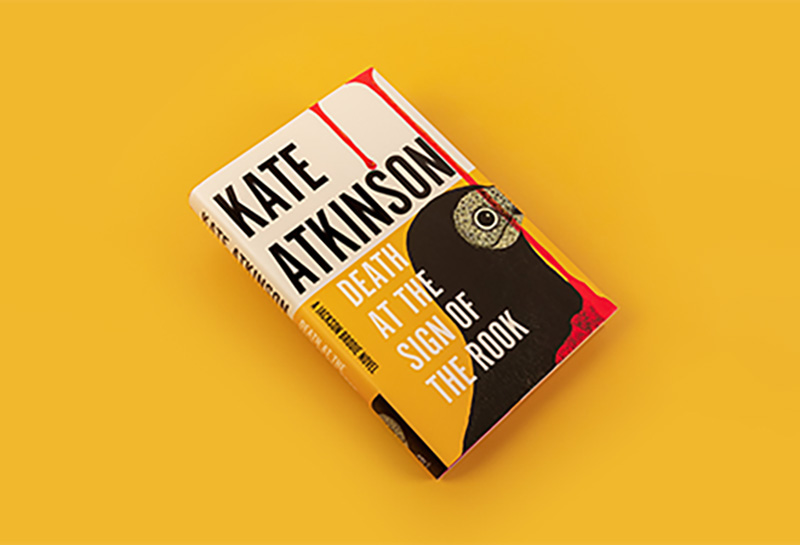
But I am glad Steve persuaded me to read her. Kate Atkinson is distinctively British, and Death at the Sign of the Rook is set in a country house and the surrounding village, and seems a modern descendant of the laidback Agatha Christies I so much enjoy.
There are, however, many differences in that we have a policeman who can go rogue, like Rebus, with again a female sidekick who has a mind of her own, again like Rebus. But Jackson Brodie has retired and set up as a private investigator, while Reggie, a young lady, is still in the police.
There is a lesbian couple living in the converted dairy of the manor house, as has occurred in Agatha Christie too, in A Murder is Announced. But they are peripheral to the story, unlike Ben, the brother of one of them who left the army after losing a leg in Afghanistan. When he turns up at the Manor House to shelter from a snowstorm, along with its chatelaine, Lady Milton, he is asked to answer the door as various characters turn up, including Jackson and Reggie, who then starts fantasising about him.
The others who turn up are two couples, one from America, who have paid for a murder weekend at the hotel. The family is impoverished, and has sold lots of pictures to survive, but most recently a Turner had been stolen, almost certainly by Lady Milton’s housekeeper Sophie, who vanished one night along with the picture. Reggie had been involved in that investigation, but there had been no trace of either picture or young lady.
Jackson Brodie suspects a connection between that theft and the one he has been called in to investigate, which has not been reported to the police. The picture hung opposite the bed of an old woman whose carer vanished after she died, along with it. Her children, adopted twins, have asked Jackson to investigate and also try to trace the carer, though he suspects something strange in that they did not go to the police.
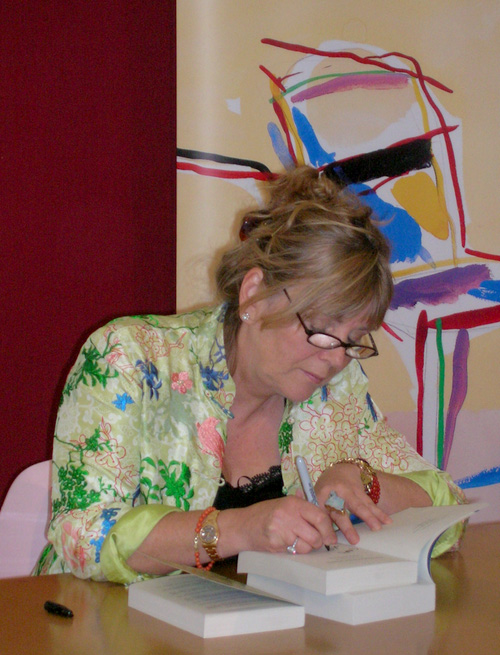
Kate Atkinson
Brodie, in studying the stolen art, is also struck by the disappearance of a Rembrandt from a house in Scotland, along with a member of the cleaning staff. He thinks the three women might be the same one.
But Brodie’s assumption that the three women who vanished when valuable pictures did were identical would not have helped except that Beatrice, as she was also called, kept turning up, including to the funeral home where the old lady’s body was kept. And then that picture turned up, in the village church, and was found by the local vicar, Simon Cate, whose life story is also a prominent feature of the novel. He was an aspiring actor but then smitten by faith, and became a priest, but in time he lost his faith. His wife left him after the death of their son, and he is now in this backwater, where he feels he is of no use to anyone. But he has a great feel for living beings, and his most successful service has been one in which he blessed pets. And he was deeply concerned about the bees that Ben looks after for his sister and her wife.
He too staggers into the manor house in the midst of the storm, in which everyone concerned loses their way comprehensively. But amongst those Ben lets in is a man in a tracksuit with cuts and bruises, who then vanishes after he has been led to a bedroom, when Ben went in search of brandy. We soon work out that it is the escaped murderer about whom Reggie has been alerted.
Simon also turns up, through the back door, carrying the picture and also a gun, for he has found the dead body of one of his parishioners when he went to her house in search of his mobile phone. She had been shot and he had picked up the gun he found there. But he could not tell the police, for though he called he had lost his voice, and for the last few days had communicated only through writing.
This chaotic mix of characters at the manor house is further complicated by the group of players putting on the murder mystery play though some members have either cried off or died before reaching the venue. So, there is much doubling up and confusion over who is an actor and who is not.
The grand now largely empty rooms of the manor house, and its various odd passages and multiple doors, make it a splendid set for the lunacy that runs on and on. Reggie finds herself in a pantry Atkinsonwith a dead body, though this turns out to be the nanny who fell down the stairs and was put there by Lady Milton’s younger son. And there is high drama on the roof when the murderer nearly kills Ben, but he is saved by Reggie, and when he tries to kill Brody with an axe, he is shot by Beatrice, who has been the maid who served at the dinner before the murder mystery play, and explains to Brody how she has managed all her thefts.
And then in the melee, she vanishes on a motorbike, along with the daughter of the old lady’s adopted daughter, the only person who seemed to grieve at the funeral, and to whom the old lady had left her house in a codicil to her will, which her children have not known about. She leaves the picture to the carer, but it is brought to Simon Cate as he lies in hospital, recovering from a heart attack which adds confusion to the play.
Wonderfully convoluted, but all very clear, despite the headlong pace of the book and its shifts from one scene to another, from one character to another (or rather combinations of them) and from one-time span to another. A writer and a detective well worth looking out for. e more books by her on Dinali’s shelves.

by Capt. (Ret.).G.A. Fernando, MBA
There are three essential components to a commercial airline operation: safety, security and teamwork.
Aviation and teamwork at the ‘sharp’ end of a commercial aircraft, i.e. the flight deck, is unique. Unlike many other teams, it may be quite literally the first and the last time a particular combination of small teams of two, three, or four individual airmen (or women) will fly together. Sometimes even in the same airline that employs them.
Therefore, to make conditions safe and practical, while understanding and trusting tech other, they have to rely on a series of Standard Operating Procedures (SOPs), and ‘Normal’ and ‘Emergency’ checklists for every conceivable situation. That is, to be able to do the right things, and do things right. In fact, there is a saying in aviation to the effect that ‘if you make a mistake in aviation, be original and make a new one’.
To ensure that safety standards are constantly maintained, airline pilots’ proficiency is tested every six months, in simulators, under the supervision of examiners from the civil aviation regulator. In Sri Lanka that organisaton is the Civil Aviation Authority-Sri Lanka (CAASL). Three simulator checks are conducted every 12 months in keeping with the tenet that ‘practice makes perfect’. A pithy adage not confined to the world of aviation warns that ‘prior preparation prevents piss-poor performance’.
The simulator exercises include rejected takeoffs, including in cross-wind situations, landings, engine fires and/or engine failures from a variety of causes, cabin pressurisation failure, precision and non-precision approaches, and landings in bad visibility – amongst other conditions that could be expected in actual flight.
In addition, a flight in a real airplane, on a regular passenger service under the supervision of an examiner from the airline, is undertaken to ensure that the company’s standard practices and procedures are carried out and maintained as prescribed in the airline’s manuals. These publications are in turn approved by the national regulator.
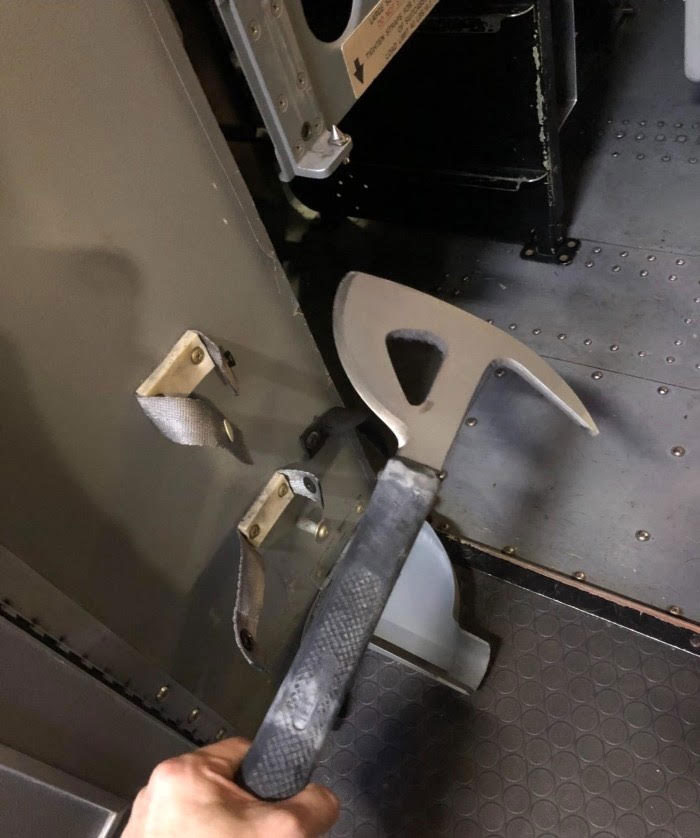
Crash axe
Finally, flight crew members must take a written test annually, on emergency equipment locations and procedures, with 90% as the pass mark.
Since the mid-1980s it has been mandatory for airline pilots to undertake a Crew Resource Management (CRM) programme once every two years. This training essentially emphasises what to do and what not to do to, in a specific emergency situation, or even during normal operations, to make the team cohesive and effective. During the course, the CRM facilitators discuss recent incidents and accidents that have occurred. Results of those events are recorded and could be retrieved, when necessary, by the official aviation bodies.
Not unexpectedly, it is demanding on a pilot to fulfill these requirements on a regular basis throughout his/her career, along with presenting for a bi-annual medical examination, all with the objective of retaining one’s licence to operate an aircraft. It may not be understood, therefore, by persons outside the aviation industry, or even some working in other aspects of an airline organisation, that it is often the passion for flight that keeps many pilots doing what they do to earn a living.
Security
Another important factor is the challenge of maintaining security in all aspects of airline operations, not least in the cockpit. The challenges are many, with new ones surfacing almost every day. It is therefore essential to be always prepared for the activities and ‘methods’ of perpetrators seeking to wreak evil on an aircraft and its occupants. As it is impossible for any airline or national security organisation to cover all aspects, systematic management of risks to effect a safe outcome becomes imperative.
Flydubai Incident
In the recent Flydubai incident of 30 September, 2026, a first officer (co-pilot) attacked the captain of the flight with a crash axe to accomplish his sinister motives, into which investigations are continuing. For the time being, it prompts the questions: should the crash axe be easily accessible to the flight crew? Or even be there at all? I believe it is a case of assessing the greater risk.
With regard to that event, and the circumstances that led to it, other deterrents could have been applied more thoroughly. For example, more thorough screening of pilots’ and other crewpersons’ backgrounds, with emphasis on their mental health, ideological affiliations and previous employment history. Separately, during a time of conflict in the Middle East, should Flydubai have even been operating between Dubai and Tel Aviv? Notwithstanding that cost-cutting and profit maximisation are key aims of any business, an airline’s apparent failure to conduct adequate psychological profiling of flight crew members, while continuing to operate ‘profitable’ routes, regardless of potential danger, can only be regarded and condemned as greed and disregard for human lives.
( Captain. Fernando, RCyAF, SLAF, Air Ceylon, Air Lanka, Singapore Airlines (SIA), SriLankan Airlines, Former Chief Pilot, Air Lanka Boeing 737, Former Deputy Chief Pilot, Lockheed L 1011, Former Crew Resource Management (CRM) Facilitator, SIA, Former Deputy Director (Air Operations) CAASL, Former President, Aircraft Owners and Operators Association Sri Lanka (AOAOASL), President, The Colombo Flying Club, Representative for Aviation, Organisation of Professional Associations (OPA), Hony, and Member Sri Lanka Society of Transport and Logistics.)

Navy Commander attends Trans-Regional Seapower Symposium in Italy

Heavy showers about (100-150) mm are likely at some places in the Central, Sabaragamuwa, Uva and Southern provinces

Elephant enrichment programme centred on the Thabbowa Reservoir proves successful
Showers above 75 mm are likely at some places in the Western, Sabaragamuwa, Central, Southern, Uva and North-Western provinces and in Anuradhapura and Mannar districts.

New prison regulations for monks serving jail terms soon: President’s Office

CP alleges NPP has taken the blame for illegal US sanctions on Iranian vessels

‘Dates have the highest sugar content to fight Coronavirus’

Sunday Island 27 December – Headlines

#SundayIsland 17th December – Headlines

Sunday Island – 28th March

Sunday Island Headlines – 21 March

Sunday Island – 21st February – Headlines
-

 Features5 days ago
The Sri Lankan who made Scottish history
-

 Features7 days ago
Preventing grievances from becoming communal
-

 Sports5 days ago
Nissanka absence opens door for Sri Lanka’s young guns
-

 News6 days ago
Gnansara Thera to be assigned to prison printing section: Officials
-

 News4 days ago
NDB fraud Rs 60mn more than reported
-

 News4 days ago
Removing monk’s robes matter for Sangha to decide: Mahanayake Theras
-

 Features5 days ago
Future of Sri Lanka’s state university system: Should it be shut down and reopened?
-

 News6 days ago
OIC of FCID summoned before Maligakanda Magistrate