
Business
Uneven Ageing: Why Sri Lanka’s districts face different retirement crises

Retirement in Sri Lanka is not the same experience for every person. Two workers can spend decades contributing to the Employees’ Provident Fund or Employees’ Trust Fund, retire at a similar age, and draw broadly comparable balances, and yet face entirely different financial realities in the years that follow. The difference is not discipline or income alone. It is geography.
Sri Lanka is ageing faster than almost any other country in South Asia. According to the United Nations World Population Prospects 2024 revision, life expectancy at birth in Sri Lanka now stands at approximately 77.67 years, with women expected to live to 80.75 years and men to 74.45 years. Declining fertility rates and rising longevity are together positioning Sri Lanka as one of the fastest ageing nations in the region. By 2050, one in four Sri Lankans will be above the age of 60. That shift is already underway, and it is not unfolding uniformly across the island. It is a reality that Ceylinco Life, as Sri Lanka’s life insurance market leader for 22 consecutive years, has been tracking closely across communities and districts throughout the country.
“Sri Lanka’s retirement gap is a structural issue, not a personal failing. The EPF and ETF were designed for a different demographic reality, one where people lived shorter lives, families stayed together, and informal care was reliable. None of those assumptions hold in the same way today. The districts that are ageing fastest are often the least equipped to absorb that change. Addressing this requires both better policy and better individual planning, and neither can wait,” said Samitha Hemachandra – Director/Chief Operating Officer, Ceylinco Life.
Geographic disparities
Sri Lanka’s districts face different retirement crises largely because of geographic disparity. There is a stark gap in cost of living figures across the island, with Colombo remaining the most expensive city in the country to live in, while food, healthcare and caregiving continue to top the list of expenditure priorities for the elderly.
The living standards of an elderly person in an urban area differ considerably from those in a rural setting. In urban centres, paid care facilities and retirement homes are more accessible. In most rural districts, elderly individuals live with their children and grandchildren, often confined to a single room. Both arrangements carry financial consequences that most retirement calculations do not account for.
According to the Department of Census and Statistics, an individual in Colombo requires approximately Rs. 18,044 per month to afford essential needs, as of January 2026, the highest figure in the country. Gampaha follows at Rs. 17,951 and Kalutara at Rs. 17,562. Further from the Western Province, the monthly expenditure required eases: Kandy at Rs. 16,983, Galle at Rs. 16,998, Kurunegala at Rs. 16,434, and Jaffna at Rs. 16,327. Monaragala records the lowest figure among the districts at Rs. 15,997.
A gap of more than Rs. 2,000 per month between the costliest and least costly districts may appear modest in isolation. Compounded over a fifteen to twenty year retirement and adjusted for inflation, it represents a meaningful difference in the savings a person needs to have accumulated before leaving the workforce.
Regional economic impact
Inflation is another factor that shapes the quality of retirement, and it is one that most retirement plans underestimate. Living costs rise in response to both predictable and unpredictable forces, and the cumulative effect over a decade can be severe.
Data from the Department of Census and Statistics shows a consistent rise in living costs driven by economic disruptions including the pandemic and the country’s 2022 economic crisis. During 2012 and 2013, the national poverty line stood above Rs. 5,000 per month, gradually rising toward Rs. 6,000 by 2016 and Rs. 7,000 by 2019. By early 2025, it had surpassed Rs. 16,000, reaching Rs. 16,730 by April 2026. That is more than a threefold increase in roughly a decade.
A person who retired in 2015 planning for Rs. 30,000 a month in household expenses would need closer to Rs. 90,000 today to maintain the same standard of living. Most retirement calculations made even five years ago did not account for that scale of change. Many people making those calculations today are making the same error again.
Limited healthcare access
After retirement, the need for healthcare does not diminish. It intensifies. Physical health deteriorates over time, and the frequency and cost of medical attention rises accordingly. A specialist consultation at a private hospital in Colombo can range from Rs. 2,000 to Rs. 5,000 or more, before investigations or treatment. For a retiree living on a fixed monthly income, a single hospitalisation can erase months of savings.
The challenge is compounded by the effects of outward migration. A significant number of younger Sri Lankans have moved abroad in recent years, drawn by higher wages in caregiving and other sectors. The families they have left behind, often elderly parents in rural districts with limited income, face rising costs and a shrinking pool of family support. The informal care arrangements that previous generations relied upon can no longer be assumed.
In more remote districts, healthcare facilities are fewer, specialist services limited, and travel to access care adds both time and expense. The financial implication is the same whether a retiree lives in Colombo or in a district far from the Western Province: healthcare will consume a growing share of retirement income with each passing year, and the less a person has saved, the more acute that pressure becomes.
Where life insurers come in
This is where the life insurance industry has a meaningful and practical role to play. Life insurers offer something that EPF contributions and personal savings cannot: a long-term, structured commitment to a defined financial outcome. A retirement plan placed with a life insurer is not a passive savings vehicle. It is a contractual arrangement, built around the individual’s specific circumstances and backed by an institution whose financial obligations are governed by strict regulatory requirements around liquidity, solvency, and reserve management.
That regulatory framework matters more than most people realise. Life insurers operate under oversight that requires them to maintain the financial capacity to honour long-term commitments. When a person plans their retirement with a life insurer, the credibility and assurance are not marketing claims. They are built into the regulatory structure itself. The security that comes with a structured life insurance plan is, in that sense, already embedded in how the industry is required to operate.
A solution at every stage of life
One of the most persistent misconceptions about retirement planning is that it is only relevant for the young. A life insurer can structure solutions across a wide range of starting points. A 25-year-old entering the workforce can begin building a retirement foundation that compounds over decades. A 50-year-old who has not yet put a formal plan in place can still access products designed to provide income security, protection, and healthcare coverage in the years immediately ahead. The conversation is not closed because someone has started late.
What changes with age is the structure of the plan, not its relevance. Younger policyholders benefit from lower premiums, longer accumulation periods, and greater compounding. Those closer to or already at retirement benefit from plans oriented toward immediate protection, structured income streams, and coverage for healthcare costs that grow more likely with each passing year. A life insurer with the product range and long-term experience to serve both can meet a client wherever they are in that journey.
Long-term commitment as a core value
Retirement planning through a life insurer is not a transaction. It is a relationship built over years, often decades, grounded in a structured, long-term commitment in which the insurer takes on defined obligations and the policyholder receives defined protections in return. That is fundamentally different from the approach most Sri Lankans currently take, which involves EPF accumulation, informal savings, and the expectation that family will cover whatever remains.
For those funding a future they cannot fully predict, the priority is not maximising short-term returns. It is securing a financial foundation that will hold regardless of what happens to living costs, healthcare, or family circumstances. Life insurance exists precisely for that kind of long-term protection. It is the business of commitments that individuals cannot reliably make alone.
The time to plan is not at retirement
The retirement challenge Sri Lanka faces is not uniform. It varies by district, by income, by family structure, and by the decisions each working adult makes or delays. The data on cost of living, on healthcare, on ageing demographics, all of it points in the same direction. EPF alone is not enough, and the gap between what most people have planned and what they will actually need is wider than most are prepared to acknowledge.

By Ifham Nizam
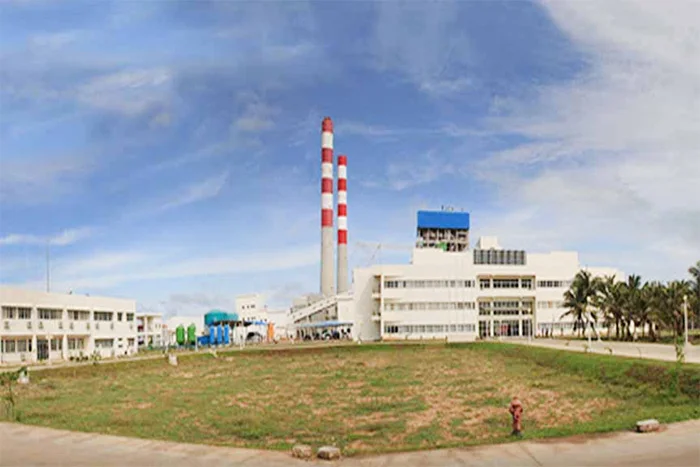
A Rs.160 million-plus diesel discrepancy at the Lakvijaya power plant in Norochcholai has triggered an internal investigation, raising questions over the handling of public funds and the controls governing fuel purchased for electricity generation.
The discrepancy surfaced during an internal audit of diesel supplied to the plant from the Kolonnawa and Sapugaskanda fuel terminals, according to senior officials familiar with the inquiry.
The audit has identified five transactions—two in December 2025 and three in January 2026—in which diesel recorded as delivered to the plant allegedly could not be fully accounted for in its physical stocks.
The investigation is now examining whether these were isolated discrepancies or part of a longer-running practice.
One transaction under scrutiny relates to January 16, when records reportedly showed that 10 diesel bowsers had arrived at the plant. Investigators subsequently found indications that the fuel stock corresponded to only nine bowsers.
A storekeeper responsible for the relevant fuel operation has reportedly been temporarily removed from those duties pending the investigation.
A senior official said investigators were reviewing historical records amid indications that similar discrepancies may have occurred over a longer period. If established, the financial exposure could therefore exceed the Rs.160 million currently identified.
The investigation is comparing fuel-terminal dispatch records, tanker movements, plant-entry records, receiving documents and physical stocks to establish exactly how much fuel was dispatched, received and accounted for.
That audit trail will also be critical in determining who authorised, received and certified the disputed consignments, and whether established controls were followed.
Relevant documents were reportedly transferred from Norochcholai to the company’s Colombo head office on September 26 for further examination, with electricity-sector security personnel assisting in the transfer.
The internal audit has also reportedly uncovered expired chemical stocks worth several hundred thousand rupees in the plant’s stores. Investigators are examining whether further inventory-management irregularities occurred.
The matter was also reportedly taken to the Puttalam Police Special Crimes Investigation Unit on September 26.
When contacted by Puttalam-based journalist Hiran Priyankara Jayasinghe for The Island Financial Review, Lakvijaya Power Plant Manager Nalaka Kumara confirmed that an investigation was under way but declined to provide further details.
The financial issue is direct: if the plant paid for diesel it did not receive, public-sector funds were spent without the electricity sector receiving the corresponding fuel.
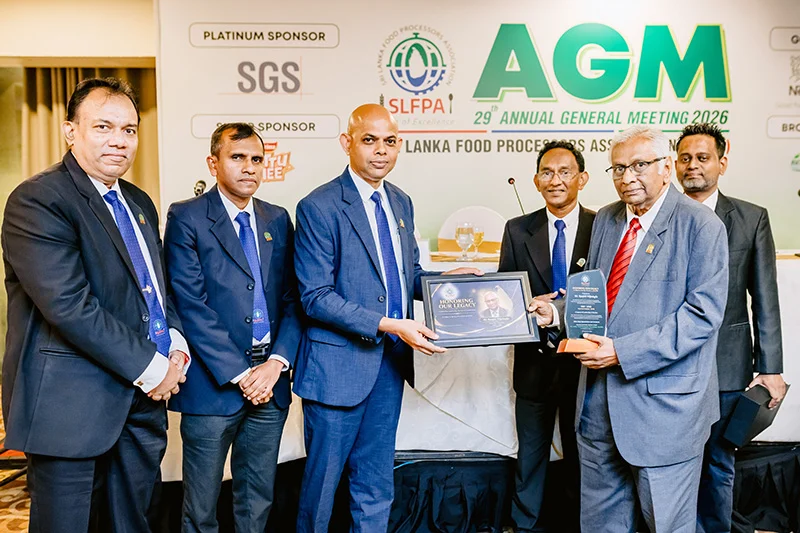
The Sri Lanka Food Processors Association (SLFPA) successfully convened its 29th Annual General Meeting (AGM) on September 23, 2026, at the Water’s Edge Hotel, Battaramulla. Bringing together key industry stakeholders and member organizations, the event served as a platform to review milestone achievements from the 2025/2026 term and outline strategic priorities for the nation’s food and beverage processing sector.
At the AGM, the new Executive Committee for 2027/2028 was appointed, comprising: Honorary President Aruna Senanayake C.W. Mackie PLC Imme. Past President Thusith Wijesinghe Trans Continental Packaging & Commodities (Pvt) Ltd.
President Elect Nadishan Guruge Meadlee Trading Co. (Pvt) Ltd.
1st Vice President Damitha Perera Forbes & Walkers Commodity Brockers (Pvt) Ltd.
2nd Vice President Rasika Seneviratne Diesel & Motor Engineering PLC 3rd Vice President Deepal De Alwis Neochem International (Pvt) Ltd.
Honorary Secretary Amila Weerasinghe Nestle Lanka Limited.
Asst. SecretaryDineth Alahakoon Country Style Foods (Pvt) Ltd.
Honorary Treasurer Sameera Jayathilaka Westmann Engineering Company (Pvt) Ltd.
Asst. Treasurer Niroshan Dalpethado C D De Fonseka & Sons (Pvt) Limited. In addition to the above office bearers, the following ten Executive Committee Members were appointed:
Sanjeewa De Silva Unilever Sri Lanka Limited Sheran De Alwis MA’S Tropical Food Processing (Pvt) Limited
Thusitha Ekanayake Anods Cocoa (Pvt) Ltd.
Vijitha Govinna Plenty Foods (Pvt) Limited Ms. Praharshi Wickramasekara International Commodity Exports (Pvt) Ltd.
Sanjeewa Niroshan SGS Lanka (Pvt) Ltd. Kushan Amarasinghe Finagle Lanka (Pvt) Ltd.
Rangajeewa Hettiarrachchi Fonterra Brands Lanka (Pvt) Ltd.
Harindra Abeyrathna Vision Technologies International (Pvt) Ltd. Thilina Weerasekara Ceylon Cold Stores PLC
The event was proudly supported by key industry partners, with SGS Lanka (Pvt) Ltd serving as the Platinum Sponsor. Unilever Sri Lanka Ltd. and Nestlé Lanka Ltd. joined as Gold Sponsors, Ceylon Agro Industries – Prima as the Silver Sponsor, while Lanka Exhibition & Conference Services (LECS) and Hero Nature Products (Pvt) Ltd., supported as Bronze Sponsors.
The proceedings concluded with a vote of thanks delivered by Hony. Secretary Deepal De Alwis, followed by cocktails and a fellowship networking session, providing an opportunity for members to connect and strengthen industry ties.

New premium ride option expands Uber’s portfolio from affordable Moto and Tuk rides to premium on-demand travel
Uber announced the launch of Uber Black in Sri Lanka, bringing its premium ride experience to the country for the first time. Designed as the “business class of back seats,” Uber Black combines premium vehicles and highly-rated drivers for riders looking for greater comfort, quality and a more elevated travel experience.
The launch comes as demand for premium products and experiences grows across Sri Lanka, with consumers seeking greater choice and quality in their everyday experiences. Uber Black brings this choice to on-demand mobility, whether for an airport journey, an important business meeting, a special occasion or simply when riders want to travel in greater comfort.

What happened on diverted Flydubai flight from Dubai to Tel Aviv?

“Vishishta Seva Vibhushana” medals presented under President’s patronage

Hindu Priests Seek State Intervention for Sivarasa Anojan

“A Nation United” National Steering Committee meets under President’s Chairmanship

PM declares open 2nd Day of National AI Expo 2026

Waste management and recycling to receive priority in the 2027 Budget – PM

‘Dates have the highest sugar content to fight Coronavirus’

Sunday Island 27 December – Headlines

#SundayIsland 17th December – Headlines

Sunday Island – 28th March

Sunday Island Headlines – 21 March

Sunday Island – 21st February – Headlines
-

 Latest News7 days ago
Showers above 100 mm are likely at some places in the Western, Sabaragamuwa, Central and North-western provinces and in Galle and Matara Districts
-

 Editorial7 days ago
Crimes punished and unpunished
-

 Features6 days ago
Beyond traditional jobs: Why Sri Lanka needs to facilitate the gig economy
-

 Editorial5 days ago
Birth of a bad law
-

 News3 days ago
Police remove Thileepan statue in Jaffna
-
 Latest News6 days ago
Kusal, Wellalage star as Sri Lanka defend 322 in Headingley thriller
-

 News5 days ago
TIN mandatory for key transactions from Nov. 1
-

 News7 days ago
IMF: Sri Lanka on course for 2027 market return