
Business
UN Global Compact Network Sri Lanka rallies corporates to ‘Forward Faster’ on SDGs


United Nations Global Compact Network Sri Lanka (Network Sri Lanka), the country network of the world’s largest corporate sustainability initiative, recently launched a rousing call to action for corporate leaders of Participant companies and across the country: commit to ambitious sustainability targets and amplify Sri Lanka’s progress towards the Sustainable Development Goals (SDGs) through a new global initiative called ‘Forward Faster’.
The ‘Forward Faster’ initiative of the UN Global Compact, calls on business leaders worldwide to take measurable, credible, and ambitious action in five key areas — gender equality, climate action, living wage, water resilience, and finance & investment. These areas can accelerate progress across all SDGs, enabling the private sector to collectively make the biggest and fastest impact by 2030.
At an event titled ‘Compass 2024’ and themed ‘Towards a Resilient Future Through Corporate Impact’, Network Sri Lanka introduced the Forward Faster initiative locally to ignite private sector leadership in driving transformational change. The programme also outlined Network Sri Lanka’s 2024 programmes and anticipated outcomes while laying the groundwork for companies to strategically direct resources. Representatives from Participating companies of Network Sri Lanka, key stakeholders, and special invitees were in attendance.
The event featured distinguished speakers including UN representatives, a presentation from the 2021 Sustainable Development Goals (SDG) Pioneer for SDG 12 Responsible Production and Consumption from Sri Lanka, insights on the experience from a representative of the John Keells Holdings PLC team that was selected to present at the Leaders Summit in New York through participation in the SDG Innovation Accelerator 2023, a discussion on navigating the future from working group heads and representatives and insights from the Regional Human Development report by the UNDP spotlighting current and emerging risks for local businesses. Compass 2024 highlighted the urgent need for ambitious commitments and collective action on SDGs to achieve Agenda 2030.
Welcoming the audience, via a pre-recorded message, Sanda Ojiambo, Assistant Secretary-General; Executive Director & CEO of UN Global Compact said, “I thank each one of you for participating in today’s critical dialogue. Our UN Global Compact now includes over 20,000 companies worldwide committed to sustainable and responsible business practices – a truly powerful force for the greater good. The Sri Lankan business community is an essential and growing part of our movement. In today’s uncertain global environment, your participation is more important than ever.”
Unveiling UN Global Compact Network Sri Lanka’s overarching plan for 2024, Rathika de Silva, Executive Director, UN Global Compact Network Sri Lanka explained the roadmap will help participating companies enhance governance strategies, set ambitious targets across priority areas and unlock innovation opportunities.
“I want to assure you that Network Sri Lanka will be collaborating a lot more with key institutions to create more value for our participant companies,” he pledged.
Reminding participants that the world is not on track to achieve the SDGs, he noted, “When you sign up to Forward Faster, you could prioritise the areas of actions that are most relevant for your company and your industry and you could start there and then integrate the other areas of action as you go along”
In his address, Dilhan Fernando, Chairman of UN Global Compact Network Sri Lanka, emphasized the urgent need for collective action, noting, “UN Global Compact offers something as important as a blueprint, that is collaboration, together we are stronger, that is what binds us. As the Global Compact we have the benefit of learning from around the world. Global Compact can empower you and bring you together with like-minded people. Coming together with the support of a global network, I believe benefits every business.”
Marc-André Franche, United Nations Resident Coordinator in Sri Lanka, emphasized the private sector’s role and welcomed deeper cooperation. “The UN Global Compact exemplifies the spirit of collaboration and partnership that leverages the unique strengths and resources of the private sector to achieve our shared goals” he said. “As private sector leaders, you have a great responsibility to set examples as champions of sustainability. The United Nations is your partner in these endeavours. We are committed to working with each of you and re-envisioning our pathways towards the SDGs.”
Speaking at the event, Azusa Kubota, Resident Representative UNDP Sri Lanka said, “UNDP is working collaboratively with all of you to make sure our work contributes to a healthier planet and people, and investments required to recover the socio-economic status of the country are SDGs-aligned. And the private sector obviously plays an indispensable role in driving this change. We very much appreciate and highly value our partnership with all of you through the UN Global Compact Sri Lanka.”
By rallying participant companies under a bold strategic compass, Network Sri Lanka has signalled the intent to lead in accelerating Sri Lanka’s corporate sustainability transformation through multi-stakeholder partnerships.
Today Network Sri Lanka includes 75 business and non-business organisations, joining over 20,000 companies in the world’s largest corporate sustainability initiative. Participants commit to align their business strategy and operations with the Ten Principles of the UN Global Compact in the areas of Human Rights, Labour, Environment and Anti-Corruption. It further encourages businesses to support the 2030 Agenda.UN Global Compact supports organisations irrespective of their size, sector and geographic location to align to the Ten Principles and progress in their sustainability journey.


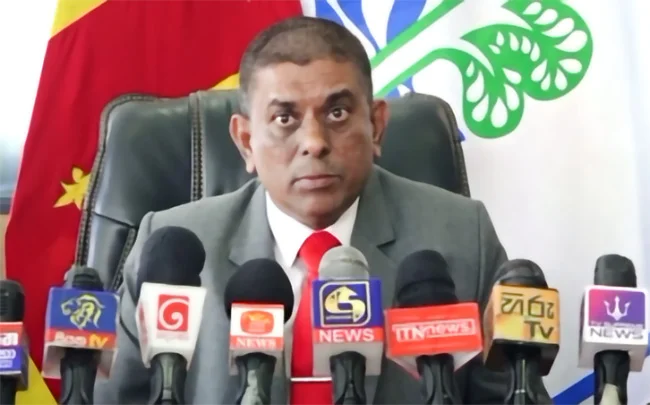
Parliament yesterday took up for debate and vote a sweeping overhaul of Sri Lanka’s main environmental law, in what the Central Environmental Authority (CEA) hopes will become the country’s first major legal reset on environmental protection in 38 years.
The National Environmental (Amendment) Bill, taken up for its final reading in the House, is being seen by environmental officials as a critical attempt to modernise an outdated legal framework that has struggled to keep pace with mounting pollution, hazardous waste, ecological degradation and the environmental fallout of unplanned development.
In a sign of the importance attached to the Bill, senior CEA officials remained in parliament throughout the day as the debate unfolded, amid growing expectations within the environmental sector that the revised law would strengthen the Authority’s hand in regulation, enforcement and environmental planning.
CEA chairman Prof. Tilak Hewawasam described yesterday as a “very special day” for the Authority and said the proposed amendments were long overdue.
“Yesterday was a very special day for the Central Environmental Authority. The Bill to amend the National Environmental Act was read in parliament for the final time, debated and voted on. This was the third revision of the Act and came 26 years after the previous amendment. While the 2000 revision was only a minor one, the 1988 amendment was a comprehensive reform that provided the legal framework and tools such as the EPL and EIA for environmental protection and environmental management in Sri Lanka. After 38 years, another comprehensive revision has now been proposed to Parliament, Hewawasam told The Island Finacial Review.
He said the CEA leadership and senior staff had closely followed the proceedings, hopeful that parliament would clear the Bill and pave the way for a stronger legal framework for sustainable development.
“We were very eager to see this revised Act passed and enacted by parliament, as it will provide the legal framework needed to drive and accelerate the country’s sustainable development, he said.
The push for reform comes at a time when the country’s environmental governance framework is under increasing strain from industrial pollution, mounting solid waste, chemical hazards, encroachment into environmentally sensitive zones and the widening conflict between economic activity and ecological safeguards.
Environmental officials say the revised law is intended to close long-standing legal and institutional gaps that have weakened environmental enforcement and slowed regulatory action.
Among the major changes proposed are provisions to legally recognise Strategic Environmental Assessments (SEA), strengthen the CEA’s authority to issue binding orders instead of merely recommendations, tighten controls on hazardous waste and chemicals, expand producer responsibility in waste management, and empower authorities to act more decisively against unauthorised constructions and environmentally harmful activities in protected and ecologically sensitive areas.
By Ifham Nizam

Residents of La Serena recently came together in a spirit of quiet reflection and shared devotion for a Vesak Bhakthi Gee recital, transforming the serene beachfront setting into an evening of song, mindfulness and gentle celebration.
The programme, organised for residents and invited guests, featured a collection of Buddhist devotional songs that captured the essence of Vesak, fostering a sense of inner peace and spiritual fulfilment. Voices joined in harmony, creating a deeply moving atmosphere rich in meaning and memory.
With around 60 per cent of La Serena residents being expatriate Sri Lankans, the event was particularly evocative. One resident observed that having lived overseas for many years, they had missed Sri Lankan cultural and religious celebrations, making the celebration especially meaningful.
Beyond the music, the gathering strengthened the bonds of community that define life at La Serena, encouraging connection, conversation and companionship among residents. Rooted in Sri Lankan cultural and religious tradition, the event reflected the resort’s commitment to enriching emotional and spiritual well-being through thoughtfully curated experiences.
La Serena is a purpose-built beachfront retirement resort in Uswetakeiyawa, offering a secure and dignified environment for assisted living. Combining the privacy of independent living with access to personalised care and shared amenities, it fosters a vibrant, connected lifestyle where residents can enjoy comfort, companionship and peace of mind.

Sarvodaya Development Finance PLC (SDF) delivered a strong financial performance for the year ended 31 March 2026, recording significant growth in income, profitability, portfolio expansion, and asset quality while continuing its commitment to responsible and inclusive finance.
For the financial year under review, SDF reported total income of LKR 6.42 billion, a year-on year increase of 46.8%. Interest income rose by 43.8% to LKR 5.85 billion, driven by business expansion and growth in earning assets. Net Interest Income increased by 35.4% to LKR 3.58 billion, while Total Operating Income grew by 40.8% to LKR 4.15 billion, reflecting the Company’s ability to generate strong and sustainable earnings.
Profitability improved substantially during the year. Operating Profit before Tax on Financial Services increased by 59.9% to LKR 1.82 billion, while Profit Before Tax rose by 63.8% to LKR 1.36 billion. Profit for the Year increased by 73.1% to LKR 820.1 million compared with LKR 473.8 million in the previous year. Earnings per share improved to LKR 5.48, demonstrating enhanced value creation for shareholders.
The Company’s balance sheet expanded significantly, with total assets increasing by 65.8% to LKR 37.37 billion as at 31 March 2026. Financial assets at amortized cost, including loans and receivables, grew by 67.2% to LKR 20.60 billion, while lease rental receivables increased by 34.0% to LKR 9.19 billion. SDF also strengthened its funding profile through debt securities, including Sustainable Bonds, amounting to LKR 2.09 billion.
Commenting on the performance, Chief Executive Officer, Nilantha Jayanetti stated, “The results achieved during FY2025/26 reflect the strength of our business model, disciplined growth strategy, and commitment to delivering responsible financial solutions. We remain focused on creating sustainable value while supporting communities and enterprises across Sri Lanka.”
SDF maintained a strong capital position, with a Tier 1 Capital Adequacy Ratio of 15.48% and a Total Capital Adequacy Ratio of 22.13%, both comfortably above regulatory requirements. Asset quality also improved, with the Gross Stage 3 Loans Ratio declining to 4.93% from 7.88% and the Net Stage 3 Loans Ratio improving to 2.94% from 5.70%. The Stage 3 Impairment Coverage Ratio strengthened to 42.60%.
Operational efficiency improved as the Cost-to-Income Ratio reduced to 42.99%, while Return on Equity increased to 19.60%. Reflecting its stronger financial position, SDF’s external credit rating was upgraded to Lanka Ratings (SL) BBB- Stable.
With a network of 56 branches, SDF remains committed to advancing financial inclusion, supporting sustainable enterprise growth, and contributing to Sri Lanka’s long-term socio-economic development.

Representatives from the Ceylon Chamber of Commerce meet PM

Progress of Housing Project for Malayagam Community families funded by India reviewed

South Africa stun South Korea to reach World Cup knockouts for the first time

Tremors of 7.5, 7.2 kill 32, injure hundreds in Venezuela

Former Minister Wijeyadasa Rajapakshe’s son arrested by CIABOC

Morocco come back after historic Haiti goals to reach World Cup last 32

‘Dates have the highest sugar content to fight Coronavirus’

Sunday Island 27 December – Headlines

#SundayIsland 17th December – Headlines

Sunday Island – 28th March

Sunday Island Headlines – 21 March

Sunday Island – 21st February – Headlines
-

 News6 days ago
Creditor receives USD 2.5 mn as Lankan public bears loss from theft of Treasury funds
-

 News5 days ago
Creditor not yet paid
-
 News5 days ago
Consumers bearing 22% tax burden despite 18% VAT claim: Dr. Harsha de Silva
-

 Features4 days ago
Nanda Pethiyagoda Wanasundara as three generations of family saw her
-

 Features3 days ago
Sri Lanka developing independent hydrographic capabilities
-

 Opinion6 days ago
SriLankan Airbus struck by lightning
-

 Editorial4 days ago
Fuel crisis: Beyond price debate
-

 Latest News4 days ago
Sooryavanshi thumps fastest List A fifty as India A win tri-series