
News
Two-year reconciliation project spurns Lord Naseby’s disclosure

EU, Germany funded scheme costs Rs. 8 mn
By Shamindra Ferdinando
The National Peace Council (NPC) says war-related matters hadn’t been discussed at the nearly two-year-long reconciliation project that brought together students from Eastern, Jaffna, Ruhuna and Sabaragamuwa Universities.
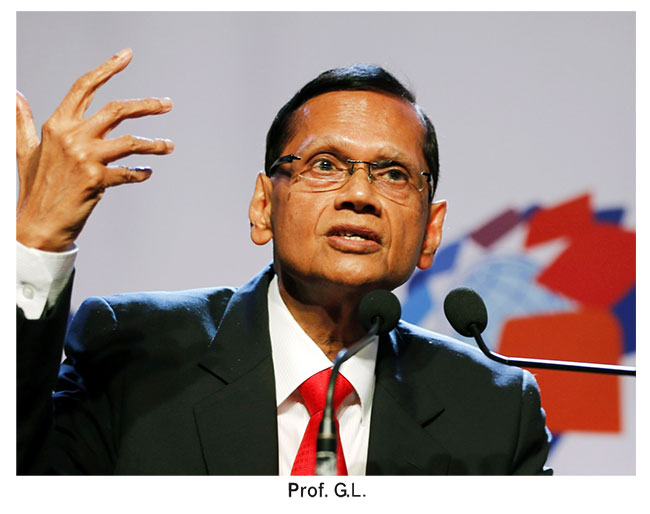
More than 160 students have participated in the project that culminated with a conference on the theme of ‘Plural Sri Lanka: Paths to reconciliation.’ Foreign Minister Prof. G.L. Peiris delivered the closing address and responded to questions from the audience.
Pointing out that post-war reconciliation efforts had been badly hampered by allegations that the Sri Lankan military killed over 40,000 civilians on the Vanni east front, The Island sought clarification as regards measures taken by the NPC to improve relations among the communities, and the following questions were raised:
The Island:
During your two-year long project did participants discuss specific war crimes allegations and disclosure made in the House of Lords in Oct 2017 that contradicted unsubstantiated accusations pertaining to 40,000 civilian deaths.
Executive Director NPC Dr. Jehan Perera:
“No, we did not discuss these war-related matters. The project was titled “Creative Youth Engagement for Pluralism” and it focused on the nature of Sri Lanka as a plural society and the value framework that should guide it. The research papers highlighted the diversity within Sri Lankan society that goes beyond ethnicity and religion. They included topics such as “Attitudes of Society on Education and Transsexuality: A Comparative Study on the Ideologies of a Community with Primary, Secondary, and Tertiary Education,” and “Pluralism and University Subculture: An Ethnological Study on Young Behavior towards Social Cohesion,” and “An Investigative Study of the Challenges Posed by the Changes in the Aboriginal Society.”
The Island:
What is the total cost of the project?
The NPC
: Rs 8 million was spent to train and mentor the writers of the 30 research publications in four universities, translate, review and publish their findings in book form and for the conference which brought the students to Colombo.
Question 3:
What is the GoSL’s contribution?
The NPC:
There was no direct financial support by the government. Four state universities supported through their faculty members and students.
The Island: What is the NPC’s stand on accountability resolution and announcement made in Geneva that the Sri Lankan military would be subjected to a fresh inquiry?
The NPC:
In order to get out of these allegations, there is a need for a credible and independent investigation. Our preference is for a national mechanism that is acceptable to all sides. Accountability will need to be a part of the reconciliation process. NPC favours the restorative justice approach which focuses on ensuring justice to victims. This includes an acknowledgement of wrongs done and reparations and institutional reform to ensure that there is non-recurrence.
The Island: Are you also engaged in post-war reconciliation projects funded by Norway?
The NPC:
NPC hasn’t obtained funds from Norway for the past five years.
The recently concluded project has been funded by a project called Strengthening Reconciliation Process here jointly funded by the European Union and the German Federal Foreign Office and implemented by Deutsche Gesellsschaft Fur Internationale Zusammenarbeit (GIZ) GmbH and the British Council in partnership with the Sri Lankan Government.



News
Establishment of an Institutional Framework to Inagurate Upper Hydro Catchment Areas Management Authority

Policy approval of the Cabinet of Ministers was granted at their meeting held on 08.06.2026 to establish the Upper Hydro Catchment Areas Management Authority for identification and
execution of a formal and long – lasting remedy to secure the central hills including the upper hydro catchment areas enabling them to sustain amidst extreme weather conditions
due to natural calamities and human activities as well as to be used for the sustainable development of the country.
Accordingly, a concept paper has been prepared including
institutional structure, activities, powers, active subject area as well as administrative and coordination mechanism for the proposed authority by an expert technical committee appointed by the Secretary to the President.
Based on the said concept paper, the Cabinet of Ministers granted approval to the resolution furnished by the President to instruct the Legal Draftsman to prepare a draft bill including legal provisions required for the establishment of Upper Hydro Catchment Areas Management Authority.
News
Introduction of Flora and Fauna (Regulation of actions of the Indigenous Community within the nominated areas) Regulations
With the objective of securing the traditional livelihood and the eco system of the indigenous community, it has been recognized the necessity of introducing a formal regulation methodology to secure their engagement in livelihood activities by being more sensitive to the existing laws.
Thereby, the Fauna and Flora (regularizing) regulations under the Fauna and Flora Protection Ordinance (Authority 469) have been prepared so that nominated activities within the prescribed area to a member of the indigenous community
who has been registered for securing the rights acquired from law or custom or usage or traditional stance to execute an act within a certain state land that is fundamental to the survival of the indigenous community permission can be granted
Accordingly, the Cabinet of Ministers granted approval to the resolution furnished by the Minister of Environment to publish the said regulations in the government gazette notification and thereby submit to the Parliament for its concurrence.
Latest News
M. M. D. J. Senarathne, appointed Director General of the Department of National Botanical Gardens
The Cabinet of Ministers approved the resolution furnished by the Minister of Environment to appoint M. M. D. J. Senarathne, who is the senior most officer in Grade I of Sri Lanka Scientific Service se

Establishment of an Institutional Framework to Inagurate Upper Hydro Catchment Areas Management Authority
Introduction of Flora and Fauna (Regulation of actions of the Indigenous Community within the nominated areas) Regulations
M. M. D. J. Senarathne, appointed Director General of the Department of National Botanical Gardens

Harmanpreet Kaur steps down as India captain

Turkiye, Pakistan agree Saudi Arabia military deployment under Mecca pact

Rumesh Tharanga among nominees announced for World Athlete of the Year 2026

‘Dates have the highest sugar content to fight Coronavirus’

Sunday Island 27 December – Headlines

#SundayIsland 17th December – Headlines

Sunday Island – 28th March

Sunday Island Headlines – 21 March

Sunday Island – 21st February – Headlines
-

 Latest News7 days ago
Gold winner Tharanga gets brand-new Honda Vezel from SLAAJ
-

 News6 days ago
US-assisted ‘Ice’ detection: NPC to examine IGP’s move to transfer drug-busting team
-

 Features7 days ago
Why Sri Lanka needs an Inclusive Civic Nationalism – urgently
-

 Editorial5 days ago
Colombo Port drug bust: The plot thickens
-

 News7 days ago
Civil society activist accuses govt. of favouring Ven. Gnanasara
-
 Midweek Review7 days ago
Dappula’s Easter Sunday ‘grand conspiracy’ claim demolished
-

 Editorial7 days ago
When crime bosses rise above law and shrines
-
Editorial6 days ago
Drug busting, transfers and trust deficit