
Features
Towards reclamation of awareness


Book Review
‘Requisites,’ by Ramya Chamalie Jirasinghe, Mica Press & Campanula Books, United Kingdom, 2025, reviewed by Malinda Seneviratne
The white American poet and writer Allen Ginsberg once said, ‘The only thing that can save the world is the reclaiming of the awareness of the world. That’s what poetry does.’
The world is too misnamed and misrepresented for people to make head or tail of it and obtaining awareness, perforce, is quite a challenge. We are caught in the swollen waters of consumerism, acquisition, competition and self image as individuals and collectively; and if rivers in spate toss us into unfamiliar banks, we dive right in, believing that we just cannot drown (how could we?)! We drown because we can’t swim, neither downstream (with the flow) or upstream (against the flow).
Poetry, if we go with Ginsberg, can offer pause. Good poetry, that is. Poets, even poor ones, offer insights, but if the narrative is uneven and lacking in cohesion (as most poetry collectives are), puffs of mediocrity quickly obliterate those rare illuminations. We learn very little.
Ramya Jirasinghe’s ‘Requisites’ is like a companion to someone on a quest, a journey out of ignorance and towards awareness of the eternal verities. It is fluid but is neither a trickle nor of monsoonal volume. Enough to quench thirst, enough to float a just-enough-room-for-one vessel. If it were the former, the reader would flounder, and if the latter, risk wreck and drowning.

Ramya Chamalie Jirasinghe
It must take a lot of poetic skill to achieve such a delicate balance. Indeed, one might even wonder if such is possible. But we have in ‘Requisites’ the cover-to-cover elegance, insight and economy that are the defining attributes of good poetry.
Ramya is no novice though. Her ‘There is an island in the bone,’ published in 2010, was shortlisted for the Gratiaen Prize of 2007. ‘Love poems from a frangipani garden’ came out in 2018. Both are highly readable and re-readable, each containing more than a few poems that deserve a permanent place in any anthology of modern Sri Lankan poetry. And of course, she won the Gratiaen for her debut novel, ‘Father Cabraal’s recipe for love cake.’
Requisites: the word obtains from the ‘ata pirikara,’ the eight essential items the Buddha recommended for seekers: outer robe, inner robe, winter cloak, bowl, needle and thread, belt and water strainer. Ramya uses these to structure her reading (or reclaiming of meaning) of the world.
It reads like a companion volume to ‘The light of Asia.’ Whereas Edwin Arnold details the life and times of Prince Siddhartha and his subsequent Buddha persona, Ramya’s focus is the dhamma or doctrine of the Enlightened One. Arnold uses blank verse and therefore his text has definite structure that makes for musical rendition. Ramya uses free verse, which one might say is a better communicative enabler. Importantly, less structured, stylistically, than Arnold’s celebrated narrative poem, ‘Requisites,’ is not lacking in any way when it comes to rhythm. And of course reason.
It is a carefully crafted explication of key elements in the journey that she considers necessary. A book for seekers, then, But is it only that? I think not.
Ramya does not veer from the path, she merely obtains from the everyday, the ‘here’ that is close to home and the ‘there’ that is distanced by time and space. She alludes to the ‘worldly’ world that Ginsberg speak of and therefore comments on an overarching political economy that contains among other things capitalism, colonialism and empire. She get specific at times, for example in referring to Donald Trump and the current tensions over rare earth minerals, but none of it is frill. Rather, she uses them as apt windows that open to the larger or rather deeper philosophical quest that is her journey, her book.
The book is chaptered by each element of the ‘ata pirikara,’ with each unraveling key principles of the doctrine. In the ‘Outer Robe,’ for example, Ramya comments on things seen, the outer (and even pretty and alluring) skin of our lives, that which is carefully groomed for other eyes. Self-image. She interjects, ‘all around is the world in a shop window / sold to us through slogans.;
Gone, she says, are the days of ‘…[recycling] vestiary: stripping
the funeral shroud before vultures swooped in
unwrapping stained rags restitching them into a life
chosen when the map had no other place to take the wanderer.
these could be vestments for the journey upstream.
these were.’
But no more, for, she says, ‘this is another millennium.’ And yet, ‘the shunning must begin.’ Obviously it is not only the disavowal of things material, and Ramya reminds us that in fact there’s an inner robe which needs deconstruction:
‘…the most difficult task:
looking oneself, where?
in the eye.’
Because, she continues…
‘the eyes will understand what it sees
only after it has seen itself’
Then she elaborates. As she does in the other sections.
‘Requisites,’ is a smooth and yet disturbing ride. Perhaps ‘disturbing’ is the wrong word or one that needs to be broken down. Agitates (in a good or rather wholesome way) might be better, for Ramya’s effort at seeking (with words but perhaps without them, in her personal life) is at once an exercise of reclamation; she draws meaning from the seemingly meaningless, true dimensions of things exaggerated or truncated as the case may be, and awareness of the world: that which exists outside her but inevitably within her.
Perhaps because I am not necessarily a seeker of the kind that Ramya addresses, I found much delight in the little and almost peripheral pieces of ‘rock’ in the gallery of poetic gems that is ‘Requisites.’ Nothing here is peripheral of course, but there are stand-alone lines that can distract and lead the reader to destinations Ramya has not recommended.
‘…there is no cure for a hangover — it sticks in the throat
the smoked haddock de-boned from a colonial trail
sitting next to chicken tikka and butter naan’
Pithy. So much said with so few words. Such economy! David Kalupahana, in a rare public lecture at Peradeniya University in the early nineties observed that the Buddha was an eminent linguist. Not a word out of place. He did explicate at length but then he was also able to encapsulate with such precision without compromising lyrical quality — at least in the transcriptions that have come down to us, with or without amendment. Doctrinal fidelity can be debated, obviously, but not the ‘nutshelling.’ Ramya nearly understands the worth and use of finesse in the art of poetry.
‘Requisites,’ is heavy. It is a slow read. It calls for several, slow, reads. Line by line. Words by word, even.
‘…we keep our ear to the smooth shell of loneliness.’
Such lines abound. They are like koans which gently nudge us to reconsider the lives we live and the worlds we inhabit and are inhabited by.
In the end, we are forced to confront ourselves (the Ascetic Siddhartha’s final challenge [and ‘crossing’] came in the form of Mara, the Tempter who manifests in the form of the ascetic himself, whereupon the following is said to have been uttered, ‘architect, thou shalt not build thy house again’. — the kleshas had been exhausted).
‘…we may hang on to these eight requisites but
the practice is circular we must discard
the requisites before we carry them’
That circularity and the necessary, even inevitable, return to self or self-reflection is a recurrent feature in ‘Requisites’:
‘…it did not work, we know, we who fled to
our country homes looking for cool springs.
It could not work we realised: the tail meets
the tea, sooner or later’
It is a layered narrative then. There’s the everyday for those who find moments fascinating. There’s political economy for, say, the politically inclined, revolutionaries included. And philosophy for those who contend with ‘the smooth shell of loneliness.’ Well, we are all of all of the above, more or less, and therefore this is a treatise that can be read differently at different moments. That alone speaks of the richness of that narrative and literary deftness of the poetess.
And perhaps, at the end of the reading or during it, we might obtain the meaning, in all subtlety of nuance, of the following:
‘…our journey up stead was a faceting
of this still point of not wanting not thing nor word nor metaphor.’
And we may, then, reclaim some semblance of awareness (of the world) as per the work of poetry. Or not; depending on our individual karmic accounts.
And now, I must return to ‘Requisites,’ by Ramya Chamalie Jirasinghe, for substance, lyricism and this-worldly delight, for re-visitation is both invitation and necessity in the reclamation of awareness.

Features
Ranking public services with AI — A roadmap to reviving institutions like SriLankan Airlines

Efficacy measures an organisation’s capacity to achieve its mission and intended outcomes under planned or optimal conditions. It differs from efficiency, which focuses on achieving objectives with minimal resources, and effectiveness, which evaluates results in real-world conditions. Today, modern AI tools, using publicly available data, enable objective assessment of the efficacy of Sri Lanka’s government institutions.
Among key public bodies, the Supreme Court of Sri Lanka emerges as the most efficacious, outperforming the Department of Inland Revenue, Sri Lanka Customs, the Election Commission, and Parliament. In the financial and regulatory sector, the Central Bank of Sri Lanka (CBSL) ranks highest, ahead of the Securities and Exchange Commission, the Public Utilities Commission, the Telecommunications Regulatory Commission, the Insurance Regulatory Commission, and the Sri Lanka Standards Institution.
Among state-owned enterprises, the Sri Lanka Ports Authority (SLPA) leads in efficacy, followed by Bank of Ceylon and People’s Bank. Other institutions assessed included the State Pharmaceuticals Corporation, the National Water Supply and Drainage Board, the Ceylon Electricity Board, the Ceylon Petroleum Corporation, and the Sri Lanka Transport Board. At the lower end of the spectrum were Lanka Sathosa and Sri Lankan Airlines, highlighting a critical challenge for the national economy.
Sri Lankan Airlines, consistently ranked at the bottom, has long been a financial drain. Despite successive governments’ reform attempts, sustainable solutions remain elusive.
Globally, the most profitable airlines operate as highly integrated, technology-enabled ecosystems rather than as fragmented departments. Operations, finance, fleet management, route planning, engineering, marketing, and customer service are closely coordinated, sharing real-time data to maximise efficiency, safety, and profitability.
The challenge for Sri Lankan Airlines is structural. Its operations are fragmented, overly hierarchical, and poorly aligned. Simply replacing the CEO or senior leadership will not address these deep-seated weaknesses. What the airline needs is a cohesive, integrated organisational ecosystem that leverages technology for cross-functional planning and real-time decision-making.
The government must urgently consider restructuring Sri Lankan Airlines to encourage:
=Joint planning across operational divisions
=Data-driven, evidence-based decision-making
=Continuous cross-functional consultation
=Collaborative strategic decisions on route rationalisation, fleet renewal, partnerships, and cost management, rather than exclusive top-down mandates
Sustainable reform requires systemic change. Without modernised organisational structures, stronger accountability, and aligned incentives across divisions, financial recovery will remain out of reach. An integrated, performance-oriented model offers the most realistic path to operational efficiency and long-term viability.
Reforming loss-making institutions like Sri Lankan Airlines is not merely a matter of leadership change — it is a structural overhaul essential to ensuring these entities contribute productively to the national economy rather than remain perpetual burdens.
By Chula Goonasekera – Citizen Analyst

International Day of Mathematics falls tomorrow
The approximate value of Pi (π) is 3.14 in mathematics. Therefore, the day 14 March is celebrated as the Pi Day. In 2019, UNESCO proclaimed 14 March as the International Day of Mathematics.
Ancient Babylonians and Egyptians figured out that the circumference of a circle is slightly more than three times its diameter. But they could not come up with an exact value for this ratio although they knew that it is a constant. This constant was later named as π which is a letter in the Greek alphabet.

Archimedes
It was the Greek mathematician Archimedes (250 BC) who was able to find an upper bound and a lower bound for this constant. He drew a circle of diameter one unit and drew hexagons inside and outside the circle such that the sides of each hexagon touch the sides of the circle. In mathematics the circle passing through all vertices of a polygon is called a ‘circumcircle’ and the largest circle that fits inside a polygon tangent to all its sides is called an ‘incircle’. The total length of the smaller hexagon then becomes the lower bound of π and the length of the hexagon outside the circle is the upper bound. He realised that by increasing the number of sides of the polygon can make the bounds get closer to the value of Pi and increased the number of sides to 12,24,48 and 60. He argued that by increasing the number of sides will ultimately result in obtaining the original circle, thereby laying the foundation for the theory of limits. He ended up with the lower bound as 22/7 and the upper bound 223/71. He could not continue his research as his hometown Syracuse was invaded by Romans and was killed by one of the soldiers. His last words were ‘do not disturb my circles’, perhaps a reference to his continuing efforts to find the value of π to a greater accuracy.
Archimedes can be considered as the father of geometry. His contributions revolutionised geometry and his methods anticipated integral calculus. He invented the pulley and the hydraulic screw for drawing water from a well. He also discovered the law of hydrostatics. He formulated the law of levers which states that a smaller weight placed farther from a pivot can balance a much heavier weight closer to it. He famously said “Give me a lever long enough and a place to stand and I will move the earth”.
Mathematicians have found many expressions for π as a sum of infinite series that converge to its value. One such famous series is the Leibniz Series found in 1674 by the German mathematician Gottfried Leibniz, which is given below.
π = 4 ( 1 – 1/3 + 1/5 – 1/7 + 1/9 – ………….)
The Indian mathematical genius Ramanujan came up with a magnificent formula in 1910. The short form of the formula is as follows.
π = 9801/(1103 √8)
For practical applications an approximation is sufficient. Even NASA uses only the approximation 3.141592653589793 for its interplanetary navigation calculations.
It is not just an interesting and curious number. It is used for calculations in navigation, encryption, space exploration, video game development and even in medicine. As π is fundamental to spherical geometry, it is at the heart of positioning systems in GPS navigations. It also contributes significantly to cybersecurity. As it is an irrational number it is an excellent foundation for generating randomness required in encryption and securing communications. In the medical field, it helps to calculate blood flow rates and pressure differentials. In diagnostic tools such as CT scans and MRI, pi is an important component in mathematical algorithms and signal processing techniques.
This elegant, never-ending number demonstrates how mathematics transforms into practical applications that shape our world. The possibilities of what it can do are infinite as the number itself. It has become a symbol of beauty and complexity in mathematics. “It matters little who first arrives at an idea, rather what is significant is how far that idea can go.” said Sophie Germain.
Mathematics fans are intrigued by this irrational number and attempt to calculate it as far as they can. In March 2022, Emma Haruka Iwao of Japan calculated it to 100 trillion decimal places in Google Cloud. It had taken 157 days. The Guinness World Record for reciting the number from memory is held by Rajveer Meena of India for 70000 decimal places over 10 hours.
Happy Pi Day!
The author is a senior examiner of the International Baccalaureate in the UK and an educational consultant at the Overseas School of Colombo.
by R N A de Silva

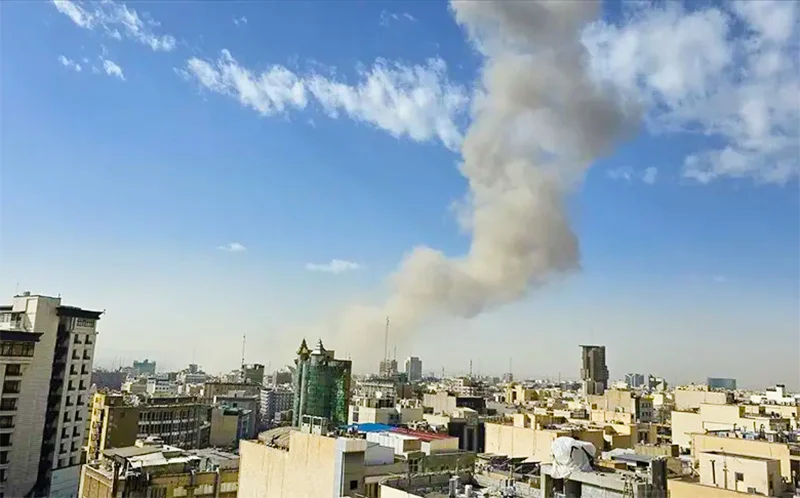
 The recent humanly costly torpedoing of an Iranian naval vessel in Sri Lanka’s Exclusive Economic Zone by a US submarine has raised a number of issues of great importance to international political discourse and law that call for elucidation. It is best that enlightened commentary is brought to bear in such discussions because at present misleading and uninformed speculation on questions arising from the incident are being aired by particularly jingoistic politicians of Sri Lanka’s South which could prove deleterious.
As matters stand, there seems to be no credible evidence that the Indian state was aware of the impending torpedoing of the Iranian vessel but these acerbic-tongued politicians of Sri Lanka’s South would have the local public believe that the tragedy was triggered with India’s connivance. Likewise, India is accused of ‘embroiling’ Sri Lanka in the incident on account of seemingly having prior knowledge of it and not warning Sri Lanka about the impending disaster.
It is plain that a process is once again afoot to raise anti-India hysteria in Sri Lanka. An obligation is cast on the Sri Lankan government to ensure that incendiary speculation of the above kind is defeated and India-Sri Lanka relations are prevented from being in any way harmed. Proactive measures are needed by the Sri Lankan government and well meaning quarters to ensure that public discourse in such matters have a factual and rational basis. ‘Knowledge gaps’ could prove hazardous.
Meanwhile, there could be no doubt that Sri Lanka’s sovereignty was violated by the US because the sinking of the Iranian vessel took place in Sri Lanka’s Exclusive Economic Zone. While there is no international decrying of the incident, and this is to be regretted, Sri Lanka’s helplessness and small player status would enable the US to ‘get away with it’.
Could anything be done by the international community to hold the US to account over the act of lawlessness in question? None is the answer at present. This is because in the current ‘Global Disorder’ major powers could commit the gravest international irregularities with impunity. As the threadbare cliché declares, ‘Might is Right’….. or so it seems.
Unfortunately, the UN could only merely verbally denounce any violations of International Law by the world’s foremost powers. It cannot use countervailing force against violators of the law, for example, on account of the divided nature of the UN Security Council, whose permanent members have shown incapability of seeing eye-to-eye on grave matters relating to International Law and order over the decades.
The foregoing considerations could force the conclusion on uncritical sections that Political Realism or Realpolitik has won out in the end. A basic premise of the school of thought known as Political Realism is that power or force wielded by states and international actors determine the shape, direction and substance of international relations. This school stands in marked contrast to political idealists who essentially proclaim that moral norms and values determine the nature of local and international politics.
While, British political scientist Thomas Hobbes, for instance, was a proponent of Political Realism, political idealism has its roots in the teachings of Socrates, Plato and latterly Friedrich Hegel of Germany, to name just few such notables.
On the face of it, therefore, there is no getting way from the conclusion that coercive force is the deciding factor in international politics. If this were not so, US President Donald Trump in collaboration with Israeli Rightist Premier Benjamin Natanyahu could not have wielded the ‘big stick’, so to speak, on Iran, killed its Supreme Head of State, terrorized the Iranian public and gone ‘scot-free’. That is, currently, the US’ impunity seems to be limitless.
Moreover, the evidence is that the Western bloc is reuniting in the face of Iran’s threats to stymie the flow of oil from West Asia to the rest of the world. The recent G7 summit witnessed a coming together of the foremost powers of the global North to ensure that the West does not suffer grave negative consequences from any future blocking of western oil supplies.
Meanwhile, Israel is having a ‘free run’ of the Middle East, so to speak, picking out perceived adversarial powers, such as Lebanon, and militarily neutralizing them; once again with impunity. On the other hand, Iran has been bringing under assault, with no questions asked, Gulf states that are seen as allying with the US and Israel. West Asia is facing a compounded crisis and International Law seems to be helplessly silent.
Wittingly or unwittingly, matters at the heart of International Law and peace are being obfuscated by some pro-Trump administration commentators meanwhile. For example, retired US Navy Captain Brent Sadler has cited Article 51 of the UN Charter, which provides for the right to self or collective self-defence of UN member states in the face of armed attacks, as justifying the US sinking of the Iranian vessel (See page 2 of The Island of March 10, 2026). But the Article makes it clear that such measures could be resorted to by UN members only ‘ if an armed attack occurs’ against them and under no other circumstances. But no such thing happened in the incident in question and the US acted under a sheer threat perception.
Clearly, the US has violated the Article through its action and has once again demonstrated its tendency to arbitrarily use military might. The general drift of Sadler’s thinking is that in the face of pressing national priorities, obligations of a state under International Law could be side-stepped. This is a sure recipe for international anarchy because in such a policy environment states could pursue their national interests, irrespective of their merits, disregarding in the process their obligations towards the international community.
Moreover, Article 51 repeatedly reiterates the authority of the UN Security Council and the obligation of those states that act in self-defence to report to the Council and be guided by it. Sadler, therefore, could be said to have cited the Article very selectively, whereas, right along member states’ commitments to the UNSC are stressed.
However, it is beyond doubt that international anarchy has strengthened its grip over the world. While the US set destabilizing precedents after the crumbling of the Cold War that paved the way for the current anarchic situation, Russia further aggravated these degenerative trends through its invasion of Ukraine. Stepping back from anarchy has thus emerged as the prime challenge for the world community.

Navy seizes an Indian fishing boat poaching in Mannar seas

Bodies of 84 Iranian sailors killed in US torpedo strike to be repatriated

Four crew members killed after US refuelling plane crashes in Iraq

Safeguarding linguistic heritage is not only a cultural responsibility, but also a shared commitment to preserving the diversity of our world – PM

This is not an ordinary scholarship programme. It defines the future vision of our country – PM

West Indies name unchanged squad for home T20Is against Australia

‘Dates have the highest sugar content to fight Coronavirus’

Sunday Island 27 December – Headlines

#SundayIsland 17th December – Headlines

Sunday Island – 28th March

Sunday Island Headlines – 21 March

Sunday Island – 21st February – Headlines
-

 News7 days ago
Peradeniya Uni issues alert over leopards in its premises
-

 News5 days ago
Repatriation of Iranian naval personnel Sri Lanka’s call: Washington
-

 News7 days ago
Wife raises alarm over Sallay’s detention under PTA
-
 Features5 days ago
Winds of Change:Geopolitics at the crossroads of South and Southeast Asia
-

 News4 days ago
Prof. Dunusinghe warns Lanka at serious risk due to ME war
-

 Sports3 days ago
Royal start favourites in historic Battle of the Blues
-

 Latest News7 days ago
Heat Index at ‘Caution Level’ in the Sabaragamuwa province and, Colombo, Gampaha, Kurunegala, Anuradhapura, Vavuniya, Hambanthota and Monaragala districts
-

 Features7 days ago
The final voyage of the Iranian warship sunk by the US