
Features
Tortured Journalist breaks 14-year silence


By Keith Noyahr
May 22, 2022 marked the country’s golden anniversary as a republic within the British Commonwealth. The republican status was secured in 1972 with the promulgation of the first autochthonous constitution, severing ties with the British monarchy. The country’s name changed from Ceylon to the Democratic Socialist Republic of Sri Lanka. Sri Lankans regrettably will mark this milestone minus tamashas and instead with long winding queues for basic supplies like food, fuel and gas at exorbitant prices as the country gropes in the dark with long blackouts.
What is more, the whole world is looking down on Sri Lanka as a bankrupt nation, unable to pay its debts and not having foreign exchange to import essentials. The leaders are turning to friendly countries for cash and credit lines for survival. After arrogantly refusing for months if not years to go to the IMF for assistance and to restructure the country’s debts, the stiff-neck leaders had to bite the bullet and seek IMF help. Pohottuwa politicians should hang their collective heads in shame for dragging Sri Lanka into such ignominy in a year that should have been marked by fitting celebrations.
Today is also National Heroes Day, and it is evident the true heroes are those braving the sun, rain and elements to peacefully protest on behalf of the millions in travail as a result of omission and commission of an incompetent dispensation that has let the country down miserably. With much hesitation, I decided to weigh in on the national debate on the plight of my dear motherland as today marks the 14th anniversary of my abduction and torture that haunts me without closure.
I reliably understand that key figures in the national government headed by Maithripala Sirisena and Ranil Wickremesinghe sought to intervene to block a thorough investigation of my case to protect the Rajapaksa regime. After promising much to expose and bring to book the corrupt politicians of the previous regime, the Sirisena-led government did little, and the Rajapaksas returned with greater resolve to plunder the nation. The unbridled corruption coupled with the mismanagement of the economy, eventually rendered the country bankrupt.
What a proud achievement! History is again repeating itself, with another national government, not willed by the people at elections, but forced into office by an economy in the doldrums. This is an admission that the arrogant Rajapaksas have failed the test of governance. Alternatively, is it another attempt to buy time and thereby prevent legal proceedings into their widespread corruption?
To make way for a national government, Prime Minister Mahinda Rajapaksa reluctantly submitted his resignation at 9.32 pm on May 9, 2022. This was not because of the peaceful agitation or a presidential request to appease the masses, but because of the backlash to the violence instigated at Temple Trees. In hindsight, his elder brother Chamal Rajapaksa accurately opined that Mahinda should have resigned after concluding his second term as president.
What words of wisdom! Even after losing the presidency, Mahinda illegally occupied the Prime Minister’s chair without showing a simple majority for over a month until he was unseated by the Supreme Court. Of course, Mahinda will argue that he became prime minister on the invitation of President Sirisena in another of the many deals that mark national governance.
It was during this hiatus that national security was downgraded, leaving room for the bloody Easter bombings that ushered in Gotabaya on a mandate to provide national security and expose the masterminds behind the attacks. This does not in any way whitewash the sitting Prime Minister Wickremesinghe and President Sirisena who are equally culpable for failing to act on bombshell intelligence. Forget the foreign intelligence, where was our local intelligence in the gathering of information and acting on same.
The peaceful public outcry for President Gotabaya Rajapaksa to quit has fallen on deaf ears. Is this outcry unreasonable? Surely, the president has failed the country in every sector or department throughout his tenure of office. On May 9 he even failed the country on national security, his main plank for winning the presidency. He could not prevent the instigation of state-sponsored violence and the reprisals that followed.
Mr Rajapaksa won a mandate for security and economic progress. Foremost in any discussion of national security is the concept of power. It is popularly defined as “a nation’s possession of control of its sovereignty and destiny”. This implies a degree of control over the extent to which outside forces can harm the country. It has not factored in national security from an external perspective, putting the country’s sovereignty on the line.
The infamous 1987 Indian Airdrop 35 years ago was condemned as a violation of our sovereignty. Now, we are compelled to request more airdrops and shiploads of aid from India for the very survival of the people. We paid for toxic Chinese fertiliser that had to be sent back, losing millions. We are paying for demurrage for all the ships berthed outside the harbour unable to be unloaded for lack of dollars. What a waste! The financial mismanagement by successive administrations particularly after 2005 has been woeful, with millions sent down the drain by the current regime. The country’s sovereignty is now under threat as we depend on the support of mighty nations in a dangerous geo-political landscape.
Under the watch of President Gotabaya Rajapaksa, the country’s sovereignty has been undermined as the leaders are begging regional and international powers to salvage the nation.
The country that kept the Americans and Indians at bay for decades since independence is now so vulnerable to China and India backed by America hustling for a foothold in the strategically placed island.
The airport and the port built in Hambantota by China during the previous Rajapaksa government in close proximity to India raised security concerns. The situation was aggravated when the Chinese wrested control of the port on a 99-year lease under the Sirisena-Wickremesinghe government that failed to repay the Chinese loans that paid to build it. India has seized the opportunity to undertake projects in other parts of the island as a counter to the Chinese gaining strategic access. To fix our economic woes, the country’s foreign policy and sovereignty has been sacrificed for political expediency.
The “Gota go home” campaign is the first real political campaign by the people and of the people as democracy has failed to deliver its component “for the people” in keeping with US president Abraham Lincoln’s definition. Sri Lanka prides itself in democracy because it has periodic elections that are won by electioneering on craftly scripted manifestos and more recently social media stunts that fool the people every so many years.
The same US president also said: “You can fool some of the people all of the time, and all of the people some of the time, but you cannot fool all of the people all of the time.” Has that time come? I reckon it has as empty words and promises meant nothing to the masses deprived of basic essentials. The longer the president digs in and hangs on, the greater the resistance will be and sadly greater the suffering of the masses.
For the president, the way out was a national government with him at the helm. What is the new Prime Minister Wickremesinghe’s solution at hand? Print more money and privatise Sri Lankan Airlines that has been fleeced by corrupt boards over the years. Having lost much, losing the national carrier and the pride that goes with it does not concern our leaders. Let’s hope that the national government will at least coerce the incumbent to strip the presidency of such arbitrary powers granted by the 20th Amendment.
Will the national cabinet call the shots even as the president’s party continues to enjoy a majority in parliament? After securing IMF assistance and foreign dollars from the Sri Lankan diaspora, will the party refuse to give the two thirds majority required to amend the constitution? Or will Wickremesinghe be sacked like he was by President Sirisena? Alternatively, for throwing President Gotabhaya Rajapaksa a lifeline, will Ranil be spared while his chosen cabinet ministers be relieved of their duties in the manner President Chandrika Kumaratunga sent packing Defence Minister Tilak Marapana and other important ministers during the Chandrika-Ranil coexistence government?
The ideal solution would be to altogether scrap the executive presidency introduced by the 1978 Democratic Socialist Republic of Sri Lanka constitution six years after becoming a republic. This form of presidency that has lasted 44 years has actualised the potential for constitutional dictatorship, undermining parliament for most of its life. The Sri Lankan diaspora, fearing it could further line the pockets of corrupt politicians, will closely watch the developments in the national government and what it does before committing its hard-earned dollars for the suffering masses.
Forced into exile, I watch from afar with a sad heart the immense suffering of Sri Lankans and my country of birth being declared bankrupt in the very year it celebrates its golden jubilee as a republic following its 75th anniversary of independence. That this pearl would lose its lustre in the eyes of the world simply bleeds my heart more than our international sporting defeats. Woe to the politicians who greedily and haughtily dragged this country to the rock bottom. They are not our national heroes but national and international villains in this sad tale on Sri Lanka that had such a promising future.
(The writer, then associate editor of The Nation newspaper, was abducted and tortured by operatives of a state agency on May 24, 2008 and barely escaped alive thanks to the efforts of his colleagues who got Mr. Karu Jayasuriya to wake President Mahinda Rajapaksa in the dead of night and persuade him to intervene. He now lives with his family in Australia where he sought refuge.)

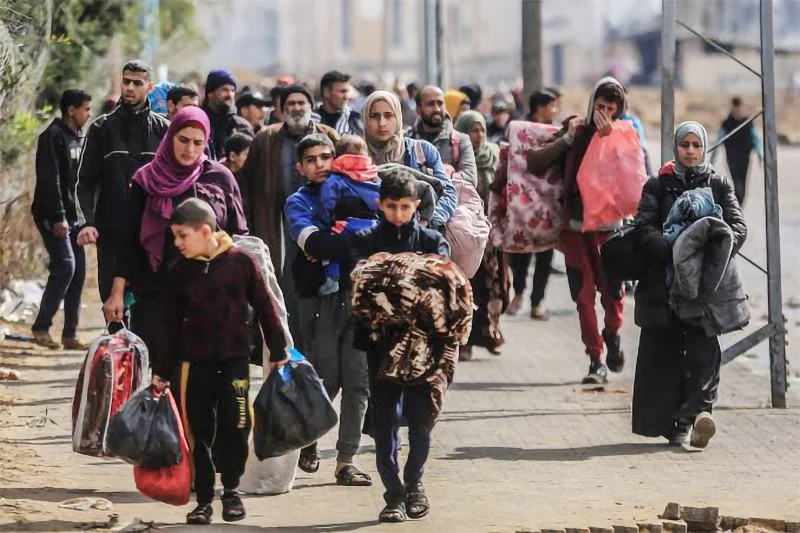
 Despite some sections of the Trump administration persisting with the view that the possibility could not be entirely ruled out of there being a diplomatic solution to the current US-Iran hostilities in West Asia, the skeptic could not be blamed for thinking otherwise. The intensity, scale and frequency of the tit-for-tat strikes by the antagonists over the past few days against selected military targets and civilian infrastructure in particular in West Asia make the adoption of this stance excusable.
The continuing hostilities render the mentioning of the MOU signed between the warring parties in mid-June a laughable matter. While it could very well be that the foes are wishing privately for a cessation of hostilities before long, what seems to be uppermost on their minds right now is to negotiate with each other from a position of strength. This strategy compels them to incapacitate each other militarily to the extent possible, lest they have to concede too much to each other during negotiations. Hence the stepped-up hostilities.
However, even on the question of there being a negotiated political settlement in the West Asian theatre in the longer term, the skeptic could come to be seen as scoring over the optimist. Developments on the ground account for this.
At the time of writing Israel’s Netanyahu government is going ahead in fairly care-free fashion with the establishment of more Jewish settlements in the Gaza and the West Bank, and it’s all happening under the apparently complacent gaze of the US. In fact, some quarters estimate that Israel is in control of some 65% of the Gaza Strip. Ethnic cleansing, that is, is being drastically stepped-up.
Accordingly, in terms of the power relations of West Asia, the world is almost back to the status quo of the late forties of the last century when the state of Israel was established and the Palestinians were reduced to a microscopic minority in the land they came to inhabit. Therefore, even the impartial observer would be compelled to ask: ‘Will a negotiated peace be ever possible in the Middle East?’
The humanist in the observer would prefer to answer this question in the affirmative and it is indeed the ideal stance to adopt considering the staggering human and material costs of the conflict. But the way ahead to peace could be expected to be highly hazardous and arduous. Among other odds, it would also prove an uphill endeavour to win minds and hearts.
The US’ Trump administration would need to be counted out in this pursuit. This is on account of the fact that it has been far too wayward in its management of West Asian affairs in particular over the past couple of years. Given its unpredictable character it is a matter for conjecture whether it could be counted on to live up to its commitments.
Moreover, Israel could be expected to ‘go it alone’ in the Middle East regardless of whether US help is coming or otherwise. It has indicated as much in recent times and Israel could be doubted on this score only at the doubter’s peril. Because time and again Israel has demonstrated that it could steadfastly defend its interests even single-handedly in the Middle East. History bears this out.
However, a durable alliance with the US would stand Israel in good stead. On the matter of military and intelligence assistance, for example, the US’s help proved invaluable for Israel in the past and going forward this is bound to be so as well. Moreover, it is unlikely that the Trump administration would give up on Israel, considering that a strong Israel is crucial for the furtherance of the US’ strategic and economic interests in West Asia.
But whether the above factors would have a considerable bearing on the question of working out a durable solution to the West Asian tangle is an entirely different matter. Israel, as in the case of the Palestinian enclaves, is acutely security conscious and would need to satisfy itself fully that it could live in a security environment that would guarantee its complete safety, going forward.
The Middle East is badly in need of another peace effort on the lines of the Oslo Accords of the mid-nineties that brought the key actors together and helped hammer out a solution that addressed some of their notable concerns. To be sure, that process did not prove to be the ideal answer to the tangle, but it yielded some respite to the region and drove home that one-time sworn foes could indeed negotiate with a degree of success. The West Bank authority, although falling short of fulfilling some key Palestinian aspirations, is testimony that a degree of success is possible if the intent is right.
Given the current realities of West Asia, peace-making is bound to be an uphill challenge. The violence faced in recent times by the Palestinian community, in particular, has been nothing less than mind-numbing. Merciless has been the violence visited on them by the Israeli side. In such circumstances, durable peace in the region could smack of an idealist’s dream.
Nevertheless, there needs to be urgently, a meeting of minds over the divides. The US would need to be counted out as an honest broker in bringing the sides together but the rest of the West would do well to step up to the challenge.
In this exercise the onus would be on the world’s democracies to take the initiative and doggedly stay the course. An acceptable combination would be the EU and the UN. Given their credentials, the main sides in West Asia ought to find them the least controversial.
Even if the relevant institutional and political arrangements could be shored up to take a reconciliation process forward, winning hearts and minds for the peace drive would prove a grueling challenge. Over the past few years in particular tens of thousands of hearts and minds on both sides of the divide have been bruised badly in the runaway murderous violence that has come to define the Middle East.
These badly scarred personalities would need to experience healing without much delay. It is therefore a multi-faceted challenge that is at hand. Since wide-ranging expertise would be needed in the healing process, people’s participation in peace-making, ranging over the divides, would need to be made a durable reality. It will be a time for enthroning humanity and ensuring the rejection of all forms of violence and coercion.
 For many Sri Lankans, Thailand is the go-to holiday — beaches, temples, food, and that famous warm hospitality.
In fact, I’ve been to Amazing Thailand 24 times myself, and was honoured with the Friends of Thailand International Media Award by the Tourism Authority of Thailand for promoting Thai tourism.
The good news I have for you today is that you don’t even need a passport to get a taste of Amazing Thailand.
The Royal Thai Embassy, in Colombo, is bringing a vibrant slice of Thailand, to the city of Colombo, with Thai Festival 2026 — a cultural experience like never before.
Whether you are an avid enthusiast of Thai culture, a total novice, or simply just interested in exploring foreign cultures, Thai Festival 2026 is going to be the perfect opportunity for you to get more than just a glimpse into one of the most celebrated cultural heritages in South East Asia. And ENTRANCE IS FREE.
The festival will be held on the 1st and 2nd of August, 2026, at Siam Nivasa, 43, C.W.W. Kannangara Mawatha, Colombo 7, and the East Parking Area, of the Colombo Municipal Council, from 11:00am to 5:00pm.
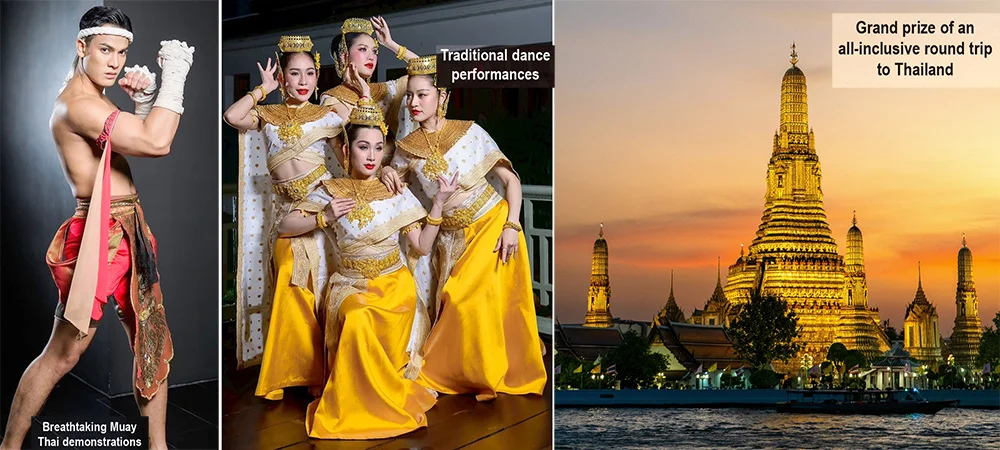
Both days will be full of live entertainment, and dispersed throughout with Thai cultural displays, including exhilarating traditional dance performances and breathtaking Muay Thai demonstrations.
Exploring art and craft specific to Thailand, tasting irresistible authentic Thai cuisine, and playing arcade games, are just a few more fun-filled events available for visitors at the festival premises.
An array of Thai products will also be available for purchase.
While at the festival, you will find Sri Lankan Alumni from Thai universities sharing their experiences with you and willing to answer any questions you might have, related to studying abroad in Thailand.
You can also register for the Muay Thai workshop that will be happening on the 7th and 8th of August, 2026, in Colombo.

Irresistible authentic Thai cuisine
Visitors can also stand a chance to win traditional Thai souvenirs, get exclusive photo opportunities, and, the big one — to enter the raffle draw, at the end of each day, for the grand prize of an all-inclusive round trip to Thailand.
Be sure to avail yourself of this exceptional opportunity and add a cultural spin to your weekend.
To keep up with the latest updates on Thai Festival 2026, head over to the Thai Festival official social media pages.
The Royal Thai Embassy in Colombo official webpage:
https://colombo.thaiembassy.org
Official social media:
Facebook: @RTEColombo
Instagram: @thaiembassysrilanka
Thai Festival official social media:
Facebook: Thai Festival in Colombo
Instagram: @thaifestival_colombo
TikTok: @thaifestival.incolombo

 Hair fall, in this heat, can be so frustrating, and noticing a thin patch is even more worrying. The good news is … yes, with a little care and kitchen ingredients, you can nourish your scalp and support healthy regrowth.
Try these four easy home remedies … even our grandmothers trusted:
* Coconut Oil and Curry Leaves Tonic:
Warm 04 tablespoons of coconut oil, with a handful of curry leaves, till the leaves turn black. Cool, strain, and massage into scalp 02-03 times a week. Leave for 01 hour, or overnight.
Why:
Coconut oil deeply nourishes, while curry leaves help strengthen roots and add shine.
* Onion Juice for Spot Treatment:
With cotton, dab the juice of 01 small onion, directly on the thin/bald patches. Leave for 20-30 minutes, and then wash with a mild shampoo. Use twice a week.
Why:
Rich in sulfur, onion juice helps boost blood circulation to the scalp.
* Aloe Vera and Castor Oil Mask:
Mix 02 tablespoons of fresh aloe vera gel and 01 tablespoon castor oil and apply to the scalp, focusing on thinning areas. Leave for 45 minutes, and then rinse with cool water.
Why:
Aloe vera soothes the scalp, while castor oil coats hair to make it look thicker.
* Fenugreek and Curd Strengthening Pack:
You will need 02 tablespoons fenugreek seeds, soaked overnight, and 02 tablespoons plain curd.
Grind to a paste, apply to scalp for 30 minutes, and then wash.
Why:
Fenugreek strengthens strands and reduces breakage.
Extra Tips for Healthy Hair:
Avoid tight hairstyles that pull on the scalp.
Eat iron and protein rich foods: greens, dhal, eggs, fish.
Use lukewarm water, not hot.
Be gentle when brushing and drying.
Manage stress — it plays a big role in hair fall.
Important: If bald patches are growing, or there is itching/redness, please consult a dermatologist.
Home remedies support hair health, but a doctor can find the exact cause.
Remember, healthy hair starts with a healthy, happy you.

Navy seize Indian fishing trawler, nine fishermen poaching in Sri Lankan waters

Sri Lanka edge Qatar in Davis Cup opener

Dambulla Sixers hand Galle Gallants first defeat in LPL 2026

Jaffna Kings beat Colombo Kaps by five runs

Showers will occur in the Western and North-western provinces and Galle, Batticaloa, Ampara and Monaragala districts

United Opposition moves to halt interference with judicial independence

‘Dates have the highest sugar content to fight Coronavirus’

Sunday Island 27 December – Headlines

#SundayIsland 17th December – Headlines

Sunday Island – 28th March

Sunday Island Headlines – 21 March

Sunday Island – 21st February – Headlines
-
 Features4 days ago
Two memorable excerpts from a former SLAF commander’s memoir
-

 Business4 days ago
‘Giving up was never an option’: The fisherman who fought back after losing millions in SL
-
 Latest News5 days ago
Davis cup Asia/Oceania Group IV 2026 to be held in Colombo from 20th to 25th July
-
 Features4 days ago
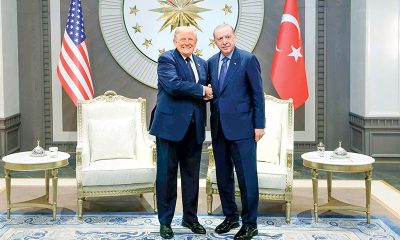
Erdoğan’s New Republic
-

 Life style4 days ago
Taste of the Swiss Alps comes to Colombo
-
 News5 days ago
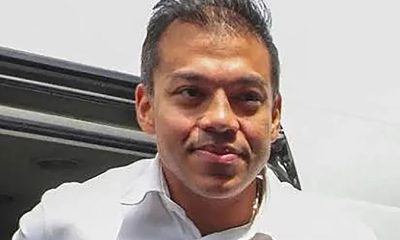
Evidence recorded in money laundering case against Yoshitha Rajapaksa
-
 News5 days ago
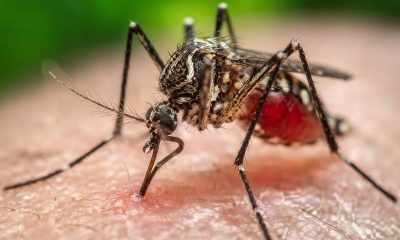
Dengue outbreak gallops ahead: Infections surpasses 73,455, leaving 50 dead
-
 Midweek Review1 day ago
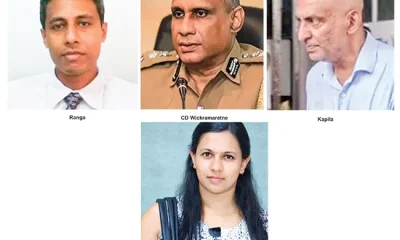
Three high-profile alleged suicides shaping key investigations