
News
Top academic calls for punitive measures against those abusing scholarships offered to govt.

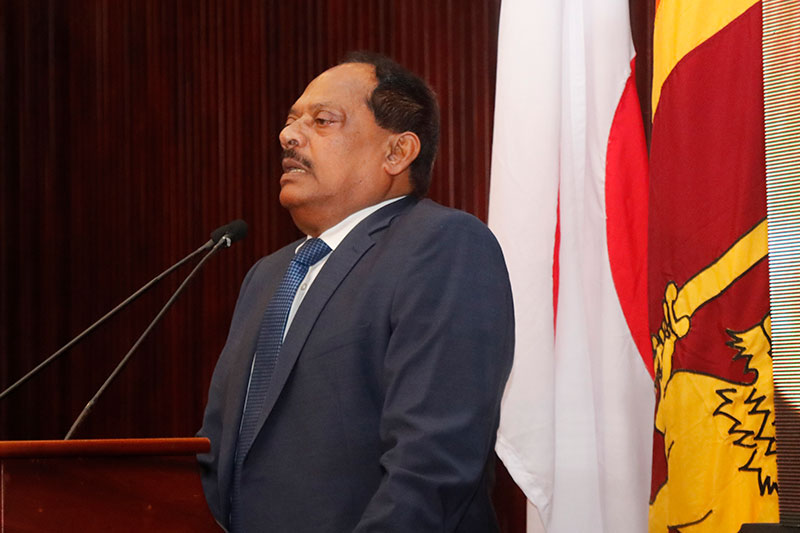
JaGAAS lifetime awards 2025:
Vice Chancellor of the NSBM Green University, Prof. E. A. Weerasinghe, said that the government should take punitive measures against those chosen for foreign scholarships in case they violated bond conditions.
Tougher action was required to discourage public servants and academics from brazenly violating the trust placed on them, the top administrator said yesterday (23), in a brief interview with The Island after receiving Japanese Graduates’ Alumni Association of Sri Lanka (JaGAAS) lifetime awards 2025 at the BMICH on March 21. Prof. Weerasinghe received the award for exemplifying leadership and entrepreneurship in human capital development in higher education.
The other recipients were: Ms Baba Shigeko, Ito Yoshiaki, Koga Michio, Mikasa Jitsuo, Ogawa Kiyoko, Jagath Chandana Ramanayake, emeritus Prof. Yamada Yoshiaki, Prof. N.S. Cooray, Prof. Ranjith Dissanayake, retired IGP Chandra Fernando, Merrick Gooneratne, Dr. Nishantha Nanayakkara, Dr. OP.G. Rohan Pallewatta, Prof. Piyadasa Ratnayake, Ananda Shelton Thenuwara, Dayasiri Warnakulasooriya and Prof. E.A. Weerasinghe.
They received the coveted JaGAAS lifetime awards from Japanese Ambassador in Colombo Akio Isomata who, in his brief address, declared their dedication would inspire more people to pursue similar opportunities for study, collaboration and innovation.
Responding to The Island queries, Prof. Weerasinghe found fault with successive governments for failing to deal with wrongdoers. Alleging that academics were among the worst culprits, Prof. Weerasinghe said that along with him three others – a researcher with the National Dangerous Drugs Control Board and two University lecturers were chosen jointly by the governments of Japan and Sri Lanka. “We proceeded to Japan in 1990 and having obtained a doctorate in economics from Osaka City University I returned home in 1997. My colleagues decided against doing so. The researcher stayed in Japan while the remaining two migrated to Australia.”
Prof. Weerasinghe said that his former colleagues, now in Australia, once sought the opportunity to join the University. But they were told not to expect opportunities in the motherland after having betrayed the trust the country placed on them.
Prof. Weerasinghe said that though he could have easily migrated to New Zealand with his wife and two children, they decided to come back home. At the time Weerasinghe had received a Japanese scholarship he was serving the University of Sri Jayewardenapura as an assistant lecturer. “In terms of the bond conditions, I served the University for a period of seven years,” Prof. Weerasinghe said, adding that he never once regretted the decision to pursue a career here.
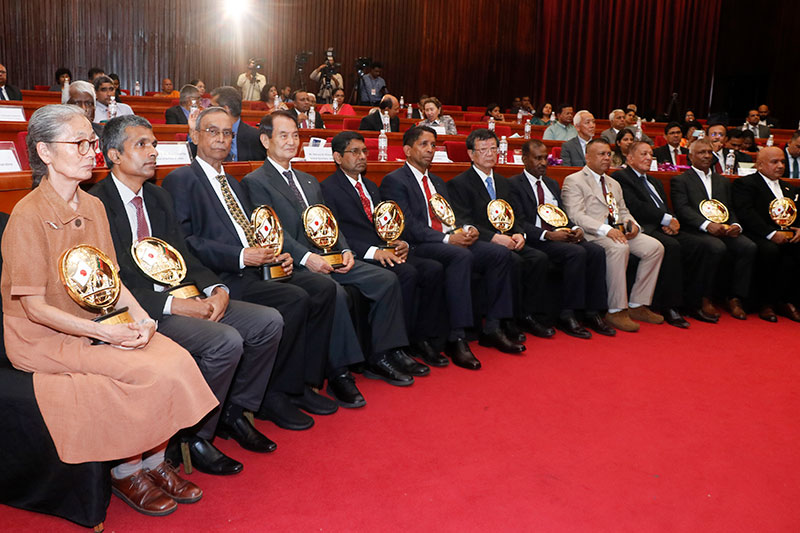
Recipients of JaGAAS lifetime awards
At the end of his sabbatical leave, Prof. Weerasinghe was offered the opportunity to serve as the Director General (DG) of the National Institute of Business Management (NIBM) in 2005. Prof. Weerasinghe emphasized that the NIBM had been in a much deteriorated state and restoration of the public faith in the Institution seemed a herculean task. “The University released me without pay,” a smiling Prof. Weerasinghe said, recalling his efforts to expand NIBM to other major towns, including Galle, Matara and Kandy, over the years.
The academic emphasised that in spite of the raging war in the Northern and Eastern regions and occasional terrorist attacks in the South the government sustained the NIBM. Sometime after the conclusion of the conflict in 2009, Prof. Weerasinghe, in his capacity as the DG, NIBM has proposed transforming the institute to a fully-fledged University. “Some were skeptical about my proposal. But, I pushed hard and finally managed to convince the powers that be that NIBM could be the foundation for a fully-fledged University,” Prof. Weerasinghe said.
Prof. Weerasinghe paid a glowing tribute to the Bank of Ceylon (BoC) for providing the wherewithal to launch the project in 2013. The BoC provided a staggering Rs 10 bn on a Treasury guarantee that made it possible for us to establish NSBM Green University in 2016, Prof. Weerasinghe said, declaring that his team ensured that the loan was paid on time. “There had never been an issue regarding the repayment of the loan and today we are a fully self-financed, state-of-the-art international-level University eyeing further expansion.’’
VC Weerasinghe said that recently they finalised a Rs 7.3 bn loan with the BoC in support of further expansion. Asked to explain the impact of the Covid-19 epidemic and the subsequent unprecedented economic crisis that compelled the government to declare bankruptcy in early 2022, Prof. Weerasinghe said that they received the maximum backing of the people who had faith in the University.
Emphasising the responsibility on the part of the government whoever is in power to ensure stability, Prof. Weerasinghe said that during the first phase of the project he had to work with 12 Ministers. The VC didn’t mince his words when he pointed out unnecessary difficulties caused by political appointments over the years. It would be easy to cause chaos, disrupt systems and undermine institutions that were managed without being a burden to the Treasury, Prof. Weerasinghe said. However, restoring public faith in such institutions would be extremely difficult, the Japanese scholar mentioned.
“NSBM Green University belongs to the government. Therefore, the University belongs to the people. Primary difference is we do not depend on government funds at all,” Prof. Weerasinghe said. According to him the University produced over 20,000 graduates and at the moment over 13,000 students were at five faculties, namely business, computing, engineering, science and postgraduate studies. “We have over 70 degree programmes to suit students,” Prof. Weerasinghe said, underscoring the pivotal importance of the government recognizing the contribution made by the University.
By Shamindra Ferdinando


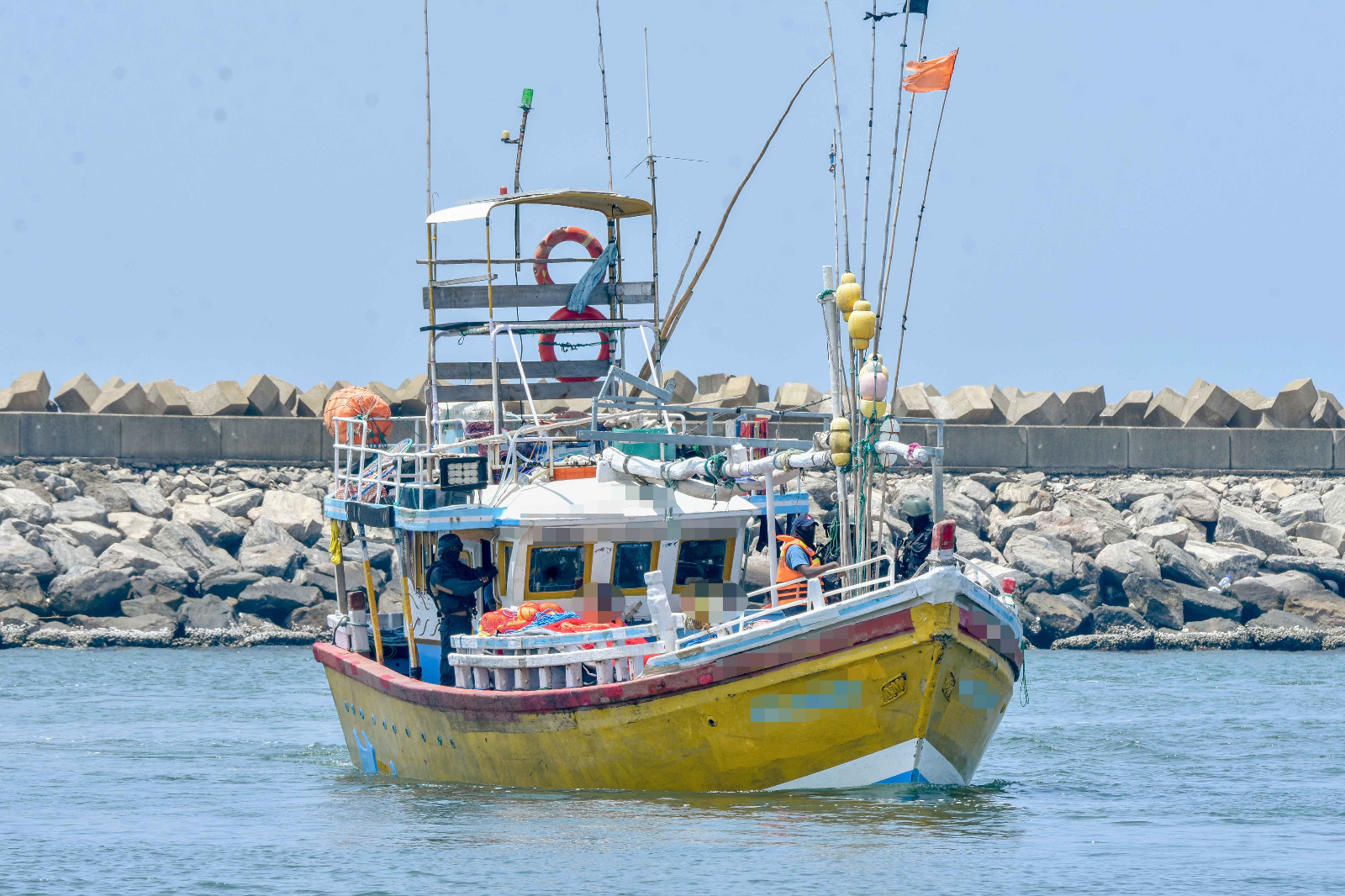
The Sri Lanka Navy during yet another successful operation on the high seas south of Sri Lanka, intercepted two (02) local multi-day fishing trawlers.
One trawler, along with 05 individuals, was suspected of attempting to smuggle a consignment of narcotics and weapons. The second trawler and the remaining 05 suspects are believed to be linked to the same illicit operation.
On 12 Mar 26, the multiday fishing trawlers and crew were brought to the Dickowita Fishery Harbour.
After a meticulous examination the Police Narcotic Bureau (PNB) detected 478kg of crystal methamphetamine, 176kg of heroin as well as 03 mechanical weapons, 08 sidearms and
communication equipment.
The Honourable Deputy Minister of Defence, Major General Aruna Jayasekara (Retd), along with the Commander of the Navy, Vice Admiral Kanchana Banagoda and the Inspector General of Police, Priyantha Weerasooriya, were present to inspect the seized narcotics and weapons.




Latest News
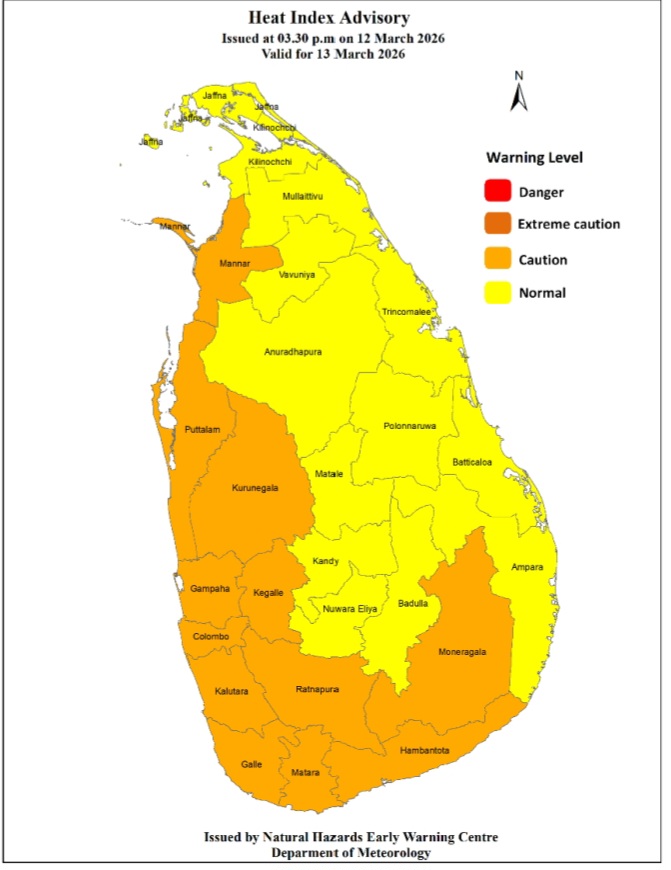
Heat Index likely to increase up to ‘Caution level’ at some places in the Western, Sabaragamuwa, Southern and North-western provinces and in Monaragala and Mannar districts

Warm Weather Advisory
Issued by the Natural Hazards Early Warning Centre of the Department of Meteorology at 3.30 p.m. on 12 March 2026, valid for 13 March 2026.
Heat index, the temperature felt on human body is likely to increase up to ‘Caution level’ at some places in Western, Sabaragamuwa, Southern and North-western provinces and in
Monaragala and Mannar districts.
The Heat Index Forecast is calculated by using relative humidity and maximum temperature and this is the condition that is felt on your body. This is not the forecast of maximum temperature. It is generated by the Department of Meteorology for the next day period and prepared by using global numerical weather prediction model data.

Effect of the heat index on human body is mentioned in the above table and it is prepared on
the advice of the Ministry of Health and Indigenous Medical Services.
ACTION REQUIRED
Job sites: Stay hydrated and takes breaks in the shade as often as possible.
Indoors: Check up on the elderly and the sick.
Vehicles: Never leave children unattended.
Outdoors: Limit strenuous outdoor activities, find shade and stay hydrated.
Dress: Wear lightweight and white or light-colored clothing.
Note:
In addition, please refer to advisories issued by the Disaster Preparedness & Response Division, Ministry of Health in this regard as well. For further clarifications please contact 011-7446491.

The Frontline Socialist Party (FSP) yesterday accused the government of trying to award another tender to the Indian company that supplied low-grade coal to the Norochcholai Power Plant and failed to deliver the stipulated amount of coal according to schedule.
The allegation was made by the Education Secretary of the Progressive Socialist Party, Pubudu Jayagoda, during media briefing at the party office in Nugegoda last afternoon.
Jayagoda said that in September 2025, the government had awarded a tender to the Indian company Trident Chemphar to supply 25 coal shipments for electricity generation in 2026.
In August 2025, it was confirmed that the coal delivered by the company was substandard. The company also failed to supply coal on schedule. Although the first shipment was expected in the second week of December 2025, it arrived at the end of the month. By mid-March, only 12 ships had arrived, and biweekly deliveries have been disrupted, putting Sri Lanka at risk of a severe energy shortage.
On 11 March, the government called a sudden spot tender for five coal shipments. Four companies submitted bids, and they include Trident Chemphar. FSP criticiced awarding the tender to the same discredited company, saying it was unethical and could trigger a major national crisis, as the company had failed to supply quality coal reliably in the past.
Previously, coal quality was strictly measured, with a “Reject Value”. But now to help the errant supplier the term of Reject Value has now been omitted altogether and replaced with a new term ‘Minimum Value’ setting it as the minimum calorific threshold—coal producing less than 5,900 kilocalories per kilogram was rejected, and coal with ash content above 16% was also discarded.
However, the government is now reportedly lowering these standards, accepting substandard coal, and changing tender specifications to accommodate the company.
Jayagoda castigated the latest stunt coming especially at a time when the world faces war and oil shortages. Diesel meant for electricity generation is being diverted to school buses, public transport, and emergency vehicles, leaving households at risk of prolonged blackouts. Even if diesel is imported, electricity tariffs could skyrocket.

Qantas agrees to pay $74m over Covid-19 travel voucher refunds

Navy seize 654kg of narcotics and haul of arms off South Coast

Heat Index likely to increase up to ‘Caution level’ at some places in the Western, Sabaragamuwa, Southern and North-western provinces and in Monaragala and Mannar districts

Showers above 50 mm can be expected at some places in the Western and Sabaragamuwa provinces and in the Galle and Matara districts

Govt. bends rules, lowers coal standards in favour of errant company: FSP

Lanka requests diesel from India

‘Dates have the highest sugar content to fight Coronavirus’

Sunday Island 27 December – Headlines

#SundayIsland 17th December – Headlines

Sunday Island – 28th March

Sunday Island Headlines – 21 March

Sunday Island – 21st February – Headlines
-

 News6 days ago
Peradeniya Uni issues alert over leopards in its premises
-

 News4 days ago
Repatriation of Iranian naval personnel Sri Lanka’s call: Washington
-

 News6 days ago
Wife raises alarm over Sallay’s detention under PTA
-
 Features4 days ago
Winds of Change:Geopolitics at the crossroads of South and Southeast Asia
-

 News3 days ago
Prof. Dunusinghe warns Lanka at serious risk due to ME war
-

 Latest News6 days ago
Heat Index at ‘Caution Level’ in the Sabaragamuwa province and, Colombo, Gampaha, Kurunegala, Anuradhapura, Vavuniya, Hambanthota and Monaragala districts
-

 Sports2 days ago
Royal start favourites in historic Battle of the Blues
-

 Features6 days ago
The final voyage of the Iranian warship sunk by the US