
Features
Time to Think Part One

By Michael Patrick O’Leary
Transgender Issues in Sri Lanka
Sri Lanka’s first president, JR Jayewardene, famously boasted that the newly-created executive presidency gave him the power, “to do anything, except make a man a woman, or a woman a man”. Today, there is much conflict in many countries about making a man a woman or a woman a man. The issue recently contributed to the downfall of Scotland’s First Minister, Nicola Sturgeon, who had seemed unassailable. In Ireland, the government is under attack because the Equalities Minister, Roderic O’Gorman, has been siphoning money off to trans activist groups that had been earmarked for the Traveller and Roma communities, migrant integration and redress for children who had been abused by the state and the church. There are some who believe that if a man says he is woman – “self-identifies” as a woman – then he is, indeed, a woman. Wishing makes it so. Those who dispute this are labeled “transphobic” and are brutally attacked in the trans wars. JK Rowling has been vilified simply for saying a man cannot be a woman.
Sunday Island readers might consider that this a first world issue and not relevant in Sri Lanka. The trans wars raise issues of free speech which are widely relevant in any country, even Sri Lanka. According to a December 2019 report by Equal Ground, a non-profit group that advocates for LGBTQ rights in Sri Lanka, there are some 122,000 people in Sri Lanka aged 18-65 that identify as transgender. Some of them gather at night in our neighbourhood. National Transgender Network Sri Lanka has a Facebook account. Dimuthu Attanayake wrote about trans people in Sri Lanka who have resorted to sex work to make a living because of the economic crisis. RoarMedia (to which I have contributed) published a balanced and compassionate article back in 2016. Ceylon Today published a series of articles by my good self in 2021. The Sunday Morning newspaper has published regular features on trans issues. HiruNews reported a 12 hour gender reassignment operation at Jaffna Hospital on a person from Batticaloa. There are advertisements on the internet for sex reassignment surgery in Sri Lanka.
GIDS Gone
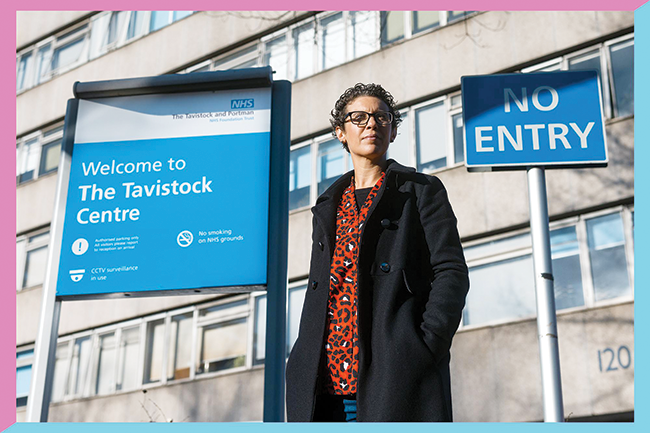
On February 23, 2023, A Time to Think by Hannah Barnes was published. I preordered the book so I could quickly read it for you and report back as soon as possible. Barnes regards her work as an investigation into flawed healthcare – not an attack on Trans rights. The subject of the book is GIDS (Gender and Identity Development Service) run by the Tavistock and Portman NHS Foundation Trust. Hannah Barnes had previously investigated the clinic for the BBC’s Newsnight programme.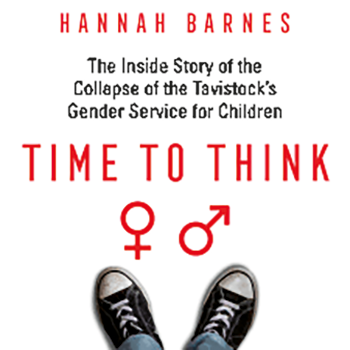
The NHS has ordered the clinic to be closed. The Hippocratic Oath requires a physician to swear upon the healing gods to, “first, do no harm”. The treatment promoted by GIDS did a lot of harm. Barnes spoke to over 60 clinicians, psychologists, psychotherapists, nurses, social workers as well as clients and their parents.
The clinic was launched in 1989 by Domenico Di Ceglie to help people aged 17 and under struggling with their gender identity. They “ended up with three or four cases” in its first year. True gender dysphoria is very rare. The term describes a sense of unease that a person may have because of a mismatch between their biological sex and their gender identity. This sense of unease or dissatisfaction may be so intense it can lead to depression and anxiety and have a harmful impact on daily life. Barnes quotes Di Ceglie, “And then somebody said to me, ‘But is it that you, [by] creating a service, you are creating the problem?’” The number of people seeking the clinic’s help is 20 times higher than it was a decade ago. Something strange is going on.
Cass Report
Dr Hilary Cass, a leading paediatrician, was commissioned to review and report on the service provided by GIDS. Cass said the Tavistock clinic needed to be transformed. She said the current model of care was leaving young people “at considerable risk” of poor mental health and distress.
Cass reported that:
The service was struggling to deal with spiralling waiting lists
It was not keeping “routine and consistent” data on its patients
Health staff felt under pressure to adopt an “unquestioning affirmative approach”
Once patients are identified as having gender-related distress, other healthcare issues they had, such as being neurodivergent, “can sometimes be overlooked.”
Affirmative Approach
In the acrimonious debates about transgender issues, one has to carefully unpick the meaning of words. When Cass says, “affirmative approach”, she means that very young children who were confused about whether they were male or female were put on a fast track to receive puberty blockers. There is very little research about the side effects of these medications but there are well-founded fears that they cause deficiencies of bone density. There are also well-founded fears of blood clots and cardiovascular disease. There is little doubt that puberty blockers cause infertility and difficulties in achieving orgasm. It is unlikely that anyone who opts for this treatment will have a happy sexual life.
“Neurodivergent” means that most of the children that GIDS dealt with had a lot of problems apart from gender. This means that issues about whether they identified as male or female were, in reality, secondary to other issues including “non-suicidal self-harm, suicidal ideation, suicide attempts, autism spectrum conditions (ASCs), attention deficit hyperactivity disorder (ADHD), symptoms of anxiety, psychosis, eating difficulties, bullying and abuse”. Many of the children would have developed into a reasonably happy life as homosexuals if GIDS had not fast tracked medical intervention to alter their gender. Over 90% were lesbian. Some of the patients interviewed by Barnes thought they might be happy as neither male or female. There is much evidence of homophobia surrounding the issue of gender reassignment. Was GIDS promoting a form of gay conversion?
Early Intervention
“Early intervention” is another term bandied about. It means doing nasty things to children below the age of consent. What it means is that pre-adolescent children have been chemically castrated with drugs designed to be used on sex offenders. Claims are routinely made that puberty blockers are reversible. There is no data to support this view. Decisions are made by parents which can have a disastrous effect on children’s lives. The lower age limit of 12 was removed as the GIDS clinic moved to a “stage” not “age” approach, allowing younger children to be referred for puberty blockers.
Mermaids
There are many mentions in Hannah Barnes’s book of a charity called Mermaids. This was founded in 1995 to provide support for transgender youths up to 20 years of age. The influence of Mermaids and Susie Green on GIDS’s practice and policy seems egregious, nay, sinister. Susie Green was the chief executive of Mermaids from January 2016 until 25 November 2022. Her son Jack became a girl called Jackie. She took him to Boston when he was 12 for a course of puberty blockers. On his 16th birthday he had “gender reassignment surgery” in Thailand. In plain English this means orchiectomy, castration, which would be illegal in Britain for a 16-year-old. Green promoted the wider use of puberty blockers and tried to persuade GIDS to support her.
Domenico Di Ceglie and his successor, Polly Carmichael, would regularly attend meetings of Mermaids and subsequently encourage staff to change practice. According to GIDS staff that Barnes interviewed, “Mermaids became more political and harder to work with. Their position appeared to be that there was only one outcome for these children and young people – medical transition.” Clinical psychologist Kirsty Entwistle, on the GIDS staff from 2017, said: “Those who’d connected with Mermaids were terrified, because they’d been told that their child was going to kill themselves if they didn’t get blockers.” Entwistle was shocked when her clinical partner cited a female patient’s early love of Thomas the Tank Engine as evidence she should be referred for puberty blockers.
No Talking Cure
The Tavistock was, for many years, seen as a centre of excellence for psychoanalysis within the NHS. The Tavistock’s reputation was based on psychotherapy – the talking cure. Distinguished people who passed through the Tavistock’s portals include Freud, Jung, John Bowlby, Lily Pincus, RD Laing, HG Wells and Samuel Beckett. I had dealings with the Tavistock in 1994 when one of their psychotherapists, Valerie Sinason, was spreading disinformation about “ritual satanic child abuse.” I will deal with that in my next article. There was little therapy of any kind available at GIDS. “The ‘fundamental problem’ was that the team could only ever carry out ‘limited’ psychological work with young people and families.” New staff could not be trained quickly enough and patients were disorientated by seeing new people at every appointment. Children were referred for drugs sometimes after only two sessions.
I Had not Thought Delusion Had Undone so Many.
Part of the madness was that children were turning up identifying as other ethnicities such as Japanese. Why is there an epidemic of young people with gender dysphoria? Most cases used to be boys wanting to be girls. Why are most of them girls today who want to become men?” The number of teenage girls claiming to have gender dysphoria had risen by 5,000% in seven years.
Dr Anna Hutchinson, a senior clinical psychologist at GIDS, joined the clinic at the start of 2013 with significant experience from a number of London’s leading hospitals, including Great Ormond Street Hospital. By late 2014, GIDS’s activity was “increasing faster than staffing”. Barnes quotes Hutchinson, one of the many whistleblowers to have gone on the record: “Self-diagnosed adolescent trans boys — natal females — started to fill up GIDS’s waiting room with similar stories, haircuts, even names – ‘one after another after another’. They’d talk about their favourite trans YouTubers, many having adopted the same name, and how they aspired to be like them in the future.” I will look at mass hysteria in my next article.
Cancel Culture
Barnes had submitted a detailed book proposal to 22 publishers. None of them wanted to publish the book. Barnes recalls: “Of the 12 who responded, all via email, not one publisher said anything negative about the proposal. In fact, several praised it, saying that it was an important story that should be told – but not by them. Some mentioned that other authors they published would be ‘sensitive’ to the material, others hinted that it would be difficult to get it past junior members of staff.” She said, “Ten other publishers did not respond to my proposal, something my agent tells me is very unusual.” Mark Richards and Diana Broccardo, the owners of the small, independent publisher Swift Press agreed to publish the book. The book received uniformly positive reviews and is selling very well. There is strong anecdotal evidence that staff at London branches of Waterstones and Foyles (Foyles is now owned by Waterstones) are actively preventing people from buying the book.
In my next article, I will deal with the issue of moral panic and mass delusion.


 by Kaushalya Perera
Time has, by and large, stood still in the business of academic staff recruitment to state universities. Qualifications have proliferated and evolved to be more interdisciplinary, but our selection processes and evaluation criteria are unchanged since at least the late 1990s. But before I delve into the problems, I will describe the existing processes and schemes of recruitment. The discussion is limited to UGC-governed state universities (and does not include recruitment to medical and engineering sectors) though the problems may be relevant to other higher education institutions (HEIs).
How recruitment happens currently in SL state universities
Academic ranks in Sri Lankan state universities can be divided into three tiers (subdivisions are not discussed).
* Lecturer (Probationary)
– recruited with a four-year undergraduate degree. A tiny step higher is the Lecturer (Unconfirmed), recruited with a postgraduate degree but no teaching experience.
* A Senior Lecturer can be recruited with certain postgraduate qualifications and some number of years of teaching and research.
* Above this is the professor (of four types), which can be left out of this discussion since only one of those (Chair Professor) is by application.
State universities cannot hire permanent academic staff as and when they wish. Prior to advertising a vacancy, approval to recruit is obtained through a mind-numbing and time-consuming process (months!) ending at the Department of Management Services. The call for applications must list all ranks up to Senior Lecturer. All eligible candidates for Probationary to Senior Lecturer are interviewed, e.g., if a Department wants someone with a doctoral degree, they must still advertise for and interview candidates for all ranks, not only candidates with a doctoral degree. In the evaluation criteria, the first degree is more important than the doctoral degree (more on this strange phenomenon later). All of this is only possible when universities are not under a ‘hiring freeze’, which governments declare regularly and generally lasts several years.
Problem type 1
– Archaic processes and evaluation criteria
Twenty-five years ago, as a probationary lecturer with a first degree, I was a typical hire. We would be recruited, work some years and obtain postgraduate degrees (ideally using the privilege of paid study leave to attend a reputed university in the first world). State universities are primarily undergraduate teaching spaces, and when doctoral degrees were scarce, hiring probationary lecturers may have been a practical solution. The path to a higher degree was through the academic job. Now, due to availability of candidates with postgraduate qualifications and the problems of retaining academics who find foreign postgraduate opportunities, preference for candidates applying with a postgraduate qualification is growing. The evaluation scheme, however, prioritises the first degree over the candidate’s postgraduate education. Were I to apply to a Faculty of Education, despite a PhD on language teaching and research in education, I may not even be interviewed since my undergraduate degree is not in education. The ‘first degree first’ phenomenon shows that universities essentially ignore the intellectual development of a person beyond their early twenties. It also ignores the breadth of disciplines and their overlap with other fields.
This can be helped (not solved) by a simple fix, which can also reduce brain drain: give precedence to the doctoral degree in the required field, regardless of the candidate’s first degree, effected by a UGC circular. The suggestion is not fool-proof. It is a first step, and offered with the understanding that any selection process, however well the evaluation criteria are articulated, will be beset by multiple issues, including that of bias. Like other Sri Lankan institutions, universities, too, have tribal tendencies, surfacing in the form of a preference for one’s own alumni. Nevertheless, there are other problems that are, arguably, more pressing as I discuss next. In relation to the evaluation criteria, a problem is the narrow interpretation of any regulation, e.g., deciding the degree’s suitability based on the title rather than considering courses in the transcript. Despite rhetoric promoting internationalising and inter-disciplinarity, decision-making administrative and academic bodies have very literal expectations of candidates’ qualifications, e.g., a candidate with knowledge of digital literacy should show this through the title of the degree!
Problem type 2 – The mess of badly regulated higher education
A direct consequence of the contemporary expansion of higher education is a large number of applicants with myriad qualifications. The diversity of degree programmes cited makes the responsibility of selecting a suitable candidate for the job a challenging but very important one. After all, the job is for life – it is very difficult to fire a permanent employer in the state sector.
Widely varying undergraduate degree programmes.
At present, Sri Lankan undergraduates bring qualifications (at times more than one) from multiple types of higher education institutions: a degree from a UGC-affiliated state university, a state university external to the UGC, a state institution that is not a university, a foreign university, or a private HEI aka ‘private university’. It could be a degree received by attending on-site, in Sri Lanka or abroad. It could be from a private HEI’s affiliated foreign university or an external degree from a state university or an online only degree from a private HEI that is ‘UGC-approved’ or ‘Ministry of Education approved’, i.e., never studied in a university setting. Needless to say, the diversity (and their differences in quality) are dizzying. Unfortunately, under the evaluation scheme all degrees ‘recognised’ by the UGC are assigned the same marks. The same goes for the candidates’ merits or distinctions, first classes, etc., regardless of how difficult or easy the degree programme may be and even when capabilities, exposure, input, etc are obviously different.
Similar issues are faced when we consider postgraduate qualifications, though to a lesser degree. In my discipline(s), at least, a postgraduate degree obtained on-site from a first-world university is preferable to one from a local university (which usually have weekend or evening classes similar to part-time study) or online from a foreign university. Elitist this may be, but even the best local postgraduate degrees cannot provide the experience and intellectual growth gained by being in a university that gives you access to six million books and teaching and supervision by internationally-recognised scholars. Unfortunately, in the evaluation schemes for recruitment, the worst postgraduate qualification you know of will receive the same marks as one from NUS, Harvard or Leiden.
The problem is clear but what about a solution?
Recruitment to state universities needs to change to meet contemporary needs. We need evaluation criteria that allows us to get rid of the dross as well as a more sophisticated institutional understanding of using them. Recruitment is key if we want our institutions (and our country) to progress. I reiterate here the recommendations proposed in ‘Considerations for Higher Education Reform’ circulated previously by Kuppi Collective:
* Change bond regulations to be more just, in order to retain better qualified academics.
* Update the schemes of recruitment to reflect present-day realities of inter-disciplinary and multi-disciplinary training in order to recruit suitably qualified candidates.
* Ensure recruitment processes are made transparent by university administrations.
Kaushalya Perera is a senior lecturer at the University of Colombo.
(Kuppi is a politics and pedagogy happening on the margins of the lecture hall that parodies, subverts, and simultaneously reaffirms social hierarchies.)
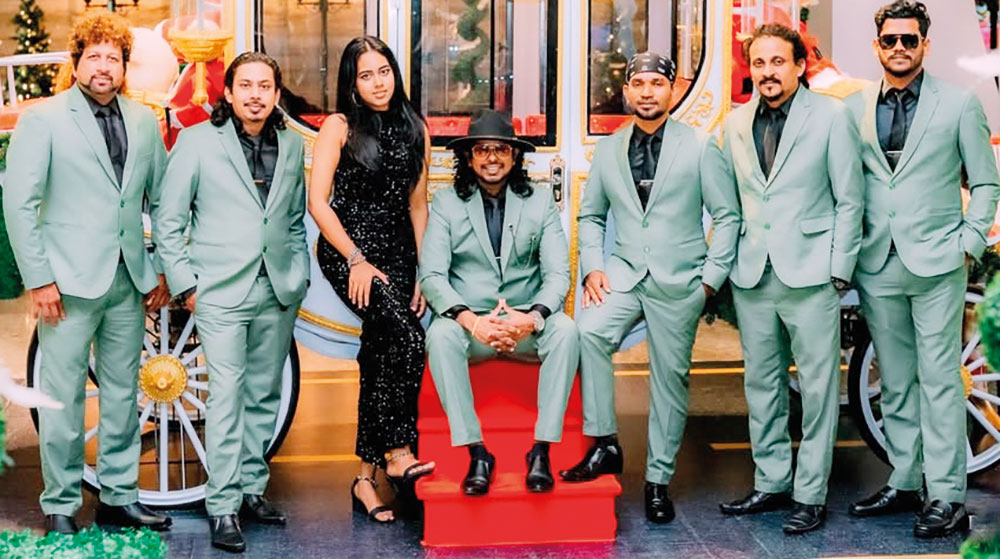
 This week, too, the spotlight is on an outfit that has gained popularity, mainly through social media.
Last week we had MISTER Band in our scene, and on 10th February, Yellow Beatz – both social media favourites.
Talento is a seven-piece band that plays all types of music, from the ‘60s to the modern tracks of today.
The band has reached many heights, since its inception in 2012, and has gained recognition as a leading wedding and dance band in the scene here.
The members that makeup the outfit have a solid musical background, which comes through years of hard work and dedication
Their portfolio of music contains a mix of both western and eastern songs and are carefully selected, they say, to match the requirements of the intended audience, occasion, or event.
Although the baila is a specialty, which is inherent to this group, that originates from Moratuwa, their repertoire is made up of a vast collection of love, classic, oldies and modern-day hits.
The musicians, who make up Talento, are:
Prabuddha Geetharuchi:

Geilee Fonseka: Dynamic and charismatic vocalist
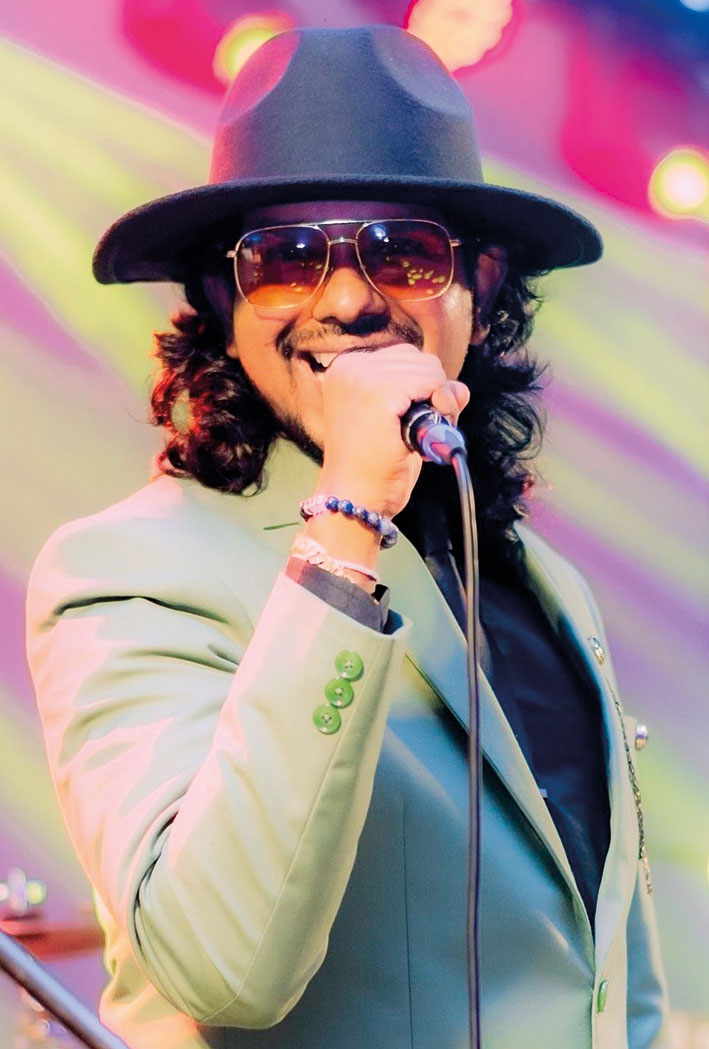
Prabuddha Geetharuchi: The main man behind the band Talento
(Vocalist/ Frontman). He is an avid music enthusiast and was mentored by a lot of famous musicians, and trainers, since he was a child. Growing up with them influenced him to take on western songs, as well as other music styles. A Peterite, he is the main man behind the band Talento and is a versatile singer/entertainer who never fails to get the crowd going.
Geilee Fonseka (Vocals):
A dynamic and charismatic vocalist whose vibrant stage presence, and powerful voice, bring a fresh spark to every performance. Young, energetic, and musically refined, she is an artiste who effortlessly blends passion with precision – captivating audiences from the very first note. Blessed with an immense vocal range, Geilee is a truly versatile singer, confidently delivering Western and Eastern music across multiple languages and genres.
Chandana Perera (Drummer):
His expertise and exceptional skills have earned him recognition as one of the finest acoustic drummers in Sri Lanka. With over 40 tours under his belt, Chandana has demonstrated his dedication and passion for music, embodying the essential role of a drummer as the heartbeat of any band.
Harsha Soysa:
(Bassist/Vocalist). He a chorister of the western choir of St. Sebastian’s College, Moratuwa, who began his musical education under famous voice trainers, as well as bass guitar trainers in Sri Lanka. He has also performed at events overseas. He acts as the second singer of the band
Udara Jayakody:
(Keyboardist). He is also a qualified pianist, adding technical flavour to Talento’s music. His singing and harmonising skills are an extra asset to the band. From his childhood he has been a part of a number of orchestras as a pianist. He has also previously performed with several famous western bands.
Aruna Madushanka:
(Saxophonist). His proficiciency in playing various instruments, including the saxophone, soprano saxophone, and western flute, showcases his versatility as a musician, and his musical repertoire is further enhanced by his remarkable singing ability.
Prashan Pramuditha:
(Lead guitar). He has the ability to play different styles, both oriental and western music, and he also creates unique tones and patterns with the guitar..
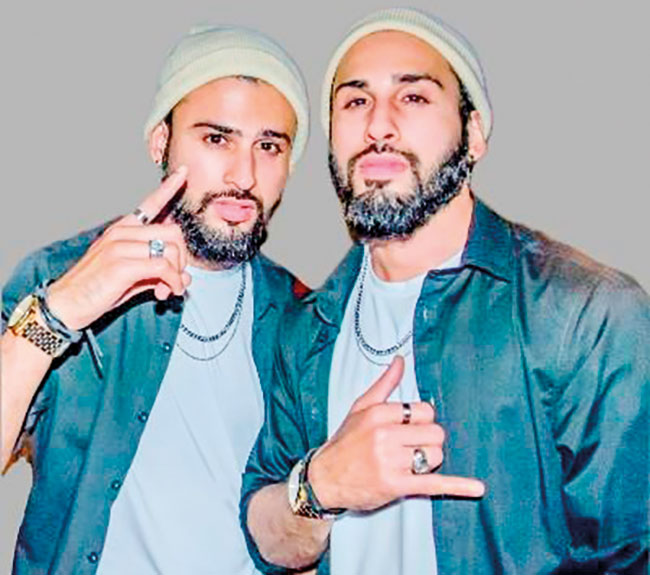
The JJ Twins, the Sri Lankan musical duo, performing in the Maldives, and known for blending R&B, Hip Hop, and Sri Lankan rhythms, thereby creating a unique sound, have come out with a brand-new single ‘Me Mawathe.’
In fact, it’s a very special milestone for the twin brothers, Julian and Jason Prins, as ‘Me Mawathe’ is their first ever Sinhala song!
‘Me Mawathe’ showcases a fresh new sound, while staying true to the signature harmony and emotion that their fans love.
This heartfelt track captures the beauty of love, journey, and connection, brought to life through powerful vocals and captivating melodies.
It marks an exciting new chapter for the JJ Twins as they expand their musical journey and connect with audiences in a whole new way.
Their recent album, ‘CONCLUDED,’ explores themes of love, heartbreak, and healing, and include hits like ‘Can’t Get You Off My Mind’ and ‘You Left Me Here to Die’ which showcase their emotional intensity.
Readers could stay connected and follow JJ Twins on social media for exclusive updates, behind-the-scenes moments, and upcoming releases:
Instagram: http://instagram.com/jjtwinsofficial
TikTok: http://tiktok.com/@jjtwinsmusic
Facebook: http://facebook.com/jjtwinssingers
YouTube: http://youtube.com/jjtwins

Israel attacks presidential office in Tehran as reported death toll in Iran rises to 787

Attorney At Law S K Sangakkara pasess away

SriLankan Airlines Update on Middle East Operations

Trump says Iran war projected to last 4 to 5 weeks, could go ‘far longer’

Qatar downs two Iranian fighter jets as conflict widens

Jammu and Kashmir’s long road to India cricketing glory

‘Dates have the highest sugar content to fight Coronavirus’

Sunday Island 27 December – Headlines

#SundayIsland 17th December – Headlines

Sunday Island – 28th March

Sunday Island Headlines – 21 March

Sunday Island – 21st February – Headlines
-

 Opinion4 days ago
Jamming and re-setting the world: What is the role of Donald Trump?
-

 Features4 days ago
An innocent bystander or a passive onlooker?
-

 Features5 days ago
Ratmalana Airport: The Truth, The Whole Truth, And Nothing But The Truth
-
 Features6 days ago
Building on Sand: The Indian market trap
-
 Opinion6 days ago
Future must be won
-

 Business6 days ago
Dialog partners with Xiaomi to introduce Redmi Note 15 5G Series in Sri Lanka
-
 Business5 days ago
IRCSL transforms Sri Lanka’s insurance industry with first-ever Centralized Insurance Data Repository
-
 Opinion1 day ago
Sri Lanka – world’s worst facilities for cricket fans