
Latest News
Ticket sales announced for 2026 T20 World Cup

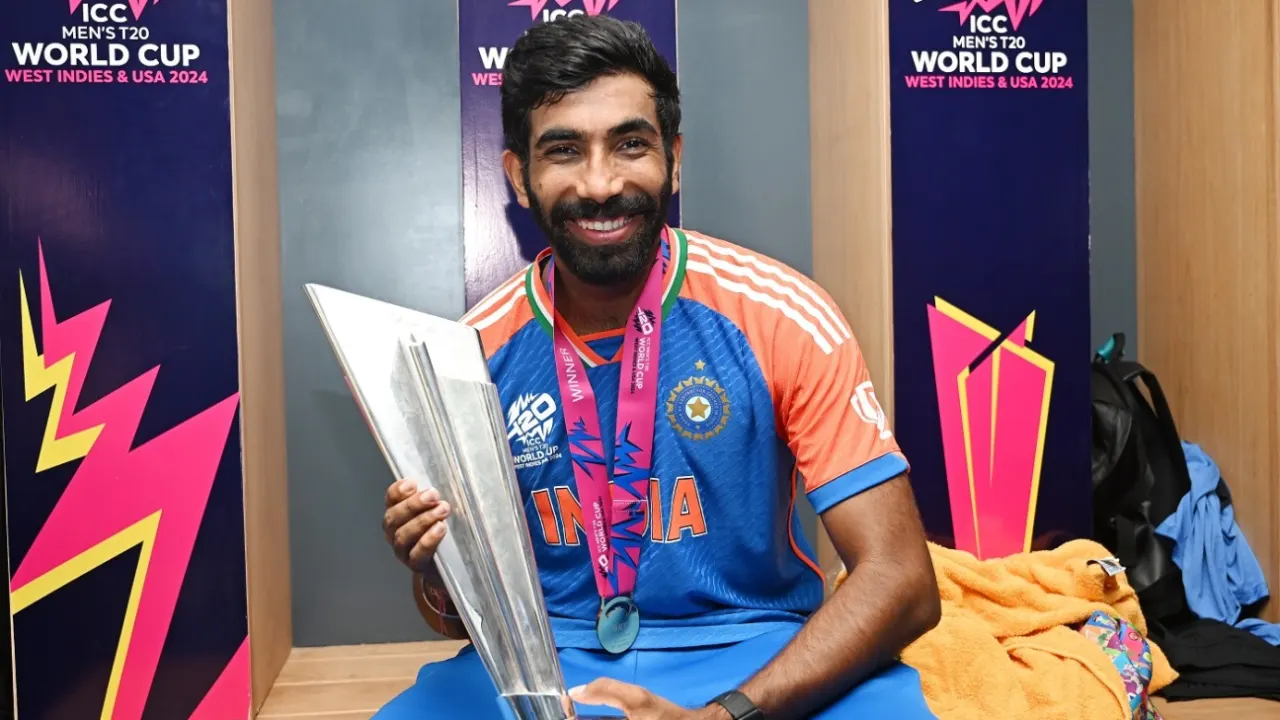
Tickets for the 2026 T20 World Cup will go on sale at 18.45 IST and Sri Lanka time (13.15 GMT) on December 11, with the tournament slated to begin on February 7 in India and Sri Lanka.
Prices for phase one of the ticket sales start at INR 100 (USD 1.1) at some venues in India and LRK 1000 (USD 3.2), the ICC said on Thursday. The dates for phase two of the ticket sales will be announced soon. Tickets can be purchased at tickets.cricketworldcup.com.
“Phase I of ticket sales is an important milestone in our journey towards delivering the most accessible and global ICC event ever staged,” ICC CEO Sanjog Gupta said. “Our vision for the ICC Men’s T20 World Cup 2026 is clear: every fan, regardless of background, geography or financial means, should have the chance to access an in-stadia experience of world-class marquee cricket.
“With tickets starting from just INR 100 and LKR1000, we are putting affordability at the centre of our strategy. This is about opening the gates wide and inviting millions to be part of a global celebration of cricket, not as spectators from afar, but as active participants in the energy, emotion and magic that only a stadium can offer.”
The 2026 T20 World Cup will be contested by 20 teams and comprises 55 matches. The games start at 11am (0530 GMT), 3pm (0930 GMT) and 7pm IST (1330 GMT). The format for the tournament is the same as the previous edition in 2024, where the teams were divided into five groups of four each.
The first-round groups are as follows:
Group A: India, Pakistan, USA, Netherlands, Namibia
Group B: Sri Lanka, Australia, Ireland, Zimbabwe, Oman
Group C: England, West Indies, Bangladesh, Nepal, Italy
Group D: New Zealand, South Africa, Afghanistan, Canada, UAE
The top two teams from each of the groups progress to a Super Eight phase, where they will be further divided into two groups of four each.
The Super Eight groups are as follows, assuming these teams qualify from the first round; if another team qualifies, they will take the place of the team from their group that failed to make it:
Super Eight Group 1: X1 (India), X2 (Australia), X3 (West Indies), X4 (South Africa)
Super Eight Group 2: Y1 (England), Y2 (New Zealand), Y3 (Pakistan), Y4 (Sri Lanka)
Each team will play the other three in their Super Eight group, with the top two from each group qualifying for the semi-finals. The two semi-finals are in Kolkata – or Colombo if Pakistan qualify – on March 4, and Mumbai on March 5. The final of the tournament will be played in Ahmedabad on March 8 – if Pakistan qualify, it will be held in Colombo.
[Cricinfo]

Latest News
FFSL renews National Team Head Coach Abdullah Almutairi under “The Next Chapter” program

As part of the newly launched “The Next Chapter” program of Sri Lanka Football, the Football Federation of Sri Lanka (FFSL) has renewed the contract of National Team Head Coach Abdullah Almutairi.
The renewal follows discussions held between FFSL President Jaswar Umar and Coach Almutairi regarding the future direction and ambitions of Sri Lanka Football.
During the meeting, President Jaswar Umar expressed his appreciation for the Head Coach’s commitment, professionalism, and positive results delivered over the past two years. He also outlined the new objectives and performance targets that the national team is expected to achieve under the FFSL’s strategic development framework, “The Next Chapter.”
Coach Almutairi completed his first tenure with notable success, helping Sri Lanka achieve significant progress on the international stage. Under his leadership, the national team improved its FIFA ranking substantially, rising from 205 to 187 while recording an impressive number of international victories and positive results within a relatively short period.
President Jaswar Umar stated that he was satisfied with the achievements delivered during Almutairi’s first tenure and the successful completion of key performance targets. As a result, the FFSL had no hesitation in offering him a second contract, reflecting the Federation’s trust and confidence in his leadership and technical expertise.
With the renewed mandate, Coach Almutairi will now lead the implementation of the FFSL’s new technical and competitive objectives, including preparations for upcoming international competitions and the Federation’s long-term vision for national team success.
The renewal marks another important step in “The Next Chapter” initiative, as Sri Lanka Football continues to strengthen its foundations, increase its competitiveness, and build greater visibility and success at both regional and international levels. Football in Sri Lanka is steadily progressing across all areas, supported by a clear vision, strong leadership, and a commitment to sustainable development.

Cody Gakpo and Brian Brobbey both scored twice as the rampant Netherlands thrashed Sweden 5-1 in a World Cup warning to the favourites.
The big win on Saturday in front of nearly 69,000 at Houston Stadium put the delighted Dutch on the cusp of the knockout rounds and gave them lift-off after being held by Japan.
Ronald Koeman’s side top Group F with four points from two games, ahead of Sweden on three, Japan (one) and Tunisia (zero).
Despite the sobering loss, the Swedes had plenty of chances but were denied by good goalkeeping and wasteful finishing.
Sunderland striker Brobbey got his first start of the tournament and repaid Koeman with predatory goals after five and 17 minutes.
Before that, the 24-year-old had scored only once for his country since making his debut three years ago.

In a game full of top Premier League talent, Liverpool’s Gakpo – who set Brobbey up for the opener – scored twice early in the second half.
Substitute Anthony Elanga from Newcastle United pulled one back for Sweden just before the hour with a classy finish.
West Ham’s Crysencio Summerville had the last word for the five-star Dutch.
Two crew members from the historic Artemis II lunar mission were among the VIP guests, a nod to Houston’s place as the home of space flight.
There was no problem here as the Dutch, twice pegged back in a lively 2-2 draw with Japan to start their title bid, made the brighter start in front of their orange-clad fans and King Willem-Alexander.
Brobbey, who came in for Summerville despite the winger scoring against Japan, started and finished the first goal.
It was made in the Premier League, with goalkeeper Bart Verbruggen, midfielder Tijjani Reijnders and Gakpo all involved.
Brobbey exchanged passes with Gakpo, before the Anfield attacker crossed in low from the left for his team-mate to stab in from close range.
Sweden, who thrashed Tunisia 5-1 in their first game, could not handle Brobbey’s muscular presence.
Up front, the much-vaunted attack of Liverpool’s Alexander Isak and Viktor Gyokeres of Arsenal were feeding on scraps for Sweden.

Twelve minutes after his opener, Brobbey made it 2-0 when a deflected Denzel Dumfries cross from the right fell perfectly into his path and he toe-poked past Kristoffer Nordfeldt.
Sweden’s English coach, Graham Potter, was in deep discussions with his backroom staff as the game threatened to run away from them.
At the unpopular hydration break, Potter made a beeline for left-sided defender Gabriel Gudmundsson of Leeds United, who was being overrun by the flying Dumfries and Donyell Malen.
Sweden then had their best chance, Gyokeres crossing for an unmarked Yasin Ayari, who completely miscontrolled the ball with his chest.
Gyokeres was next to fluff a good chance, failing to make proper contact after being played in by the largely anonymous Isak.
Gyokeres and Ayari both had further sights of goal, only to be denied by the increasingly overworked Verbruggen.
The Netherlands were hanging on by the end of the half.

Koeman sent on Summerville for Malen at the break and two minutes later it was mission impossible for Sweden, Gakpo prodding in from close range after yet another dangerous low cross from Dumfries.
All three goals were strikingly similar.
Gakpo scored a lovely fourth on 54 minutes, turning inside his defender before firing low into the bottom corner.
Elanga pulled one back five minutes later when he raced clear of the Dutch defence and rattled the ball past Verbruggen.
Summerville made it five in the dying minutes with his second goal in North America.
Sweden are still in with a good chance of progressing into the last 32.
Japan and Tunisia play later Saturday in Monterrey, Mexico.
Sweden face Japan next, while the Netherlands play Tunisia.
[Aljazeera]

The Iranian military says it has closed the Strait of Hormuz again over Israel’s attacks on southern Lebanon.
Iran said Israel’s strikes in Lebanon are a breach of Tehran’s agreement with the US to end the war.
“Do not approach the Strait of Hormuz; otherwise, your security will be jeopardised,” Iran’s Revolutionary Guard Corps Navy said.
The US-Iran deal includes the reopening of the Strait of Hormuz – a shipping channel through which about 20% of the world’s oil and liquefied natural gas passes.
After Iran’s statement, US Central Command (Centcom) said safe passage through the strait “remained intact” and commercial ship traffic had increased on Saturday, with 55 merchant ships transiting.
It was not clear whether Centcom was referring to marine traffic before or after Tehran’s announcement.
The Iranian military accused the US of violating the US-Iran deal by not implementing the first clause of their 14 point memorandum of understanding, which agrees to “the immediate and permanent termination of military operations on all fronts, including in Lebanon”.
At least 20 people have reportedly been killed by Israeli airstrikes on southern Lebanon, less than 24 hours after a new ceasefire between Israel and Hezbollah was announced. Lebanon’s health ministry said 4,057 people have been killed since the re-start of conflict between Israel and Hezbollah on 2 March.
Iran’s top joint military command cited what it called Israel’s “continuous and relentless violation of the ceasefire in southern Lebanon” in a statement on state TV as the reason for re-closing the strait.
“It is noted that this first step is a response to the enemy’s breach of promise, and if the aggression continues, further steps will be planned and taken to force the enemy to comply with its obligations.”
The move comes days after the US and Iranian presidents signed an initial agreement aiming to end the war, including in Lebanon, with immediate effect. It includes a commitment to further talks to reach a final deal over the next 60 days.
At the time, Israeli officials said then they had no intention of withdrawing their forces from Lebanon and insisted the conflict with the Iran-backed group Hezbollah was separate from the war on Iran.
The Israeli military confirmed a ceasefire between Israel and Hezbollah went into effect at 16:00 local time (14:00 BST) on Friday, but later a spokesman said its forces would “continue to remove immediate threats”.
Israel and Hezbollah have since accused each other of repeatedly violating Friday’s ceasefire.
[BBC]

FFSL renews National Team Head Coach Abdullah Almutairi under “The Next Chapter” program

Gakpo, Brobbey doubles give Dutch 5–1 World Cup win

Trump vows Iran will not charge Strait of Hormuz tolls, but says US might

Showers will occur in the Western, Sabaragamuwa and North-western provinces and in Galle, Matara, Kandy and Nuwara-Eliya districts

Govt. seeks INTERPOL assistance to bring Basil Rajapaksa back

Ravi warns against attempts to stir communal tensions over Easter attacks probe

‘Dates have the highest sugar content to fight Coronavirus’

Sunday Island 27 December – Headlines

#SundayIsland 17th December – Headlines

Sunday Island – 28th March

Sunday Island Headlines – 21 March

Sunday Island – 21st February – Headlines
-

 News6 days ago
Release of 2025 O/L results likely to be delayed
-

 Sports6 days ago
Tharanga set for high-profile javelin clash in Ostrava
-

 News6 days ago
Theft of USD 2.5 mn from Treasury: CoPF accused of complicity in NPP cover-up
-

 News5 days ago
Beijing Capital Airlines to resume flights to Colombo signalling boost to tourism
-
 Features4 days ago
Killing of Colombo’s ancient trees — a warning on UN’s World Desertification Day – 17 June
-

 Opinion6 days ago
Decoding Trump’s 12.5% “Forced Labor Tariff” on Sri Lanka
-

 Opinion6 days ago
Palm leaf manuscripts of Sri Lanka – Part V
-

 News1 day ago
Creditor not yet paid