
Sports
Thivanka’s record breaking spree continues

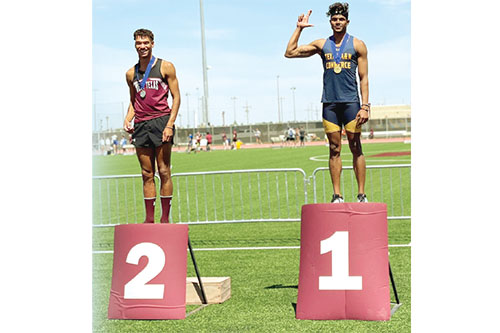
Bags South Asian record with third best performance of the world
by Reemus Fernando
Former Maris Stella College, Negombo high jumper Ushan Thivanka produced yet another record breaking feat in his bid to edge closer to Tokyo Olympic qualifying standards and immediately dedicated the victory in Texas to his polio victim mother on Sunday.
The Texas A & M Commerce University scholarship holder cleared 2.30 metres, the top third height cleared in the world this year to win the high jump event held at a championship in Texas. In clearing the height he also broke the South Asian regional record held by India’s Tejaswin Shankar who cleared 2.29 metres in 2018.
Thivanka is in a record breaking spree this year having started with Sri Lanka National Indoor record and then breaking the 16-year old outdoor National Record held by Manjula Kumara. On Saturday (USA time), Thivanka was the sole competitor in his winning height and he made it in his third attempt to further improve his Sri Lanka record.
“I am extremely happy to have achieved this feat. I dedicate this victory to my mother. It is my Mother’s Day gift. She has done a lot for me. I have arranged a friend of mine to send a surprise to her though it is not the Mother’s Day here yet,” Thivanka said in a telephone interview with The Island before embarking on a long journey back to his University.
“Our target was to achieve the direct Olympic qualifying standard. I concluded the event after clearing the 2.30 metres mark in consultation with the coach because there was a strong wind which made it difficult to hold my swinging- leg,” said Thivanka.
The World Athletics set a tough qualifying standard for the Tokyo Olympics raising the bar to 2.33 metres, a height which was once considered beyond the reach of South Asians. While 13 athletes will be selected from direct qualifying method, 19 others will be chosen according to ‘Road to Olympic’ ranking positions.
Though only two other high jumpers have cleared better heights in the world this year, Thivanka’s position in the ‘Road to Olympic’ rankings is below the positions of possible athletes’ quota places yet. Analysts were optimistic that he would improve the rankings within the next two months.
“We are not in a hurry as my coach Rock Light is very much optimistic that I could reach the qualifying standard before the cut-off date,” said Thivanka.
Thivanka said that he was fortunate to be trained by Rock Light and also thanked all those who helped him reach where he is today including his former coach Suranjith Fernando.
Olympian and Asia Games medallist Nagalingam Ethirweerasingham who has followed Thivanka’s progress in the USA closely was the first to predict that the champion athlete would break Manjula Kumara’s record before June this year and strive for an Olympic berth.


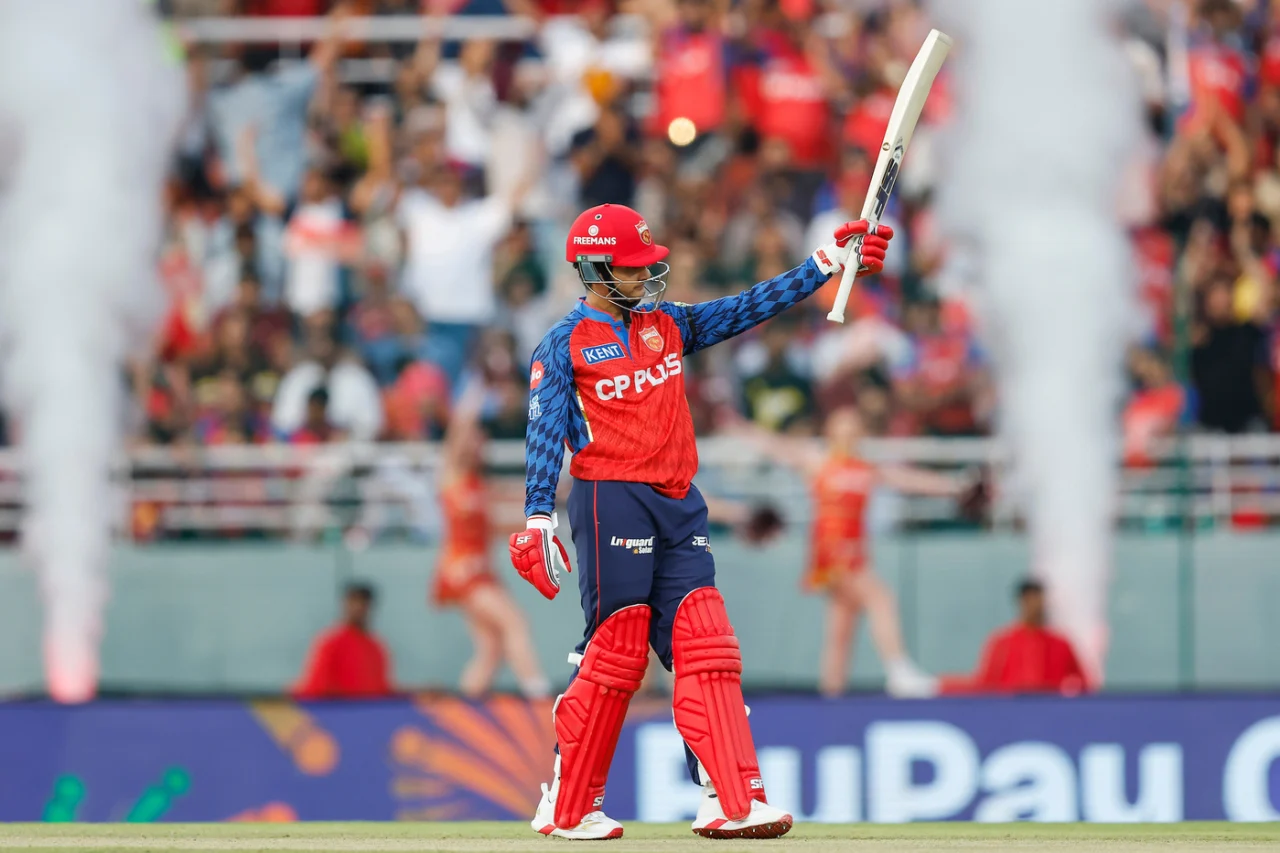
Punjab Kings trumped Sunrisers Hyderabad in a battle of explosive top orders, chasing down 220 with more than an an over to spare. Abhishek Sharma and Travis Head put on 120, and Prabhsimran Singh and Priyansh Arya responded with a 99-run partnership of their own before Shreyas Iyer ensured the rest of the chase went smoothly.
The winning runs were scored by Shashank Singh, who was more pivotal on the day with the ball, dismissing both SRH openers in a single over to begin a slowdown they couldn’t recover from. Having got to 120 for no loss in eight overs, SRH scored just 99 in their last 12.
Shashank took 2 for 20 in three overs, finishing with an economy rate of 6.66 in a game where 442 runs were scored.
This was the tenth time PBKS had chased down a 200-plus target, the most times by any team in the IPL.
They teased it against Kolkata Knight Riders, but in New Chandigarh, the Travishek show well and truly arrived at IPL 2026. Abhishek slapped the first legal delivery of the game over covers to lay down the marker. He drove Xavier Bartlett down the ground twice next up. And then in the third over, the fireworks really began.
Abhishek pulled a short ball from Arshdeep Singh over midwicket and then slapped a slower ball down the ground for back-to-back boundaries. Arshdeep went on to bowl four wides in his next five attempts to keep the ball out of Abhishek’s arc. Under pressure, he ended up bowling closer to off and was thumped down the ground for the first six of the game. When Arshdeep went around the wicket and bowled short and across the left-hander, Abhishek went up and over short third for another six.
Head, on 3 off 5 at this point, joined the party by taking down Marco Jansen for two fours and a six in the fourth over.
When PBKS turned to Vijaykumar Vyshak, Abhishek welcomed him with a six over cover and then hit him for three more for the second 24-run over of the powerplay, in the process bringing up an 18-ball fifty. Head followed up with a hat-trick of boundaries against compatriot Bartlett. One legal ball later, when Abhishek pulled a short ball in front of square for a six, SRH brought up their hundred in 35 balls, making it the fifth time a team had reached 100 inside the powerplay – three of them had come courtesy this opening pair. Their 105 for no loss at the end of the sixth over was the joint-third-highest powerplay score in the IPL.
With PBKS’ frontline bowlers getting hit around the park, Shreyas turned to Shashank’s medium-pace, and it turned out to be the turning point in the game.
He conceded just six runs off the first over after the powerplay, and off the first ball of his next over he foxed Head with a slower ball that he chipped tamely to long-off. A single and a wide later, he had Abhishek slicing to cover for 74 off 28. With that, Shashank had three IPL wickets, and they were of Abhishek, Head and Abhishek.
From there, the scoring rate dropped significantly. Ishan Kishan scored briskly, but Jansen took a screamer running from deep midwicket to end his cameo in the 14th over. Heinrich Klaasen, meanwhile, could never really get going, and fell as he tried to accelerate at the death, falling for 39 off 33. In the end, SRH finished on 219 for 6, the lowest first-innings total when an IPL team has scored 100 or more in the powerplay.
Chasing 220 can be daunting. But perhaps less so if you’re chasing 220 when you know your opponents left some runs out there, especially in the Impact Player era.
SRH opted for Harsh Dubey’s left-arm spin first up and Arya welcomed him with a sweep for four, before launching the last two balls of the over down the ground – once over the rope and once along the carpet – to knock 18 runs off the target.
Then Prabhsimran took over the scoring. The next three overs went for 37, to which Arya contributed just the one run. Prabhsimran took a special liking to Jaydev Unadkat, whom he hit for three sixes.
The fifth over by Eshan Malinga went for 17, and PBKS saved the best of the powerplay for the last over, with Arya going 6, 6, 4, 4 to bring up a 16-ball fifty and welcome Harshal Patel into the attack with a 21-run over.
Brief scores:
Punjab Kings 223 for 4 in 18.5 overs (Priyansh Arya 57, Prabhsimran Singh 51,Cooper Connolly 11, Shreyas Iyer 69*, Nehal Wadhera 14, Shashnak Singh 16*; Harsh Dubey 1-38, Shivang Kumar 3-33) beat Sunrisers Hyderabad 219 for 6 in 20 overs (Abhishek Sharma 74, Travis Head 38, Ishan Kishan 27, Heinrich Klaasen 39, Aniket Verma 18; Arshdeep Singh 2-50, Xavier Bartlett 1-42, Shashank Singh 2-20) by six wickets
[Cricinfo]


Trinity College ended a 15-year wait for silverware with a commanding 58-26 win over Royal College, running in ten tries to clinch the Dialog Schools Rugby Knockouts 2026 President’s Trophy at Sugathadasa Stadium.
In a final rich in rivalry, Trinity struck early and never relented. Royal’s indiscipline proved costly as Trinity moved the ball fluently, Kevin Weerakoon opening the scoring. Royal briefly responded through a driving maul finished by Lemitha Amerasinghe, but their lead was short-lived.
Trinity hit back with precision, Sadeesha Weerawansa and Dimath Abeypitiya combining before the latter crossed twice. Despite another maul try from Disas Pathirana, Trinity’s attacking edge stood out. Abdul Malik’s cross-kick found Ammaar Manzil, while Malik added a try of his own as Trinity led 27-12 at the break.
Any hopes of a Royal comeback were swiftly ended. Skipper Shan Althaf struck twice after the restart, while Malik orchestrated proceedings. Further tries from Hamza Abdeen and Manzil underlined Trinity’s dominance.
Royal managed late consolation scores through Hiruka Jayadinu and Akira Yatawara, but it was Althaf who sealed the rout, completing his hat-trick to cap a memorable triumph.
Meanwhile, Lumbini Vidyalaya etched their name in history with a 17-10 win over Dharmaraja College in the Premier Trophy.
In the Chairman’s Trophy final played at the Royal College Sports Complex between Madina National School, Kandy and Central College, Maharagama, Central College Maharagama won 20-19.
In the run-up to the President’s Trophy final, Royal beat S. Thomas’ College 25-5 in a lopsided quarter-final before defeating Isipathana in the semi-final 39-13 to reach the final. Trinity College downed Zahira College 32-23 in their quarter-final fixture before beating a strong Wesley outfit 49-29 to book their berth in the final.
A highlight of this year’s Chairman’s Trophy Final was the inspiring journey of Madina National School, Kandy, whose rise to the final reflects the success of grassroots rugby development initiatives supported by Dialog.

One of cricket’s most battle-hardened operators is Steve Waugh. He may not have possessed the silken elegance of his twin brother Mark Waugh, but when it came to rolling up his sleeves and digging in, few did it better. Nicknamed the ‘Iceman’, Waugh made a career out of staring adversity in the face and refusing to blink.
His back-to-the-wall double hundred in Jamaica didn’t just win a Test, it snapped the spine of West Indies’ dominance that had stretched over decades. That was vintage Waugh: when the chips were down, he didn’t just hold the fort, he rebuilt it brick by brick.
Never one to take a backward step, Waugh once broke his nose attempting a catch off Mahela Jayawardene at Asgiriya. Surgeons advised him to sit out the Colombo Test and let the wounds heal. But for Waugh, the thought of Australia conceding a series was a bridge too far. He took the field against medical advice, a call that summed up his appetite for the fight.
He was no less formidable as a leader. The way he handled a young, wayward Ricky Ponting, then prone to off-field scrapes, has passed into cricketing folklore. Waugh didn’t just build a team; he forged a culture. His book ‘Out of My Comfort Zone’ remains a manual on how elite sportsmen must push the envelope if they are to stay ahead of the curve.
It is perhaps a book that should find its way into a few Sri Lankan kit bags. Too many current players appear content to play within themselves, happy to nudge and nurdle rather than step out of the crease and take the game on. At the highest level, though, comfort zones are quicksand. If you stand still for too long you will sink.
Champion leg-spinner Wanindu Hasaranga now finds himself under the scanner, his recurring hamstring injury becoming a stubborn thorn in both his side and Sri Lanka’s ambitions. Earlier this year, the injury ruled him out of the World Cup, with an initial recovery timeline of six weeks, enough, on paper, to make the IPL.
But cricket, as ever, had a twist in the tale.
In the aftermath of the World Cup, Sri Lanka Cricket took stock. While the team did reasonably well to reach the second round, there was a lingering sense of a chance missed, especially at a home World Cup where a semi-final berth was there for the taking. The consensus in cricketing corridors was simple: with a full-strength bowling attack, Sri Lanka could have gone deeper.
Determined not to leave things to chance again, the board drew a line in the sand, no fitness, no NOC. Players were required to clear stringent fitness tests to secure No Objection Certificates for franchise leagues, including the IPL. Hasaranga, along with a few others, found the bar a stiff one to clear.
Unlike Nuwan Thushara, whose case has taken a legal turn, Hasaranga’s issue is less about agility and more about durability. On the field, he is as sharp as they come, electric in the deep, capable of pulling off screamers and hitting the stumps on the fly. But the body, it seems, has not kept pace with the skill.
Fresh off injury, pushing too hard carries the risk of another breakdown. As a result, Hasaranga has opted out of fitness tests, leaving him without an NOC and consequently, out of the IPL with Lucknow Super Giants. Head Coach Tom Moody has already indicated that the franchise is scouting for a replacement, a clear sign that the wheels of professional cricket wait for no one.
The immediate loss is financial, a tidy USD 220,000, roughly LKR 70 million. But in the grand scheme, that’s loose change compared to what’s at stake. Not long ago, Royal Challengers Bangalore splashed over USD 1 million on him and he repaid the faith by finishing as their leading wicket-taker in 2022.
Since then, however, his stock has dipped. Not for lack of skill, Hasaranga still has the ability to turn games on their head, but because franchises are increasingly wary of whether he can last the distance over a full season. In franchise cricket, availability is often the best ability and Hasaranga’s repeated breakdowns have raised a few eyebrows.
The message, then, is clear. Hasaranga needs to take a leaf out of Waugh’s book. Step out of the comfort zone. Tighten the screws on fitness. Watch the weight. Treat the body like the temple that houses his talent.
No one is asking him to morph into Virat Kohli, hitting the gym at dawn and steering clear of butter chicken avoiding it like a plague. But at the very least, the basics must be ticked off. At this level, you don’t just play the game, you prepare for it, day in, day out.
There’s also a bigger storm brewing. Missing the IPL without an NOC could open the door to a potential two-year ban, a prospect that would be a bitter pill to swallow for the player.
For Hasaranga, this must be a line-in-the-sand moment. Because in international cricket, as Waugh showed time and again, you either get out of your comfort zone or the game moves on without you.
by Rex Clementine

Arya, Prabhsimran and Shreyas help Punjab Kings ace another 200-plus chase

Beauty of Sri Lanka in focus: Global showcase blends art, diplomacy and conservation

Showers expected in the Western, Sabaragamuwa, Central, Southern, North-western and Uva provinces and in Ampara, Batticaloa and Polonnaruwa districts after 1.00 p.m.

Heat index likely to increase up to ‘Caution level’ at some places in the Northern, North-central, North-western, Western, Sabaragamuwa, Southern and Eastern provinces and Monaragala district

Sun directly overhead Cheddikulam, Kebithigollewa, Gomarankadawala and Nilaveli about 12:11 noon. today [12]

Peru holds presidential election amid decade of political tumult

‘Dates have the highest sugar content to fight Coronavirus’

Sunday Island 27 December – Headlines

#SundayIsland 17th December – Headlines

Sunday Island – 28th March

Sunday Island Headlines – 21 March

Sunday Island – 21st February – Headlines
-

 News5 days ago
Lankan-origin actress Subashini found dead in India
-

 News3 days ago
AG: Coal procurement full of irregularities
-

 Business2 days ago
Israeli attack on Lebanon triggers local stock market volatility
-

 Business3 days ago
Hayleys Mobility introduces Premium OMODA C9 PHEV
-

 Business2 days ago
HNB Assurance marks 25 years with strategic transformation to ‘HNB Life’
-

 Sports3 days ago
DS to face St. Anthony’s in ‘Bridges of Brotherhood’ cricket encounter
-

 News5 days ago
UN Regional Director launches SL’s first Country Gender Equality Profile during official visit
-
 News4 days ago
AKD admits import of substandard coal, blames technicalities and supplier