
Business
Thilan Wijesinghe appointed to the Board of Ventive Hospitality Limited

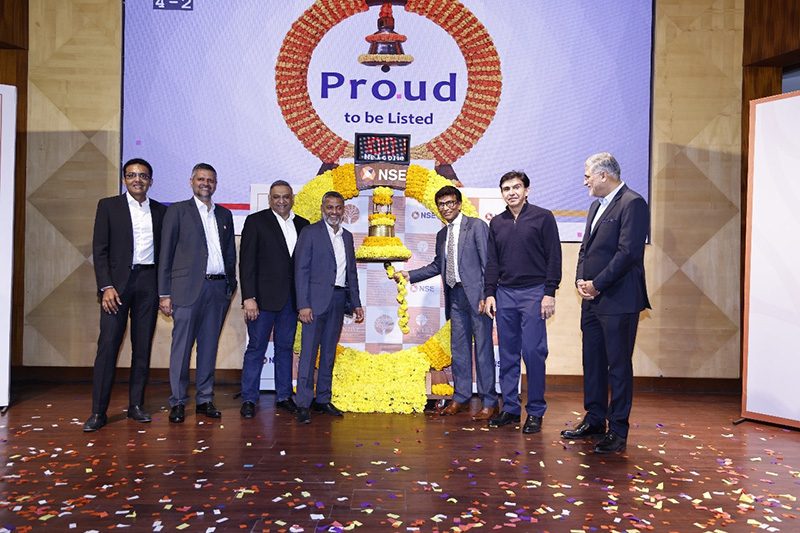
Chairman & Owner of TWC Holdings, Thilan Wijesinghe, has been appointed to the Board of Directors of Ventive Hospitality Limited, which successfully concluded a USD 200 Mn IPO in India, reaching a market capitalisation of over USD 2 billion upon the commencement of trading at the National Stock Exchange of India recently. Ventive Hospitality is a joint venture between Blackstone India and Panchshil Realty, and is among the largest real estate developers in India based in Pune.
Ventive is India’s first South Asia-focused listing comprising 13 operating hotels and four [04] office and retail properties in India, three [03] hotels in the Maldives and one [01] international luxury branded resort property in Sri Lanka which is scheduled to commence construction later this year. With 2,036 operating hotel rooms currently in Ventive’s portfolio, the company is now the fourth-largest hotel company in India by market capitalisation.
Speaking on the need for Sri Lanka to attract capital into luxury brands, Thilan remarked, “Sri Lanka needs to attract high-end international brands to draw high-spending tourists. Only about 6% of the country’s graded resort hotel rooms are managed by international brands, compared to over 40% in the Maldives.”

Business
HNB Life unveils “Wing for Life” campaign to mark bold new chapter and 25 years of trusted protection

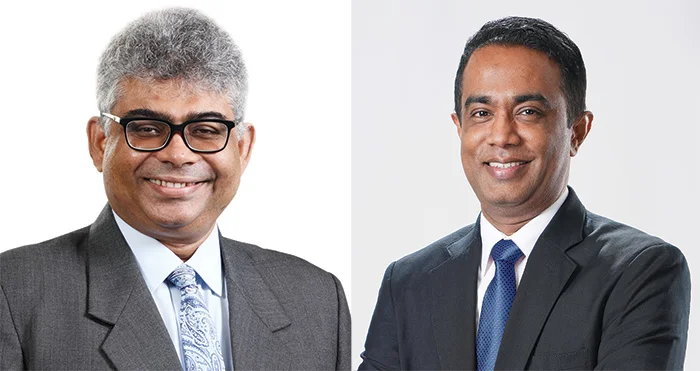
Marking a significant milestone in its journey, HNB Life has officially launched its new brand campaign, “Wing for Life,” as part of its transformation from HNB Assurance. The campaign celebrates 25 years of trust while introducing a renewed identity built on protection and possibility.
“Wing for Life” captures the essence of HNB Life’s role as a proactive enabler, supporting individuals to rise above life’s uncertainties and confidently pursue what truly matters to them. Inspired by the symbolism of wings, the campaign reflects freedom, strength, and the assurance that customers have a trusted partner standing beside them through every stage of life.
This integrated campaign will come to life across multiple platforms, bringing the brand’s new identity closer to customers while reinforcing its enduring promise of protection.
Lasitha Wimalaratne, Executive Director / Chief Executive Officer, HNB Life, stated, “As we celebrate 25 years of protecting what matters most to Sri Lankans, our transition to HNB Life marks more than a name change it reflects our ambition to evolve with the aspirations of our customers. ‘Wing for Life’ embodies our purpose as a proactive enabler, empowering individuals and families to take on life with confidence, knowing they have the strength and security to move forward.”
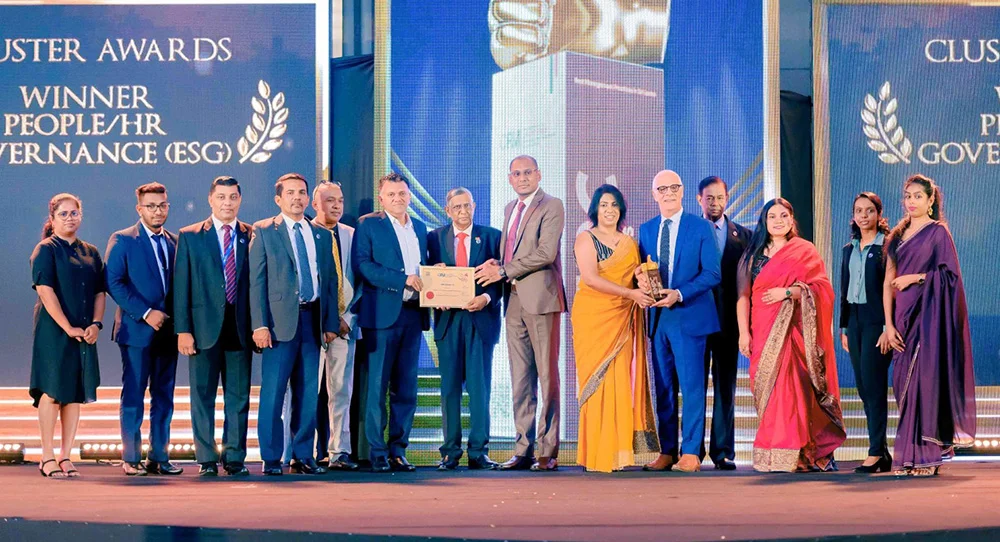
LIMRA Holdings Limited, one of Sri Lanka’s most diversified and quietly ambitious conglomerates, has earned a landmark double recognition at the Best Management Practices Company Awards 2026 held recently.
LIMRA Holdings was named among the Top 40 Outstanding Companies in Sri Lanka and awarded Gold in the People and HR Governance ESG cluster – two distinctions that reflect the quality and discipline of its operations across a multi-sector portfolio spanning more than three decades.
Organised by the Institute of Chartered Professional Managers of Sri Lanka (CPM Sri Lanka), the Best Management Practices Company Awards evaluate Sri Lankan public and private sector organisations on the rigour of their leadership, strategy, people management, partnerships, processes, and performance outcomes. In 2026, 170 leading Sri Lankan companies participated in the award competition.
Founded in 1993 and headquartered in Colombo, LIMRA Holdings connects homes and boardrooms across South and Southeast Asia to some of the world’s most trusted brands. The group has spent more than three decades building a formidable portfolio across seven subsidiaries spanning cybersecurity, consumer goods, enterprise technology, AI ventures, and energy with a regional presence across South and Southeast Asia. It helps clients from various industry domains build and operate their own capabilities across enterprise cybersecurity, artificial intelligence, government technology, and digital platforms. Global partnerships with
Fortinet, ESET, Nutanix, Zoho and Qualys extend that reach further. Additionally, it brings the world’s most trusted consumer brands such as LEGO, Barbie, Hot Wheels, and Farlin into Sri Lankan homes.
There is a conversation that does not happen often enough in Sri Lankan workplaces, boardrooms, or at the family dinner table. It is not about salaries, or school fees, or the cost of the next car. It is about what happens when the salary stops.
Most professionals in their thirties and forties are managing life reasonably well, or working hard at it. They have mortgages, school fees, the occasional holiday, perhaps a small investment on the side. They know EPF exists. They probably have a passbook somewhere. What most of them have not done is think carefully about what that EPF balance will actually mean when the time comes to stop working.
It is a gap that Ceylinco Life, as Sri Lanka’s life insurance market leader, has spent three decades observing, and one it believes the professional class can no longer afford to ignore.
This is not carelessness. In many ways, it is entirely rational. When you are forty, retirement is two decades away. Two decades is an abstraction, and it is difficult to feel urgency about an abstraction. The problem is that by the time it stops feeling abstract, the window for meaningful action has largely closed.
The EPF Illusion
Let us look at what EPF actually delivers. According to the EPF Annual Report 2024, total EPF benefit payments for the year amounted to approximately LKR 230 billion, including both retirement settlements and authorised pre-retirement withdrawals for housing and medical purposes permitted under the Act. These payments represent workers exiting the system at retirement or upon death, often after decades of contributions. When the retirement-specific payouts are considered against the number of members leaving the Fund, the average EPF balance available at retirement remains modest. Sri Lanka’s standard retirement age for private sector workers is 60, while average life expectancy now stands at approximately 77 to 78 years. That arithmetic alone should give pause: spread across an expected retirement period of fifteen or more years, the typical EPF settlement translates into only a few thousand rupees per month.
For context: a kilogram of rice costs more today than a full meal did a decade ago. A single private hospital consultation can run to LKR 2,000 to 4,000. A monthly prescription for a common chronic condition easily exceeds LKR 10,000. EPF, on its own, does not cover any of this with any real comfort.
And that is before inflation enters the picture, the most patient and persistent force in personal finance. Sri Lanka’s inflationary history is a reminder of how corrosively time erodes purchasing power. A monthly income that feels adequate at retirement can lose a substantial portion of its real value within a decade. The numbers are not punishing by accident. They are simply the mathematics of time and money working against anyone who is not paying attention.
The typical EPF settlement, spread across fifteen or more years of retirement, amounts to only a few thousand rupees a month. At today’s cost of living, that is not a retirement income. It is a problem.
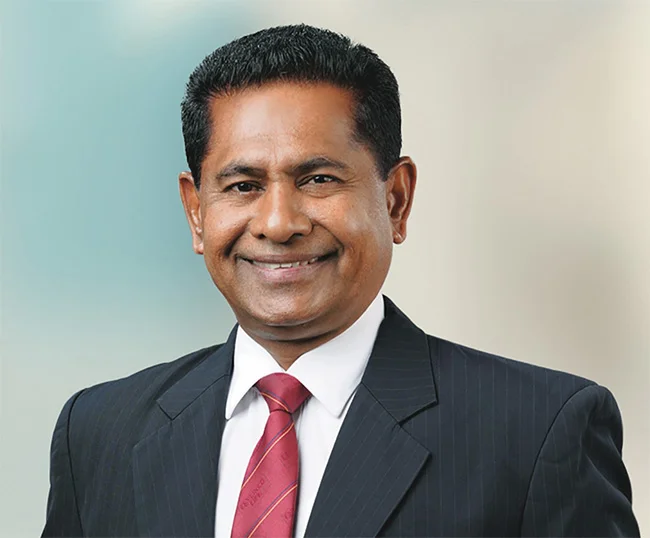
“EPF was never designed to be a complete retirement solution. It is a foundation, and a necessary one, but for the professional class in particular, treating it as the whole answer is a decision that will be felt very painfully in the final decades of life,” says Ranga Abeynayake, Director/ Deputy CEO.
Who Is Most at Risk
It would be a mistake to assume that retirement vulnerability is a problem only for low-income workers. The professional class, middle and upper-middle income earners with stable jobs and reasonable salaries, carries its own version of this risk. In some ways, a more insidious one.
Professionals tend to carry higher lifestyle costs. Their housing is more expensive. Their children attend better-resourced schools. They eat out more, travel more, and spend more on healthcare. When retirement comes, the monthly income gap they need to fill is rarely LKR 50,000. It is more often LKR 150,000 to 200,000 or above, depending on the life they have built.
Yet retirement savings rarely scale in proportion to that income. EPF contributions are capped by salary bands. Many private sector professionals, particularly those who have moved between employers, have fragmented EPF records with inconsistent balances. Business owners and the self-employed may have no EPF at all. And very few, across any of these categories, have sat down and calculated their actual monthly requirement at retirement, adjusted for inflation, healthcare costs, and the possibility of a partner who may outlive them by a decade.
“The professionals we are most concerned about are not struggling today. They have good salaries, reasonable assets, and every intention of sorting out retirement eventually. That word, eventually, is where the problem lives,” says Abeynayake.
The Sandwich Generation Problem
There is one group that deserves particular attention: what demographers refer to as the sandwich generation. These are people, typically in their forties, who are simultaneously supporting their children through education and their ageing parents through retirement or illness. Financially, they are being pressed from both sides, and their own retirement savings are invariably the first thing to be deprioritised.
Sri Lanka’s demographic trajectory makes this harder. By 2042, one in four Sri Lankans will be elderly. That shift places mounting pressure on the working-age population. Many of today’s forty-year-olds will, in practice, be funding two retirements, their parents’ and eventually their own, while simultaneously navigating the most expensive phase of raising children. Without a plan, that combination is a financial storm.

Seventeen Air Force athletes to represent Sri Lanka at Asian Beach Games

Sajith, Namal question Treasury heist

Glowing Hair…

Fort Magistrate extends Sally detention, asks CID to inform court of progress into Easter Sunday investigations on 20 May

HNB Life unveils “Wing for Life” campaign to mark bold new chapter and 25 years of trusted protection

Ex-MP Jayasekera granted bail, passport impounded

‘Dates have the highest sugar content to fight Coronavirus’

Sunday Island 27 December – Headlines

#SundayIsland 17th December – Headlines

Sunday Island – 28th March

Sunday Island Headlines – 21 March

Sunday Island – 21st February – Headlines
-
 News2 days ago
Rs 13 bn NDB fraud: Int’l forensic audit ordered
-

 Business5 days ago
Harnessing nature’s wisdom: Experts highlight “Resist–Align” path to resilience
-

 News5 days ago
Gratiaen Trust announces longlist for the 33rd Annual Gratiaen Prize
-

 Opinion3 days ago
Shutting roof top solar panels – a crime
-

 News4 days ago
From Nuwara Eliya to Dubai: Isha Holdings markets Agri products abroad
-

 Latest News6 days ago
Singapore Zoo’s first Sri Lankan leopard cubs make their public debut
-
 News5 days ago
Heroin haul transported on 50-million-rupee contract
-

 News3 days ago
Church calls for Deputy Defence Minister’s removal, establishment of Independent Prosecutor’s Office