
Business
There’s more than meets the eye in the Rs. 1000 daily plantation wage issue

By Steve A. Morrell
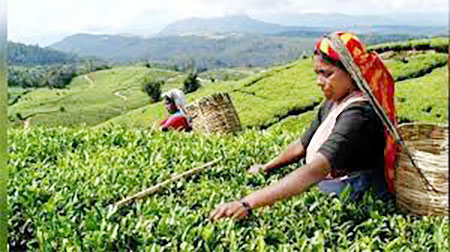
The plantation worker wage per day of Rs. 1000,approved by the government, would ensure a monthly income of Rs.25,000, worked out at 25 working days each month. But there is more than meets the eye in this situation.
Plantation sources informed us that apart from the wage, all allied benefits relevant to the wage, for example, extra earnings deriving from what are called ‘over kilos’, would not be applicable now. In consequence, the earning capacity of women, mainly, would be gravely affected. The plucking norm, usually set at 18 kilos or less, could be achieved by most pluckers. Kilos exceeding the norm earned Rs. 40 per kilo.
Accordingly, the take home wage, before the wage increase, would have been around Rs. 720, the basic daily wage, plus the ‘over kilos’ plucked. That is, if 30 kilos were plucked, each plucker would earn the basic wage plus the earnings from 12 extra kilos. This would amount to a total wage of about Rs. 1230 per day.
‘Over kilos’ exceeding the norm were achievable. More industrious pluckers could pluck as much as 20 kilos over the norm. Their daily income would amount to Rs.1550, on this basis. This sum multiplied by 25 working days would mean that such workers would have a take home wage of around Rs.38,750 per month.
However, the wage increase would deprive these workers of the ‘over kilos’ earnings, because the wage now applicable, and associated conditions, would not provide for such extra earnings.
This reporter’s requests to plantation trade unions for their comments on this issue did not elicit any responses.
The general view of most other sections was that limits placed on the take home wage would exacerbate an already acute man power crisis and provoke an accelerating exodus of young people from the plantations for jobs in cities. In consequence, the formal plantation sector, unable to cope with loss of man power, would be increasingly abandoning arable tea land. In some instances, as much as 100 to 200 hectares have been reportedly abandoned in each plantation, because of a lack of man power.
We also requested for responses from the tea smallholder sector and the tea factory owners. Both sections reported that they were ‘in disarray’. The tea smallholders were distributed fertilizer at heavily subsidized rates prompting over fertilizing. The consequences were soil degradation resulting in negative production results. The tea factory owners, already threatened with reduced production, are unable to cope with their loan payments. Some said they would have to close their factories.

Sri Lanka has launched a National Digital Signing Framework, a foundational initiative paving the way for paperless governance. This strategic move eliminates the need for physical signatures and documents in government transactions, aiming to dramatically enhance efficiency, transparency, and accessibility for citizens and businesses. An analyst said that this could accelerate Sri Lanka’s governance and commercial relationships with other countries as traditional signatures make room for digitally signed documents accepted by the government.
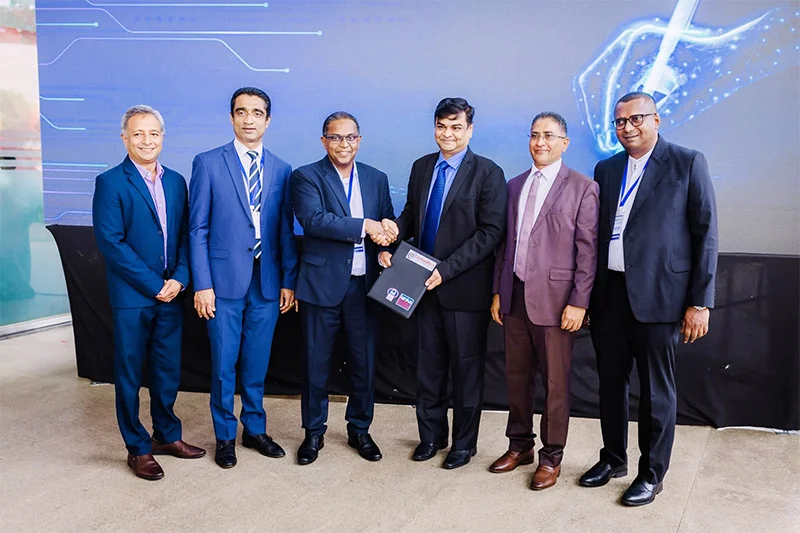
In this significant step toward accelerating Sri Lanka’s digital transformation, eMudhra, a global leader in digital identity and security solutions, has entered into a strategic partnership with LankaSign the only Certification Service Provider (CSP) in the country that complies with the Electronic Transactions Act No. 19 of 2006, operated by LankaPay, Sri Lanka’s national payment network during recently held inauguration of INFOTEL 2025 ICT exhibition at Sirimavo Bandaranaike Exhibition Hall.
The LankaSign–eMudhra partnership brings together the strengths of LankaPay’s legally recognized digital signing certificates issued via LankaSign – the pioneering digital Certification Service Provider in Sri Lanka established in 2009 – and eMudhra’s globally trusted emSigner platform, which has enabled secure digital document signing across more than 68 countries since 2008. Through this collaboration, Sri Lankan citizens and businesses will be able to experience a seamless, secure, and user-friendly digital signing solution, enabling documents to be signed anytime, anywhere using iOS, Android, or web-based applications.
This partnership with eMudhra aligns with the national agenda to promote adoption of digital documents, reduce dependency on paper-based processes, and facilitate a more efficient, transparent, and secure digital economy. This collaboration aims to support the government’s long-term digitalization roadmap by enabling a secure digital documentation layer essential for e-government services, digital finance, and digital transformation.
By Sanath Nanayakkare

In a significant move to accelerate technological innovation in Sri Lanka, Dialog Axiata PLC, Sri Lanka’s #1 connectivity provider, and the Dialog-University of Moratuwa (UoM) Research Lab, has announced the release of SinhalaVITS, a state-of-the-art, open-source Text-to-Speech (TTS) model for the Sinhala language.
This non-commercial initiative delivers a powerful, high-quality, and natural-sounding Sinhala voice model to the public, making it freely accessible to developers, researchers, and students. The model is available for download on Hugging Face, the world’s largest open-source AI community, empowering anyone to build and experiment with advanced voice technology.
The SinhalaVITS model is the result of a deep-rooted collaboration that unites Dialog’s industry leadership with the academic excellence of the Dialog–UoM Mobile Communications Research Lab, fulfilling a vital need within Sri Lanka’s tech community for accessible, high-performance tools that drive innovation. By removing cost and licensing barriers tied to proprietary software, Dialog is empowering developers and researchers while fostering a more inclusive, collaborative, and future-ready AI ecosystem. This initiative further reinforces Dialog’s commitment to advancing Sri Lanka’s digital future—investing in open-source technology and academic partnerships to nurture local talent and lay the foundation for next-generation digital services built by Sri Lankans, for Sri Lankans.
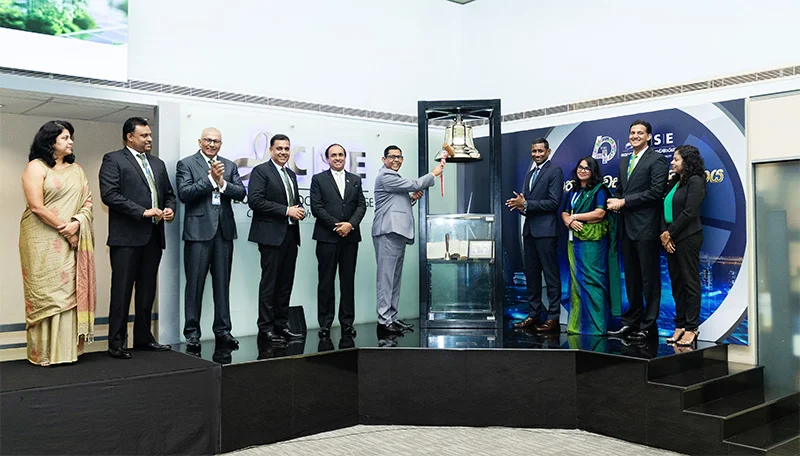
The Hatton National Bank PLC (HNB PLC) commemorated raising LKR 10 bn with its first ever issuance of sustainable bonds by way of a market opening ceremony conducted on the trading floor of the Colombo Stock Exchange (CSE) last week.
The 9th December issuance of 100 mn listed, rated, unsecured senior sustainable bonds, in five year and seven-year tenors, with a par value of LKR 100/- and rated “AA-(lka)” By Fitch Ratings Lanka Limited, was oversubscribed on the same day, raising LKR 10 bn.
Sustainable bonds, which were launched in Sri Lanka for the first time this year, are part of a series of GSS+ (Green, Social, Sustainable & Sustainability Linked) debt instruments. The proceeds of the sustainable bond issuance will be used by HNB PLC to fund the development and installation of solar, wind, biomass and hydropower projects, improve energy efficiency through retrofits, fund the construction of recognized ‘green’ buildings, fund investment infrastructure for water treatment, water conservation and efficient agricultural water technologies, finance housing development, healthcare and education for low- and middle-income families, promote women entrepreneurship, amongst others initiatives.
Damith Pallewatte, Managing Director and CEO of HNB PLC, who was the ceremony’s keynote speaker remarked upon the issuance of sustainable bonds commenting: “HNB’s LKR 10 bn sustainable bond issuance is a landmark step in advancing Sri Lanka’s sustainability agenda.”
Delivering his welcome address at the event, Rajeeva Bandaranaike, CEO of CSE, remarked upon rising corporate engagement in CSE’s GSS+ debt instruments stating: “HNB’s Sustainable Bond represents a welcome new addition to the list of leading Sri Lankan financial instruments that have set the example for the success of CSE’s GSS+ Bond framework which have allowed the capital market to operate as a financing vehicle for sustainable and socially equitable projects.”

Navy seizes an Indian fishing trawler poaching in Sri Lankan waters north of Talaimannar

Several spells of showers may occur in Central, Uva and Eastern provinces and in Polonnaruwa and Mullaittivu districts

India’s External Affairs Minister meets Sri Lanka PM

Shafali 69 not out , spinners lead India’s rout of Sri Lanka

Sri Lanka’s coastline faces unfolding catastrophe: Expert

SOC examines proposed amendments to the Microfinance and Credit Regulatory Authority Bill

‘Dates have the highest sugar content to fight Coronavirus’

Sunday Island 27 December – Headlines

#SundayIsland 17th December – Headlines

Sunday Island – 28th March

Sunday Island Headlines – 21 March

Sunday Island – 21st February – Headlines
-

 News2 days ago
Members of Lankan Community in Washington D.C. donates to ‘Rebuilding Sri Lanka’ Flood Relief Fund
-

 News7 days ago
Pope fires broadside: ‘The Holy See won’t be a silent bystander to the grave disparities, injustices, and fundamental human rights violations’
-

 News7 days ago
Pakistan hands over 200 tonnes of humanitarian aid to Lanka
-

 Business6 days ago
Unlocking Sri Lanka’s hidden wealth: A $2 billion mineral opportunity awaits
-

 News6 days ago
Army engineers set up new Nayaru emergency bridge
-

 News7 days ago
Officials of NMRA, SPC, and Health Minister under pressure to resign as drug safety concerns mount
-

 News7 days ago
Expert: Lanka destroying its own food security by depending on imported seeds, chemical-intensive agriculture
-

 Editorial7 days ago
Flawed drug regulation endangers lives