
News
There are ways to stop new COVID variants entering SL – Experts and unionists

By Rathindra Kuruwita
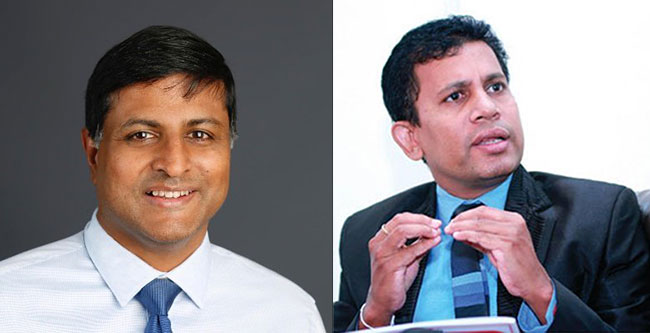
Medical experts and health sector trade unionists yesterday criticised Deputy Director General of Health Services, Dr. Hemantha Herath for claiming that there was no mechanism to prevent the new COVID variant detected in South Africa from entering Sri Lanka.
Executive Director of the Institute for Health Policy (IHP), Dr. Ravi Rannan-Eliya told The Island yesterday that he disagreed with Dr. Herath’s assertion.
“Strict border security can substantially reduce the risk of new variants entering the community. Secondly, the Zero Covid approach with high testing can also detect the new variants that do get through early enough to have a chance of crushing them,” he said.
Dr. Eliya said that the countries that did both had managed so far not to be overwhelmed by new variants. New Zealand seemed to be on the verge of crushing the Delta spread. However, those that relied on just tough border security but didn’t fully understand the importance of testing, especially in Asia, largely failed to control Delta.
“Taiwan was one of them, but it did ramp up testing in response to a Delta outbreak and may have learnt its lesson in time,” he said.
Commenting on Sri Lanka, Dr. Eliya said the belief that the country could live with low levels of virus and opening its borders for tourists ruined any chance of quick recovery.
“We’ve thrown away our initial victories. Searching for new variants in the community now is pretty useless. As medical students we were taught that doctors must not order tests unless they made a difference to patient management. Looking for new variants is useless because by the time we detect them, it will be too late,” he said.
President of the College of Medical Laboratory Science (CMLS), Ravi Kumudesh told The Island that Dr. Herath’s statement was irresponsible. The Health Ministry had actively prevented an effective state run screening system at the ports of entry, he said.
“It’s universally acknowledged that protecting borders is important to prevent new variants from coming in. The Ministry took steps to ensure that we could not effectively screen people that come in. And now Dr. Herath says that there is nothing that can be done to prevent new variants from coming in. Why do we even need a Health Ministry?” Kumudesh asked.
The CMLS President said that tourists would not arrive in Sri Lanka if COVID was rampant in the country. People who could afford to travel and spend large quantities of money in Sri Lanka lived in countries that were relatively secure from COVID.
“Let’s look at China. Why would you assume Chinese tourists will come here? Why do you think the Chinese state will allow people to come here?” he queried.
Kumudesh said that about 50,000 people were affected daily by COVID-19. The current lockdown was a joke and everyone except the government seemed to know it, he said.
“Come to Colombo or any other big city and tell me if there is a lockdown. Even if we close the country for six months like this, there will be no benefit. We have just let go. We have to let god to decide. Sri Lanka had not been able to reap at least 20% of the benefits of lockdown,” he said.
Kumudesh said that the purpose of a lockdown had been lost as garment factories had remained open without its workers being tested. The lab technologists and other health sector unions had come forth to help the government to test all garment factory workers and issue results within days, he said.
“The government has so far not responded. It has also ignored our calls for providing hospitals with portable PCR testing machines and increasing testing to 100,000 a day”.
Dr. Herath was not immediately available for comment.


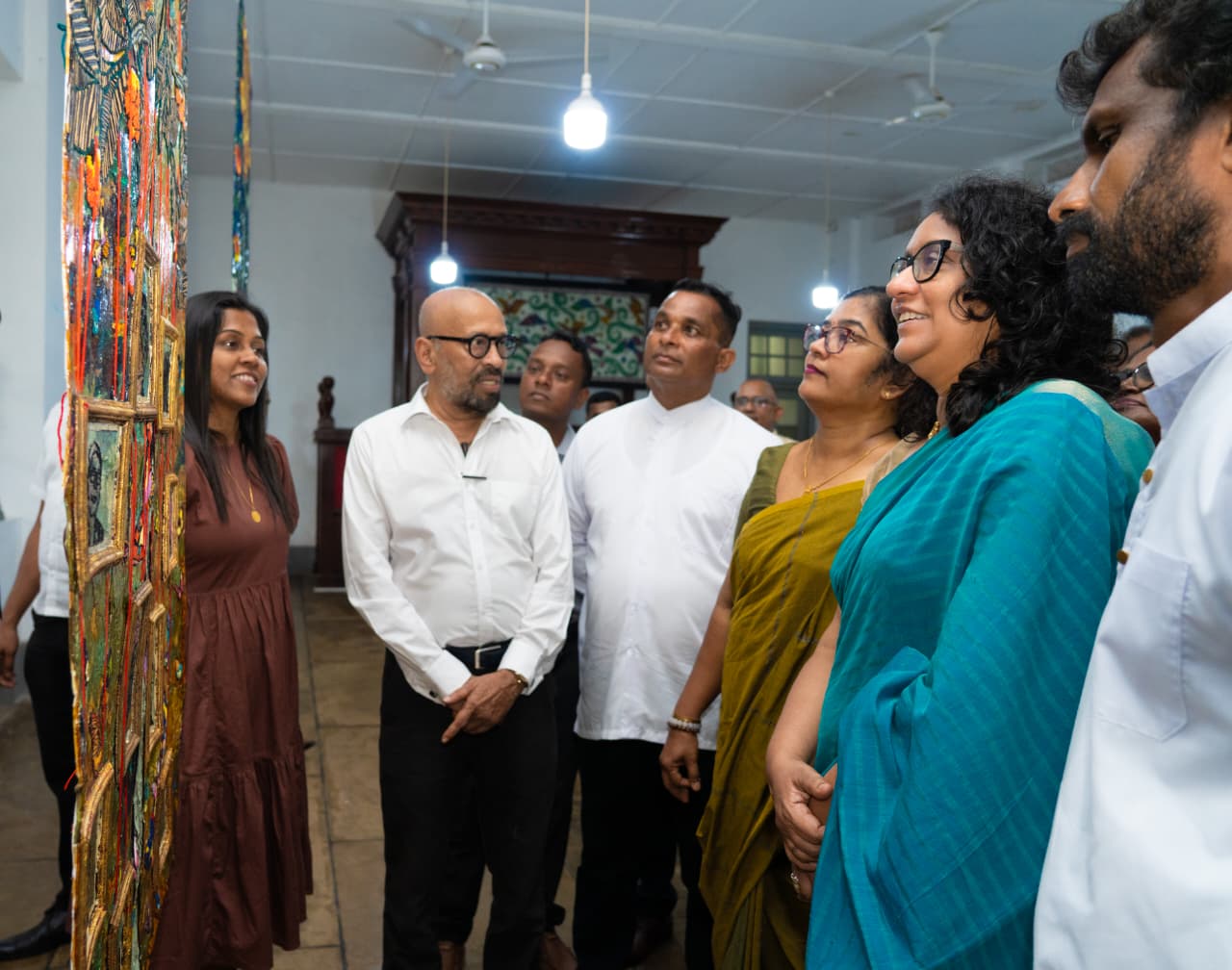
The inaugural ceremony of the Matara Festival for the Arts, featuring a wide range of creations by local and international artists, was held on February 19 at the Old High Court premises of the Matara Fort, under the patronage of Prime Minister Dr. Harini Amarasuriya.
The festival, centred around the Old High Court premises in Matara and the auditorium of the Matara District Secretariat, will be open to the public from 20 to 23 of February. The festival will be featured by visual art exhibitions, short film screenings, Kala Pola, and a series of workshops conducted by experts.
The inaugural event was attended by the Minister of Women and Child Affairs, Ms. Saroja Paulraj, along with artists, guests, and a large number of schoolchildren.
(Prime Minister’s Media Division)

Only one Member of Parliament has chosen not to receive the salaries and allowances entitled to MPs, Prime Minister Dr. Harini Amarasuriya revealed in Parliament last Thursday, shedding light on the financial perks enjoyed by members of the Tenth Parliament.
Speaking on Thursday (Feb. 19) in response to a question from SJB Badulla District MP Chaminda Wijesiri, the Prime Minister outlined the full range of pay and allowances provided to parliamentarians.
According to Dr. Amarasuriya, MPs receive a monthly allowance of Rs. 54,285, an entertainment allowance of Rs. 1,000, and a driver’s allowance of Rs. 3,500—though MPs provided with a driver through the Ministry of Public Security and Parliamentary Affairs are not eligible for the driver’s allowance.
Additional benefits include a telephone allowance of Rs. 50,000, a transport allowance of Rs. 15,000, and an office allowance of Rs. 100,000. MPs are also paid a daily sitting allowance of Rs. 2,500 for attending parliamentary sessions, with an additional Rs. 2,500 per day for participation in parliamentary sittings and Rs. 2,500 per day as a committee allowance.
Committee meetings held on non-parliament sitting days also attract Rs. 2,500 per day.
Fuel allowances are provided based on the distance between an MP’s electoral district and Parliament. National List MPs are entitled to a monthly allocation equivalent to 419.76 litres of diesel at the market price on the first day of each month.
Despite the comprehensive benefits, only SJB Badulla District MP Nayana Wasalathilaka has opted not to draw a salary or allowances. Dr. Amarasuriya said that in accordance with a written notification submitted by MP Wasalathilaka on August 20, 2025, payments have been suspended since that date.
The Prime Minister also confirmed that she, along with the Speaker, Deputy Speaker, committee chairs, ministers, deputy ministers, the Opposition Leader, and senior opposition whips, have all informed the Secretary-General of Parliament in writing that they will not claim the fuel allowance.
Challenging the ruling party’s voluntary pledge to forgo salaries, MP Wijesiri pointed out that all MPs except Wasalathilaka continue to receive their salaries and allowances. “On one hand you speak about the people’s mandate, which is good. But the mandate also included people who said they would voluntarily serve in this Parliament without salaries. Today we have been able to prove, Hon. Speaker, that except for one SJB MP, the other 224 Members are drawing parliamentary salaries,” he said.
The Prime Minister responded by defending the political culture and practice of allocating portions of MPs’ salaries to party funds. Referring to previous practices by the JVP and NPP, she said: “It is no secret to the country that the JVP has for a long time not personally taken MPs’ salaries or any allowances. I think the entire country knows that these go to a party fund. That is not new, nor is it something special to mention. The NPP operates in the same way. That too is not new; it is the culture of our political movement.”
When MP Wijesiri posed a supplementary question asking whether diverting salaries to party funds was an indirect method of taking care of MPs, Dr. Amarasuriya said: “There is no issue there. No question was raised; the Member made a statement. What we have seen throughout this week is an inability to understand our political culture and practice, and a clash with decisions taken by political movements that misused public funds. What is coming out is a certain mindset. That is why there is such an effort to find fault with the 159. None of these facts are new to people. He did not ask a question, so I have nothing to answer.”
The disclosures come days after the Government moved to abolish the parliamentary pension, a measure that has sparked renewed debate over MP compensation and the transparency of funds allocation.
Public Security and Parliamentary Affairs Minister Ananda Wijepala on Friday (20) disclosed in Parliament details of properties and assets allegedly acquired through illegal activities by suspects arrested in raids carried out since September last year.
The Minister made the disclosure in response to a question raised by MP Ravindra Bandara, stating that the identified assets have been frozen pending further investigations.
He said the assets include properties belonging to several alleged organised crime figures, among them Mandinu Padmasiri, alias ‘Kehelbaddara Padme’, who was arrested last year.
Listing the assets in the House, the Minister said Hapugoda Arachchige Kankanamge Duminda Dilruk has assets worth Rs. 23 million frozen, including a van, a motorcycle, a house and a roller gate.
In the case of Kandaiya Kalamogan, two motorboats have been identified, although their value has not yet been assessed.
Dilum Tharaka Balasuriya is reported to own a two-storey house situated on 15 perches of land with a face value of Rs. 800,000.
Assets belonging to Mohammad Harish Mohammad and Mohammad Shiyam were frozen on January 21, 2026. While the total value has not yet been assessed, five vehicles were confiscated from the former and a car from the latter.
Wijesuriya Mahaduruge Uditha Iroshan Wijesiri has assets valued at Rs. 5 million, including a lorry, while Indika Pathmakumara’s assets include a cab worth Rs. 2.5 million and a bank account containing Rs. 1 million.
Lahiru Sampath is reported to own a three-wheeler valued at Rs. 1.8 million.
According to the Minister, Hettiarachchige Dona Sriyani Chandralatha possesses a four-storey house and 14.7 perches of land valued at Rs. 60 million.
Mandinu Padmasiri, alias ‘Kehelbaddara Padme’, owns 20 perches of land with partially constructed buildings valued at Rs. 30 million and a half-finished six-room building worth Rs. 20 million, the Minister said.
Patabendi Maddumage Shehan Sathsara, alias ‘Dehi Bale Malli’, has five multi-day fishing trawlers valued at Rs. 200 million and a two-storey house with 15.8 perches of land worth Rs. 50 million.
The Minister further disclosed that Jayasinghege Maduranga Sampath owns a cab worth Rs. 5.4 million, a van valued at Rs. 14.5 million, five bank accounts containing Rs. 73.03 million, another account with Rs. 160,328.88 and USD 544, and Rs. 283 million in cash.
Adhikari Samantha Perera is reported to own 10.10 perches of land valued at Rs. 5 million and one acre and 1.5 perches of land worth Rs. 13 million.The Minister said investigations are continuing in respect of the suspects and the frozen assets.

More than 1,500 Venezuelan political prisoners apply for amnesty

Six races, six golds – Klaebo’s historic Olympics

India, South Africa meet in the final before the final

Matara Festival for the Arts’ inaugurated by the Prime Minister

Showers or thundershowers will occur at most part of the Island after 1.00 p.m.

Only single MP refuses salary as Parliament details pays and allowances

‘Dates have the highest sugar content to fight Coronavirus’

Sunday Island 27 December – Headlines

#SundayIsland 17th December – Headlines

Sunday Island – 28th March

Sunday Island Headlines – 21 March

Sunday Island – 21st February – Headlines
-

 Business6 days ago
Ministry of Brands to launch Sri Lanka’s first off-price retail destination
-
 Latest News2 days ago
New Zealand meet familiar opponents Pakistan at spin-friendly Premadasa
-

 Latest News2 days ago
Tariffs ruling is major blow to Trump’s second-term agenda
-

 Latest News2 days ago
ECB push back at Pakistan ‘shadow-ban’ reports ahead of Hundred auction
-
 Features6 days ago
Giants in our backyard: Why Sri Lanka’s Blue Whales matter to the world
-
 Features9 hours ago
Why does the state threaten Its people with yet another anti-terror law?
-
 Sports3 days ago
Old and new at the SSC, just like Pakistan
-

 News2 days ago
Construction begins on country’s largest solar power project in Hambantota