Connect with us

News

Restructuring Guru Buchheit Warns Sri Lanka on Holdout Creditors

Published

on

A clause on some of Sri Lanka’s older dollar bonds gives creditors a potential opening to hold the sovereign hostage and stall restructuring negotiations, Lee Buchheit, a veteran of over two dozen debt restructurings who has also been consulted by the Sri Lankan government, told Bloomberg on Thursday.

He says some of the nation’s debt contracts contain the so-called single series collective action clause, which could allow a minority of bondholders to veto or demand terms in the negotiations.

“One must always anticipate the possibility of holdout creditors in an operation of this kind,” Buchheit said in email replies. “No one seriously doubts that Sri Lanka needs debt relief. The debate may focus on how much debt relief and from whom will it be sought.”

While Sri Lanka is seeking a bailout from the International Monetary Fund, the multilateral lender insists that existing debt must be brought to sustainable levels before any aid is doled out. That could include protracted discussions with not just global asset managers but also large bilateral creditors such as Japan, India and China, each of whom would also impose their conditions.

For instance, India has stated that it wants China to be treated on par with other creditors in the debt restructuring process. However, China has historically preferred to hand out fresh loans as refinance rather than rework existing debt and doesn’t often share details of the credit. Sri Lanka hasn’t been able to tap a $1.5 billion swap line from China over concern that the IMF may consider it as a loan and force delays in repayment.

‘Main Challenge’

“The main challenge I see is one of coordination among the three main creditor groups — bondholders, Paris Club bilaterals and non-Paris Club bilaterals like China and India,” said Buchheit. “A commitment by Sri Lanka to even-handed treatment of these three groups should go a long way toward smoothing the path of the negotiations.”

China has indicated that it will not insist on preferential repayment of loans and is willing to be treated at par with other creditors, Sri Lanka’s President Gotabaya Rajapaksa said in an interview on Monday.When asked if Beijing would be willing to be treated on par with other creditors, Foreign Ministry spokesman Zhao Lijian said on Tuesday that China supports “the proper settlement through consultation with relevant parties and institutions” and hopes other countries will also play a constructive role.

“We hope that Sri Lanka will protect the legitimate rights of foreign investors and safeguard and uphold the credibility and good investment environment at home,” he added.

Sri Lanka is grappling with a worsening humanitarian crisis after it ran out of dollars to import food and fuel, stoking inflation to 40% and forcing a historic debt default. Sri Lanka needs $5 billion to ensure “daily lives are not disrupted,” and a further $1 billion to strengthen the rupee, Prime Minister Ranil Wickremesinghe told Parliament Tuesday.The first step would be a Debt Sustainability Analysis from the IMF, which will provide an outline of how much of a haircut creditors could see. Unlike corporate bankruptcies, debt restructuring has no clear, defined rules.

That’s where Buchheit fits in. The retired lawyer has worked on almost every major sovereign restructuring case in a career that spanned over four decades, including leading the legal team for the $206 billion Greek negotiations in 2012. That restructuring — the world’s biggest — retroactively imposed an “aggregated collective action clause” across domestic notes, which has since become an important tool to ensure that a majority of creditors can force any minority holdouts to accept a restructuring deal.Bonds issued before 2015 are likely to be subject to the problematic single-series CACs as innovations after that year have eliminated more protracted negotiations by requiring only investors who hold three quarters of overall debt to agree, according to Matthew Vogel, London-based portfolio manager and head of sovereign research at FIM Partners.


Continue Reading
Advertisement
Click to comment

Leave a Reply

Your email address will not be published. Required fields are marked *

News

The President’s Fund has been transformed into a people-centred fund – PM

Published

on

By

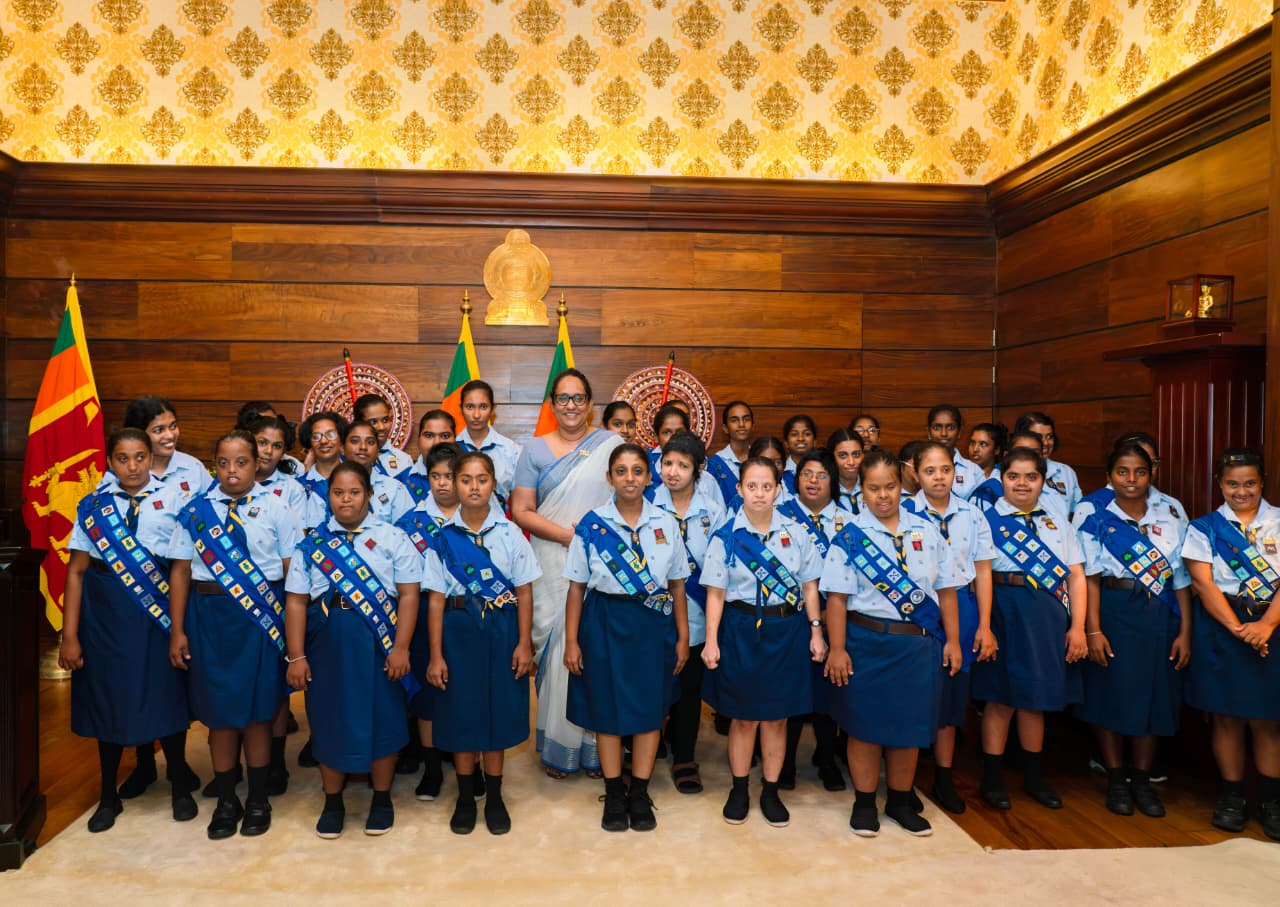
Prime Minister Dr. Harini Amarasuriya stated that the President’s Fund has been transformed into a people-centred fund and that ensuring equal access to education for all children is a key policy of the Government.

The Prime Minister made these remarks on 11th of July at Temple Trees while participating in the “Sarasavi Diriya Abhiman 2026” programme, organised to recognise students with special needs pursuing university education.

The President’s Fund has decided to provide financial assistance of Rs. 100,000 each to 370 students admitted under the special needs category through the University Grants Commission, and under the first phase of the programme, cheques were presented to 236 students.

Addressing at the event, Prime Minister stated:

“It is the Government’s policy to ensure equal access to education for all children, including those with special needs, such as neurodivergent and those with autism or dyslexia, without leaving any child behind in the education system. Vice-Chancellors and other education authorities bear a responsibility to ensure that the necessary practical accessibility facilities are available to these students within universities. In addition, the Government is taking steps to digitalise the education system through assistive technologies and to develop public transport and physical infrastructure in a manner that is accessible and inclusive for persons with special needs.These students are not a burden to the country; they are valuable human resources capable of contributing to sustainable development. The ultimate objective is to build a civilised society that recognises and respects the value of every individual.

The occasion was attended by the Speaker Dr. Jagath Wickramaratne, Minister of Rural Development, Social Security and Community Empowerment Upali Pannilage, Member of Parliament Sugath Wasantha de Silva, and several others.

[Prime Minister’s Media Division]
Continue Reading

News

Thambuttegama Water Supply Project Commissioned by the President

Published

on

By

The Thambuttegama Water Supply Project, which will benefit 91,810 people in the Thambuttegama, Thalawa and Galnewa Divisional Secretariat divisions, was officially commissioned by President Anura Kumara Dissanayake on Friday (10) afternoon .

The project, which was launched under a concessional loan from the China Development Bank (CDB), was suspended between May 2022 and May 2024 due to the country’s debt restructuring process. However, recognising its national importance, the current Government allocated additional funding from the Government of Sri Lanka to successfully complete the project.

Constructed as a long-term solution to the chronic kidney disease that has spread rapidly across the region, the water supply project is also expected to improve the social and economic well-being of local communities.

The project aims to provide 25,000 new household with water connections.

Built at a cost of Rs. 32 billion, the project comprises a water treatment plant with a daily capacity of 18,000 cubic metres, three water towers with a capacity of 1,500 cubic metres each, a 12.75-kilometre water transmission pipeline and a 158-kilometre water distribution network.

Speaking at the event, Minister of Housing, Construction and Water Supply Susil Ranasinghe said:

“The Thambuttegama Water Supply Project, which was declared open today by the President, has the capacity to provide safe drinking water to 25,000 families. The project has been completed at a cost of Rs. 32 billion. It was implemented with the assistance of the China Development Bank, but construction came to a standstill due to the economic crisis experienced in recent years. Over the past two years, we allocated funds through the national budget and have now successfully completed the project.

At the initial stage of the project, concerns were raised over drawing water from the Rajanganaya Reservoir. Farmers protested against the proposal. However, today this project is being commissioned with the blessing and support of the Rajanganaya farmer leaders, who are present here. They presented their concerns to us and we are committed to addressing them.

Their foremost concern was to ensure that no farmer in Rajanganaya would face a shortage of irrigation water as a result of water being diverted for this project. I can assure you without hesitation that there is absolutely no reason for concern. Not even a single drop of water required for agriculture will be denied in order to supply drinking water. This project is, after all, intended to provide clean drinking water to farming families themselves.

They also requested that compensation be paid if cultivation is affected due to any water-related issue. I assure you that there is no cause for concern on that front either. This Government has consistently compensated farmers affected by disasters. We paid Rs. 1.2 billion in compensation for losses suffered by farmers over the past seven cultivation seasons due to the Nilwala saltwater barrier. We also resolved long-standing issues relating to land acquisition under the Yan Oya Project and allocated Rs. 180 million to the District Secretary to compensate the affected landowners. In addition, Rs. 12 billion has been paid in compensation to around 200,000 farmers whose farmlands were damaged by Cyclone Ditwah. Therefore, if farmers suffer any losses or damage to their lands in the future, this Government stands ready to provide compensation.

Another request made by the farming community was the construction of the Ginipetti Bridge if water is to be drawn for this project. We have already allocated Rs. 240 million to build a new bridge capable of accommodating vehicular traffic and foundation work will commence shortly. At the same time, a team of experts has been appointed to determine whether the existing Ginipetti Bridge can be rehabilitated or whether an entirely new bridge is required. Therefore, I assure the farming community once again that we will not allow them to suffer any hardship or loss as a result of this project.”

Minister of Trade, Commerce, Food Security and Cooperative Development Wasantha Samarasinghe, Governor of the North Central Province Wasantha Jinadasa, public representatives of the province, Chinese Ambassador Qi Zhenhong, officials of the Ministry of Housing, Construction and Water Supply and the National Water Supply and Drainage Board, together with a large number of local residents, were also present at the event.

[PMD]

Continue Reading

News

New Chairman and members appointed to the Public Service Commission

Published

on

By

President Anura Kumara Dissanayake has appointed S. A. Nimal Saranatissa as the new Chairman of the Public Service Commission.

The other members appointed to the Commission are B. Sanath Poojitha, E. R. Weerakoon, R. Ketheeswaran, J. M. R. Jayasundara, E. A. P. N. Edirisinghe, Dr S. A. A. N. Jayasekara and M. H. Mohammed Sameel.

The letters of appointment were presented to the newly appointed Chairman and members by Secretary to the President Dr Nandika Sanath Kumanayake at the Presidential Secretariat Thursday (09) afternoon .

The appointments have been made to fill the vacancies that arose following the expiry of the previous term of office of the Public Service Commission

[PMD]

Continue Reading

Trending