
Features
The move to impeach President Premadasa


(Excerpted from Memories of 33 Years in Parliament, by Nihal Seneviratne)
It was a usual sunny morning in Sri Jayewardenepura – Kotte in August 1991 when Anil Moonesinghe, MP, walked into my room and sat down. He opened his conversation by saying “Nihal, you will be at the centre of a big controversy very soon.” I was quite puzzled by this remark and asked him “Why me of all people?” Anil smiled and said, “You will know soon” and walked out of my room.
I continued to be perplexed by his remark. Anil happened to be a cousin of mine and was in the habit of coming to my room for a chat off and on. I could not understand why he made this remark but soon forgot about it and continued my daily parliamentary routine.
That night around 10 p.m. when I was about to go to sleep, the phone rang. When I answered, I was surprised to hear President Premadasa’s voice. He asked,” “Nihal have you seen this impeachment motion?”. Taken aback, I replied “Which impeachment motion, Sir?” He replied saying Speaker M.H. Mohamed had informed him that he had entertained a Motion of Impeachment against the President.
I was quite categorical and said that I had not seen it at all, which was the truth. He shot back, “Is it not the duty of the Speaker to discuss the motion with you?” I had to safeguard the Speaker too and replied, “Normally he discusses these motions but on this occasion he hasn’t done so.” The President continued, “That means you have not seen this at all?” I promptly replied “Yes, Sir,” and he rang off. I realized that the Speaker had sent him the Motion but had not shown it to me.
The next morning, I found Parliament all agog with Members of the Government, streaming into the chambers of the Speaker. I was told that President Premadasa had arrived there and had summoned all 125 Government group members to meet him. I was also told that the President shook the hand of each MP individually having asked whether any of them had signed the motion. I learned that all had said “No” including possibly a few who had in fact signed. By noon, the MPs had left the Speaker’s chambers, but the Speaker did not tell me what this was all about.
After the Members left the Speaker’s chambers, Minister Lalith Athulathmudali walked into my room. I asked him “Lalith, why are you rocking the boat?” His instant reply Was “Don’t ask me that question? Address it to your Speaker.” I was surprised but remained silent.
Under provisions of the Constitution, Article 38(1) specifies that such an Impeachment Motion must be signed by not less than two thirds of the Members of the House. Article 70(1) C continues to specify that once such a Motion is received by the President, he shall not dissolve Parliament. Having been prevented from dissolving Parliament, the President used his right to prorogue Parliament, which was- his legal entitlement. On Augusts 30 he did so, re-summoning Parliament on Sept. 24.
I must say here that the circumstances relating to the preparation and drafting of the actual motion of impeachment was one of the most closely guarded secrets ever. That was what prevented Anil Moonesinghe from elaborating on what he was talking about when he came to my room and made that puzzling remark.
As far as I know, in all my 33 years of Parliamentary service, there has never been such a closely guarded secret. The closest such event was when 17 government MPs led by Mr. C.P. de Silva crossed over to The Opposition to topple the Sirima Bandaranaike Government by a single vote at the end of the Throne Speech debate on the press takeover attempt in 1964. It was believed that J.R. Jayewardene planned this move and kept it a secret as far as possible.
As for the impeachment motion, I have not to date seen the actual motion or even a copy of it, but it is believed that it was contained in two to three A4 pages and that several copies of it were made available to those Members who were entrusted with the task of getting the necessary signatures. Regrettably, our Parliament records do not even have a copy of it or the original. I was never given a copy of the motion so that I could have included it in the Order Book as is the normal practice.
In the meantime, Speaker (MH) Mohamed and few MPs had been invited by the Inter Parliamentary Union to attend a conference in Delhi, but we had not received permission from the President to leave the country. Soon after the President rang me and said to inform the Speaker and members of the delegation that he had given permission for the delegation to proceed to India which we did.
Just before learning I advised the Speaker not to answer any questions about the impeachment matter in India since the local and international press had given it wide publicity. I advised him to politely say “No Comment” whenever confronted with this question. This he did many times during our short stay in Delhi, whenever he was frequently quizzed by the local press.
By this time Members were quite perturbed and excited about the circumstances that led to the sudden prorogation and were in a confrontational mood. The opening of the new session of Parliament was fixed for Sept. 24. We escorted the President who was present on these occasions to the Robing Room of the House, and he stayed there until it was time to enter the chamber.
I recall telling him that since he was presiding over the sittings of the House, he must be cautious and careful in tackling the Members since I believed that many were planning to heckle him. I felt it was my duty to warn him of a possible uproar in the House and that we Secretaries at the Table were ready to advise him about any problem that might arise. He swiftly responded “Nihal don’t worry. I know how to tackle them.”
The sitting was brief and without incident and the President left the building after his opening address. In his address to Parliament he mentioned at the outset “Apart from the fact that an Impeachment Motion is sought to be brought against me, no misconduct on my part has been established. It is the practice in our country that a person is considered innocent until he is found guilty of any offence. We all know that no person is considered guilty of any offence merely because a charge has been leveled against him. It is therefore necessary that the accused has to be considered innocent till he is proved guilty. You all know that I have not been found guilty of any offence”.
It is believed that Ministers Lalith Athulathmudali, Gamini Dissanayake and the Speaker himself possessed copies of the motion for which they began collecting signatures starting with members of the Opposition and later persuading members of the Government to sign. It was rumored that one member signed the motion without n reading it, having been made to believe that he was signing a motion to get parliamentary pensions increased! Another is believed to have signed since he was unable to refuse a leading Minister who had lectured him at the Law College and whose student he had been.
The next day on September 25 the Speaker made the following statement at the commencement of proceedings. He said “I wish to inform the House that I have been given notice of a resolution under Art. 38 (2) of the Constitution. Having satisfied myself that the resolution is in order I decided to entertain it. Subsequently written and oral representations have been made to me questioning the validity of the signatures on the resolution. I am looking into this matter at present. My decision will be conveyed to the House soon”.
Time had passed and the President believing that it was the Speaker who had been one of the prime movers in bringing this motion took different steps to confront the Speaker. He is even believed to have advised a Royal dignitary in the Middle East to refrain from supporting some of projects the Speaker was sponsoring here. The Speaker’s family was also known to have owned a company importing motor cars from India. It was believed that the President had asked the Inland Revenue Department to check and scrutinize all documents pertaining to that business.
It was only much later that the Speaker summoned me to his Chambers and then sought to discuss the contentious motion with me. He told me then that he believed some of the signatures of Members were not genuine and were forgeries. I recall telling him that if he had consulted me at the time, he accepted the motion, I could have readily helped him to check the veracity of the signatures by comparing them with the signatures in the volume we maintained for Members to sign when they took their oaths.
The Speaker only smiled and then asked me to draft a letter to the President telling him that in these circumstances he was not entertaining the motion he had forwarded to the President earlier. We understood then that the motion lacked the 150 valid signatures of the MPs which is required by the provisions of the Constitution.
After the lapse of a month or so on October 8, 1991, at the start of the sitting of the House, the Speaker made the following statement: “Further to the announcement made by me to the House on September 25, 1991, regarding the notice of a resolution under Article 38(2) of the constitution, I wish to inform the House that having inquired into the matter, I am now of the view that the resolution does not have the required number of valid signatures, and therefore it cannot be proceeded with”. With these historic words, the saga of the impeachment motion came to an end.



 Australian Prime Minister Anthony Albanese has done very well to speak-up against and outlaw race hate in the immediate aftermath of the recent cold-blooded gunning down of several civilians on Australia’s Bondi Beach. The perpetrators of the violence are believed to be ardent practitioners of religious and race hate and it is commendable that the Australian authorities have lost no time in clearly and unambiguously stating their opposition to the dastardly crimes in question.
The Australian Prime Minister is on record as stating in this connection: ‘ New laws will target those who spread hate, division and radicalization. The Home Affairs Minister will also be given new powers to cancel or refuse visas for those who spread hate and a new taskforce will be set up to ensure the education system prevents, tackles and properly responds to antisemitism.’
It is this promptness and single-mindedness to defeat race hate and other forms identity-based animosities that are expected of democratic governments in particular world wide. For example, is Sri Lanka’s NPP government willing to follow the Australian example? To put the record straight, no past governments of Sri Lanka initiated concrete measures to stamp out the evil of race hate as well but the present Sri Lankan government which has pledged to end ethnic animosities needs to think and act vastly differently. Democratic and progressive opinion in Sri Lanka is waiting expectantly for the NPP government’ s positive response; ideally based on the Australian precedent to end race hate.
Meanwhile, it is apt to remember that inasmuch as those forces of terrorism that target white communities world wide need to be put down their counterpart forces among extremist whites need to be defeated as well. There could be no double standards on this divisive question of quashing race and religious hate, among democratic governments.
The question is invariably bound up with the matter of expeditiously and swiftly advancing democratic development in divided societies. To the extent to which a body politic is genuinely democratized, to the same degree would identity based animosities be effectively managed and even resolved once and for all. To the extent to which a society is deprived of democratic governance, correctly understood, to the same extent would it experience unmanageable identity-bred violence.
This has been Sri Lanka’s situation and generally it could be stated that it is to the degree to which Sri Lankan citizens are genuinely constitutionally empowered that the issue of race hate in their midst would prove manageable. Accordingly, democratic development is the pressing need.
While the dramatic blood-letting on Bondi Beach ought to have driven home to observers and commentators of world politics that the international community is yet to make any concrete progress in the direction of laying the basis for an end to identity-based extremism, the event should also impress on all concerned quarters that continued failure to address the matters at hand could prove fatal. The fact of the matter is that identity-based extremism is very much alive and well and that it could strike devastatingly at a time and place of its choosing.
It is yet premature for the commentator to agree with US political scientist Samuel P. Huntingdon that a ‘Clash of Civilizations’ is upon the world but events such as the Bondi Beach terror and the continuing abduction of scores of school girls by IS-related outfits, for instance, in Northern Africa are concrete evidence of the continuing pervasive presence of identity-based extremism in the global South.
As a matter of great interest it needs mentioning that the crumbling of the Cold War in the West in the early nineties of the last century and the explosive emergence of identity-based violence world wide around that time essentially impelled Huntingdon to propound the hypothesis that the world was seeing the emergence of a ‘Clash of Civilizations’. Basically, the latter phrase implied that the Cold War was replaced by a West versus militant religious fundamentalism division or polarity world wide. Instead of the USSR and its satellites, the West, led by the US, had to now do battle with religion and race-based militant extremism, particularly ‘Islamic fundamentalist violence’ .
Things, of course, came to a head in this regard when the 9/11 calamity centred in New York occurred. The event seemed to be startling proof that the world was indeed faced with a ‘Clash of Civilizations’ that was not easily resolvable. It was a case of ‘Islamic militant fundamentalism’ facing the great bulwark, so to speak, of ‘ Western Civilization’ epitomized by the US and leaving it almost helpless.
However, it was too early to write off the US’ capability to respond, although it did not do so by the best means. Instead, it replied with military interventions, for example, in Iraq and Afghanistan, which moves have only earned for the religious fundamentalists more and more recruits.
Yet, it is too early to speak in terms of a ‘Clash of Civilizations’. Such a phenomenon could be spoken of if only the entirety of the Islamic world took up arms against the West. Clearly, this is not so because the majority of the adherents of Islam are peaceably inclined and want to coexist harmoniously with the rest of the world.
However, it is not too late for the US to stop religious fundamentalism in its tracks. It, for instance, could implement concrete measures to end the blood-letting in the Middle East. Of the first importance is to end the suffering of the Palestinians by keeping a tight leash on the Israeli Right and by making good its boast of rebuilding the Gaza swiftly.
Besides, the US needs to make it a priority aim to foster democratic development worldwide in collaboration with the rest of the West. Military expenditure and the arms race should be considered of secondary importance and the process of distributing development assistance in the South brought to the forefront of its global development agenda, if there is one.
If the fire-breathing religious demagogue’s influence is to be blunted worldwide, then, it is development, understood to mean equitable growth, that needs to be fostered and consolidated by the democratic world. In other words, the priority ought to be the empowerment of individuals and communities. Nothing short of the latter measures would help in ushering a more peaceful world.
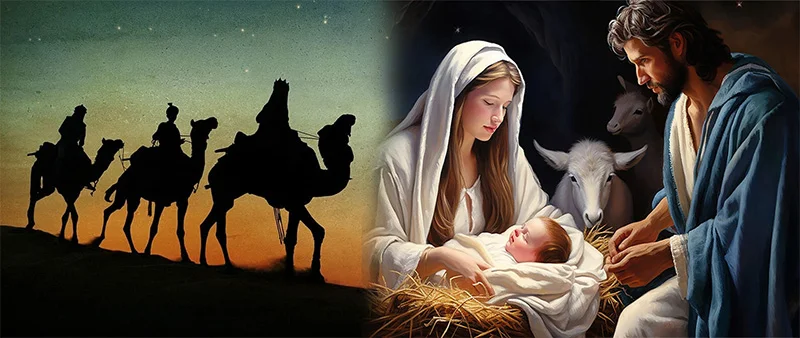
Christmas
Peace on Earth to all people of good-will is the perennial and the pristine song of Joy and hope aired in every nook and corner during every Christmas season commemorating the Birth of Jesus Christ, the Prince of Peace. In his own day, Jesus of Nazareth was himself a wonderful instrument of peace and reconciliation in his own homeland of Palestine. He was open to all classes of people, whatever their ethnicity, race, language or social class with preference particularly to the sectors of the poor among these social strata. He would freely crisscross the various regions of Palestine which at that time was tri-partite: Galilee in the north with its fishing villages, lakes graced with wonderful beaches and imposing ranges of hills and valleys; Samaria in the middle and Judea in the deep south which located the religious centers of Judaism with its magnificent temple and also housed the State buildings of the Roman prefectures.
Liberation from Oppression
Entire Palestine was colonized with Caesar sitting in Rome his capital and having his legates governing the local provinces. People too were living in the expectation of a Messiah who would fight the colonial power and thus bring liberation to their oppressed motherland. There was a strongly prevalent messianic current of hope circulating and the longing for the day and the appearance of the Messiah, the liberator. Though inundated by Roman paganism and constantly under the threat of foreign invasion, the people kept to their traditional religious beliefs with their festivals, pilgrimages, rituals and rites and laws.
Unfortunately, there was a historic breach with the breakaway of the Samaritans from the Jews, both claiming to be authentic descendants of their earliest patriarchs. They had different holy centers of worship. Jews considered the Samaritans a hybrid race enabled by the inter-marriages encouraged by the invading Assyrian foreigners (721 BC) with the local population that were not deported by the invaders. It was a historic schism that had very sad socio-cultural, religious and political repercussions. As time went by, this enmity had created many tensions and had percolated into many other serious issues that caused estrangement within the country. The story of the Good Samaritan who came to the rescue of the Jew fallen among the robbers along the road to Jericho and the sole leper who returned to thank Jesus following his healing and who happened to be a Samaritan are gospel incidents that strived to heal this division and bring reconciliation among the two dissenting groups. Creating confusion among the general public was also the fact of the misunderstanding of the mission of the Messiah wholly thought of as a purely political liberation which was only a partial truth.
The homeland of Jesus was desperately in need of a profound spiritual and religious revolution. There had to be a more humane understanding of the Law of Moses, the great code of the national ethic and putting relationships in their correct perspective despite the fact that the land was surrounded on all sides with kingdoms and ruling monarchs who were pagan and the worship of idols was rampant. People treasured their religious and cultural traditions and were in great fear of them being lost when invading foreigners threatened their sovereignty and even territorial integrity. Their very land was sacred for it was the land of their God and therefore defended against any foreign pagan aggression. In fact, there had been often and on many insurrectionist movements rebelling against the Roman colonial rule that were summarily crushed.
Religion at the service of Freedom & Liberation
Jesus Christ saw the need of introducing a new spirituality based on a new ethic to restore the religious sensibilities of Israel. From the mountain he taught the classical sermon on the Beatitudes which declared the poor as blessed and those who suffered persecution for the sake of justice and righteousness as blessed too. It would be the meek who will inherit the earth and those who are merciful would be the true children of God. Pharisaical spirit of religion that is subservient to the letter of the Law that kills and false religiosity limited purely to rites and rituals were to be empty of meaning. Love of God to be total had to be matched with the love for the neighbor. Even enemies were to be loved without conditions. Self-righteousness had no place in the spirituality he propounded. People have to be fed both with spiritual food of truth as well as material nourishment to feed their hunger as he multiplied fish and loaves in the Galilean mountains to cater to the thousands who had flocked to hear him and sought blessings of healing and solace. Many were stunned wondering how the son of a carpenter could have such wisdom and powers even over demons who rattled at his presence. Simple jealousy, unfounded fear and a great amount of misunderstanding and suspicion finally caved in from his enemies, the religious authorities of Jerusalem and the Roman governor that led to that shamefully blatant and unjust condemnation ever recorded in legal history: the crucifixion of Jesus of Nazareth, King of the Jews.
In some ways the celebration of Christmas, which is the commemoration of the birth of Jesus Christ is being caricatured with commercialism and mere external fanfare with décor and illuminations. The deeper truth is that we are celebrating a spiritual event that was decisive in history: God entering the world in the real physical and bodily appearance of a human being. He made humanity make its peace with God and brought enlightenment about the mystery of life and death declaring the importance of love and respect of others in neighborly love and forgiveness. Like an industrious fisherman he cast his net into the deep and distant waters for an abundance of harvest that would bring civilization itself a mighty haul of blessings. Christianity is very much alive in its two millennia history cutting across cultures and civilizations witnessing to the belief in God and the dignity of man who has an eternal destiny. This religion is pro-life in all dimensions: safety of the unborn, the sacredness and inviolability of every life, the sanctity of marriage, life-beyond death, no violence of any kind, no wars, no nuclear weapons, no arms race or unwarranted ethnic or racial superiority, no danger to sovereignty of nations and their territorial integrity and safe haven for refugees and migrants of every hue.
It is in some of these very difficult issues that peace-keeping and work of reconciliation are becoming global priorities. Science and technology alone are no saviors of humanity embattled as it is in problems that appear to be very dramatic and far extensive. In no way should human beings become victims of their own creations however impressive they may be. Humanity must be the center of our global concerns and innovations with everything serving it towards a better quality of life. A Human being must never be instrumentalized in dehumanizing experiments. On the contrary, he must be served in all things so that his unique place in creation may not be displaced and continue to be the final point of reference in all world’s undertakings and ventures. To this must all regional and international bodies commit themselves in earnest. Christianity considers Jesus Christ the Lord to be the goal of human history, the focal point of the longings of history and of civilization, the center of the human race, the joy of every heart and the answer to all its yearnings as the great Vatican II Council document put it (Gaudium et Spes 45) while the joys and the hopes, the griefs and the anxieties of the men of this age, especially those who are poor or in any way afflicted, these are the joys and hopes, the griefs and anxieties of the followers of Christ. Indeed, nothing genuinely human fails to raise an echo in their hearts (Gaud. et Spes 1).
Christianity & Secularity
It is this spirit of Jesus Christ that impels Christianity to be closely involved in the world society’s journey which registers the triumphs and failures of history. Wherever it has gone, it has opened hospitals for healing the sick, schools for education and other charitable institutions thus playing the role of the Good Samaritan in keeping the fires of charity and compassion alive in a society always prone to various kinds of natural disasters and human conflicts that bring misery and suffering. Christianity favors an economic system that is neither radically socialist nor downright capitalistic and holds primacy of labor over capital, thus taking a clear anti-Marxist stand in this ever important socio-political issue. The dignity and working conditions of the worker with the issue of a living wage, pension benefits, sharing of profits, private enterprise are considered important human issues to be dealt with within the parameters of social justice and labour rights. Democratic principles are preeminently Christian in outlook empowering people to make the needed political options in constructing a system of governance and rule that benefits the common and the greater good. Christianity wishes its voice to be heard in international fora and in contexts in which important decisions affecting people globally are made.
If the spirit of Christmas is to endure beyond its usual annual celebration, the challenges of the Christmas event must be faced and due response to its newer questions met with courage and hope. In the concrete, they are the peace among nations, inter-religious harmony, war against terror and fundamentalisms, economies without disparities and respect for human rights as well as basic freedoms. These are all elements for reconciliation and building-blocks for peace-keeping. Military superiority and economic imperialism are the most satanic forms of modern paganism that plague our world creating so much suspicion, instability and tensions. More spirit of listening, dialogue and understanding are in demand for a stable world and a new form of warm humanism. In emulation of Jesus Christ the eminent peace-maker and reconciler, it behoves that all those who claim to be peace-makers and agents of reconciliation pursue the same mission. Thus, the spirit of Christmas is preserved ever alive.
by Rev. Fr. Leopold Ratnasekera OMI
Ph.D., Th.D.

 The world over, Christmas is being celebrated today. However, in our part of the world, Christmas, and the lead up to the New Year, will be observed on a sombre note.
With this in mind, I wish my readers a Blessed Christmas and let’s hope 2026 will be a good one … without any fear.
Several known personalities also send their greetings and best wishes to The Island readers:
* Noshin De Silva (Actress):
Happy Holidays to everyone across our beautiful island! As we move toward the end of the year, my heart goes out to all communities affected by the recent floods and severe weather. In these challenging weeks, we have also witnessed the true spirit of Sri Lanka through the humility, compassion, and unity of people coming together to support one another. May this season bring comfort to those rebuilding, gratitude to those giving, and hope to us all. Wishing everyone Peace, Healing, Great Health, and a very Happy New Year!
* Melloney Dassanayaka (Miss Universe Sri Lanka 2024):
As we celebrate the blessings of Christmas and step with hope into a brand-new year, I am reminded of the strength, resilience, and spirit that define us as Sri Lankans. This festive season invites us to reflect, to appreciate what we have, and to look ahead with courage.
Be positive and embrace every opportunity that comes your way. Be smart, be brave, and work hard for yourself, because your future is shaped by the determination you carry within.
May this Christmas fill your hearts with peace and joy, and may the New Year bring you endless possibilities, renewed strength, and the confidence to pursue every dream.
Wishing you a Blessed Christmas and a Bright, Prosperous New Year!
With love and warm wishes.
* Raffealla Fernando (Photographer/Designer):
Wishing you a beautiful, light-filled Christmas and a New Year overflowing with inspiration.
As a photographer and designer, I’m constantly searching for the moments, colours, and stories. that make life extraordinary and this season always reminds me how much beauty there is in the simple things: warm laughter, shared memories, and the quiet magic of togetherness.
Thank you for being part of my creative journey this year.
May your holidays be filled with genuine joy, and may 2026 bring you new adventures, brighter light, and endless reasons to smile.
This season, I’m also wishing for something close to my heart: for Sri Lanka to rise up bigger, better, and stronger. Nothing more to ask for than peace in these turbulent hearts, peace of mind for every soul, and the strength to rebuild our country in the coming year.
Merry Christmas, and a Vibrant, Inspiring New Year.
 * Andrea Marr (Singer – Australia):
Wishing you all a Blessed Christmas and a Joyful New Year. May the message of Christmas remain in your hearts and give you peace.
* AROH (Music group):
We thank you for sharing your year with us, for every lyric sung, every rhythm embraced, and every stage shared. Your incredible support fuels our passion and continues to inspire the music we create.
Although the past few weeks have seen heaps of problems cropping up, may your Christmas be filled with Joy, Peace, and the beautiful harmony of family and friends.
Also, may the New Year bring you prosperity, health, and a score of exciting new possibilities.
We look forward to connecting with you through music in the coming year, as well.
* Melantha Perera (Singer):
Music heals the soul, and sharing its gift this season fills our hearts with joy.
May our melodies spread love to every soul, making our Creator smile as we celebrate His birth.
Wishing you all a Merry Christmas and a New Year in perfect harmony!
* Natasha Rathnayake (Singer):
As we close another year and step into a new one, may this season remind us of what truly matters — kindness, connection, and love for all living beings.
Let’s carry forward the lessons, the healing, and the gratitude we’ve gathered, and step into 2026 with open hearts, courage, and compassion.
Wishing you and your loved ones a Christmas filled with blessings and joy, and a New Year that inspires clarity, creativity, and love in all that you do.
With love, and abundance of blessings!
God bless.

AROH
* Sohan Weerasinghe (Singer):
Yes, Christmas is back and 2026 is around the corner. It’s time once again to convey my good wishes and also to remind myself to be careful of my waistline as I have a weakness for goodies, especially Christmas cake!
Have a fabulous Christmas and New Year and you also must do your utmost to help the needy people around you, especially those affected by the disaster that took us all by surprise; give till it hurts!
* JJ Twins (Duo):
As the magic of Christmas fills the air and a brand-new year approaches, we extend our heartfelt thanks to our wonderful community for your continued support. May this festive season bring you joy, peace, and time spent with those you cherish.
We also take this moment to warmly wish Ivan Alvis a Merry Christmas and a Prosperous New Year filled with success and happiness.
Jesus bless you all, and may you have a Christ-filled Christmas and New Year!
Wishing everyone a Merry Christmas and a Bright, Successful New Year!
* SEVEN NOTES (Music group – Dubai):
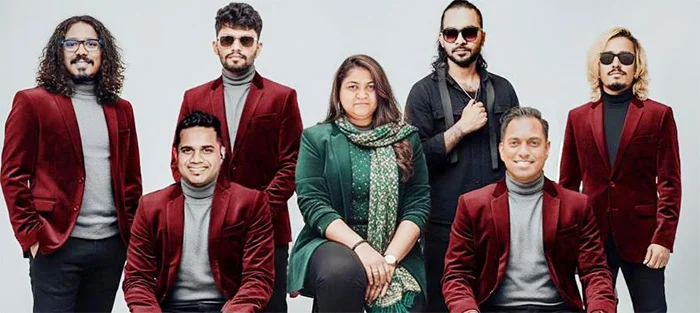
SEVEN NOTES
As we celebrate the joy of Christmas and welcome the dawn of a brand-new year, we extend our heartfelt wishes to the readers and the dedicated team of The Island newspaper.
May this festive season bring peace, love, and harmony into your homes, and may the New Year 2026 be filled with success, good health, and new opportunities.
Thank you for inspiring communities across the globe with trusted journalism and unwavering service.
Wishing you a Merry Christmas and a Prosperous New Year 2026.

BCB takes ownership rights of Chattogram Royals for remainder of BPL

Steps are being taken to relocate schools in risk prone Areas to Safe Locations – Prime Minister

Cargills (Ceylon) PLC Donates Rs. 100 million to “Rebuilding Sri Lanka” Fund

Let us uphold the true meaning of Christmas following the guidance of Jesus Christ, and work together towards the shared goal of building a new nation filled with peace and harmony – PM

Showers may occur in Uva province and in Ampara, Batticaloa, Matale and Nuwara-Eliya districts

CoPF Chief steps up pressure on Prez to appoint AG

‘Dates have the highest sugar content to fight Coronavirus’

Sunday Island 27 December – Headlines

#SundayIsland 17th December – Headlines

Sunday Island – 28th March

Sunday Island Headlines – 21 March

Sunday Island – 21st February – Headlines
-

 News3 days ago
Members of Lankan Community in Washington D.C. donates to ‘Rebuilding Sri Lanka’ Flood Relief Fund
-

 Business7 days ago
Unlocking Sri Lanka’s hidden wealth: A $2 billion mineral opportunity awaits
-

 News7 days ago
Army engineers set up new Nayaru emergency bridge
-
 News7 days ago
TISL, civil society flay NPP govt. for holding up Auditor General’s appointment
-

 Latest News5 days ago
Landslide early warnings issued to the districts of Badulla, Kandy, Kurunegala, Matale and Nuwara-Eliya extended till 8AM on Sunday (21)
-
 Opinion7 days ago
The Maha Jana Handa at Nugegoda, cyclone destruction, and contenders positioning for power in post-NPP Sri Lanka – II
-

 Latest News6 days ago
Tannane goal from own half sets Morocco on way to FIFA Arab Cup 2025 title
-
 News7 days ago
Sri Lankans rescued from cybercrime centers in Myanmar repatriated