
Opinion
The Maha Jana Handa at Nugegoda, cyclone destruction, and contenders positioning for power in post-NPP Sri Lanka – II


Continued from December 9, 2025
During his rousing speech, Harin Fernando anticipated SLPP national organiser Namal Rajapaksa’s straightforward declaration of his resolve to end the JVP/NPP regime as soon as possible. The latter’s battle cry might have sounded premature even to some of his less attentive fellow members of the SLPP who failed to catch his meaning. It is possible that Harin delivered a preemptive strike at what he felt was Namal’s overweening presidential ambition (by making a facial gesture, before leaving the speaker stand, that suggested contempt at the latter’s goal). What Namal expressed was his desire and determination to bring down a poor-performing government that, he believed, was causing great harm to the country through ignorance, inexperience, and arrogance of the men and women who were running it.
Harin was criticised in Parliament by Wimal Weerawansa MP, in February 2024 during Ranil Wickremesinghe’s presidency, for having casually stated during an interview with an Indian TV channel, as newly appointed Tourism minister then, that Sri Lanka was a part of India! Indian High Commissioner Santosh Jha’s recent remark at the Colombo YMBA’s ‘Light of Asia’ Centenary Celebrations (December 6, 2025) that “… India and Sri Lanka are connected not only by geography but by deeper bonds of culture ….” could be read as a matter of fact allusion to a sinister assumption that Harin’s ‘casual’ statement probably purposefully expressed. It is also significant that Harin was appointed by the UNP as its Deputy Secretary General of Political Mobilisation with immediate effect on October 21, 2025. His new responsibilities include uniting all political parties in the country and engaging them in a common programme, in addition to which he will be coordinating the many meetings that are to be organised by the UNP. Harin’s new post seems to match Namal’s position as the national organiser of the SLPP.
Actually, the very idea of holding a series of such massive protest rallies across the country is Wickremesinghe’s brainchild. If he and Mahinda Rajapaksa have masterminded the Maha Jana Handa protest rally campaign initiated on November 21, 2025, they have all the reason and the moral right as well as the inherent obligation to do so. They ought to get involved in actively mentoring the next generation of rulers at this crucial moment of unprecedented national emergency caused by the recent cyclonic disaster of apocalyptic proportions. They both share between them a significant amount of responsibility for the current situation due to their own past strengths and weaknesses of leadership as senior politicians, in their characteristic egoistic ways, though.
Mahinda Rajapaksa, a follower of the watersheds of 1956 and 1972 in the political history of post-Independence Sri Lanka, inadvertently turned the 2009 victory over terrorism, which he was largely instrumental in creating through his own brave political leadership, into a sort of pyrrhic victory. That is, he let his success become the cause of his own downfall and the country’s regress; this was basically as a consequence of his shameless indulgence in ‘family bandyism’ or nepotism. As for Wickremasinghe, an admirer of the 1978 introduction of the open market economic system and the institution of the executive presidency (by his uncle, UNP leader J.R. Jayewardene), acts as if he wants to erase from national memory the two previous epochal events (of 1956 and 1972) that his rival is guided by; this makes him look least sensitive towards Sinhalese Buddhist majority’s legitimate aspirations.
Wickremesinghe and Mahinda Rajapaksa, each tried and tested in the rough and tumble of parliamentary politics for over half a century, have always been political rivals, but both have also been robust defenders of parliamentary democracy. Those who are old enough or adult enough may remember how, not long ago, the Parliament chamber reverberated with their raised voices denouncing each other with shouts of “kauda hora? Mahinda hora …. Ranil hora benku hora”, etc. Despite this mutual hostility in politics, they have together profoundly influenced the most tumultuous course of the island’s political history of the last two decades (2005-25). At the Maha Jana Handa, Harin expressed his views on the complementary roles the two senior leaders played during that period in the service of the Sri Lankan people. While praising Wickremesinghe for saving Sri Lanka from total economic collapse in 2022, and for having made similar contributions in the past for the uplift of the country and its people. Harin paid unqualified encomiums to Mahinda Rajapaksa for having eliminated the scourge of separatist terrorism through his unique abilities of political direction and diplomacy.
Harin’s explicit acknowledgement of the historic achievement of the leader (Mahinda Rajapaksa) of the SLFP (the major partner of the UPFA, now the SLPP) signifies a sea change in the UNP’s traditional attitude towards that victorious nationalist triumph over the LTTE.
So, Wickremesinghe and Rajapaksa represent respectively the UNP and the SLFP, which, though now almost defunct, are still alive and well in their new manifestations. The UNP is probably on the verge of being made whole with the return of its breakaway group the Samagi Jana Balavegaya (SJB) led by Sajith Premadasa, with or without his consent; it should not be forgotten that the SJB, with its 40 MPs, forms the main Opposition. There will most likely be a similar reunion between the SLFP and the SLPP. The cooperation between the two oldest national parties at this crucial juncture is imperative for the survival of the sovereign unitary state of Sri Lanka. If Sri Lanka’s unitary status must be ended for some untoward reason beyond the country’s capacity to deal with such as global or regional geostrategic pressure (which is, of course, unlikely, because the Eastern bloc countries Russia and China, with comparable military and economic power also have stakes in the region), it should be done through Parliament, not otherwise.
The rescue of parliamentary democracy after the ouster of the 7th Executive President of the Democratic Socialist Republic of Sri Lanka Gotabaya Rajapaksa in 2022 amidst the so-called Aragalaya (Struggle) protest, which was turning violent, was the joint achievement of Wickremesinghe and Mahinda Rajapaksa (though it was cynically bruited about the social media that Wickremasinghe played an opportunistic ‘run with the hares and hunt with the hounds’ strategy exploiting Aragalaya, begun peacefully, but later hijacked by violent extremist elements including members of the JVP/NPP. Representatives of certain regional communal parties, and coercive religious extremists hiding among them, were there too. These elements seem to be lying low now in sinister silence.
On December 5, 2025 President Anura Kumara Dissanayake made a special statement in Parliament which took almost one hour and forty minutes. He dwelt on the devastation being caused by Cyclone Ditwah that had by then raged for about a week already and what his government was doing and was planning to do in the future to bring relief to the hapless thousands affected. Two things out of the many matters that he touched on, I feel like mentioning here:
1) He made some commendatory remarks about the triforces members and the police, while paying tribute to Wing Commander Nirmal Siyambalapitiya of the Air Force, who died in a helicopter accident during a rescue operation in the flood-hit Wennappuwa area, and to the five Navy personnel who went missing while being engaged in widening a waterway in the Chundikulam lagoon in Chalai in order to control the flood situation there. This is something that suggests an implicit acknowledgement made (belatedly, though) by the President of the vital importance of the defense forces whose selfless dedication to the service of the nation should never be underestimated. That is a salutary attitudinal change on his part, comparable to the aforementioned volt-face of the UNP regarding Mahinda Rajapaksa-led victory over separatist terrorism.
President Dissanayake had stopped calling the security forces members ‘ranaviruwo’ or ‘war heroes’, perhaps under pressure from the small section of the Tamil diaspora enjoying the patronage of the meddling powers. This year President Dissanayake marked the May 2009 victory over terrorism a day later than the due date, that too grudgingly. The vociferous Archuna Ramanathan, independent MP from Jaffna, who calls the dead Prabhakaran his ‘god’, and claims that he receives funds from the Tamil diaspora (which may be true), taunts the President and his Sinhalese MPs for failing to call the members of the Sri Lanka Army ‘war heroes’! While President Dissanayake denounces ‘Nationalism’ consciously misconceiving (a la Americans) it as ‘jativadaya’ (Racism) or ‘warga vadaya’ (Communalism), he allows the rump of the banned LTTE to commemorate the dead terrorist leader as a national hero. Illegal Mahaveerar Naal celebrations were held in the north in the last week of November. MP Archuna Ramanadan, it was reported, thanked the Sri Lanka Navy personnel for saving him from the flood waters while returning from one of those celebrations!
2) While paying a passionate tribute to the security forces members President Dissanayake made a gratingly incongruent gratuitous reference to the submerged Gampola area as ‘a place largely populated by Muslims’: “No room should be left for them to feel isolated or discriminated against”. What an ill-conceived remark! Clearly, he meant to curry favour with the Muslim community of the place. He is probably already trying to promote himself among the Muslim community in preparation for re-election in 2029!
During the “Derana 360” programme hosted by Kalindu Karunaratne about a month ago, Minister of Justice and National Integration Harshana Nanayakkara, NPP MP, probably inadvertently, revealed that they had to give in to certain Tamil demands in the North (which might seem unreasonable and extremist to the majority community) in order not to spoil their chances of winning support at the next election.
SJB leader Sajith Premadasa, in his capacity as the Leader of the Opposition, was on an official visit to New Delhi in early November, 2025, which focused on strengthening India-Sri Lanka bonds. (But his egotistic utterances degraded his Indian visit into a private one.) He had meetings with senior Indian leaders including External Affairs minister Subramanyam Jaishankar and Corporate Affairs minister Nirmala Sitharaman. He was given the honour to address the Indian Council of World Affairs (ICWA). Sajith Premadasa talked about Sri Lanka’s commitment to its special strategic relationship with India, stressing “the need for implementing the 13th Amendment for Sri Lanka’s stability”. It is impossible that he is unaware of the fact that the 13th Amendment was externally imposed on Sri Lanka in 1987 by India and has not been fully implemented by any president to date for good reasons.
The National Joint Committee (NJC), a leading civil society organization committed to the defence of Sri Lanka’s unitary state status and sovereignty, has strongly condemned Sajith Premadasa’s ‘recent declaration in New Delhi that he would fully implement the 13th Amendment to the Constitution’ (The Island/November 14, 2025)
The NJC has issued a statement condemning SJB and Opposition Leader Sajith Premadasa’s recent declaration in New Delhi that he would fully implement the controversial 13th Amendment to the Constitution when elected to power. Co-Presidents of the NJC, Lt. Gen. Jagath Dias (Rtd) and Dr Anula Wijesundara expressed shock, dismay, disappointment and disgust over it. They have described Premadasa’s uncalled-for undertaking given to India as unbecoming of him as the leader of the main opposition; it is a disdainful betrayal of the nation. The NJC views the 13th Amendment, introduced under duress, as obsolete because India did not fulfil its part of the contract to disarm the LTTE, leading to a disastrous three decade military conflict.
What I have delineated above is a hexagonal simulacrum of the chaotic political situation of the country as I perceive it, for what it is worth, with Mahinda Rajapaksa and Wickremesinghe poised at opposite points equidistant from the square formed in the middle by President Dissanayake and Premadasa facing each other and Harin confronting Namal. Concluded
By Rohana R. Wasala ✍️



Broader Strategic Consequences
One of the most significant strategic consequences of the war is the accelerated erosion of U.S. political and moral hegemony. This is not a sudden phenomenon precipitated solely by the present conflict; rather, the war has served to illuminate an already evolving global reality—that the era of uncontested U.S. dominance is in decline. The resurgence of Donald Trump and the reassertion of his “America First” doctrine reflect deep-seated domestic economic and political challenges within the United States. These internal pressures have, in turn, shaped a more unilateral and inward-looking foreign policy posture, further constraining Washington’s capacity to exercise global leadership.
Moreover, the conduct of the war has significantly undermined the political and moral authority of the United States. Perceived violations of international humanitarian law, coupled with the selective application of international norms, have weakened the credibility of U.S. advocacy for a “rules-based international order.” Such inconsistencies have reinforced perceptions of double standards, particularly among states in the Global South. Skepticism toward Western normative leadership is expected to deepen, contributing to the gradual fragmentation of the international system. In this broader context, the ongoing crisis can be seen as symptomatic of a more fundamental transformation: the progressive waning of a global order historically anchored in U.S. hegemony and the emergence of a more contested and pluralistic international landscape.
The regional implications of the crisis are likely to be profound, particularly given the centrality of the Persian Gulf to the global political economy. As a critical hub of energy production and maritime trade, instability in this region carries systemic consequences that extend far beyond its immediate geography. Whatever may be the outcome, whether through the decisive weakening of Iran or the inability of external powers to dismantle its leadership and strategic capabilities, the post-conflict regional order will differ markedly from its pre-war configuration. In this evolving context, traditional power hierarchies, alliance structures, and deterrence dynamics are likely to undergo significant recalibration.
A key lesson underscored by the war is the deep interconnectivity of the contemporary global economic order. In an era of highly integrated production networks and supply chains, disruptions in a single strategic node can generate cascading effects across the global system. As such, regional conflicts increasingly assume global significance. The structural realities of globalisation make it difficult to contain economic and strategic shocks within regional boundaries, as impacts rapidly transmit through trade, energy, and financial networks. In this context, peace and stability are no longer purely regional concerns but global public goods, essential to the functioning and resilience of the international system
The conflict highlights the emergence of a new paradigm of warfare shaped by the integration of artificial intelligence, cyber capabilities, and unmanned systems. The extensive use of unmanned combat aerial vehicles (UCAVs)—a trend previously demonstrated in the Russia–Ukraine War—has been further validated in this theatre. However, unlike the Ukraine conflict, where Western powers have provided sustained military, technological, and financial backing, the present confrontation reflects a more direct asymmetry between a dominant global hegemon and a Global South state. Iran’s deployment of drone swarms and AI-enabled targeting systems illustrates that key elements of Fourth Industrial Revolution (4IR) warfare are no longer confined to technologically advanced Western states. These capabilities are increasingly accessible to Global South actors, lowering barriers to entry and significantly enhancing their capacity to wage effective asymmetric warfare. In this evolving context, technological diffusion is reshaping the strategic landscape, challenging traditional military hierarchies and altering the balance between conventional superiority and innovative, cost-effective combat strategies.
The war further exposed and deepened the weakening of global governance institutions, particularly the United Nations. Many of these institutions were established in 1945, reflecting the balance of power and geopolitical realities of the immediate post-Second World War era. However, the profound transformations in the international system since then have rendered aspects of this institutional architecture increasingly outdated and less effective.
The war has underscored the urgent need for comprehensive international governance reforms to ensure that international institutions remain credible, representative, and capable of addressing contemporary security challenges. The perceived ineffectiveness of UN human rights mechanisms in responding to violations of international humanitarian law—particularly in contexts such as the West Bank and the Gaza Strip, and more recently in Iran—has amplified calls for institutional renewal or the development of alternative frameworks for maintaining international peace and security. Moreover, the selective enforcement of international law and the persistent paralysis in conflict resolution mechanisms risk accelerating the fragmentation of global norms. If sustained, this trajectory would signal not merely the weakening but the possible demise of the so-called liberal international order, accelerating the erosion of both the legitimacy and the effective authority of existing multilateral institutions, and deepening the crisis of global governance.
Historically, major wars have often served as harbingers of new eras in international politics, marking painful yet decisive transitions from one order to another. Periods of systemic decline are typically accompanied by instability, uncertainty, and profound disruption; yet, it is through such crises that the contours of an emerging order begin to take shape. The present conflict appears to reflect such a moment of transition, where the strains within the existing global system are becoming increasingly visible.
Notably, key European powers are exhibiting a gradual shift away from exclusive reliance on the U.S. security umbrella, seeking instead a more autonomous and assertive role in global affairs. At the same time, the war is likely to create strategic space for China to expand its influence. As the United States becomes more deeply entangled militarily and politically, China may consolidate its position as a stabilising economic actor and an alternative strategic partner. This could be reflected in intensified energy diplomacy, expanded infrastructure investments, and a more proactive role in regional conflict management, advancing Beijing’s long-term objective of reshaping global governance structures.
However, this transition does not imply a simple replacement of Pax Americana with Pax Sinica. Rather, the emerging global order is likely to be more diffuse, pluralistic, and multilateral in character. In this sense, the ongoing transformation aligns with broader narratives of an “Asian Century,” in which power is redistributed across multiple centers rather than concentrated in a single hegemon. The war, therefore, may ultimately be understood not merely as a geopolitical crisis, but as a defining inflection point in the reconfiguration of the global order.
Conclusion: A New Era on the Horizon
History shows that major wars often signal the birth of new eras—painful, disruptive, yet transformative. The present conflict is no exception. It has exposed the vulnerabilities of the existing world order, challenged U.S. dominance, and revealed the limits of established global governance.
European powers are beginning to chart a more independent course, reducing reliance on the U.S. security umbrella, while China is poised to expand its influence as an economic stabiliser and strategic partner. Through energy diplomacy, infrastructure investments, and active engagement in regional conflicts, Beijing is quietly shaping the contours of a more multipolar world. Yet this is not the rise of Pax Sinica replacing Pax Americana. The emerging order is likely to be multilateral, fluid, and competitive—a world in which multiple powers, old and new, share the stage. The war, in all its turbulence, may therefore mark the dawn of a genuinely new global era, one where uncertainty coexists with opportunity, and where the next chapter of international politics is being written before our eyes.
by Gamini Keerawella
(First part of this article appeared yesterday (08 April)
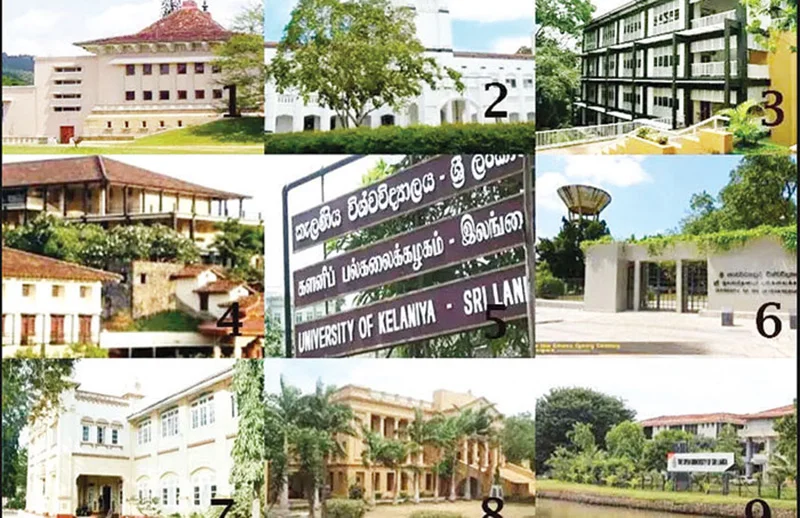
130,000 students are left out each year—academics hold the key
Each year, Sri Lanka’s G.C.E. Advanced Level examination produces a wave of hope—this year, nearly 175,000 students qualified for university entrance. Yet only 45,000 will be admitted to state universities. That leaves more than 130,000 young people stranded—qualified, ambitious, but excluded. This is not just a statistic; it is a national crisis. And while policymakers debate infrastructure and funding, the country’s academics must step forward as catalysts of change.
Beyond the Numbers: A National Responsibility
Education is the backbone of Sri Lanka’s development. Denying access to tens of thousands of qualified students risks wasting talent, fueling inequality, and undermining national progress. The gap is not simply about seats in lecture halls—it is about the future of a generation. Academics, as custodians of knowledge, cannot remain passive observers. They must reimagine the delivery of higher education to ensure opportunity is not a privilege for the few.
Expanding Pathways, Not Just Campuses
The traditional model of four-year degrees in brick-and-mortar universities cannot absorb the demand. Academics can design short-term diplomas and certificate programmes that provide immediate access to learning. These programmes, focused on employable skills, would allow thousands to continue their education while easing pressure on degree programmes. Equally important is the digital transformation of education. Online and blended learning modules can extend access to rural students, breaking the monopoly of physical campuses. With academic leadership, Sri Lanka can build a reliable system of credit transfers, enabling students to begin their studies at affiliated institutions and later transfer to state universities.
Partnerships That Protect Quality
Private universities and vocational institutes already absorb many students who miss out on state admissions. But concerns about quality and recognition persist. Academics can bridge this divide by providing quality assurance and standardised curricula, supervising joint degree programmes, and expanding the Open University system. These partnerships would ensure that students outside the state system receive affordable, credible, and internationally recognised education.
Research and Advocacy: Shaping Policy
Academics are not only teachers—they are researchers and thought leaders. By conducting labour market studies, they can align higher education expansion with employability. Evidence-based recommendations to the University Grants Commission (UGC) can guide strategic intake increases, regional university expansion, and government investment in digital infrastructure. In this way, academics can ensure reforms are not reactive, but visionary.
Industry Engagement: Learning Beyond the Classroom
Sri Lanka’s universities must become entrepreneurship hubs and innovation labs. Academics can design programmes that connect students directly with industries, offering internship-based learning and applied research opportunities. This approach reduces reliance on classroom capacity while equipping students with practical skills. It also reframes education as a partnership between universities and the economy, rather than a closed system.
Making the Most of What We Have
Even within existing constraints, academics can expand capacity. Training junior lecturers and adjunct faculty, sharing facilities across universities, and building international collaborations for joint programmes and scholarships are practical steps. These measures maximise resources while opening new avenues for students.
A Call to Action
Sri Lanka’s university admission crisis is not just about numbers—it is about fairness, opportunity, and national development. Academics must lead the way in transforming exclusion into empowerment. By expanding pathways, strengthening partnerships, advocating for policy reform, engaging with industry, and optimizing resources, they can ensure that qualified students are not left behind.
“Education for all, not just the fortunate few.”
Dr. Arosh Bandula (Ph.D. Nottingham), Senior Lecturer, Department of Agricultural Economics & Agribusiness, Faculty of Agriculture, University of Ruhuna
by Dr. Arosh Bandula
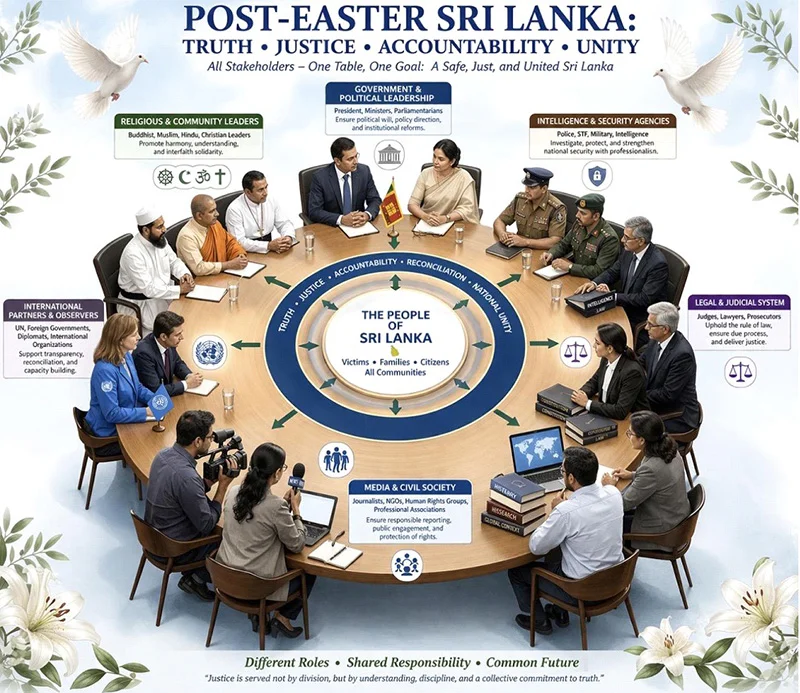
As Sri Lanka approaches the seventh commemoration of the Easter Sunday attacks, the national mood is once again marked by grief, reflection, and an enduring sense of incompleteness. Nearly seven years later, the tragedy continues to cast a long shadow not only over the victims and their families, but over the institutions and narratives that have since emerged.
Commemoration, however, must go beyond ritual. It must be anchored in clarity, accountability, and restraint. What is increasingly evident in the post-Easter landscape is not merely a search for truth, but a contest over how that truth is framed, interpreted, and presented to the public.
In recent times, public discourse has been shaped by book launches, panel discussions, and media interventions that claim to offer new insights into the attacks. While such contributions are not inherently problematic, the manner in which certain narratives are advanced raises legitimate concerns. The selective disclosure of information particularly when it touches on intelligence operations demands careful scrutiny.
Sri Lanka’s legal and institutional framework is clear on the sensitivity of such matters. The Official Secrets Act (No. 32 of 1955) places strict obligations on the handling of information related to national security. Similarly, the Police Ordinance and internal administrative regulations governing intelligence units emphasize confidentiality, chain of command, and the responsible use of information. These are not mere formalities; they exist to safeguard both operational integrity and national interest.
When individual particularly those with prior access to intelligence structures enter the public domain with claims that are not subject to verification, it raises critical questions. Are these disclosures contributing to justice and accountability, or are they inadvertently compromising institutional credibility and future operational capacity?
The challenge lies in distinguishing between constructive transparency and selective exposure.
The Presidential Commission of Inquiry into the Easter Sunday Attacks provided one of the most comprehensive official examinations of the attacks. Its findings highlighted a complex web of failures: lapses in intelligence sharing, breakdowns in inter-agency coordination, and serious deficiencies in political oversight. Importantly, it underscored that the attacks were not the result of a single point of failure, but a systemic collapse across multiple levels of governance.
Yet, despite the existence of such detailed institutional findings, public discourse often gravitates toward simplified narratives. There is a tendency to identify singular “masterminds” or to attribute responsibility in ways that align with prevailing political or ideological positions. While such narratives may be compelling, they risk obscuring the deeper structural issues that enabled the attacks to occur.
Equally significant is the broader socio-political context in which these narratives are unfolding. Sri Lanka today remains a society marked by fragile intercommunal relations. The aftermath of the Easter attacks saw heightened suspicion, polarisation, and, in some instances, collective blame directed at entire communities. Although there have been efforts toward reconciliation, these fault lines have not entirely disappeared.
In this environment, the language and tone of public discourse carry immense weight. The framing of terrorism whether as a localized phenomenon or as part of a broader ideological construct must be handled with precision and responsibility. Overgeneralization or the uncritical use of labels can have far-reaching consequences, including the marginalization of communities and the erosion of social cohesion.
At the same time, it is essential to acknowledge that the global discourse on terrorism is itself contested. Competing narratives, geopolitical interests, and selective historiography often shape how events are interpreted. For Sri Lanka, the challenge is to avoid becoming a passive recipient of external frameworks that may not fully reflect its own realities.
A professional and unbiased approach requires a commitment to evidence-based analysis. This includes:
· Engaging with primary sources, including official reports and judicial findings
·
· Cross-referencing claims with verifiable data
·
· Recognizing the limits of publicly available information, particularly in intelligence matters

It also requires intellectual discipline the willingness to question assumptions, to resist convenient conclusions, and to remain open to complexity.
The role of former officials and subject-matter experts in this discourse is particularly important. Their experience can provide valuable insights, but it also carries a responsibility. Public interventions must be guided by professional ethics, respect for institutional boundaries, and an awareness of the potential impact on national security.
There is a fine balance to be maintained. On one hand, democratic societies require transparency and accountability. On the other, the premature or uncontextualized release of sensitive information can undermine the very systems that are meant to protect the public.
As Sri Lanka reflects on the events of April 2019, it must resist the temptation to reduce a national tragedy into competing narratives or political instruments. The pursuit of truth must be methodical, inclusive, and grounded in law.
Easter is not only a moment of remembrance. It is a test of institutional maturity and societal resilience.
The real question is not whether new narratives will emerge they inevitably will. The question is whether Sri Lanka has the capacity to engage with them critically, responsibly, and in a manner that strengthens, rather than weakens, the foundations of its national security and social harmony.
In the end, justice is not served by noise or conjecture. It is served by patience, rigor, and an unwavering commitment to truth.
Mahil Dole is a former senior law enforcement officer and national security analyst, with over four decades of experience in policing and intelligence, including serving as Head of Counter-Intelligence at the State Intelligence Service of Sri Lanka and a graduate of the Asia Pacific Center for Security Studies in Hawai, USA.
by Mahil Dole
Former Senior Law Enforcement Officer National Security Analyst; Former Head of Counter-Intelligence, State Intelligence Service)

Singapore Zoo’s first Sri Lankan leopard cubs make their public debut

Sri Lanka Navy seize multi day fishing craft suspected of smuggling narcotics

‘Sent to be killed’: How Russia forces migrants to fight in Ukraine

Babar Azam 71* helps Peshawar Zalmi extend lead at top

Trump threatens to fire Fed chair Jerome Powell if he doesn’t leave in May

Royal Challengers Bengaluru top the table after bowlers help thump Lucknow Super Giants

‘Dates have the highest sugar content to fight Coronavirus’

Sunday Island 27 December – Headlines

#SundayIsland 17th December – Headlines

Sunday Island – 28th March

Sunday Island Headlines – 21 March

Sunday Island – 21st February – Headlines
-

 News5 days ago
CEB orders temporary shutdown of large rooftop solar systems
-
 Features5 days ago
From Royal College Platoon to National Cadet Corps: 145 years of discipline, leadership, and modern challenges
-

 Business7 days ago
Israeli attack on Lebanon triggers local stock market volatility
-

 Business7 days ago
HNB Assurance marks 25 years with strategic transformation to ‘HNB Life’
-
 Latest News4 days ago
PNS TAIMUR & ASLAT arrive in Colombo
-

 News6 days ago
Anura Solomons passes away
-

 Features5 days ago
CIA’s hidden weapon in Iran
-
 Latest News4 days ago
Prasidh, Buttler set up comfortable win for Gujarat Titans