
Features
THE KANDY ESALA PERAHERA

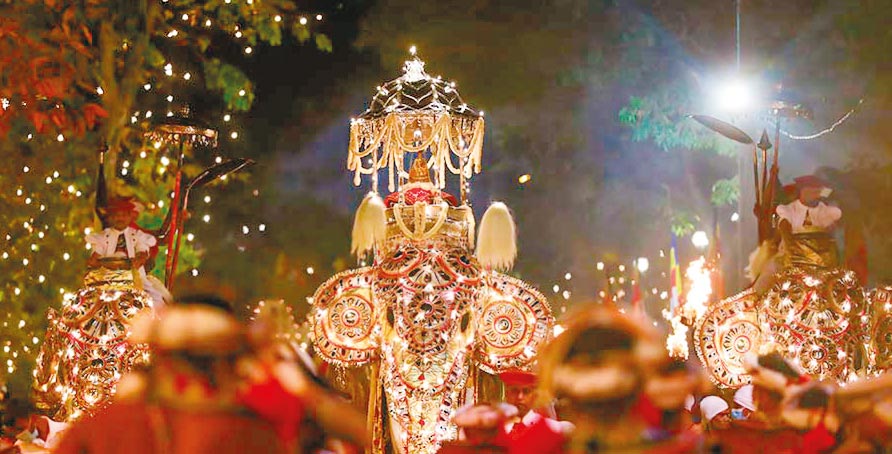
 The Kandy Esala Perahera parades the streets of the Hill Capital to coincide with the eighth full moon poya of the year – the Esala Poya – in July/August. The change of date each year is because the lunar calendar is not parallel to the Gregorian calendar in use, since the full moon occurs every 28 days.
The Kandy Perahera is a mix of culture, religion, historical tradition and of course a vast show, albeit imbued with dignity and splendour. It is the most ancient perahera, which combines the Dalada Maligawa procession with those of devales – Natha, Vishnu, Pathini and Kataragama devales. As time progressed, other temples and devales inaugurated their peraheras and thus we have several dotted all over the country. The next most ancient of these is the Kataragama Devale Perahera, which usually closely follows or precedes the Kandy procession. Coming into prominence as a tourist attraction is the procession in Colombo organised by the Hunupitiya Gangaramaya Vihara. Another well patronized perahera is of the Bellanwila Temple in a suburb of Colombo.
Authority and power are epitomised by the Diyawadana Nilame (DN) – the chief of the Temple of the Tooth – and Basnayake Nilames of the other devales, who walk in their respective processions. They are truly majestic, dressed as they are in yards and yards of gold bordered silk cloth with huge waists and intricately sequined and gold embroidered jackets, also a hat and pointed shoes. Elaborate jewelry and a jewel studded small sword stuck in their waistbands complete their regalia. To signify their authority they have retainers who walk behind, one holding a white parasol, and dancers who precede them chanting respectful stanzas.
The Kandy Esala Perahera has the longest history: an unbroken record since Maha Nuwara – Kandy – became the capital of the country’s indigenous rulers and received royal patronage from the Kandyan King – Kirthi Sri Rajasinghe (1747-1781). A Hindu element was introduced by the later kings of the Kandyan Kingdom who were of South Indian origin.
Even during the height of World War II, when the South East Asia Command under Lord Louis Mountbatten was headquartered in Kandy, and a total blackout imposed countrywide, the Kandy Perahera was held, albeit in the precincts of the Maligawa.
The religious significance is that originally it afforded an opportunity to the common man to pay homage to the sacred tooth relic of the Buddha, in the possession of the king. At present the tooth relic is not paraded; only a gold plated casket is carried by the most majestic tusker.
Kandy turns into a seething mass of humanity which congregates by evening along the route of the procession which is changed daily by order of the Diyawadana Nilame.
For the first five days, the short Kumbal Perahera moves within the temple square. Then on the sixth day starts the much grander Randoli Perahera with seven palanquins borne at the end of the procession; these having been the mode of travel of the ladies of state during the Kandyan Kingdom. On the final night, the entire city of Kandy turns into a blaze of colour, throbbing sound, smell of burning dried coconut and seething crowds. It is exotically resplendent with a veneer of mystique.
Strikingly the procession is lit by men toting burning copra baskets which apart from illumination, keep the pachyderms from attempting tricks. Time was when they had no restraining chains binding their legs together. The elephants proceed in trios carrying minor chieftains on their backs and directed by mahouts. The babies get slightly naughty and restive and have to be kept in place. The larger have their legs, front and back, chained since one went berserk in 1964, causing pandemonium among the spectators who line the streets ten deep towards the last night of the procession. The Veterinary Department and Wildlife Protection Society place tranquiliser loaded guns in strategic positions.
Drumming and dancing, conch and flute playing, distinctive from these arts of other regions of the country, introduce the culture of the Kandyans in a spectacular manner. Different types of drums are used; beaten either with a curved cane stick or the drummer’s palm and fingers. Dancers range from Kandyan dancers in their distinctive costumes and dance steps to less elaborately dressed dancers who display different styles, like the lee keli and pantheri performers who use thin ‘sticks’ in dance formations. The dancers and drummers in their hundreds dance and drum to strictly traditional rituals and styles. They are preceded by lash bearers who swing their coir whips around and dash them on the ground announcing the onset of the procession
Everything is done according to age-old customs and rituals. It is the Diyawadana Nilame, the Head of the Maligawa, who places the casket on the elephant’s back each night. The procession leaves the temple premises at an auspicious time. On the day following the last of the brilliant night processions, very early in the morning, a small procession wends its way to the Mahaweli Ganga to perform the water-cutting ceremony. A sword used through the ages sweeps down on the water drawing a temporary incision from which water is collected in a new clay pot. This water is kept in the Maligawa until replaced by a new pot the following year.
A noteworthy fact is that the performers and elephant mahouts are usually not paid in cash. They live on land owned by the Maligawa and this is their mode of paying rent – termed rajakariya, ‘free service to the king’.
And so ends the Esala Perahera at noon of the full moon day in August. Sri Lanka metamorphosizes to a truly Resplendent Island during this season!

Features
Ranking public services with AI — A roadmap to reviving institutions like SriLankan Airlines

Efficacy measures an organisation’s capacity to achieve its mission and intended outcomes under planned or optimal conditions. It differs from efficiency, which focuses on achieving objectives with minimal resources, and effectiveness, which evaluates results in real-world conditions. Today, modern AI tools, using publicly available data, enable objective assessment of the efficacy of Sri Lanka’s government institutions.
Among key public bodies, the Supreme Court of Sri Lanka emerges as the most efficacious, outperforming the Department of Inland Revenue, Sri Lanka Customs, the Election Commission, and Parliament. In the financial and regulatory sector, the Central Bank of Sri Lanka (CBSL) ranks highest, ahead of the Securities and Exchange Commission, the Public Utilities Commission, the Telecommunications Regulatory Commission, the Insurance Regulatory Commission, and the Sri Lanka Standards Institution.
Among state-owned enterprises, the Sri Lanka Ports Authority (SLPA) leads in efficacy, followed by Bank of Ceylon and People’s Bank. Other institutions assessed included the State Pharmaceuticals Corporation, the National Water Supply and Drainage Board, the Ceylon Electricity Board, the Ceylon Petroleum Corporation, and the Sri Lanka Transport Board. At the lower end of the spectrum were Lanka Sathosa and Sri Lankan Airlines, highlighting a critical challenge for the national economy.
Sri Lankan Airlines, consistently ranked at the bottom, has long been a financial drain. Despite successive governments’ reform attempts, sustainable solutions remain elusive.
Globally, the most profitable airlines operate as highly integrated, technology-enabled ecosystems rather than as fragmented departments. Operations, finance, fleet management, route planning, engineering, marketing, and customer service are closely coordinated, sharing real-time data to maximise efficiency, safety, and profitability.
The challenge for Sri Lankan Airlines is structural. Its operations are fragmented, overly hierarchical, and poorly aligned. Simply replacing the CEO or senior leadership will not address these deep-seated weaknesses. What the airline needs is a cohesive, integrated organisational ecosystem that leverages technology for cross-functional planning and real-time decision-making.
The government must urgently consider restructuring Sri Lankan Airlines to encourage:
=Joint planning across operational divisions
=Data-driven, evidence-based decision-making
=Continuous cross-functional consultation
=Collaborative strategic decisions on route rationalisation, fleet renewal, partnerships, and cost management, rather than exclusive top-down mandates
Sustainable reform requires systemic change. Without modernised organisational structures, stronger accountability, and aligned incentives across divisions, financial recovery will remain out of reach. An integrated, performance-oriented model offers the most realistic path to operational efficiency and long-term viability.
Reforming loss-making institutions like Sri Lankan Airlines is not merely a matter of leadership change — it is a structural overhaul essential to ensuring these entities contribute productively to the national economy rather than remain perpetual burdens.
By Chula Goonasekera – Citizen Analyst

International Day of Mathematics falls tomorrow
The approximate value of Pi (π) is 3.14 in mathematics. Therefore, the day 14 March is celebrated as the Pi Day. In 2019, UNESCO proclaimed 14 March as the International Day of Mathematics.
Ancient Babylonians and Egyptians figured out that the circumference of a circle is slightly more than three times its diameter. But they could not come up with an exact value for this ratio although they knew that it is a constant. This constant was later named as π which is a letter in the Greek alphabet.

Archimedes
It was the Greek mathematician Archimedes (250 BC) who was able to find an upper bound and a lower bound for this constant. He drew a circle of diameter one unit and drew hexagons inside and outside the circle such that the sides of each hexagon touch the sides of the circle. In mathematics the circle passing through all vertices of a polygon is called a ‘circumcircle’ and the largest circle that fits inside a polygon tangent to all its sides is called an ‘incircle’. The total length of the smaller hexagon then becomes the lower bound of π and the length of the hexagon outside the circle is the upper bound. He realised that by increasing the number of sides of the polygon can make the bounds get closer to the value of Pi and increased the number of sides to 12,24,48 and 60. He argued that by increasing the number of sides will ultimately result in obtaining the original circle, thereby laying the foundation for the theory of limits. He ended up with the lower bound as 22/7 and the upper bound 223/71. He could not continue his research as his hometown Syracuse was invaded by Romans and was killed by one of the soldiers. His last words were ‘do not disturb my circles’, perhaps a reference to his continuing efforts to find the value of π to a greater accuracy.
Archimedes can be considered as the father of geometry. His contributions revolutionised geometry and his methods anticipated integral calculus. He invented the pulley and the hydraulic screw for drawing water from a well. He also discovered the law of hydrostatics. He formulated the law of levers which states that a smaller weight placed farther from a pivot can balance a much heavier weight closer to it. He famously said “Give me a lever long enough and a place to stand and I will move the earth”.
Mathematicians have found many expressions for π as a sum of infinite series that converge to its value. One such famous series is the Leibniz Series found in 1674 by the German mathematician Gottfried Leibniz, which is given below.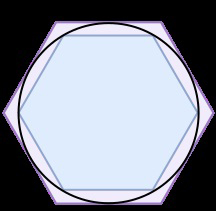
π = 4 ( 1 – 1/3 + 1/5 – 1/7 + 1/9 – ………….)
The Indian mathematical genius Ramanujan came up with a magnificent formula in 1910. The short form of the formula is as follows.
π = 9801/(1103 √8)
For practical applications an approximation is sufficient. Even NASA uses only the approximation 3.141592653589793 for its interplanetary navigation calculations.
It is not just an interesting and curious number. It is used for calculations in navigation, encryption, space exploration, video game development and even in medicine. As π is fundamental to spherical geometry, it is at the heart of positioning systems in GPS navigations. It also contributes significantly to cybersecurity. As it is an irrational number it is an excellent foundation for generating randomness required in encryption and securing communications. In the medical field, it helps to calculate blood flow rates and pressure differentials. In diagnostic tools such as CT scans and MRI, pi is an important component in mathematical algorithms and signal processing techniques.
This elegant, never-ending number demonstrates how mathematics transforms into practical applications that shape our world. The possibilities of what it can do are infinite as the number itself. It has become a symbol of beauty and complexity in mathematics. “It matters little who first arrives at an idea, rather what is significant is how far that idea can go.” said Sophie Germain.
Mathematics fans are intrigued by this irrational number and attempt to calculate it as far as they can. In March 2022, Emma Haruka Iwao of Japan calculated it to 100 trillion decimal places in Google Cloud. It had taken 157 days. The Guinness World Record for reciting the number from memory is held by Rajveer Meena of India for 70000 decimal places over 10 hours.
Happy Pi Day!
The author is a senior examiner of the International Baccalaureate in the UK and an educational consultant at the Overseas School of Colombo.
by R N A de Silva

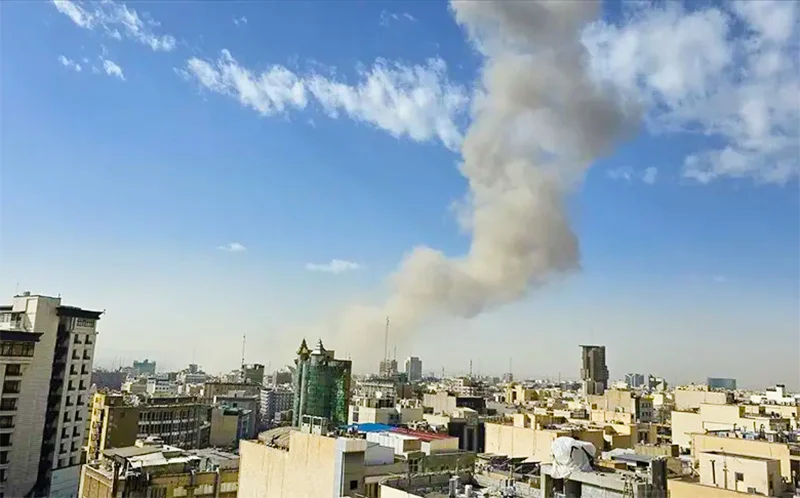
 The recent humanly costly torpedoing of an Iranian naval vessel in Sri Lanka’s Exclusive Economic Zone by a US submarine has raised a number of issues of great importance to international political discourse and law that call for elucidation. It is best that enlightened commentary is brought to bear in such discussions because at present misleading and uninformed speculation on questions arising from the incident are being aired by particularly jingoistic politicians of Sri Lanka’s South which could prove deleterious.
As matters stand, there seems to be no credible evidence that the Indian state was aware of the impending torpedoing of the Iranian vessel but these acerbic-tongued politicians of Sri Lanka’s South would have the local public believe that the tragedy was triggered with India’s connivance. Likewise, India is accused of ‘embroiling’ Sri Lanka in the incident on account of seemingly having prior knowledge of it and not warning Sri Lanka about the impending disaster.
It is plain that a process is once again afoot to raise anti-India hysteria in Sri Lanka. An obligation is cast on the Sri Lankan government to ensure that incendiary speculation of the above kind is defeated and India-Sri Lanka relations are prevented from being in any way harmed. Proactive measures are needed by the Sri Lankan government and well meaning quarters to ensure that public discourse in such matters have a factual and rational basis. ‘Knowledge gaps’ could prove hazardous.
Meanwhile, there could be no doubt that Sri Lanka’s sovereignty was violated by the US because the sinking of the Iranian vessel took place in Sri Lanka’s Exclusive Economic Zone. While there is no international decrying of the incident, and this is to be regretted, Sri Lanka’s helplessness and small player status would enable the US to ‘get away with it’.
Could anything be done by the international community to hold the US to account over the act of lawlessness in question? None is the answer at present. This is because in the current ‘Global Disorder’ major powers could commit the gravest international irregularities with impunity. As the threadbare cliché declares, ‘Might is Right’….. or so it seems.
Unfortunately, the UN could only merely verbally denounce any violations of International Law by the world’s foremost powers. It cannot use countervailing force against violators of the law, for example, on account of the divided nature of the UN Security Council, whose permanent members have shown incapability of seeing eye-to-eye on grave matters relating to International Law and order over the decades.
The foregoing considerations could force the conclusion on uncritical sections that Political Realism or Realpolitik has won out in the end. A basic premise of the school of thought known as Political Realism is that power or force wielded by states and international actors determine the shape, direction and substance of international relations. This school stands in marked contrast to political idealists who essentially proclaim that moral norms and values determine the nature of local and international politics.
While, British political scientist Thomas Hobbes, for instance, was a proponent of Political Realism, political idealism has its roots in the teachings of Socrates, Plato and latterly Friedrich Hegel of Germany, to name just few such notables.
On the face of it, therefore, there is no getting way from the conclusion that coercive force is the deciding factor in international politics. If this were not so, US President Donald Trump in collaboration with Israeli Rightist Premier Benjamin Natanyahu could not have wielded the ‘big stick’, so to speak, on Iran, killed its Supreme Head of State, terrorized the Iranian public and gone ‘scot-free’. That is, currently, the US’ impunity seems to be limitless.
Moreover, the evidence is that the Western bloc is reuniting in the face of Iran’s threats to stymie the flow of oil from West Asia to the rest of the world. The recent G7 summit witnessed a coming together of the foremost powers of the global North to ensure that the West does not suffer grave negative consequences from any future blocking of western oil supplies.
Meanwhile, Israel is having a ‘free run’ of the Middle East, so to speak, picking out perceived adversarial powers, such as Lebanon, and militarily neutralizing them; once again with impunity. On the other hand, Iran has been bringing under assault, with no questions asked, Gulf states that are seen as allying with the US and Israel. West Asia is facing a compounded crisis and International Law seems to be helplessly silent.
Wittingly or unwittingly, matters at the heart of International Law and peace are being obfuscated by some pro-Trump administration commentators meanwhile. For example, retired US Navy Captain Brent Sadler has cited Article 51 of the UN Charter, which provides for the right to self or collective self-defence of UN member states in the face of armed attacks, as justifying the US sinking of the Iranian vessel (See page 2 of The Island of March 10, 2026). But the Article makes it clear that such measures could be resorted to by UN members only ‘ if an armed attack occurs’ against them and under no other circumstances. But no such thing happened in the incident in question and the US acted under a sheer threat perception.
Clearly, the US has violated the Article through its action and has once again demonstrated its tendency to arbitrarily use military might. The general drift of Sadler’s thinking is that in the face of pressing national priorities, obligations of a state under International Law could be side-stepped. This is a sure recipe for international anarchy because in such a policy environment states could pursue their national interests, irrespective of their merits, disregarding in the process their obligations towards the international community.
Moreover, Article 51 repeatedly reiterates the authority of the UN Security Council and the obligation of those states that act in self-defence to report to the Council and be guided by it. Sadler, therefore, could be said to have cited the Article very selectively, whereas, right along member states’ commitments to the UNSC are stressed.
However, it is beyond doubt that international anarchy has strengthened its grip over the world. While the US set destabilizing precedents after the crumbling of the Cold War that paved the way for the current anarchic situation, Russia further aggravated these degenerative trends through its invasion of Ukraine. Stepping back from anarchy has thus emerged as the prime challenge for the world community.

Showers or thundershowers will occur at several places in the Western, Sabaragamuwa, Central, North-western and Uva provinces and in Galle, Matara, Mannar and Anuradhapura districts after 2.00 pm.

Bahrain & Saudi Arabia Grands Prix to be cancelled

Pink Floyd guitar sold for record-breaking $14.6m

Promoting Local Industries is a key priority of the Government – PM

Crypto loopholes funnel Lankan funds abroad

SLCERT urges Lankans not to get gypped by internet scams in run-up to festive period

‘Dates have the highest sugar content to fight Coronavirus’

Sunday Island 27 December – Headlines

#SundayIsland 17th December – Headlines

Sunday Island – 28th March

Sunday Island Headlines – 21 March

Sunday Island – 21st February – Headlines
-

 News5 days ago
Repatriation of Iranian naval personnel Sri Lanka’s call: Washington
-
 Features5 days ago
Winds of Change:Geopolitics at the crossroads of South and Southeast Asia
-

 News4 days ago
Prof. Dunusinghe warns Lanka at serious risk due to ME war
-

 Sports3 days ago
Royal start favourites in historic Battle of the Blues
-

 Sports2 days ago
The 147th Royal–Thomian and 175 Years of the School by the Sea
-

 News2 days ago
Historic address by BASL President at the Supreme Court of India
-

 News3 days ago
CEBEU warns of operational disruptions amid uncertainty over CEB restructuring
-
 Business6 days ago
Seven decades of sartorial excellence: The legacy of Linton Master Tailors in Kandy