
Features
The historical context of Sri Lanka’s ethnic conflict

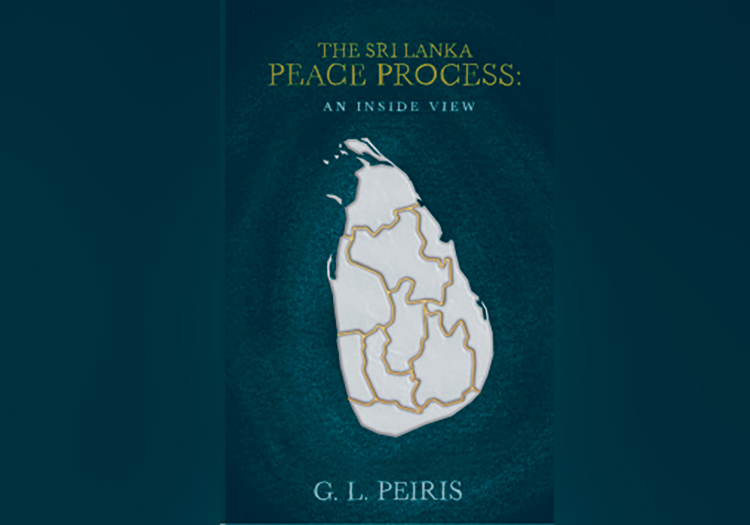
The themes of power-sharing, devolution, and federalism, which run through this work, have their origin in issues which are not connected to ethnicity. Indeed, federalism, as a structure of governance suited to Sri Lanka, was first proposed in an entirely different setting. At its inception, this had to do with the aspirations not of the Tamils, but of the Kandyan Sinhalese.
The Donoughmore Commission
A watershed in the Island’s constitutional development was the Donoughmore Commission which arrived on our shores in November, 1927. The Kandyan National Assembly, in their representations to the Commission, declared: “Ours is not a communal claim or a claim for the aggrandizement of a few. It is a claim of a nation to live its own life and realize its own destiny. A federal system will enable the respective nationals of the several states to prevent further inroads into their territories and to build up their own nationality.”
This had been foreshadowed during the years leading up to the appointment of the Donoughmore Commission by representations on similar lines by prominent Sinhala representatives of the Ceylon National Congress. An exemplar was S. W. R. D. Bandaranaike, fresh from his 1laurels at Oxford, who, in a lecture delivered to the Students’ Congress in Jaffna on 17 July 1926, went so far as to characterize federalism as the “only solution to our political problems.” The lecture was the culmination of a line of argument which he had developed persuasively in six letters to The Ceylon Morning Leader, published between 19 May, and 30 June, 1926.
The Donoughmore Commissioners were not friendly to the idea of federalism because of their robust aversion to division along communal or other lines, and their commitment, as the foundation of their report, to unity of the body politic. A nuanced approach typified their recommendations, in so far as they showed themselves well disposed to the concept of Provincial Councils. They accepted the system in principle, although inclined to leave the modalities of implementation to an elected administration.
It is interesting to note that, almost a 100 years ago, the Donoughmore Commissioners showed sensitivity to a range of issues which gave rise to vigorous and even acrimonious debate in succeeding decades. Among these was a nexus between Provincial Councils and local government institutions, and the question whether Members of Parliament should be eligible to sit in Provincial Councils. On this latter issue, as recently as two years ago, Prime Minister Ranil Wickremesinghe, citing copious precedents, strongly contended for the view that there should be no constitutional or statutory bar.
Incipient indications of ethnic identity emerging as an impediment to the growth of a healthy multi-party system proved to be a source of anxiety to the Donoughmore Commissioners. This accounted for their decision to spend several days in Jaffna and Batticaloa to listen to the views of a cross-section of the public there. Organizations which made representations to the Commission included the All Ceylon Tamil Congress and The Jaffna Association. The Commissioners were alive, as well, to burgeoning communal tensions within the Ceylon National Congress.
A Marxist-Leninist perspective
The impetus towards federalism had a strong ideological perspective, from a Marxist-Leninist standpoint. This was vividly mirrored in the policy articulated by the Ceylon Trade Union Federation on 23 September 1944, on which was built the constitutional proposals addressed by the Communist Party to the Ceylon National Congress on 18 October 1944. Subject to minor refinements and matters of detail, the two documents can be taken together. They go very far, indeed. Anticipating future developments, merger of the North East was specifically contemplated.
The nomenclature used had much in common with the current discourse. The Sinhalese and the Tamils were envisioned as two distinct “nations”, or “historically evolved nationalities”. The homeland concept found expression in relation to a contiguous territory. This was thought to be justified on the basis that the distinct nationalities “have their own language, economic life, culture, and psychological makeup.”
The high water mark of the proposals was the assertion that “Both nationalities have their right to self-determination, including the right, if they so desire, to form their own separate independent state.” The sheet anchor of the proposals was that the equality and sovereignty of the “peoples” of Ceylon must be recognized. These were among the ideas that found unanimous acceptance at the Town Hall rally on 15 October1944.
The Communist Party’s proposals not only gave expression to these normative principles, but spelt out practical means for arriving within the legislature. This was embodied in the proposal relating to two Chambers enjoying coeval authority. The Chamber of Representatives was to be elected on the basis of territorial constituencies buttressed by universal adult franchise, while the second Chamber, designated the Chamber of Nationalities, was marked by the special feature of the principle of equality between the nationalities.
These proposals received further elaboration in a memorandum submitted to the Working Committee of the Ceylon National Congress by two prominent members of the Communist Party, Mr. Pieter Keuneman and Mr. A. Vaidialingam. The thrust of their reasoning was predicated on a multinational state with inbuilt safeguards for the “non- dominant nationality”. The premise was set out pithily as follows: “We regard a nation as a historical, as opposed to an ethnographical, concept. It is a historically evolved, stable community of people living in a contiguous territory as their traditional homeland.”
The Soulbury Commission
These events occurred in the immediate backdrop to the transition from colonial to dominion status. A Commission headed by Lord Soulbury, appointed by Whitehall to consider the grant of full independence to Ceylon, arrived in the country in December, 1944. The main focus of their work was intended to be a comprehensive set of proposals prepared by the Board of Ministers, which functioned under the Donoughmore Constitution. This was in response to the Declaration of May, 1943, made by Mr. Oliver Stanley, Secretary of State for the Colonies, setting out, in outline, the intentions of the British government.
Some degree of friction arose, however, because of the subsequent exhortation to the Soulbury Commission “to consult with various interests including minority communities” interpreted by the Board of Ministers as a breach of faith, in that it deviated from the previous assurance that the Commission’s mandate would be confined to consideration of the Memorandum to be submitted by the Ministers. It was possible, however, to arrive at a pragmatic compromise, in terms of which the Ministers, although boycotting formal sessions with the Commission, made their views known extensively during frequent social interactions.
Their proposals were contained in the ‘Ministers’ draft’, which was mainly the work of Sir Ivor Jennings, a renowned constitutional expert, later to become Vice-Chancellor of the University of Ceylon, in close consultation with Mr D. S. Senanayake and Sir Oliver Goonetilleke. The report of the Soulbury Commission, based primarily on the Ministers’ draft, was published in 1945 as a White Paper, which formed the foundation of the three legal instruments comprising the Constitution of Ceylon of 1948.
An interesting feature of the work of the Soulbury Commission was explicit recognition of the complexity of inter-communal relations on the Island and the near- insoluble difficulties they posed in respect of constitutional development. The Commission showed candour in its observation that “The relations of the minorities – the Ceylon Tamils, the Indian Tamils, Muslims, Burghers, and Europeans with the Sinhalese majority – present the most difficult of the many problems involved in the reform of the Constitution of Ceylon.”
The Soulbury Commission found itself subject to rival pressures of the greatest intensity. The Board of Ministers had graduated from their efforts directed at amendment of the Donoughmore Constitution to a full-blooded demand for dominion status. The countervailing pressure came from the leadership of the All Ceylon Tamil Congress, which strenuously contendedc omplete transference of power and authority from neutral British hands to the people of this country is causing, in the minds of the Tamil people, “in common with other minorities, much misgiving and fear.”
The most significant aspect of the Soulbury Commission’s initiatives consisted of the search for mediating techniques to discourage polarization. On the whole, this effort was marked by commendable pragmatism. It is of interest that the Commissioners, invited to consider in earnest the federal route, had little fascination for it, nor did the idea of a Bill of Rights find favour with them. If the underlying fear related to encroachment of seminal rights by capricious legislative action, this anxiety could have been convincingly assuaged by enshrining in the Constitution a nucleus of rights placed beyond the reach of the legislature.
This expedient would have been effective, if combined with appropriate mechanisms of judicial review. In line with this approach, it would be an important part of the judicial function, exercised by the Apex Court, to rule on the issue of incompatibility of impugned legislation with paramount safeguards embodied in the Constitution.
The Soulbury Commissioners were not persuaded of the wisdom of this course of action, and shied away from support for comprehensive judicial review as a protective lever. Their preference was for less intrusive mechanisms. At that stage of constitutional evolution, it seemed to them that adequate protection could be conferred on minority communities by the combination of two sets of safeguards. The first had to do with the numerical strength of minority representation in Parliament. The main plank of the submission in this regard by the Tamil-speaking leadership resided in a distinction between an absolute and a relative majority.
The gist of the argument was that the majority community, although admittedly in the legislature, should not be possessed of sufficient strength to override all minority representatives, taken together. With this end in view, Mr. G. G. Ponnambalam, leader of the All Ceylon Tamil Congress, argued strenuously for the 50-50 formula, in terms of which all minority communities collectively would be entitled to 50% representation, complemented by proportionate representation in the Cabinet of Ministers, as well. This was urged as the only realistic buffer against communal hegemony.
The extreme dimensions of this proposal held no appeal to the Soulbury Commissioners. Conceding as they did the gravity of the issue, they opted for a more moderate solution. This took the form of a proposed electoral system, at the base of which lay a mixture of population-based and territorial criteria. The basic character of the system involved the election of members relative to spread of population, subject however to the refinement that four additional members each were to be allocated to the Northern and Eastern Provinces, over and above their entitlement on the population-centric criteria.
The intention was to make provision in some form for “additional weightage in the interest of equity underpinning the electoral system, as a whole. This fell far short of the ambitious claim by the Tamil leadership for “balanced representation”, which entailed a mechanism to forestall a permanent Sinhala majority, with the probable risk of unbridled majoritarianism. The markedly limited scope of the suggested modality met with disillusionment on the part of the Tamil leadership. It was, nevertheless, not a stand-alone formula.
It stood in conjunction with a carefully crafted constitutional limitation on the legislative competence of Parliament. The legislature was expressly precluded from making any law, the effect of which was to “make persons of any community or religion liable to disabilities or restrictions to which persons of other made liable”, or “confer on persons of any community or religion any privilege or advantage which is not conferred on persons of other communities or religions”. Any law contravening this prohibition was characterized as void. The provision against discrimination, couched in this form, was susceptible to being overridden by a vote of two-thirds of the total membership of Parliament.
(To be continued next week)
(Excerpted from The Sri Lanka Peace Process: An Inside View by GL Peiris)



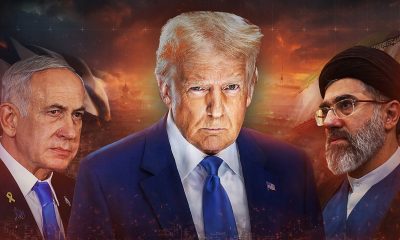
 Going forward, it is hoped that a reported ceasefire agreement between the US and Iran would provide a basis for a degree of stability in the Middle East and pave the way for substantive peace talks between the powers concerned. The world is compelled to fall back on hope because there is never knowing when President Donald Trump would change his mind and plans on matters of the first importance. So erratic has he been.
Yet, confusion abounds on who has agreed to what. The US President is on record that a number of conditions put forward by him to Iran to deescalate tensions have been accepted by the latter, whereas Iran is yet to state unambiguously that this is so. For instance, the US side claims that Iran has come clear on the point that it would not work towards acquiring a nuclear weapons capability, but there is no official confirmation by Iran that this is so. The same goes for the rest of the conditions.
Accordingly, the peace process between the US and Iran, if such a thing solidly exists, could be said to be mired in uncertainty. Nevertheless, the wider publics of the world are bound to welcome the prospects of some sort of ceasing of hostilities because it would have the effect of improving their economic and material well being which is today under a cloud.
However, questions of the first magnitude would continue to bedevil international politics and provide the breeding ground for continued tensions between East and West. Iran-US hostilities helped highlight some of these divisive issues and a deescalation of these tensions would not inevitably translate into even a temporary resolution of these questions. The world community would have no choice but to take them up and work towards comprehending them better and managing them more effectively.
For example, there are thorny questions arising from the Treaty on the Non-Proliferation of Nuclear Weapons (NPT). Essentially, this treaty bans the processing and use of nuclear weapons by states but some of the foremost powers are not signatories to it.
Moreover, the NPT does not provide for the destroying of nuclear arsenals by those signatory states which are already in possession of these WMDs. Consequently, there would be a glaring power imbalance between the latter nuclear-armed states and others which possess only conventional weapons.
Such a situation has grave implications for Iran’s security, for instance. The latter could argue, in view of the NPT restrictions, that the US poses a security threat to it but that it is debarred by the Treaty from developing a nuclear arms capability of its own to enable it to match the nuclear capability of the US. Moreover, its regional rival Israel is believed to possess a nuclear weapons capability.
Accordingly, a case could be made that the NPT is inherently unfair. The US would need to help resolve this vexatious matter going forward. But if it remains, US-Iran tensions would not prove easy to resolve. The same goes for Iran-Israeli tensions. Consequently, the Middle East would remain the proverbial ‘powder keg’.
Besides the above issues, the world has ample evidence that it could no longer speak in terms of a united NATO or West. Apparently, there could be no guarantee that US-NATO relations would remain untroubled in future, even if the current Iran-US standoff is peacefully resolved. US-NATO ties almost reached breaking point in the current crisis when the US President called on its NATO partners, particularly Britain, to help keep open the Hormuz Straits for easy navigation by commercial vessels, militarily, on seeing that such help was not forthcoming. Such questions are bound to remain sore points in intra-Western ties.
In other words, it would be imperative for the US’ NATO partners to help pull the US’ ‘chestnuts out of the fire’ going ahead. The question is, would NATO be willing to thus toe the US line even at the cost of its best interests.
For the West, these fractious issues are coming to the fore at a most unpropitious moment. The reality that could faze the West at present is the strong opposition shown to its efforts to bolster its power and influence by China and Russia. Right through the present crisis, the latter have stood by Iran, materially and morally. For instance, the most recent Security Council resolution spearheaded by the US which was strongly critical of Iran, was vetoed by China and Russia.
Accordingly, we have in the latter developments some marked polarities in international politics that could stand in the way of the West advancing its interests unchallenged. They point to progressively intensifying East-West tensions in international relations in the absence of consensuality.
It is only to be expected that given the substance of international politics that the West would be opposed by the East, read China and Russia, in any of the former’s efforts to advance its self interests unilaterally in ways that could be seen as illegitimate, but what is sorely needed at present is consensuality among the foremost powers if the world is to be ‘a less dangerous place to live in.’ Minus a focus on the latter, it would be a ‘no-win’ situation for all concerned.
It would be central to world stability for International Law to be upheld by all states and international actors. Military intervention by major powers in the internal affairs of other countries remains a principal cause of international mayhem. Both East and West are obliged to abide scrupulously with this principle.
From the latter viewpoint, not only did the West err in recent times, but the East did so as well. Iran, for instance, acted in gross violation of International Law when it attacked neighbouring Gulf states which are seen as US allies. Neither Iran nor the US-Israel combine have helped in advancing international law and order by thus taking the law into their own hands.
Unfortunately, the UN has been a passive spectator to these disruptive developments. It needs to play a more robust role in promoting world peace and in furthering consensual understanding among the principal powers in particular. The need is also urgent to advance UN reform and render the UN a vital instrument in furthering world peace. The East and West need to think alike and quickly on this urgent undertaking.
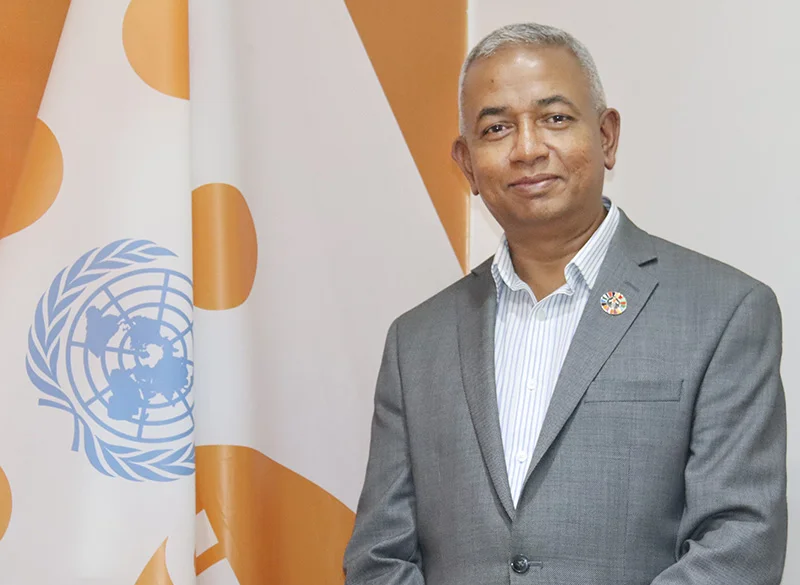
Marking World Health Day on April 7, health experts have called for a stronger commitment to science-based decision-making to address increasingly complex and evolving health challenges in Sri Lanka and beyond.
Dr. Dayanath Ranatunga, Assistant Representative of the United Nations Population Fund, stressed that health is no longer confined to hospitals or traditional medical systems, but is shaped by a broad spectrum of social, environmental, and technological factors.
“This year’s theme, ‘Together for Health. Stand with Science,’ reminds us that science is not only for laboratories or policymakers. It is a way of thinking and a tool that shapes everyday decisions,” he said.
Dr. Ranatunga noted that modern health challenges are increasingly interconnected, ranging from infectious diseases such as COVID-19 to climate-related risks, demographic shifts, and emerging forms of online violence.
He warned that maternal and newborn health continues to demand urgent attention despite progress. Globally, an estimated 260,000 women died from pregnancy and childbirth-related causes in 2023 alone—many of them preventable through timely, science-based interventions.
“In countries like Sri Lanka, where fertility rates are declining and survival rates improving, every pregnancy carries greater significance—not just for families, but for the future of communities and economies,” he said.
The UNFPA official also highlighted the growing threat of Technology Facilitated Gender-Based Violence (TFGBV), including cyber harassment and online abuse, noting that these forms of violence can have deep psychological consequences despite lacking visible physical harm.
He emphasised the need for multidisciplinary, science-informed approaches that integrate mental health, digital safety, and survivor-centered care.
Turning to demographic trends, Dr. Ranatunga pointed out that increasing life expectancy is bringing new challenges, particularly the rise of non-communicable diseases such as diabetes, cardiovascular illnesses, and cancers.
In Sri Lanka, nearly 13.9% of mothers develop diabetes during pregnancy, a trend attributed to obesity and unhealthy lifestyles, underscoring the urgent need for preventive healthcare strategies.
“Are we investing enough in prevention?” he asked, noting that early intervention and healthier lifestyles could significantly reduce long-term healthcare costs, especially in a country with a free public healthcare system.
He underscored the importance of data-driven policymaking, stating that scientific research and analytics enable governments to identify gaps, anticipate future needs, and allocate resources more effectively.
The UNFPA, he said, is already leveraging tools such as Geographic Information Systems (GIS) to improve access to maternal healthcare, including mapping travel times for pregnant women to reach health facilities.
Digital innovation is also transforming healthcare delivery, from telemedicine to real-time data systems, improving efficiency and ensuring continuity of care even during emergencies.
In Sri Lanka, partnerships between the government and development agencies are helping to modernise training institutions, including facilities in Batticaloa, equipping healthcare workers with both clinical and digital skills.
However, Dr. Ranatunga cautioned that technology alone is not a solution.
“It must be guided by evidence and grounded in equity,” he said, pointing out that women’s health remains significantly underfunded, with only about 7% of global healthcare research focusing on conditions specific to women.
He also drew attention to the growing health impacts of climate change, including extreme weather, food insecurity, and displacement, describing it as an emerging public health crisis.
“Health does not begin in hospitals. It is shaped by the environments we live in, the choices we make, and the systems we build,” he said.
Calling for renewed commitment, Dr. Ranatunga urged stakeholders to invest in prevention, embrace innovation, and ensure that science remains central to policy and practice.
“Science is not just about knowledge—it is about ensuring that everyone has the opportunity to live healthy, dignified lives, and that no one is left behind,” he added.
By Ifham Nizam

 Melantha Perera is well known as a very versatile musician.
He was involved with the band Mirage, as their keyboardist/vocalist, and was also seen in action with other outfits, as well, before embarking on a trip to Australia, as a solo artiste.
I now hear that he has plans to operate as a trio.
However, what has got many talking about Melantha, these days, is his awesome work with the visually impaired Bright Light Band.
They have worked out a special song for the Sinhala and Tamil New Year, aptly titled ‘Awurudu Kaale.’
Says Melantha: “This song has been created to celebrate the spirit of the Sinhala and Tamil New Year and to share the joy of the Awurudu season with all Sri Lankans”.
Yes, of course, Melantha composed the song, with the lyrics written collaboratively by Melantha, Badra, and the parents of the talented performers, whose creative input brought the song to life during moments of inspiration.
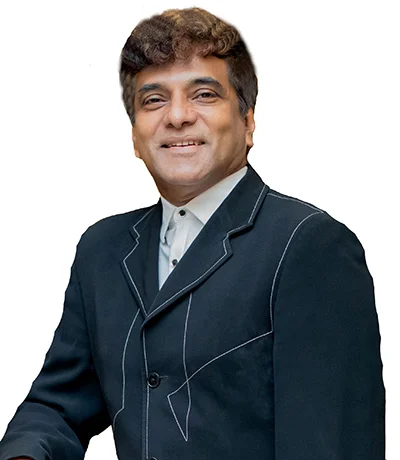
Melantha Perera: Awesome work with Bright Light Band
This meaningful collaboration reflects the strong community behind the Bright Light Band.
According to Melantha, accompaning the song is a vibrant video production that also features the involvement of the parents, highlighting unity, joy, and togetherness.
Beyond showcasing their musical talents, the visually impaired members of Bright Light Band deliver a powerful message, through this project, that their abilities extend beyond singing, as they also express themselves through movement and dance.
Melantha expressed his satisfaction with the outcome of the project and looks forward to sharing it with audiences across the country during this festive season.
He went on to say that Bright Light Band extends its sincere gratitude to Bcert Australia for their generous Mian sponsorship, the CEO of the company, Samath Fernando, for his continuous support in making such initiatives possible, and Rukshan Perera for his personal support and encouragement in bringing this project to completion.
The band also acknowledges Udara Fernando for his invaluable contribution, generously providing studio space and accommodating extended recording sessions to suit the children’s availability.
Appreciation is warmly extended to the parents, whose unwavering commitment from ensuring attendance at rehearsals to supporting the video production has been instrumental in the success of this project.
Through ‘Awurudu Kaale’, Bright Light Band hopes to spread festive cheer and inspire audiences, proving that passion and talent know no boundaries.

BCCI curbs movement of benched IPL players in latest rules

Prasidh trumps Miller in last-ball finish as Gujarat Titans clinch thriller

Greece to ban social media for under-15s from next year

Showers will occur at a few places in the Western, Sabaragamuwa and North-western provinces and in Galle, Matara, Kandy, Nuwara-Eliya and Mannar districts after 2.00 p.m.

Sun directly overhead Chilaw, Bingiriya, Halmillawewa, Panduwasnuwara, Gokarella, Kawudupelella, Koppaveli and Kirankulam about 12:12 noon. today (09)

Heat Index at Caution Level in the Western, Sabaragamuwa, Southern, Eastern, North-western, Northern and North-central provinces and in Monaragala district

‘Dates have the highest sugar content to fight Coronavirus’

Sunday Island 27 December – Headlines

#SundayIsland 17th December – Headlines

Sunday Island – 28th March

Sunday Island Headlines – 21 March

Sunday Island – 21st February – Headlines
-

 Features4 days ago
Ranjith Siyambalapitiya turns custodian of a rare living collection
-

 News4 days ago
Global ‘Walk for Peace’ to be held in Lanka
-

 News2 days ago
Lankan-origin actress Subashini found dead in India
-
 Opinion6 days ago
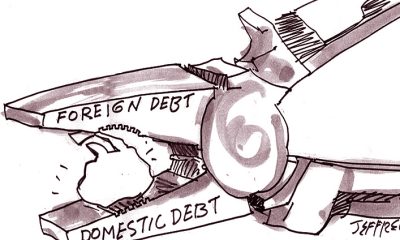
Hidden truth of Sri Lanka’s debt story: The untold narrative behind the report
-

 Features4 days ago
Beyond the Blue Skies: A Tribute to Captain Elmo Jayawardena
-

 Features4 days ago
Aspects of Ceylon/Sri Lanka Foreign Relations – 1948 to 1976
-
 Features6 days ago
The Ramadan War
-

 Editorial5 days ago
Brouhaha over a book