
Features
The day the boss mistook me for a peon and took me to an important meeting

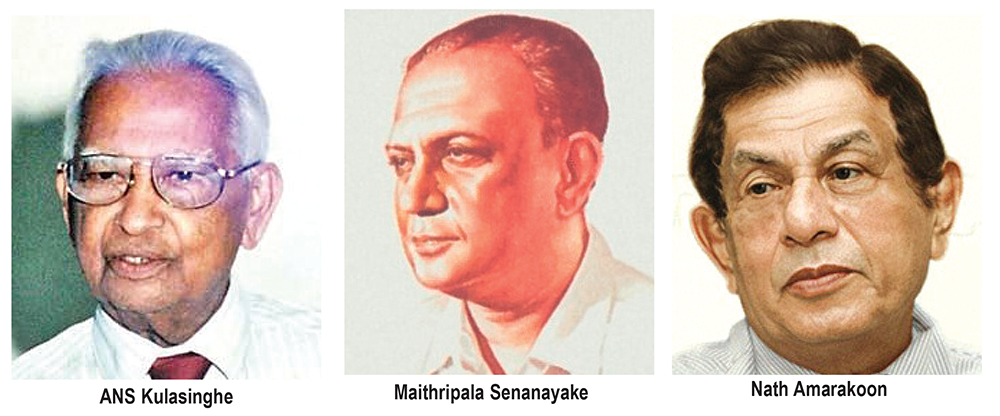
Realizing his mistake, Kulasinghe invited me to participate at the meeting despite my role as briefcase carrier
On that particular Monday, my fiance had an early start at Shaw Wallace and Hedges, a private sector firm with its offices about two kilometres south from the State Engineering Corporation SEC, where I worked. Having accompanied her to her workplace, I arrived very early, 6:30 AM, to an open and empty office. There were no hordes of security guards in 1970s and there was an open-door policy at SEC, one could say. A single watcher (as Security Staff were then called) manned the entrance. He greeted me and off I climbed stairs and to my desk. How times have changed in the period to 2020 regards security!
I was dressed in spotless white longs, white short-sleeved shirt, white socks and black shoes. Within 10 minutes of my arrival, SEC Chairman Kulasinghe came up the stairs hurriedly to the second floor. He was in white shorts, white shirt, knee length white stockings and black shoes. So, there were only two people in the building, both on the same floor, and both in white with one difference – he was in shorts.
I was standing near the entrance door to the floor. I had come down to check on a friend, but the floor was empty. Chairman’s office was on the same floor at the rear end and in more salubrious surroundings. I could sense an urgency as he looked excited. He proceeded to inquire in a commandeering fashion with the conversation being entirely in Sinhala:
“Where is Gunapala?” (“Kohede Gunapala?”)
“Looks like he is not in, Sir!” was my reply. (“Sir, Gunapala thama wedeta avilla ne wagai”)
“Where is Sirisena, then? ” (“Ko, ehenan Sirisena?”)
“He is also not to be seen anywhere, Sir” (“Eyath kohewath penne ne Sir”)
“You check in the canteen” he ordered: he was clearly annoyed. (“Thamuse Gihilla canteemma balanawa”)
I had a ready reply as I had been to the canteen downstairs about five minutes earlier for a cup of tea. The doors were shut with a notice on it in all three languages announcing its opening time. “The canteen does not open till seven, Sir” (“hatha wenekan canteema arinne ne Sir”)
Kulasinghe checked his watch.
“Okay! Then you come with me” (“Ehenan, thamuse math ekke enewa”), thrusting his briefcase towards my midriff, for me to hold it to prevent its fall . He was somewhat petulant and rude in my opinion, somewhat small.
This was not the time to question an order nor wonder about the behavioural etiquette of superiors towards their subordinates, especially towards those in the lowest rungs. I followed the Leader, three steps behind. Fortunately, the
briefcase was not too heavy for my then skinny frame. He walked fast and I followed, with my stride kept in check
so as not to overrun the boss. He walked, nay, ran down the stairs and we were at the open ground floor of the Corporation, where the Chairman’s official car was always parked, and very prominently at that. Next to the reserved lot was the canteen, with closed gates.
There was no one in the office to signal the driver that the Chairman was on his way to the car. The driver on sighting his master, put away the Dinamina newspaper and hurriedly got out of the car to open the passenger side rear door. The Chairman got in. I was now standing near the rear door holding the briefcase.
In management studies it is said that should one wish to approach a CEO, the two most difficult obstacles to get past are the CEO’s secretary and the driver, who will thwart any minion. The air of superiority of this driver was apparent for me to witness and endure. With the driver staring at me, a surprised Kulasinghe finding me at the rear door, boomed in Sinhala: “You get into the front seat.” (“Issaraha seat ekete naginewa”)
A wry smile appeared on the driver’s face as if to indicate “You got your just desserts for not knowing your place in life”. Minions always travelled away from their superior. Subservient behaviour being the norm.
There was definitely no driver respect for an underling like me. Generally, the personal driver of the top brass of any large organization is feared because he can carry tales to the boss. Kulasinghe depended on his driver to take him everywhere. Such drivers are acutely aware that they are in an influential position.
The driver closed the rear door on the passenger side, walked in front of the vehicle ignoring me, and settled into his seat. I could see that he was unnerved at carrying extra cargo next to him. I opened the front passenger-side door, got in, closed the door and clasped the briefcase now on my lap.
“To Minister Maithripala’s office” (“Maithripala amathi thumage karyalayata”) was the directive.
“Yes, Sir” (“Ow Sir”)
The driver, a stocky darkish man, continued to ignore me, apparently concentrating on the empty road with steely eyes. I did not need any more proof from this ‘powerful’ person that I was not welcome. I was an intruder. There were only two people usually in the limousine. Sometimes there were three, when Mrs Kulasinghe shared the back seat. But now, horror of horrors, there was a third man.
I was an interested listener to the conversation between the site managers and the supremo in the back seat on the VHF. He spoke in English with about five site managers during the trip of about four miles. I was as attentive listener. A sample of the conversation went like this; “Can I speak to Mr Kandiah ? Over!”
‘Over’ is the usual signal on a one-way radio conversation, requesting the other party to speak. VHF capabilities at the time were limited to a one-way conversation only. I could hear the excited voice of the clerk at the other end through the crackling sounds;
“Chairman is on the VHF, Call Mr Kandiah” he gushed. A call from the Chairman early in the morning was a ritual, and the head of each site made it a point to report to work early. “Anil here, good morning, how are you Sir? Over!”
It was an education for me. The Chairman reviewing the progress of work, giving instructions and being precise on any technical solutions, where requested. The aura surrounding him and the reverential respect by the highly qualified project managers and engineers, was not misplaced.
The Chairman and I alighted 15 minutes later at the Ministry in Colombo Fort. Kulasinghe did not wait for the driver to come around and open the door for him. There was simplicity in the man.
The building was three storeys high. At the entrance and
at ground level, marked Level-1, was a notice with an arrow
pointing upwards, which listed ‘Minister of Highways- Level 3’.
I knew my place in life for the next hour. It was to be outside the door of the minister’s office after handing over the briefcase and waiting for the meeting to end, and again carrying the briefcase back to the car.
But a dramatic intervention was about to happen to change my destiny and my standing. We went up the stairs, with Kulasinghe still about three steps ahead and came to the first landing at Level-2.
Nath Amarakoon, as if coming in from the side shadows, also alighted at the same time on the landing through a corridor leading from his office. The Ministry of Housing was on the same floor. He was carrying a file. I was to find out later, that Nath had been invited by the Minister
as he was an engineer with political links.
“Morning, are you going to meet the Minister, Mr Kulasinghe” was Nath’s pleasant greeting in English’ “Yes” “So am I. Both of us will be at the bridge meeting then?”
I am sure the news would not have elated Kulasinghe. But his reaction could not be gauged with his back to me.
It was at this time, that I came on to the Level-2 landing.
“Hello, Nihal” said Nath and Kulasinghe turned back and to
me, now aware of my presence and having heard Nath greeting
me in English.
“So, what do you do at the Corporation?” Kulasinghe inquired with wide eyes. “I am a graduate engineer, Mr Kulasinghe.”
A wry smile appeared on Kulasinghe’s lips. I enjoyed the smile and acknowledged the greeting with a smile. Each of us knew what was going through in the other’s mind. “OK, you can come to the meeting” was his conciliatory gesture
to make amends for the faux pas of thinking I was a peon. So the trio of engineers, ascended to the Minister’s room. We were led to a polished teak table in the middle of the room, with chairs around it. There was a chair and another very smaller table about two metres away which I assumed to be my rightful position.
Nath and Kulasinghe sat around the high table in two adjoining chairs. I sat down in my chair and laid the briefcase on the small table. The peon was also looking at me, and then he disappeared, only to appear behind two other gentlemen of about Kulasinghe’s age.
They too sat around the high table and exchanged greetings.
“Hello Kule” followed by;
“Hello Nath” was the greeting by a stocky gentleman.
“Hello Chandra” was Kulasinghe’s reply.
“Let me introduce Sivagnanam, my Assistant Secretary to both of you” Chandrasena said. Sivagnanam smiled and shook hands all round. Then he came around to me.
“What is your name, young man? I am Sivagnam?”
Nath and Sivagnanam wore neckties.
“Nihal Kodituwakku, Mr Sivagnanam.”
“Why are you sitting away, join us at the table”
“It is okay, and I am comfortable here”
“You, come and sit next to me”, Kulasinghe called and I obeyed, and sat down at the adjoining vacant seat. Next to me on the right there were three more vacant seats.
That is how at the age of 24, I sat around a table with two permanent secretaries, an assistant secretary and the chairman of SEC awaiting the arrival of the Minister. The peon brought a large pot of tea. The cups and saucers were already laid around the table.
I thought of my fiancé Lucky and was grateful that she requested me to accompany her to work at an early hour on that Monday. Unknown to her at the time, I chanced to be in high company, after all.
About five minutes later the peon again disappeared and re-appeared behind the Minister of Highways, Maithripala Senanayake. Both of them were the only people in national
dress in the room. The five trousered men got up. gave a common greeting “Morning to all.” He was the tallest man in the room and, I must say, that I was the next in height.
A lady who later I happened to find out to be a stenographer-clerk, sat down on the chair vacated by me. Another peon carrying a typewriter walked in and deposited it on the table in front of the lady. She then pulled out her note book. Unknown to me, I was about to learn a lesson on how to handle people in power, politicians or CEOs which has stood me in good stead and helped in my career.
The Minister got to the crux of the matter straightaway; and the reason for the gathering. “At the elections I gave a promise to my constituents that the bridge at Medawachiya Electorate will be built.” I cannot remember the exact location which the Minister mentioned, but the next action was noteworthy.
“Get me my briefcase, please” said Kulasinghe. I handed the briefcase and he pulled out a drawing from the case. Obviously, he had been sounded out earlier and had come prepared. Kulasinghe now standing, having laid out the drawing on the high table said “Minister, there are very big technical problems”, and at that moment, Chandrasena came across and looked at the drawing.
Chandrasena added “I agree with Kule, this bridge will cost a lot. I recommend that it not be built” If the Minister was angry, he did not show it, but looked across to Sivagnanam. The lady at the table was taking down notes, presumably in short-hand.
Sivagnanam came across, near the two engineers and directly addressed the Minister and said firmly; “Sir, what Mr Kulasinghe and Mr Chandrasena are saying is that there are technical problems. These are surmountable problems and solutions can be found”.
The other permanent secretary Nath, as if waiting for the signal to interject, now joined the fray, remaining seated. He said, “Sir, if you gave a promise to the electorate, it needs to be fulfilled. The current wooden bridge needs to be replaced with a concrete bridge. There are ways to minimize the costs.”
I was glued to my seat, attentive listener, with nothing to contribute. The Minister nodded his head in the affirmative and smiled at the two recent speakers. It was a wide smile. It was also the cue for Kulasinghe and Chandrasena to stare at Nath and at the career public servant and Assistant Secretary, Sivagnanam. The latter two had pulled the rug under the feet of two leading engineers in the country.
Kulasinghe and Chandrasena looked at Nath, and the hatred in their eyes was intense. If only looks could kill! “Thanks to all, the bridge can be built. I will inform my electorate” and the Minister got up.
The peon ran to the door, opened it and let the master go
through. He held the door open for Nath, followed by Sivagnanam. The stenographer turned her attention to typing. The two engineers were left in the room, forlorn. I put the drawing in the briefcase.
Kulasinghe meandered down the stairs, still ruminating at the loss of face, followed by me with the briefcase. It was obvious to me that the two high ranking and reputable engineers, one of them a permanent secretary, were raw in
political nuance and had a steep learning curve for their future dealings with ministers.
It was a case study of two prominent experienced engineers losing the battle. A young engineer with political nous, along with a career public servant who knew the game, won the day.
It was a lesson for me that Ministers are not worried about technicalities of a problem. What is music to their ears is to hear that a job can be done.
I understand that the bridge was completed by the State
Development and Construction Corporation in 1976 at a considerable cost. The cost benefit analysis did not justify such a bridge. Do you think that the politician was worried about such analysis?
A series of a combination of time of my arrival to be the first at SEC that morning, plus my attire, and being the only one in the office led to the above episode, the recall of which still makes me smile. An incident born out of sheer coincidence and a case of mistaken identity. It was hilarious being identified as a peon, and concurrently educational in how to manage and massage a politician in delivering their needs.
Looking at the brighter side, my attire of the day plus being the first to arrive at SEC clinched a valuable experience. In Perth, I was employed at the West Australian Treasury from 2008, and we were trained on how to answer our political master, the Minister for Finance, who also doubled up as the Treasurer cum Deputy Premier.
The template in answering Ministerial Requests required the following; “If the decision after long hours of deliberation by the public servants was to agree with Minister’s requests, one were to mention the “Request can be complied with”. No supporting documentation was needed. If the answer is in the negative a maximum of a single page summary to be provided”
The reasoning was that the Minister’s time is valuable, and should not be eaten up with time consuming details. A salutary lesson for the likes of Messrs Kulasinghe and Chandrasena. Pity that such templates were not available nor advance briefings were given, as far as I was aware in 1970s for high level officers.
It was the unlikely event of Nath appearing that gave away my identity. For Kulasinghe, I was the peon, even though the circumstances leading to the conclusion was a series of coincidences. However, I had no qualms about carrying the briefcase for the man. Respect towards Kulasinghe came naturally to all who worked with him.
In essence Kulasinghe, an engineer of repute, was responsible for training and producing many a capable engineer, technical officer and quantity surveyor. These professionals are now spread around the world. Raising professionalism was Kulasinghe’s gift to the country of his birth and the unintended benefit to the world. The departure of professionals were primarily due to a combination of factors; performance of the politicians, ethnic unrest and lack of economic progress being the top three.
Postscript
SEC was a semi-government organization and the premier
construction body in Ceylon/Sri Lanka in the 1970s. All rolled into one, SEC was the planner, designer, project manager and contractor of major building projects for the government. All these being done internally created efficiencies and provided a sound training ground for youngsters like me.
At the same time being a semi-government agency there were some bureaucratic and financial inefficiencies which resulted in cost blow ups on many projects that SEC undertook. Kulasinghe left in 1972, with Nath taking over the dual responsibility of Chairmanship of SEC in addition to his permanent secretarial duties.
All mentioned in this story, the first part of which appeared last week, have passed on except me.
• Dayantha Wijeyesekera passed away in 2023. He lived in Sri Lanka and became the Chancellor of the Open University. Prior to his posting, he was the Professor of Civil Engineering at University of Moratuwa and subsequently its Vice Chancellor. An achiever who contributed immensely to progress the educational sector.
• Brahman Sivaprakasapillai was responsible for designing and installing the sewerage pumping systems for the newly built Mahiyangana Hospital. After the communal clashes of 1983 he migrated to USA contributing to our brain drain. He retired after a career at the UN in New York where he lived till his passing away in 2021. During winter and for six months from November he moved to his other home in sunny Florida.
• Kamal Nathan left around 1973 and is retired after being an Associate Professor at a University in Singapore.
• David Gunasekera worked for the Department of Housing in Canberra having left the country in mid 70s.
• Importantly, Gunapala from Gampaha got a transfer to another Corporation nearer his home and subsequently a promotion to be chief peon.
• Sirisena, I understand hedged his bets correctly as his master, the Assistant Personnel Manager in 1970, was subsequently appointed a High Commissioner to many countries under the UNP regimes of Prime Minister and President Ranasinghe Premadasa, who was assassinated in 1992. Sirisena’s master was related to the then President’s wife and as usual “Theory of Relativity” was more important than efficiency. Sirisena served his master and saw the world in the dual capacities of a driver and a house helper at the respective High Commissions.
• What happened to the driver? I have not been able to find out.
• Lucky and I married in 1973 and are still going strong. We have one child, a son.
(Excerpted from the memoirs of Nihal Kodituwakku)


As a clinician whose journey in medicine began from the lecture halls of the Colombo Medical Faculty, in 1965, and then matured through securing the coveted MBBS(Ceylon) degree in 1970, followed by a further kaleidoscopic journey down the specialist corridors, from 1978 onwards, I have witnessed the remarkable evolution of healthcare in Sri Lanka. I have seen the admirable resolve of a nation that managed to offer free healthcare, at the point of delivery, to all its citizens, and I have seen many a battle being fought to bring state-of-the-art treatments for the benefit of sick patients, even despite some of the initial scepticism on the part of some.
However, as we now try to navigate the turbulent waters of 2026, I find myself compelled to speak even impulsively. This is not a mission of fault-finding, or a manifestation of a desire to “ruffle feathers,” for the sake of fanning a fire. Rather, it is a reflection offered in good faith, born from the “Spirit of an Enthusiast” who has seen both the brickbats as well as the accolades bestowed on our profession. My goal is relatively simple: which is to bring to light the silent, sometimes extremely difficult, situations faced by patients, doctors, and relatives, and to urge for a compassionate and collective solution to a crisis that threatens the very foundation of the care we provide.
The Generic Gamble: The Lament of the Ward
The cornerstone of our health service has always been the provision of free medicine to all who come to our state medical facilities. For decades, the “generic-only” policy served as a vital safety net. But, today, that net is fraying, not just at the edges but virtually as a whole. In our hospital wards, the clinician’s heart sinks when a patient fails to respond to a standard course of treatment.
We are increasingly haunted by the fancy terminology, “Quality Failure”, as alerts on medicinal drugs. When an anti-infective medicine lacks the potency to clear an infection, or when a poor-quality generic drug fails to stabilise the circulation of a little gasping child who is fighting for his life, the treating doctor is left in a state of agonising clinical despair. It is a profound lament to realise that while the medicine is “available” on the shelf, its efficacy remains as a question mark. The “free health service” becomes tragically and obstinately expensive when it leads to prolonged hospital stays, complications, or, in the worst cases, even the loss of a life that could have been saved with a more reliable formulation of an essential medicine. We must acknowledge that a cheap drug that does not work is the most expensive drug of all. For the doctor, this turns every prescription into a calculated risk, a far cry from the “best possible care” we were trained to deliver. These situations are certainly not the whims of fancy of a wandering mind, but real-time occurrences in our health service.
The Vanishing Innovators and the Small Market Reality
In the private sector, the situation is equally dire, though the causes are different. We must face a hard truth: Sri Lanka is a comparatively small market in the global pharmaceutical landscape. For the world’s leading manufacturers of proven, branded medicines and vaccines, our island is often a small, rather peripheral, consideration.
When the National Medicines Regulatory Authority (NMRA) fixes prices at levels that do not even cover the “Cost, Insurance, and Freight” (CIF) value, let alone the massive research and development costs of these innovator drugs, these companies inevitably reach a breaking point. They do not “bail out” through a lack of compassion, but do so even reluctantly sometimes, because they simply cannot sustain their operations at a loss.
Over the last few years, we have watched in silence as reputable international companies have closed their shops and departed our shores. With them have gone some of the vaccines that provided a lifetime of immunity, and the so-called branded drugs that offered predictable, life-saving results. When these “Gold Standards” vanish, the void is often filled by products from regions with lower regulatory oversight, leaving the patient with no choice but to settle for what is available or just what is left.
The Shadow Economy of “Baggage Medicines”
Perhaps the most heartbreaking symptom of this broken system is the rise of the “baggage medicine” market. Walk into any major private hospital today, and you will hear the whispered conversations of relatives trying to source drugs from abroad, in a clandestine manner.
Reputed branded drugs are being brought into the country in the suitcases of international travellers. While these relatives are acting out of pure, desperate love, the medical risks are astronomical. These medicines sometimes bypass the essential “Cold Chain” requirements for temperature-sensitive products like insulin or specialised vaccines. There is no way to verify if the drug in the suitcase is genuinely effective, or if it has been rendered inert by the heat of a cargo hold of an aircraft.
As a physician, it is an agonising dilemma: do I administer a drug brought in a suitcase to save a life, knowing very well that I cannot certify its safety? We are forcing our citizens into a shadow economy of survival, stripped of the protections a modern regulatory body should provide.
The Unavoidable Storm: Geopolitical Shocks
Adding to this internal struggle is the current unrest in the Middle East. As of March 2026, the escalation of conflict has sent shockwaves through global supply chains. With major maritime routes, like the Strait of Hormuz effectively halted and air cargo capacity from Middle Eastern hubs, like Dubai, slashed by over 50%, the cost of transporting medicine has become a moving target.
* Skyrocketing Logistics: Freight surcharges and war-risk insurance premiums have added “unavoidable costs” that simply cannot be absorbed by local importers under a rigid price cap.
* Delayed Transport is delayed healing:
Shipments rerouted around the Cape of Good Hope add weeks to delivery times, leading to stockouts of even the most basic medical consumables.
These are global forces beyond our control, but our regulatory response must be agile enough to recognise them. If we ignore these external costs, we are not just controlling prices; we are ensuring that the medicine never arrives at all.
The Rights of Patients Seeking Private Healthcare
Whatever the reason for patients seeking private healthcare, all of us have an abiding duty to respect their wishes. It is their unquestionable right to have access to drugs and vaccines of proven high quality, if they decide to go into Private Fee-levying Healthcare. This is particularly relevant to the immunisation of children. Sometimes the child receives the first dose of a given vaccine in a Private Hospital, but when he or she is taken for the second dose, that particular vaccine is not available, and they are not able to tell the parents when it would be available as well.
Some of the abiding problems, associated with immunisation of children and adults in the Private Sector, were graphically outlined at the Annual General Meeting of the Vaccines and Infectious Diseases Forum of Sri Lanka, held on the 10th of March, 2026. This needs to be attended to as a significant proportion of vaccines are administered to patients, both children and adults, in the Private Sector.
In other cases, the drug or drugs of proven quality is or are not available in the Private Sector as the company, or importing authority, has wound up the operations in our country due to their inability to sustain the operations, resulting from factors entirely beyond their control. Let us face it, the current pharmaceutical industry is significantly profit-oriented, and they will continue to operate only in countries where their profit margins are quite lucrative.
A Humane Call to All Stakeholders
The current scenario is a shared burden, and it requires a shared, compassionate solution. We must look at this, not through the lens of policy or profit, but through the eyes of the patient waiting in the clinic or in the ward.
* To the Ministry of Health and the NMRA:
We recognise the extremely difficult task of balancing affordability with quality. However, we urge a “Middle Path.” We need a dynamic pricing mechanism that reflects the reality of global trade logistics and the unique challenges of a relatively smaller market. Let us prioritise the restoration of “Quality Assurance” as the primary mandate, ensuring that every generic drug in the state sector is as reliable as the branded ones we have lost. To be able to provide such an abiding certificate of good quality, we need a fully-equipped state-of-the-art laboratory.
* To the Private Sector and Importers:
We ask you to remain committed to the people of Sri Lanka. Your role is not just commercial; it is a vital part of the national health infrastructure. A transparent dialogue with the regulator is essential to prevent more companies from leaving.
* To our Patients and their Families:
We hear your lamentations. We see the struggle in your eyes when a drug is unavailable or when you are forced to seek alternatives from abroad. We respect your right to seek the best possible treatment, and we are advocating for a system that honours that choice legally and safely.
Finally, the Spirit of Care
In the twilight of my career, I look back at my work and the thousands of patients I have treated. The “Spirit of an Enthusiast” is certainly not one of resignation, but of persistent hope. We have the clinical talent and the commitment of our healthcare professionals, we have the history of a strong health service, and we have a populace that deserves the best. For us, in this beautiful land, hope springs eternal.
Let us stop the “baggage medicine” culture. Let us invite the innovators back to our shores by treating them as partners in health, not just as vendors. Let us also ensure that our state-sector generics are beyond reproach.
This is a mission to find a way forward. For the sake of the child in the ward, the elderly patient in the clinic, and the integrity of the medical profession. We desperately need to act now, together, hand in hand, and with a pulsating heart of concern, for the entire humanity we are committed to serve.
by Dr B. J. C. Perera
MBBS(Cey), DCH(Cey), DCH(Eng), MD(Paediatrics), MRCP(UK), FRCP(Edin),
FRCP(Lond), FRCPCH(UK), FSLCPaed, FCCP, Hony. FRCPCH(UK), Hony. FCGP(SL)
Specialist Consultant Paediatrician and Honorary Senior Fellow,
Postgraduate Institute of Medicine, University of Colombo, Sri Lanka.

I was recently given several books dealing with religion, and, instead of looking at questions of church union in current times, I turned first to Buddhism in the 19th century. Called Locations of Buddhism: Colonialism and Modernity in Sri Lanka, the book is a study by an American scholar, Anne M Blackburn, about developments in Buddhism during colonial rule. It focuses on the contribution of Ven. Hikkaduwe Sri Sumangala who was perhaps the most venerated monk in the latter part of the 19th century.
Hikkaduwe, as she calls Ven. Sumangala through the book, is best known as the founder of the Vidyodaya Pirivena, which was elevated to university statues in the fifties of this century, and renamed the University of Sri Jayewardenepura in the seventies. My work in the few years I was there was in the Sumangala Building, though I knew little about the learned monk who gave it its name.
He is also renowned for having participated in the Panadura debates against Christians, and having contributed to the comparative success of the Buddhist cause. It is said that Colonel Olcott came to Sri Lanka after having read a report of one of the debates, and, over the years, Ven. Sumangala collaborated with him, in particular with regard to the development of secondary schools. At the same time, he was wary of Olcott’s gung ho approach, as later he was wary of the Anagarika Dharmapala, who had no fear of rousing controversy, his own approach being moderate and conciliatory.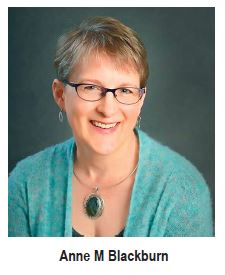
While he understood the need for a modern education for Buddhist youngsters, which Olcott promoted, free of possible influences to convert which the Christian schools exercised, he was also deeply concerned with preserving traditional learning. Thus, he ensured that in the pirivena subjects such as astrology and medicine were studied with a focus on established indigenous systems. Blackburn’s account of how he leveraged government funding given the prevailing desire to promote oriental studies while emphatically preserving local values and culture is masterly study of a diplomat dedicated to his patriotic concerns.
He was, indeed, a consummately skilled diplomat in that Blackburn shows very clearly how he satisfied the inclinations of the laymen who were able to fund his various initiatives. He managed to work with both laymen and monks of different castes, despite the caste rivalry that could become intense at times. At the same time, he made no bones about his own commitment to the primacy of the Goigama caste, and the exclusiveness of the Malwatte and Asgiriya Chapters.
What I knew nothing at all about was his deep commitment to internationalism, and his efforts to promote collaboration between Ceylon Lanka and the Theravada countries of South East Asia. One reason for this was that he felt the need for an authoritative leader, which Ceylon had lost when its monarchy was abolished by the British. Someone who could moderate disputes amongst monks, as to both doctrine and practice, seemed to him essential in a context in which there were multiple dispute in Ceylon.
Given that Britain got rid of the Burmese monarchy and France emasculated the Cambodian one, with both of which he also maintained contacts, it was Thailand to which he turned, and there are records of close links with both the Thai priesthood and the monarchy. But in the end the Thai King felt there was no point in taking on the British, so that effort did not succeed.
That the Thai King, the famous Chulalongkorn, did not respond positively to the pleas from Ceylon may well have been because of his desire not to tread on British toes, at a time when Thailand preserved its independence, the only country in Asia to do so without overwhelming British interventions, as happened for instance in Nepal and Afghanistan, which also preserved their own monarchies. But it could also have been connected with the snub he was subject to when he visited the Temple of the Tooth, and was not permitted to touch the Tooth Relic, which he knew had been permitted to others.
The casket was taken away when he leaned towards it by the nobleman in charge, a Panabokke, who was not the Diyawadana Nilame of the day. He may have been entrusted with dealing with the King, as a tough customer. Blackburn suggests it is possible the snub was carefully thought out, since the Kandyan nobility had no fondness for the low country intercourse with foreign royalty, which seemed designed to take away from their own primacy with regard to Buddhism. The fact that they continued subservient to the British was of no consequence to them, since they had a façade of authority.
The detailed account of this disappointment should not, however, take away from Ven. Sumangala’s achievement, and his primacy in the country following his being chosen as the Chief Priest for Adam’s Peak, at the age of 37, which placed him in every sense at the pinnacle of Buddhism in Ceylon. Blackburn makes very clear the enormous respect in which he was held, partly arising from his efforts to order ancient documents pertaining to the rules for the Sangha, and ensure they were followed, and makes clear his dominant position for several decades, and that it was well deserved.
by Prof. Rajiva Wijesinha
Attempting to bask in the glory of the past serves no purpose, some may argue supporting the contention of modern educationists who are advocating against the compulsory teaching of history to our youth. Even the history they want to teach, apparently, is more to do with the formation of the earth than the achievements of our ancestors! Ruminating over the thought-provoking editorial “From ‘Granary of the East’ to a mere hunduwa” (The Island, 5th March), I wished I was taught more of our history in my schooldays. In fact, I have been spending most of my spare time watching, on YouTube, the excellent series “Unlimited History”, conducted by Nuwan Jude Liyanage, wherein Prof. Raj Somadeva challenges some of the long-held beliefs, based on archaeological findings, whilst emphasising on the great achievements of the past.
Surely, this little drop in the Indian ocean performed well beyond its size to have gained international recognition way back in history. Pliny the Elder, the first-century Roman historian, therefore, represented Ceylon larger than it is, in his map of the world. Clicking on (https://awmc.unc.edu/2025/02/10/interactive-map-the-geography-of-pliny-the-elder/) “Interactive Map: The Geography of Pliny the Elder” in the website of the Ancient World Mapping Centre at the University of North Carolina at Chappel Hill, this is the reference to Anuradhapura, our first capital:
“The ancient capital of Sri Lanka from the fourth century BCE to the 11th century CE. It was recorded under the name Anourogrammon by Ptolemy, who notes its primary political status (Basileion). It has sometimes been argued that a “Palaesimundum” mentioned by Pliny in retelling the story of a Sri Lankan Embassy to the emperor Claudius is also to be identified with Anourogrammon. A large number of numismatic finds from many periods have been reported in the vicinity.”
Ptolemy, referred to above, is the mathematician and astronomer of Greek descent born in Alexandria, Egypt, around 100 CE, who was well known for his geocentric model of the universe, till it was disproved 15 centuries later, by Copernicus with his heliocentric model.
It is no surprise that Anuradhapura deservedly got early international recognition as Ruwanwelisaya, built by King Dutugemunu in 140 BCE, was the seventh tallest building in the ancient world, perhaps, being second only to the Great Pyramids of Giza, at the time of construction. It was overtaken by Jetawanaramaya, built by King Mahasena around 301 CE, which became the third tallest building in the ancient world and still holds the record for the largest Stupa ever built, rising to a height of 400 feet and made using 93.3 million baked mud bricks. Justin Calderon, writing for CNN travel under the heading “The massive megastructure built for eternity and still standing 1,700 years later” (https://edition.cnn.com/travel/jetavanaramaya-sri-lanka-megastructure-anuradhapura) concludes his very informative piece as follows:
“Jetavanaramaya stands today as evidence of an ancient society capable of organising labour, materials and engineering knowledge on a scale that rivalled any civilisation of its time.
That it remains relatively unknown beyond Sri Lanka may be one of history’s great oversights — a reminder that some of the ancient world’s most extraordinary achievements were not carved in stone, but shaped from earth, devotion and human ingenuity.”
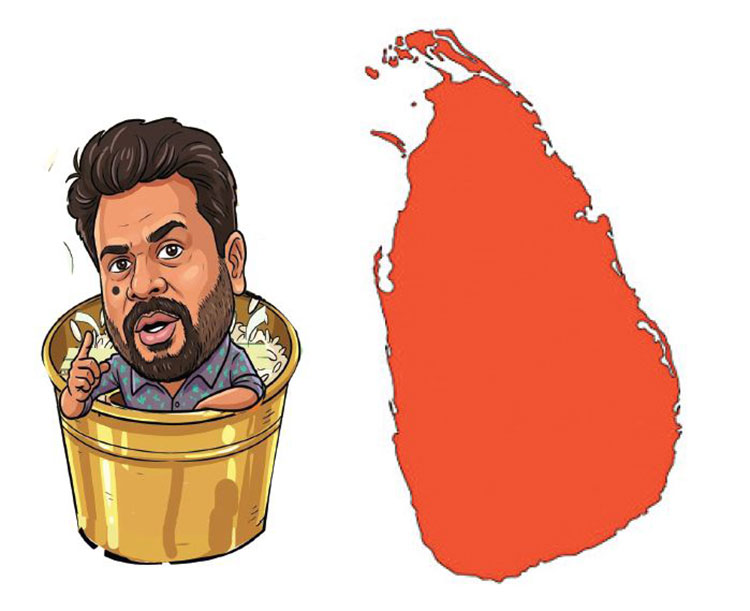
Extraordinary achievements of our ancestors are not limited to Stupas alone. As mentioned in the said editorial, our country was once the Granary of the East though our present leader equated it to the smallest measure of rice! Our canal systems with the gradient of an inch over a mile stand testimony to engineering ingenuity of our ancestors. When modern engineers designed the sluice gate of Maduru Oya, they were pleasantly surprised to find the ancient sluice gates designed by our ancestors, without all their technical knowhow, in the identical spot.
Coming to modern times, though we vilify J. R. Jayewardene for some of his misdeeds later in his political career, he should be credited with changing world history with his famous speech advocating non-violence and forgiveness, quoting the words of the Buddha, at the San Francisco Conference in 1945. Japan is eternally grateful for the part JR played in readmitting Japan to the international community, gifting Rupavahini and Sri Jayewardenepura Hospital. Although we have forgotten the good JR did, there is a red marble monument in the gardens of the Great Buddha (Daibutsu) in Kamakura, Japan with Buddha’s words and JR’s signature.
It cannot be forgotten that we are the only country in the world that was able to comprehensively defeat a terrorist group, which many experts opined were invincible. Services rendered by the Rajapaksa brothers, Mahinda and Gotabaya, should be honoured though they are much reviled now, for their subsequent political misdeeds. Though Gen-Z and the following obviously have no recollections, it is still fresh in the minds of the older generation the trauma we went through.
It is to the credit of the democratic process we uphold, that the other terrorist group that heaped so much of misery on the populace and did immense damage to the infrastructure, is today in government.
As mentioned in the editorial, it is because Lee Kuan Yew did not have a ‘hundu’ mentality that Singapore is what it is today. He once famously said that he wanted to make a Ceylon out of Singapore!
Let our children learn the glories of our past and be proud to be Sri Lankan. Then only they can become productive citizens who work towards a better future. Resilience is in our genes and let us facilitate our youth to be confident, so that they may prove our politicians wrong; ours may be a small country but we are not ‘hundu’!
By Dr Upul Wijayawardhana

A new curriculum will be introduced for preschools in 2027, while steps will also be taken to train teachers accordingly – PM

Be mindful of the accuracy of information before sharing it on social media – PM

Heat Index at ‘Caution level’ at some places in the Western, Sabaragamuwa, Southern and North-western provinces and in Monaragala, Mannar, Anuradhapura and Vavuniya districts

Showers expected at several places in the Central, Sabaragamuwa, Southern, North-western, Eastern and Uva provinces after 2.00 pm.

Fuel rationing begins: Police deployed as queues return

GMOA warns fuel quota could disrupt health services

‘Dates have the highest sugar content to fight Coronavirus’

Sunday Island 27 December – Headlines

#SundayIsland 17th December – Headlines

Sunday Island – 28th March

Sunday Island Headlines – 21 March

Sunday Island – 21st February – Headlines
-

 News6 days ago
Prof. Dunusinghe warns Lanka at serious risk due to ME war
-

 News4 days ago
Historic address by BASL President at the Supreme Court of India
-

 Sports5 days ago
Royal start favourites in historic Battle of the Blues
-

 Sports4 days ago
The 147th Royal–Thomian and 175 Years of the School by the Sea
-
 Business5 days ago
BOI launches ‘Invest in Sri Lanka’ forum
-

 News5 days ago
CEBEU warns of operational disruptions amid uncertainty over CEB restructuring
-
 News4 days ago
Power sector reforms jolted by 40% pay hike demand
-
 Features5 days ago
Indian Ocean zone of peace torpedoed!