
Features
The challenge of keeping value-based politics alive

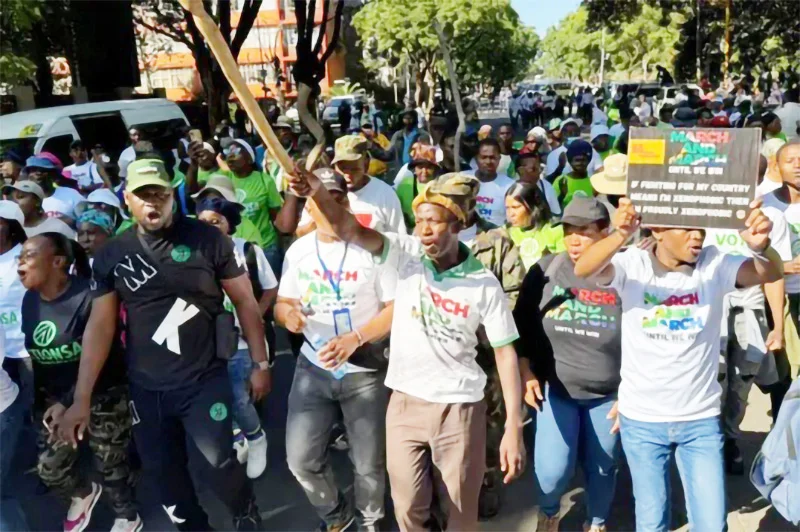
 The current outbreak of anti-immigrant protests in Durban, South Africa is bound to have taken many a subscriber to value-based politics or political idealism quite by surprise. After all, this is evidence that despite the historic accomplishments of nation-builders of the stature of the late President Nelson Mandela it cannot be taken for granted that identity politics, including racism in its worst forms, is no more in South Africa.
At the time of this writing details are scarce on the substantive root causes of the protests but it could very well be that economic grievances, particularly on the part of the majority community in South Africa, are contributing considerably to the disaffection. Shrinking employment and material prospects are likely to figure majorly among the factors igniting the unrest.
Fortunately, the local authorities in Durban are losing no time in calling for peaceful co-existence among the relevant communities and are pointing to the vital importance of stepping-up national integration processes. Apparently, immigrants in sizable numbers from neighbouring countries are present in Durban. However, international TV footage of the protests quoted some local authorities as saying that the majority of the immigrants in some centres that housed them were not illegal migrants and had the documents that entitle them to be in Durban.
In the Durban protests the world has fresh proof of the socially divisive consequences of the gathering globe-wide economic disaffection, touched off particularly by the continuing crisis in West Asia. Going ahead, the world would need to brace for increasing identity-based unrest of the kind it is just witnessing in South Africa.
Considering that the material lot of ordinary people everywhere could only aggravate progressively, with the US and Iran showing no signs of negotiating an end to their confrontation any time soon, it will be left to the more democratic and progressive sections of the world community to initiate positive measures collectively to bring a measure of relief to the discontented.
The swiftness with which such relief will be provided would depend crucially on the importance those sections taking up these undertakings attach to value-based politics as opposed to Realpolitik of power politics.
Going by these yardsticks, Italy could be considered to be moving in the right direction. Recently Italy came to the fore in initiating the collective named, ‘Rome Coalition for Food Security and Access to Fertilizer’, which has as one of its aims the swift provision of fertilizer to economically weak African countries.
In a recent statement Italian Minister of Foreign Affairs and International Cooperation, Antonio Tajani, said that a principal aim of the project was to ensure that the farmers of Africa gained easy access to fertilizer, considering that food security is a growing concern among some of Africa’s economically vulnerable countries.
The statement went on to mention that some 30 countries hailing from the Mediterranean region, the Middle East, the Balkans as well as the FAO had been invited to join the coalition. The venture is far-seeing in that food security is main among the reasons for social discontent which in turn could degenerate into endemic political turmoil and bloodshed. Separatist violence and geographical fragmentation of countries wouldn’t be too far behind these developments, as Africa itself has often proved.
It is hoped that more G7 countries would take the cue from Italy and do what they could to ease the hardships of economically distressed countries, particularly of the global South. In these efforts they would need to break rank with the US, which is today brutally indifferent to the consequences of its policy of making ‘America First’, come what may.
Going by current developments, the Trump administration seems to be blithely oblivious to the wider, deleterious effects of its policy course in West Asia. Besides rendering Iran militarily and otherwise impotent nothing else seems to matter to Washington, as regards West Asia. This is policy short-sightedness of an extreme kind. After all, right now West Asia could be said to be sitting on the proverbial powder keg.
On the other hand, Iran is not giving the world the impression that it is doing anything constructive to get out of the policy straitjacket that it wove for itself decades ago. Rather than enter into a policy of ‘live and let live’ in relation to Israel in particular and initiate a process of reconciliation with the latter, it has chosen to operate within policy parameters that continue to damn Israel. This has put Israel always on the ‘defensive’ so to speak and prevented the opening up of space for meaningful dialogue.
That said, Israel is obliged to explore the possibilities of entering into a negotiatory process with the Arab-Islamic world that could lead to a de-escalation of tensions and bloodshed. It cannot continue to look at its neighbours through lenses that distort them as archetypal enemies who should be ‘wiped off completely from the face of the earth.’
In other words, the need is urgent for Realpolitik to give way to value-based politicks. Italy is beginning to prove that the latter approach could be pursued with some success. May be the EU and the UK could throw their weight behind these initiatives as well and establish that international politics could be refashioned on the basis of humane, civilized norms. The UN would need to be fully supportive of these moves and prove an organizational nucleus of the operations that follow.
In fact the time is ripe for people of conscience to collectively stand up on the side of peace and say ‘No’ to war and violence. Organizations such as the ICRC, the WHO and Medicines Sans Frontiers have already taken up this call. Referring to the widespread destruction of health facilities and their dehumanizing results these organizations have said, among other things, that ‘This is not a failure of the law. It is a failure of political will.’
True, ‘failure of political will’ among those powers that matter accounts for the runaway, uncontrollable nature of war and destruction in contemporary times, but more fundamentally it is a failure of the human conscience. It could very well be that the phenomenal levels to which violence and war have been unleashed today have had the effect of deadening consciences. This is a matter for urgent study and wide discussion.

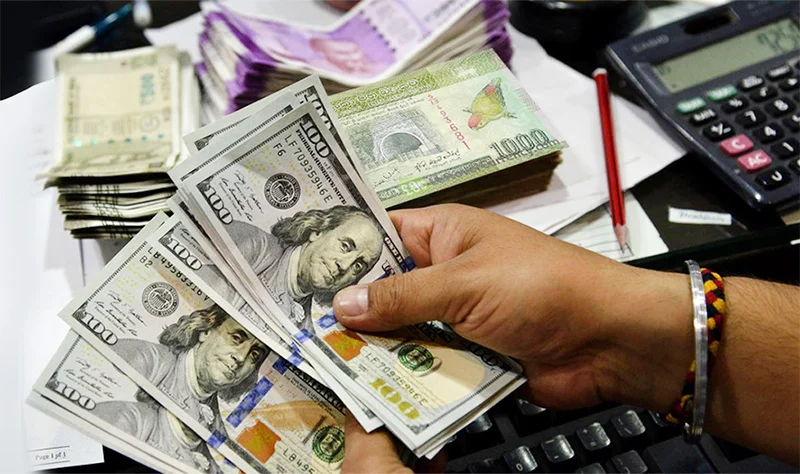
How Hawala and Undiyal created parallel banking system
 Sunil works as a driver in Dubai. Every month, on payday, he sets aside a portion of his salary to send to his mother in Galle. For years he used his bank’s remittance service. Then, one evening, a friend at the labour camp told him something that changed his habits.
“Don’t use the bank. I know someone. Your mother will get more rupees, and she’ll get it today.”
Sunil hesitated, but the offer was hard to refuse. The bank’s exchange rate was lower than what his friend’s contact was offering. The transfer fee was smaller. And instead of waiting two or three working days, the money would be in his mother’s hands by evening.
He agreed. He handed his friend’s contact a sum in UAE dirhams. He sent a one-line message to his mother with a code word. Within hours, a man on a motorcycle visited his mother’s home in Galle and handed her an envelope of rupees, more rupees than the bank would have given her, for the same dirhams.
No bank was involved. No wire transfer crossed the Indian Ocean. No dollar, dirham, or rupee physically travelled from Dubai to Galle. And yet the money moved, instantly, reliably, and outside the view of any regulator.
This is the world of Undiyal, known elsewhere as Hawala, a financial system that predates modern banking by centuries, operates today across six continents, and quietly moves an estimated USD 100 billion to USD 300 billion every year, almost entirely beyond the reach of central banks, tax authorities, and financial intelligence units.
Most Sri Lankans have heard the words Undiyal and Hawala. Fewer understand how the system actually works, why it has survived for centuries, despite the rise of modern banking, or why it matters to every citizen, whether or not they have ever sent or received a single rupee through it.
About this Four Part Series
The Invisible Financial Empire, will take readers from the basic mechanics of underground value transfer to the sophisticated criminal networks, digital platforms, and policy battles that define this shadow economy today. We begin, in Part I, with the system’s history and mechanics. Parts II, III and IV will examine how dirty money is laundered through this and related channels, how technology has transformed illicit finance, and what all of this means for Sri Lanka’s economy and its people.
Every important claim in this series is backed by evidence, from the International Monetary Fund, the Financial Action Task Force (FATF), the United Nations Office on Drugs and Crime (UNODC), Interpol, the Central Bank of Sri Lanka, and other research. Where something is allegation rather than established fact.
From the Silk Road to the Smartphone
Hawala , from the Arabic word for “transfer” or “trust”, emerged on the trade routes of South Asia and the Middle East more than a thousand years ago. Merchants travelling the Silk Road faced an obvious problem: carrying gold and silver across vast distances, through bandit-infested deserts and pirate-infested seas, was dangerous and impractical. The solution they devised was elegant. Only the broker’s word, we used to say “Word is the Deed” in our treasury dealing room and a running ledger of mutual debts between brokers, made the system work.
This same basic structure exists today across the world, under different regional names. In Sri Lanka and among Tamil communities globally, it is called Undiyal. In Pakistan and India, the underlying instrument is called Hundi. In China, it is known as Fei-Chien (“flying money”). In Hong Kong, Hui Kuan. In Thailand, Pei Kwan. In Somalia, Xawilaad. In the Philippines, Padala. In Colombia and parts of Latin America, the Black Market Peso Exchange. The US Financial Crimes Enforcement Network (FinCEN) groups all of these under a single technical term: Informal Value Transfer Systems (IVTS). (See Table 01)
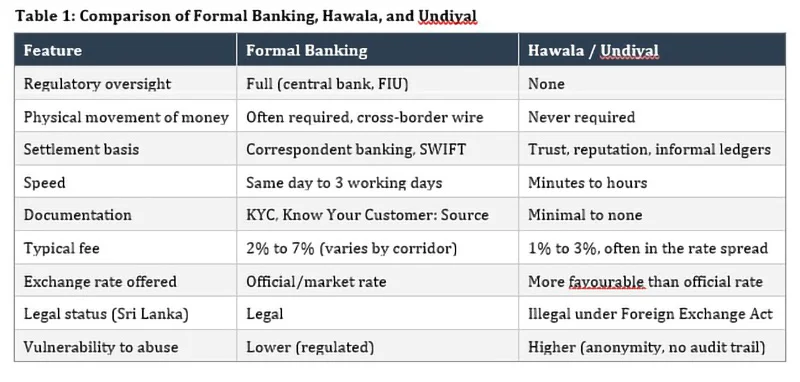
The system survived the rise of telegraphs, SWIFT transfers, and online banking for a simple reason: it consistently does several things that formal banking, in many developing economies, has struggled to do as well, offer better effective exchange rates, charge lower fees, settle faster, and ask no questions.
How an Undiyal Transaction Actually Works: The Settlement Mechanism (See Figure 1)
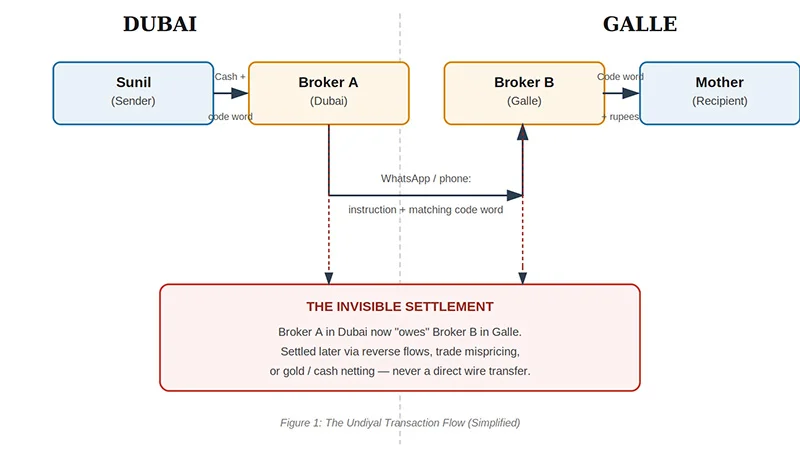
No SWIFT message. No correspondent bank. No regulator sees a thing, unless one of the brokers later moves the settlement funds through a formal account, where Sri Lanka’s Financial Transactions Reporting Act requires banks to flag and report suspicious activity to the Financial Intelligence Unit (FIU) of the Central Bank.
The Digital Revolution: Hawala Goes High-Tech
For most of its history, Hawala depended on physical trust networks, extended families, ethnic and trading communities, and word-of-mouth reputation built over generations. That has changed dramatically in the past fifteen years.
Today’s underground value transfer ecosystem increasingly relies on:
* Encrypted messaging apps (WhatsApp, Telegram, Signal) to coordinate transactions and code words instantly across continents, replacing the slower telephone-and-courier model of earlier decades.
* Online payment platforms and digital wallets which can be used to move settlement funds in small, harder-to-detect increments.
* Internet-based forex trading platforms some entirely legitimate, others used as fronts to mix illicit settlement flows with apparently ordinary trading activity.
* Cryptocurrencies and stablecoins which allow brokers to settle balances between themselves across borders without touching the formal banking system at all.
* AI-assisted coordination increasingly used by larger networks to manage ledgers, detect law enforcement patterns, and optimise routing of funds across multiple jurisdictions.
This digital layer has not replaced the old trust-based Hawala network, it has supercharged it, allowing brokers to settle obligations faster, across more jurisdictions, and with a thinner paper trail than ever before.
Why People Use It: The Economics Beneath the Headlines
It would be easy, and too simple, to assume that everyone using Undiyal or Hawala is engaged in something illicit. Not really always. The system serves both legitimate remittance needs and, separately, can be exploited for criminal purposes.
Sri Lanka’s own experience between 2021 and 2022 is the clearest illustration of this dynamic anywhere in the world. When the Central Bank maintained an artificially fixed exchange rate while informal market rates ran far higher, formal worker remittances collapsed. Officially recorded remittances fell sharply through 2021 and into 2022, even though Sri Lankans working abroad had not stopped sending money home, they had simply stopped using the formal banking system to do it. The money was still flowing; it had simply gone underground, where the official statistics could no longer see it.
The lesson is one we will return to throughout this series: informal systems do not grow primarily because people want to break the law. They grow because the formal system has made them inconvenient less competitive if not completely impossible.
The Scale of the Shadow Economy
The numbers, where they can be estimated, are staggering, and it is worth pausing on exactly how they are estimated, since by definition these are flows that evade official measurement. (See Table 02)
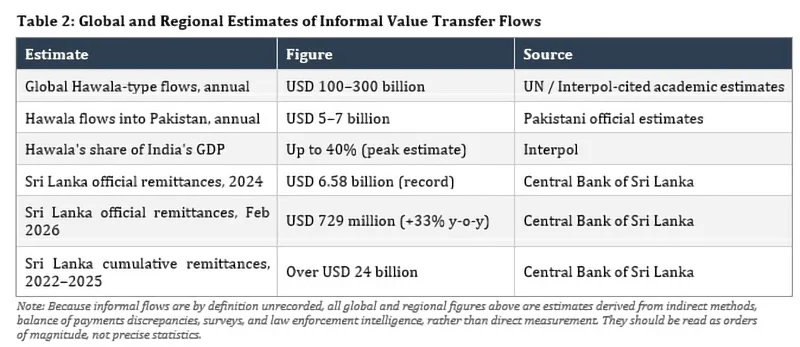
What this table also reveals is encouraging. Since the Central Bank of Sri Lanka abandoned its parallel, artificially fixed exchange rate regime after the 2022 crisis, official remittances have recovered sharply and repeatedly hit record highs. This is not a coincidence. It is the clearest available evidence for the central argument of this series: when the formal exchange rate is allowed to reflect market reality, much of the incentive to use Undiyal disappears.
Why Governments Struggle to Stop It
In Sri Lanka, transferring funds overseas through Undiyal is explicitly prohibited under Section 4(3) of the Foreign Exchange Act, and engaging in such transactions is a punishable offence under the Prevention of Money Laundering Act. Banks are required under the Financial Transactions Reporting Act to report suspicious transactions to the FIU, regardless of amount. Yet the system persists, not because the law is unclear, but because, as this section has shown, the underlying economics often still favour the informal channel.
What Comes Next
In Part II, “Dirty Money: How Criminal Networks Launder Billions Across the World”, we will examine the three-stage laundering process that converts criminal proceeds into apparently legitimate wealth, the shell companies and trade manipulation schemes that make it possible, and what this machinery costs Sri Lanka and the world.
OUT OF THE BOX QUESTION
If informal systems like Hawala and Undiyal have survived for centuries despite the rise of modern banking, is the real problem the existence of these networks, or the incentives that keep ordinary people, like Sunil, choosing them over the formal financial system their own country has built?
(The writer is a senior Chartered Accountant, professional banker, and prominent academic researcher, holding a PhD from Auckland University of Technology (AUT), New Zealand. He has an extensive publication record in peer-reviewed journals and is the author of “Doing Social Research” (Springer) and “Samaja Gaveshakaya.” The views and opinions expressed in this article are personal.)
(The writer, a senior Chartered Accountant and professional banker, is Professor at SLIIT, Malabe.Views expressed in this article are personal.)
Antibiotic resistant bacteria found even in absence of measurable antibiotic contamination in water
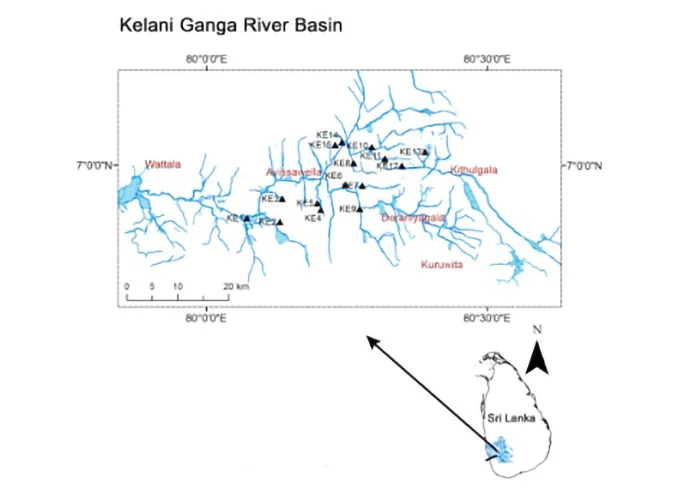
The first comprehensive study on antibiotic resistance in the Kelani River Basin, a freshwater system that supplies drinking water to over 80% of the Greater Colombo region and supports more than a quarter of the national population has been completed.
The Centre for Water Quality and Algae Research in the department of Zoology at the University of Sri Jayewardenepura has conducted the study in collaboration with Hayleys Fabric PLC, a subsidiary of Hayleys PLC.
They said that the research examined the occurrence and distribution of antibiotic residues, antibiotic-resistant bacteria (ARB), and antibiotic resistance genes (ARGs) across the basin, establishing the first antibiotic resistance baseline for one of Sri Lanka’s most critical freshwater systems.
The text of their statement: “The initiative reflects the wider commitment of The Hayleys Group to evidence-based environmental stewardship and long-term value creation across the communities and ecosystems in which the Group operates.
Antibiotic resistance (AR) occurs when bacteria naturally evolve to survive the medicines (antibiotics) designed to kill them, creating what are often called “superbugs”. Rivers can be major pathways for these bacteria to spread. To understand this risk, the study assessed 71 water samples collected across three distinct zones of the basin during the dry and wet seasons: the Head Zone, Transitional Zone, and Meandering Zone, for six antibiotic classes, including penicillin, tetracycline, fluoroquinolones, macrolides, sulfonamides, and aminoglycosides.
The study produced a fascinating and highly important scientific finding. The scientists found that actual traces of leftover antibiotics in the water were so low that they were mostly undetectable. However, despite the lack of leftover antibiotics, widespread and highly resilient antibiotic-resistant bacteria were still found throughout the basin. In fact, more than 80% of the bacteria tested showed high resistance levels, surviving antibiotic concentrations greater than 360 parts per million (ppm). This proves that resistant bacteria and their resistance genes can persist and multiply in the environment even without active antibiotic pollution present in the water.
Hayleys Fabric PLC Managing Director / CEO Rohan Goonetilleke said: “The Kelani River Basin is central to the daily lives of millions of Sri Lankans, and understanding the health of that ecosystem is a responsibility that extends beyond any single industry. As part of Hayleys PLC, we believe industries operating near critical water systems have an obligation to invest in evidence, not just in compliance. The findings provide a baseline that the country has not had before, and we intend to support the continued monitoring work that this study calls for.”
The research also found that antibiotic resistance genes and resistant bacterial populations persisted even in the absence of measurable antibiotic contamination in the water, highlighting the complexity of Anti-Microbial Resistance (AMR) dynamics in freshwater environments and raising broader questions about long-term environmental and public health risk management.
Senior Professor P.M. Manage, head of the research team in the Centre for Water Quality and Algae Research at the University of Sri Jayewardenepura, said: “This study gives Sri Lanka its first systematic picture of antibiotic resistance across the Kelani River Basin. What makes the findings particularly significant is that resistance persists even in the absence of detectable antibiotic residues, meaning conventional water quality monitoring alone is insufficient to capture this risk. The partnership with Hayleys Fabric PLC was essential in bringing this research to scale, and we hope the baseline data generated here informs both policy and continued environmental monitoring.”
The research reflects a close collaboration between academia and industry, led by Senior Professor P.M. Manage (Centre for Water Quality and Algae Research, University of Sri Jayewardenepura), together with Dr Gayani Yasodara Liyanage, Anjana Kalum and Hayleys Fabric PLC representatives Rohan Goonetilleke (Managing Director / CEO), Rohitha Bandara (Executive Director – Finance and ESG), and Lakmal Diyawaththege (Deputy General Manager – Sustainability). Drawing on expertise across environmental science, research, and industry, the team worked collectively to establish the first antibiotic resistance baseline for the Kelani River Basin, creating an important foundation for future monitoring and evidence-based decision-making.
The study combined microbiological, chemical, molecular, and spatial analysis techniques reflecting the science-led, future-oriented approach that Hayleys and its sectors apply to environmental and operational challenges.
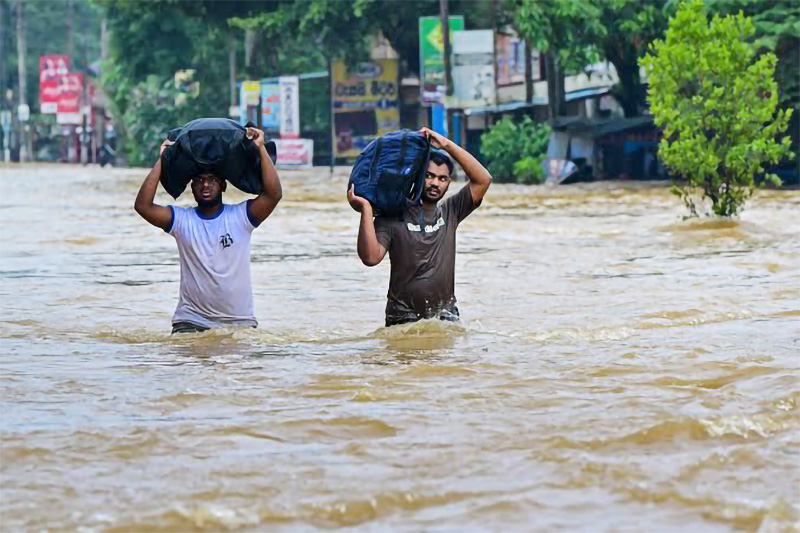
Cyclone Ditwah was the most destructive natural disaster to strike Sri Lanka since the 2004 tsunami. More than 640 people lost their lives, over 170 remain missing and more than 2.2 million people throughout the country were affected. Estimates placed the economic cost at over US$4 billion, equivalent to about four percent of Sri Lanka’s Gross Domestic Product. Sri Lanka could not cope with a disaster of this scale alone. International assistance was essential and it came quickly. India was the first country to send emergency relief, technical expertise and assistance to restore damaged infrastructure. Other South Asian countries also contributed humanitarian assistance. The Maldivian people collected and gave more than their government. This response was significant for reasons that went beyond humanitarian relief. It showed that person-to-person sympathies in South Asia can transcend nationality and religion.
South Asia is more often associated with political rivalry than regional cooperation. Relations between countries in the region have been shaped by wars, border disputes, security concerns and political mistrust. These divisions have also prevented the region from developing effective institutions for cooperation. The experience of the South Asian Association for Regional Cooperation (SAARC) illustrates this problem. Established in 1985, SAARC was expected to promote cooperation in trade, agriculture, education, health, poverty reduction and disaster management. Four decades later its record has been disappointing. Political disagreements between member states have stalled summit meetings with the last being held in 2014 and prevented many regional initiatives from moving beyond declarations.
The contrast with ASEAN is striking. Southeast Asia has also experienced territorial disputes, ideological divisions and political differences. But ASEAN chose to separate economic and functional cooperation from political disagreements wherever possible. As a result, trade within ASEAN today accounts for around one quarter of the region’s total trade. In South Asia the equivalent figure remains about five percent. The economic cost of this failure has been borne by every country in the region. Climate change offers an opportunity to adopt a different approach. It is not a substitute for resolving political disputes, but it provides an area in which cooperation is both necessary and politically possible. Floods, cyclones, droughts and heatwaves do not recognise national boundaries. Countries may disagree on political issues while still recognising that they face the same environmental risks.
Ditwah Effects
A conference on Climate, Peace and Security held, in Kathmandu, organised by the Global Partnership for the Prevention of Armed Conflict (GPPAC), recently, reflected a growing recognition that climate change is no longer only an environmental issue. The meeting of practitioners, academics, government officials and youth from the South Asian countries was a meeting of hearts and minds that transcended national differences. It also highlighted another important point. Effective responses to climate change cannot come from governments alone. They need to be informed by the experiences of the communities that are most directly affected. One of the case studies was Sri Lanka’s experience following Cyclone Ditwah which illustrates why community participation needs to be part of climate policy. Recovery is not simply about rebuilding damaged infrastructure. It is also about restoring livelihoods, resolving land issues and rebuilding confidence between affected communities and public institutions.
In their presentations at the conference, the Regional Centre for Strategic Studies (RCSS) and the National Peace Council (NPC) provided the experiences in Sri Lanka of communities affected by Cyclone Ditwah to identify lessons for future disaster responses. Their work was presented at the Kathmandu conference and brought community voices into a discussion that is often dominated by technical experts and policymakers. The research focused on communities that had experienced severe flooding and landslides. Rather than looking only at the physical destruction, it examined the impact on livelihoods, land ownership, relocation, compensation and social cohesion. The findings showed that recovery is often slowed not by a lack of humanitarian assistance but by unresolved social and administrative issues.
Many of those surveyed had lost crops, farming land and sources of income, in addition to their homes. Some families continued to live in schools, temporary shelters or with relatives months after the disaster. Although most accepted that relocation from high risk areas was necessary, they wanted assurance that they would not lose their livelihoods or become separated from their communities. For many, the greatest concern was not the move itself but uncertainty about access to farmland, schools, health services and places of worship after relocation.
The survey also highlighted weaknesses in the decision-making process. More than half of those interviewed said they had not been consulted before relocation decisions were taken, while only a very small minority believed their views had been properly considered. The strongest message from the communities was that relocation should take place with their participation and, wherever possible, keep existing communities together rather than dispersing them.
Beyond Lanka
Another issue brought out by the research was the particular vulnerability of plantation communities in Sri Lanka. Families whose homes had been damaged found that they could not always receive the full compensation available because they did not possess legal title to the houses they had occupied for generations. Climate-related disasters therefore exposed long standing issues relating to land ownership and equal access to state assistance that had existed long before the cyclone. Based on these findings, recommendations included that relocation programmes should preserve community networks and livelihoods, that plantation families should receive greater security of land tenure, that compensation procedures should be simplified, and that communities should participate more fully in disaster planning. They also called for stronger early warning systems, better communication in both Sinhala and Tamil, and greater transparency in the management of disaster recovery funds.
These problems are not unique to Sri Lanka. Across South Asia, climate-related disasters are exposing similar weaknesses. Whether it is flooding in Bangladesh, glacial melting in Nepal, heatwaves in India or coastal erosion in the Maldives, governments are finding that recovery depends as much on effective public institutions and community participation as on financial resources. There is considerable scope for countries to learn from one another’s experience. This is where SAARC could regain some of the relevance it has lost. It already has agreements and institutions dealing with disaster management, food security and regional cooperation. Rather than allowing broader political disputes to prevent progress in every area, member states could focus on issues where cooperation benefits everyone. Joint disaster preparedness, regional early warning systems, scientific collaboration, humanitarian assistance and climate adaptation are practical areas where progress is possible. As a recent beneficiary of South Asian solidarity and concern, Sri Lanka has a special obligation in this regard.
As a friend of all South Asian countries, Sri Lanka can play a facilitative role in the revival of SAARC cooperation. By sharing their experiences and lessons learned with counterparts elsewhere, civil society organisations can help to strengthen regional cooperation from the ground up, complementing cooperation between governments. Climate change will not remove the political disagreements that divide South Asia. But it does create a compelling reason for governments to work together where their interests coincide. Cyclone Ditwah demonstrated both Sri Lanka’s vulnerability and the willingness of neighbouring countries to respond when disaster struck. The next step should be to convert that humanitarian response into sustained regional cooperation. Climate cooperation could become an initiative in which South Asian governments and civil societies work together.
by Jehan Perera

Mexico beat Ecuador 2-0 to reach World Cup last-16 and break 40-year curse

Trump made more than $1bn from crypto in first year back in office

France beat Sweden as Mbappe draws level with Messi in World Cup goal chart

Showers will occur in the Western, Sabaragamuwa and North-western provinces and in Galle, Matara, Kandy and Nuwara-Eliya districts.

SJB: Petrol and diesel prices could have been reduced by Rs. 115 each per litre

NGO urges CIABOC to probe GR’s 2019 presidential poll nomination

‘Dates have the highest sugar content to fight Coronavirus’

Sunday Island 27 December – Headlines

#SundayIsland 17th December – Headlines

Sunday Island – 28th March

Sunday Island Headlines – 21 March

Sunday Island – 21st February – Headlines
-
 News3 days ago
LAWASIA warns against ad hoc initiative to increase judges’ retirement ages
-
 News4 days ago
Another 1,132 Sri Lankan Personnel to be deployed for United Nations Peacekeeping Missions
-

 News6 days ago
Kelaniya emerges as highest ranked Lankan uni in Times Higher Education Sustainability Impact Ratings
-
 Opinion7 days ago
A triumph for Pakistan’s skilled diplomacy at Iran-US talks
-

 Features4 days ago
People’s Bank expands digital banking network with 125th cheque deposit kiosk
-

 Business5 days ago
Month-end profit-takings drive stock trading; indices up
-
 News2 days ago
Chamuditha to seek removal of injunction on Youtube programme
-

 News5 days ago
FSP complains of irregularities in a Guinness World Record event held in Sri Lanka