
Sports
Tharanga Sri Lanka’s top contender for Ultimate Championships


Javelin national record holder Rumesh Tharanga is the country’s top contender for World Athletics’ Ultimate Championships as Sri Lanka Athletics included the new global event as one of the 19 international competitions scheduled for athletes in the 2026 calender announced on Wednesday.
The newest event introduced by World Athletics will be held in Budapest where only the World Champions, Olympic Champions and the highest ranked athletes in the ‘Road to the Ultimate’ rankings will fight for history’s biggest price money bag in track and field.
Rumesh Tharanga, Sri Lanka’s brightest prospect across all disciplines, is third in the year-end ‘Road to the Ultimate’ rankings published by World Athletics for the September 2026 event.
No Sri Lankan had been ranked that high for any event in history, though the current ranking does not guarantee his place.
Track and field athletes will have at least 19 international competitions and five local competitions conducted by Sri Lanka Athletics in the year 2026 according to the calendar published by local governing body.
The ‘Ultimate Championships’ designed to bring top athletes together at a season ending competition annually will be contested for a total cash bag of US $ 10 million. According to World Athletics winners will get US $ 150,000.00 each, by far the highest price money in history.
Tharanga is the only Sri Lankan athlete who has a realistic chance of securing a spot for the global event to be held in the Hungarian capital as only eight athletes are picked for field events. Track events will feature 16 athletes starting with two semifinals in the 100m, 200m, 400m, 800m, 100m and 110m hurdles and 400m hurdles. The top four in each semi-final will compete in the final. The 1500m, 5000m and relay races will be straight finals.
According to World Athletics ‘Road to the Ultimate’ rankings Tharanga is listed in the third place. He needs to remain among the top athletes in these rankings if he is to compete in Budapest.
There are at least three other top international events that Tharanga and the other Sri Lankan athletes in the senior category will be vying for in 2026. They are the Asian Throwing Championships, Commonwealth Games and the Asian Games.
It will be a busy year for junior and youth athletes as well with the Asian Junior Athletics Championships, World Junior Championships and Youth Olympic Games taking place in 2026.
The local competitions will commence with the National Short Course Championship early in January.
by Reemus Fernando ✍️


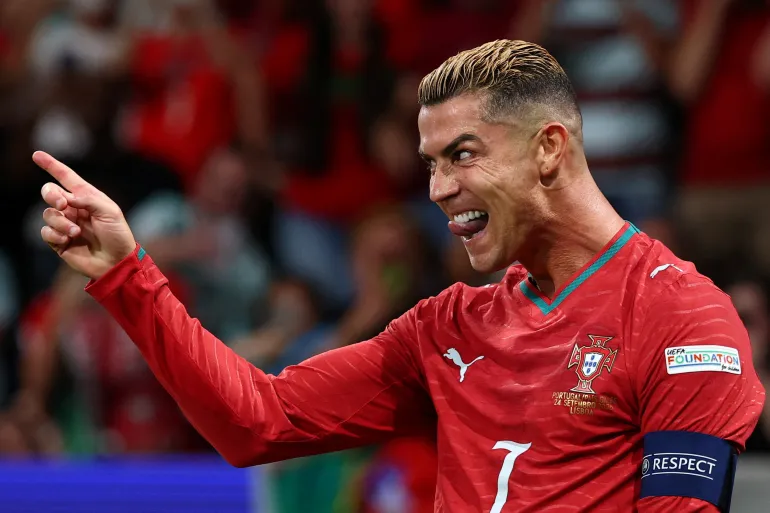
Cristiano Ronaldo has accused Portugal coach Jorge Jesus of twice breaking his word, saying a failed agreement to publicly explain his omission against Norway drove him out of the camp, but insisting he remained available after any punishment.
In a lengthy statement, the 41-year-old gave his account of the dispute that prompted his departure from Copenhagen before Portugal’s Nations League match versus Denmark last week.
Ronaldo said Jesus had agreed a plan under which the forward would miss the Norway and Denmark matches to manage his fitness. However, on the day of the Norway game, the coach told him he would play for 30 minutes.
“Everyone knows the rest. I warmed up from halftime onwards, watched the minutes tick by and wasn’t called on,” Ronaldo said.
“The manager had broken his word to me.”
Portugal’s captain and all-time leading scorer said a subsequent meeting with Jesus, attended by his club side Al Nassr’s sporting director Simao Coutinho, produced an agreement for the coach to clarify events at his next news conference.
According to Ronaldo, an eight-point document was prepared saying he had never demanded playing time, had respected Jesus’s decisions and that the coach asking him to warm up without bringing him on had been a mistake.
Ronaldo said the agreed notes did not require Jesus to apologise to him but said the coach’s public remarks bore no resemblance to their private discussion.
“It was the second time he had broken his word to me,” Ronaldo said. “I decided to leave the training camp without waiting for any further broken promises.”
The statement provided Ronaldo’s account, but on Sunday, after Portugal’s win over Norway, Jesus denied he had made any agreement with the player, nevertheless leaving the door open for his return.
The Portuguese Football Federation (FPF) did not immediately respond to a request for comment about Ronaldo’s statement.
Ronaldo apologised for failing to greet supporters after the Norway match and for leaving his teammates, accepting that his captaincy made his conduct more serious.
“The consequences of my actions must be assessed and punished by the Portuguese Football Federation,” he said.
Despite the rupture, Ronaldo said he was not limiting his international ambitions to a farewell appearance.
“If I’m physically fit, playing for my club – scoring goals, I hope – after serving whatever suspension is imposed on me, I’ll be available, as I’ve always been until now, to compete and win for our national team,” he added.
(Aljazeera)

by Reemus Fernando
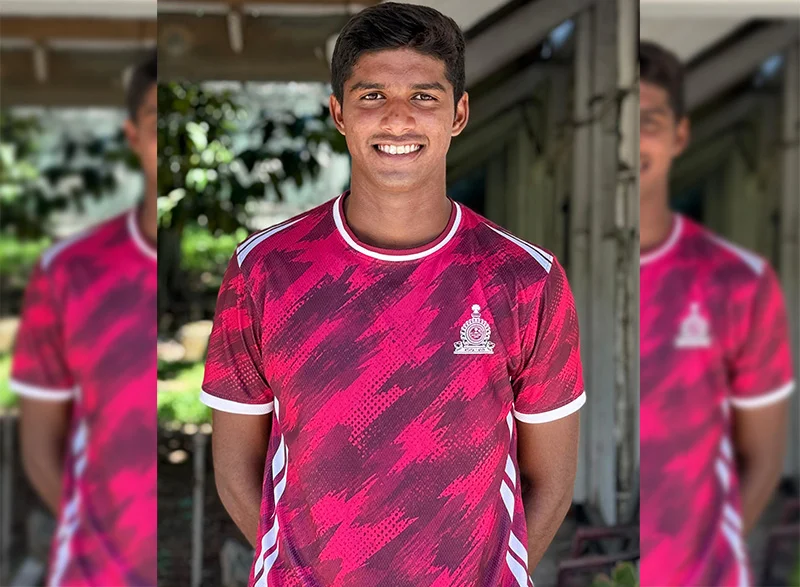
Nalanda College, Colombo continued their unbeaten run to come closer to securing a berth in the knockout stage as they beat Gurukula College by nine wickets in the Under 19 Division I Tier A Limited Overs Tournament match played at Campbell Place on Tuesday.
With Rusandu Silva continuing his impressive run in the tournament, Nalanda did well to restrict the team from Kelaniya to just 113 runs (in 35.4 overs).
After two outings Rusandu had six wickets against his name coming to this match.Rusandu and Methuka Perera claimed three wickets each. Lithum Wijekumara also impressed with two wickets, while Santhul Wijeyarathne took one.
Adeepa Pinsara was the only batsman to make a contribution of note as he top-scored with 35 off 49 balls, including four fours and two sixes, while Javindu Madusanka made 20.
In their chase Nalanda made light work of the modest target, reaching 114 for one, scoring at a rate of over a run a ball.
Nadul Jayalath cracked an unbeaten 62 from just 52 balls. His innings contained four fours and five sixes. He received valuable support from Lithum Wijekumara, who scored 35 off 42 deliveries with six boundaries.
Ranmith Senarath completed the successful chase with an unbeaten 10 off seven balls, including two fours.
Nalanda lost only one wicket as the opening pair added 89 for the first wicket. Jayalath and Senarath then finished the contest comfortably, securing a convincing nine-wicket victory with many overs to spare.
It was Nalanda’s third successive victory in the Tier A tourney after having beaten Thurstan (155) by seven wickets and St. Servatius’ Matara (187) by four wickets in the first two matches.
As of now, they are the leading team in Group G where they have only St. Joseph’s Darley Road to meet before the knockout stage.
With just two teams advancing to the next stage from each Group Nalanda are almost assured of their place.

33RD SINGER – MCA Super PREMIER LEAGUE
Hayley’s Group ‘A’, HNB ‘A’ and CDB registered wins by defeating Colombo Aces, Fairfirst Insurance and SLC Youth in the matches of the Mercantile Cricket Association’s Super Premier League cricket tournament on Sunday (04).
The MCA Super Premier League is sponsored by Singer Sri Lanka for the 33rd consecutive year.
At the Bloomfield Cricket ground, Nishan Madushka, Pulindu Perera and Minod Dhanuka smashed half tons as Hayley’s Group ‘A’ registered their second win of the tournament defeating Colombo Aces by six wickets.
At the Thurstan ground, Nipun Dhananjaya and Muditha Lakshan posted eighty plus scores to help CDB amass 307/8, which the bowlers defended by 71runs.
At the Colts Ground Milan Rathnayake starred with bat and ball [71 and 3-24] to help HNB ‘A’ overcome SLC Youth by 41 runs. Rehan Pieris topped SLC Youth score card with a 108 ball 77 with six fours and a six.
At Bloomfield Ground Colombo:
Hayley’s overcome Colombo Aces by six wickets
Colombo Aces 222/10 in 49 overs
[ Kavin Bandara 62, Dinura Kalupahan 50; Dhanajaya Lakshan 2-14, Ramesh Mendis 4-36]
Hayleys Group A 227/4 in 25.2 overs [Nishan Madushka 61, Pulindu Perera 51, Minod Bhanuka 54; Dinura Kalupahana 2-35]
At Thurstan College Ground:
CDB BY 71 runs
CDB 307/8 in 50 overs
[ Vishsd Randika 53, Nipun Dhananjaya 86, Muditha Lakshan 89; Himesh Ramanayake 3-49, ]
Fairfirst Insurance 236/10 in 46.4 overs
[Sanoj Dharshika 58, Yasiru Rodriga 78; Movin Subasinghe 3-27, Lahiru Madushanka 2-16]
At Colts ground;
Milan Rathnayake stars in HNB A’s 41 run win:
HNB ‘A’ 262/10 in 50 overs
[Janishka Perera 43, Anjala Bandara 54, Milan Rathnayake 71; Gimhan Mendis 2-43, Latheendra Akash 2-28, Himaru Deshan 2-42]
SLC Youth 221/10 in 44 overs [Rehan Peiris 77, Kithma Widnapathirana 53; Duvindu Ranathunga 2-40, Milan Rathnayake 3-24, Chamindu Wijesinghe 2-18]

Ronaldo apologizes for Portugal walkout; says Jesus broke promise

Showers in the Western, Sabaragamuwa, Central, Uva, North-western and Southern provinces and in Anuradhapura and Mannar districts

Fuel crunch looms

Gnansara Thera to be assigned to prison printing section: Officials

Speaker rejects Ajith Perera’s privilege complaint

OIC of FCID summoned before Maligakanda Magistrate

‘Dates have the highest sugar content to fight Coronavirus’

Sunday Island 27 December – Headlines

#SundayIsland 17th December – Headlines

Sunday Island – 28th March

Sunday Island Headlines – 21 March

Sunday Island – 21st February – Headlines
-

 News6 days ago
US-assisted ‘Ice’ detection: NPC to examine IGP’s move to transfer drug-busting team
-

 Editorial5 days ago
Colombo Port drug bust: The plot thickens
-

 Editorial6 days ago
Drug busting, transfers and trust deficit
-
 Features3 days ago
The first woman in the foreign service or Ceylon Overseas Service it was then called
-

 Editorial4 days ago
Fuelling discontent and protest
-
 News6 days ago
Sri Lankan facing death penalty in Saudi Arabia: Mano G appeals to Crown Prince
-
 Latest News4 days ago
Tharindu Rathnayake, bowlers secure Asian Games Bronze for Sri Lanka
-

 News2 days ago
Geneva takes up Sallay’s case and govt. ignores opportunity to answer accusations