
Connect with us

News

Tehran protests hijacked, says Iranian Embassy

Published

on

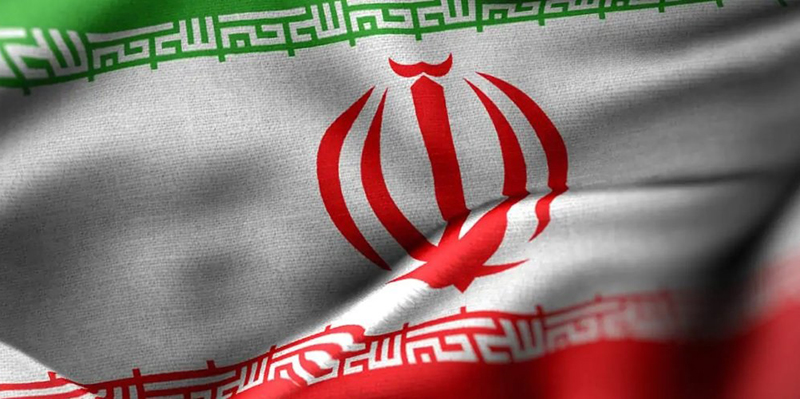
The Iranian Embassy in Colombo has defended the Iranian government’s handling of recent unrest, claiming that initially peaceful economic protests were later hijacked by violent groups with alleged foreign links.

In a statement titled ‘Unrest in Iran: From Reality to Distortion,’ issued by the Embassy’s Public Diplomacy Division yesterday, the Embassy said public dissent, including protests, is a normal feature of democratic societies and a legitimate means for citizens to convey concerns to authorities.

According to the statement, Iran has faced years of what it described as unlawful and unjust sanctions, which have placed economic pressure on the population. These conditions, it said, led to protests by merchants in Tehran between December 28 and 31, aimed at raising concerns over economic policies.

Full text of the statement: In democratic societies, governments continuously seek to receive the opinions of the public regarding their policies and decisions. These opinions are regularly communicated to authorities through parliamentary representatives and, at times, through political parties, media outlets, surveys, and even protest gatherings. In fact, in societies where public protests are absent, the democratic and popular nature of such governments should be seriously questioned.

The Islamic Republic of Iran, over the past years, has faced various unlawful, illegitimate and unjust sanctions, primarily because Iran refused to allow its national destiny to be dictated by the United States or other self-proclaimed great powers. As a result, the Iranian people have endured significant economic pressures while steadfastly upholding their principles and ideals.

This situation has led to certain criticisms and protests regarding economic policies. From December 28 to 31, Tehran’s merchants staged demonstrations, attempting to directly convey their grievances to the country’s economic authorities. Immediately, the President of the Islamic Republic of Iran, through official directives, acknowledged the merchants’ protests and issued orders for the establishment of specialized committees to address these issues.

Simultaneously, as these meetings and specialized committees began their work, the peaceful, professional protests of the merchants were gradually diverted by certain elements. From January 1 to 7, these protests, which had remained entirely peaceful until that point, began to escalate into violence. At this stage, specific elements infiltrated the ranks of ordinary citizens, attempting to damage urban infrastructure during the demonstrations.

According to documented reports, from January 8 onward, the violent actions of these specific groups escalated into outright acts of terrorism, as they opened fire on police forces and ordinary citizens using firearms. Their objective was to increase the number of casualties and injuries, regardless of whether the victims were law enforcement personnel or civilians.

Concurrently, media outlets affiliated with the Zionist regime, by distorting reports and statistics, engaged in relentless efforts to shape the perceptions of international observers against the Islamic Republic of Iran and the country’s national security. In this context, the President of the United States, employing highly undiplomatic language, openly threatened Iran and promised military action by both the U.S. and the Zionist regime.

As a result, two entirely distinct fronts emerged within the country: the terrorists and rioters, who had no goal other than destruction, killing, and chaos, and the general populace, alongside law enforcement, who sought peace and aimed to confront opportunists.

On Monday, January 12, citizens across all Iranian cities took to the streets in large numbers to express their strong condemnation of the terrorist groups that had destroyed mosques, schools, banks, subway systems, ambulances, and other urban infrastructure. They called on national authorities to take decisive action against these rioters.

At present, the government of the Islamic Republic of Iran possesses sufficient documentation and evidence proving the links of these rioters with certain intelligence services, including Mossad. This information, along with the severe threats made by the U.S. President to attack Iran, has been submitted to the United Nations and to the Secretary-General of the organization.

The Islamic Republic of Iran expects impartial media outlets, rather than repeating baseless claims propagated by news agencies affiliated with the Zionist regime, to align themselves with the Iranian people and accurately reflect the facts.

It is important to recall that, following the brutal massacres in Gaza, the Zionist regime, during a twelve-day series of attacks on Iranian cities in June 2025, killed more than one thousand Iranian citizens, with the United States regime complicit in these crimes.


Continue Reading
Click to comment

Leave a Reply

Your email address will not be published. Required fields are marked *

News

SLPP MP killing: 12 Aragalaya activists sentenced to death

Published

on

Amarakeerthi

… ex-Public Security Minister says lives of MP and bodyguard could have been saved

The Gampaha High Court Trial-at-Bar yesterday (11) sentenced 12 persons to death by hanging over the May 9, 2022, killing of former Polonnaruwa District SLPP MP Amarakeerthi Athukorala and his police bodyguard. They were among altogether 39 persons tried by the High Court for the double murder. Of the remaining accused, four persons were handed six-month sentences, suspended for five years, and 23 others acquitted by the Gampaha High Court Trial-at-Bar, consisting of High Court Judges Sahan Mapa Bandara Rashmi Singappuli and A.D. Ruwan Pathirana.

Of the 12 sentenced to death, one continues to evade the law.

The verdict was to be announced on January 14.

Sri Lanka suspended implementation of the death penalty in 1976. The EU has repeatedly warned that resumption of judicial executions would result in consequences.

The new entrant to Parliament, and his bodyguard, were lynched by a ‘Aragalaya’ mob, in broad daylight. They were on their way back to Polonnaruwa when the gang intercepted the MP’s car, in the Nittambuwa town, during violence unleashed in the aftermath of SLPP goons’ attack on those camping at the Gotagohome site at Galle Face.

Footage secured from a nearby CCTV camera showed MP Amarakeerthi Athukorala fleeing the scene with his security officer, who was armed with a gun. Dozens of suspects had been subsequently arrested on several occasions on suspicion of involvement in the MP’s murder. The MP and police officer were killed in a garment store where they took refuge.

Earlier, the case caused major controversy over the Gampaha High Court Trial-at-Bar granting bail to all suspects. The Attorney General appealed to the Supreme Court (SC) to cancel the bail granted by the High Court Trial-at-Bar. The AG argued that releasing the accused on bail would impede a fair trial. The AG asked that the SC cancel the bail order and requested that the accused be placed in remand custody till the conclusion of the trial.

One-time Law and Order Minister Rear Admiral (retd) Sarath Weerasekera told The Island that the lives of the parliamentarian and his police bodyguard could have been saved if the military swiftly responded to the then developing situation. Former Colombo District MP said that he told Parliament that the Army, in spite of having troops at Nittambuwa, didn’t intervene. The powers that be never inquired into the lapses on the part of those responsible for maintaining law and order, the ex-Minister said, alleging that successive governments conveniently neglected that responsibility.

by Shamindra Ferdinando

Continue Reading

News

Over one million Lankan devotees venerate sacred relics

Published

on

Exposition of Devnimori Relics of Buddha at the Gangaramaya Temple (pic courtesy IHC)

The Devnimori Relics of Lord Buddha, brought to Sri Lanka on February 04, 2026, departed for India on February 11, 2026, after the successful conclusion of the Exposition at the Gangaramaya Temple in Colombo. The Relics were accompanied by the Governor of Madhya Pradesh Mangubhai C. Patel, and Deputy Chief Minister of Arunachal Pradesh, Chowna Mein, on their return journey.

At the ceremonial departure, at the Bandaranaike International Airport, Minister of Buddhasasana, Religious and Cultural Affairs (Dr.) Hiniduma Sunil Senevi, Deputy Minister of Buddhasasana, Religious and Cultural Affairs Gamagedara Dissanayake, and High Commissioner of India Santosh Jha, were present to see off the Buddha Relics.

IHC spokesperson: ” During the visit, the delegation led by Governor of Madhya Pradesh, and Deputy Chief Minister of Arunachal Pradesh met Minister of Foreign Affairs, Foreign Employment and Tourism Vijitha Herath, Deputy Minister of Environment Anton Jayakody, and Governor of North Western Province Tissa Kumarasiri Warnasuriya. In addition, the dignitaries interacted with members of the Indian-origin community in Sri Lanka.

The Exposition was inaugurated by President Anura Kumara Dissanayaka from the Sri Lankan side, and Governor of Gujarat Acharya Devvrat, and Deputy Chief Minister of Gujarat Harsh Sanghavi from the Indian side, in the presence of the Chief Incumbent of the Gangaramaya Temple Ven. Dr. Kirinde Assaji Thera at the Gangaramaya Temple, Colombo, on February 04, 2026. The week-long Exposition saw over a million devotees paying their respects. Prime Minister of Sri Lanka (Dr.) Harini Amarasuriya and several Cabinet Ministers, as well as the Speaker, the Leader of Opposition, former Presidents and numerous other Members of Parliament paid their respects during the course of the Exposition.

The Exposition marked the first public veneration of these Holy Relics outside of India. Complementing the exposition, two exhibitions titled “Unearthing the Sacred Piprahwa” and “Sacred Relic and Cultural Engagement of Contemporary India” were also held to showcase the shared Buddhist heritage of India and Sri Lanka.

The Exposition was announced by Prime Minister Narendra Modi during his State Visit to Sri Lanka in April 2025. The Exposition further reinforced the spiritual and cultural linkages between the two civilizational partners. India remains committed to deepening the linkages between both countries through continued bilateral initiatives and regular exchanges between the monastic and scholarly communities.”

Continue Reading

News

Flooded Chemmani mass grave cleared amidst persistent rain

Published

on

Court officials and others, including lawyers, at the Chemmani mass graves site (pic courtesy Tamil Guardian)

Action was taken on Monday (9) to drain rainwater from the Chemmani mass graves as preparations continued for the next phase of excavation, Tamil Guardian has reported.

During the first and second phases of excavation at Chemmani, a total of 240 sets of human skeletal remains were identified. Of these, 239 sets have so far been exhumed under court supervision.

Although funds had already been allocated and preliminary arrangements were in place to begin the third phase of excavation, persistent heavy rainfall, in Jaffna, since November last year, resulted in rainwater stagnating within the burial site, bringing the process to a halt.

In response, steps were taken on Monday to remove the accumulated water with the assistance of the Nallur Pradeshiya Sabha. However, despite the drainage, the site remains heavily waterlogged and muddy, making immediate excavation unsafe, Tamil Guardian reported.

As a result, it has been decided that a determination on when the next phase of excavation can commence will be made on 16 March, when the case is due to be taken up again. The matter has been adjourned to that date.

The drainage operation was inspected on site by a team that included Jaffna Magistrate S. Lenin Kumar, Judicial Medical Officer Sellaiyah Pranavan, and Attorneys-at-Law Niranjan and G. Rajitha.

Tamil Guardian disclosed that funds allocated last year by the Ministry of Justice for the third phase of excavation have lapsed and been returned, as the work could not proceed within the allocated timeframe. As a result, a fresh budget proposal must now be submitted for the current year in order to secure the necessary funding.

The Judicial Medical Officer has taken steps to submit a new cost estimate to the court, so that the excavation process can resume once conditions at the site permit.

Continue Reading

Trending