
Sports
Team of the tournament: Mandhana, Wolvaardt, Gardner, Ecclestone and…?

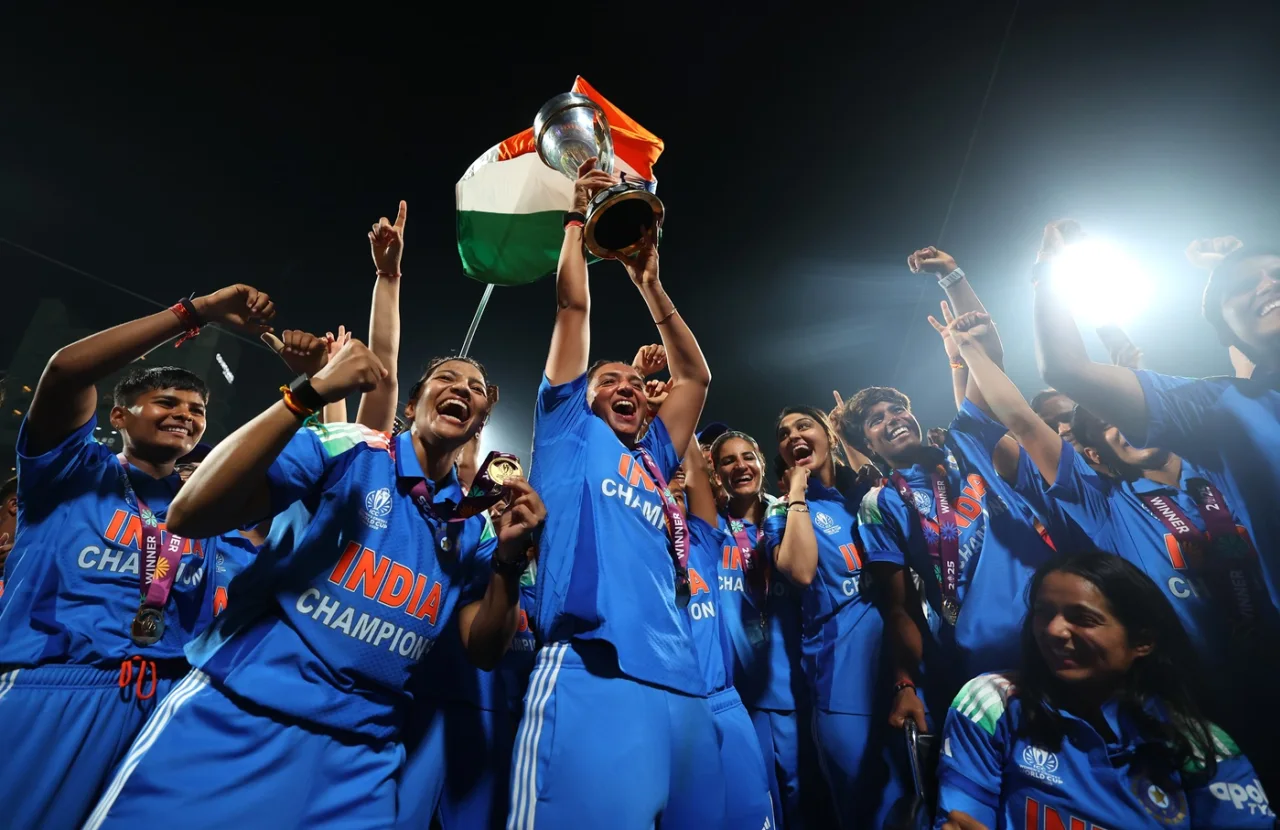
The Women’s World Cup 2025 drew to a close at the DY Patil Stadium in Navi Mumbai, where India upstaged South Africa to be crowned champions. This was one of the closest World Cups in recent times, and there were some tricky choices to make in ESPNcricinfo’s team of the tournament.
Runs 434 | Avg 54.25 | SR 99.08
So rich was Mandhana’s vein of form coming into the competition that a quiet start – 54 runs in the first three outings – had left viewers perplexed. But she dialled things up once the big games arrived: 80 versus Australia, 88 versus England, and 109 in the high-stakes clash against New Zealand. She added 45 in the final to finish with the highest tally for an Indian in a women’s World Cup.
Laura Wolvaardt (capt)
Runs 571 | Avg 71.37 | SR 98.78
Wolvaardt, too, had a slow start, but more than made up for lost time, scoring 30 or more in seven consecutive matches – including half-centuries in wins against India, Sri Lanka and Pakistan – and then hit centuries in both knockouts. Her 101 in the final versus India may have ended in a losing cause, but the 169 against England to take South Africa to their maiden ODI World Cup final will go down as one of the all-time great performances. Her tally is, by some distance, the highest at an edition of the ODI World Cup.
Jemimah Rodrigues
Runs 292 | Avg 58.40 | SR 101.03
Speaking of iffy beginnings… Rodrigues found herself on the bench three weeks into her maiden ODI World Cup, after two ducks and two 30s. She celebrated her return – and a promotion to No. 3 – with a sparkling 76 not out off 55 balls versus New Zealand, before the career-defining 127 not out to end Australia’s reign with a record chase in the semi-finals.
Marizanne Kapp
Runs 208 | SR 102.97 | Wickets 12 | ER 4.18
Continuing the trend of peaking at the right time was Kapp, whose first big contribution (aside from a chase-stabilising half-century against Bangladesh) came in the sixth game of the campaign: 68 not out off 43 balls followed by three new-ball wickets against Pakistan. She then demolished England’s hopes of chasing 320 in the semi-final with a double-strike in the first over, finishing with 5 for 20, having earlier chipped in with a 33-ball 42.
Annabel Sutherland
Runs 117 | SR 85.40 | Wickets 17 | ER 4.45
Sutherland’s consistent mastery at the death, fuelled by a lethal back-of-the-hand slower ball, meant she was the joint highest wicket taker before the final. She started with a three-for against New Zealand, triggered an Indian collapse with 5 for 40 in Visakhapatnam, and added another three versus England – a game where she also had her only significant outing with the bat.
Ashleigh Gardner
Runs 328 | SR 130.15 | Wickets 7 | ER 5.30
Prior to 2025, the World Cup had seen only three hundreds from batters coming in at No. 5 or lower; Gardner hit two in this edition, both stunning recovery acts. She turned 128 for 5 into 326 against New Zealand by smashing 115 off 83 balls, and then turned a tricky chase versus England into a cakewalk – Australia were 68 for 4 in pursuit of 245 – with 104* off 73. There was a fifty in the semis too, and she chipped in with the ball all along.
Richa Ghosh (wk)
Runs 235 | Avg 39.16 | SR 133.52 | Dismissals 4
Ghosh takes the wicketkeeping gloves in our team owing to her finishing prowess. She was the tournament’s fastest scorer as well as its highest six hitter. Her unbeaten 20-ball 35 pushed India closer to 250 against Pakistan in Colombo; she played cameos in both the games versus Australia, including a handy 16-ball 26 in the record semi-final chase; she added 34 off 24 in the title clash against South Africa, and her 94 off 77 against the same opponents was an early contender for the knock of the tournament…
Nadine de Klerk
Runs 208 | SR 131.64 | Wickets 9 | ER 5.30
… only to be upstaged by de Klerk later the same evening. De Klerk pulled off rescue acts twice in five days in Visakhapatnam: the 84* off 54 against India pulled off one of the tournament’s all-time great escapes, while the 37* off 29 versus Bangladesh averted one of the big upsets. De Klerk finished as this edition’s second-fastest scorer, and with the second-most sixes, while remaining a reliable presence with the ball, taking at least a wicket every time she was called on to bowl.
Deepti Sharma
Wickets 22 | ER 5.52 | Runs 215 | SR 90.33
Deepti’s tournament started with a fifty and a three-for, and ended with a fifty and a five-for – the first such achievement in any World Cup final, women’s or men’s. The leading wicket-taker of the tournament, Deepti became the first player to do the double of 200+ runs and 15+ wickets in an edition of the women’s ODI World Cup. The Player of the Tournament recipient also contributed a four-for and fifty in the loss to England, and injected vital momentum in the semi-final chase against Australia with a 17-ball 24.
Alana King
Wickets 13 | Avg 17.38 | ER 4.03
King delivered the spell of the tournament, claiming the first seven-for in World Cup history, to bamboozle South Africa in Indore. But don’t discount the rest of her tournament: two key wickets in the opener versus New Zealand, miserly returns against Bangladesh (2 for 18) and England (1 for 20), and the first fifty from a No. 10 in a women’s white-ball international to stitch a rescue act against Pakistan.
Sophie Ecclestone
Wickets 16 | Avg 14.25 | ER 4.05
Ecclestone began the tournament playing second fiddle to fellow slow left-arm spinner Linsey Smith’s hero act against South Africa, but finished as strongly as ever. She proved too strong for Bangladesh (3 for 24) and Sri Lanka (4 for 17), and despite tougher outings in Indore, and an injury scare ahead of the semi-final, she was England’s standout performer in the defeat to South Africa with 4 for 44.
12th: Sophie Devine
Runs 289 | Ave 57.80 | SR 85.25 | Wkts 4
In the final chapter of an illustrious ODI career, Devine was the lone star of New Zealand’s campaign, top-scoring in defeats to Australia (112) and South Africa (85), and scoring 63 in the win over Bangladesh. That meant Devine had 260 runs after three outings, but New Zealand didn’t bat for another two weeks, and Devine didn’t get a perfect swansong with low scores against India and England.
[Cricinfo]

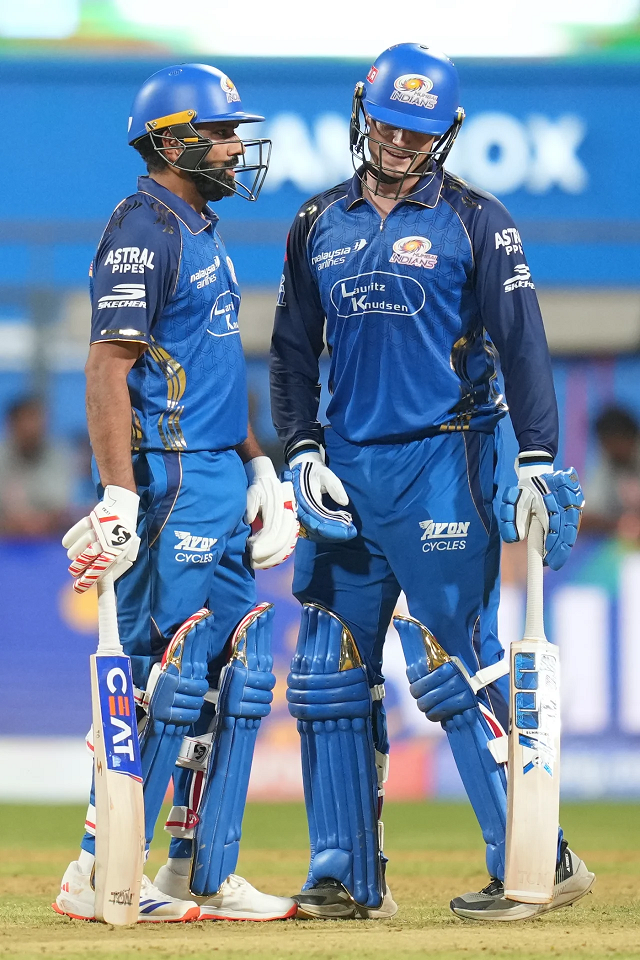
Before Sunday, Mumbai Indians had never chased down a 220-plus target in their previous seven attempts. MI had never won their opening game of the IPL since 2012. On day two of IPL 2026, MI broke two jinxes as they chased down 221 in 19.1 overs to begin their season with a comfortable six-wicket win over Kolkata Knight Riders. Rohit Sharma wound back the clock, smashing 78 off 38 balls, while Ryan Rickelton thumped 81 off 43, the duo adding 148 runs for the opening wicket off 71 balls.
That KKR were coming into this opening game severely depleted on the bowling front was known. The extent of it was visible on Sunday night with Vaibhav Arora and Blessing Muzarabani toothless, Varun Chakravarthy ineffective and Sunil Narine a shadow of his former self.
At the halfway mark, KKR might have been happy reaching 220 for 4, their second-highest score against MI in the IPL. Ajinkya Rahane, who at the toss said that he had “never seen so much of grass at Wankhede”, scored 67 off 40 balls while Angkrish Raghuvanshi, another Mumbai lad, made 51 off 29 as KKR breached the 220 mark. But against a KKR unit missing several of their frontline seamers, MI barely had any hiccups, completing the highest-successful IPL chase at the Wankhede with five balls to spare.
It was a typical Rohit innings that Wankhede has witnessed so many times, laced with some of the most pristine shots. He was on 12 off eight at one stage, but once in, he lit up Mumbai like only he can. Coming into the game, he had a strike rate of less than 100 against Varun in T20s. So, what did he do? He lofted the spinner inside-out over covers first ball and then lifted him for six the next ball. By the time the powerplay was done, Rohit had raced to a 23-ball fifty, his fastest in the IPL and MI’s chase was on course.
They raced to 80 in the first six, past 100 in 8.1 overs and by the time Rohit fell, thanks to a lovely catch by Anukul Roy running back from mid-off, MI’s required rate had gone below nine, which at the start of the innings was above 11 an over.
There were a few raised eyebrows when Rickelton was picked over the more experienced Quinton de Kock , but the former justified his selection. Rickelton needed just the first couple of overs to get a hang of the surface and once he did, there was no stopping him. He deposited Arora for back-to-back sixes, one over extra cover and then over deep midwicket, and that kickstarted a brutal takedown of the KKR bowlers.
While he saw Rohit do his thing in the powerplay, Rickelton took on Narine after the six-over mark. He slog swept him over deep midwicket in his first over and then launched him over the ropes twice in three balls in the next to raise a 24-ball fifty.
He didn’t stop there and only fell courtesy a stunning direct hit from the deep by Anukul. Suryakumar Yadav, the Impact Sub, came and went, but Hardik Pandya and Tilak Varma took MI closer. Hardik finished on an unbeaten 18 off 11 balls, while Naman Dhir hit the winning runs off Anukul as MI started their IPL 2026 in style.
Finn Allen brought his stellar form international cricket to the IPL. After facing five dot balls against Hardik, he went after MI debutant AM Ghazanfar, pumping him to the deep square fence and then spanking him for an 86-metre six over wide long-on. Another six capped off Ghazanfar’s opening over. Rahane then went after Hardik, thumping him for back-to-back sixes and Allen then got on strike and went 4, 4, 4. A monster 26-run over against Hardik helped KKR race past fifty in 3.5 overs, their fastest against MI in the IPL.
Shardul Thqkur, on MI debut, then brought his experience into play and sent back Allen who shoveled a slower length ball to long-off but Rahane carried on. He struck two fours off Thakur as KKR finished on 78 for 1 in six overs.
Two Mumbai boys on opposite ends were critical to their team’s cause. After removing Allen, Thakur sent back Cameron Green, whose innings lasted just ten balls and he then dismissed Rahane with a hard length delivery outside off that was mistimed to extra cover. At this point, KKR were still going at over ten an over but had lost steam, thanks to some terrific bowling from Bumrah, Trent Boult and Thakur.
Enter the other Mumbai boy, Raghuvanshi. He was on 17 off 14 at one stage but found a new lease of life after being dropped by Rohit at long-on. He closed out the 15th over with a four and six against Ghazanfar and then launched Thakur over long-on. Raghuvanshi added 60 off 30 balls with Rinku Singh for the fourth wicket, reaching his fifty off 28 balls as KKR raced past 200 in the 19th over.
Rinku struck unbeaten on 33 off 21 as KKR finished on 220 for 4 but it wasn’t enough.
Brief scores:
Mumbai Indians 221 for 4 in 19.1 overs (Ryan Rickelton 81, Rohit Sharma 78, Suryakumar Yadav 16, Tilak Varma 20, HardikPandya 18*; Vaibhav Arora 1-52, Kartik Tyagi 1-43, Sunil Narine 1-30) beat Kolkata Knight Riders 220 for 4 in 20 overs (Ajinkya Rahane 67, Finn Allen 37, Cameron Green 18, Angkrish Raghuvanshi 51, Rinku Singh 33*; Hardik Pandya 1-39, Shardul Thakur 3-39) by six wickets
[Cricinfo]


Sri Lankan champion thrower Rumesh Tharanga created history with yet another world-leading effort when he shattered his own national record at the Champions Track and Field event held at Diyagama Mahinda Rajapaksa Stadium on Saturday.
Tharanga produced a massive throw of 89.37 metres in his final attempt, a distance which, once ratified by World Athletics, is expected to stand as the fourth-longest throw ever recorded in Asia. The outstanding performance further cemented his status as one of the region’s leading javelin throwers.
Despite facing little competition from his rivals at the meet, Tharanga displayed the composure and determination of a true champion. Rising above the field, he delivered the record-breaking throw in dramatic fashion with his final effort of the competition.
Coming into the meet, Tharanga already held the world-leading mark of 83.07 metres for the season. Saturday’s performance elevated him to a new level, strengthening his reputation as a strong medal prospect for Sri Lanka on the global stage this year.
Tharanga first attracted widespread international attention when he set a Sri Lankan national record with a throw of 86.50 metres, a performance that earned him the gold medal at an international meet and secured direct qualification for the World Athletics Championships.
The former athlete of St. Peter’s College Colombo has continued to impress since then, producing consistent world-class performances while competing against some of the best javelin throwers in the world. Among his major achievements is reaching the final of the 2025 World Athletics Championships, becoming the first Sri Lankan male javelin thrower to reach the final stage of the event.
With his latest record-breaking performance, Tharanga has once again demonstrated that he is ready to shine and carry Sri Lanka’s hopes at the highest level of international athletics.
By Reemus Fernando
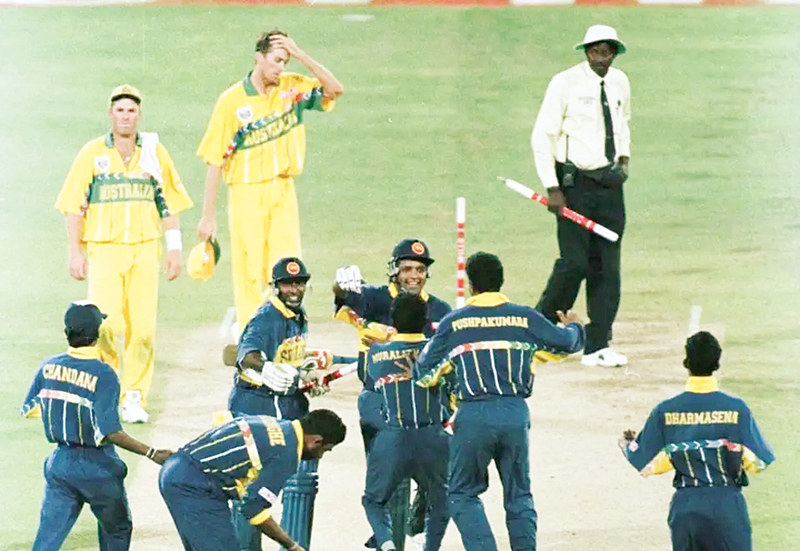
Sri Lanka’s trailblazing 1996 World Cup-winning side will roll back the years when they take on a World XI in Kuala Lumpur, marking three decades since their watershed triumph that changed the game’s field settings for good.
The exhibition match, hosted by the historic Royal Selangor Club, an institution that has been part of Asia’s sporting fabric since 1884, will be preceded by a gala dinner before the old warhorses lace up their boots once more against a Rest of the World XI.
It promises to be more than a nostalgic lap around the park.
“Some of the players took the initiative and I thought it was a splendid idea,” Arjuna Ranatunga, the captain who marshalled his troops like a seasoned general in 1996, told Telecom Asia Sport. “It helps us come together again and more importantly, inspire the next lot coming through.”
Beyond the boundary ropes, the legends will don the coach’s hat, conducting sessions aimed at passing on the baton to aspiring youngsters.
Former Malaysian cricketer Devindran Ramanathan, one of the chief architects behind the event, is keen that this is not just a walk down memory lane but a springboard for the future.
“This isn’t only about celebrating a World Cup win,” Ramanathan said. “It’s about showing young players what’s possible when you dare to dream.”
“When players of that calibre turn up, it shouldn’t end with autographs and photographs. It must open doors and broaden horizons,” he added.
In a heartening initiative, around 20 youngsters from Malaysia’s interior, players who have been making steady strides despite limited facilities, will be brought to the capital on May 15 and 16 to witness the action up close.
For many of them, it will be a once-in-a-lifetime opportunity to rub shoulders with giants of the game, a chance to trade dusty nets for the bright lights and perhaps believe that they, too, can one day play on the big stage.
“The real impact is not the match or the dinner,” Ramanathan noted. “It is whether a young player walks away believing they can go further.”
Malaysia, steadily padding up as a regional cricket hub, has already hosted events like the Under-19 World Cup and continues to expand its footprint in the game. In a sporting landscape dominated by motor racing, racquet sports and football, visits from former world champions in cricket could well help the sport get a firmer grip.
All 14 members of Sri Lanka’s 1996 squad are expected to travel to Malaysia in the second week of May, even as life has taken many of them to different corners of the globe.
Their famous triumph over Australia in Lahore remains one of cricket’s most defining moments, a victory that didn’t just tilt the balance of a final, but shifted the axis of the modern game itself.
(telecomasia.net)

Electricity tariffs to be increased from 1st April

A QR code system to be introduced for agricultural lands and other sectors requiring fuel

Rickelton, Rohit, Shardul break Mumbai’s first-game jinx

Oil tops $116 a barrel as Iran accuses US of preparing invasion

Iranian attack damages Kuwait power and desalination plant, kills worker

Warm weather conditions prevailing over the island are expected to continue

‘Dates have the highest sugar content to fight Coronavirus’

Sunday Island 27 December – Headlines

#SundayIsland 17th December – Headlines

Sunday Island – 28th March

Sunday Island Headlines – 21 March

Sunday Island – 21st February – Headlines
-

 News6 days ago
Senior citizens above 70 years to receive March allowances on Thursday (26)
-

 Features3 days ago
A World Order in Crisis: War, Power, and Resistance
-

 News4 days ago
Energy Minister indicted on corruption charges ahead of no-faith motion against him
-

 News5 days ago
US dodges question on AKD’s claim SL denied permission for military aircraft to land
-

 Business5 days ago
Dialog Unveils Dialog Play Mini with Netflix and Apple TV
-

 News6 days ago
CEB Engineers warn public to be prepared for power cuts after New Year
-

 Business7 days ago
Postponement of Sri Lanka Investment Forum 2026
-

 Sports4 days ago
SLC to hold EGM in April