
Latest News
‘Team audit’ done, Kirsten hopes Sri Lanka keep ‘progressing and improving’


When Gary Kirsten coached India to ODI World Cup glory in 2011, 20 million Sri Lankan hearts were shattered. Now, as Sri Lanka’s new head coach, his mission is to mend them.
In a wide-ranging Q&A session with the local media, his first since being appointed last month for two years – officially from April 14 – Kirsten laid out the roadmap as he sought to blend data-driven modernisation with the island’s cricketing DNA.
Kirsten’s first week has been defined by a comprehensive “team audit”. While Sri Lanka has never lacked for talent in the game, Kirsten believes the discrepancy between that talent and the team’s current world rankings don’t “match up”.
“The formula – we will progress as we go along,” he said. “I have certainly been spending the first week doing a bit of a team audit, just to get to understand where everyone is at. You can’t only rely on talent. You need a good work ethic and a good attitude.”
To broaden this audit, Kirsten is already looking at the next generation, confirming plans to head down to Galle immediately to watch the ‘A’ team in action against New Zealand A.
“I am quite excited just to see all the players and what talent is out there,” he said, adding that his vision for a “balanced outfit” extended well beyond the current senior squad. This also goes along with a desire to build more squad depth, to aid with player workload management.
“For me, what’s important around that is that we have a lot of depth in the group across the different formats. So you are able to rotate players when you need to. You can’t expect one guy just to be playing all the time. He’ll blow up quite quickly.”
Having begun his coaching career in 2008, Kirsten’s coaching style has evolved significantly over the years, including several seasons spent on the franchise circuit. In this time, he has moved away from a “top-down” approach to coaching, with the growing realisation that the modern player is now highly informed and resistant to being told what to do without objective evidence.
“The modern player often doesn’t listen to a ‘we’ll-tell-you-what-to-do’ approach because he’s got a strong argument to tell you otherwise,” Kirsten said, with his solution to this being to present “compelling arguments” backed by data.
He pointed to a specific metric – the number of ODI hundreds Sri Lanka have scored over their last 30 matches – as an example. Despite having played 100 ODIs since the start of 2020 – more than any other Full Member, with India (91), New Zealand (83) and Australia (80) behind – Sri Lanka have just 25 ODI hundreds. In comparison, India have 38, New Zealand have 35, and Australia 32.
“I just looked at where they are ranked in the world,” Kirsten said. “If you present it in a good way to the players and it’s compelling, you’ll get movement.”
In terms of player selection, while acknowledging that the information derived from the data would be “weighted massively”, Kirsten is cognisant of the fact that big-game players might sometimes appear outside of the data – though that is something that will “take time” for him to identify.
“I think the next component to that is every team needs individuals in the team that are willing to step up and make those hard performances when the team needs it,” he said. “And each team, when you’ve got a good group of those guys, they win games out of nowhere and perform when you really need it. Those are the individuals I’m really excited by. Now that’s going to take time for me to understand and learn.”
Talking about the rise of global T20 leagues, Kirsten was pragmatic. With several Sri Lankan players involved in major leagues, he viewed match-readiness as superior to training-camp drills – even if that meant that he wouldn’t be able to work with his full allotment of players until much closer to the start of Sri Lanka’s tour of the West Indies in June.
“We’ll probably have the full complement of players available just two or three days before their first ODI,” Kirsten said. “So it’s not an easy thing, but we do what we can. And you try and adapt because that’s what international cricket requires. To be honest with you, I prefer guys to be in competition and playing matches. I always think that’s the best form of preparation that you can have. So to have a group of players that are match-ready by the time we play the first ODI against West Indies, I’m happy with it.
“In fact, in all the coaching opportunities that I’ve had around the world, I’ve generally had about ten days’ prep before we play the first game. So this time I’ve got six weeks. That’s pretty cool.”
On the topic of fitness protocols, Kirsten offered a performance-based defence of the current standards, reframing them as a “tool for availability” so as to ensure key players remain match-fit. Sri Lanka lost all three of Eshan Malinga, Matheesha Pathirana and Wanidu Hasarnga at different points across the T20 World Cup earlier this year.
Kirsten also effectively ended any debate on whether the requirements were too harsh. “Fitness is about keeping people on the field for as long as possible. You don’t want to have injuries where, in an important match, guys are not available. And as I understand in Sri Lankan cricket, there are protocols in place. And players have got to reach pretty standard levels, to be honest with you. I don’t think that the fitness protocols are too hard on the players. Certainly, your basic and standard levels.”
With approximately 20-25 ODIs remaining before the 2027 World Cup in southern Africa, Kirsten is already reverse-engineering the squad for those specific conditions. His native South Africa, especially, demands a different brand of cricket, and he is looking for a very specific set of skills.
“It’s going to be very different conditions to what a lot of the guys are used to, so how do plan for that? It’s about making sure all our bases are covered in the skillsets of the team,” Kirsten said. “Do we have guys with great air speed? Do we have guys that can swing the ball? Do we have guys that can bowl with bounce? Do you have top spinners? And do you have six batters who can bat on those kind of conditions?”
As Kirsten prepared to immerse himself in his new country of work – literally, with plans to cycle around the entire island – the South African knows that results in the interim will continue to matter as the World Cup build-up carries on.
“Results count, we can’t hide from that,” he said. “Every series we play going into the World Cup, we want to give a good account of ourselves. We’ll be aiming at progressing and improving as we get closer.”
[Cricinfo]

Latest News
Landslide Early Warnings issued to the Districts of Kandy, Kegalle, Matale and Ratnapura

The Hational Building Research Institute (NBRI) has issued landslide early warnings to the Districts of Kandy, Kegalle, Matale and Ratnapura valid from 2200 hrs on 03rd October upto 2200 hrs on 04th October 2026.
Accordingly,
LEVEL II (AMBER) landslide early warnings have been issued to the Divisional Secretaries Divisions and surrounding areas of Udu Dumbara and Minipe 8n the Kandy district, Dehiowita in the Kegalle district, and Ambanganga Korale and Matale in the Matale district.
LEVEL I (YELLOW) landslide early warnings have been issued to the Divisional Secretaries Divisions and surrounding areas of Rambukkana in the Kegalle district, Rattota in the Matale district, and Eheliyagoda in the Ratnapura district.
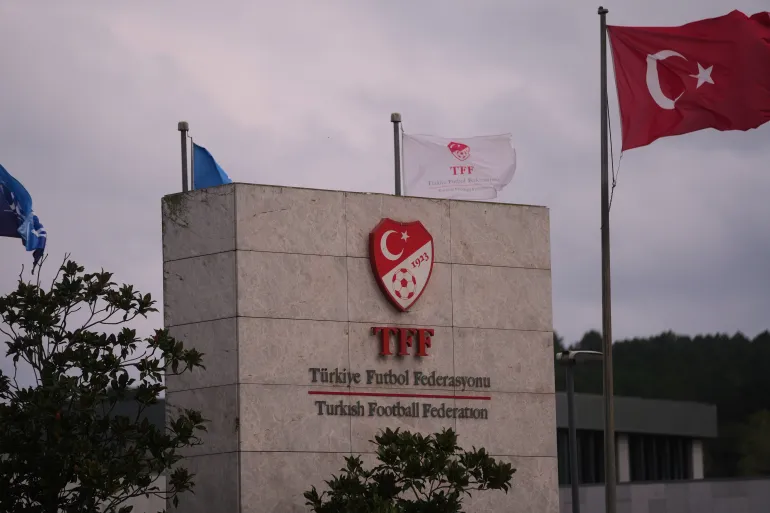
The head of Turkiye’s football refereeing body and four other officials have been placed in pretrial detention by a court as part of a corruption investigation, the state news agency Anadolu reports.
Ferhat Gundogdu, head of the Central Referees Committee, and six others appeared before a judge over allegations of manipulation of the referee administration process, Anadolu said on Saturday.
They appeared on Friday before a judge at Istanbul’s Caglayan courthouse on several charges, including forgery of official documents, breach of trust and illegal acquisition of personal data, the report said.
The judge remanded five people in custody and granted the other two conditional release, Anadolu said.
It was the latest scandal to shake football in Turkiye, coming exactly a year after the Turkish Football Federation (TFF) suspended 149 referees on charges of illegal betting.
On Thursday night, police from the illegal betting and sports crime unit also detained Yasin Kol, a referee from Turkiye’s top-flight Super Lig, as well as an assistant referee, media reports said.
Justice Minister Akin Gurlek said prosecutors are examining claims about “interference in the processes of referee classification, assignments, scoring and appointments as well as the exams on rules”.
During raids on Tuesday, police searched the VAR room at TFF’s headquarters in Istanbul. Observers said the investigation was likely linked to last year’s betting scandal and would have implications for the federation.
“It does seem to be a continuation of 2025, and it looks like it will continue further,” sports journalist Ayhan Sensoy told the AFP news agency.
Sensoy, who wrote a 2024 book on the issue called The Gambling Pit, said it was unlikely that federation bosses “have any chance of staying in office”.
So far, the TFF has not directly addressed the arrests as its top officials are due to fly home on Saturday after attending Friday night’s Belgium-Turkiye UEFA Nations League clash in Liege, which Turkiye lost 3-0.
[Aljazeera]

A car has crashed into a crowd of rugby league supporters in the eastern Australian city of Newcastle, injuring 10 people, including three children.
New South Wales police said on Saturday that two of the injured – a five-year-old girl and a 67-year-old man – were in a critical condition and the other eight were in stable condition in hospital.
Police said they had arrested the 18-year-old man driving the vehicle and were investigating what happened. They said the crash was not believed to be related to “terrorism”.
The crowd had gathered to farewell the local rugby league side, the Newcastle Knights, ahead of their grand final against the Sydney Roosters on Sunday.
Newcastle Lord Mayor Gavin Morris said the driver, a rugby league fan, had lost control of his vehicle and had been taken into custody.
“He was revving the car, he was excited, he was a supporter, he was there for the joy of the moment,” Morris told the national broadcaster ABC.
“Somehow he lost control of the car … and he’s gone into the crowd,” he added.
Prime Minister Anthony Albanese said: “My thoughts are with everyone injured or involved in the horrible incident this morning in Newcastle.”
“Rugby league brings people together, and this should have been a weekend of excitement and pride for Newcastle fans,” he wrote in a social media post.
[Aljazeera]

Landslide Early Warnings issued to the Districts of Kandy, Kegalle, Matale and Ratnapura

No handshakes and a delayed ceremony as India beat Pakistan at Asian Games

Showers or thundershowers will occur in most parts of the island after 1.00 p.m

Lanka enters new phase of prosecutions as hurdles clear

Police warn: Court evaders face property seizure

Nearly 20 Iranian tankers stranded off Lanka amid US sanctions

‘Dates have the highest sugar content to fight Coronavirus’

Sunday Island 27 December – Headlines

#SundayIsland 17th December – Headlines

Sunday Island – 28th March

Sunday Island Headlines – 21 March

Sunday Island – 21st February – Headlines
-

 News6 days ago
Police remove Thileepan statue in Jaffna
-

 Features6 days ago
The 22nd Amendment, constitutional recovery and illiberal slippage
-

 Features6 days ago
Of foreigners as CEOs of Lankan ventures
-

 Latest News4 days ago
Gold winner Tharanga gets brand-new Honda Vezel from SLAAJ
-

 News6 days ago
Sajith rejects Jt. Opp. protest sabotage claim; SJB TU chief demands remedial action
-

 Features4 days ago
Why Sri Lanka needs an Inclusive Civic Nationalism – urgently
-

 News3 days ago
US-assisted ‘Ice’ detection: NPC to examine IGP’s move to transfer drug-busting team
-

 Features5 days ago
Thailand’s biggest new global star …