
News
Sugar tax scam takes shocking turn: Parliament directive to recover Rs 16 bn disregarded


FM now claims loss of revenue not reported, contradicts AG’s findings
By Shamindra Ferdinando
The ongoing controversy over the failure on the part of the Finance Ministry and the Inland Revenue Department (IRD) to recover taxes from companies implicated in a massive sugar tax scam in 2020 has taken a shocking turn, with the Department of Trade and Investment Policy declaring that loss of revenue hadn’t taken place.
D. M. A. Dassanayake, Information Officer of the department that comes under the purview of the Finance, Economic Stabilisation and National Policies Ministry, said so in response to a query submitted to the Ministry in terms of the Right to Information Act (RTI) No 12 of 2016.
The Finance Ministry emphasised that contrary to claims, the issuance of Gazette 2197/12, dated Oct. 13,2020 whereby Special Commodity Levy (SCL) on sugar imports had been reduced to 25 cents from Rs 50 (per kg) didn’t cause any loss of revenue.
The Island received the Finance Ministry response on February 08, 2024 for a set of questions submitted on Dec 18, 2023. The questions were based on the proceedings of the Public Finance Commission on Dec 16 chaired by Dr. Harsha De Silva, economist and member of the main Opposition Samagi Jana Balawegaya (SJB)
During the Dec 16 proceedings, Dr. De Silva questioned the failure on the part of the Finance Ministry and the IRD to recover the losses as ascertained by the Auditor General by way of a forensic audit conducted into the Oct 2020 sugar scam. The House committee flayed the two institutions for turning a blind eye to several major sugar importers making a killing at the expense of the consumers. The Auditor General has named those who benefited from the SCL reduction.
MPs Chandima Weerakkody, Madura Vithanage, Duminda Dissanayake and Sumith Udukumbura attended the meeting.
Declaring that the government lost tax revenue, amounting to over Rs 16 bn, the AG had recommended criminal investigation into the sugar scam perpetrated during Mahinda Rajapaksa’s tenure as the Finance Minister. At the time of the issuance of the controversial Gazette in Oct 2020, S.R. Attygalle served as the Secretary to the Ministry of Finance. The forensic audit revealed that the government suffered a loss of Rs. 16.763 bn within four months (Oct 14, 2020 to Feb 08, 2021).
The House committee has pointed out that in spite of the SCL on sugar imports being reduced by a staggering 99.5%, the relevant authorities hadn’t done anything to prevent importers from exploiting the consumers. The IRD has been asked on January 16, 2024 to submit a report in respect of recoveries to be made from sugar importers.
Responding to another query, Information Officer Dassanayake said that the Finance Ministry had been summoned before the Public Finance Commission twice.Asked what were the difficulties in recovering revenue losses caused by the sugar tax scam, the RTI officer said that the question didn’t arise as losses hadn’t been estimated.
Asked whether another sugar tax scam perpetrated in November last year in the wake of the change of government consequent to Aragalaya was under investigation, the RTI officer declared that investigations conducted by the CID and the CIABOC (Commission to Investigate Allegations of Bribery or Corruption) so far didn’t reveal fraud. The Island pointed out that Labour and Foreign Employment Minister Manusha Nanayakkara is on record as having alleged a massive tax scam occurred in November last year.
The Island also asked whether President Wickremesinghe, in his capacity as the Finance Minister, instructed the Finance Ministry regarding the recouping losses. The RTI official said that the question is irrelevant as loss of revenue hadn’t been estimated or reported.
The Public Finance Commission has also paid attention to the reversal of the Special Commodity Levy in November in respect of sugar imports. The House committee questioned the rationale in the Finance Ministry seeking to collect as much as Rs 30 bn from consumers by way of tax reversal while allowing those who had been implicated in massive fraud to go unpunished.
The Finance Ministry disregarded questions submitted in terms of the RTI regarding the IMF stand in respect of the need to streamline revenue collection and whether the Ministry consulted the Attorney General as regards ways and means to address such corrupt practices.







Plant’s output cut from 270 MW to 140 MW amidst dwindling stocks; energy analysts warn system remains “at a razor’s edge”
By Ifham Nizam
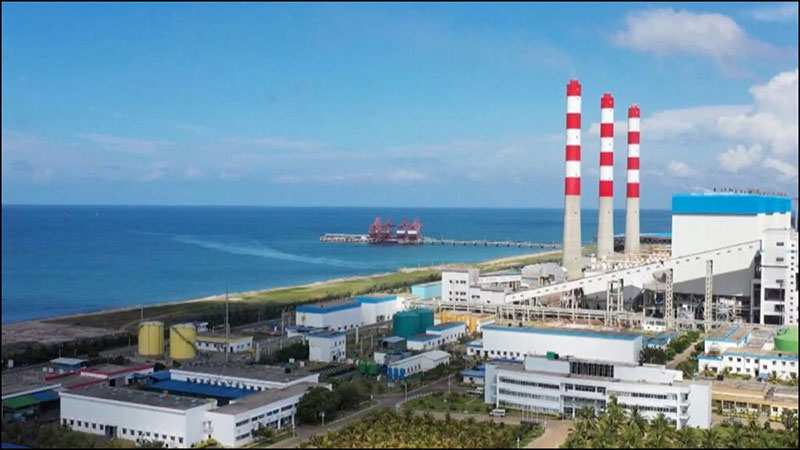
The Norochcholai coal-fired power plant is now digging into the last dredges of its coal stock, with two operational units forced to slash generation from around 270 MW to just 140 MW on Sunday as the plant ran critically short of fuel, according to independent energy analysts and sources familiar with the National System Operator (NSO).
The sudden reduction of approximately 130 MW in coal generation has once again exposed the fragile state of the country’s power supply arrangements, with the plant understood to have coal stocks sufficient only until Friday night.
“This is not how a coal plant is expected to operate. They are digging up the last dredges of coal from the plant,” an independent energy analyst told The Island.
The analyst questioned why the units had been allowed to reach this stage without earlier intervention, arguing that at least one unit should have been deloaded around 10 days ago to conserve the remaining coal.
Had that been done, the analyst said, the country could also have reduced its dependence on more expensive diesel-fired generation during the period when
coal stocks were being conserved.
The latest NSO generation figures highlight the continuing pressure on the system.
Around 7 p.m. on Sunday, when the night peak was reached, total demand stood at 2,552.7 MW. Coal contributed only 282 MW, while major hydro accounted for 1,215.8 MW and thermal-oil generation for 791.9 MW.
The night peak of 2,552.7 MW was substantially higher than the daytime peak of 2,246 MW, according to the NSO Generation Summary for August 30.
The most immediate concern is the remaining coal stock at Norochcholai.
Sources said the plant has coal only to Friday night, making the timing of the next shipment critical.
The first shipment under the emergency arrangement is expected to arrive on Friday, September 4, but the coal unloading will have to begin on the same day if
the power plant is to continue operating without further significant deloading.
That creates another potential vulnerability, with rough sea conditions posing an additional challenge to unloading operations.
Energy sector sources said that even the arrival of the September 4 shipment would not completely eliminate the danger.
The next shipment under the new coal tender would need to commence unloading around September 15. Any significant delay beyond that could again force the Norochcholai units to operate at reduced output.
“We are still at a razor’s edge”
The independent energy analyst said the situation should not be viewed merely as a question of whether a particular vessel arrives on time.
The situation also means that any further reduction in coal generation could have a direct impact on the use of oil-fired power generation, potentially increasing the cost of electricity generation.
The latest NSO figures already show the important role being played by thermal-oil generation during the evening peak, when demand rises sharply.
The analyst questioned the rationale behind allowing the coal units to continue operating at higher loading until stocks reached critically low levels instead of taking measures earlier to stretch the available inventory.
News
22A: BASL decides against making written submissions after SC refuses to grant it right of reply
The Bar Association of Sri Lanka (BASL) has informed the Supreme Court that it would not tender written submissions in respect of the petitions challenging the 22nd Amendment to the Constitution, which were heard on September 1 and 2.
The BASL said it had initially decided not to make written submissions after being deprived of the right of reply when the Solicitor General, appearing for the State, made submissions and explained the rationale and justification for the Bill.
The BASL pointed out that the Solicitor General, who made submissions at the end of the second day of the hearing, had not made a policy document available to the petitioners.
It also said the petitioners had not been given an opportunity to respond orally to the Solicitor General’s submissions or to address the Court on certain questions raised by the judges during their exchanges with the Solicitor General. (SF)
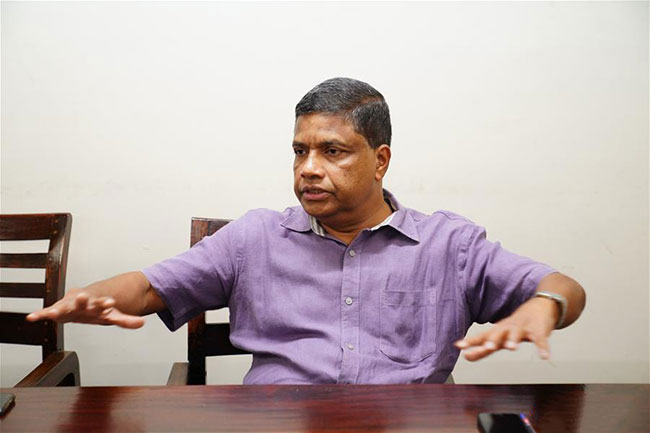
The Communist Party of Sri Lanka (CPSL) has strongly objected to the Ministry of Defence’s statement on 1 September that Defence Secretary Sampath Thuyacontha has invited the North Atlantic Treaty Organisation (NATO) to engage and cooperate with Sri Lanka.
CPSL General Secretary Dr. G. Weerasinghe has issued the following statement: “According to the Ministry’s official press release, Thuyacontha held discussions with senior NATO officials, including Admiral Guiseppe Cavo Dragone, Chair of the NATO Military Committee and senior advisor to the political leadership of NATO member states on the sidelines of the Chiefs of Defence Conference in Canada.
The discussions reportedly covered exchange of military personnel, sharing of information and expertise, and military modernisation involving advanced technology and cyber capabilities.
These developments indicate a clear shift in Sri Lanka’s military posture, moving beyond traditional bilateral partnerships and signalling a growing alignment with a Western military bloc.
The CPSL views this engagement with NATO as a deeply unhealthy development that violates the principles of non-alignment which have guided Sri Lanka’s foreign policy for decades. Sri Lanka is neither in Europe nor in North America, nor is it located in the Atlantic Ocean. NATO’s remit has no relevance to Sri Lanka’s security needs.
NATO is an alliance for aggression, protecting imperialist interests. Historically, NATO has not carried out a single defensive operation; instead, it has launched unprovoked military interventions in Yugoslavia, Afghanistan, and Libya, causing immense human suffering. The United States-led NATO military bloc contributes to over 70% of global military spending.
The United States, NATO’s most powerful member, is at present engaged in an unprovoked war of aggression against Iran, while NATO countries continue to support Israel’s genocide against the Palestinian people and its aggression against Iran and Lebanon. The US has also been pressuring NATO members to increase defence spending to 5% of GDP, a sign of anticipated aggression.
The illegal US base at Diego Garcia, established through the ethnic cleansing of the Chagossian people, lies close to Sri Lanka and has been used for illegal abductions and attacks during Washington’s wars against Iraq and Iran.
Sri Lanka’s participation in discussions with such an alliance raises serious questions about the government’s strategic direction and its susceptibility to external pressure.
Sri Lanka’s foreign policy must remain non-aligned, independent, and rooted in national sovereignty. Engagement with NATO represents a dangerous deviation that threatens to compromise the country’s neutrality and expose it to geopolitical conflicts far beyond its shores.
The CPSL reiterates that Sri Lanka must not allow itself to be drawn into NATO’s global military agenda. The country’s security interests lie in peaceful cooperation within the Indian Ocean region, not in entanglement with an alliance responsible for destabilising multiple nations across the world. Sri Lanka must not become a pawn in global power struggles.
The CPSL calls upon:
1. The Government to immediately clarify the nature and scope of its discussions with NATO.
2. Parliament to demand full transparency regarding foreign military presence and agreements.
3. The People of Sri Lanka to remain vigilant against attempts to erode national sovereignty under the guise of “modernisation” or “cooperation”.
Sri Lanka must not abandon its proud tradition of non-alignment. The CPSL will continue to oppose any move that compromises the independence, sovereignty, non-alignment, and long-term security of our people and our nation.”

Norochcholai digs into dwindling coal stocks, two units slash generation

22A: BASL decides against making written submissions after SC refuses to grant it right of reply

CPSL condemns pursuit of military cooperation with NATO

Police probe cops promoting drug business of “Kudu Avishka” operating from Dubai

Sumanthiran condemns police and ministers over assault on families of missing persons

Sri Lanka’s rice conundrum: Time to stop managing crises and start fixing the system

‘Dates have the highest sugar content to fight Coronavirus’

Sunday Island 27 December – Headlines

#SundayIsland 17th December – Headlines

Sunday Island – 28th March

Sunday Island Headlines – 21 March

Sunday Island – 21st February – Headlines
-

 Features5 days ago
“Wrap Me Up in My Blazer”— A Gentlemanly Bradby Reminiscence
-

 Features4 days ago
When Sri Lankan stories find their own voice
-

 Features5 days ago
JVP/NPP government as seen from outside by Lionel Bopage now domiciled in Australia
-

 News4 days ago
BASL takes exception to Justice Ganepola being denied a place in SC
-

 Editorial6 days ago
Govt. trying to dupe UN Rapporteur?
-
 Features5 days ago
Prof. Savitri Goonesekere: What has she done?
-

 Features5 days ago
World Trade Politics: Canada rebuffs Trump’s tariff blackmail
-
 News5 days ago
Legal avenues explored to bring back Mahendran, aka Harjan Alexander