
Editorial
Stranded Lankan women in Oman


Decades ago when he was the finance minister implementing J.R. Jayewardene’s open economy, Ronnie de Mel once said that Sri Lanka’s was a female dependent economy. He urged that the country then, as well as to a large extent now, largely relied on its women workers to bring home the bacon. Never was a truer word spoken. The women plucking tea on the plantations, those working in the garment factories that sprang up in those days to help move a traditionally crop dependent economy into a new industry and those who ventured forth to the Middle East to work as domestic servants, often under harsh conditions, contributed massively to an economy long atop a tea, rubber and coconut tripod.
Although the years have moved on to a new millennium, much of that remains true to this day. That is why the country is dismayed about the horror story that emanated from Oman last week that some 90 Lankan women are stranded in that country and seeking repatriation assistance for reasons that are all too common. Many of them have entered Oman, often from elsewhere in the Middle East, with visit visas they hoped to convert into work visas. They have fallen into the hands of unscrupulous job agencies both in their own countries as well as overseas. Confronted with reality they must cough up big money to cover visa fees, overstay penalties, air fares, agents’ fees and costs of recruitment. Their families barely managed to scrape-up what was required for wives and daughters to seek an El Dorado and are now unable to meet new demands to get them back home.
There have been reports, true or false has not yet been firmly established, about a sex trafficking aspect to this case. The CID has been brought into investigate and a senior police officer who has appeared over national television seemed to confirm that there is no smoke without fire. The Sri Lankan Embassy in Muscat, like other missions elsewhere in the Middle East confronted with similar problems, had set up a safe house to cater to the stranded women. Disturbingly, a mission official in Oman has been suspended and is being brought back to Colombo for further investigation of allegations made against him. Though nothing has been proved or firmly established, all this implies lack of supervision from a senior level in the mission. It is well known that housemaids employed overseas are frequently harassed by employers, sexually and otherwise, and such instances have been publicized. It’s sad but true that such occurrences are not uncommon within the country too; but it is not often that the smelly stuff hits the fan.
Given prevailing poverty in the country and increasing desperation about making ends meet, prospects of overseas employment are becoming increasingly attractive to growing numbers including professional segments. This is manifest in the queues outside passport offices. Many people, often educated and fluent in the English language attempt to get into developed countries offering better prospects on student visas. The intention is not to study but find paid employment. The continuing pursuit of such avenues is an indication of a fair success rate. While educated professionals and the better-off will find ways of fending for themselves when they gain admission to other countries, poor women improperly and illegally in the Middle East are in a perilous situation as indicated by what has happened in Oman. It was reported a few months ago that the government, as an urgent cost cutting measure, had decided to shut down labour and welfare sections in a number of missions in West Asia and recall their staff. Given that there are hundreds of thousands of housemaids and blue collar workers in these countries, there were protests. How far this measure was implemented we do not know.
What we do know is that despite their best efforts, the regulatory authorities have not been successful in stamping out foreign employment rackets. There are numerous cases of agencies charging money and not delivering as promised and delaying refunds or not making them at all. Undoubtedly people do go to dubious agencies and get cheated just as they were cheated by finance companies and other deposit takers. Suckers are born every minute as the popular cliché goes. Undoubtedly the Sri Lanka Bureau of Foreign Employment (SLBFE) is serving a useful role. But the fact that job seekers with visit visas are frequently going abroad hoping to change status at their eventual destinations is common. Despite widespread knowledge of risks and dangers, desperate people persist in taking the plunge. Would it not be possible to erect an effective barrier at least at the immigration counter at the airport? Doing so will not be as easy as making the suggestion. But this is something to which the concerned authorities must give serious thought.
The SLBFE already has an airport presence. It is not difficult to judge who is a tourist and who is a job seeker. But the authorities have no legal muscle to stop people with visas traveling. Complicating the whole business are the mudalalis sending couriers to carry back easily salable goods on which tidy profits can be made.



Thursday 9th April, 2026
The whole world must have heaved a huge sigh of relief yesterday when the US and Iran agreed to a two-week ceasefire, with Israel consenting to follow suit. Pakistan deserves praise for a timely intervention to de-escalate the West Asian conflict and prepare the ground for negotiations aimed at working out a lasting solution.
However, the situation is far from right as rain. What we are witnessing in the trouble-torn West Asia, which is red in tooth and claw, is an interval in hell, so to speak. Over the past several days, US President Donald Trump has repeatedly threatened to unleash hell on Iran unless the Hormuz Strait is reopened for international navigation. Hell hath no fury like a US President piqued, one may say with apologies to the Bard. There are some contentious issues to be resolved for a durable solution to be negotiated.
Iran has put forth 10 conditions and the US 15 for ending the conflict peacefully. It is now up to the other world powers and the UN to step in and ratchet up pressure on the US, Israel and Iran to reach a middle ground, without resuming hostilities, and give peace a chance. They ought to do so for their own sake. Occasions were not rare when the world experienced the so-called butterfly effect, or the phenomenon whereby a minute localised change in a complex system has large effects elsewhere. But what it has recently witnessed in West Asia may be described as the Pterosaur effect, as it were, the impact of the conflict on the rest of the world being so huge. Oil prices soared, making economies around the world scream. Some leading economists even warned of possible global stagflation risks in case of prolonged energy shocks from the Iran war. Oil prices came down significantly following the announcement of the ceasefire, but it is highly unlikely that they will return to the pre-conflict level of USD 70 a barrel any time soon due to irreparable damage suffered by critical energy infrastructure in the region. This has been the cost of US-Israeli military aggression.
Long dead as Mahatma Gandhi is, a core tenet of his teachings, nonviolent resistance, lives on today. What the Iranians adopted yesterday to protect their power plants, bridges, etc., vis-à-vis US President Trump’s threat to destroy them in a matter of a few hours was the Gandhian method of countering violence with nonviolence. According to media reports, a large number of Iranians gathered around potential US/Israeli targets, appealing to the conscience of the Americans. Whether their conscience-stirring method was the reason why Trump decided against carrying out his threat to annihilate the Iranian civilization in one fell swoop is a moot point, but blowing up infrastructural facilities together with thousands of unarmed civilians is something that no leader, other than someone like Hitler, can bring himself to do. Trump is already facing protests in the US against his war and has incurred international opprobrium for US aggression. Most of all, an attempt to wipe out a whole civilization would have triggered a spate of retaliatory attacks by Iran on multi-billion dollar US assets in the region.
It is ironic that the Iranian authorities who mercilessly ordered crackdowns on civilian protests before the eruption of the conflict had to urge the people to come out in their thousands and form human chains around infrastructural facilities to protect them.
One thing we gather from the West Asian conflict is that some elderly leaders’ dreams can become nightmares for others, especially the youth. Driven by his MAGA dream, Trump is trying to build an empire and grab the precious oil resources of other nations. He has graduated from abductions (in Venezuela) to assassinations (in Iran) in a bid to realise his goal. Israeli Prime Minister Benjamin Netanyahu has declared that a 40-year-old dream came true for him when he and Trump started attacking Iran. The Iranian leaders have also been dreaming of obliterating Israel. These dangerous dreams of ageing leaders remind us of Wilfred Owen’s Anthem for Doomed Youth: “What passing-bells for these who die as cattle? — Only the monstrous anger of the guns …” Perhaps, the best elderly leaders with a penchant for belligerence can do for the world, particularly the youth, who bear the brunt of any war, is to stop dreaming.
It is hoped that the peacemakers who have undertaken the onerous task of reconciling the warring parties in West Asia will not lose sight of the need to address the root cause of the conflict. While welcoming the Pakistan-brokered ceasefire, many seasoned analysts have pointed out that without a resolution of the Palestine question, particularly working towards a two-state solution supported by the UN, broader peace initiatives in West Asia are unlikely to reach fruition.
Wednesday 8th April, 2026
It is ironic that the JVP-NPP government is now defending tainted ministers and downplaying corruption in the Parliament it came to power promising to clean up. A few weeks ago, it vehemently denied the allegation that more than a dozen coal shipments obtained from a new supplier for the Norochcholai power plant were substandard. Having realised the futility of defending the indefensible, it chose to eat its words. However, it kept on claiming that the low-quality coal had not affected power generation. Now, it has had to admit that the low-grade coal imports have led to a huge drop in electricity generation at the Norochcholai power plant. However, it claims that there have been no irregularities in the coal procurement process! It has thus craftily conceded some points to defend its main argument that the integrity of its members is above reproach.
President Anura Kumara Dissanayake yesterday admitted in Parliament that low-quality coal had adversely impacted electricity generation. Assuring that the additional costs would not be passed on to the public, he claimed that the price of the first shipment of coal had effectively dropped from USD 98 per tonne to around USD 68 per tonne after penalties were imposed on the supplier. This cannot be cited in extenuation of the offences of supplying and procuring low-quality coal. The quality of coal was so low that all coal stocks should have been rejected in keeping with the tender guidelines. Instead, the government allowed the errant supplier to dump dirty coal here after paying penalties! Even if the penalties have led to a coal price reduction, as the President has claimed, more than 1.2 million litres of diesel have to be burnt daily to meet the electricity generation shortfall caused by the use of low-quality coal at Norochcholai, according to Convener of the United Trade Union Force, Ananda Palitha, a former Ceylon Petroleum Corporation worker.
Although President Dissanayake has said the additional costs arising from low-quality coal will be recovered from the supplier and they would not be passed on to electricity consumers, electricity tariffs have already been increased, and it is feared that another power price hike is in the pipeline. Diesel stocks meant for transport and agricultural purposes are being diverted for power generation. The Opposition yesterday claimed that unofficial power shedding was already on because it was not feasible to burn diesel to produce power to meet the Norochcholai generation shortfall. Power and energy experts have warned that official power cuts will be imposed after the upcoming traditional New Year.
It can also be argued that the government has raised colossal amounts of funds at the expense of the public to absorb losses caused by the coal scam. It has resorted to price gouging. It is accused of having jacked up the prices of fuel stocks procured before the eruption of the Iran war. The Opposition says the government has increased the price of old LGP stocks. The people are without any defence when their government orders them to stand and deliver.
While addressing Parliament, President Dissanayake also sought to defend his friend, Energy Minister Kumara Jayakody the Opposition is all out to oust over the fraudulent coal procurement. A no-faith motion against Jayakody is scheduled to be taken up in Parliament on 10 April. The President laid the blame for the low-quality coal imports solely at the doorstop of the supplier. True, that company must be held accountable for violating the tender guidelines and fined. But the government cannot absolve itself of the blame for the coal scam. It postponed the commencement of the bidding process and changed the tender criteria in favour of the errant company, as the Opposition has revealed in Parliament, holding Minister Jayakody accountable for the corrupt coal deal.
A future government is bound to have the coal scam probed thoroughly, and the JVP/NPP big guns involved in it will have to face legal action when they lose their hold on power. They will have a lot to answer for. Former ministers have been imprisoned for misusing fuel allowances.
Tuesday 7th April, 2026
Water cuts are currently on in some parts of the Colombo District due to the prevailing dry spell. Initially, some suburbs of Colombo were left without water for as long as 24 hours at a stretch, and people protested. Subsequently, the durations of water cuts were reduced. However, people were seen protesting in some areas yesterday as well. The situation is likely to take a turn for the worse throughout the country unless the reservoir catchments receive sufficient rain.
Sri Lanka’s water problem is far more serious than it looks. It is worsening rapidly due to climate change, which disrupts the global water cycle, causing floods and droughts often in the same regions at different times of the year. The acceleration of evaporation due to global warming takes its toll on the snowpack, shifting rainfall patterns the world over, adversely impacting fresh water supplies to billions of people. Hence the need for Sri Lanka to address the water issues related to climate change, as a national priority, and formulate a comprehensive mitigation strategy urgently.
Experts have stressed the need to build the country’s resilience against drought while taking action to conserve and manage water resources efficiently. Among the urgent measures they have called for are fixing leaks in the mains, promoting water-efficient irrigation systems, appliances and industrial processes through incentives and regulation, and, most of all, rainwater harvesting.
Prerequisites for building national resilience against drought include substantial investment in desalination technology mainly for the benefit of the coastal communities, restoring wetlands, forests and watersheds to facilitate the natural water flow that replenishes underground aquifers. Unfortunately, successive governments have allowed the encroachment on wetlands, forests and other such ecologically sensitive areas. The fate of the Muthurajawela wetland may serve as an example. Climatologists and agricultural scientists have pointed out the need to grow drought-resistant crops and adopt smarter agricultural practices, as farming is believed to account for about 70% of freshwater use across the globe. The situation must be more or less the same here.
Climate change mitigation strategies are resource-intensive and heavily policy driven. A chronic lack of vision and capacity of successive governments and state officials has stood in the way of preparing the country for the challenges from climate change and even the adoption of relatively simple and less resource-intensive methods to help the public overcome their water woes. Their failure to develop rainwater harvesting as a national policy is a case in point. It is high time they focused more on rainwater harvesting, which is technically feasible here, given Sri Lanka’s high rainfall, averaging about 2,000 mm annually, according to the Department of Census and Statistics. Even if a faction of this rainfall can be captured properly, that will help supplement domestic and agricultural water supplies significantly, experts have pointed out. Every rooftop can be turned into an effective catchment area for capturing rainwater, which can be stored to reduce the stress caused by the use of treated water for cleaning, gardening, toilet flushing, etc., to the mains.
There has been a proposal that rainwater harvesting be made mandatory in new buildings, private, public or commercial, by requiring them to have water harvesting systems. Sri Lanka can learn how to enforce rainwater harvesting effectively from countries, such as Germany, India, China, Pakistan and Thailand. It, too, encourages such systems, but that has to be done vigorously through public awareness campaigns, incentives, soft loan schemes, etc. An added advantage of rainwater harvesting is that excess stormwater can be used to recharge wells and replenish aquifers, especially in the dry zone. Such systems will also help improve urban drainage.
Lanka Rainwater Harvesting Forum, a collective of government and non-government institutions, including the National Water Supplies and Drainage Board, has been on a mission to raise public awareness and assist in rainwater harvesting. It will be of tremendous help to launch a national rainwater harvesting programme.
Sri Lankans have evinced a keen interest in the country’s energy security vis-a-vis the West Asian conflict, and the resultant global oil supply disruptions and massive price increases. These days, much is also being spoken about energy conservation. This no doubt is a positive development. However, the country’s long-term water security is no less important and warrants the attention of the public, politicians and policymakers alike.

BCCI curbs movement of benched IPL players in latest rules

Prasidh trumps Miller in last-ball finish as Gujarat Titans clinch thriller

Greece to ban social media for under-15s from next year

Showers will occur at a few places in the Western, Sabaragamuwa and North-western provinces and in Galle, Matara, Kandy, Nuwara-Eliya and Mannar districts after 2.00 p.m.

Sun directly overhead Chilaw, Bingiriya, Halmillawewa, Panduwasnuwara, Gokarella, Kawudupelella, Koppaveli and Kirankulam about 12:12 noon. today (09)

Heat Index at Caution Level in the Western, Sabaragamuwa, Southern, Eastern, North-western, Northern and North-central provinces and in Monaragala district

‘Dates have the highest sugar content to fight Coronavirus’

Sunday Island 27 December – Headlines

#SundayIsland 17th December – Headlines

Sunday Island – 28th March

Sunday Island Headlines – 21 March

Sunday Island – 21st February – Headlines
-

 Features4 days ago
Ranjith Siyambalapitiya turns custodian of a rare living collection
-

 News4 days ago
Global ‘Walk for Peace’ to be held in Lanka
-

 News2 days ago
Lankan-origin actress Subashini found dead in India
-
 Opinion6 days ago
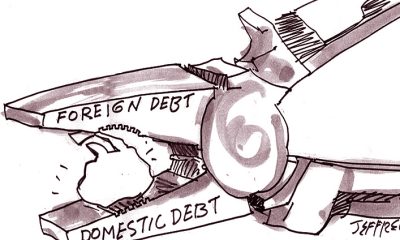
Hidden truth of Sri Lanka’s debt story: The untold narrative behind the report
-

 Features4 days ago
Beyond the Blue Skies: A Tribute to Captain Elmo Jayawardena
-

 Features4 days ago
Aspects of Ceylon/Sri Lanka Foreign Relations – 1948 to 1976
-

 Features6 days ago
The Ramadan War
-

 Editorial5 days ago
Brouhaha over a book