
Latest News
Storm Boris casualties rise as floods ravage Central Europe


At least 19 people are reported to have died in flooding caused by Storm Boris in Central and Eastern Europe, with many countries braced for more torrential rain.
Rivers were still spilling their banks in the Czech Republic on Tuesday, while the River Danube was rising in Austria, Slovakia and Hungary. The flooding is the worst that the region has seen in at least two decades, authorities report.
Border areas between the Czech Republic and Poland were especially hit hard over the weekend, with surging water levels leading to collapsed bridges and damaged cars and houses.
Seven people are now reported to have died in Romania, where waters have receded since the weekend. Four have been declared dead in Poland, another five in Austria, and three in the Czech Republic. Dozens more are understood to be missing.
The Czech police said that one woman drowned in the northeast of the country near the border with Poland. Seven other people were missing on Monday, up from four a day earlier.
Emergency services in Austria discovered an 81-year-old woman dead in her flooded house on Tuesday, adding to the country’s toll. Two men aged 70 and 80 were found drowned in their homes in the Lower Austria region surrounding Vienna, while a firefighter died on Sunday. The cause of death of the other victim remains unclear.
In Poland, the city of Wroclaw, which boasts 600,000 residents, was preparing on Tuesday for the Oder river to peak. The waters have been forecast to hit their highest on Wednesday.
Meeting in the city with Prime Minister Donald Tusk, national fire chief Mariusz Feltynowski reported on Tuesday on overnight efforts to seal the embankment in the nearby town of Nysa, where military helicopters had joined the operation to drop sandbags.
The previous day, the town’s hospital was evacuated, with patients including pregnant women and elderly people taken away in rafts.
Many Polish cities, including Warsaw, have called for food donations for flood survivors.
Reporting from the town of Klodzko in Poland, Al Jazeera’s Assed Baig said that the situation in the town was devastating.
“When the floods came through this historical town, it wreaked havoc … people are trying to salvage what they can … people are appealing for help. They want food, clothes and electricity,” he said.
He said people have been putting sandbags in the streets and in front of their houses in preparation for more floods.
“But it is difficult to prepare. When the first [flood] wave hit, it was very high and there was no warning,” Baig said. He said many feared that there could be “worse to come”.
Poland’s government announced on Monday a state of natural disaster and said that it has set aside one billion zlotys ($260m) to help victims on Monday.
Tusk said he was in touch with the leaders of other affected countries and that they would ask the European Union for financial aid.
“From today, anyone affected by the flood – and here I mean through flooding, collapsed buildings, flooded garages, lost cars, losses linked to the flood – will be able to easily” claim funds, he added.
Czech authorities on Monday declared a state of emergency in two northeastern regions, which have seen the worst flooding, including in the Jeseniky mountains near the Polish border.
A number of towns and cities were submerged on Sunday in the northeast, with thousands evacuated. Military helicopters joined rescuers on boats in efforts to transport people to safety.
Floods moving towards the southeastern part of the country inundated the town of Litovel, while on Monday the Oder flooded parts of the city of Ostrava at the confluence with the Opava river, forcing the evacuation of hundreds of people after a natural dam broke.
Authorities in Ostrava warned people against travelling to Czechia’s third-largest city, where most residents were without hot water and heating amid temperatures that have dropped since Thursday from about 30 degrees Celsius (68 degrees Fahrenheit) to 10 degrees Celsius (50 degrees Fahrenheit).
Czech Prime Minister Petr Fiala said more than 13,000 people have been evacuated across the country.
In Austria, the levels of rivers and reservoirs fell overnight as rain eased, but officials have said they are bracing for a second wave as heavier rain is expected.
After hitting Austria, the Czech Republic, Poland and Romania, flooding could affect Slovakia and Hungary next as a result of a low-pressure system from northern Italy that has been dumping record rainfall in the region since Thursday.
In Hungary, at the historic towns of Visegrad and Szentendre, north of Budapest, authorities have put mobile dams in place. The capital has said it is preparing for waters to peak near record levels.



Colombia’s President Gustavo Petro has told the BBC that he believes there is now a “real threat” of US military action against Colombia.
Petro said the United States is treating other nations as part of a US “empire”. It comes after Trump threatened Colombia with military action. He said that the US risks transforming from “dominating the world” to becoming “isolated from the world.”
He also accused US Immigration and Customs Enforcement (ICE) agents of acting like “Nazi brigades”. Trump has significantly expanded ICE operations as part of what the administration says is a crackdown on crime and immigrants who illegally entered the US.
The BBC has approached the White House for comment.t
Following US strikes on Venezuela and the seizure of Nicolás Maduro, US President Donald Trump said a military operation targeting Colombia “sounds good”.
Trump has also repeatedly told Petro to “watch his ass”, remarks Petro strongly condemned.
Trump and Petro spoke by phone on Wednesday evening, after which Trump said he would meet hisColombian counterpart at the White House in the near future. Writing on his Truth Social platform late on Wednesday after the call, Trump described his conversation with Petro as a “Great Honour”. A Colombian official said at the time that the conversation had reflected a 180-degree shift in rhetoric “from both sides.”
But on Thursday, Petro’s tone suggested relations had not significantly improved.
He told the BBC the call lasted just under an hour, “most of it occupied by me,” and covered “drug trafficking Colombia” and Colombia’s view on Venezuela and “what is happening around Latin America regarding the United States.”
Petro strongly criticised recent US immigration enforcement, accusing ICE agents of operating like “Nazi brigades”.
President Trump has often blamed immigration for crime and trafficking in the US, using it to justify large-scale enforcement operations, and has accused countries like Colombia and Venezuela of not doing enough to tackle drug-trafficking.
Since returning to the White House, the US president has sent ICE agents to cities across the country. The agency enforces immigration laws and conducts investigations into undocumented immigration. It also plays a role in removing undocumented immigrants from the US.
The administration says it deported 605,000 people between 20 January and 10 December 2025. It also said 1.9 million immigrants had “voluntarily self-deported”, following an aggressive public awareness campaign encouraging people to leave the country on their own to avoid arrest or detention.
About 65,000 people were in ICE detention as of 30 November 2025, according to data obtained by the Transactional Records Access Clearinghouse’s immigration project, a compendium of government data from Syracuse University.
This week a US immigration agent shot dead a 37-year-old US citizen in the city of Minneapolis, sparking protests overnight.
Federal officials said the woman, Renee Nicole Good , had tried to run over immigration agents with her car but the city mayor, Democrat Jacob Frey, said the agent who shot her had acted recklessly and demanded agents leave the city.
Petro said ICE had “reached the point where it no longer only persecutes Latin Americans in the streets, which for us is an affront, but it also kills United States citizens.”
He added that if this continued, “instead of a United States dominating the world – an imperial dream – it is a United States isolated from the world. An empire was not built by being isolated from the world.”
Petro said the US has for “decades” treated other governments, particularly in Latin America, as an “empire” regardless of the law.
The two leaders have long been adversaries, frequently trading insults and tariff threats on social media.
Following the US’s military action in Venezuela, Petro accused Washington of seeking wars over “oil and coal,” adding that if the US had not pulled out of the Paris Agreement, where countries agreed to limit global temperature rising by reducing fossil fuel use, “there would be no wars, there would be a much more democratic and peaceful relationship with the world. And South America.”
“The Venezuelan issue is about this,” he said.
After Trump’s comments threatening military action in Colombia, demonstrations were held across the country in the name of sovereignty and democracy.
Petro told the BBC that Trump’s remarks amounted to a “real threat”, citing Colombia’s loss of territory such as Panama in the 20th century, and said “the prospect of removing [the threat] depends on the ongoing conversations.”
Asked how Colombia would defend itself in the event of a US attack, Petro said he would “prefer it to be about dialogue.” He said that “work is being done” on this.
But he added: “Colombia’s history shows how it has responded to large armies.”
“It’s not about confronting a large army with weapons we don’t have. We don’t even have anti-aircraft defenses. Instead, we rely on the masses, our mountains, and our jungles, as we always have.”
Petro confirmed he had also spoken to Delcy Rodríguez, Venezuela’s acting president and former vice president and oil minister, and invited her to Colombia.
He said Venezuela had “long been subject to interference by various intelligence agencies,” adding that while such agencies had permission to operate in Colombia, it was solely to combat drug trafficking. He denounced attempts at what he said were other “covert operations” in Colombia.
He did not directly comment when asked whether he feared the CIA could carry out covert operations similar to their actions in Venezuela in Colombia, or whether he feared his own government or inner circles may have informants.
Maduro was captured by the US army’s Delta Force, the military’s top counter-terrorism unit, after a CIA source in Venezuelan government helped the US track his location.
As the world’s largest producer of cocaine, Colombia is a major hub for the global drug trade. It also has significant oil reserves, as well as gold, silver, emeralds, platinum and coal.
The US has said it will control sales of Venezuelan oil “indefinitely” as it prepares to roll back restrictions on the country’s crude in global markets.
Speaking aboard Air Force One after the Venezuela operation, Trump described Petro as a “sick man who likes making cocaine and selling it to the United States,” adding: “He’s not going to be doing it for very long.”
Petro denied the claims, saying it has “always been proven that I’m not involved in that.”
“For 20 years I have been fighting against the drug cartels, at the cost of my family having to go into exile,” he said.
A former guerrilla, Petro has pursued a “total peace” strategy since taking office, prioritising dialogue with armed groups. Critics say the approach has been too soft, with cocaine production reaching record levels.
Asked what failed and whether he accepted responsibility, Petro said coca cultivation growth was slowing and described “two simultaneous approaches.”
“One, talking about peace with groups that are bandits. And the other, developing a military offensive against those who don’t want peace.”
He said negotiations were ongoing in southern Colombia, “where the greatest reduction in coca leaf cultivation has occurred” and “where the homicide rate in Colombia has fallen the most.” Cocaine is made from the leaves of the coca plant.
The policy of dialogue, he said, was intended to “de-escalate violence”, adding: “we’re not fools, we know who we’re negotiating with.”
(BBC)
Latest News
Landslide RED warnings issued to the Divisional Secretaries Divisions of Ududumbara, Nildadndahinna and Walapane

The landslide early warning center of the National Building Research Organisation [NBRO] has issued RED warnings to the districts of Kandy and Nuwara Eliya for the next 24 hours effective from 0900 hrs today [09th January].
Accordingly,
LEVEL III RED landslide early warnings have been issued to the Divisional Secretaries Divisions and surrounding areas of Ududumbara in the Kandy district, and Nildandahinna and Walapane in the Nuwara Eliya district.
LEVEL II AMBER landslide early warnings have been issued to the Divisional Secretaries Divisions and surrounding areas of Wilgamuwa in the Matale district, and Mathurata and Hanguranketha in the Nuwara Eliya district.
LEVEL I YELLOW landslide early warnings have been issued to the Divisional Secretaries Divisions and surrounding areas of Uva Paranagama, Welimada, Kandaketiya, Badulla, Meegahakiwula, Hali_Ela, Passara and Lunugala in the Badulla district, Minipe in the Kandy district, Ambanganga Korale, Ukuwela, Rattota, Naula and Laggala_Pallegama in the Matale district, and Nuwara Eliya in the Nuwara Eliya district.

In its fourth season, the WPL now feels part of the system, shaping careers and standards in increasingly visible ways. Most notably, it played a part in India winning their first ODI World Cup last year. How ’bout that. Almost silly that there was a time when this idea struggled to get off the ground.
While rivalries are still taking shape in this five-team league, Mumbai Indians vs Royal Challengers Bengaluru has all the ingredients of being the best one. Borrowing from its IPL counterpart, it pits two of the biggest names in Indian cricket, Harmanpreet Kaur and Smriti Mandhana, against each other. They are also the only teams to have lifted the trophy so far, with MI holding a slender 4-3 head-to-head advantage
There is an extra layer of significance this time. Harmanpreet and Mandhana return to the venue where the defining night of their international careers played out two months ago. The DY Patil Stadium will stir fond memories not just for the two captains but also for the India players on both sides, even if the sea of MI blue in the stands is expected to outweigh RCB’s red, black and gold. It was here that the duo shared an emotional hug after India clinched the World Cup, before circling the ground together, singing and dancing long into the night. On the eve of the WPL opener, both admitted those memories came flooding back as they walked into the stadium.
Harmanpreet has since spoken of the venue becoming a hub for women’s cricket in India, a sentiment Mandhana echoed ahead of the season. “Whenever you enter the ground, you remember exactly where the last catch was taken,” she said, recalling Harmanpreet’s leap at extra cover to dismiss South Africa’s Nadine de Klerk and seal the win in the final. “This is still just one-and-a-half months later, but even after 20 years, if we come back to this ground, we are still going to remember exactly what happened on November 2.”
The friendship remains untouched but once the WPL begins, Harmanpreet said the focus will be on “how we can win against each other.”
For defending champions MI, the template established in the inaugural season – continuity, role clarity, a strong core and enviable depth – continues to serve them well. Retaining five players ahead of the auction preserved the backbone of the batting, while the return of familiar faces ensured stability. While other teams opted for reshuffles, MI doubled down on their processes, backing experience, investing in youth and trusting a leadership group that has grown with the league.
RCB arrive with a sense of renewal after missing the knockouts last season. Mandhana remains the face of the team, supported by T20 firepower in Georgia Voll, Grace Harris, Richa Ghosh and Nadine de Klerk, though Ellyse Perry’s withdrawal leaves questions at the top. Their bowling, however, looks formidable, with pace from Lauren Bell, Arundhati Reddy, Pooja Vastrakar and de Klerk, and spin options in Radha Yadav, Shreyanka Patil and Harris.
G Kamalini 17, was retained by MI ahead of the auction alongside players like Harmanpreet, Sciver-Brunt, Matthews and Amanjot, which is an indicator of how highly she is rated. A left-handed wicketkeeper-batter with the ability to go big, Kamalini offers flexibility in the line-up. She made her WPL debut last season and announced herself in just her second game, against RCB, holding her nerve to seal a last over victory, She continued to impress in the domestic circuit, which earned her a maiden India call-up late last year for the T20I series against Sri Lanka, where she made her international debut. Captain Harmanpreet indicated ahead of this season that Kamalini would be given a “special role”, suggesting a move up the order, and said she expects the teenager to be one of the “main players” in the team.
After missing WPL 2025 and spending more than a year sidelined by a series of injuries, spin-bowling allrounder Shreyanka Patil returns to the tournament that launched her into prominence. She was just 20 when she debuted for RCB in 2023, and her rise was swift, with India T20I and ODI caps following later that year. Patil enjoyed a breakthrough campaign in 2024, finishing as the tournament’s leading wicket-taker as RCB went on to lift their maiden title. She made her return from injury at the Women’s CPL last September, featured in the domestic season for Karnataka, and was one of four players retained by RCB ahead of the auction. In the lead-up to the season, Patil has focused on fine-tuning her offspin, batting and overall fitness during a month-long conditioning camp at the private academy where she trains.

Colombia sees ‘real threat’ of US military action, president tells BBC

Landslide RED warnings issued to the Divisional Secretaries Divisions of Ududumbara, Nildadndahinna and Walapane

Harmanpreet, Mandhana return to DY Patil, on opposite sides this time

Huge anti-government protests in Tehran and other Iranian cities, videos show

Clinical Pakistan look to keep momentum going and wrap up series

Astronaut’s ‘serious medical condition’ forces Nasa to end space station mission early

‘Dates have the highest sugar content to fight Coronavirus’

Sunday Island 27 December – Headlines

#SundayIsland 17th December – Headlines

Sunday Island – 28th March

Sunday Island Headlines – 21 March

Sunday Island – 21st February – Headlines
-

 News3 days ago
Interception of SL fishing craft by Seychelles: Trawler owners demand international investigation
-
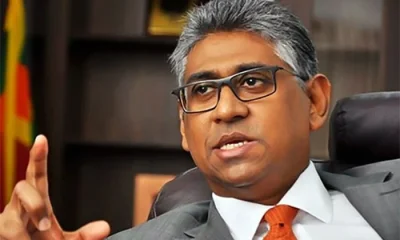
 News3 days ago
Broad support emerges for Faiszer’s sweeping proposals on long- delayed divorce and personal law reforms
-

 News4 days ago
Private airline crew member nabbed with contraband gold
-

 Opinion11 hours ago
The minstrel monk and Rafiki, the old mandrill in The Lion King – II
-

 News2 days ago
Prez seeks Harsha’s help to address CC’s concerns over appointment of AG
-

 Latest News1 day ago
Warning for deep depression over South-east Bay of Bengal Sea area
-

 Features10 hours ago
The Venezuela Model:The new ugly and dangerous world order
-

 News2 days ago
Govt. exploring possibility of converting EPF benefits into private sector pensions