
News
Stop excessive money printing to avert a far worse crisis – SJB


‘The only way prices can be controlled is not by gazette or emergency rule, but via the market itself’
In principle price controls fail, and they create shortages and black markets. The only way prices can be controlled is not by gazette or emergency rule, but via the market itself, says top Samagi Jana Balavegaya spokesman and economist Dr. Harsha de Silva.
Issuing a statement in the wake of the government doing away with price control, Dr. de Silva has said: “To do so, the reason why prices are increasing must be determined. Is it a temporary increase due to a supply shortage, say a drought or flood or is it because aggregate demand has increased due to increased money supply? The answer will depend on what is causing prices to rise.
“In the case of Sri Lanka, the massive expansion of money is the cause for continuous increase in prices or inflation. This is the reason for the rapid depreciation of the currency as well. The only short-term solution to reduce this excessive rate of money growth is to stop excessive money printing. If monetary accommodation is continued inflation could turn into hyperinflation and further depreciation of the currency leading to serious social unrest.
“However, the reality is that much of the population cannot bear the increasing costs. It is not a secret that middle-class families have had to cut down on expenses. The situation among the low-income families is a lot worse. People have had to give up meals. It is the responsibility of the government to ensure people don’t starve due to the total mess up of the economy by the politicized Central Bank that continuously ran its printing press a la modern monetary theory that was bound to fail. It is imperative that an income support mechanism be implemented for the most vulnerable immediately. This can be implemented via the Samurdhi scheme even though it is nowhere near ideal.
“Beyond the short term and in a more stable macroeconomic environment, we need to be more productive. For instance, accurate information on weather, better use of technology, application of right amounts of fertiliser, efficient storage and logistics would help improve the supply of agricultural produce. Similarly, the productivity must increase in manufacturing and services.
“In the meantime, the government must correct market failures by appropriate regulation to foster competition in the market. Take for instance the rice market. While there is more than enough paddy harvested there is a huge shortage of rice. That is because the rice manufacturing market has been captured by a few big millers and competition has been wiped out. The way to correct that market failure is to empower the hundreds of SME rice millers by providing them working capital and get their supply into the market. Instead, the government has now decided to import rice to control the prices. This wrong policy will make the problem worse, from market failure to government failure. When imports are stopped, all the SME millers would be out of business the big players will completely dominate the market.
“The SJB believes in a social market economy where competition will be encouraged with necessary amount of regulation to maintain a stable market. We will ensure that all parties to a transaction, the firm or the investor, the worker or the farmer and the regulator or government would together arrive at sustainable equilibrium so that longer term growth with equity could be maintained. However, given that the economy is in such dire straits, the truth must be told to the public that there is no free lunch and we as a nation will have no option but to work hard to a plan. And that plan will call for significant economic reforms and integrating Sri Lanka with global production networks. The resulting export-led growth, as opposed to the current import-substitution led growth, would significantly elevate living standards of our people while allowing for sufficient funding to provide safety nets for those in need.”



Former first lady Shiranthi Rajapaksa, wife of former President Mahinda Rajapaksa was produced before the Hulftsdorp court, after being arrested by officers of the Commission to Investigate Allegations of Bribery or Corruption (CIABOC) and produce
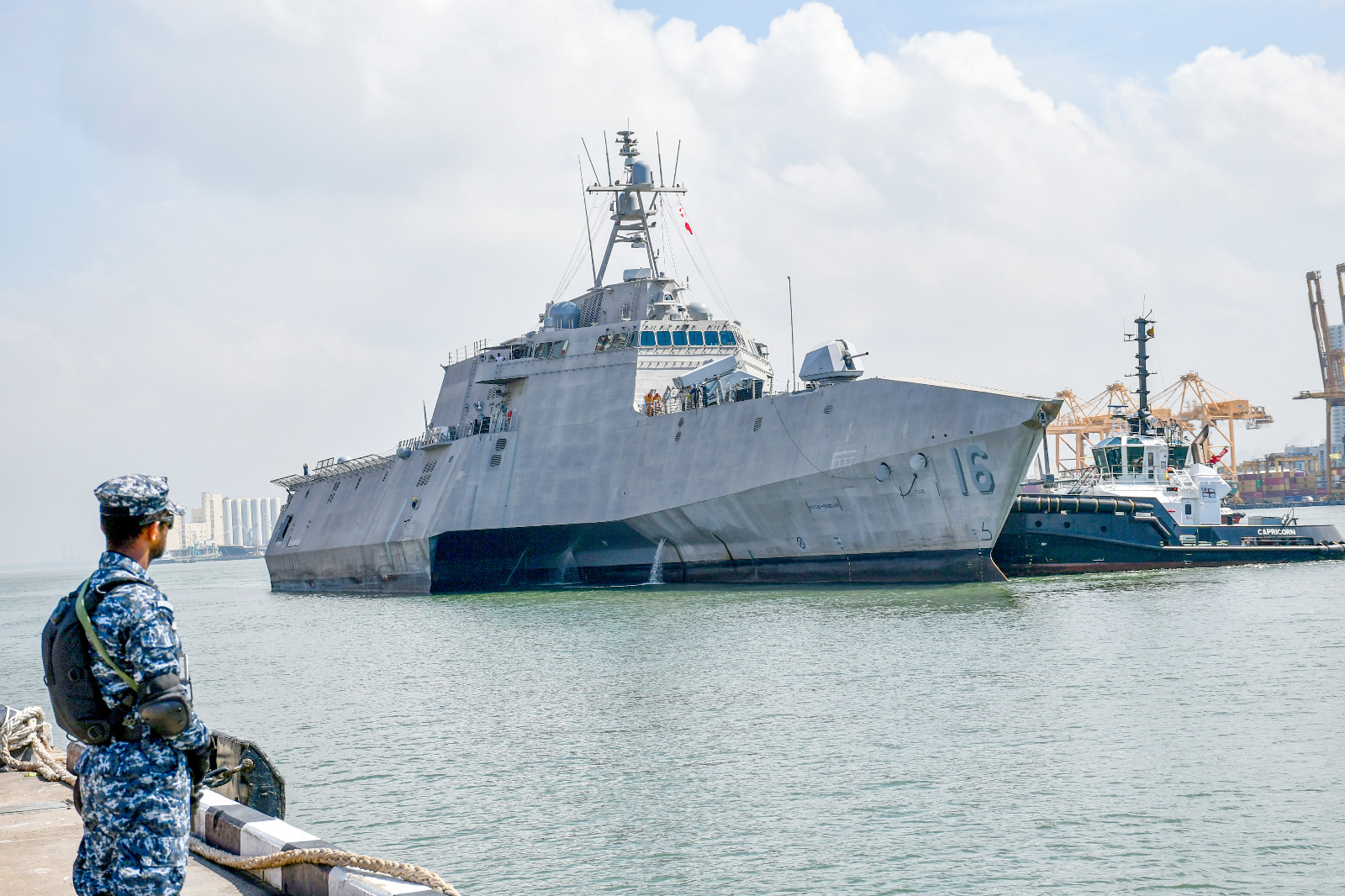
The U.S. Navy ship USS Tulsa (LCS 16) arrived at the Port of Colombo this morning, 7 October 2026 for replenishment purposes.
The visiting ship was welcomed by the Sri Lanka Navy in accordance with naval traditions.
The 127.7-metre-long platform is a Littoral Combat Ship commanded by Commander BM Wanier. Commissioned on 16 February 2019, USS Tulsa has since been in service with the US Navy.
The ship previously made a port call in Sri Lanka on 27 August 2025.
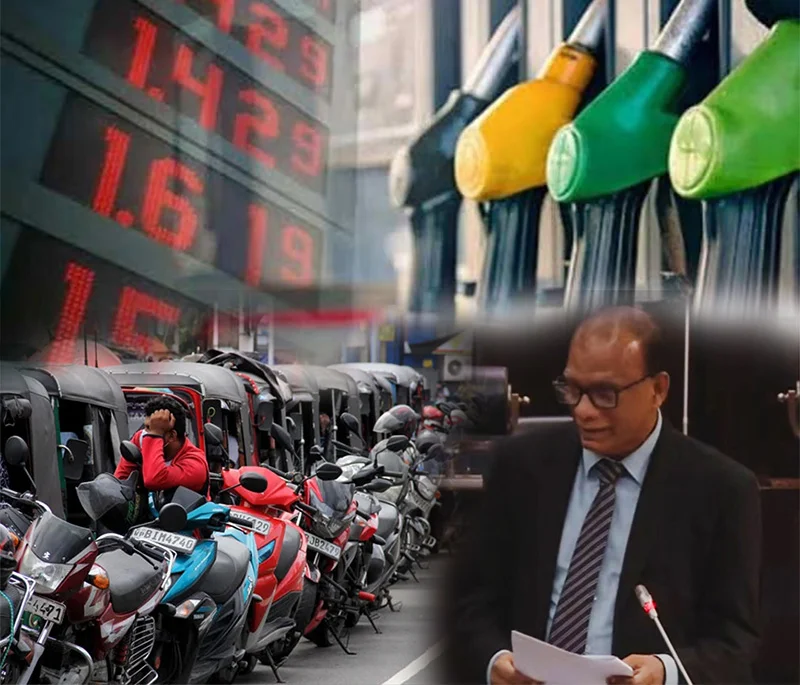
Govt. tells fuel distributors to maintain stocks to ensure uninterrupted supplies
by Saman Indrajith and Norman Palihawadane
The government had instructed private fuel distributors to maintain minimum stocks and ensure uninterrupted supplies to the market, Energy Minister Anura Karunathilaka told Parliament yesterday (06).
Karunathilaka said the Ministry of Energy Secretary had notified the relevant companies of the requirement, following a reduction in supplies by some private distributors, amid higher international fuel prices.
The Minister said private companies had informed the government that they were facing losses because international prices had risen while fuel was being sold, locally, at prevailing prices. As a result, some companies had reduced the volumes released to the market.
The reduced supplies had increased the burden on the Ceylon Petroleum Corporation (CPC), whose share of the diesel market had risen from about 54% to 82%, the Minister said.
“The CPC currently holds an 82% share of the market,” he said, adding that it had increased its supplies, compared with February, to compensate for the reduction by private distributors.
Karunathilaka said the government could not, under the existing agreements with private companies, specify the quantities they should supply to individual filling stations. However, it could require them to maintain minimum stocks in the country.
The Minister said the Energy Ministry had already instructed companies that had failed to maintain the required stocks to take steps to prevent supply disruptions.
The Minister attributed the queues reported at some filling stations to reduced supplies from private distributors, as well as normal variations in fuel distribution. He also said demand for CPC fuel had increased because private companies generally did not provide fuel to dealers on credit, while the CPC offered a three-day credit facility.
“We expect that, as the Ceylon Petroleum Corporation takes on this additional burden, the problem will ease to some extent by Wednesday or Thursday,” Karunathilaka said.
He said instructions had also been issued to increase supplies to CPC filling stations. A special discussion on the issue is scheduled for today (07), with officials of the Energy Ministry and CPC expected to participate,
along with President Anura Kumara Dissanayake.
Meanwhile, Petroleum Dealers’ Association officials have called for an early solution to the supply issue. Association Chairman D.V. Shantha Silva said queues had been reported at many filling stations, mainly those operated by private distributors.
He said the situation was not due to an overall shortage of fuel, but was linked to reduced orders by Lanka IOC, Sinopec and R.M. Parks amid concerns over losses incurred on fuel sales.
The Ceylon Petroleum Private Tanker Owners Association has urged motorists to refrain from panic buying, saying there was no nationwide disruption to fuel supplies.
The government earlier increased fuel prices and introduced a per-litre diesel subsidy following concerns raised by distributors over rising international prices.

Showers above 100 mm are likely at some places in the Western, Sabaragamuwa, Central, Uva and Southern provinces and in Anuradhapura district

Remembering Juvenal, Coke, Acton and Machiavelli

West Asian conflict undergoing manifold complications

Nissanka absence opens door for Sri Lanka’s young guns

The prelate who walked the talk

Needs of populace hit by Cyclone Ditwah seen as waiting to be addressed

‘Dates have the highest sugar content to fight Coronavirus’

Sunday Island 27 December – Headlines

#SundayIsland 17th December – Headlines

Sunday Island – 28th March

Sunday Island Headlines – 21 March

Sunday Island – 21st February – Headlines
-

 Editorial6 days ago
Colombo Port drug bust: The plot thickens
-

 Features4 days ago
The first woman in the foreign service or Ceylon Overseas Service it was then called
-

 Editorial5 days ago
Fuelling discontent and protest
-

 News3 days ago
Geneva takes up Sallay’s case and govt. ignores opportunity to answer accusations
-

 Latest News5 days ago
Tharindu Rathnayake, bowlers secure Asian Games Bronze for Sri Lanka
-

 Foreign News5 days ago
Ten injured after car crashes into rugby supporters in Australia
-

 Features3 days ago
Sri Lanka Cricket Bill: Governance reform is not yet a cricket strategy
-

 News4 days ago
Nearly 20 Iranian tankers stranded off Lanka amid US sanctions