
Life style
Amphibians going extinct in SL at a record pace


by Ifham Nizam
Sri Lanka holds the record for nearly 14 per cent of the amphibian extinctions in the world. In other words, of the 130 amphibian extinctions known to have occurred across the globe, 18 extinctions (14 per cent) have occurred in Sri Lanka, says Dr. Anslem de Silva, widely regarded as the father of Herpetology in the country. Speaking to The Sunday Island, the authors of a news book on amphibians, said that this is one of the highest number of amphibian extinctions known from a single country. Some consider this unusual extinction rate to be largely the result of the loss of nearly 70 per cent of the island’s forest cover. Dr. Anslem de Silva, Co-Chairman, Amphibian Specialist Group, International Union for the Conservation of Nature/Species Survival Commission (IUCN/SSC), together with two academics, Dr. Kanishka Ukuwela, Senior Lecture at Rajarata University, Mihintale who is 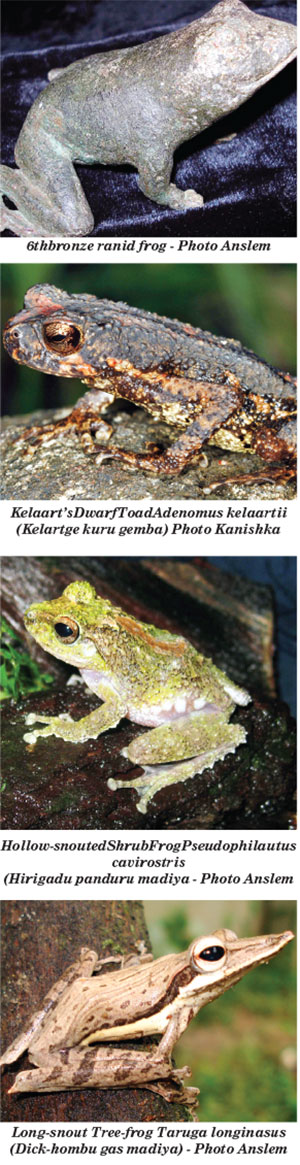 also associated with IUCN/SSC and Dr. Dillan Chaturanga, Lecture at Ruhuna University, Matara had authored this most comprehensive book on amphibians running to nearly 250 pages released last week. The prevalent levels of application of agrochemicals up to few months back, especially in rice fields, and vegetable and tea plantations, have increased over the past three decades. Similarly, the release of untreated industrial wastewater to natural water bodies has intensified. As a consequence, many streams and canals have become highly polluted, they say. The use of pesticides directly decreases the insect population, an important source of food for amphibians. Furthermore, these pollutants can easily make the water in paddy fields and the insects on which the amphibians feed toxic or increase the nitrogen content of the water. The highly permeable skins of amphibians would certainly cause them to be directly affected by these, they add. Amphibian mortality due to road traffic is a widespread problem globally that has been known to be responsible for population reductions and even local extinction in certaininstances. In Sri Lanka, amphibian mortalities due to road traffic are highly prevalent on roads that serve paddy fields, wetlands and forests. Further, they are especially intensified on rainy days when amphibian activity is high, the book explains. Recent studies indicate that amphibian road kills are exacerbated in certain national parks in the country due to increased visitation. According to recent estimates, several thousand amphibians are killed annually due to road traffic.
Professor W. A. Priyanka, PhD (USA), Professor in Zoology, Faculty of Science, University of Peradeniya says the need for a guide to the amphibian fauna of Sri Lanka is obvious, given the currently critical conditions endangering them. Amphibians are an attractive group of animals whose diversity has always sparked interest among the scientific community, creating a vast body of unanswered questions.However, the identification of amphibians has been a challenge due to the lack of a complete and informative guide. The comprehensive pictorial guide provided by the new book should thus be of great benefit to a better understanding of the unique and intriguing nature of these fascinating living beings.The authors have done an outstanding job in compiling this book. An introduction to the guide briefly describes the history, current status, threats and conservation information, along with interesting folklore associated with amphibians. With the clear and informative images, distribution maps and updated status of each species, this guide can easily be comprehended by experts and beginners in the field alike.”I firmly believe that this book will be very useful to undergraduate and postgraduate students in the fields of zoology, biology and environmental science, as well as researchers, wildlife managers and visitors,” Professor Priyanka added.The authors said that like their previous guide to the reptiles of Sri Lanka, A Naturalist’s Guide to the Reptiles of Sri Lanka (de Silva & Ukuwela, 2017, 2020), this book is intended for both naturalists and visitors to Sri Lanka, providing an introduction to the amphibians found here. It features all the extant species of amphibian in this country with colour photographs and quick and easy tips for identification. At the time of writing, 120 species have been recorded within the country and ongoing taxonomic work is certain to add more to this impressive list in the next few years.This guide provides a general introduction to the amphibians of Sri Lanka, a profile of the physiographic, climatic, and vegetation features of the island, key characteristics that can be used in the identification of amphibians and descriptions of each extant amphibian species.Additionally, it presents information on amphibian conservation here and a brief introduction to folklore and traditional treatment methods for combating poisoning due to amphibians in this country. The species descriptions are arranged under their higher taxonomic groups(orders and families), and further grouped in their respective genera.The descriptions are organized in alphabetical order by their scientific names. Every species covered is accompanied by one or more colour photograph of the animal. Each account includes the vernacular name in English, the current scientific name, the vernacular name in Sinhala, a brief history of the species, a description with identification features, and details of habitat, habits and distribution (both here and outside the country).Key external identification features of the species, such as body form, skin texture and coloration, are provided, to help in the quick identification of an animal in the field.It must be noted that according to Sri Lanka’s wildlife laws, amphibians cannot be captured or removed from their natural habitats without official permits, which must be obtained in advance from the Department of Wildlife Conservation.Sri Lanka is home to an exceptional diversity of amphibians. Currently, the island nation boasts of 112 species of amphibians of which 98 are restricted to the country. However, nearly 60 per cent of this magnificent diversity is threatened with extinction. To make matters worse, very little attention is paid by the conservation authorities or the public. The last treatise on the subject was published 15 years ago. However, many changes have taken place since then and hence an updated compilation was a major necessity. This book by the three authors intends to popularize the study of amphibians by the general public by filling this large void. Historical aspects
Sri Lanka is one of the few countries in the world where conservation and protection of its fauna and flora has been practiced since pre-Christian times. There is much archaeological, historical and literary evidence to show that from ancient times amphibians have attracted the attention of the people of this island.
This is evident by the discovery of an ancient bronze cast of a frog (see photo) discovered during excavations conducted by the Department of Archaeology and the Central Cultural Fund. Strati-graphic evidence from the excavation sites indicate that these objects belong to the sixth to eighth centuries AD (Anuradhapura and Jetavanārāma museum records). Beliefs that feature the ‘good’ qualities of frogs and association with nature. These beliefs have some positive effects on the conservation of amphibians, perhaps one reason that Sri Lanka harbours a diverse assemblage of frogs. Absence of frogs and toads in agricultural fields indicates impending crop failure, it is believed.
The authors have specially thanked Managing Director John Beaufoy of John Beaufoy Publishing Ltd, for publishing many books promoting Sri Lanka diversity.


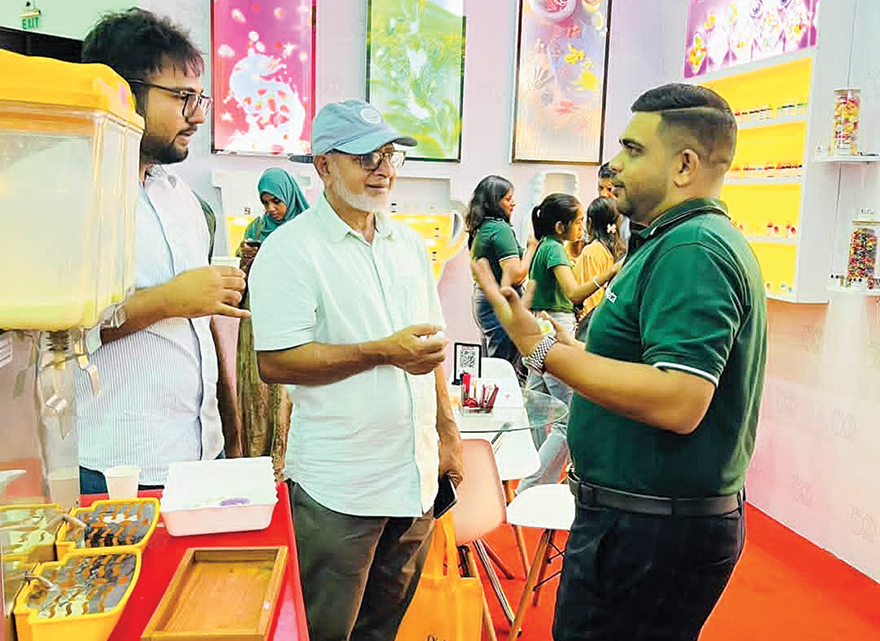
Salman Faiz has turned his family legacy into a modern sensory empire. Educated in London, he returned to Sri Lanka with a global perspective and a refined vision, transforming the family legacy into a modern sensory powerhouse blending flavours,colours and fragrances to craft immersive sensory experiences from elegant fine fragrances to natural essential oils and offering brand offerings in Sri Lanka. Growing up in a world perfumed with possibility, Aromatic Laboratories (Pvt) Limited founded by his father he has immersed himself from an early age in the delicate alchemy of fragrances, flavours and essential oils.
 Salman Faiz did not step into Aromatic Laboratories Pvt Limited, he stepped into a world already alive with fragrance, precision and quiet ambition. Long before he became the Chairman of this large enterprise, founded by his father M. A. Faiz and uncle M.R. Mansoor his inheritance was being shaped in laboratories perfumed with possibility and in conversations that stretched from Colombo to outside the shores of Sri Lanka, where his father forged early international ties, with the world of fine fragrance.
Growing up amidst raw materials sourced from the world’s most respected fragrance houses, Salman Faiz absorbed the discipline of formulation and the poetry of aroma almost by instinct. When Salman stepped into the role of Chairman, he expanded the company’s scope from a trusted supplier into a fully integrated sensory solution provider. The scope of operations included manufacturing of flavours, fragrances, food colours and ingredients, essential oils and bespoke formulations including cosmetic ingredients. They are also leading supplier of premium fragrances for the cosmetic,personal care and wellness sectors Soon the business boomed, and the company strengthened its international sourcing, introduced contemporary product lines and extended its footprint beyond Sri Lanka’s borders.

Where raw materials transform into refined fragrance

Salman Faiz -carrying forward a legacy
Today, Aromatic Laboratories stands as a rare example of a second generation. Sri Lankan enterprise that has retained its soul while embracing scale and sophistication. Under Salman Faiz’s leadership, the company continues to honour his father’s founding philosophy that every scent and flavour carries a memory, or story,and a human touch. He imbibed his father’s policy that success was measured not by profit alone but the care taken in creation, the relationships matured with suppliers and the trust earned by clients.
“We are one of the leading companies manufacturing fragrances, dealing with imports,exports in Sri Lanka. We customise fragrances to suit specific applications. We also source our raw materials from leading French company Roberte’t in Grasse
Following his father, for Salman even in moments of challenge, he insisted on grace over haste, quality over conveniences and long term vision over immediate reward under Salman Faiz’s stewardship the business has evolved from a trusted family enterprise into a modern sensory powerhouse.
Now the company exports globally to France, Germany, the UK, the UAE, the Maldives and collaborates with several international perfumes and introduces contemporary products that reflect both sophistication and tradition.
We are one of the leading companies. We are one of the leading companies manufacturing fine and industrial fragrance in Sri Lanka. We customise fragrances to suit specific applications said Faiz
‘We also source our raw materials from renowned companies, in Germany, France, Dubai,Germany and many others.Our connection with Robertet, a leading French parfume House in Grasse, France runs deep, my father has been working closely with the iconic French company for years, laying the foundation for the partnership, We continue even today says Faiz”
Today this business stands as a rare example of second generation Sri Lankan entrepreneurship that retains its souls while embracing scale and modernity. Every aroma, every colour and every flavour is imbued with the care, discipline, and vision passed down from father to son – a living legacy perfected under Salmon Faiz’s guidance.
By Zanita Careem
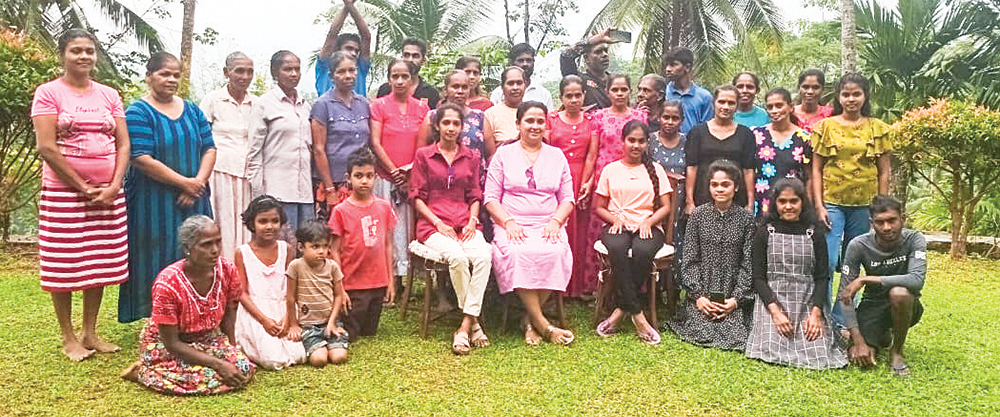
Harini and Chanaka cultivating change
When Harini and Chanaka Mallikarachchi returned to Sri Lanka after more than ten years in the United States, it wasn’t nostalgia alone that they brought home . It was purpose.Beneath the polished resumes and strong computer science backgrounds lay something far more personal- longing to reconnect with the land, and to give back to the country that shaped their memories. From that quiet but powerful decision was born Agri Vision not just an agricultural venture but a community driven movement grounded in sustainability ,empowerment and heritage. They transform agriculture through a software product developed by Avya Technologies (Pvt Limited) Combining global expertise with a deep love for their homeland, they created a pioneering platform that empowers local farmers and introduce innovative, sustainable solutions to the country’s agri sector.
After living for many years building lives and careers in theUnited States, Harini and Chanaka felt a powerful pull back to their roots. With impressive careers in the computer and IT sector, gaining global experience and expertise yet, despite their success abroad, their hearts remained tied to Sri Lanka – connection that inspired their return where they now channel their technological know-how to advance local agriculture.
For Harini and Chanaka, the visionaries behind Agri Vision are redefining sustainable agriculture in Sri Lanka. With a passion for innovation and community impact, they have built Agri Vision into a hub for advanced agri solutions, blending global expertise with local insight.
In Sri Lanka’s evolving agricultural landscape, where sustainability and authenticity are no longer optional but essential. Harini and Chanaka are shaping a vision that is both rooted and forward looking. In the heart of Lanka’s countryside, Uruwela estate Harini and Chanaka alongside the ever inspiring sister Malathi, the trio drives Agri Vision an initiative that fuses cutting edge technology with age old agricultural wisdom. At the core of their agri philosophy lies two carefully nurtured brands artisan tea and pure cinnamon, each reflecting a commitment to quality, heritage and people.
Armed with global exposure and professional backgrounds in the technology sector,they chose to channel thier experiences into agriculture, believing that true progress begins at home.
-
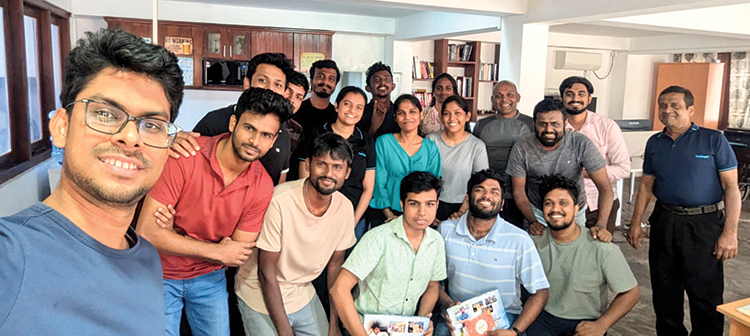
- Avya Technologies (Pvt) ltd software company that developed Agri Vision
-
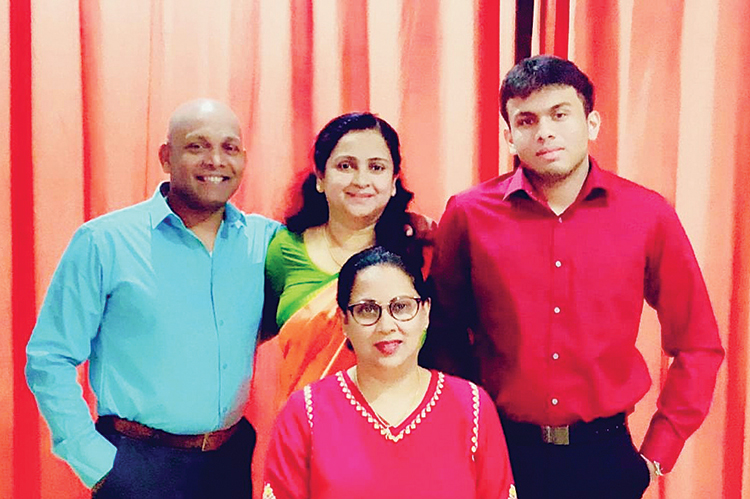
- Chanaka,Harini and Shakya Mallikarachchi and Malathi Malathi dias (middle)
But the story of Agri Vision is as much about relationships as it is about technology. Harini with her sharp analytical mind, ensures the operations runs seamlessly Chanaka, the strategist looks outward, connecting Agri Vision to globally best practices and Malathi is their wind behind the wings, ensures every project maintains a personal community focussed ethos. They cultivate hope, opportunity and a blueprint for a future where agriculture serves both the land and the people who depend on it .
For the trio, agriculture is not merely about cultivation, it is about connection. It is about understanding the rhythm of the land, respecting generations of farming knowledge, and that growth is shared by the communities that sustain it. This belief forms the backbone of Agro’s vision, one that places communities not only on the periphery, but at the very heart of every endeavour.
Artisan tea is a celebration of craft and origin sourced from selected growing regions and produced with meticulous attention to detail, the tea embodier purity, traceability and refinement, each leaf is carefully handled to preserve character and flavour, reflecting Sri Lanka’s enduring legacy as a world class tea origin while appealing to a new generation of conscious consumers complementing this is pure Cinnamon, a tribute to authentic Ceylon, Cinnamon. In a market saturated with substitutes, Agri vision’s commitment to genuine sourcing and ethical processing stands firm.
By working closely with cinnamon growers and adhering to traditional harvesting methods, the brands safeguards both quality and cultural heritage.
What truly distinguishes Harini and Chanake’s Agri Vision is their community approach. By building long term partnerships with smallholders. Farmers, the company ensures fair practises, skill development and sustainable livelihoods, These relationships foster trust and resilience, creating an ecosystem where farmers are valued stakeholders in the journey, not just suppliers.
Agri vision integrates sustainable practices and global quality standards without compromising authenticity. This harmony allows Artisan Tea and Pure Cinnamon to resonate beyond borders, carrying with them stories of land, people and purpose.
As the brands continue to grow Harini and Chanaka remain anchored in their founding belief that success of agriculture is by the strength of the communities nurtured along the way. In every leaf of tea and every quill of cinnamon lies a simple yet powerful vision – Agriculture with communities at heart.
By Zanita Careem
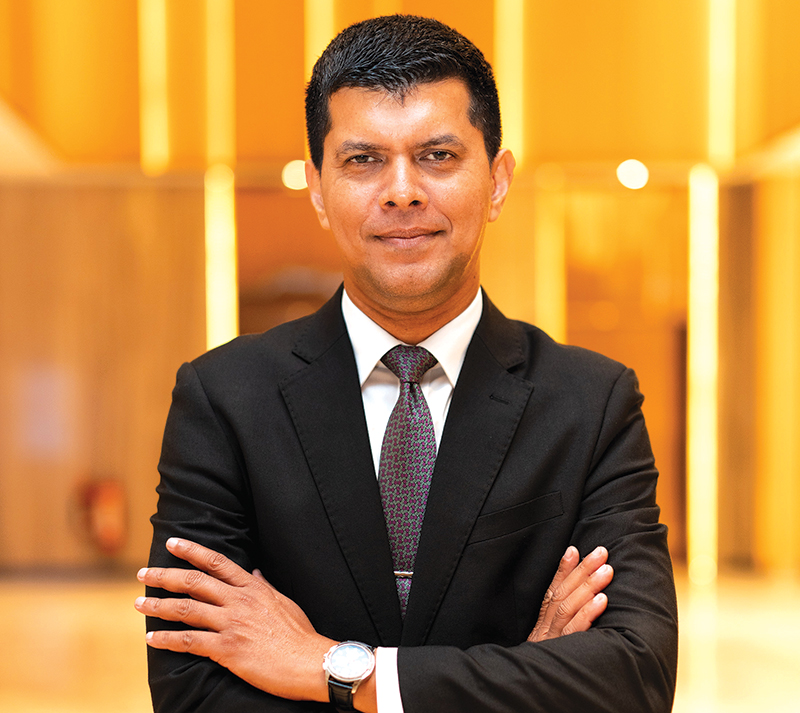
Courtyard by Marriott Colombo has welcomed Suranga Peelikumbura as its new General Manager, ushering in a chapter defined by vision, warmth, and global sophistication.
Suranga’s story is one of both breadth and depth. Over two decades, he has carried the Marriott spirit across continents, from the shimmering luxury of The Ritz-Carlton in Doha to the refined hospitality of Ireland, and most recently to the helm of Resplendent Ceylon as Vice President of Operations. His journey reflects not only international mastery but also a devotion to Sri Lanka’s own hospitality narrative.
What distinguishes Suranga is not simply his credentials but the philosophy that guides him. “Relationships come first, whether with our associates, guests, partners, or vendors. Business may follow, but it is the strength of these connections that defines us.” It is this belief, rooted in both global perspective and local heart, that now shapes his leadership at Courtyard Colombo.
At a recent gathering of corporate leaders, travel partners, and media friends, Suranga paid tribute to outgoing General Manager Elton Hurtis, hon oring his vision and the opportunities he created for associates to flourish across the Marriott world. With deep respect for that legacy, Suranga now steps forward to elevate guest experiences, strengthen community ties, and continue the tradition of excellence that defines Courtyard Colombo.
From his beginnings at The Lanka Oberoi and Cinnamon Grand Colombo to his leadership roles at Weligama Bay Marriott and Resplendent Ceylon, Suranga’s career is a testament to both resilience and refinement. His return to Marriott is not merely a professional milestone, it is a homecoming.

Navy and Coast Guard seize 04 Indian fishing vessels poaching in Sri Lankan waters

Hope’s 75, Forde and Joseph’s wickets help West Indies go into playoffs unconquered

Sri Lanka opt to bat against Zimbabwe, play Madushanka and Madushan

South Korea’s ex-president jailed for life for masterminding an insurrection

Old and new at the SSC, just like Pakistan

Peru appoints Jose Maria Balcazar as president, ninth leader in a decade

‘Dates have the highest sugar content to fight Coronavirus’

Sunday Island 27 December – Headlines

#SundayIsland 17th December – Headlines

Sunday Island – 28th March

Sunday Island Headlines – 21 March

Sunday Island – 21st February – Headlines
-

 Life style4 days ago
Marriot new GM Suranga
-

 Business3 days ago
Ministry of Brands to launch Sri Lanka’s first off-price retail destination
-

 Features4 days ago
Monks’ march, in America and Sri Lanka
-

 Features4 days ago
The Rise of Takaichi
-
 Features4 days ago
Wetlands of Sri Lanka:
-

 News4 days ago
Thailand to recruit 10,000 Lankans under new labour pact
-

 News4 days ago
Massive Sangha confab to address alleged injustices against monks
-

 News2 days ago
IMF MD here