
Latest News
Starmer to host Zelensky for Ukraine talks in London

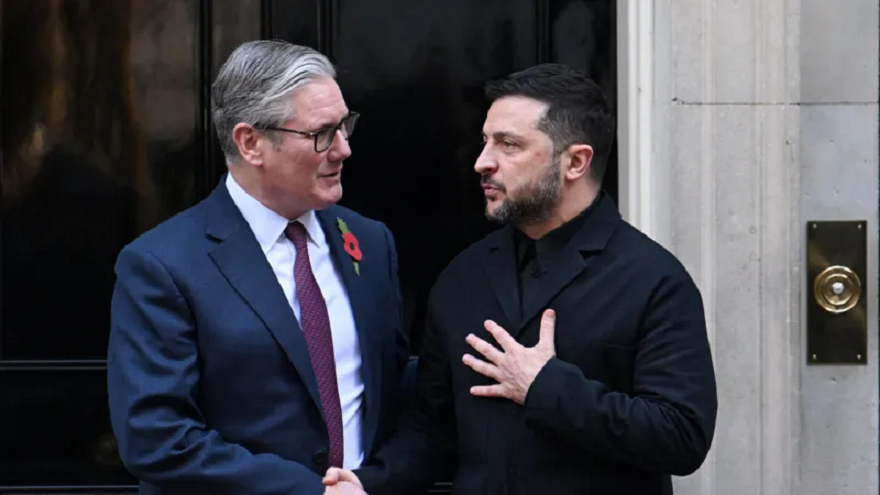
UK Prime Minister Sir Keir Starmer will host Ukrainian President Volodymyr Zelensky in London today [Monday] amid a continuing deadlock in negotiations to end the war in Ukraine.
Zelensky will attend the talks in Downing Street alongside French President Emmanuel Macron and German Chancellor Friedrich Merz.
Cabinet minister Pat McFadden said on Sunday that Ukraine’s security and self-determination would be “at the heart” of the leaders’ discussions in London. He said that US-led talks were at a “really pivotal moment”.
After three days of discussions in Miami, US President Donald Trump’s outgoing Ukraine envoy said that a deal to end the war was “really close” but hinged on Russia’s co-operation.
Negotiations remain stuck on issues including the size of Ukraine’s army after the conflict with Moscow ends and Russian control of the Donbas.
“If we get those two issues settled, I think the rest of the things will work out fairly well,” US special envoy for Ukraine Keith Kellogg told Reuters. “We’re almost there.”
Monday’s in-person talks are the latest attempt by Ukraine’s European allies to carve out a role in the ongoing efforts to end the war.
Confirming the meeting on Sunday, Downing Street said the leaders would “focus on the ongoing peace negotiations and next steps”, without providing details.
The White House has been pushing Kyiv and Moscow to agree to a multi-point plan to end the war but there has been little sign of a breakthrough, despite both sides engaging with the process.
The latest US-Ukraine talks concluded over the weekend – with Zelensky saying he was “determined” to continue working with the US after speaking to Trump’s special envoy, Steve Witkoff.
European leaders have pushed back against early versions of the US-led peace plan, which has since been revised after criticism it was too favourable towards Russia.
It has sought to win US support for its own proposals, including a European-led security force to police any peace deal in Ukraine, an idea that has been rejected by Moscow.
The original version of the US plan faced criticism from Ukraine and its allies for accepting Russian demands including on Nato involvement, restrictions to Ukraine’s army and control of the eastern Donbas region.
Russian President Vladimir Putin has in turn rejected the revisions.
Despite blows to Russia’s economy and heavy losses on the battlefield, Putin has been unwilling to compromise on key points.
He has said Russia would take the Donbas by force if Ukraine did not cede control of the region, 85% of which is currently held by Russia.
“Either we liberate these territories by force, or Ukrainian troops will leave these territories,” Putin said in an interview with India Today.
While talks continued, Russia launched another large aerial bombardment on targets across Ukraine overnight into Sunday.
Twenty-four hours earlier, Russia had launched 653 drones and 51 missiles on Ukraine, triggering air raid alerts across the country.
Macron was among the European leaders to offer his “full solidarity” to Ukraine amid the attacks and that he would “continue efforts with the Americans” to secure peace.
Meanwhile, the US National Security Strategy, which was unveiled last week, did not consider Russia to be a threat to Europe.
Moscow responded that the strategy was consistent with its own vision and was a “positive step” forward.
With further diplomatic negotiations on the horizon, EU officials have urged the US to keep historic ties between the two continents intact.
“This is the only reasonable strategy of our common security,” Polish Prime Minister Donald Tusk said in response.
[BBC]


A clinical display helped West Indies dispatch Nepal by nine wickets, as they continue their perfect record in this World Cup. They are through to the Super Eights, while Nepal are now left with only pride to play for.
Nepal’s fans were loud and proud through the tournament, and will be disappointed after these last two defeats, after having run England so close.
For West Indies, a repeat of 2016 now looks much more real a prospect than at the start of this tournament. A commanding display, right from the first over of the game till the last.
[Cricinfo]
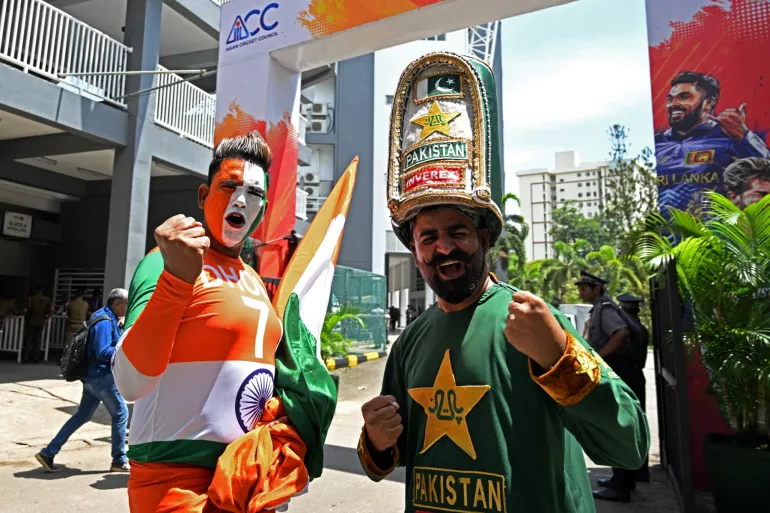
Almost 30 years ago today, India and Pakistan formed a combined cricket team to take on Sri Lanka ahead of the 1996 Cricket World Cup in an unprecedented moment of unity in the sport’s history.
The two age-old rivals put aside their differences and came together in an act of solidarity to support a fellow South Asian team, who faced the threat of match boycotts in a tournament they had battled hard to host.
India versus Pakistan is the most highly marketed fixture at every multination tournament – the World Cup, Asia Cup or Asian Games – whether it’s a men’s, women’s or Under-19 event.
Few sporting events globally carry the weight and anticipation of an India-Pakistan cricket match. So, when Pakistan’s government ordered its team not to face India at the ongoing T20 World Cup, the tournament was briefly pushed into a state of chaos.
It also left Sri Lanka, the designated host of the fixture, holding its collective breath.
A week of negotiations led to a dramatic late U-turn by the Pakistani government and the match will now take place as scheduled on Sunday at the R Premadasa International Cricket Stadium in Colombo.
But what if the boycott had gone ahead? The impact could have been catastrophic, not just for Pakistan, but also for the International Cricket Council (ICC), as well as Sri Lanka.
With the crisis seemingly averted, the island nation stands poised to reap the benefits in its financial landscape, diplomatic standing and community.
The tourism and hospitality industry was one of the hardest hit during Sri Lanka’s financial meltdown and this match will see an enormous influx of fans from India and Pakistan coming into the country.
Hotels in and around Colombo were fully booked out well ahead of the tournament but the industry braced itself for heavy losses after Pakistan threatened a boycott.
“There’s been a massive impact since the boycott was announced,” Sudarshana Pieris, who works in Sri Lanka’s hospitality sector, told Al Jazeera.
“All major hotels in Colombo were fully booked by Indian travel agencies well ahead of the match and once the boycott was announced, we lost almost all of those bookings,” he said.
“But after Pakistan reversed their decision, hotel room rates shot up by about 300-400 percent at five-star establishments in Colombo.”
It’s not just hotels but several other local businesses – from street vendors to high-end restaurants – who are hoping for an increased footfall and spending over the weekend.
These short trips and the experiences they offer could influence visitors to extend their stay or return to Sri Lanka on holiday, long after the game has ended, in a potential long-term benefit to the industry.
Another relatively underestimated impact of the game would be the employment opportunities it creates, albeit temporarily, in the media, event management, security and transportation industries.
Asanka Hadirampela, a freelance journalist and broadcaster currently working as a Sinhala language commentator for the World Cup, recognises the marquee match as a great opportunity from a personal standpoint.
“This is my first World Cup as a broadcaster,” Hadirampela said.
“The India-Pakistan fixture is the biggest and most-watched game of the tournament. So to get to work on such a match is exciting and I consider it a special achievement.”
The lines are always blurred between sport and politics in South Asia.
So while the financial gains are expected to be significant, the fixture’s impact on the region’s geopolitical environment cannot go amiss.
Pakistan’s boycott, too, was explicitly political, as confirmed by the country’s Prime Minister Shehbaz Sharif when he said that they were offering support to Bangladesh after the Tigers were kicked out of the tournament by the ICC.
The reversal of Pakistan’s decision, which they said came after requests to reconsider the boycott by several regional “friends”, was steeped in politics, too.
Sri Lanka’s President Anura Kumara Dissanayake reportedly had a phone conversation with PM Sharif, urging his government to rethink their decision to boycott the game as the successful staging of this encounter would not only position Sri Lanka as a capable host of global sporting events but also reinforce its standing as a neutral mediator in a region fraught with geopolitical complexities.
Sri Lanka and Pakistan have always maintained strong diplomatic relations, which have extended to the cricket field as well.
Sri Lanka were one of the first teams to travel to Pakistan following their 10-year ostracisation from international cricket, which came as a result of a terrorist attack targeting the Sri Lankan team in March 2009.
When Al Jazeera reached out to Sri Lanka Cricket (SLC), its vice president Ravin Wickramaratne confirmed that SLC did, indeed, reach out to the Pakistan Cricket Board (PCB) after the boycott was announced.
“We asked them to reconsider the decision,” Wickramaratne said.
“It [boycott] would have impacted Sri Lanka economically, whether directly or indirectly.
“We have always had a good relationship with the PCB and we have always supported them, so we’re happy with their decision.”
A little over 24 hours ahead of the match in Colombo, there is a sense of palpable excitement and a growing buzz around the fixture as it returns from the brink of cancellation.
As of Saturday morning, 28,000 tickets had been sold for the game but local organisers expect a capacity crowd of 40,000 to make it into the stands.
Come Sunday, thousands more will line the streets in and around Maligawatte, the bustling Colombo suburb that houses the famous Premadasa Stadium.

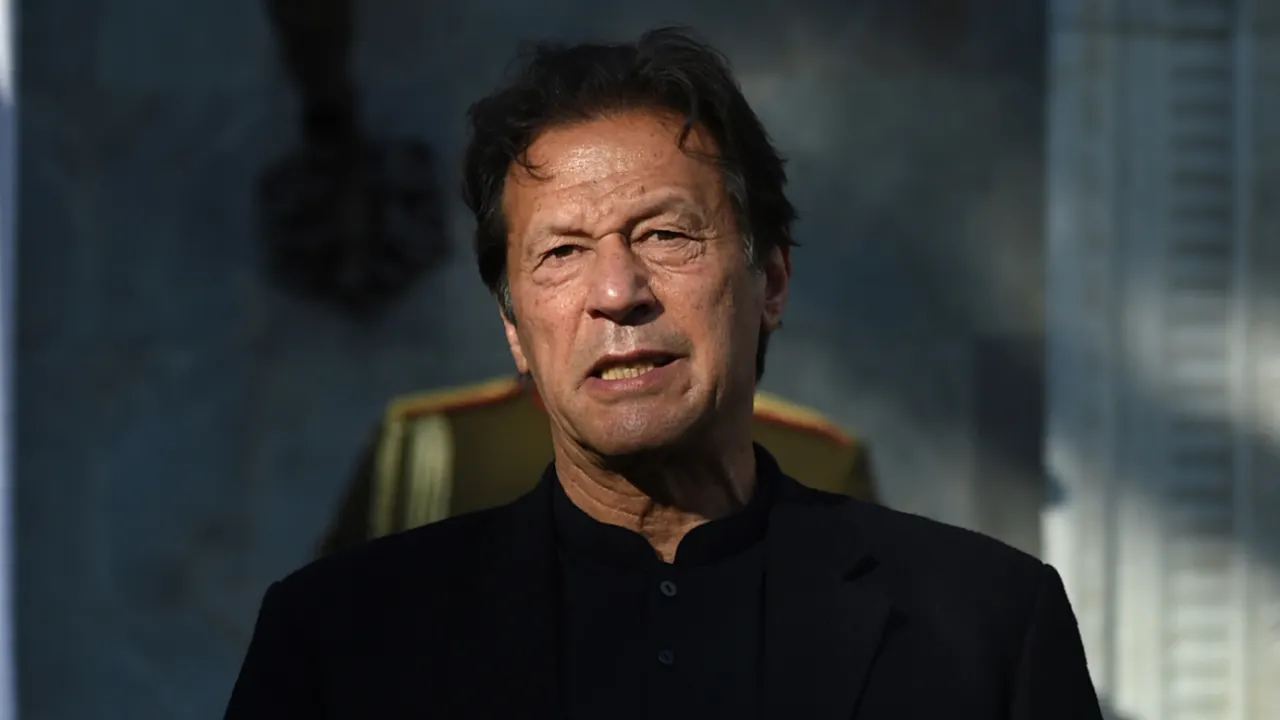
Former Pakistan captain and Prime Minister Imran Khan will be moved to hospital amid rising concerns about his health. A government minister, Tariq Fazal Chaudhary said in a post on X, formerly Twitter, that “considering his health, it has been decided to shift him to hospital and form a medical board”. The decision came amidst rising pressure on the government from the opposition, who have staged a parliamentary sit-in at Parliament House until appropriate medical care is provided to Imran. The sit-in is into its second day.
Wasim Akram and Waqar Younis have led calls for Imran to be allowed appropriate medical access in prison after reports have emerged that he has lost most of the vision in his right eye. Imran, 73, has been in virtual solitary confinement in prison for several months, and has suffered an eye infection that his legal team has claimed left him with severe vision loss.
Imran’s legal team has also asserted that his deteriorating health has been caused by the government’s neglect. Government spokespersons have denied these charges.
“It is heartbreaking to hear our skipper Imran Khan going through health issues,” Wasim, who has cited Imran as the biggest influence on his career, said on X, formerly Twitter. “I sincerely hope the authorities take this seriously and ensure he receives the best possible medical care. Wishing him strength, a speedy recovery, and a full return to good health.”
Waqar, who has similarly extolled Imran’s influence on his career, posted shortly after. “Putting politics aside, our national hero who gave us our greatest glory on the sporting field, a cancer hospital [which] helped so many, including my own mother, is suffering a health emergency and requires urgent treatment. I humbly request the related authorities he gets the appropriate treatment in a timely manner. Get well soon skipper.”
Shoaib Akhtar said earlier on Saturday that he had spent the last three months in the USA raising funds for Shaukat Khanum Cancer Hospital, which Imran fundraised and built in tribute to his mother who died of cancer. “I’m deeply saddened to hear the news of him losing vision in his eye,” Shoaib said. “I hope he gets the best treatment and I’m wishing him a speedy recovery.”
Shahid Afridi said right to medical access was a “basic right and should be provisioned”. Ramiz Rajaa, who took the catch off Imran’s bowling that won the 1992 World Cup for Pakistan, and later served as PCB chairman when Imran was Prime Minister, said he hoped “humanity prevails”. “Seeing Imran Khan suffer and lose vision in one eye is an emotional meltdown!” he posted.
Mohammad Hafeez has also joined calls wishing Imran well and asking for appropriate medical access to be provided.
The calls have not been confined to Pakistan, with former India batter Ajay Jadeja calling on Pakistan’s cricketers to show their support for Imran on Friday.
Imran was arrested in August 2023 and sentenced to several prison sentences on a slew of charges that he and his supporters have insisted are politically motivated.
[Cricinfo]

West Indies brush aside Nepal to reach Super Eights

India vs Pakistan match is a godsend for T20 World Cup hosts Sri Lanka

Imran Khan to be moved to hospital amid rising health concerns

Fairly heavy showers are likely at some places in the Rathnapura, Kalutara, Galle and Matara districts

India vs Pakistan is finally here. Over to cricket now

“We Are Building a Stable, Transparent and Resilient Sri Lanka Ready for Sustainable Investment Partnerships” – PM

‘Dates have the highest sugar content to fight Coronavirus’

Sunday Island 27 December – Headlines

#SundayIsland 17th December – Headlines

Sunday Island – 28th March

Sunday Island Headlines – 21 March

Sunday Island – 21st February – Headlines
-
 Business4 days ago
Autodoc 360 relocates to reinforce commitment to premium auto care
-
 Midweek Review4 days ago
A question of national pride
-
 Opinion3 days ago
Will computers ever be intelligent?
-
 Features12 hours ago
The Rise of Takaichi
-
 Midweek Review4 days ago
Theatre and Anthropocentrism in the age of Climate Emergency
-

 Editorial7 days ago
The JRJ syndrome
-
 Life style12 hours ago
Marriot new GM Suranga
-
 Opinion4 days ago
The Walk for Peace in America a Sri Lankan initiative: A startling truth hidden by govt.