
Features
St. Maximilian Kolbe: ‘The Saint and Hero at Auschwitz’ and his visits to Sri Lanka in the 1930

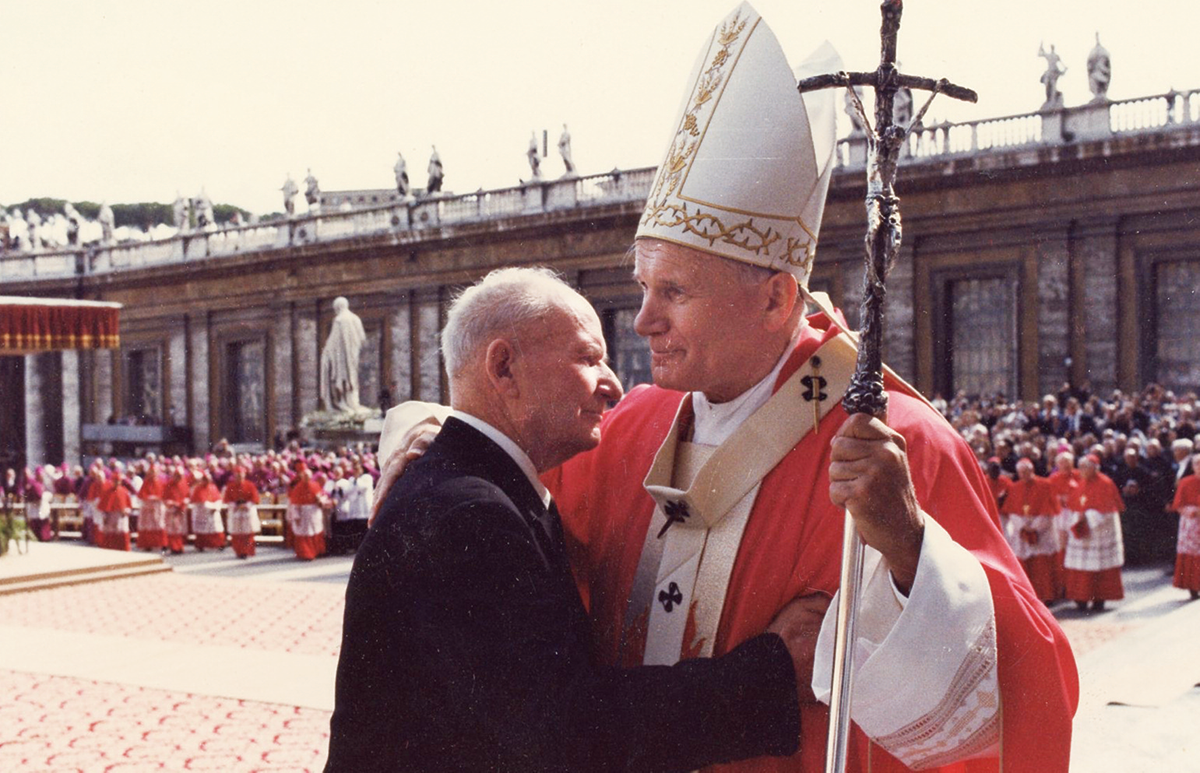
The 84th anniversary of the death of St. Maximilian Maria Kolbe- a Polish Franciscan priest who, during the Second World War, volunteered to die in place of a fellow prisoner, Franciszek Gajowniczek (a father of two, condemned to starve to death in the infamous “Death Bunker” at the Nazi concentration and extermination camp of Auschwitz), in order to save that prisoner’s life- fell on August 14, 2025. St. Maximilian Kolbe was no stranger to Sri Lanka. During his missionary journeys to and from Japan, China and India, he visited the Island (then known as Ceylon) in 1930, 1932 and 1933.
In July 1941, the Nazis discovered that a prisoner had escaped from the Auschwitz concentration and extermination camp. On such occasions, the Nazis enforced a brutal retaliatory policy they believed would serve as a deterrent: for every escapee, 10 men randomly chosen from the remaining prisoners would be starved to death. Following this cruel and inhuman policy, the SS officer, Karl Fritsch selected 10 men from among the prisoners who were standing in ranks for this unjust collective punishment. One of those chosen was a Polish prisoner Franciszek Gajowniczek, who pleaded in anguish, ‘My wife and children’.
Father Maximilian Maria Kolbe was a 47 year old Polish Franciscan priest who had been taken prisoner by Nazis for providing shelter to Jewish refugees at his monastery near Warsaw and for publishing articles critising the Nazi regime. He was not among those chosen for the cruel and vengeful punishment. Father Maximilian heard the desperate plea of his fellow prisoner- Franciszek Gajowniczek. Moved by compassion, he walked up to the Nazi officer.
When asked “Who are you?”, Father Maximilian replied, ‘I am a Catholic priest. I want to die for that man; he has a wife and children.’ The Nazi officer complied with Father Maximilian’s request and chose him in place of Franciszek Gajowniczek. Along with other nine prisoners condemned to death by starvation, Father Maximilian was led to a cell in the ‘Death Bunker’. A person who had served as an assistant janitor at Auschwitz at that time, later testified that in his prison cell, Father Maximilian led the prisoners in prayer. Each time the guards came to check, they saw him standing or kneeling in the middle of the cell. He and the other nine prisoners were starved and deprived of water for two weeks, and all but Fr. Maximilian and three others died. The guards, eager to empty the bunker as quickly as possible, administered lethal injections of carbolic acid to Father Maximilian and the three remaining prisoners, ending their lives.
Father Maximilian passed away on August 14, 1941. His mortal remains were cremated the following day, August 15, the Feast of the Assumption of Mary. Gajowniczek, whose life was spared through Father Maximilian’s supremely heroic and sacrificial act of love, remained imprisoned at Auschwitz until he was transferred from there to Sachsenhausen concentration camp on October 25, 1944. He remained a prisoner there until the camp was liberated by the Allied forces following Germany’s surrender on May 7, 1945. Six months later, when he reunited with his wife Helena, who had survived the war, he learnt that their two sons had been killed in a Soviet bombardment of Rawa Mazowiecka in January 1945 before his release.
Gajowniczek dedicated the rest of his life to sharing the story of Father Maximilian’s supreme act of love and sacrifice – how one man laid down his life so that another man might live. Father Maximilian’s sacrifice was a living example, an epic realization of what Christ said: ‘Greater love has no one than this, than to lay down one’s life for his friends’ [John 15:13]. It was also a profound imitation of what Christ himself did.
On October 17, 1971, Pope Paul VI beatified Father Maximilian Kolbe. Eleven years later, on October 10, 1982 Pope John Paul II canonized him proclaiming that he was a ‘martyr of charity’. Franciszek Gajowniczek was present in Rome to witness both the beatification and canonization ceremonies. St. Maximilian Kolbe is one of the 20th century Christian martyrs commemorated in statues erected above the Great West Door of Westminster Abbey, a cathedral of the Church of England.
When one looks at the life of St. Maximilian Kolbe, it becomes clear that his supreme act of laying down his life to save another man was not a spontaneous, isolated or impulsive gesture. It was unequivocally the cumulative outcome of a deeply rooted and well-formed spiritual life he lived from early on.
Early Years
Raymond Kolbe, who took the religious name Maksymilian (transliterated as Maximilian in English) upon entering the novitiate in 1910, and later the additional name Maria at his ordination as a Franciscan priest in the Order of Friars Minor Conventual (OFM Conv.) in 1914, was born on January 8, 1894 in the Polish town of Zduńska Wola then situated in the Russian-occupied part of Poland. At that time, Poland was partitioned and divided between the Russian, Prussian and Austro-Hungarian empires.
His parents, Julius Kolbe and Maria Kolbe (née Dabrowska) were weavers by trade; his mother later worked as a midwife. They were devout Catholic Christians. Of their five sons, two died in infancy. The three surviving sons – Francis, Maximilian and Joseph – began their early informal education at home, and were later sent to the Franciscan Fathers in Lwow for formal education in the hope that they would become priests. Julius and Maria Kolbe inculcated in their three sons a profound love for and faith in God. They also planted in them a streak of patriotism, a love for their Fatherland, Poland. Julius and Maria entered the religious life in their lives later. Julius entered a Franciscan monastery as a religious brother and Maria joined a Felician Sisters’ convent as an extern.
Apparition of Mary
St. Maximilian Kolbe, at times, was as mischievous as any child could be. On one day in 1903 when he was only nine years old, his mother, exasperated by his pranks, asked him ‘What is going to become of you?’ Little Maximilian, who took this question to heart, began to spend time before the family altar praying. His mother, observing her son spending long hours in solitude, praying and weeping at the family altar in solitude, became concerned about what was troubling him. When she asked him what disturbed him, Maximilian told her:
‘When you said to me, ‘What will become of you?’ I prayed very hard to Our Lady to tell me what would become of me. And later in the church I prayed again. Then the Virgin Mother appeared to me holding in her hands, two crowns, one white, one red. She looked at me with love and she asked me if I would like to have them. The white [one] meant that I would remain pure and the red that I would be a martyr. I answered “yes, I want them.” Then the Virgin looked at me tenderly and disappeared.’
[Treece, Patricia, ‘A Man for Others: Maximilian Kolbe: Saint of Auschwitz in the Words of Others who knew Him’ , Harper & Row, New York,1982]
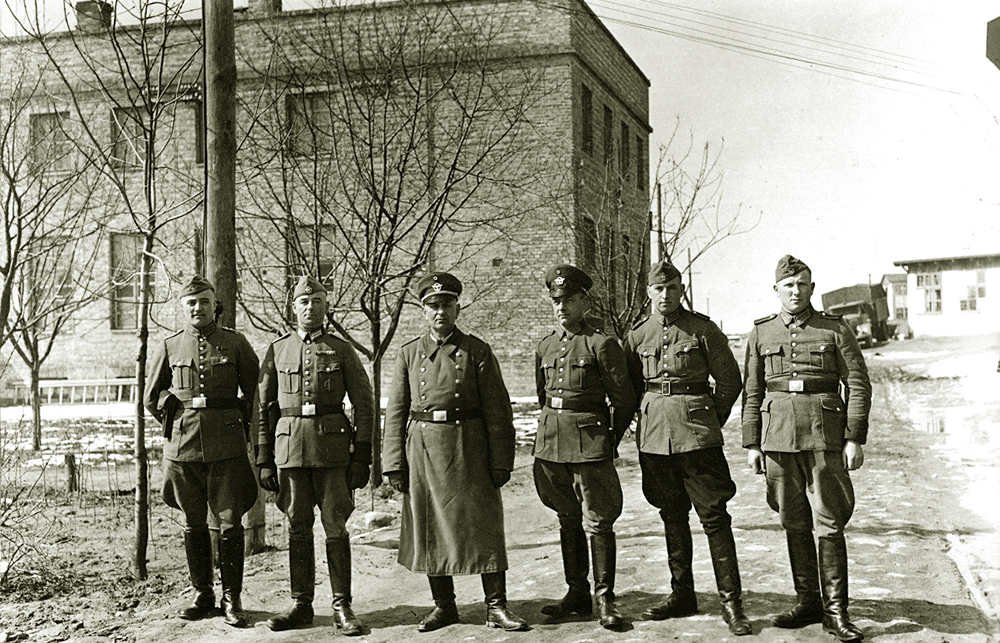
Nazi Officers standing near Auschwitsz Concentration Camp Photo courtesy: reproduced with the permission of The Archives of MI Niepokalanów (Archiwum MI Niepokalanów) , Teresin, Poland
This experience undoubtedly left an indelible imprint on St. Maximilian Kolbe’s spiritual journey.
Education, Rome, Ordination and ‘Militia Immaculata of the Immaculata’
St. Maximilian Kolbe was a bright pupil at the Franciscan Minor Seminary in Lwow, where he displayed notable excellence in mathematics and science. In 1912, he was sent to Rome for higher studies at the Pontifical Gregorian University where he received a doctorate in philosophy in 1915. While in Rome, on April 28, 1918, he was ordained a priest in the Order of Friars Minor Conventual (OFM Conv.). He pursued further studies at the Pontifical University of St. Bonaventure, where he was awarded a doctorate in theology in 1919.
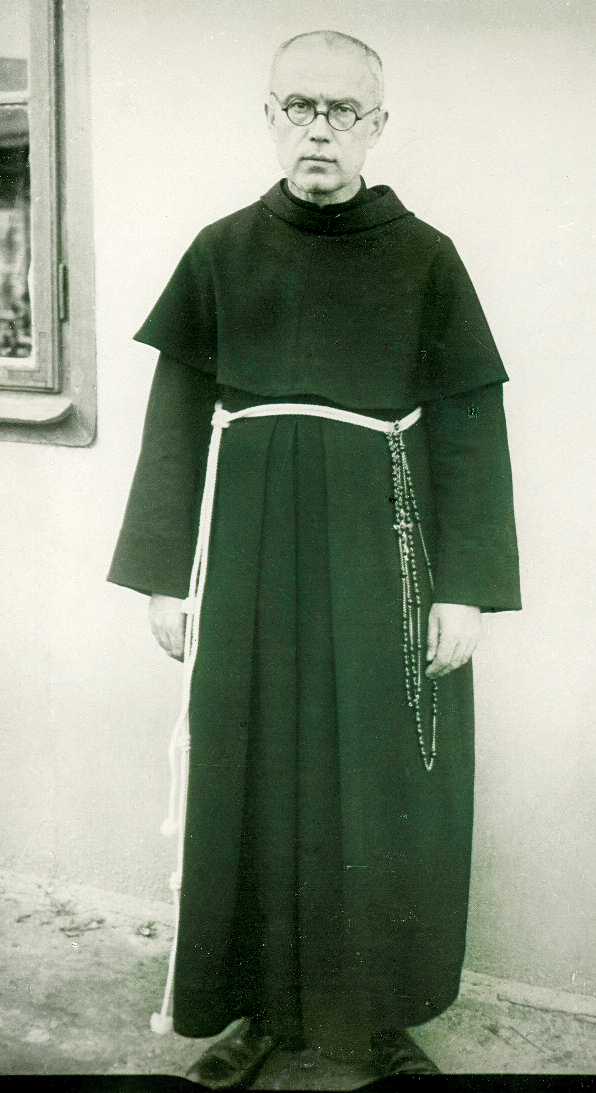
St. Maxilian Kolbe Photo courtesy: reproduced with the permission of The Archives of MI Niepokalanów (Archiwum MI Niepokalanów) , Teresin, Poland
When World War I broke out, St. Maximilian Kolbe was still studying in Rome. At that time, Józef Piłsudski’s Polish Legions were engaged in battle against the Russians for the independence of Poland. His father, Julius Kolbe, who had by then become a Franciscan brother, left his religious life and joined Józef Piłsudski’s forces to fight for his country’s freedom. Julius Kolbe, who was only 43 years old, was captured and executed by the Russians. His death was a traumatic event for young St. Maximilian Kolbe.
The year 1917 marked a crucial turning point for the Church and for the world. In Europe, the rise of materialism and the Russian revolution which brought Lenin and atheistic communism to power resulted in an open “war” against religion and the Church. Meanwhile in Italy, the unresolved “Roman Question”, which arose from the military occupation of the Papal States by the Kingdom of Italy in 1870, had created a political climate and social opinion hostile towards the Catholic Church and the Papal authority. Some intellectuals, political parties, groups (notably Italian Freemasons) and activists in Italy openly launched vigorous campaigns against the Church and the Papal authority. The response of the young student and Franciscan friar, St. Maximilian Kolbe to this global and moral challenge, was the founding of the Militia of the Immaculata.
On October 16, 1917, St. Maximilian Kolbe, together with six fellow Franciscan friars, founded the Militia of the Immaculata (The Army of the Immaculate Blessed Virgin Mary), a non-violent spiritual army waging a battle of love for the conversion of sinners and opponents of the Catholic Church, using as weapons the preaching of the Gospel of Jesus Christ, prayer (particularly prayers invoking the intercession of the Blessed Immaculate Mother Mary), evagelisation through modern media (magazines, newspapers, books, radio), missionary and pastoral outreach, personal sanctification, Eucharistic devotion and charitable apologetics. Members of the Militia of the Immaculata are called The Knights of the Immaculata.
St. Maximilian Kolbe, early on as a child, had adopted five ideals in life: a military career in defence of his beleaguered and divided homeland; ordination as a Franciscan priest; championing the causes of the Catholic Faith; holiness; and martyrdom. As events unfolded in his life, all these ideals except the military career in a secular army to fight for the freedom of his country came to fruition. His military inclination, however, found expression in a non-violent spiritual form through the Miliitia of the Immaculata.
Towards the final stages of his studies in Rome, he contracted tuberculosis, an infection that afflicted him throughout the rest of his life from time to time. Despite the physical suffering, poor health and weakness caused by bouts of this infection, St. Maximilian Kolbe unwaveringly laboured for and served the causes to which he was profoundly committed and dedicated.
Return to Poland, Niepokalanov, Apostle of Media, and Missionary Endeavours in Japan and India
After completing his studies in Rome, St. Maximilian Kolbe returned to Poland in 1919, and began serving as a teacher at the Franciscan Seminary in Kraków, a position he held till 1922 whilst actively promoting the work of the Militia of the Immaculata. In 1922, he launched the popular Catholic periodical Rycerz Niepokalanej (The Knight of the Immaculata). In 1927, he founded a new Franciscan monastery called ‘Niepokalanów’ (The City of Mary Immaculate) near Warsaw, which grew into a large and influential religious centre for Catholic media operating both a publishing house and a radio station, Radio Niepokalanów. Niepokalanów eventually attracted a community of about 700 friars and workers.
He and his fellow friars, whilst practising strict religious poverty, made use of the most modern equipment, printing machines and administrative strategies in their media work at the Niepokalanów. The periodical Rycerz Niepokalanej (The Knight of the Immaculate) achieved a spectacular monthly circulation of one million. The daily newspaper Mały Dziennik (the Small Diary) launched by the monastery at Niepokalanów later reached a significant circulation of 137,000 on weekdays, and nearly double that, 225,000, on weekends.
As St. Maximilian Kolbe’s vision for the Militia of the Immaculata was global and missionary in its scope, naturally he began to extend its work to foreign lands. In 1930, he travelled to Japan with four Franciscan brothers. There, he launched a Japanese version of his periodical Rycerz Niepokalanej entitled Seibo no Kishi, and founded a Franciscan monastery of the Order of the Friars Conventual Minor called Mugenzai no Sono (The Garden of Mary Immaculate) on a hill near Nagasaki. Although this monastery did not grow into a large institution like its parent Niepokalanów near Warsaw, it nevertheless developed into an active Catholic publishing house.
St. Maximilian Kolbe travelled to India in 1932 and during his visits there, he met with Kerala’s Archbishop of the Syrian Rite and the Archbishop of the Latin Rite. He had lengthy discussions with them on the possibilities of establishing a friary on the lines of Niepokalanów and starting publishing an Indian version of The Knight of the Immaculate. Although both Archbishops had initially expressed their willingness to gift pieces of land for his project, his vision of starting a Franciscan monastery named Amalam on lines of Niepokalanów in India did not materialise during his lifetime due to some obstacles and delays that intervened.
[The writer expresses his sincere gratitude to Fr. Krzys Flis, Director of MI Niepokalanów in Teresin, Poland and Sister Annamaria Mix, Archivist, Archiwum MI Niepokalanów in Teresin, Poland for providing him with access to the writings of St. Maximilian Kolbe relating to his visits to Sri Lanka and the photographs with permission for reproduction]
(To be continued next week)
By Prabhath de Silva ✍️
“Greater love has no one than this,
than to lay down one’s life for his friends”
-Jesus Christ [John 15:13]

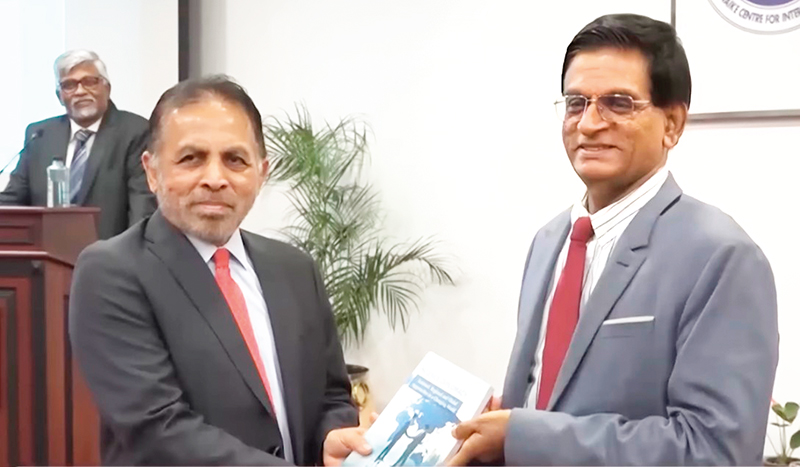
Today marks a truly historic and momentous occasion in the realm of transdisciplinary diplomacy in our country. We gather here with a twofold purpose of profound national and global significance: the establishment of the Science Diplomacy Forum, and the launch of the volume Science Diplomacy: National, Regional and Global Approaches in a Changing World.
This volume brings together valuable and timely contributions from internationally renowned experts representing all key regions of the world — North America, Latin America, Europe, Africa, West Asia, South Asia, and Oceania. It reflects a rich diversity of perspectives, experiences, and insights that speak to the increasingly interconnected nature of science, policy, and diplomacy in our rapidly transforming world.
I am deeply heartened — and indeed humbled — by the presence of such a distinguished constellation of leaders, professionals, intellectuals, scholars, and luminaries from diverse domains, including international relations, science and technology, higher education, and governance. It is rare to witness such an extraordinary and diverse assembly of intellectual, professional, and academic excellence under one roof. Your presence affirms the importance of the cause we serve and the promise of the path we are charting together. Your support, encouragement, and engagement give life, purpose, and direction to this vital endeavour.
As Chief Editor of this volume, it is both a great honour and a profound responsibility to extend a warm and heartfelt welcome to all our distinguished guests and invitees. I am conscious that this august gathering is not assembled to listen to a lengthy welcome address, but rather to engage with the substantive proceedings of this event, enriched by five eminent personalities, four distinguished speakers, and an able and competent moderator — all of whom possess exceptional mastery of the subject. I shall therefore be brief.
Among us today are former and current Ministers and people’s representatives, members of the diplomatic corps, Secretaries to Ministries, distinguished panelists, valued contributors to the volume, Vice-Chancellors, Members of the Board of Management and Academic Affairs Board of the BCIS, Heads of institutions, professors, senior government officials, professionals, journalists, and many others — too numerous to acknowledge individually, yet each of you is most warmly welcomed. I receive you all, whether present in person or online, with the utmost warmth, respect, and appreciation.
The panel discussion constitutes the pièce de résistance of this event. We are deeply honoured to be joined by four eminent personalities:
Her Excellency Siri Walt, Ambassador of Switzerland to Sri Lanka;
Professor Pierre-Bruno Ruffini, former Chair of the EU Science Diplomacy Alliance; and former Ambassadors Mr. Bernard Goonatilleke and Dr. Palitha Kohona — all of whom bring exceptional depth of experience and insight to this important subject.
Their discussion will be guided by our distinguished moderator, Mr. Naushard Cader, a truly cosmopolitan personality, widely respected for his breadth of knowledge and his keen understanding of global affairs and science diplomacy. I extend to all our speakers and our moderator a very warm welcome and my sincere appreciation for their willingness to share their wisdom with us this evening.
Allow me, however, to place this event in perspective.
We gather this evening not merely to introduce a book, nor solely to inaugurate a forum, but to reflect together on an idea whose time has unquestionably arrived.
We meet at a moment of profound global transition and conflict. The international landscape is marked by turbulence, uncertainty, and rapid transformation. The world is shifting from a relatively stable post–Cold War configuration toward an increasingly multipolar order. While multipolarity carries the promise of greater balance and strategic autonomy, it also brings intensified competition among major powers, fluid alliances, and growing unpredictability.
At the same time, the rules-based international order — which for decades provided smaller nations with a measure of predictability and protection — is under visible strain and threat. Institutions are contested. Norms are challenged. Economic interdependence deepens even as geopolitical fragmentation intensifies. Supply and value chains now account for nearly seventy percent of global trade, binding nations in complex webs of mutual dependence. Yet such interdependence has not prevented trade wars, sanctions regimes, technological decoupling, and regional conflicts.
For small and economically vulnerable states, this evolving environment is especially daunting. When global rules weaken, asymmetries of power become more pronounced. Bilateral negotiations between unequal partners can leave smaller nations disadvantaged. Without adequate legal, geological, scientific, technological, and diplomatic expertise, such states may struggle to safeguard their long-term national interests and sovereignty. Vulnerability, in the absence of knowledge and capacity, risks translating into marginalisation.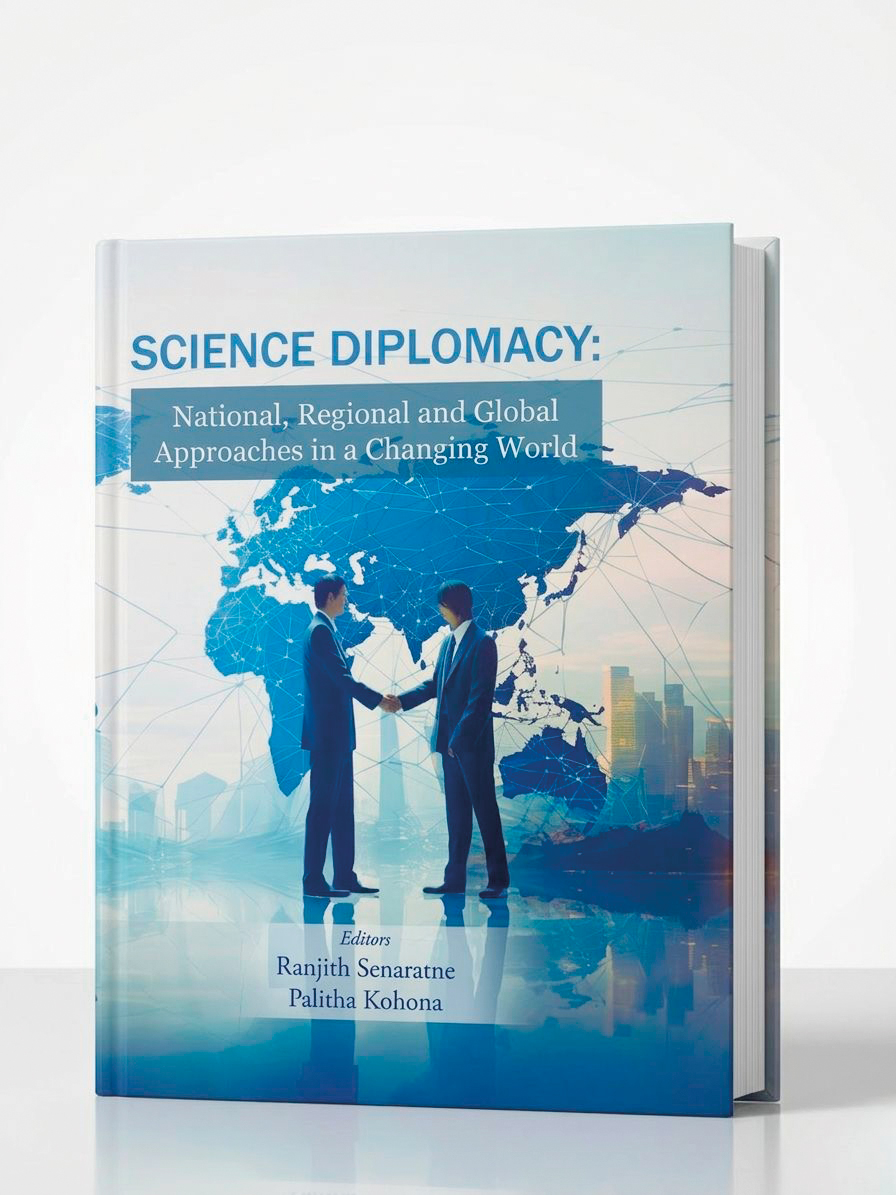
Overlaying this geopolitical transformation is a constellation of interconnected global challenges. Climate change is no longer a distant projection; it is a lived reality. Sea levels are rising. Extreme weather events are intensifying. Food, water, and energy security remain fragile. Pandemics have exposed vulnerabilities in global health systems. Cyber threats transcend borders. Environmental degradation, biodiversity loss, and marine pollution threaten livelihoods and ecosystems alike.
These challenges are systemic and transboundary. Almost every major issue — whether global, regional, or national in scale — involves science and technology, either in understanding root causes or in devising effective solutions.
Traditional diplomacy, while indispensable, is no longer sufficient on its own. The defining issues of our time are not purely political or military; they are scientific, technological, environmental, and societal. They demand evidence-based policymaking, interdisciplinary collaboration, and sustained transnational cooperation.
It is within this context that science diplomacy emerges — not as an academic abstraction, but as a strategic necessity.
Nowhere are these realities more visible than in the Indian Ocean.
Unlike the Atlantic or Pacific Oceans, which possess longstanding institutional architectures and extensive scientific mapping, the Indian Ocean remains comparatively underexplored and under-institutionalised. Covering roughly one-fifth of the world’s oceanic expanse, it carries a substantial share of global energy shipments and maritime trade. Its seabed resources — including critical and rare-earth minerals — remain only partially surveyed. Many of its coastal and island nations are developing economies with limited scientific and technological capacity to explore, monitor, and sustainably manage these resources.
The Indian Ocean is unique. It is bordered predominantly by developing and emerging states. It hosts remarkable cultural, religious, and political diversity. It is home to some of the world’s most climate-vulnerable communities. Increasingly, it has become a central theatre of global strategic competition, viewed by some nations through distinct geostrategic lenses.
This maritime space is simultaneously a lifeline and a fault line. It sustains global commerce and local livelihoods. Yet it is also a theatre where geopolitical interests intersect — sometimes converge, sometimes collide.
At the heart of this ocean lies Sri Lanka.
Geographically, our island sits astride one of the busiest East–West shipping routes in the world. Historically, Sri Lanka has been a hub of commercial, cultural, and intellectual exchange. Today, that strategic location presents both opportunity and responsibility.
Sri Lanka’s history, enriched by iconic figures such as Dr. Gamini Corea, Hon.
Lakshman Kadirgamar, Judge Christopher Weeramantry, Dr. Neville Kanakaratne and Dr. Jayantha Dhanapala, stands as a powerful testament to our long-standing contributions to global diplomacy and international governance. Our nation provided leadership within the Non-Aligned Movement, positioning itself as a bridge between civilizations at a time of deep ideological division. We also made history by producing the world’s first woman Prime Minister, affirming our commitment to political progress and inclusive governance.
Today, we are called upon once again to build upon this distinguished legacy — by championing regional unity, promoting sustainable development, and addressing critical contemporary challenges such as climate change, maritime security, and environmental sustainability.
We must navigate complex geopolitical currents while safeguarding sovereignty and strengthening economic resilience. We face vulnerabilities common to island and littoral states: climate change, coastal erosion, marine pollution, and supply chain disruptions. Our development aspirations must be balanced with environmental stewardship and maritime security considerations.
Yet within these challenges lies profound opportunity.
Sri Lanka can position itself as a regional convener — a hub for ocean science, climate research, marine biodiversity studies, disaster risk reduction, and blue economy innovation. Through platforms such as BIMSTEC, the Indian Ocean Rim Association, and SAARC, we can advance cooperative marine research, harmonise environmental standards, strengthen early warning systems, and promote sustainable maritime governance grounded in international law.
But to do so effectively, we must invest in knowledge — and in the diplomacy of knowledge.
Science diplomacy operates along three mutually reinforcing dimensions:
First, science in diplomacy — where scientific evidence informs foreign policy decisions.
Second, diplomacy for science — where diplomatic engagement enables international research collaboration and shared infrastructure.
Third, science for diplomacy — where scientific cooperation itself becomes a bridge for confidence-building, even when political relations are strained.
Importantly, science diplomacy extends beyond the natural sciences. The humanities and social sciences are equally vital. Technology must be guided by ethics. Data must be interpreted within cultural contexts. Policy must consider equity and justice. Diplomats of the future must be fluent not only in international law and negotiation, but also in scientific literacy and interdisciplinary thinking.
In a fragmented world, science offers a neutral vocabulary. It encourages transparency, peer review, and open data. It shifts discourse from rhetoric to evidence. It fosters long-term thinking in political environments often dominated by short-term calculations.
For small and vulnerable nations, science diplomacy is empowerment. It strengthens capacity. It enhances credibility. It enables engagement with larger powers on firmer ground — armed not merely with moral argument, but with data, research, and technical expertise.
The book we launch today reflects a diversity of experience and insight. It is intentionally transdisciplinary because the problems we face are transdisciplinary. It is intentionally global because no region can address these challenges in isolation.
In Sri Lanka, science diplomacy remains at a formative stage. The establishment of the Science Diplomacy Forum signals our determination to move beyond dialogue toward sustained institutional engagement. It envisions training programmes for diplomats and scientists, embedding scientific advisory mechanisms within governance structures, and building networks among universities, research institutes, industry, and policymakers. It seeks to cultivate a new generation equipped to navigate the interface between knowledge and negotiation.
We aspire for the Science Diplomacy Forum to be transformative — a true game changer.
Excellences, Ladies and Gentlemen,
We live in an era of mounting uncertainty — but also of extraordinary human ingenuity. The same interconnectedness that transmits crises also enables collaboration. The same technologies that disrupt can also heal and transform.
Change is inevitable. The deeper question is whether we will shape that change cooperatively, constructively, and inclusively.
For Sri Lanka, for the Indian Ocean region, and for the broader global community, science diplomacy offers a pathway beyond zero-sum thinking. It channels competition into collaboration around shared public goods. It aligns national interest with regional stability. It transforms vulnerability into resilience through knowledge.
Let this book be not merely a publication, but a platform for sustained reflection and action.
Let the Science Diplomacy Forum be not merely an institution, but a living bridge between evidence and policy, between research and responsibility, between nations and neighbours.
Let Sri Lanka reaffirm its role as a bridge — not a battleground — in the Indian Ocean.
In a world where rules may falter, let evidence guide us.
In a world where tensions may rise, let dialogue endure.
In a world of turbulence, let science diplomacy be our compass — guiding us toward peace, stability, dignity, and shared prosperity.
Welcome Address and Opening Remarks made by Emeritus Prof. Ranjith Senaratne
Former General President,
Sri Lanka Association for the Advancement of Science recently on the occasion of the Founding of the Science Diplomacy Forum and the Launch of the Book Science Diplomacy:
National, Regional and Global Approaches in a Changing World

From one day of celebration to 364 days of transformation
The international women’s day was just celebrated all over the world. I saw many organiations share their slogans, and organize panel discussions, presentations, and exhibitions to support women empowerment. Slogans, themes, colors play vivid and vociferous role across the world, commemorating the international women’s day.
Alas, the colors are faded, slogans are weaned, themes are forgotten, over the next 364 days, pushing UN Chapter on Women’s Rights come up with more illustrious themes and slogans.
From Bread and Peace to Rights and Action
According to the recorded history, the Women’s day first introduced on 28th February 1909 in America, raising a voice of women against poor working conditions and poor pay in garment factories. This took a more revolutionary form in 1917 in Russia against World War I, where a mass of women protested under the theme of “Bread and Peace”.
Starting from basic needs such as bread and peace, the International Women’s Day theme has evolved towards freedom and independence, justice and inclusion.
Over the years, the rise of feminism brought cultural refinements and highlighted women’s rights. Looking back the historical evolution of women’s role, we see that matrimony has faded and patriarchy evolved with religious and geopolitical forces intertwined with the social expectation. The importance and respect for women, given in the ancient civilisations, diminished with medieval civilization, and subsequent colonisation. The rise of patriarchy domesticated women as homemakers, at the same time prompting their voices to rise for dignity and equitable treatment.
Rise of Feminism
In a typical Western-household of 20th century, husband was the bread winner of the family and the wife managed household affairs. In this era, women’s affairs were restricted to daily chores, creating a boundary wall restricting their access to corporate jobs, free voices. Betty Friedman was a remarkable lady who observed the domestic suffering of women and challenged ‘feminine mystique’ through her 1963 book. She disclosed the feminine mystique, which celebrated women as good housewives, and the belief that women could find satisfaction from domestic chores, home making, marriage, raising children, cooking, washing and taking care of husband’s needs. Betty disclosed that the unhappiness and boredom experienced by the domesticized women, and their inability to live up to the feminist mystique defined by the male dominant society had no name and difficult to express in words. Betty’s claim was supported by the theories of Abraham Maslow, who introduced motivation to grow along the hierarchy of needs. Betty, declared that feminine mystique denies basic growth needs of women, where their desires limited to shelter, food, safety and love only.
In this era women’s jobs were confined preeminently to teaching, and caregiving. STEM fields: science, technology, engineering and medicine were dominated by males, leaving less space for women. As you may have heard in the medieval era women who practiced medicine were branded as ‘witches’ and many were burned alive rooting out the knowledge and courage of women. Women who practiced and taught science and astronomy, were also branded for witch craft and condemned to death. The social pressure suppressed women confining them to domestic chores. In the industrial era women were hired for factory work under low wages and less facilities. In this period Women’s organisations were gathered demanding freedom and justice for women, calling for equal opportunities and rights enjoy their male counterparts. The evolution of women’s movements culminated in 1975, where the first International Women’s Day was commemorated on 8th March 1975.
Celebration and Contradiction
Since 1975, women were celebrated for a day in every year across the globe, with various themes and color codes to showcase the world that all women have rights and demanding fair treatment. The theme colors of International Women’s day are Purple, Green and White.
Purple stands for justice, dignity, and loyalty to the cause.
Green for hope and growth.
White for purity and unity.
In 1996, the International Women’s Day declared a theme to embrace, which is; “Celebrating the Past, Planning for the Future.” In the year 2023, the theme was ‘Embrace Equity’, which evolved to ‘Inspire inclusion’ in 2024, and the year 2025 theme was ‘Accelerate Action’. In 2026, there are three themes; 1. Give to Gain, 2. Balance the Scales, 3. Rights. Justice. Action.
Fragmented Focus Diminishes Values
Multiple themes and competing messages can unintentionally dilute momentum. Unity is not uniformity, but coherence matters; shared direction makes shared progress possible. Emerging three themes to celebrate international women’s day in 2026, implicate lack of solidarity, and unity among women’s organizations to share a common theme. Inclusion, equity and accelerated action have not yet achieved by the women globally, neither locally, nor in small communities. We are bound to question whether the women stay true to the meanings of theme colors that represent womanhood.
Thus, isn’t it vital to explore what goes wrong with our themes and slogans on this Women’s day, before setting foot without solid foundation for what we claim for? Or is it only a day that dawn women’s organisations to gather women in elite society, or identified group of women to enjoy a cup of tea over futuristic speeches of identical society, which treat women with high respect and equity?
One thing we must understand is the world is evolving, so does the roles, rights, and actions of women. Although, women shouted and pleaded for opportunities to enter male dominate world of work, today in many countries including Sri Lanka, women occupies majority of administrative positions and clerical level jobs. Even, the labour positions, dominated by males, are now occupied by the females in many sectors. However, women still bear the traditional homemaker role as well, while juggling with work, and studies to sustain jobs and promotions. This modern day scenario has made women more prone to chronic stress related deceases. The break of rest, too rigid demands coming from work and family, their own desires to move up the corporate ladder, outsmart neighbourers, and craving to make their children better than the others have made women’s lives miserable and breaching the themes and slogans that cater to the women’s prosperity.
Today’s environment has resulted many women to abandon dignity, purity, and hope, overlook unity and justice. If you see social media contents shared by women, you may not be surprised by my statements. The dignity, purity and hope for betterment of women is vanishing on screen. Young girls’ addiction to drugs, liquor and tobacco, sexual misbehaviour, and rising school-aged pregnancies are critical concerns that women’s movements must pay attention today.
What We Must Demand Now: Right Education and Just Acts
Women’s day slogans need a shift. Rather than demanding equal rights as men, we must demand right education for women and girls. We shall not stop at demanding justice as given to the men, but shout and make women and girls aware of ‘Just Acts’, and encourage them to act justly, for themselves, without exposing them to be victims of social media, and ill temptations.
Digital lives of women and girls can amplify comparison, quick outrage, and performative ideals. For girls and women, this can mean unrealistic bodies, curated success, and unsafe online spaces. What we need isn’t more judgment; it’s digital literacy, psychological safety, reproductive health awareness, and robust support systems, so women can flourish on and off‑line. We must educate women and nourish and foster the moral values among women and girls to stay pure in thoughts and actions, we must empower women and girls to keep hope and grow continuously. We must share a culture of inclusion among women to enhance solidarity and stay true to unified action for the betterment of women, and the society.
Women as Creators and Modifiers of the World
The history of International Women’s Day is a call for rights and justice. Today, the next horizon is to build cultures at home, at work, and society. Women are the creators and modifiers of the world. They are to add color to lives of those around them. In fact, WOMEN, do not need to call for justice, rights and action. WOMEN, need to call the hidden power, strength and courage within them and create a world that assures every being in it receives justice, and enjoys rights.
Thus, whether themes multiply or fade, the test is not in the rally or the ribbon, it is in the 364 days after. The colours may be vivid on stage, yet the colors are faded in practice if we do not live them. Let us re‑design life with dignity, unity, courage, and continuous growth. Let us educate, include, and act justly. Let us awaken strength within, so that every woman, every girl, and every community can thrive by being a Woman Who Re‑designs Life!
(The author is a senior education administrator, researcher,
management consultant and a lecturer.)
By Dr. Chani Imbulgoda
cv5imbulgoda@gmail.com)
Features
Illegal solar push ravages Hambantota elephant habitat: Environmentalist warns of deepening crisis

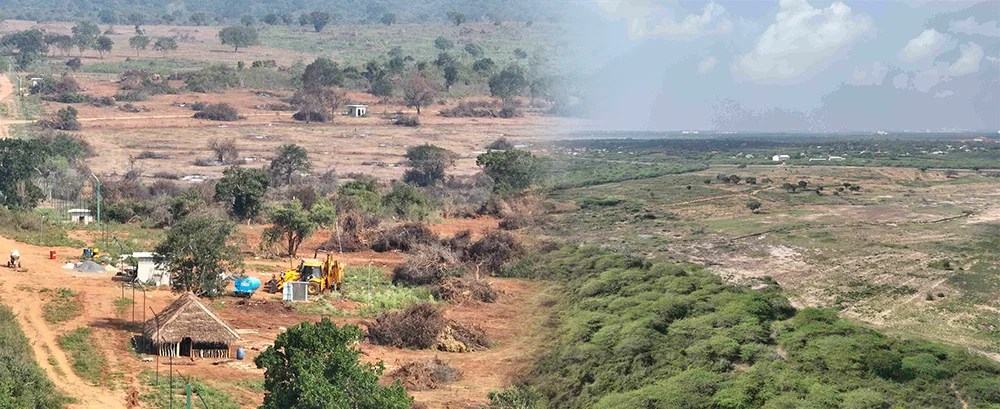
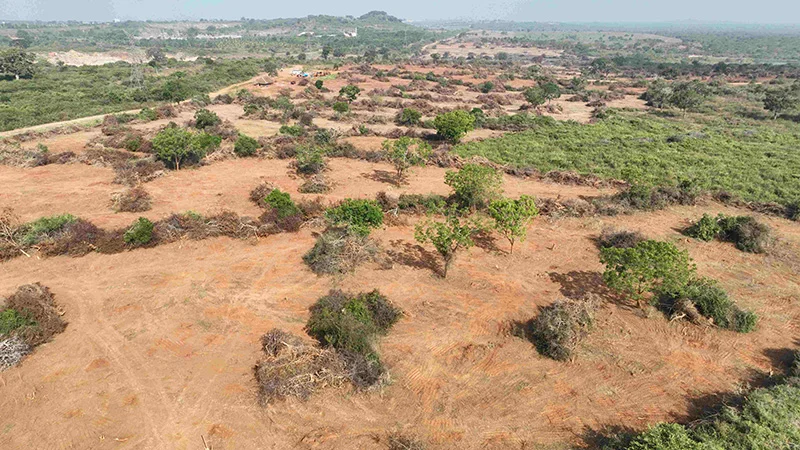
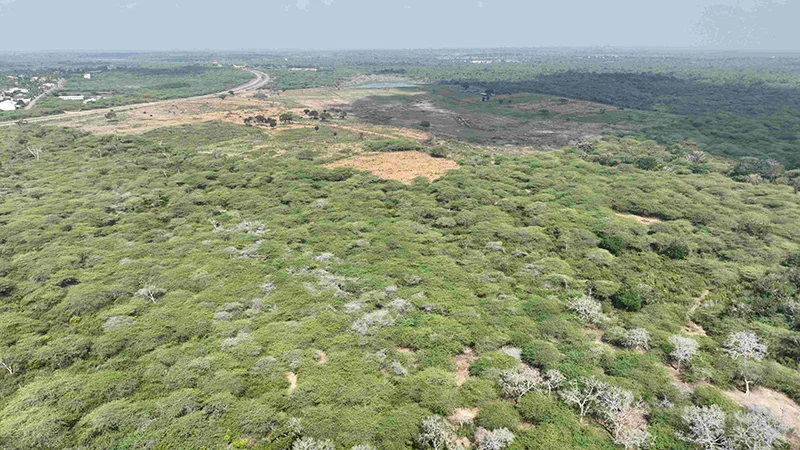
A large-scale move to establish solar power plants in Hambantota has triggered a major environmental and social crisis, with more than 1,000 acres of forest—identified as critical elephant habitat—cleared in violation of the law, environmental activist Sajeewa Chamikara said.
Chamikara, speaking on behalf of the Movement for Land and Agricultural Reform, said that 17 companies have already begun clearing forest land along the boundaries of the Hambantota Elephant Management Reserve. The affected areas include Sanakku Gala, Orukemgala and Kapapu Wewa, which are known to be key elephant habitats and long-used movement corridors.
He said that what is taking place cannot be described as development, but rather as a large-scale destruction of natural ecosystems carried out under the cover of renewable energy expansion.
According to Chamikara, the clearing of forests has been carried out using heavy machinery, while large sections have also been deliberately set on fire to prepare the land for solar installations. He said that electric fences have been erected across wide stretches of land, effectively blocking elephant movement and fragmenting their natural habitat.
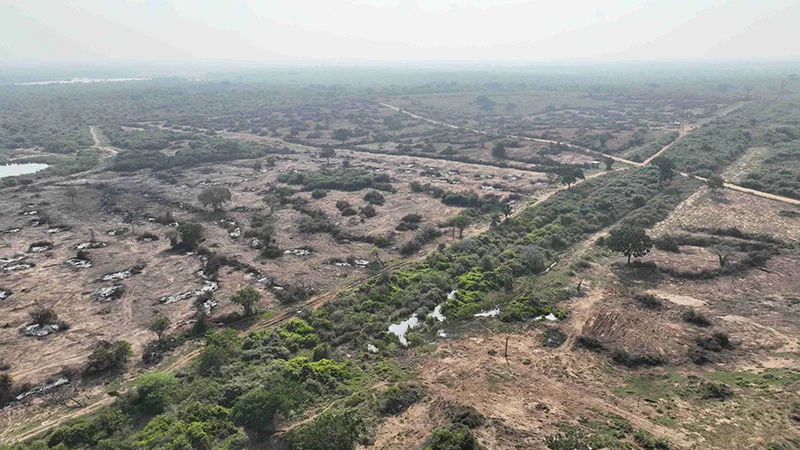
“These forests are not empty lands. They are part of a living system that supports wildlife and nearby communities. Once destroyed, they cannot be easily restored,” he said.
The projects in question include a 50 megawatt solar development undertaken by five companies and a larger 150 megawatt project implemented by 12 companies. The larger project is reported to be valued at around 150 million US dollars.
Chamikara stressed that these projects are being carried out in a coordinated manner and involve extensive land clearing on a scale that raises serious environmental concerns.
He further alleged that certain companies had paid about Rs. 14 million to secure support and move ahead with the projects. He said this points to a troubling failure of oversight by state institutions that are expected to protect forests and wildlife habitats.
“This is not only an environmental issue. It is also a serious governance issue. The institutions responsible for protecting these lands have failed in their duty,” he said.
Chamikara pointed out that under the National Environmental Act, any project of this scale must receive prior approval through a proper Environmental Impact Assessment process.
He said that clearing forest land before obtaining such approval is a direct violation of the law.
He added that legal requirements relating to archaeological assessments had also been ignored. Under existing regulations, large-scale land clearing requires prior evaluation to ensure that sites of historical or cultural value are not damaged.
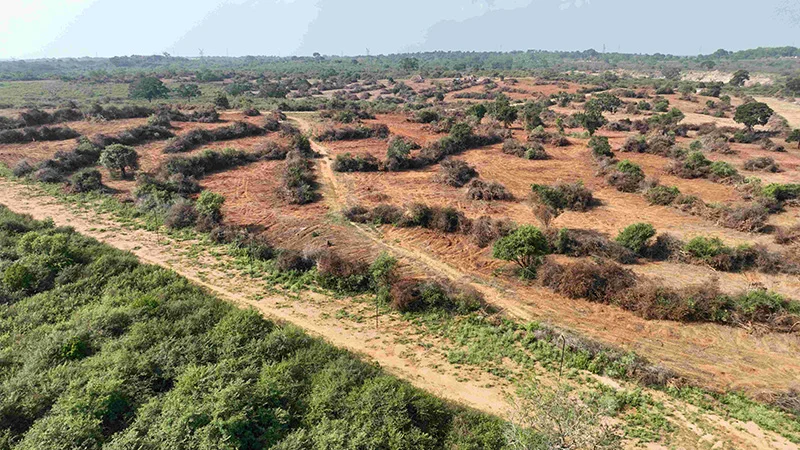
“The law is very clear. You cannot go ahead with projects of this nature without proper approval. What we are seeing is a complete disregard for legal procedure,” Chamikara said.
The environmental impact of these activities is already becoming visible. With their natural habitats destroyed, elephants are increasingly moving into nearby villages in search of food and shelter. This has led to a sharp rise in human-elephant conflict in several areas.
Areas such as Mayurapura, Gonnooruwa, Meegahajandura and Thanamalvila have reported increasing encounters between humans and elephants. According to Chamikara, more than 5,000 farming families in these areas are now facing growing threats to their safety and livelihoods.
He warned that farmers are being forced to abandon their lands due to repeated elephant intrusions, while incidents involving damage to crops and property are rising. There have also been increasing reports of injuries and deaths among both humans and elephants.
“This is turning into a serious social and economic problem. When farmers cannot cultivate their lands, it affects food production, income and rural stability,” he said.
Chamikara also raised concerns about the broader environmental consequences of clearing forests for solar power projects. While renewable energy is promoted as a solution to reduce carbon emissions, he said that destroying forests undermines that goal.
“Forests play a key role in absorbing carbon dioxide. When you clear and burn them, you are increasing emissions, not reducing them. That defeats the purpose of promoting solar energy,” he explained.
He added that large-scale deforestation in dry zone areas such as Hambantota could also affect local weather patterns and reduce rainfall, which would have further negative impacts on agriculture and water resources.
Chamikara called for a shift in policy, urging authorities to focus on more sustainable approaches to solar power development. He said that rooftop solar systems on homes, public buildings and commercial establishments should be given priority, as they do not require clearing large areas of land.
He also recommended that solar projects be located on degraded or abandoned lands, such as areas affected by past mining or other low-value lands, rather than forests or productive agricultural areas.
“Renewable energy development must be done in a way that does not destroy the environment. There are better options available if there is proper planning,” he said.
Chamikara urged the Central Environmental Authority and the Department of Wildlife Conservation to take immediate action to stop ongoing land clearing and investigate the projects. He stressed that all activities carried out without proper approval should be halted until legal requirements are met.
He warned that failure to act now would lead to long-term environmental damage that could not be reversed.
“If this continues, we will lose not only forests and wildlife, but also the balance between people and nature that supports rural life. The consequences will be felt for generations,” he said.
The situation in Hambantota is fast emerging as a critical test of whether development goals can be balanced with environmental protection. As pressure grows, the response of authorities in the coming weeks is likely to determine whether the damage can still be contained or whether it will continue to spread unchecked.
By Ifham Nizam

Senegal and Morocco tied by religion and trade but divided by AFCON fallout

Showers expected in the Central, Sabaragamuwa and Uva provinces and in Galle, Matara, Mannar, Anuradhapura and Vavuniya districts after 2.00 pm.

CIABOC tells court Kapila gave Rs 60 mn to MR and Rs. 20 mn to Priyankara

Opposition moves no-faith motion against Energy Minister Kumara Jayakody

NJC takes up cudgels on behalf of Sallay, who played pivotal role in combating terrorism

Leopards haunt Pera Uni having already killed several cattle at Vet Faculty

‘Dates have the highest sugar content to fight Coronavirus’

Sunday Island 27 December – Headlines

#SundayIsland 17th December – Headlines

Sunday Island – 28th March

Sunday Island Headlines – 21 March

Sunday Island – 21st February – Headlines
-

 Business4 days ago
Browns EV launches fast-charging BAW E7 Pro at Rs. 5.8 million
-

 Life style5 days ago
From culture to empowerment: Indonesia’s vision for Sri Lanka
-

 News2 days ago
CIABOC questions Ex-President GR on house for CJ’s maid
-
 Business6 days ago
Sri Lanka Institute of Information Technology raises the bar for academic excellence
-

 Life style5 days ago
Ranjith Fernando celebrates cricketing journey with Hob Nails to Spikes
-

 Latest News5 days ago
QR code system will be implemented for fuel with effect from 06.00 a.m. today (15th)
-

 News3 days ago
Australian HC debunks misleading travel risk claims for Sri Lanka
-

 News3 days ago
Sri Lankan marine scientist Asha de Vos honoured at UNGA opening