
Life style
Sri Lanka’s tourism strategy: Vision for sustainable growth and global competitiveness


In a candid conversation with the Deputy Minister of Tourism Professor Ruwan Ranasinghe, who is attached to the Ministry of Foreign Affairs, Foreign Employment and Tourism, shared insightful perspectives on Sri Lanka’s ambitious plans to improve its tourism sector. His vision is to position Sri Lanka as a premier global destination. As Sri Lanka emerges from challenging years marked by Covid-19 and economic setbacks, the Deputy Minister expressed optimism and gave a clear vision for making Sri Lanka as a top destination once again.
Prof. Ranasinghe emphasised that the government was working hard to ensure safety, improve infrastructure and offer seemless travel experiences. “Sri Lanka has always been known for its warm hospitality and now we are making all efforts to offer tourists not just beautiful sights but also exceptional service and safety, sustainability is at the core of our tourism strategy. All efforts are underway to protect eco-tourism, protect wildlife and we are poised to put Sri Lanka on the global tourism landscape.
Q: Could you elaborate on the Sri Lanka Tourist Board’s goals and mission for the coming years, particularly in terms of increasing visit numbers?
A: Sri Lanka’s Tourism Development Strategy aims to position the country as a globally competitive and sustainable travel destination. The strategy focuses on attracting 4 million tourists annually by 2030, fostering long-term economic growth while ensuring responsible tourism practices.
An essential goal of this initiative is to generate $8.5 billion in revenue, emphasizing high-value tourism experiences that encourage greater visitor spending. Additionally, the strategy seeks to increase the daily tourist expenditure from $169 to $250, ensuring substantial benefits for local businesses and hospitality services.
Diversifying Sri Lanka’s tourism offerings is a crucial aspect of this plan. The promotion of eco-tourism, wellness tourism, and MICE (Meetings, Incentives, Conferences, Exhibitions) tourism caters to specialized traveller preferences, enhancing Sri Lanka’s global appeal. Strengthening destination branding through long-term international marketing campaigns further supports the nation’s competitive positioning.
By integrating sustainability, technological innovation, and stakeholder collaboration, Sri Lanka aims to establish itself as a premier travel hub, balancing economic expansion with environmental and cultural preservation.
Leveraging social media, digital platforms, and collaborations with travel influencers and bloggers, the board aims to attract a diverse demographic of tourists. What is your opinion?
The modern tourism industry thrives on digital engagement, with social media, travel influencers, and bloggers playing a pivotal role in shaping travel trends. The Sri Lanka Tourism Promotion Bureau (SLTPB) has recognized the importance of these tools and actively integrated them into its promotional strategy.
One key initiative involves influencer-led press trips, where travel bloggers and content creators explore Sri Lanka firsthand, generating authentic storytelling that captivates potential travelers. By offering visually rich and engaging content, these collaborations enhance destination visibility and credibility.
The SLTPB also utilizes targeted digital engagement, employing platforms such as Instagram, YouTube, TikTok, Facebook, and LinkedIn to connect with audiences globally. Strategic partnerships with hospitality providers, airlines, and tourism organizations further amplify Sri Lanka’s reach in key markets.
By embracing digital storytelling, audience interaction, and influencer collaborations, Sri Lanka is effectively adapting to modern tourism marketing to expand its global influence.
Q: How is the Tourist Board incorporating women’s empowerment into its tourism strategies, and can you share specific programmes or initiatives that aim to empower local women in the tourism sector?
A: Despite women comprising 55% of Sri Lanka’s population, their representation in the tourism workforce remains below 10%. To address this imbalance, the Sri Lanka Tourist Board has launched inclusive policies and strategic initiatives to encourage female participation in the sector.
One key program is the Women in Tourism Study, conducted in partnership with Australian Aid, which examines barriers and opportunities for women seeking careers in the tourism industry. The insights from this study have informed actionable strategies to enhance female workforce inclusion.
Additionally, entrepreneurship and training programmes are being implemented to support female-led tourism businesses, particularly in rural areas across Uva, North Western, and Central provinces. These efforts empower women with financial resources, training, and mentorship.
The Community-Based Tourism (CBT) initiative further encourages women to engage in eco-tourism, hospitality, and cultural heritage experiences, strengthening their roles as active contributors to Sri Lanka’s growing tourism economy.
By adopting gender-inclusive policies, Sri Lanka is taking meaningful steps toward women’s empowerment and equitable growth within the sector.
Q: What strategies is the Tourist Board employing to engage stakeholders, local communities, travel operators, and government bodies to support tourism development?
A: Successful tourism development relies on collaborative efforts among government agencies, private enterprises, and local communities. The Sri Lanka Tourist Board actively integrates a multi-stakeholder approach to ensure inclusive and sustainable tourism growth.
Key initiatives include Public-Private Partnerships (PPP), where tourism authorities work alongside hotels, airlines, tour operators, and service providers to create enhanced visitor experiences. This collaborative model strengthens Sri Lanka’s tourism infrastructure and global competitiveness.
Additionally, community-based tourism (CBT) empowers local communities to engage in small-scale tourism enterprises, ensuring that tourism benefits extend beyond major urban centers.
The Sri Lanka Tourist Board also prioritises government coordination, working closely with immigration, customs, and law enforcement agencies to improve travel security, accessibility, and efficiency for international tourists.
Through these multi-level stakeholder collaborations, Sri Lanka fosters an environment where economic opportunities and sustainable tourism coexist, ensuring long-term growth within the sector.
Q: The global tourism industry has undergone significant changes in recent years. How has the Sri Lanka Tourist Board adapted to these shifts, particularly in terms of marketing and engagement strategies to support tourism development?
A: The global tourism sector has evolved due to digital transformation, shifting traveler preferences, and post-pandemic recovery efforts. Recognizing these trends, the Sri Lanka Tourist Board has refined its marketing and engagement strategies to align with modern travel expectations.
One key aspect is unified national branding, ensuring consistent messaging that reinforces Sri Lanka’s unique identity. This initiative strengthens long-term destination recognition, allowing Sri Lanka to maintain a competitive presence in the global tourism market.
Additionally, digital transformation has been prioritized, incorporating AI-driven marketing tools, virtual tourism experiences, and seamless online booking systems to enhance accessibility.
The promotion of sustainable travel initiatives, including eco-friendly tourism, carbon-neutral policies, and responsible visitor experiences, further solidifies Sri Lanka’s reputation as an environmentally conscious travel destination.
By integrating resilience-driven tourism strategies, Sri Lanka ensures adaptability, competitiveness, and sustainable growth in an evolving global tourism landscape.
Are there any exciting new projects or initiatives on the horizon that you would like to share?
Sri Lanka is actively expanding its tourism infrastructure, with new projects designed to enhance visitor experiences and create long-term economic benefits.
One of the standout developments is the Dedduwa Lake Resort, a 1,800-hectare eco-tourism destination that combines sustainable hospitality with environmental conservation. This project is expected to position Sri Lanka as a leading eco-travel destination in the region.
Another key initiative is the Kalpitiya Dutch Bay Resort, which focuses on marine tourism and water sports, providing visitors with unique opportunities to explore Sri Lanka’s coastal beauty while promoting ocean conservation.
Furthermore, Passikudah Resort Development emphasizes community-based tourism, strengthening local accommodations and cultural tourism experiences that offer visitors authentic interactions with Sri Lankan heritage and traditions.
These developments align with Destination Development Models, ensuring economic expansion while preserving Sri Lanka’s natural and cultural assets.
Q: With the competitive landscape of travel and tourism, what innovative campaigns and promotional strategies is the Tourist Board implementing to attract domestic and international tourists?
A: Sri Lanka is implementing targeted and high-impact tourism campaigns to strengthen its appeal among both domestic and international travellers. These initiatives are strategically designed to differentiate the country from competing destinations while showcasing its unique offerings.
One of the most significant campaigns is the Global Destination Marketing Blitz, which focuses on 16 priority markets, including the UK, France, Germany, India, and Australia. Through this campaign, Sri Lanka aims to increase brand visibility and attract a diverse tourist demographic.
Additionally, promotions centered around luxury and adventure tourism highlight Sri Lanka’s extensive offerings, from eco-tourism and wellness retreats to heritage experiences, ensuring that travelers with varied interests find compelling reasons to visit.
Furthermore, domestic tourism campaigns are being strengthened to encourage Sri Lankan diaspora engagement and local travel exploration, helping build a sustainable tourism economy within the country.
These strategies align with modern tourism branding theories, ensuring market differentiation and competitive positioning in a rapidly evolving global travel industry.
Q: What are the key challenges facing the tourism industry?
A: Despite tourism’s vast potential, Sri Lanka faces several critical challenges that require strategic interventions and policy-driven solutions to ensure long-term growth and sustainability.
One of the foremost challenges is political stability and security, as maintaining a safe and stable environment for tourists is crucial to sustaining international confidence in Sri Lanka as a travel destination. Addressing global travel advisories and ensuring proactive security measures are key priorities.
Additionally, infrastructure development remains a pressing concern, particularly in areas such as transportation networks, airport capacity, and digital accessibility. Strengthening these foundational elements will directly impact tourist satisfaction and the overall experience.
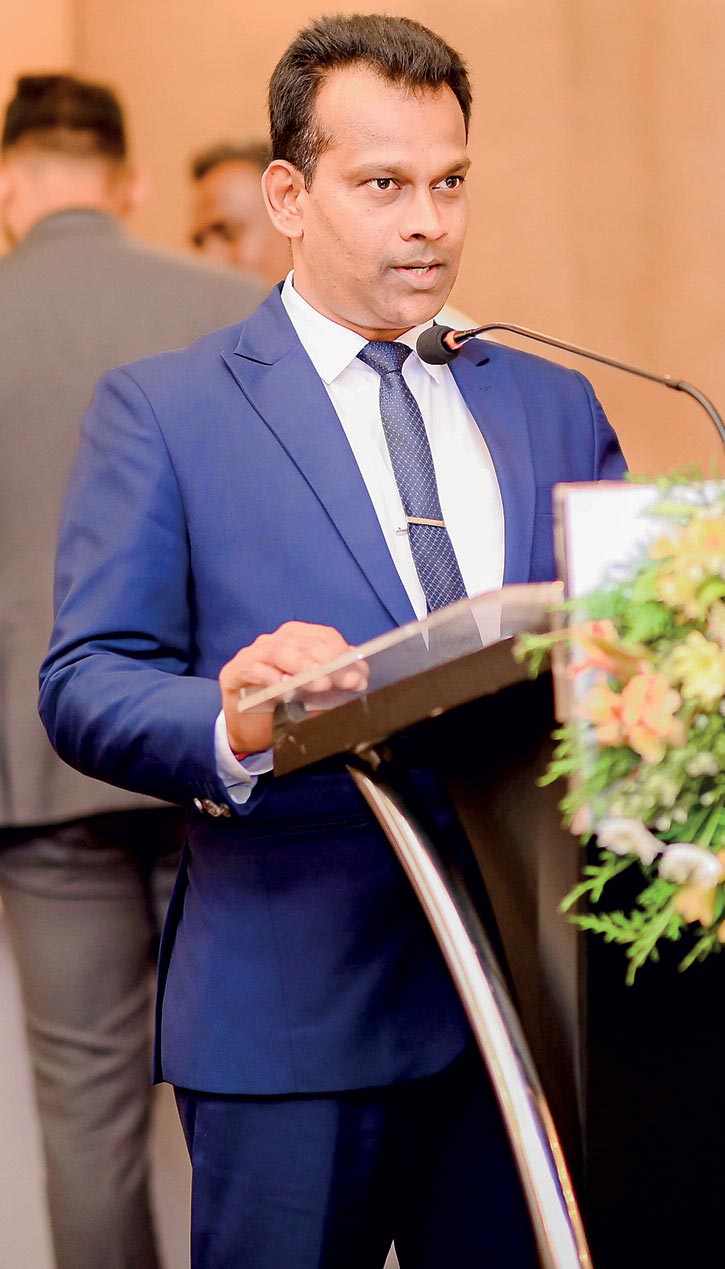
Professor Ranasinghe
Another challenge Sri Lanka faces is competitive positioning in the global tourism market, as neighboring destinations such as Thailand, Maldives, and Indonesia continue to attract large volumes of travellers. To remain competitive, Sri Lanka must enhance its promotional strategies, improve tourism facilities, and ensure top-tier service standards.
By implementing long-term resilience strategies and policy-driven improvements, Sri Lanka’s tourism industry can overcome these challenges and thrive in a competitive global market.
What is your vision for the future of Sri Lanka’s tourism industry?
Sri Lanka’s Tourism Vision 2025 is centered on sustainability, economic diversification, and global positioning to ensure long-term industry growth. The strategic focus is not solely on attracting tourists but on enhancing the quality of their experiences and contributions to the local economy.
A key priority is quality over quantity, meaning Sri Lanka aims to attract high-value travellers who contribute more to local businesses and communities, rather than focusing solely on visitor numbers.
Additionally, the adoption of sustainable tourism practices ensures the preservation of Sri Lanka’s natural heritage and cultural assets, allowing future generations to experience its beauty and traditions without compromising environmental integrity.
Strengthening global competitiveness through destination branding, infrastructure improvements, and strategic collaborations plays a vital role in this vision. Sri Lanka aims to become a leading travel hub in Asia, known for its exceptional hospitality, biodiversity, and cultural richness.
By following progressive tourism growth models, Sri Lanka’s tourism industry will continue to evolve dynamically, ensuring economic stability while fostering a deep connection between travellers and the country’s unique identity.
Q: To ensure the health and safety of tourists, what guidelines does the Sri Lanka Tourist Board have in place?
A: Tourist health and safety remain top priorities for Sri Lanka’s tourism authorities, with comprehensive policies and regulations ensuring secure travel experiences.
Among these initiatives is the Certified Safe and Secure Hotels program, which requires accommodations to meet rigorous hygiene, health, and safety standards. This ensures tourists receive exceptional service in a risk-free environment.
Additionally, Sri Lanka has introduced a Tourist Bio-Bubble system, facilitating controlled movement during crises or public health concerns. This measure was particularly crucial in maintaining visitor confidence during the COVID-19 pandemic.
Emergency response mechanisms also play a pivotal role, ensuring rapid medical assistance, crisis intervention, and law enforcement coordination when required.These initiatives align with Global Tourism Safety Frameworks, ensuring visitor well-being and confidence in Sri Lanka as a secure and welcoming travel destination.
By Zanita Careem ✍️


In a country where creative pursuits are often treated as indulgences rather than vocations, Saman Halloluwa’s journey stands apart — carved patiently through brushstrokes, framed through a camera lens, and articulated through the written word. Painter, wildlife and nature photographer, and independent environmental journalist, Halloluwa inhabits a rare space where art, ecology and social responsibility converge.
His relationship with art began not in galleries or exhibitions, but in a classroom. From his school days, drawing was not simply a subject but an instinct — a language through which he learned to observe, interpret and respond to the world around him. Under the guidance of two dedicated mentors, Ariyaratne Guru Mahathaya and Gunathilaka Guru Mahathaya, he honed both skill and discipline. Those early lessons laid the foundation for a lifelong engagement with visual storytelling.

“His work navigates between traditional Sinhala artistic sensibilities, abstract compositions and expansive landscapes.”
 That commitment eventually materialised in two solo art exhibitions. The first, held in 2012, marked his formal entry into Sri Lanka’s art scene. The second, staged in Colombo in 2024, was a more mature statement — both in content and confidence. Featuring nearly fifty paintings, the exhibition drew an encouraging public response and reaffirmed his place as an artist with a distinct visual voice.
His work navigates between traditional Sinhala artistic sensibilities, abstract compositions and expansive landscapes. There is restraint in his use of form and colour, and an underlying dialogue between memory and space. Yet, despite positive reception, Halloluwa speaks candidly about the structural challenges faced by artists in Sri Lanka. Recognition remains limited; fair valuation even rarer.
“This is not merely an artistic issue,” he observes. “It is a social and economic problem.”
In Sri Lanka, art is often viewed through the lens of affordability rather than artistic merit. Many approach a painting by first calculating the contents of their wallet, not the value of the idea or labour behind it. In contrast, he notes, art in Europe and many other regions is treated as cultural capital — an investment in identity, history and thought. Until this mindset shifts, local artists will continue to struggle for sustainability.
The decisive push toward wildlife photography came from Professor Pujitha Wickramasinghe, a close friend who recognised both Halloluwa’s observational skills and his affinity with nature. From there, the journey deepened under the mentorship of senior wildlife photographer Ravindra Siriwardena.
Both mentors, he insists, deserve acknowledgment not merely as teachers but as ethical compasses. In a field increasingly driven by competition and spectacle, such grounding is invaluable.
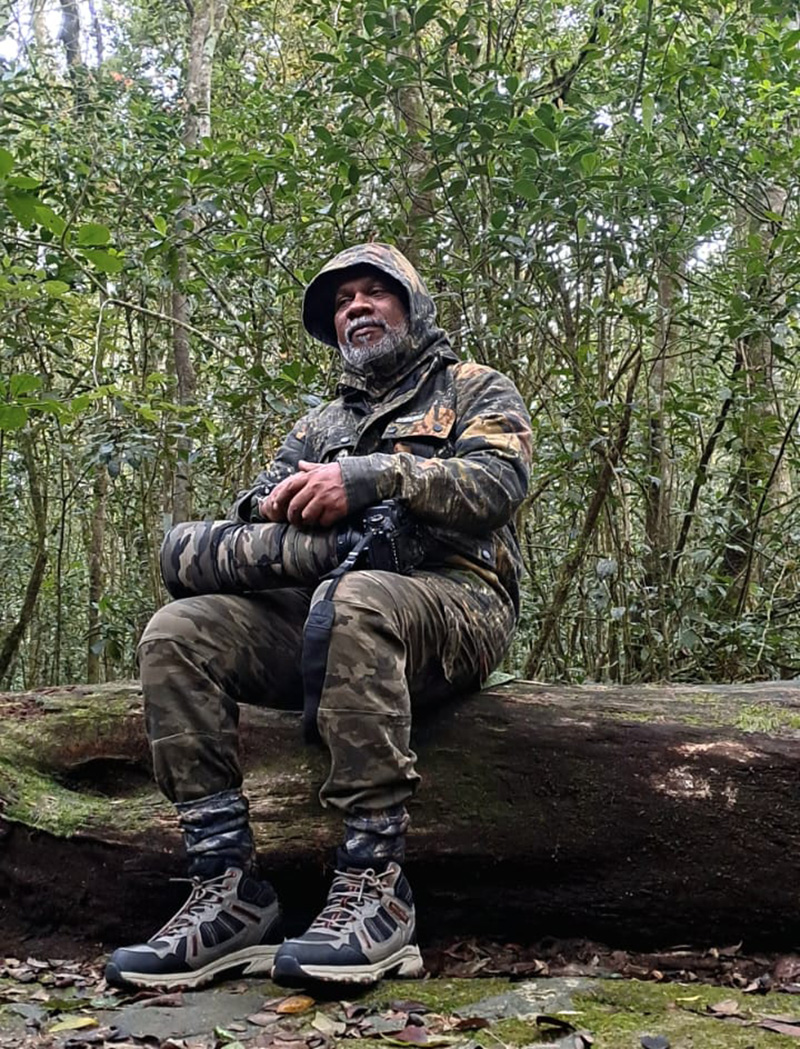
Saman Halloluwa
Wildlife photography, Halloluwa argues, is among the most demanding visual disciplines. It cannot be improvised or rushed. “This is an art that demands restraint,” he says.
Among all subjects, elephants hold a special place in his work. Photographing elephants is not merely about proximity or scale, but about understanding behaviour. Observing social patterns, movement, mood and interaction transforms elephant photography into a constantly evolving challenge. It is precisely this complexity that draws him repeatedly to them.
Halloluwa is cautiously optimistic about the current surge of interest in wildlife photography among Sri Lankan youth. Opportunities have expanded, with local and international competitions, exhibitions and platforms becoming more accessible. However, he issues a clear warning: passion alone is not enough
Sri Lanka, he believes, is uniquely positioned in the global nature photography landscape. Few countries offer such concentrated biodiversity within a compact geographical area. This privilege, however, carries responsibility. Nature photography should not merely aestheticise wildlife, but foster respect, aware ness and conservation.
Parallel to his visual work runs another equally significant pursuit — environmental journalism. For the past seven to eight years, Halloluwa has worked as an independent environmental journalist, giving voice to ecological issues often sidelined in mainstream discourse. His entry into the field was guided by Thusara Gunaratne, whose encouragement he acknowledges with gratitude.
An old boy of D.S. Senanayake College, Colombo, Halloluwa holds a Diploma in Writing and Journalism from the University of Sri Jayewardenepura and has completed journalism studies at the Sri Lanka Press Institute. He is currently pursuing an Advanced Certificate in Wildlife Management and Conservation at the Open University of Sri Lanka — a testament to his belief that learning must remain continuous, especially in a rapidly changing ecological landscape.
Outside his professional life, he enjoys cricket, rugby and badminton. Yet even leisure intersects with responsibility. He is a founding member and former president of the D.S. Senanayake College Old Boys’ Wildlife Forum, an active member of Wild Tuskers Sri Lanka, and a contributor to several independent environmental and wildlife volunteer organisations. In an era dominated by speed, spectacle and short attention spans, Saman Halloluwa’s journey unfolds differently. It is deliberate, reflective and rooted in values. Through art, he captures memory and form. Through photography, he frames life beyond human control. Through journalism, he asks uncomfortable but necessary questions.
“What I do, what I love” is not fashion here.
It is conviction — patiently lived, quietly asserted, and urgently needed in a country still learning how to value its artists, its environment and its truth.
By Ifham Nizam ✍️

Ramani Fernando Sunsilk Hair and Beauty Academy
Ramani Fernando Sunsilk Hair and Beauty Academy marked their graduation of their latest cohort of aspiring hair professionals in a ceremony held at Kingsbury Hotel.

Senaka de Silva, creative force behind Ramani’s shows
For over two decades, the Ramani Fernando Sunsilk Hair and Beauty Academy has stood as a beacon of excellence in beauty education in Sri Lanka. Founded by industry icon Ramani Fernando, the Academy has built a reputation for producing highly skilled professionals who go on to make their mark in salons, both locally and internationally. As the newly minted graduates step out into the world, they carry forward not just certificates, but also the promise of creative authority and personal empowerment.
The chief guest for the occasion was Rosy Senanayake, a long-standing supporter of the Academy’s mission. Addressing the graduates her message echoed her enduring belief that the beauty industry is not merely about aesthetic but about. confidence, self-worth and future leaders.
Over months of rigorous training, these young professionals honed their skills in cutting colouring, styling and contemporary artistry readying themselves to set trends rather than follow them.
Each graduate walked the stage with confidence, their dedication signalling a promising future for Sri Lanka’s beauty and fashion industry! With this new generation of stylists preparing to raise the standard of professional hairstyling.
Ramani Fernando, addressing the audience reflected on the academy’s mission to cultivate not only skills but vision and confidence in every student.
She urged the graduates to embrace continuous learning to take risks with creativity .The world of beauty is ever evolving, stay curious, stay bold and never underestimate the power of your talent, she added emphasising the importance of confidence, discipline and passion in carving a successful career in shaping the future of style.
These graduates are stepping into a world of endless possibilities. They are future of the country, who will carry a forward legacy of creativity. Behind every successful graduate at Sun silk Hair Academy stands a team dedicated to excellence. While Ramani Fernando serves as a visionary Principal and it is Lucky Lenagala, her trusted person who ensures that the academy runs seemingly.
From overseeing training sessions to guiding students, through hands on practice, Lucky plays a pivotal role in shaping the next generation of hairstylists.
Kumara de Silva, who has been the official compere Ramani’s, Hair graduation ceremony, from inception has brought energy, poise and professionalism. The Sunsilk Hair Academy is a celebration of talent and mentor ship for the graduates stepping confidentially into the next chapter of their careers, ready to make their mark on Sri Lanka beauty landscape

A moment of pride Ramani with chief guest Rosy Senanayake


Statement in style

Gliding in romance and sophistication
Pix by Thushara Attapathu
By Zanita Careem ✍️

During this season, Romesh Atapattu’s Capello Salon buzzes with a unique energy – a blend of festive excitement and elegance. Clients arrive with visions of holiday parties, office soirees, seeking looks that capture both glamour and individuality. The salon itself mirrors this celebrity mood. Warm lights, tasteful festive décor create an atmosphere where beauty and confidence flourish.
Romesh Atapattu himself curates the festive décor, infusing the space with his signature sense of style. His personal eye ensures that the décor complements the salon’s modern interiors.
As Colombo slips effortlessly into its most glamorous time of year, the Christmas season brings with it more than twinkling lights and celebrity soirees – it signals a transformation season at salons across the city. Capello salons are no exception.
At the heart of this festive beauty movement is Romesh Atapattu of Capello salons, a name synonymous with refined hair artistry, modern elegance and personalised style.
Christmas is about confidence and celebration. Romesh believes ‘People want to look their best without losing who they are”. Our role is to enhance, not overpower. This philosophy is evident in the salon’s seasonal approach.
Beyond trends, what sets Atapattu apart is the attention to individuality. Each consultation is treated as a creative collaboration – face shape, lifestyle, hair texture and personal style all play a role in creating the best for Romesh.
Stepping into Romesh’s salon during the Christmas season is an experience in itself. The space hums with festive energy while maintaining an atmosphere of calm sophistication.
The décor embraces the Christmas spirit with understated elegance. Tastefully adorned décor, beautiful Xmas tree, soft gold and ivory tones, and gentle hints of red are woven seamlessly into the salon’s contemporary design.
His staff, known for their warmth and professionalism also plays a key role in shaping the salon’s atmosphere—friendly, stylish and always welcoming. The Capello staff combine skill and creativity to deliver results that have a lasting impression.
Beyond trends, what sets Romesh Atapattu apart is the attention to individuality. Each consultation is treated as a creative collaboration – face shape, lifestyle, hair texture and personal style all play a role.
He is a professional who blends technical mastery with a deeply personal approach to style. His dedicated team of skilled professionals, operate with quiet confidence ensuring styles that create an atmosphere of trust, turning every appointment into a personalised and memorable experience.
(ZC) ✍️
Pic by Rohan Herath

CEB demands 11.57 percent power tariff hike in first quarter

Health Minister sends letter of demand for one billion rupees in damages

One killed, two injured in shooting at Kaduwela

SLTB introduces digital solution to halt malpractices

A question of power

Land dispute brings death to three in a knife attack that also left a fourth in hospital

‘Dates have the highest sugar content to fight Coronavirus’

Sunday Island 27 December – Headlines

#SundayIsland 17th December – Headlines

Sunday Island – 28th March

Sunday Island Headlines – 21 March

Sunday Island – 21st February – Headlines
-

 Sports5 days ago
Gurusinha’s Boxing Day hundred celebrated in Melbourne
-
 News3 days ago
Leading the Nation’s Connectivity Recovery Amid Unprecedented Challenges
-

 Sports6 days ago
Time to close the Dickwella chapter
-

 Features4 days ago
It’s all over for Maxi Rozairo
-

 News6 days ago
Environmentalists warn Sri Lanka’s ecological safeguards are failing
-
 News4 days ago
Dr. Bellana: “I was removed as NHSL Deputy Director for exposing Rs. 900 mn fraud”
-
 News3 days ago
Dons on warpath over alleged undue interference in university governance
-
 Features6 days ago
Digambaram draws a broad brush canvas of SL’s existing political situation