
Business
Sri Lanka’s global business network demands streamlined investor pathway to unlock FDI

“We can bridge the gap, but government must act,” they say
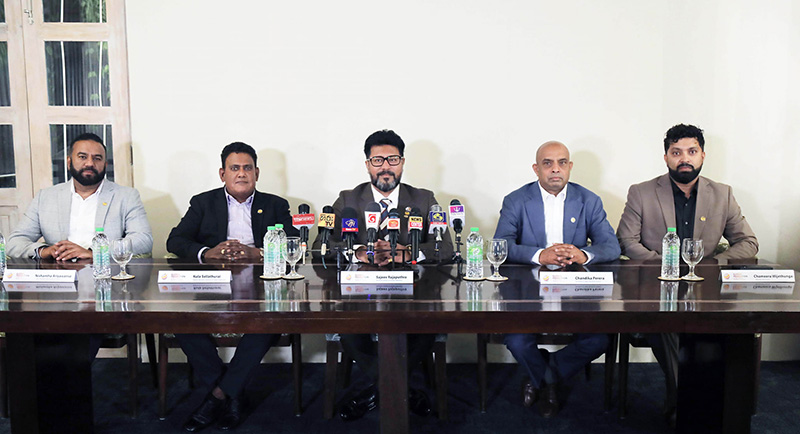
The Global Federation of Sri Lankan Business Councils (GFSLBC), an umbrella body uniting Sri Lankan business leaders across 15 countries, has called for an urgent, structured mechanism to facilitate foreign investment into Sri Lanka – warning that bureaucratic inertia risks derailing high-value economic opportunities.
The appeal follows the Federation’s Annual General Meeting (AGM), attended by President Anura Kumara Dissanayake, cabinet ministers, and state officials. Despite initial dialogue at a superficial level , members express frustration over the lack of concrete action to leverage their global investor network.
Speaking to media post-AGM, GFSLBC Secretary General Sajeev Rajaputhra underscored the Federation’s unique position:
60% of members are established entrepreneurs in key markets (Singapore, Malaysia, Japan, UAE, Europe, China, Australia, and New Zealand).
40% specialise in the automotive sector, with deep cross-industry investor ties.
“We’ve spent years building global B2B connections. The government would take decades to replicate this network – yet our offers to fast-track FDI remain unanswered,”* Rajaputhra said.
The Federation seeks a mandate to serve as a liaison between global investors and Sri Lankan policymakers, ensuring a seamless pathway for approvals, licensing, and land acquisition. “Investors won’t tolerate being sent from pillar to post. Without a clear mechanism, even the keenest will walk away,” Rajaputhra added.
Missed Opportunities
Nishantha Ariyawansa, Vice President of the Sri Lankan Business Association of New Zealand, cited a lost dairy export deal as emblematic of the challenge: ” A New Zealand entrepreneur proposed exporting bottled Highland sterilized milk- which would have been a reversal of the typical trade flow. But the million dollar opportunity stalled after the 2024 government transition, with no authority to revive discussions. This was a rare chance to turn Sri Lanka into a dairy exporter to New Zealand. Unfortunately, it’s stuck in limbo,” Ariyawansa noted.
“In another instance, a New Zealand-based investor recently abandoned plans to establish a pig-feed manufacturing facility in Sri Lanka, citing a lack of policy support and bureaucratic engagement. The proposed project aimed to convert fish offcuts – a largely wasted byproduct of the fishing industry – into high-nutrient animal feed, creating both economic and environmental value. The Sri Lankan entrepreneur facilitating the investment expressed frustration over the absence of a clear approval process or dedicated authority to advance feasibility discussions. Despite the project’s potential to reduce waste, boost local aquaculture, and generate export revenue, the investor withdrew due to inaction from relevant Sri Lankan institutions,” Ariyawansa added.
These cases highlight a recurring challenge for foreign investments in Sri Lanka: promising ventures often stall due to unclear policies, coordination gaps, and sluggish bureaucratic responses. Without structured mechanisms to evaluate and fast-track viable projects, the country risks losing out on job creation, technology transfer, and sustainable industrial development.
Considering this, the GFSLBC urges the government to:
Appoint a dedicated investment task force to streamline approvals.
Re-engage stalled proposals (like the dairy venture) under the current administration’s policies.
Establish direct dialogue with President Anura Kumara Dissanayake to align diaspora resources with national goals.
“Sri Lanka is ripe for investment, but bureaucracy and indecisiveness must not choke its potential,” Rajaputhra asserted. “We stand ready to help – but the government must meet us halfway.”
As Sri Lanka charts its economic recovery, the GFSLBC’s message is clear: Unlocking FDI requires more than intent – it demands one-on-one meetings and institutional agility.
By Sanath Nanayakkare ✍️


The Asian Development Bank (ADB) has approved a $100 million results-based loan to help Sri Lanka transform its technical and vocational education and training (TVET) system, equip more young people with industry-relevant skills, and strengthen the country’s competitiveness and inclusive growth.
The Skills Development System Transformation Program will support the Government of Sri Lanka’s efforts in improving the quality and relevance of skills training, strengthening links between training providers and industries, and expanding employment opportunities for youth. The program will increase women’s employment opportunities in nontraditional jobs in fields including automotive technology, engineering, information and communications technology, construction, and renewable energy.
“A skilled workforce is essential to Sri Lanka’s long-term economic transformation and competitiveness,” said ADB Country Director for Sri Lanka Shannon Cowlin. “This program will help create stronger pathways from education to employment by making training more responsive to industry needs, expanding opportunities for young people and women, and ensuring that graduates have the skills required by a modern and evolving economy.”
Though Sri Lanka’s economy is recovering, it faces skills shortages in priority sectors, high youth unemployment, and low female labor force participation. Many employers report difficulty finding workers with the skills needed in a changing economy.
Aligned with the Government of Sri Lanka’s Technical and Vocational Education and Training Sector Strategic Framework 2026–2035, the nationwide program will be implemented from 2027 to 2031 and is expected to directly benefit more than 100,000 young people through improved access to quality, employment-oriented training.
By Ifham Nizam
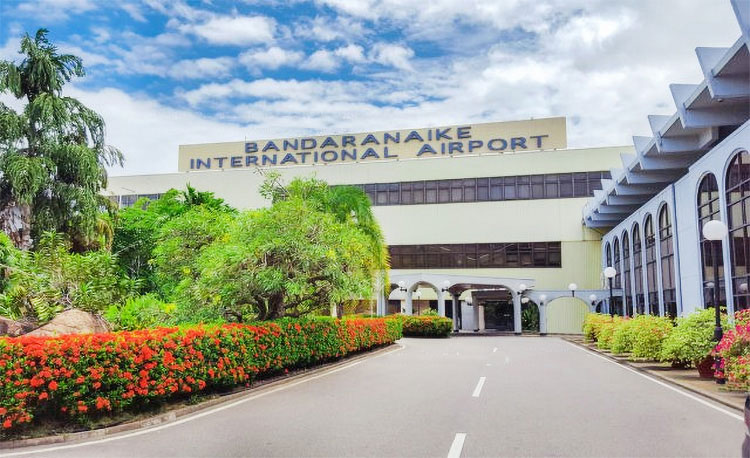
The government has cleared a USD 40.84 million and Rs. 8,548.75 million contract to build a dedicated aviation fuel pipeline from Muthurajawela to Bandaranaike International Airport (BIA), alongside a massive new fuel storage facility with a capacity of 92,000 cubic metres.
Energy Minister Anura Karunatilaka said the project represented a major investment in strengthening the infrastructure underpinning Sri Lanka’s aviation fuel supply and ensuring more reliable fuel availability at the country’s main international airport.
‘This project will provide the infrastructure required to strengthen the reliability and continuity of aviation fuel supplies to Bandaranaike International Airport, Karunatilaka said.
The contract has been awarded to China Petroleum Pipeline Engineering Company Limited, following an international competitive procurement process in which three bids were received.
The project will see a new aviation fuel storage tank complex constructed at Muthurajawela, together with the associated infrastructure required for handling and transferring aviation fuel.

By Hiran H Senewiratne
Trading activity on the Colombo Stock Exchange (CSE) gathered pace yesterday as global fuel prices began to show signs of easing, according to market analysts.In this context, both indices moved upwards. All Share Price Index up by 67.97 points while S and P SL20 up by 8.30 points.
Turnover stood at Rs 1.4 billion with seven crossings. Those crossings were reported in Sampath Bank 1.7 million shares crossed to the tune of Rs 238 million and its share price traded at Rs 140, Access Engineering two million shares crossed to the tune of Rs 159 million and its share price traded at Rs 79.50, LOLC one million shares crossed to the tune of Rs 129 million and its share price traded at Rs 129, HNB 100,000 shares crossed to the tune of Rs 38.4 million and its share price traded at Rs 384, JKH 1.9 million shares crossed to the tune of Rs 35 million and its share price traded at Rs 18.60, Hayleys 100,000 shares crossed to the tune of Rs 22.50 million and its share price traded at Rs 225 and Richard Pieris 847,000 shares crossed to the tune of Rs 22 million and its share price traded at Rs 25.50.
In the retail market top seven companies that have mainly contributed to the turnover were Sampath Bank Rs 114 million (813,000 shares traded), JKH Rs 100 million (5.3 million shares traded) LB Finance Rs 49 million (325,000 shares traded), HNB Finance Rs 30 million (27 million shares traded), HNB Rs 27 million (70000 shares traded), NTB Rs 25 million (82000 shares traded ) and Lanka IOC Rs 21 million (666,000 shares traded). During the day 65 million shares volumes changed hands in 10433 transactions.
The Banking and manufacturing sector counters performed well. In the banking sector Sampath Bank let the market while manufacturing sector especially JKH also significantly performed well. With the fuel revision Land IOC also a significant stock at the floor.
Meanwhile, First Capital Treasuries said that Ramesh Schaffter resigned as a Non-Independent Non-Executive Director with effect from October 1, to facilitate the restructuring of the company’s board.
Yesterday the Central Bank announced the US Dollar rate as against rupee. The rupee was quoted flat at Rs 330.65/80 to the US dollar in the spot market , while bond yields dropped, dealers said.

Why spill water and reject sunlight while burning imported fuel?

ADB approves $100 million loan to boost skills development and jobs for youth in Sri Lanka

‘Career of Evil’

Homer’s Odyssey

Ex-minister Johnston alleges some officials fabricating evidence against political opponents

Ananda Ganegoda: Pioneer in popularising Sinhala music

‘Dates have the highest sugar content to fight Coronavirus’

Sunday Island 27 December – Headlines

#SundayIsland 17th December – Headlines

Sunday Island – 28th March

Sunday Island Headlines – 21 March

Sunday Island – 21st February – Headlines
-

 Editorial6 days ago
Birth of a bad law
-

 News4 days ago
Police remove Thileepan statue in Jaffna
-

 News6 days ago
TIN mandatory for key transactions from Nov. 1
-

 Features4 days ago
The 22nd Amendment, constitutional recovery and illiberal slippage
-

 Features4 days ago
Of foreigners as CEOs of Lankan ventures
-

 News4 days ago
Sajith rejects Jt. Opp. protest sabotage claim; SJB TU chief demands remedial action
-

 Features3 days ago
Thailand’s biggest new global star …
-

 Latest News2 days ago
Gold winner Tharanga gets brand-new Honda Vezel from SLAAJ