
Life style
Sri Lanka’s contribution to the Sathya Sai Baba movement

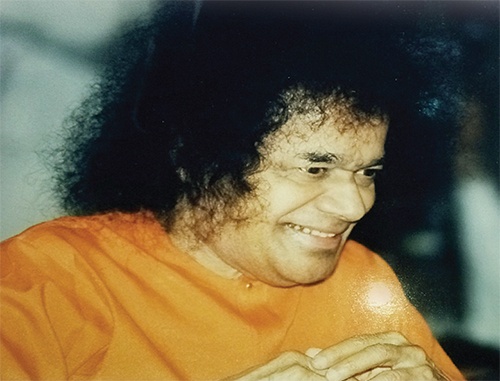
Commmemorating the Swami’s 95th birthday
by M. Wanni Wanniyasekaram
Bhagavan Sri Sathya Sai Baba was one of the most respected persons in the spiritual world in his time. In an attempt to take His Legacy forward, Bhagavan Sri Sathya Sai Baba Seva Samithi was established 53 years ago in Sri Lanka and it has spearheaded this spiritual movement nationwide.
The Sri Lankan public first heard of the miracles and spiritual mission of Sri Sathya Sai Baba of Puttaparthi, India, through the visit of Hilda Charlton, an American psychic who arrived in Colombo back in 1965. Upon hearing her stories about Sai Baba, many devotees including M Rasanayagam decided to call their friends to join and listen to the experiences of the Divine. On hearing and viewing the video clips shown by Hilda, a few enthusiastic devotees commenced conducting group bhajans at their homes mostly on Thursdays. K Thiyagaraja’s house in Wellawatta was used for this by many devotees who then went on to conduct Sai bhajans in Kandy, Jaffna and Batticaloa.
A delegation consisting of M Rajanayagam, CCS, a former Commissioner of Labor, Dr Nallinathan, C Balasingham.CCS and Kandiah Thiagaraja visited Puttaparthi to invite Bhagavan Baba to visit Sri Lanka. Accepting the invitation, Bhagavan requested the delegation to “first start regular bhajans. Then I will come.” In accordance with Swami’s directive Sri Lanka was the first country in South East Asia to establish Bhajan Centers in Colombo, Kandy, Jaffna and Batticaloa over five decades ago.
 Karu Jayasuriya, the without national titles, but carrying military titles and decorations, Dr Bramadasan from the Eastern Zone, and Wanniyasekaram are the only surviving members of the organization from the time it began.
Invitation to Bhagavan Baba to visit Sri Lanka
The second invitation to Baba to visit Sri Lanka was extended by the then Minister Savumiyamoorty Thondaman who was accompanied on this mission by his Secretary, Thirunavukarasu and a few others. They were able to meet Swami and request Him to visit Sri Lanka. Swami accepted the invitation and nominated dates and time for His visit.
They thanked Swami and while Thondaman went to his home town in India for a few days, Thirunavukarasu returned to Sri Lanka and issued a press notification that Swami was coming here and the dates nominated for the visit. Devotees were very happy that arrangements were well under way and a reception committee chaired by Hon. A. Ratnayake, President of the Senate, was set up. Then Prime Minister Sirima Bandaranaike kindly agreed to receive Swami at the airport and preside over the public meeting marking the visit.
Meanwhile the Colombo-7 elite living in posh houses jostled with each other offering to host Swami in their homes during his stay. When Thondaman returned from India, they lobbied him to recommend their names. This became intolerable and Thondaman asked C. Balasingham to contact either Sri Kasturi or Sri Indulal Shah, Swami’s aides, and get a ruling on this issue. Balasingham contacted both these gentlemen who spoke to Swami. The ruling from Swami was “I am cancelling my trip to Lanka. I will visit only if the devotees want me”. This decision was conveyed to Thondaman.
The Third Invitation
In 2005 many of us visited Puttaparthy for Buddha Poornima (Vesak) celebrations in a delegation led by Karu Jayasuriya. It included Laksahman Kiriella, late Sivali Ratwatte, late Mangala Moonesinghe, late Dr. W. Rasaputram, Bradman Weerakoon, Lakshman Watawala, Mahesh Mallawaarachi, Janaka Weerakoon, Dr Bramadasan, Prof. Degamboda and myself. We extended an invitation by way of a well designed and worded card asking Swami to visit Sri Lanka .
After Karu Jayasuriya spoke extending the invitation, I prayed to Swami “Swami, Lord Buddha had visited Sri Lanka three times. Please visit “SAI LANKA.” He looked at us all with a gracious smile saying “There’s a passing cloud. Let that settle and when there is unity in the organization, I will come.”
This is the second time that Swami had spoken of ‘Unity’. When will that happen among us? When will anger and hatred leave us and we can sit side by side, shoulder to shoulder, taking forwards His sacred legacy for the benefit of our younger generation. Devotees carrying anger and hatred must reform themselves and leave room for younger people to serve Swami.
Among the national projects conducted by the Sathya Sai Organisation in Sri Lanka are:
Hospice; Sai School Manipay – Jaffna; Children’s Home – Vavuniya; Elders Home Hanwella – Colombo; Introduction of Sathya Sai Education in Human Values to Schools; Leadership training for all office bearers (temporally suspended with approval denied by the International Chair for the participation of overseas Resource Per
sonnel).
One of the Public Events conducted includee the Inter Faith Conference with Prime Minister Ranil Wickremesinghe presiding and two overseas guest speakers, Dato Jegatheesan a Senior Civil Servant from Malaysia and Dato Dr Ayothya Art Ong Jumsai, Ex Minister Of Education Thailand, held at the BMICH which was well received by the public.
Holy Vesak/Buddha Poornima in the Divine Presence
In 1996, a few Lankan devotees were at Whitefield on Vesak Poya day, bearing the traditional tray with lights to signify the importance of Vesak. Swami, blessed the devotees on the occasion of Vesak and granted their request to hold Vesak celebrations in His presence annually. This was well received by all the Buddhist countries in the Asia Pacific region.
Reoyka Hira, who was the former Zone Chair for Asia Pacific which includes Sri Lanka, who is presently a Member of the Central Trust at Puttaparthi suggested that we regularize this event by having a “Buddha Poornima Secretariat” in Sri Lanka covering all the Buddhist countries in South Asia. It was decided to offer the Chairman’s post to Hon Karu Jayasuriya, and the post of Secretary to me. This committee worked with perfect understanding, cooperation, and love until it was scrapped by Dr Goldstein and Dr Reddy in the year 2005. However, the program continued with the participation of other countries.
The organization extends its gratitude to Vidiyapathy Ravi Bandu and his team, Kalasuri Vasuki Jegatheesan and Shanmugampillai Viswanathan, former Director Tamil Program Rupavahini Corporation, for coordinating and organizing an annual cultural program to be staged in the presence of the Divine. For many years Sri Lanka hosted this special event which is at present shared by other Buddhist countries in our region.
A minimum of 750-800 devotees per year from Sri Lanka participated in this event. The Year 2005 was a special year for us with about one thousand devotees present. Swami was very free with the Sri Lankan group, mingling among the devotees collecting letters from whoever who gave them to him. He spent more than two hours morning and evening with us, enjoying the Bhajans sung by the Sri Lankan devotees conducted by Gamini Gunasekara. The overseas Bhajans were conducted by Letchu Chablani of Japan.
Every year distinguished VVIPS visited either Whitefield or Puttaparthi. Mrs. Bandaranaike participated many times as did President Chandrika Kumaratunga, the late Anura Bandaranaike, late Dr Seevali Ratwattea and his spouse, late High Commissioner Mangala Moonesinghe, late Central Bank Governor and Ambassador Warnasena Rasaputra. Bradman Weerakoon who recently turned 91 and had held high office spoke on ‘The Importance of Vesak” in the presence of Swami and devotees. This speech was well received specially by the overseas devotees.
CHAITHANIYA JOTI MUSEUM
A large Buddha Statue was gifted to the museum by the devotees in Sri Lanka. Main sponsors were Rev (Dr) Pannindara Thera, the Chief Incumbent of Sri Dharmaka Veshi Temple, Baudaloka Mawatha Colombo 7 and Dr & Mrs Sivali Ratwatte and their daughter Mrs. Lakmani Welgama. Transport arrangement were made by Mahesh Mallawaarachi and T.G.K. Krishnamoorthy in Tamil Nadu, who ensured the statue was delivered in God’s time.
PAINTINGS FOR THE MUSEUM
Sri Indu Bai requested me to find out from Senaka Senanayake whether he would gift three large paintings for the Museum. Indu Bai has met Senaka during his visits to Sri Lanka and knew his credentials. I promptly spoke to Senaka, who without hesitation agreed and completed the assignment on time. Sri Indu Bai selected two paintings for the Museum, and asked me to forward the third to “Swami’s Abode” with a note “Gift from the devotees of Sri Lanka”. This painting is seen in Swami’s lounge as you enter His Abode.
Sathya Sai Institute for Human Values (SSEHV)
In the year 1970 SSEHV was inaugurated by Dato Dr Auodiya Na Jum Sai former Minister of Education Thailand and the Founder Director Sai School, Thailand, Dr Teerakuiat Jareonsettaisn, or “Dr Judo” as he is popularly called, together with Sister Lorraine Burrows, Director of the Sai School Thailand.
Former President Chandrika Bandaranaike Kumaratunga came to know of the SSEHV concept that the Sathiya Sai Organisation was arranging to introduce in all schools under Swami,s guidance. She requested the Chairman of this Special Commission for Educational Reforms, Prof. Jayathilaka and Dr (Mrs) Tara De Mel, the former Secretary to the Ministry of Education and Member of the Education Reforms Commission to study this report and incorporate what is suitable in the Government Schools Curriculum.
Prof Sunanda Degamboda and Chandima de Silva were appointed Members of the Committee on Ethics and Value Education in Sri Lanka’s Ministry of Education in recognition of the work of the Education Wing of the Sai Organisation. This was based on the recommendation by Prof Jayathilaka and Dr( Mrs) Tara De Mel to the President.
Introduction to Education in Human Values in Schools
This concept was carried out very well in the Northern and Eastern zones. In one of the Divine discourses that Swami addressed was the introduction of the Sathya Sai Education in Human Values (SSEHV). Swami requested all countries must introduce this concept universally. Accordingly, this exercise was carried out very successfully in the North and Eastern zones.
Sai Mandir Anniversary Celebrations
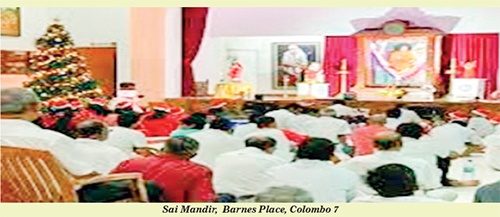
“Sai Mandir” at Barnes Place is considered as a landmark Holy Temple for all Sai devotees in Sri Lanka and also for overseas devotees visiting Sri Lanka. Sixty four perches of land in prime residential area in Colombo was gifted to the organization by the late Mrs Meena Ratnam, fomer Deputy Mayor of Colombo, and her daughter Ms Raji Ratnam.
Sai Mandir, Barnes Place, Colombo 7 Sri Gopal Ghandhi (Grand Son of Mahathma Ghandi)
High Commissioner for India in Sri Lanka



In a country where creative pursuits are often treated as indulgences rather than vocations, Saman Halloluwa’s journey stands apart — carved patiently through brushstrokes, framed through a camera lens, and articulated through the written word. Painter, wildlife and nature photographer, and independent environmental journalist, Halloluwa inhabits a rare space where art, ecology and social responsibility converge.
His relationship with art began not in galleries or exhibitions, but in a classroom. From his school days, drawing was not simply a subject but an instinct — a language through which he learned to observe, interpret and respond to the world around him. Under the guidance of two dedicated mentors, Ariyaratne Guru Mahathaya and Gunathilaka Guru Mahathaya, he honed both skill and discipline. Those early lessons laid the foundation for a lifelong engagement with visual storytelling.

“His work navigates between traditional Sinhala artistic sensibilities, abstract compositions and expansive landscapes.”
 That commitment eventually materialised in two solo art exhibitions. The first, held in 2012, marked his formal entry into Sri Lanka’s art scene. The second, staged in Colombo in 2024, was a more mature statement — both in content and confidence. Featuring nearly fifty paintings, the exhibition drew an encouraging public response and reaffirmed his place as an artist with a distinct visual voice.
His work navigates between traditional Sinhala artistic sensibilities, abstract compositions and expansive landscapes. There is restraint in his use of form and colour, and an underlying dialogue between memory and space. Yet, despite positive reception, Halloluwa speaks candidly about the structural challenges faced by artists in Sri Lanka. Recognition remains limited; fair valuation even rarer.
“This is not merely an artistic issue,” he observes. “It is a social and economic problem.”
In Sri Lanka, art is often viewed through the lens of affordability rather than artistic merit. Many approach a painting by first calculating the contents of their wallet, not the value of the idea or labour behind it. In contrast, he notes, art in Europe and many other regions is treated as cultural capital — an investment in identity, history and thought. Until this mindset shifts, local artists will continue to struggle for sustainability.
The decisive push toward wildlife photography came from Professor Pujitha Wickramasinghe, a close friend who recognised both Halloluwa’s observational skills and his affinity with nature. From there, the journey deepened under the mentorship of senior wildlife photographer Ravindra Siriwardena.
Both mentors, he insists, deserve acknowledgment not merely as teachers but as ethical compasses. In a field increasingly driven by competition and spectacle, such grounding is invaluable.
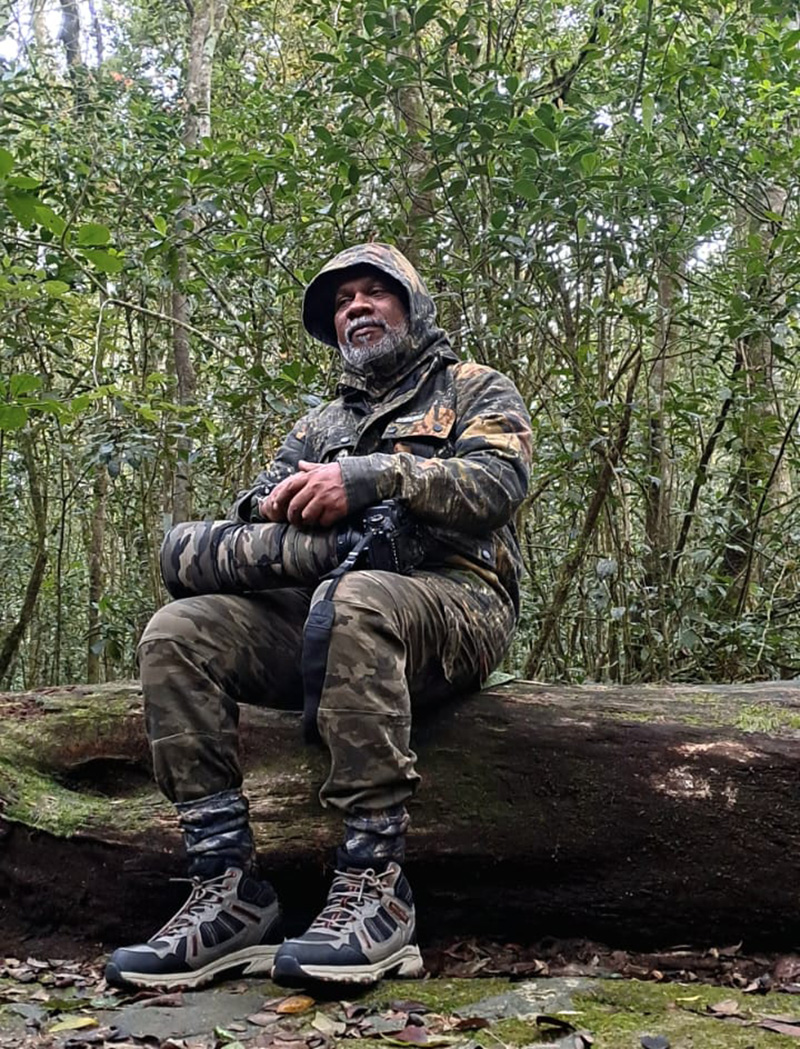
Saman Halloluwa
Wildlife photography, Halloluwa argues, is among the most demanding visual disciplines. It cannot be improvised or rushed. “This is an art that demands restraint,” he says.
Among all subjects, elephants hold a special place in his work. Photographing elephants is not merely about proximity or scale, but about understanding behaviour. Observing social patterns, movement, mood and interaction transforms elephant photography into a constantly evolving challenge. It is precisely this complexity that draws him repeatedly to them.
Halloluwa is cautiously optimistic about the current surge of interest in wildlife photography among Sri Lankan youth. Opportunities have expanded, with local and international competitions, exhibitions and platforms becoming more accessible. However, he issues a clear warning: passion alone is not enough
Sri Lanka, he believes, is uniquely positioned in the global nature photography landscape. Few countries offer such concentrated biodiversity within a compact geographical area. This privilege, however, carries responsibility. Nature photography should not merely aestheticise wildlife, but foster respect, aware ness and conservation.
Parallel to his visual work runs another equally significant pursuit — environmental journalism. For the past seven to eight years, Halloluwa has worked as an independent environmental journalist, giving voice to ecological issues often sidelined in mainstream discourse. His entry into the field was guided by Thusara Gunaratne, whose encouragement he acknowledges with gratitude.
An old boy of D.S. Senanayake College, Colombo, Halloluwa holds a Diploma in Writing and Journalism from the University of Sri Jayewardenepura and has completed journalism studies at the Sri Lanka Press Institute. He is currently pursuing an Advanced Certificate in Wildlife Management and Conservation at the Open University of Sri Lanka — a testament to his belief that learning must remain continuous, especially in a rapidly changing ecological landscape.
Outside his professional life, he enjoys cricket, rugby and badminton. Yet even leisure intersects with responsibility. He is a founding member and former president of the D.S. Senanayake College Old Boys’ Wildlife Forum, an active member of Wild Tuskers Sri Lanka, and a contributor to several independent environmental and wildlife volunteer organisations. In an era dominated by speed, spectacle and short attention spans, Saman Halloluwa’s journey unfolds differently. It is deliberate, reflective and rooted in values. Through art, he captures memory and form. Through photography, he frames life beyond human control. Through journalism, he asks uncomfortable but necessary questions.
“What I do, what I love” is not fashion here.
It is conviction — patiently lived, quietly asserted, and urgently needed in a country still learning how to value its artists, its environment and its truth.
By Ifham Nizam ✍️

Ramani Fernando Sunsilk Hair and Beauty Academy
Ramani Fernando Sunsilk Hair and Beauty Academy marked their graduation of their latest cohort of aspiring hair professionals in a ceremony held at Kingsbury Hotel.

Senaka de Silva, creative force behind Ramani’s shows
For over two decades, the Ramani Fernando Sunsilk Hair and Beauty Academy has stood as a beacon of excellence in beauty education in Sri Lanka. Founded by industry icon Ramani Fernando, the Academy has built a reputation for producing highly skilled professionals who go on to make their mark in salons, both locally and internationally. As the newly minted graduates step out into the world, they carry forward not just certificates, but also the promise of creative authority and personal empowerment.
The chief guest for the occasion was Rosy Senanayake, a long-standing supporter of the Academy’s mission. Addressing the graduates her message echoed her enduring belief that the beauty industry is not merely about aesthetic but about. confidence, self-worth and future leaders.
Over months of rigorous training, these young professionals honed their skills in cutting colouring, styling and contemporary artistry readying themselves to set trends rather than follow them.
Each graduate walked the stage with confidence, their dedication signalling a promising future for Sri Lanka’s beauty and fashion industry! With this new generation of stylists preparing to raise the standard of professional hairstyling.
Ramani Fernando, addressing the audience reflected on the academy’s mission to cultivate not only skills but vision and confidence in every student.
She urged the graduates to embrace continuous learning to take risks with creativity .The world of beauty is ever evolving, stay curious, stay bold and never underestimate the power of your talent, she added emphasising the importance of confidence, discipline and passion in carving a successful career in shaping the future of style.
These graduates are stepping into a world of endless possibilities. They are future of the country, who will carry a forward legacy of creativity. Behind every successful graduate at Sun silk Hair Academy stands a team dedicated to excellence. While Ramani Fernando serves as a visionary Principal and it is Lucky Lenagala, her trusted person who ensures that the academy runs seemingly.
From overseeing training sessions to guiding students, through hands on practice, Lucky plays a pivotal role in shaping the next generation of hairstylists.
Kumara de Silva, who has been the official compere Ramani’s, Hair graduation ceremony, from inception has brought energy, poise and professionalism. The Sunsilk Hair Academy is a celebration of talent and mentor ship for the graduates stepping confidentially into the next chapter of their careers, ready to make their mark on Sri Lanka beauty landscape

A moment of pride Ramani with chief guest Rosy Senanayake

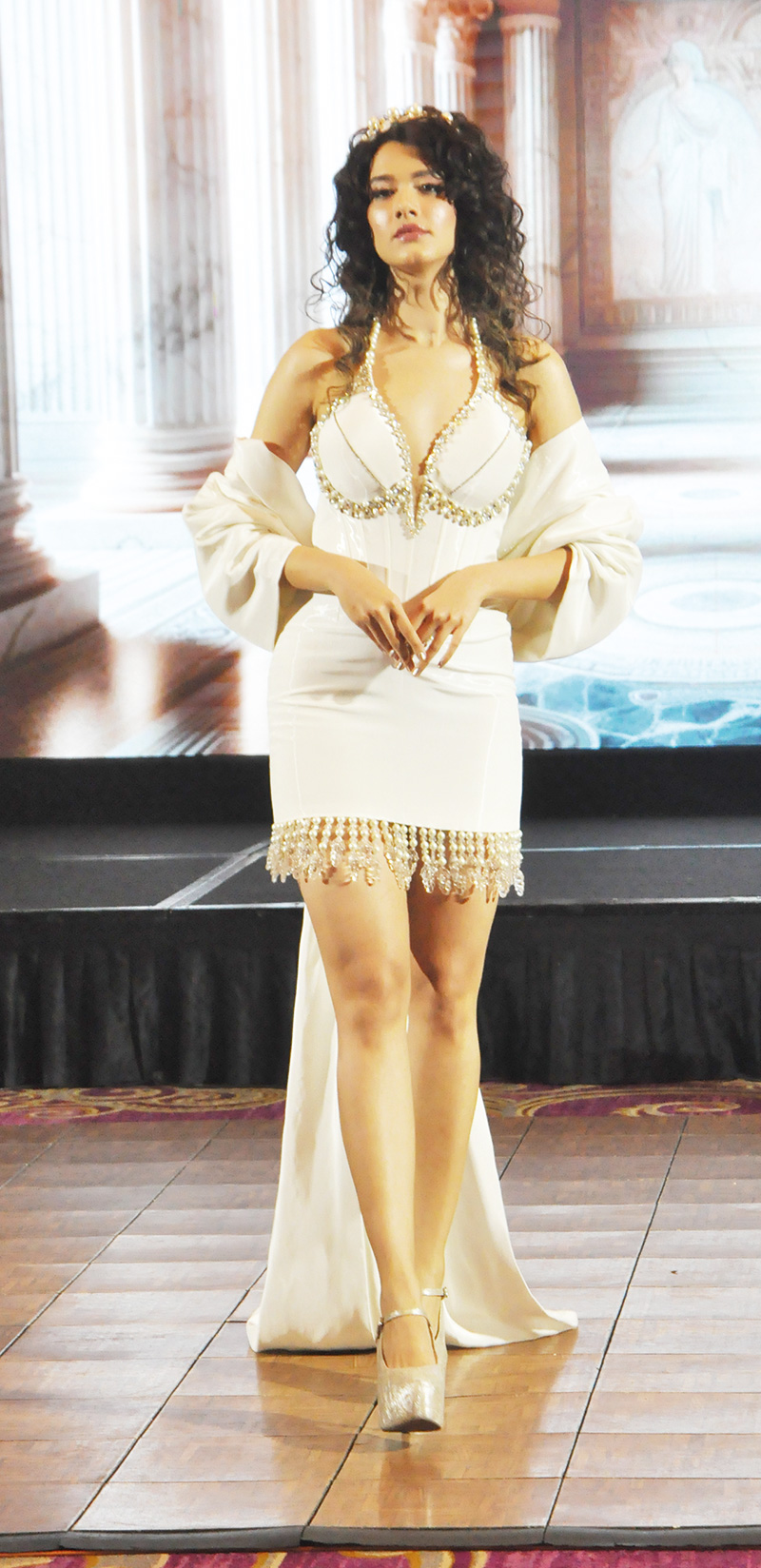
Statement in style

Gliding in romance and sophistication
Pix by Thushara Attapathu
By Zanita Careem ✍️

During this season, Romesh Atapattu’s Capello Salon buzzes with a unique energy – a blend of festive excitement and elegance. Clients arrive with visions of holiday parties, office soirees, seeking looks that capture both glamour and individuality. The salon itself mirrors this celebrity mood. Warm lights, tasteful festive décor create an atmosphere where beauty and confidence flourish.
Romesh Atapattu himself curates the festive décor, infusing the space with his signature sense of style. His personal eye ensures that the décor complements the salon’s modern interiors.
As Colombo slips effortlessly into its most glamorous time of year, the Christmas season brings with it more than twinkling lights and celebrity soirees – it signals a transformation season at salons across the city. Capello salons are no exception.
At the heart of this festive beauty movement is Romesh Atapattu of Capello salons, a name synonymous with refined hair artistry, modern elegance and personalised style.
Christmas is about confidence and celebration. Romesh believes ‘People want to look their best without losing who they are”. Our role is to enhance, not overpower. This philosophy is evident in the salon’s seasonal approach.
Beyond trends, what sets Atapattu apart is the attention to individuality. Each consultation is treated as a creative collaboration – face shape, lifestyle, hair texture and personal style all play a role in creating the best for Romesh.
Stepping into Romesh’s salon during the Christmas season is an experience in itself. The space hums with festive energy while maintaining an atmosphere of calm sophistication.
The décor embraces the Christmas spirit with understated elegance. Tastefully adorned décor, beautiful Xmas tree, soft gold and ivory tones, and gentle hints of red are woven seamlessly into the salon’s contemporary design.
His staff, known for their warmth and professionalism also plays a key role in shaping the salon’s atmosphere—friendly, stylish and always welcoming. The Capello staff combine skill and creativity to deliver results that have a lasting impression.
Beyond trends, what sets Romesh Atapattu apart is the attention to individuality. Each consultation is treated as a creative collaboration – face shape, lifestyle, hair texture and personal style all play a role.
He is a professional who blends technical mastery with a deeply personal approach to style. His dedicated team of skilled professionals, operate with quiet confidence ensuring styles that create an atmosphere of trust, turning every appointment into a personalised and memorable experience.
(ZC) ✍️
Pic by Rohan Herath

Showery condition is expected to enhance in the Eastern, Northern and Uva provinces during the coming days, due to the development of a low-level atmospheric disturbance to the East of Sri Lanka

GMOA warns of trade union action unless govt. urgently resolves critical issues in health sector

Elephant census urged as death toll nears 400

CTU raises questions about education reforms

Navy lauds foreign warships that came to assist in disaster relief ops here

It’s PC polls, stupid

‘Dates have the highest sugar content to fight Coronavirus’

Sunday Island 27 December – Headlines

#SundayIsland 17th December – Headlines

Sunday Island – 28th March

Sunday Island Headlines – 21 March

Sunday Island – 21st February – Headlines
-

 Sports4 days ago
Gurusinha’s Boxing Day hundred celebrated in Melbourne
-
 News2 days ago
Leading the Nation’s Connectivity Recovery Amid Unprecedented Challenges
-

 Sports5 days ago
Time to close the Dickwella chapter
-

 Features3 days ago
It’s all over for Maxi Rozairo
-

 News5 days ago
Environmentalists warn Sri Lanka’s ecological safeguards are failing
-
 News3 days ago
Dr. Bellana: “I was removed as NHSL Deputy Director for exposing Rs. 900 mn fraud”
-
 News2 days ago
Dons on warpath over alleged undue interference in university governance
-
 Features5 days ago
Digambaram draws a broad brush canvas of SL’s existing political situation