
Business
Sri Lankans now have access to free financial education

To take control of their financial future
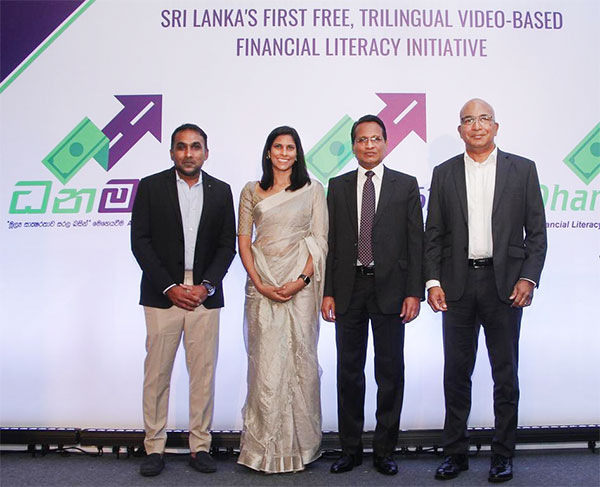
Asia Securities, a leading investment firm in Sri Lanka, launched DhanaMaga (ධනමග / தன மார்க்கம்) a trilingual financial literacy program aimed at helping Sri Lankans take control of their financial future.
DhanaMaga, the first of its kind online portal and mobile application was officially launched on 21st of February 2022. The aim of this initiative by Asia Securities is to provide answers to all Sri Lankans on their money-related questions—from understanding how to finance small businesses and building personal financial plans, to understanding company financial statements and choosing suitable investment options.
On the importance of financial education in fostering financial stability, Asia Securities Chairman Dumith Fernando stated, “We at Asia Securities talk to business owners and individual investors every day. Therefore, we understand first-hand how crucial financial skills are in enabling people to actively participate in the economy and secure their personal financial future. Our Financial Literacy initiative, DhanaMaga, empowers Sri Lankans, from all walks of life, with the right resources to help finance a small business without putting themselves at too much risk or managing their money wisely by planning and investing for their families’ future needs. We are delighted to spearhead this initiative to build a strong foundation that will support the goal of the prosperity of all citizens of our nation.”
DhanaMaga offers 100+ easy-to-follow, engaging videos available in Sinhala, Tamil and English languages that are suitable for any age, skill level, and stage of life. The videos can be viewed completely free via the www.dhanamaga.lk portal or by downloading the mobile application.
The self-directed videos also allow visitors to learn at their own pace, at anytime, anywhere. The video content had been reviewed for suitability and accuracy by an independent DhanaMaga Curriculum Committee comprising of key local experts with over 70+ years’ experience in financial regulation and education.
Chief Guest, Viraj Dayaratne PC, Chairman – Securities and Exchange Commission commented on the launch, “It is commendable that Asia Securities had the foresight and understanding to introduce a trilingual program to provide all Sri Lankans the knowledge to have an equal opportunity when it comes to investments and managing their finances”.
Sri Lanka has a literacy rate of 92% and the country’s financial literacy rate is at 35%, compared to an average of 65% in developed countries (S&P Global FinLit Survey). Meanwhile, 74% of Sri Lankans have opened an account at a formal financial institution. The lack of financial education and financial access are the primary cause of low financial literacy levels.
Guest of Honor, Mahela Jayawardena, Former Sri Lanka Cricket Captain also shared his thoughts. “I would like to thank Asia Securities for inviting me as the Guest of Honour for the launch of the DhanaMaga platform, an interesting initiative that has the potential to benefit Sri Lankans of all walks of life, especially the youth. I wish the team all the best as they strive to execute their vision to improve financial literacy in Sri Lanka.”
A highlight of the event was the first Engagement Partnership for Dhanamaga, with Room to Read, a global non-profit active in Sri Lanka, that seeks to transform the lives of children in low-income communities by focusing on literacy and gender equality in education. The partnership with DhanaMaga allows Room to Read to provide an important curriculum in financial literacy to more than a million participants of its Girls Education Program.
Commenting on the signing of the MoU, Shevanthi Jayasuriya, Country Director at Room to Read Sri Lanka said, “We are proud to have partnered with Asia Securities as together we have been able to set up the DhanaMaga platform but also lay the foundation for even more projects that will help benefit the youth and ultimately the nation as well. We look forward to working with them on this project and many more in the future.”
While many Sri Lankans are economically active, they sometimes lack basic education in the key tenets of finance. This not only prevents them from reaping the benefits of their economic activity but also puts them at risk of poor financial decisions that keep them locked in debt and poverty. While the public sector may have a responsibility to address this issue, Asia Securities believes that the private sector too must play its part in enhancing financial literacy in the national interest.
visit www.dhanamaga.lk or download the Dhanamaga app

Business
SriLankan Airlines records revenue increase with AI and ML-powered Revenue Management System

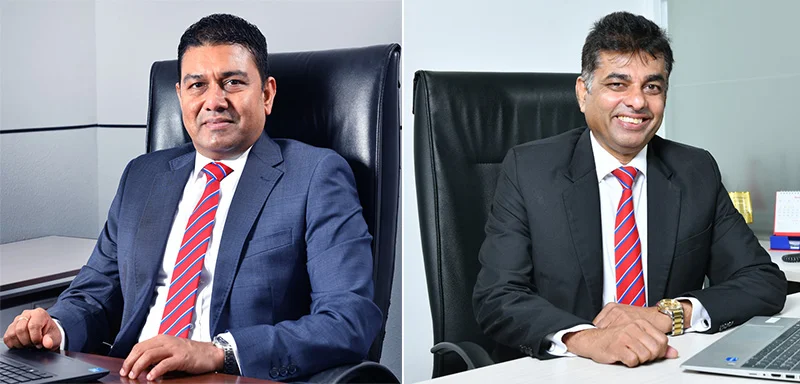
SriLankan Airlines has recorded a revenue increase following the implementation of a next-generation, AI and Machine-Learning (ML) powered Origin and Destination (O&D) revenue management platform. The system enables dynamic pricing and smarter inventory optimisation, while delivering a superior passenger experience across all sales channels through real-time seat availability and predictive analytics.
Kshanaka Saparamadu, Head of Revenue Management at SriLankan Airlines, remarked, “Embracing the latest revenue management technology is a testament to our commitment to continuous innovation and digital transformation. With the introduction of PROS Revenue Management Advantage and Amadeus Revenue Availability and Active Valuation, we are not only refining our current processes but also positioning ourselves for long-term success in modern airline retailing, ensuring we stay ahead in a rapidly changing industry.”
Chamara Perera, Group Head of IT at SriLankan Airlines, added, “This transition to a dynamic, integrated revenue management system reflects our strategic focus on remaining agile in an increasingly competitive and fast-evolving airline industry. As the aviation sector undergoes rapid digital transformation, SriLankan Airlines is enhancing its ability to respond swiftly to market fluctuations and meet the evolving demands of today’s travelers.”
Powered by PROS’ AI-driven Revenue Management Advantage (RMA) and Amadeus Revenue Availability and Active Valuation (RAAV), the platform leverages AI algorithms and ML models to improve alignment of capacity and demand, optimise premium seat allocation and respond swiftly to market shifts. These capabilities deliver unmatched agility and scalability, boost yield and position SriLankan Airlines at the forefront of digital transformation in aviation.
Industry benchmarks show that O&D-based revenue optimisation models typically deliver a 3%-5% increase in passenger revenue, underscoring the new revenue management system as a key driver, among other strategic factors, to the 13% growth recorded by SriLankan Airlines during the first three quarters of the 2025-2026 financial year.
This initiative has not only enhanced SriLankan Airlines’ agility, scalability, and competitiveness in a dynamic global aviation market, but also strengthened collaboration between pricing, demand and flight analyst teams, earning two awards in the process. It was recognised with the Growth Catalyst Award at the Outperformer Customer Awards 2025 in Las Vegas by PROS, as well as the Silver Award in the AI and Data Science category at the National Project Management Excellence Awards 2025 in Colombo by the Project Management Institute Sri Lanka Chapter.
As SriLankan Airlines continues its modernisation journey, the new integrated revenue management platform will significantly improve SriLankan Airlines’ global market position, its ability to attract and retain high value connecting passengers, and competitiveness in the global aviation landscape.(SriLankan Airlines)
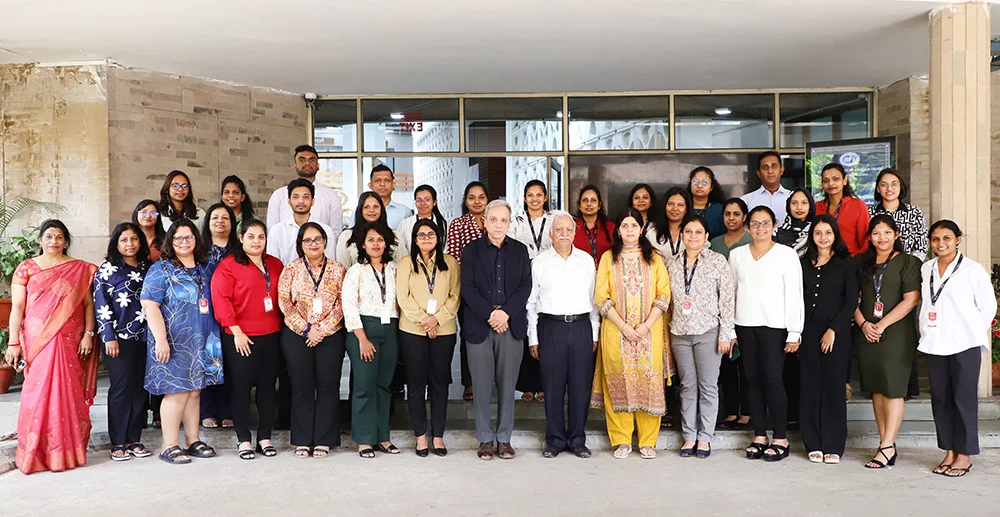
A delegation of 30 professionals from the Ceylon Chamber of Commerce recently completed a specialised residential training programme on International Trade Facilitation at the Indian Institute of Foreign Trade (IIFT) in New Delhi.
Hosted by the Indian Institute of Foreign Trade, a premier institution established under India’s Ministry of Commerce and widely regarded as a leading centre of excellence in international trade education and research, the programme also included engagements with several of India’s most prominent trade and diplomacy institutions. These included the Directorate General of Foreign Trade (DGFT), the government authority responsible for shaping and implementing India’s foreign trade policy; the Sushma Swaraj Institute of Foreign Service, the country’s premier training institution for diplomats; the Federation of Indian Export Organisations (FIEO), the apex body representing India’s exporting community; and the Confederation of Indian Industry (CII), one of India’s most influential industry associations. Together, these engagements offered participants valuable insights into how policy, diplomacy, and industry interact in a robust manner to facilitate trade and economic progress.
Over nine days, participants explored key aspects of global commerce, including the international trading system, trade negotiations, economic intelligence, trade finance, and emerging issues such as AI, cyber risk, and digital transformation.
The programme offered valuable insights into the evolving dynamics of international trade and the systems that support it, while highlighting ways in which chambers of commerce can further leverage their existing role in supporting businesses navigate global markets, contributing to policy discussions, and strengthen the broader trade ecosystem.
The programme was designed and overseen by Dr. Rohit Mehtani, Dean at IIFT and a widely respected expert in international trade diplomacy and negotiations, whose academic work and advisory experience have contributed to international trade discourse.
LOLC Life Assurance recently hosted its MDRT Summit & Recognition Night 2026 at the Hilton Colombo Residences, celebrating its 2025 MDRT qualifiers while aspiring the team to achieve even greater milestones in the year ahead. The event brought together senior leadership and top performing advisors in a distinguished forum focused on recognising performance excellence, sharing industry insights, and setting the strategic direction for continued success.
In 2025, the Company produced 89 MDRT qualifiers, including six Court of the Table (COT) and two Top of the Table (TOT) achievers, along with one Lifetime MDRT member. Representing Agency and Bancassurance channels, these professionals demonstrate a strong commitment to delivering responsible financial guidance and long-term protection solutions to individuals and families across Sri Lanka.
The Million Dollar Round Table (MDRT) is globally recognised as the benchmark of excellence in the life insurance and financial services profession. Membership is reserved for individuals who meet rigorous production targets and uphold strict ethical standards. Achieving MDRT status is widely regarded as a mark of credibility, trust, and advisory distinction.
Commenting on the achievement, Mr. Chandana L. Aluthgama, Executive Director and Principal Officer of LOLC Life Assurance stated, “It is with great pride that we recognise our MDRT qualifiers for their dedication, discipline, and integrity, which set a benchmark of excellence for our advisory force and reflect the customer-first values that define LOLC Life Assurance. These achievers deserve recognition not only for meeting targets or selling policies, but also for safeguarding families, empowering individuals to build their legacies, and supporting financial independence, providing certainty and confidence in an unpredictable world. In acknowledging their exceptional contributions, I congratulate all our MDRT qualifiers and am confident they will continue to deliver meaningful financial protection while creating lasting value for our clients and communities.”
Further echoing this sentiment, Mr. Jayantha Kalinga, Chief Operating Officer of LOLC Life Assurance added, “This Summit not only celebrates the outstanding performance of our MDRT achievers in 2025 but also acknowledges the resilience, consistency, and customer dedication demonstrated by our teams throughout the year. As we move forward, we will continue to strengthen capabilities through structured development initiatives, advanced training tools, and robust operational support, empowering our advisors to serve clients with confidence and professionalism while further expanding our MDRT presence in the years ahead.”

Steps are taken to accelerate the recovery efforts following Cyclone Ditwah despite Global Economic Challenges

Qalandars fine Afridi for violating security protocols

Sooryavanshi, Archer, Burger demolish Chennai Super Kings

Showers may occur at a few places in the Western and Sabaragamuwa provinces and in Galle and Matara districts after 2.00 pm

Burning of low-grade coal at N’cholai plant increases pollution: Parliament

Tariff shock from 01 April as power costs climb across the board

‘Dates have the highest sugar content to fight Coronavirus’

Sunday Island 27 December – Headlines

#SundayIsland 17th December – Headlines

Sunday Island – 28th March

Sunday Island Headlines – 21 March

Sunday Island – 21st February – Headlines
-

 News6 days ago
Senior citizens above 70 years to receive March allowances on Thursday (26)
-

 Features3 days ago
A World Order in Crisis: War, Power, and Resistance
-

 News4 days ago
Energy Minister indicted on corruption charges ahead of no-faith motion against him
-

 News5 days ago
US dodges question on AKD’s claim SL denied permission for military aircraft to land
-

 Business5 days ago
Dialog Unveils Dialog Play Mini with Netflix and Apple TV
-

 News6 days ago
CEB Engineers warn public to be prepared for power cuts after New Year
-

 Sports5 days ago
SLC to hold EGM in April
-
 Latest News5 days ago
A strong Technical and Vocational Education and Training (TVET) system equips individuals with practical, relevant, and future-oriented skills helping to innovate responsibly towards a greener and sustainable future – PM