
News
Sri Lankan professional honoured by Rotary International


Sri Lankan business personality, Dr. Rohantha Athukorala has been honored among the six members across the world as ‘People of Action: Champions of Health by Rotary International’.
The award was in recognition of their proactive behaviour demonstrated to improve the foundation of good health at home and across the globe.
The work of these members proved especially challenging due to the ongoing Covid-19 pandemic, which tested their ‘service above self’ ethos, a communique from Rotary Head Quarters in Chicago, United States, said.
They will be recognized at the 2021 Global Convention for their outstanding contribution.
Commenting on the award Athukorala said: “Rotary is undoubtedly one of the strongest service organizations in Sri Lanka for project management. This includes interactors who work at the school end and Rotaractors in the University end of the postgraduate segments of Sri Lanka. This award is a win for Rotary/Rotaract and Interactors of Sri Lanka”.
Dr. Athukorala, a marketing professional, who has had a 17-year career with top British and American multinational, was also the Chairman of Sri Lanka Export Development Board and Sri Lanka Tourism which gave him the experience to conceptualize the project ‘Stop the Spread’ that was picked as a national project for the year 2020/21 by the Governor of Rotary Sri Lanka and Maldives, Ajith Weerasinghe.
The innovative project brought together 6,200 Interactors, 7,800 Rotaractors and 2,000 Rotarians under one theme driving multiple initiatives from attitude change communication to economic development projects during the pandemic. It was a unique project in our ecosystem that helped fight the Covid-19 deadly virus, Governor Weerasinghe said.
‘Stop the Spread’ used a two step communication model driven by the Interactors using the voice of 280 South Asian, Commonwealth, Asian and Olympic Games medallions in partnership with the National Olympic Committee in the first stage of the roll out. The campaign created awareness on the new normal behaviour required like wearing a mask, keeping social distance, body temperate watch and washing one’s hands in a somewhat controlled ecosystem, which supported the government’s efforts on how to contain the Covid-19 virus.
At present, more than 100,000 people have fallen prey to the virus with 625 deaths in Sri Lanka. The advocacy model must be taken to the next level in Sri Lanka and also extended to the global stage in the partnership with the respective sports bodies of their home country, says Weerasinghe, the Director/CEO of CIC, a a blue chip company in Sri Lanka.
Concurrent to the ‘Stop the Spread’ attitude changing concept, Rotary Sri Lanka mooted the idea of a certification program for businesses to bring to the DNA the new health protocols required in an organization.
The Sri Lanka Standards Institute (SLSI) developed the standards that led to the first-ever Certification protocols for Covid protection being launched in country. Rotary then diffused the idea and Certified almost 300 entities including schools, supermarkets, hotels, and top tea brands, global health and nutrition companies, International rubber organizations, the apparel sector and hotels which quantified the contribution of Rotary during the pandemic commented, Dr. Athukorala noted.
The award winning Sri Lankan professional has also served the United Nations (UNOPS) in his illustrious multinational career. He now heads a leading Artificial Intelligence (AI) company for the South Asian Region.
“The Covid-19 spike in Sri Lanka is very worrying given the new strand we see in countries like India. We cannot afford another lockdown like last year. We have to stop the spread by regulating our behavior”, he stressed.


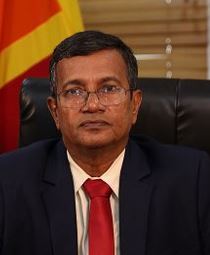
The government is taking all necessary measures to protect the Diyagama forest area located in Homagama within the Colombo District, Deputy Minister of Environment, Anton Jayakody,
stated on Friday (9) while delivering a special address in Parliament.
Originally an abandoned plot of land, it has regenerated naturally over the past two decades into a sensitive ecosystem bearing the characteristics of a rainforest. With rapid urbanization, numerous wildlife species displaced across
the Colombo District have now migrated to and found sanctuary in this ecological haven.
Citing field research conducted by a team of scholars from the University of Colombo—including Prof. S.W. Ranwala, Prof. Ileperuma, and Prof. Abeykoon—the Deputy Minister pointed out that nearly 120 species of flora and fauna have been identified in the area. Among them are species endemic to Sri Lanka, as well as rare wildlife such as the red slender loris and pregnant animals close to giving birth, clearly testifying to the rich biodiversity thriving within this habitat.
Located adjacent to the Mahinda Rajapaksa International Stadium and the Japan–Sri Lanka Friendship Baseball Ground, this green zone serves as a vital ecosystem for absorbing carbon
dioxide emitted by athletes and residents in the vicinity.
In addition to directly contributing toward Sri Lanka’s commitments under the Paris Agreement to achieve net-zero emissions by 2050, the forest also functions as a vital catchment area feeding into the Bolgoda water basin.
Accordingly, following the approval of the Colombo District Coordinating Committee (DCC) with the participation of the Divisional Secretary, government officials, and environmentalists, steps will be taken to submit a Cabinet paper to formally declare this valuable woodland a forest reserve, the Deputy Minister emphasized.

Stranded Iranian ships off SL:
Iran has reminded Sri Lanka that as a member of the UN the government is obligated to fulfil its responsibilities.
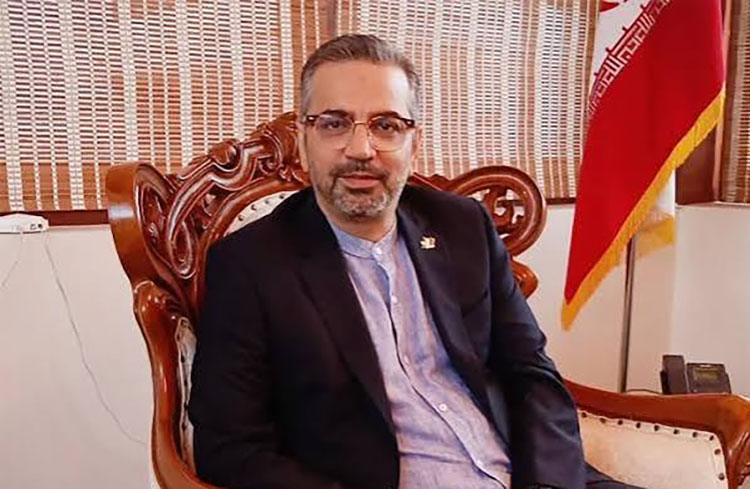
Iranian Ambassador Alireza Delkhosh in Colombo said that in terms of the Convention on the Law of the Sea (Article 98) as well as SOLAS and SAR Conventions, Sri Lanka couldn’t refrain from providing the needs of the Iranian vessels stranded in its Exclusive Economic Zone (EEZ).
Ambassador Delkhosh was responding to a recent Foreign Minister Vijitha Herath’s declaration that neither the government nor private companies would provide food, water and medicine to these ships.
The Ambassador questioned how Sri Lanka accepted illegal and unilateral US sanctions against Iran, contrary to the JVP’s much touted historic anti-imperialistic manifesto.
The Iranian vessels are believed to be under constant US surveillance to prevent any supplies from getting through.
The Iranian Embassy made these comments as USS Tulsa (LCS 16), an Independence-variant littoral combat ship arrived in Colombo where it received supplies. The US Embassy declared that; ” this goodwill visit provides an opportunity to strengthen ties between US and Sri Lankan sailors while the ship refuels and resupplies before continuing its mission in the Indo-Pacific.”
Ambassador Delkhosh said that even if the above-mentioned Conventions weren’t adhered to, there existed, what he called, unwritten yet binding conventions that compelled Sri Lanka to assist. “It is the Convention of not forgetting past friendship and Convention of Humanitarian Actions.”
The Iranian envoy emphasised that these conventions that exempt no country from extending humanitarian aid, especially Sri Lanka, which, throughout its recent history, has been a recipient of Iranian assistance.
A section of the international media reported that Sri Lanka faced the risk of secondary sanctions from the United States if Sri Lanka allowed supplies to reach the stranded Iranian vessels. Twenty vessels are believed to be stranded in EEZ.
Former Sri Lankan Ambassador in Tehran, M.M. Zuhair, recalled how the Iranian government swiftly and decisively provided assistance, amidst western efforts to jeopardise the military campaign, by undermining the national economy.
As the war entered a crucial stage, the government found itself in an extremely difficult situation. Following talks at the highest level, Iran provided Sri Lanka with an interest-free and concessionary oil credit facility worth $1.05 billion to help obtain crude oil requirements, President’s Counsel Zuhair said.
If not for the rolling credit line, easing severe foreign exchange pressures, the Rajapakasa government could have faced an insurmountable challenge, the former diplomat said, adding that, unfortunately, those in decision-making positions now have forgotten the past. (SF)

The National Centre for Cyber Security has warned of a major fraud perpetrated, targeting those seeking to enter foreign universities. The fraudsters have used social media to deceive both students and their parents. The text of the press release issued yesterday: ” Sri Lanka CERT has received complaints from several parents and students who have lost hundreds of thousands of rupees after falling victim to advertisements posted on social media offering admission to foreign universities.
You may come across advertisements on social media claiming that students can gain admission to foreign universities, obtain visas to travel abroad, secure work permits for several years, and eventually even obtain citizenship in those countries.
Some of these advertisements are completely fraudulent. When you call the telephone numbers provided in such advertisements, the information you receive may sound highly attractive and convincing.
The scammers present themselves as representatives of some of the world’s leading universities. They claim that students can gain admission by paying only a registration fee and the tuition fees for the first semester. They may further claim that students can then find employment to cover their accommodation and food expenses. They may also tell students that they have opportunities to obtain scholarships for subsequent semesters.
The scammers may also instruct victims to create an email account or join a WhatsApp group. The information shared through these channels may include videos, photographs and other details about the relevant universities. The scammers present this information so convincingly that it may be difficult to suspect that the videos and photographs have been copied or stolen from online sources. The documents provided for registration may also closely resemble genuine documents issued by the respective universities.
They may then provide foreign bank account details for transferring the required payments. In this way, the scammers attempt to eliminate any remaining doubts that the victims may have.After victims transfer hundreds of thousands of rupees as registration fees and tuition fees for the initial study period, the scammers disappear.
Therefore, Sri Lanka CERT urges the public not to fall victim to such advertisements posted online and to select only legitimate university representatives who provide services through lawful and recognised channels.
Sri Lanka CERT further urges the public to carefully verify the authenticity of all documents provided by such individuals, as well as the bank account details to which payments are requested, before making any financial transactions.”

Measures underway to protect Diyagama Forest as a Reserve — Deputy Minister of Environment

Showers or thundershowers will occur in most parts of the island after 1.00 p.m.

NPP govt. reminded of its responsibilities as US warship leaves Colombo

CERT: Beware of foreign Uni. scams on social media

Shiranthi receives treatment at National Eye Hospital

PAFFREL, TISL checking whether govt. addressed their concerns as regards Anti-Corruption (Amendment) Bill

‘Dates have the highest sugar content to fight Coronavirus’

Sunday Island 27 December – Headlines

#SundayIsland 17th December – Headlines

Sunday Island – 28th March

Sunday Island Headlines – 21 March

Sunday Island – 21st February – Headlines
-

 Features6 days ago
The first woman in the foreign service or Ceylon Overseas Service it was then called
-

 News5 days ago
Geneva takes up Sallay’s case and govt. ignores opportunity to answer accusations
-

 Foreign News7 days ago
Ten injured after car crashes into rugby supporters in Australia
-

 News6 days ago
Nearly 20 Iranian tankers stranded off Lanka amid US sanctions
-

 Latest News7 days ago
Tharindu Rathnayake, bowlers secure Asian Games Bronze for Sri Lanka
-

 Features4 days ago
Preventing grievances from becoming communal
-

 Sports2 days ago
Nissanka absence opens door for Sri Lanka’s young guns
-

 Features5 days ago
Sri Lanka Cricket Bill: Governance reform is not yet a cricket strategy