
Sports
Sri Lankan pace bowing excites Dale Steyn


by Rex Clementine in Dubai
South Africa has always produced quality fast bowlers and one of meanest bowlers of this generation has been Dale Steyn. Ranked world’s number one bowler for an extended period of time, Steyn made quite a few visits to Sri Lanka and won the hearts of local fans for his aggression on the field and friendly nature off it.
Steyn is in UAE for the T-20 World Cup as a commentator and in an interview with a few Sri Lankan journalists said that he actually thought the Proteas had lost the plot in their clash against Sri Lanka in Sharjah last week before they recorded a stunning come from behind win in the penultimate ball of the game.
“I actually thought Sri Lanka had the game in the bag. Felt like South Africa got things wrong. I was going to do the post match presentation and was actually preparing for a South African loss. They missed the opportunity to hit boundaries in the middle overs whereas Sri Lanka just kept coming at them.”
For this World Cup, Sri Lanka moved away from their traditional strength of spin and built up a bowling unit on their pace. In the qualifiers, pace came in handy but when it came to the business end of the competition, the pacies, particularly Lahiru Kumara was a let-down.
 “I like their aggression. Sri Lanka is not a country known to have that aggression. Whenever I played against Sri Lanka, there were some good fast bowlers, don’t get me wrong, Malinga was amazing but he wasn’t like the most aggressive man in the world. It’s nice to see a bit of mongrel inside those young Sri Lankan bowlers,” Steyn explained. What’s mongrel? Well, Steyn is giving them a complement in South African terms; like a dog that has grown up on the streets and has good fighting qualities.
“They are bowling 145kmph which is quick and good. Where they went wrong was their lengths were off. Against Australia they were too full. Then in the backend they dragged their lengths back. Against South Africa it switched the other way. That’s experience for you. You have got to play at the highest level. Yes, they are playing at the highest level but they need to do so more frequently.”
“I like the way Kumara went about it. Chameera is more round arm and he can swing it. Kumara is kind of hit the deck and he will be a good bowler in South Africa where you get something off the deck and find the edge when batters don’t know to whether go back or come forward. I felt bad for him. Just running into a guy like David Miller is not easy,” explained Steyn.
Steyn is not from any of the big South African cities. He is from the little known Phalaborwa, a village near the Kruger National Park. The first time he was out of South Africa was when he toured Sri Lanka in 2004 with the ‘A’ team. It was a whole new experience to him and he had it all; kottu rotti, an accident and much more.
“I just had the best time. I went to the mall in Colombo and for the first time I bought DVDs. That was bootleg DVDs, but I bought them anyway. I was eating different food for the first time. We went to the tea plantation at Dilmah. We had a car accident. Our bus crashed. Two police officers got badly injured. I sincerely hope they are okay. Then we had to jump into the Sri Lankan bus. So until the Sri Lankan bus arrived, we had to sit on the road for about five hours. We went to Kandy and I saw at the team hotel elephants cruising along. I absolutely loved it.”
“From a cricketing perspective, I can’t remember what really happened. It didn’t matter. It was one of the amazing tours. Every time I went to Sri Lanka, I sort of wanted more of it. The first time I went to Galle, it was great. I remember going up on the ramparts. Went to the little beaches and I loved it. We have won and lost games of cricket but Sri Lanka is one of the most beautiful places I have been to. West Indies and Sri Lanka are two of my favourite places,” Steyn went onto say.
Two years after that tour, he came to the island again, this time with the South African Test team. Playing his first Test match overseas, Steyn had a tough welcome to Test cricket in Asia as this was the game Kumar Sangakkara and Mahela Jayawardene were involved in a World Record 624 run stand.
“Thanks for reminding. In that Test, I had got Sanga out off a no ball and I had him dropped at point two balls earlier. Sanga went onto make almost 300. Mahela batted for two days and almost made 400. It was tough, but a great learning curve. You always want to win games and take five wicket hauls. But there is no learning in that. You need to have really bad stuff like that to learn. At that time I wasn’t enjoying it and looking back I think that was one of the best things that happened to my cricket at the start of my career. It’s a great story to tell and a great experience. As a young fast bowler I wanted to run and bowl as fast as I could. My mindset was similar to what Sri Lankan bowlers have right now. Sometimes it work sometimes it doesn’t.”
Steyn shares a special relationship with former skipper Kumar Sangakkara. While they have played cricket against each other, they have been also team mates at Warwickshire while playing County Cricket, in IPL for Deccan Charges and Sunrisers Hyderabad and Jamaica in Caribbean Premier League.
“What’s there not to like about Sanga. He’s the best man in the world. When it comes to his cricket, he is just phenomenal. Even when he was whacking hundreds against us, it was great to watch and so beautiful. There was fierce competition no doubt against each other but it’s been never ugly. That’s because Sanga is the nicest guy in the world and I love him. I don’t want to treat him any other way. Playing against him, I want to get him out but we are also friends. That’s the best thing about cricket.”
Has the master sledger have sledged Dale Steyn? “He is very clever. He is smart with his cricket brain. He will say little things. Maybe he would irritate me than sledge me. He’s got a point you know and I just step back.”
There are quite a few fast bowlers in world cricket at the moment who are exciting to watch; Pat Cummins, Kagiso Rabada, Mark Wood, Trent Boult and Jasprit Bumrah. Does any of them remind him of Dale Steyn of his prime. “Probably Antrich Nortje. I think what he does; his thought process is similar to me. I don’t look at his action or his style and say he is like me. But I like what’s going on in his head. His execution is similar to what I do. We are roughly the same height trying to bowl really quickly. Looking to skid the ball, I mean beat you for pace before the bat gets there. Good bouncer and keeps it very simple bowling gun barrel straight. That’s the key thing. He doesn’t bowl many wide balls outside the off-stump. His action allows him to bowl gun barrel straight.
Having terrorized batsmen for a decade and half, Steyn has now joined the commentary panel and doing a good job. Will he remain there? “Have you watched Happy Gilmore movie? If you get the chance watch the movie Happy Gilmore. It is one of the best sports movies. It is a comedy. It is about a guy who plays ice hockey. He has got a bad temper and he ends up playing golf and he is really good at it. He is wining and everyone is asking him you are winning golf and what about your golfing career. He says I am a hockey player and I am just playing golf to make enough money so that I can play hockey. I feel very much the same. I am a cricketer who is currently doing commentary. I am not a commentator. It’s fun. I am enjoying it.”







All of Pakistan’s squad members from the T20 World Cup have been fined PKR 5 million (US$ 18,000 approx.) each by the PCB following their underwhelming campaign. Pakistan were eliminated from the tournament following the Super Eight stage, missing out on the semi-finals of an ICC men’s event for the fourth successive time – the first such instance in Pakistan’s history.
ESPNcricinfo has learnt that the fines are not for disciplinary reasons, but specifically for what the board deems poor performance at the event. They were imposed immediately following Pakistan’s match against India in the group stages, where a meek showing resulted in a 61-run defeat. They were further told the fines may end up being waived off if Pakistan reached the tournament semi-finals.
Pakistan did get to the second round, thus avoiding a third straight first-round exit, but ran into trouble in the Super Eight group after a washout against New Zealand was followed by defeat to England. New Zealand’s crushing win over Sri Lanka left them relying on other results and a huge victory over Sri Lanka to sneak into the last four. However, their winagainst Sri Lanka was much too narrow to prevent an early exit.
The PCB has come down hard on players in the past, though sanctions have generally been framed as disciplinary. ESPNcricinfo has learned there were no disciplinary issues within the team throughout the tournament, and the fines have been levied specifically for the quality of their on-field performances. That makes the sanctions handed out by the PCB particularly rare, and potentially unprecedented.
The current PCB administration, though, does have form for imposing punishments in the wake of disappointments at major tournaments. Five months earlier, following a narrow defeat to India in the Asia Cup final, the PCB had briefly suspended all No-Objection Certificates (NOCs) issued to players that would have allowed them to take part in T20 leagues through the winter. That suspension, though, was lifted soon after as some of the top players headed to Australia for the BBL.
While the fines will be imposed on all players, Pakistan did have players who enjoyed individual success at the tournament. Sahibzada Farhan broke the record for most runs at a T20 World Cup, and became the only player to score two hundreds at the same event.
[Cricinfo]
If you are late for work and fancy beating every red light on Galle Road to clock in on time, you are chasing a mirage. Try the same stunt on Baseline Road and you will learn soon enough that Colombo traffic plays by its own rules. Sri Lanka’s World Cup campaign was much the same. When you are ranked eighth in the world and expect to waltz into the semi-finals, that is wishful thinking. And as the old saying goes, if wishes were horses, beggars would ride.
Reaching the Super Eight was no mean feat. Heavyweights like Australia were bundled out in the first round, while Afghanistan, tipped as dark horse, never quite got out of the paddock. On paper, Sri Lanka did what was expected of them. So why the hue and cry?
Because this was a home World Cup. England and New Zealand were served up on a silver platter in familiar conditions and Sri Lanka dropped the ball at the business end. Those were games there for the taking, matches where one nerveless knock could have turned the tide. Instead, they blinked. The final Super Eight clash against Pakistan, however, offered a glimpse of what this side can do when the pitch suits their armoury. On helpful tracks, they have begun to punch above their weight, trading blows with sides ranked well above them.
Yet the turbulence off the field continues to undo the good work on it. Perhaps it is time to think outside the box and appoint captains specifically for World Cups, leaders given a fixed tenure for the tournament cycle, empowered to plan without looking over their shoulders. Sri Lankan cricket has witnessed enough bloodless coups over the past 15 years to fill a political thriller.
In the past, it was established players, permanent fixtures in the XI, who engineered these power shifts when a younger man was handed the reins. Now the worrying trend is different. Even those unsure of their own places in the side are sharpening knives behind closed doors. That is a slippery slope and a dangerous precedent for a team trying to build a culture of accountability.
Not everything about this campaign was doom and gloom. Far from it. The fielding, for one, was razor sharp. Half-chances stuck, direct hits flew in like guided missiles and the athleticism in the ring saved crucial runs. For years this was Sri Lanka’s Achilles’ heel. Now it is fast becoming a strength, the result of sustained emphasis and hard graft behind the scenes.
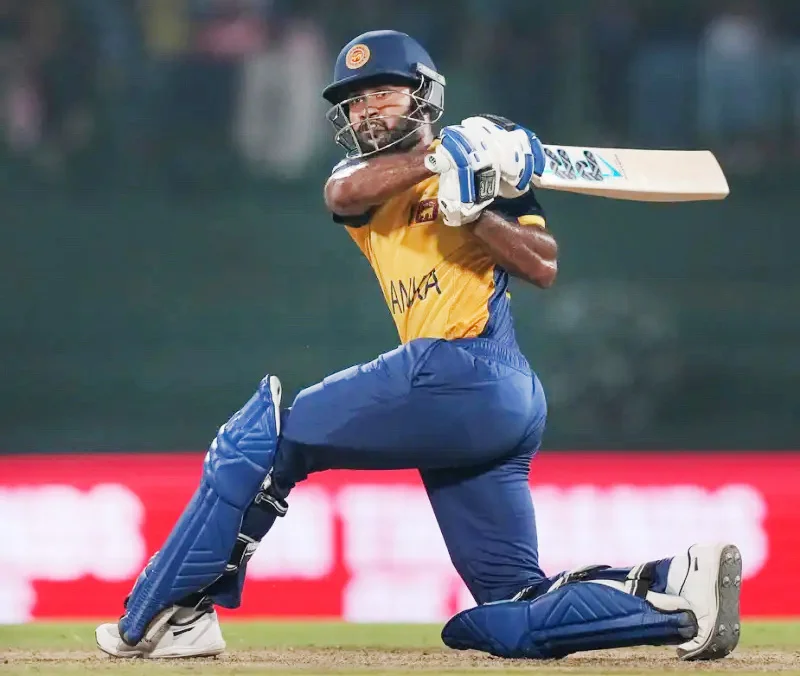
Then there was young Pavan Rathnayake. Drafted into the squad barely a week before the tournament, the 23-year-old was expected to soak in the atmosphere and learn the ropes. Instead, he walked in at the deep end and swam like a seasoned pro. Rathnayake not only held the middle order together but finished as Sri Lanka’s second highest run-getter behind Pathum Nissanka, striking at over 150. He counter-punched spinners, found gaps with soft hands and cleared the ropes with fearless intent. It was a breakout campaign that left many wondering why he had been warming the benches for so long.
True, his domestic T20 numbers were hardly headline-grabbing. But selectors are paid to look beyond spreadsheets and see temperament, technique and ticker. Thank God Sri Lanka once had a man like Duleep Mendis backing a young Sanath Jayasuriya when the numbers did not stack up. Duleep saw the bigger picture and refused to lose faith.
by Rex Clementine

Former Nannapurawa MV athlete Madushani Herath established a new Sri Lanka record in the women’s triple jump on the final day of the selection trial held at Diyagama on Sunday.
Currently, a management student of University of Kelaniya, Madushani cleared 13.68 metres to erase the record held by Vidusha Lakshani. Lakshani’s 13.66 metres record remained unshaken since 2019.
Madushani’s coach Krishantha Kumara said that the record breaking performance was a result of hardwork and combined coaching effort.

PCB fines Pakistan players for underwhelming T20 World Cup campaign

Iran strikes Qatar and Saudi energy sites as US jets shot down by Kuwaiti ‘friendly fire’

India and Canada agree series of deals as Carney and Modi reset ties in Delhi

Oil prices rise after ships attacked near Strait of Hormuz

War photographer Paul Conroy dies as tributes paid

Allies of US in the Gulf bear brunt of Iran attacks

‘Dates have the highest sugar content to fight Coronavirus’

Sunday Island 27 December – Headlines

#SundayIsland 17th December – Headlines

Sunday Island – 28th March

Sunday Island Headlines – 21 March

Sunday Island – 21st February – Headlines
-

 Opinion4 days ago
Jamming and re-setting the world: What is the role of Donald Trump?
-

 Features4 days ago
An innocent bystander or a passive onlooker?
-

 Features6 days ago
Building on Sand: The Indian market trap
-
 Opinion6 days ago
Future must be won
-

 Features5 days ago
Ratmalana Airport: The Truth, The Whole Truth, And Nothing But The Truth
-

 Business6 days ago
Dialog partners with Xiaomi to introduce Redmi Note 15 5G Series in Sri Lanka
-

 Business5 days ago
IRCSL transforms Sri Lanka’s insurance industry with first-ever Centralized Insurance Data Repository
-

 Sports7 days ago
CEA halts development at Mandativu grounds until EIA completion